South Africa – Switzerland Relations

9 March 2023

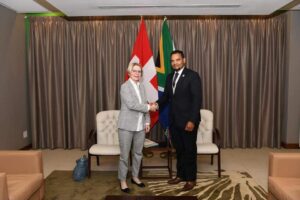
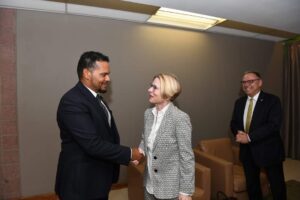
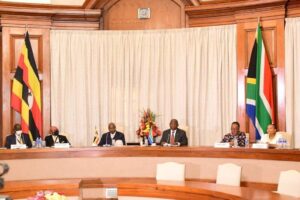
Deputy Minister Alvin Botes met with the State Secretary of Switzerland Ms Livia Leu at the tenth meeting of South Africa- Switzerland High-Level Consultation at OR Tambo building, Pretoria.

The two countries meet annually at the level of Deputy Minister and State Secretary of the Respective Foreign Ministries within the framework of the High-Level Consultation (HLC).
The last meeting was held on 16 November 2018 in Geneva, Switzerland. The purpose of the HLC (established in 2008) is to take stock of relations and progress made since the last sitting as well as to identify new areas of cooperation.

Switzerland is the 7th largest foreign investor in South Africa with approximately 100 companies and subsidiaries or production facilities in the country, sustaining an estimated 70,000 jobs.

#SASwitzerlandRelations
#Bilateral

Photo credit: Dirco

Kazakhstan, on the eve of important milestone

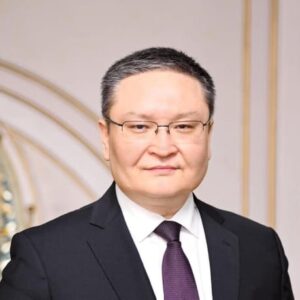
By Yerkin Akhinzhanov, Ambassador (designate) of Kazakhstan to South Africa

9 March 2023

The start of this year could not have been any more different for Kazakhstan when compared to the tragic January of 2022. Just over 12 months ago, our country was amidst a violent coup attempt orchestrated by groups that wanted to see our nation collapse. There was a real possibility that Kazakhstan’s statehood would fall apart from within, which would have had reverberating consequences well beyond Central Asia.

Fortunately, our country managed to not only recover from the wounds of January 2022 events but to further strengthen the foundations of our governance through political and socio-economic changes. Fast forward 12 months from January 2022, and our country is quite unrecognizable. The constitutional amendments that were implemented following the nationwide referendum in June 2022 have ushered in new democratic principles in our country, including a more influential parliament, limited presidential powers, simplified procedures for registering new political parties, direct elections of akims (mayors), among many other important measures.

Several political initiatives have launched from January this year. Perhaps most significant is the establishment of the Constitutional Court, to which every citizen can apply, including the Commissioner for Human Rights and the Prosecutor General. The Court will ensure that our country’s laws are in line with our Constitution and will protect the fundamental rights of our citizens. Elvira Azimova, the first Chairperson of the Constitutional Court, previously worked as Commissioner for Human Rights in Kazakhstan. This is a clear indication of the Court’s priorities and direction.

Now, Kazakhstan is moving fast towards Mazhilis (the lower house of parliament) and maslikhats (local representative bodies) elections on March 19. The President of Kazakhstan Kassym-Jomart Tokayev first proposed holding early election to the Machines and maslikhats in this Address to the Nation on September 1 last year.

President Tokayev said: “The holding of early elections to the Mazhilis and maslikhats is dictated by the logic of the constitutional reform, supported by citizens at the national referendum. According to its results, our country moved to new, fairer, and more competitive rules of formation of the representative branches of power.”

These elections will be unique in many respects. Firstly, two recently established political parties will additionally participate in the vote (beyond the earlier existing ones). For instance, towards the end of last year, the Green Party was established in Kazakhstan, which will raise awareness of ecological issues – an area that is of vital importance due to the ongoing climate change challenges, and of great concern to our citizens due to enduring consequences of large scale Soviet-era man-made environmental calamities.

Overall, seven parties are now registered in the country offering a plethora of political choice for the electorate. Their participation in competitive elections will further contribute to strengthening a multi-party system by increasing plurality and influence of opposition politics, an objective which our country has been working towards for the past several years. Significantly, the threshold for parties to enter the Mazhilis has been reduced from 7 to 5 percent, making it easier for opposition parties to enter parliament and play an important role in increasing government accountability.

Secondly, a mixed proportional-majoritarian model will be used for the first time for the election to the Mazhilis since 2004, where 70 percent of deputies will be elected proportionally from party lists, and 30 percent by majoritarian rule from single-member districts. This means that 29 out of 98 members of parliament will be elected in single-mandate constituencies, while 69 will be elected from party lists under the proportional representation model from a single nationwide constituency. The elections to the maslikhats of districts and cities of national importance will also be held under a mixed electoral system, with a 50/50 ratio, while lower level maslikhats will be elected completely under a majoritarian rule.

In addition, an ‘against all’ option will be included on the ballots, which will give the electorate the opportunity to express their disapproval of all candidates should they wish to do so. Finally, a 30 percent quota for women, youth, and persons with special needs has been established at the legislative level in the distribution of the mandates of the members of parliament from the party lists. This ensures wider representation in parliament of all groups in Kazakhstan.

Our country has always shown its commitment to holding free, open, and fair elections. The role of election monitors is undoubtedly crucial in this regard. As with previous elections, including the presidential election in November 2022, we have invited 10 international organizations and scores of observers from foreign nations to observe the election. We expect the largest election observation missions from the Organization for Security and Cooperation in Europe (OSCE) Office for Democratic Institutions and Human Rights (ODIHR) and the Commonwealth of Independent States.

The upcoming elections will mark another important milestone in the development of Kazakhstan’s democracy. Many were unsure whether our country would recover after the unrest in January 2022. Yet we have managed to overcome this hurdle. In addition to demonstrating our resilience and stability, we have transformed our country through significant political and socio-economic initiatives.

The elections are yet another important milestone in building of Just Kazakhstan – a prosperous society, and a more vibrant, dynamic, and competitive political system, where nobody is left behind. Such a country will be an even stronger and more committed partner for cooperation with the international community, including South Africa.

As the world continues to navigate current geopolitical and economic challenges, a stable and thriving Kazakhstan is to the benefit of not just our own citizens, but to the whole region and beyond. Our political reforms, supported by competitive elections, is the foundation on which we will ensure our stability and continue to build our future.

Factsheet on the early Mazhilis and maslikhats elections in Kazakhstan

Overview
Elections to the Mazhilis (the lower chamber of the Kazakh Parliament) and the maslikhats (local administrative bodies) will take place on March 19 this year. President Kassym-Jomart Tokayev dissolved the Mazhilis and terminated the powers of the maslikhats on January 19, when he announced the date of the elections for the lower chamber. Later, the Central Election Commission set the date for maslikhat elections also for March 19.

List of political parties
Thanks to the constitutional reforms implemented last year in Kazakhstan, registering political parties has become significantly easier. For example, the registration threshold has been reduced fourfold, from 20,000 to 5,000 members. The minimum requirement for the number of regional party representations was also reduced from 600 to 200 people.

As a result, several new political parties have registered before the upcoming election.
Overall, seven parties are now registered in the country, including:
• Aq Jol Democratic Party of Kazakhstan – a liberal-conservative political party in Kazakhstan.
• Amanat party – the largest party to date in Kazakhstan and the ruling party.
• Auyl People’s Democratic Patriotic Party – a social democratic party that supports agrarian interests.
• Baytaq Party – a party with an environmental focus, which received registration from the Kazakh Ministry of Justice on November 30 last year.
• National Social Democratic Party – a centre-left party.
• People’s Party of Kazakhstan – a left-of-center political party in Kazakhstan.
• Respublica Party – the newest party in Kazakhstan, which received registration on January 18 this year.

Kazakhstan’s Central Election Commission received documents on the nomination of candidates for deputies of the Mazhilis (MPs) on party lists from all political parties, and all are registered to participate in the election.
In total, there are 12,451 candidates, including 716 for the Mazhilis and 11,735 for the maslikhats (local administrative bodies).

Background to Kazakhstan’s electoral system
• President Tokayev first proposed holding elections to the Mazhilis and maslikhats in his Address to the Nation last September. As such, the period from this announcement to the voting day will be more than six months. This is the first time in Kazakhstan’s modern history that candidates have had this amount of time to prepare for an election campaign.
• A mixed proportional-majoritarian model will be used for the first time for the election to the Mazhilis, where 70 percent of deputies will be elected proportionally from party lists, and 30 percent by majoritarian rule from single-member districts. This initiative follows the amendments to the Constitution that were adopted as a result of the national referendum that took place on June 5 in 2022.
• The elections to the maslikhats of districts and cities of national importance will also be held under a mixed electoral system, with a 50/50 ratio.
• These elections constitute the final stage in the political renewal cycle initiated by the President, which started with a presidential election on November 20 last year and continued with Senate elections on January 14 this year.
• Other important election rules include the “against all” option on all ballots, the reduction of the threshold for parties to enter the Mazhilis from seven to five percent, and the legislative establishment of a 30 percent quota for women, youth, and persons with special needs in the distribution of deputy mandates.

International observers
To participate in the observation of the early parliamentary elections in Kazakhstan, invitations were sent on behalf of the Minister of Foreign Affairs to 10 international organisations: Organization for Security and Cooperation in Europe (OSCE) Office for Democratic Institutions and Human Rights (ODIHR), OSCE Parliamentary Assembly, Parliamentary Assembly of the Council of Europe, CIS Executive Committee, CIS Interparliamentary Assembly, Shanghai Cooperation Organization, CSTO Parliamentary Assembly, Organization of Islamic Cooperation, Organization of Turkic States, and Parliamentary Assembly of the Turkic States.

In addition, invitations were sent from the Chair of the CEC to the heads of the central election bodies of 34 foreign countries.

CEC has so far accredited 111 international observers for the elections from 3 international organizations (the OSCE ODIHR, the Interparliamentary Assembly of the CIS member states, CIS observer mission) and 16 foreign states (PRC, the Kingdom of Netherlands, the State of Palestine, the Republic of Korea, the Kingdom of Belgium, the Kyrgyz Republic, the Kingdom of Thailand, the Republic of Armenia, Georgia, French Republic, the Islamic Republic of Iran, Great Britain, the Slovak Republic, the Republic of Estonia).

Representatives of the diplomatic corps and international organisations accredited in Kazakhstan have also been invited to observe the elections.

Azerbaijan hosts Non-Aligned Movement summit

azertag.az
8 March 2023

Azerbaijan hosted a significant Summit-level Meeting of the Non-Aligned Movement (NAM) Contact Group in the city of Baku, which aimed to discuss the COVID-19 pandemic and post-pandemic global recovery. President of Azerbaijan Ilham Aliyev, Chairman of NAM, chaired this important meeting as Azerbaijan is leading this 120-member organization to navigate through the challenging global political and economic upheavals.

The meeting was attended by the nearly 70 heads of states and government representatives including important international organizations. At the inaugural event President Ilham Aliyev highlighted how NAM mobilized global efforts to initiate a global response to the pandemic and the role of Azerbaijan in contributing to the organization’s progress. As the world continues to grapple with the unprecedented challenges posed by the COVID-19 pandemic, NAM has played a crucial role in mobilizing global efforts to initiate a coordinated and effective global response.

Established in 1961, NAM currently comprises 120 member states, making it the largest grouping of states outside the United Nations. NAM is a group of countries that have chosen not to align themselves with any major power blocs to preserve their national independence and sovereignty. The purpose of these interactions was to deliberate on the mutual issues faced by NAM member states in the post-pandemic world. NAM has also played a critical role in highlighting the socio-economic issues of developing states and sensitizing people to the lack of resources in the third world during the pandemic.

Azerbaijan assumed its presidency in 2019, a critical time when the world was hit by a global calamity; coronavirus. Yet Baku managed to fight for all of its members at the United Nations to get their due share in health and other pandemic resources. NAM Summit in Baku provided an important platform for member states to come together and discuss the world’s challenges in the post-pandemic era. With the leadership of President Aliyev and the active participation of member states, NAM has continued to play a key role in promoting global cooperation and advancing the interests of its member states.

During the Summit, President Aliyev highlighted NAM’s contributions to the pandemic response, specifically focusing on developing a database for the pandemic needs of NAM member states. This significant effort by NAM was aimed at identifying and addressing the unique challenges faced by its members in dealing with the pandemic.

The database compiled by NAM was later utilized by the World Health Organization (WHO) to address the specific needs of NAM member states, underscoring the vital role played by NAM in the global response to the pandemic. President Aliyev also called on the United Nations in 2020 to host the United Nations General Assembly Special Session to deliberate on the concerns of NAM members. Over 70 state ensured their presence in the session to emphasize a higher degree of cooperation in fighting the pandemic.

As the Chairman of NAM, President Aliyev has strongly advocated for promoting cooperation and collaboration among member states. In his speech, the President said that as the chair of the NAM, it is the aim of Azerbaijan to defend justice and international law and highlighted the tremendous role that NAM has played during and post-pandemic period. He has emphasized the importance of maintaining the principles of non-alignment, which are rooted in respecting the sovereignty and territorial integrity of all nations. Azerbaijan, under the leadership of President Aliyev, has also played an active role in promoting regional cooperation and stability, particularly in the South Caucasus region.

NAM gained global traction when it began to demand health justice for the grouping of 120 states. Azerbaijan fought for rights to the global leaders and international platforms for equitable provision of vaccines and other critical supplies. He suggested establishing a high-level United Nations panel on Global Recovery from Covid-19.

The other significant policy option by Azerbaijan is worthy of its leadership. Baku called on the developed states to surrender the patents and intellectual copyrights of vaccines and other critical supplies. President Aliyev opposed the nationalization of life-saving supplies to enable their accessibility, availability, and affordability equitable across the globe. It demonstrates the sheer sense of responsibility, capitalization of the organization’s influence, and leadership of Azerbaijan.

Furthermore, Azerbaijan has remained at the forefront in assisting the NAM members through its resources, either bilaterally or through World Health Organization. During the pandemic, Baku realized the lack of coordination and efficiency in the organization, especially during the emergency conditions like Covid-19. Baku established the NAM Parliamentary Network to create inclusivity and enhance coordination. Baku further played a pivotal role in establishing the NAM Youth Organization in 2022 during Shusha Accords.

It is pertinent to mention that NAM had partially lost its importance after the Cold War because it ended the global utility of military blocks. But with the emergence of non-traditional security threats in the 21st century, NAM adapted itself according to modern security needs and shaped a distinct character in the international security framework. Today, NAM feels that that multilateralism is under attack, which threatens international security norms, including violation of sovereignty and territorial integrity.

In extension, the recent NAM Summit echoed the concerns over evolving the new global order and possible confrontation between the East and the West. Azerbaijan is tirelessly contributing towards making NAM as the second largest international organization after the UN to play a visible and efficient role in international issues. NAM is committed to inherently remaining a non-military block and retaining its non-aligned character in the New World Order.

The NAM countries remain at the receiving end of the global agenda on security, peace, and development. This is why NAM demands more representation and say in the international system, especially to cope with the post-pandemic challenges. The efforts of Azerbaijan for NAM reflect the dynamic leader whose vision has the potential to transform the organization for good. If the agenda of President Aliyev is supported in NAM and gets momentum, it will change the fate of NAM in the international system for good. Baku has led the organization with utmost passion and deep vision to the point where it can make a difference in real terms.

Happy International Women’s Day 8 March 2023

The Diplomatic Informer Magazine wishes all Women and Girls a Happy International Women’s Day!

It’s all about celebrating women’s achievements, helping forge a gender equal world, and building accessibility where women’s needs are represented!

Let’s give more time to women and girls to seize opportunities and improve their lives, giving a chance for a better tomorrow.

On Womens Day, let the world continue to commit to building a better future for every woman!

WOMEN

Without you, the world is incomplete,
Without you, the heart feels empty, Let the world blossom with your smile
Happy International Women’s Day

#happyinternationalwomensday
#HappyInternationalWomensMonth
#happyinternationalwomensday
#AfricaForbesWomenSummit2023

Meetings Africa 2023 a resounding success

7 March 2023
by MTHULISI SIBANDA
Africa Editor

JOHANNESBURG, (CAJ News) – THE number of confirmed meetings at the continent’s premier tourism trade show- Meetings Africa- is edging closer to pre-pandemic levels.

At the 17th edition ending on Thursday, 7 000 meetings were confirmed using the online diary system this year, compared to 3 000 in 2022.

Meetings Africa kicked off on Tuesday at the Sandton Convention Centre in Johannesburg, where delegates, buyers and exhibitors hailed it as a resounding success.

“The trade show is all about buyers meeting suppliers, resulting in real business opportunities and sales, some of which materialise years later, ” said Zinhle Nzama, Acting Chief Convention Bureau Officer at the South African National Convention Bureau (SANCB).

She emphasised the importance of sustainable tourism practices, explicitly mentioning the Green Stand Award and Sustainability Village.

The former recognises exhibitors who meet green criteria and limit their environmental footprint, while the latter promotes using locally produced, recycled, and reused materials.

The business exchanges and connections made at Meetings Africa 2023 are expected to have a long-term impact, leading to policy changes, new partnerships, and increased business opportunities to benefit Africa’s Meetings, Incentives, Conferences, and Exhibitions (MICE) industry for years to come.

First-time exhibitor, Ikala Nala of IPS Tours, was impressed by the beauty of African products and connections made, with quality leads established.

Claire Kivedo, Managing Creative Director of Overall Events and Communication from South Africa’s Nelson Mandela Bay, echoed the same sentiments about the invaluable connections she made at the trade show.

Buyer Raymon Honings, Managing Director of Travelmediate Global from the Netherlands, hailed the diversity of exhibitors.

“The quality of meetings was higher than in the past,” the buyer said.

“I had access to an entire portfolio of potential suppliers showcasing what the African MICE industry can offer,” Honings said.

Phumeza Nywe Ndjock of Mankwe Gametrackers was excited at securing multiple confirmed bookings for her business.

Meanwhile, Myra Theron, Business Development Consultant at Mankwe, proposed using Q-codes to share business cards, thus limiting the event’s carbon footprint.

“Meetings Africa is sure to have a long-term impact yr ee on the industry, benefiting local communities and t tryhe environment,” Nzama concluded.

– CAJ News

Adclick
Meetings
MEETING IN MOTO CON L’AFRICA 2023
#MeetingsAfrica2023
#adclick

President Cyril Ramaphosa announces new members of the National Executive

6 March 2023

Today, I am announcing a number of changes to the National Executive.

The purpose of these changes is to ensure that government is properly capacitated and directed to give effect to the commitments made in the State of the Nation Address and the Budget Speech.

We have said that the people of South Africa want action, they want solutions and they want government to work for them.

All members of the Executive have been directed to focus on those agreed actions that will make a meaningful difference now, that will enable real progress within the next year and that will lay a foundation for a sustained recovery into the future.

All parts of government are focused on addressing those issues that concern South Africans the most: load shedding, unemployment, poverty and the rising cost of living, and crime and corruption.

There has been some concern expressed by South Africans about the amount of time it has taken to finalise these changes to the Executive.

This delay is the result of a number of processes that needed to be followed, some of which relate to the requirements of the Constitution relating to the appointment of members of the National Executive.

The President appoints the Deputy President, Ministers and Deputy Ministers from among members of the National Assembly. The President may appoint no more than two Ministers and two Deputy Ministers from outside the National Assembly.

Understanding that just over one year remains in the term of this 6th administration, these changes are not about overhauling the National Executive.

The changes that I am announcing now are intended to fill vacancies that have occurred in the Executive and to direct government more effectively towards the areas that require urgent and decisive action.

I have sought to balance the need for new skills and capabilities to drive the agenda that we outlined in the State of the Nation Address with the important task of ensuring stability and continuity in the work of government.

In the course of attending to current challenges, we are establishing two new ministries.

The first of these is the Minister for Electricity to deal with the immediate crisis of load shedding.

The second is the Minister with specific responsibility for Planning, Monitoring and Evaluation to focus greater attention on the performance of government.

While this will result in an increase in the number of ministries in the short term, as indicated in the State of the Nation Address, I have instructed the Presidency and National Treasury to develop a proposal to rationalise government departments, entities and programmes to ensure greater efficiency.

This work, which will result in the reduction of the number of Ministries, will inform the configuration of government going into the next administration.

We said in the State of the Nation Address that our most immediate task is to dramatically reduce the severity of load shedding in the coming months and ultimately end load shedding altogether.

Our focus is on the full and urgent implementation of the Energy Action Plan. As government, Eskom and other stakeholders, we remain committed to that plan.

I am therefore announcing the appointment of a Minister in the Presidency responsible for resolving the electricity crisis.

The primary task of the new Minister will be to significantly reduce the severity and frequency of load shedding as a matter of urgency.

To effectively oversee the electricity crisis response, the appointed Minister will have political responsibility, authority and control over all critical aspects of the Energy Action Plan.

This will help to deal with the challenge of fragmentation of responsibility across various departments and Ministers which, while appropriate under normal circumstances, is not conducive to a crisis response.

The Minister will be expected to facilitate the coordination of the numerous departments and entities involved in the crisis response, work with the Eskom leadership to turn around the performance of existing power stations, and accelerate the procurement of new generation capacity.

To enable the Minister to do this work, I will, in terms of section 97 of the Constitution, transfer to them certain powers and functions contained in relevant legislation.

In the State of the Nation Address, I announced that a national state of disaster had been declared to respond to the electricity crisis and its social and economic impact.

The recently published disaster regulations empower the Minister of Electricity to issue directions to, among others, exclude critical facilities from load shedding where technically feasible; expedite various regulatory processes for energy projects; and enable Eskom to undertake critical maintenance more quickly and efficiently.

The Minister in the Presidency for Electricity will liaise with other relevant Ministers to ensure coherence in the issuing of other directions during the national state of disaster.

The Minister in the Presidency for Electricity will remain in office only for as long as it is necessary to resolve the electricity crisis.

As I indicated in my reply to the State of the Nation Debate on the 16th of February, Deputy President David Mabuza asked to step down from that position.

I am grateful for his support over the five years of his tenure and for his dedicated service to the government and people of South Africa.

I have decided to appoint Mr Paul Mashatile as Deputy President of Republic. With respect to Ministers, I am making the following appointments:

Minister in the Presidency, Ms Khumbudzo Ntshavheni,
Minister in the Presidency responsible for Women, Youth and Persons with Disabilities, Dr Nkosazana Dlamini Zuma,
Minister in the Presidency responsible for Planning, Monitoring and Evaluation, Ms Maropene Ramokgopa,
Minister in the Presidency responsible for Electricity, Dr Kgosientsho Ramokgopa,
Minister of Communications and Digital Technologies, Mr Mondli Gungubele,
Minister of Cooperative Governance and Traditional Affairs, Ms Thembi Nkadimeng,
Minister of Public Service and Administration, Ms Noxolo Kiviet,
Minister of Public Works and Infrastructure, Mr Sihle Zikalala,
Minister of Sports, Arts and Culture, Mr Zizi Kodwa,
Minister of Tourism, Ms Patricia de Lille,
Minister of Transport, Ms Sindisiwe Chikunga.
With respect to Deputy Ministers, I am making the following appointments:

Deputy Ministers in the Presidency, Ms Nomasonto Motaung and Mr Kenneth Morolong,
Deputy Minister in the Presidency responsible for Women, Youth and Persons with Disabilities, Ms Sisisi Tolashe,
Deputy Minister in the Presidency responsible for Planning, Monitoring and Evaluation, Ms Pinky Kekana,
There will be two Deputy Ministers for Cooperative Governance and Traditional Affairs, Mr Parks Tau and Mr Zolile Burns-Ncamashe,
There will be two Deputy Ministers for Water and Sanitation, Mr David Mahlobo and Ms Judith Tshabalala,
Deputy Minister of Public Works, Ms Bernice Swarts,
Deputy Minister of Small Business Development, Ms Dipuo Peters,
Deputy Minister of Public Enterprises, Mr Obed Bapela,
Deputy Minister of Transport, Mr Lisa Mangcu.
I wish to extend my appreciation to all outgoing Ministers and Deputy Ministers for their service to this administration and to the country.

I have instructed both new and existing members of Cabinet to act with speed and urgency to address the challenges that our country faces.

I expect them to fulfil their tasks with rigour and dedication, to adopt a zero tolerance approach to corruption wherever it exists, and to place the interests of the people of South Africa foremost in the work that they do.

This is the standard that I will hold them to,and I have full confidence that they will meet it. We must waste no time and spare no effort in restoring the promise of South Africa.

I thank you.

Issued by: The Presidency
More from: The Presidency

Prof. Tshilidzi Marwala Begins his Term as United Nations University Rector

1 March 2023

The United Nations University (UNU) is pleased to announce that Prof. Tshilidzi Marwala of South Africa has today assumed office for a five-year term as the Rector of UNU.

In this role, Prof. Marwala holds the rank of Under-Secretary-General of the United Nations. He is based at UNU Headquarters in Tokyo.

The selection of Prof. Marwala as the seventh Rector of UNU, to succeed Dr David M. Malone of Canada (UNU Rector from 1 March 2013 to 28 Feb. 2023), was officially announced by United Nations Secretary-General António Guterres in July 2022. As stipulated by the UNU Charter, Prof. Marwala was selected from a panel of candidates nominated by the governing UNU Council and appointed by the UN Secretary-General in consultation with, and with the concurrence of, the Director-General of UNESCO.

Prof. Marwala comes to UNU from the University of Johannesburg, where he had served as Vice-Chancellor and Principal (2018‒2023), Deputy Vice-Chancellor for Research and Internationalization (2013–2017), and Executive Dean of the Faculty of Engineering and the Built Environment (2009–2013). Prior to that (2003‒2008), he taught at the University of the Witwatersrand (South Africa). See below for a brief profile of Prof. Marwala.

The outgoing Rector, Dr David M. Malone, said of his successor: “I am delighted to be succeeded by such a distinguished university leader and inspiring scholar, and I wish him a future at UNU as happy as mine has been.”

The United Nations University, established in 1975, is a global research and training organisation with institutes and programmes in 12 countries. UNU focuses on research, training, and policy-relevant advisory services. As a think tank of the United Nations system, UNU maintains close relationships with other United Nations system entities and leading research institutions. The Charter of UNU provides that its research shall be devoted to “the pressing global problems of human survival, development, and welfare that are the concern of the United Nations”.

On behalf of the governing Council of the United Nations University, Council Chair Prof. ‘Funmi Olonisakin welcomed the new Rector, saying: “The Council looks forward to working closely with Prof. Tshilidzi Marwala to take UNU to the next stage, building on the excellent work of Dr David Malone.”

United Nations University

#tokyo
#proftshilidzi
#unuedu

The South Africa – Uganda Business Forum during the State Visit by President Yoweri Museveni to South Africa

28 February 2023

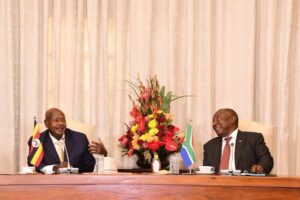
Remarks by President Cyril Ramaphosa at the South Africa – Uganda Business Forum during the State Visit by President Yoweri Museveni to South Africa

Your Excellency, President Yoweri Museveni,
High Commissioners of South Africa and Uganda,
Minister of Trade, Industry and Competition of South Africa, Mr Ebrahim Patel,
Minister of Trade, Industry and Cooperatives of Uganda, Mr Francis Mwebesa,
Ministers and Deputy Ministers,
Leaders of business and industry from Uganda and South Africa,
Representatives of business organisations,
Distinguished Guests,
Ladies and Gentlemen,

Thank you for the opportunity to address this inaugural South Africa-Uganda Business Forum.

It is my pleasure to welcome His Excellency President Museveni back to South Africa.

Earlier today we held productive discussions on how to re-invigorate and boost our trade and investment relations. We considered a number of challenges in the landscape but also opportunities.

This Business Forum is an opportunity for business exchanges and sectoral conversations that will enable us to intensify our efforts on several fronts.

It is particularly important that we inject vigour into the operationalisation of the African Continental Free Trade Area. I hope to see a strong showing from Ugandan and South African business at the inaugural AfCFTA Business Forum that will be hosted in Cape Town in a few months’ time.

When it comes to trade and investment linkages between South Africa and Uganda there is certainly room for improvement.

Last year, 2022, saw a decline in volumes of trade between our two countries compared to the preceding year.

In 2022, our two-way trade amounted to US$ 130 million, or just over R1.8 billion at the time.

We should aim to more than double this to at least R4 billion within the next five years.

South Africa is open to increasing the quantity and diversity of products we source from Uganda, because the success of intra-Africa trade hinges on each of us sourcing from one another and prioritising “made and grown in Africa” products and services.

To do so, we need to focus on two aspects in particular: increasing the level of reciprocal investment and increasing the levels of trade.

The confectionary industry is one example of opportunities for the creation of new value chains.

Building relationships between major South African food producers and Ugandan suppliers of inputs like vanilla, coffee and cocoa could provide a route to expanding into the broader consumer goods market.

Global food supply disruptions and changing climatic conditions have underscored the need for improved irrigation in farming.

South African irrigation equipment producers and services providers can assist to enable a more resilient Ugandan agricultural industry.

Uganda’s infrastructure-build programme offers opportunities for partnership, drawing on the expertise of South African firms to help achieve Uganda’s national objectives.

Uganda’s construction drive and increasing urbanisation offer substantial opportunities in the supply of electro-technical equipment by South African manufacturers.

I am hopeful, Mr President, that we will see an improvement in two-way sourcing of goods and services between our two countries.

Challenges at ports and the regulatory red tape that delays logistics and supply-chains will have to be addressed.

When it comes to investment, we share a common aspiration to see more South African companies in Uganda and more Ugandan companies in South Africa.

South African corporations such as ABSA, Stanbic, Multichoice, Eskom, Woolworths, MTN and the IDC all have a footprint in Uganda.

We are proud that they add tremendous value to the national economy and tax base.

It is a concern, however, that South Africa’s investments in Uganda have declined from 70 firms before the Covid-19 pandemic to 36 at present.

At the same time the appetite of South African firms to expand into East Africa is considerable.

To unlock the potential, and ensure that Uganda benefits from the outward investment drive, we will need to deepen our collaboration to address the challenges and concerns facing investors.

Like Uganda, South Africa has identified agriculture, infrastructure, mining, energy, transport and logistics and manufacturing as some of the key growth areas that will aid economic reconstruction and recovery.

We are therefore implementing structural reforms in key network industries such as electricity, ports, rail, telecommunications and water.

We are working to improve the business operating environment, including setting up a red tape reduction team in the Presidency to coordinate efforts to remove bureaucratic hurdles investors face.

Resolving South Africa’s debilitating electricity crisis is our foremost priority.

Our focus is on improving the availability of supply from existing coal-fired power stations; accelerating private investment in generation capacity; producing new capacity from renewables, gas and battery storage; incentivising investment in rooftop solar; and transforming the electricity sector to achieve long-term energy security.

One of the most far-reaching reforms we have implemented is removing the licensing requirements for self-generation and we now have more than 100 projects in the pipeline.

Our renewable energy programme is also forging ahead, with a number of new projects expected to enter construction soon.

The increasing effects of climate change on our countries make the decarbonisation of our respective economies all the more important.

Last year, South Africa released a Just Energy Transition Investment Plan that outlines the investments that will be required to meet our decarbonisation commitments.

Low-carbon, climate change resilient and sustainable development isn’t just about people and planet. It also makes sound business sense.

There are therefore numerous opportunities for Ugandan investors in South Africa’s clean energy and green economy space.

The Just Energy Transition must be a catalyst for development, job creation, beneficiation and localisation and business expansion for both countries.

The opportunities for both private and public investment in our respective countries is indeed immense.

I certainly forward to seeing Ugandan investors at the 5th South Africa Investment Conference in April this year.

In conclusion, I urge that throughout our interactions, we must promote the principles of mutual benefit and empowerment.

We must foster industrialisation in Africa and use African products and raw materials.

We must invest more in our people, particularly women and youth, and in rural enterprises.

We must work together to improve the conditions of Africa’s workers.

I look forward to a new era of trade, commerce and investment between South Africa and Uganda.

I thank you.

South Africa – Uganda Relations

28 February 2023

Remarks by President Cyril Ramaphosa during the State Visit by President Yoweri Museveni to South Africa

Your Excellency, President Yoweri Museveni,
High Commissioners of South Africa and Uganda,
Minister of Trade, Industry and Competition of South Africa, Mr Ebrahim Patel,
Minister of Trade, Industry and Cooperatives of Uganda, Mr Francis Mwebesa,
Ministers and Deputy Ministers,
Leaders of business and industry from Uganda and South Africa,
Representatives of business organisations,
Distinguished Guests,
Ladies and Gentlemen,

Thank you for the opportunity to address this inaugural South Africa-Uganda Business Forum.

It is my pleasure to welcome His Excellency President Museveni back to South Africa.

Earlier today we held productive discussions on how to re-invigorate and boost our trade and investment relations. We considered a number of challenges in the landscape but also opportunities.

This Business Forum is an opportunity for business exchanges and sectoral conversations that will enable us to intensify our efforts on several fronts.

It is particularly important that we inject vigour into the operationalisation of the African Continental Free Trade Area. I hope to see a strong showing from Ugandan and South African business at the inaugural AfCFTA Business Forum that will be hosted in Cape Town in a few months’ time.

When it comes to trade and investment linkages between South Africa and Uganda there is certainly room for improvement.

Last year, 2022, saw a decline in volumes of trade between our two countries compared to the preceding year.

In 2022, our two-way trade amounted to US$ 130 million, or just over R1.8 billion at the time.

We should aim to more than double this to at least R4 billion within the next five years.

South Africa is open to increasing the quantity and diversity of products we source from Uganda, because the success of intra-Africa trade hinges on each of us sourcing from one another and prioritising “made and grown in Africa” products and services.

To do so, we need to focus on two aspects in particular: increasing the level of reciprocal investment and increasing the levels of trade.

The confectionary industry is one example of opportunities for the creation of new value chains.

Building relationships between major South African food producers and Ugandan suppliers of inputs like vanilla, coffee and cocoa could provide a route to expanding into the broader consumer goods market.

Global food supply disruptions and changing climatic conditions have underscored the need for improved irrigation in farming.

South African irrigation equipment producers and services providers can assist to enable a more resilient Ugandan agricultural industry.

Uganda’s infrastructure-build programme offers opportunities for partnership, drawing on the expertise of South African firms to help achieve Uganda’s national objectives.

Uganda’s construction drive and increasing urbanisation offer substantial opportunities in the supply of electro-technical equipment by South African manufacturers.

I am hopeful, Mr President, that we will see an improvement in two-way sourcing of goods and services between our two countries.

Challenges at ports and the regulatory red tape that delays logistics and supply-chains will have to be addressed.

When it comes to investment, we share a common aspiration to see more South African companies in Uganda and more Ugandan companies in South Africa.

South African corporations such as ABSA, Stanbic, Multichoice, Eskom, Woolworths, MTN and the IDC all have a footprint in Uganda.

We are proud that they add tremendous value to the national economy and tax base.

It is a concern, however, that South Africa’s investments in Uganda have declined from 70 firms before the Covid-19 pandemic to 36 at present.

At the same time the appetite of South African firms to expand into East Africa is considerable.

To unlock the potential, and ensure that Uganda benefits from the outward investment drive, we will need to deepen our collaboration to address the challenges and concerns facing investors.

Like Uganda, South Africa has identified agriculture, infrastructure, mining, energy, transport and logistics and manufacturing as some of the key growth areas that will aid economic reconstruction and recovery.

We are therefore implementing structural reforms in key network industries such as electricity, ports, rail, telecommunications and water.

We are working to improve the business operating environment, including setting up a red tape reduction team in the Presidency to coordinate efforts to remove bureaucratic hurdles investors face.

Resolving South Africa’s debilitating electricity crisis is our foremost priority.

Our focus is on improving the availability of supply from existing coal-fired power stations; accelerating private investment in generation capacity; producing new capacity from renewables, gas and battery storage; incentivising investment in rooftop solar; and transforming the electricity sector to achieve long-term energy security.

One of the most far-reaching reforms we have implemented is removing the licensing requirements for self-generation and we now have more than 100 projects in the pipeline.

Our renewable energy programme is also forging ahead, with a number of new projects expected to enter construction soon.

The increasing effects of climate change on our countries make the decarbonisation of our respective economies all the more important.

Last year, South Africa released a Just Energy Transition Investment Plan that outlines the investments that will be required to meet our decarbonisation commitments.

Low-carbon, climate change resilient and sustainable development isn’t just about people and planet. It also makes sound business sense.

There are therefore numerous opportunities for Ugandan investors in South Africa’s clean energy and green economy space.

The Just Energy Transition must be a catalyst for development, job creation, beneficiation and localisation and business expansion for both countries.

The opportunities for both private and public investment in our respective countries is indeed immense.

I certainly forward to seeing Ugandan investors at the 5th South Africa Investment Conference in April this year.

In conclusion, I urge that throughout our interactions, we must promote the principles of mutual benefit and empowerment.

We must foster industrialisation in Africa and use African products and raw materials.

We must invest more in our people, particularly women and youth, and in rural enterprises.

We must work together to improve the conditions of Africa’s workers.

I look forward to a new era of trade, commerce and investment between South Africa and Uganda.

I thank you.

Photos Credit: The Presidency of the Republic of South Africa

#UgandaSARelations
#ugandastatevisit
#ugandainsa
#UgandaSAstatevisit

The 31st Anniversary of the Khojaly Genocide of 1992

By Susan Novela
27 February 2023

The Armenian armed forces brutally captured the City of Khojaly between the night of February 25 and 26, in 1992 using complex military equipment and personnel from the former Soviet Union’s infantry guards’ regiment number 366.

The assault on the city preceded the mass firing of
heavy weapons and artillery that began on February 25. The bombardment set the city on fire, and by five in the morning, the whole city was alight.

About 2,500 people who remained in the city were compelled to leave their homes to get to Aghdam, the district centre and the closest location primarily populated by Azerbaijanis. But this contingency did
not work out. Armenian forces supported by the infantry guards’ regiment destroyed Khojaly city and mercilessly and brutally slaughtered the peaceful population.

The consequences were as follows:

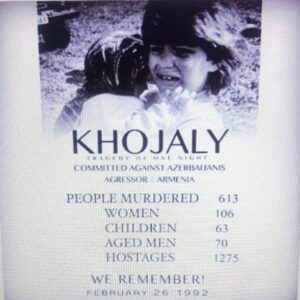
• 613 people killed, among them 63 children, 106 women, 70 elderly:
o 8 families were completely eliminated
o 25 children lost both parents
o 130 children lost one of their parents
• 487 people were wounded, including:
o 76 children
o 1275 people taken hostages
o 150 people gone missing

These figures depict the outcomes of the bloodiest tragedy of the Karabakh conflict, which began in February 1988 with the illegal demands of ethnic Armenians living in the Nagorno-Karabakh Autonomous Oblast of the Azerbaijan SSR.

They demanded joining the Armenian SSR. The ruling
elite in the Armenian SSR sparked and consented to these demands, which were compounded by central Soviet authorities’ inertia and lethargy.

Targeting Khojaly

The Armenian army’s attack on Khojaly was predetermined by the city’s
strategic location. Khankendi can be found 10 kilometres to the South
East of the 7000 person city. Khojaly hosts the only airport in Karabakh, and is on the Aghdam-Shusha, Askeran-Khankendi route.

Khojaly is a historical location where ancient monuments can still be found.
Near the Khojaly village are the relics of the Khojaly-Kedabek culture of the 14th to 15th Century BC. The round crypt (1356-1357), mausoleum
(14th Century), and funeral memorials – stone boxes, barrows, and necropolis of the late Bronze Age and early Iron Age were discovered here.

During the archaeological excavations, a variety of stone, bronze, bone jewelry, and ceramic household goods were discovered. The city had two secondary schools, two partial secondary schools, and textile factories.

54 Turk-Meskhets families – refugees from Fergana (Uzbekistan) and Armenian expatriates from Azerbaijan sought refuge in this city because
of the events of the previous year. Residential structures and other sites were developed in Azerbaijan because of the establishment of
branches of large industrial corporations. Later, the Armenians admitted that one of the first things the Armenian armed forces wanted to do was to get rid of the Khojaly base so that the only airport, which was under Azerbaijani control, could be unblocked and a corridor could open between Khankendi and the Askeran village across the city.

The phrase “the liquidation of Khojaly base” was instructive in this regard. These words, which still reverberate today, shed light on the motivations
behind the Armenians’ bloody massacre and the mass extermination of women and children.

Recognition of the genocide

Azerbaijan embarked on a path to seek justice for Khojaly, and it’s diplomatic efforts have resulted in an increasing number of States recognizing the genocide. The following is the list and the year of commemoration and condemnation:

As a massacre:

Bosnia and Herzegovina: – The House of Peoples passed a resolution condemning the Khojaly Massacre as a crime against humanity in 2014.

Czech Republic: – The Foreign Affairs Committee of the Czech Parliament condemned the Khojaly Massacre as a crime against humanity in 2013.

Colombia: – The Foreign Relations Committee of the Colombian House of Representatives recognized the Khojaly Massacre in 2013.

Mexico: – Foreign Relations Committee of the Mexican Chamber of Deputies recognised the Khojaly Massacre in 2011.

Panama: – The National Assembly of Panama adopted a resolution condemning the Khojaly massacre in 2013.

Slovenia: – The National Council of Slovenia passed a resolution condemning the Khojaly Massacre as a crime against humanity in 2016.

Sudan: – Foreign Affairs Committee of the Sudanese National Assembly recognized the Khojaly Massacre in 2014.

As genocide:

Azerbaijan: – National Assembly of Azerbaijan recognized the Khojaly massacre as genocide.

Djibouti: – The National Assembly of Djibouti recognized the Khojaly Massacre as an act of genocide in 2017.

Guatemala: – The Congress of Guatemala recognized the Khojaly Massacre referring to it as genocide in 2015.

Honduras: – The National Congress of Honduras recognized the Khojaly Massacre as an act of genocide in 2014.

Pakistan: – Foreign Relations Committee of the Senate of Pakistan recognized the Khojaly Massacre referring to it as genocide in 2012.

Paraguay: – The Parliament of Paraguay recognized the Khojaly massacre as an act of genocide in 2017.

Peru: – The Congress of the Republic of Peru adopted a resolution recognizing the Khojaly massacre as genocide in 2013.

Turkey: – Foreign Relations Committee of the Turkish National Assembly recognised the Khojaly Massacre referring to it as genocide in 2012.

Estonia – Estonian Parliamentary recognized the Khojaly Massacre as genocide in 2021.

#KhojalyGenocide
#azerbaijan
#Khojaly
#KhojalyMassacre

Also published in Pretoria News, Cape Times & The Mercury News Paper