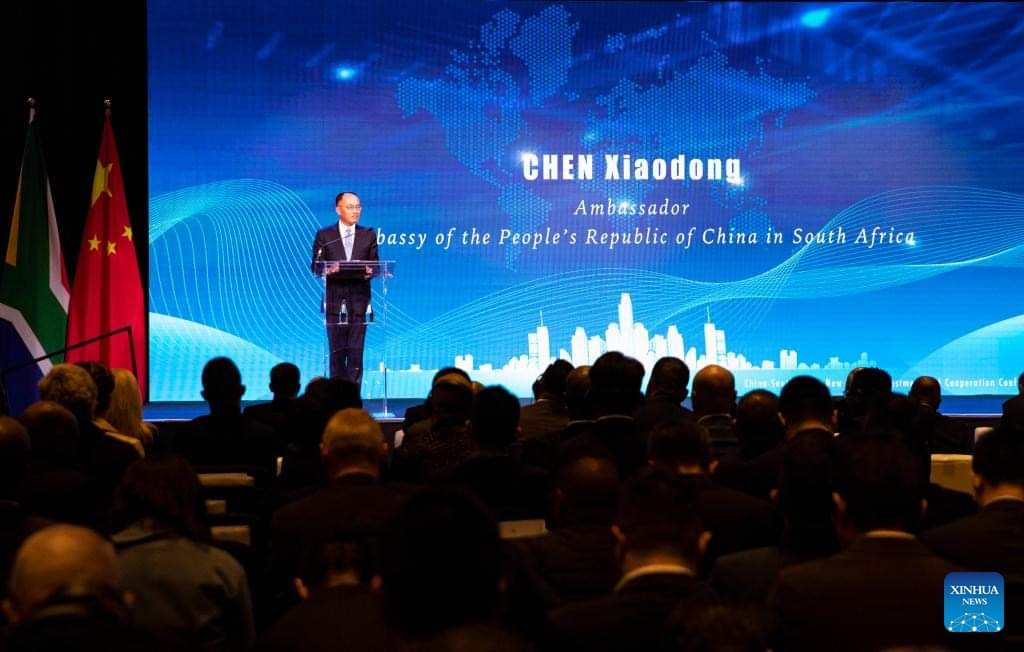
Ambassador Chen Xiaodong’s Remarks at the China-South Africa New Energy Investment and Cooperation Conference

It is my great pleasure to meet with all of you at the China-South Africa New Energy Investment and Cooperation Conference.

I thank Minister Gordhan, Minister Ramokgopa and Ambassador Cwele for your wonderful remarks.

I thank our organizers, the China Chamber of Commerce for Import and Export of Machinery and Electronic Products, the South Africa-China Economic and Trade Association and InvestSA for your great preparation.

I also thank the sectoral associations of both countries and the over 170 new energy companies for your strong support.

At present, even though South Africa is experiencing unprecedented challenges of power shortage, we are glad to see that relevant efforts have been seeing quite positive results.

As South Africa’s good brother, good friend, and good partner, China very much relates to the challenges here, and we are ready to provide support to South Africa within our capacity.

Our two countries now both have a historical task of energy transition and sustainable economic development. It is, therefore, very timely for us to cooperate more in new energy investment.

Electricity powers development, and a green and low-carbon approach will be the future.

Through today’s Conference, we want to implement the important common understandings of our two Heads of State, to build a platform for information exchange and cooperation between enterprises and institutions in both countries.

We want to mobilize more stakeholders to participate in South Africa’s new energy industry, provide assistance for alleviating the power crisis, and inject new momentum into the practical cooperation between China and South Africa.

It is my great pleasure to learn that Minister Gordhan had fruitful exchanges with relevant Chinese government departments and energy enterprises during his visit to China last month.

In a few days, Minister Ramokgopa will also lead a delegation to visit China. I believe his visit will further promote our exchanges and cooperation in this field.

This year marks the 25th anniversary of the establishment of diplomatic relations between China and South Africa.

During the past years, the China-South Africa relationship achieved significant development and there have been fruitful practical cooperation across the board.

We have together set a fine example for China-Africa relations and South-South cooperation.

Last Friday, President Xi Jinping and President Ramaphosa spoke on the phone. Our two Heads of State agreed to further elevate China-South Africa relations and jointly build a high-level China-South Africa community with a shared future.

China is ready to work with South Africa to implement the key common understandings between our two Presidents, promote exchanges and cooperation in various fields, and work for more results for our Comprehensive Strategic Partnership, so as to better achieve common development.

Economic and trade cooperation has always been a key component of China-South Africa relations.

China has been South Africa’s largest trading partner for 14 years in a row, and South Africa has been China’s biggest trading partner in Africa for 13 years straight.

During the first five months of this year, our bilateral trade reached over 24 billion US dollars, up over 18 percent year-on-year.

Among that number, South Africa’s exports to China reached over 13 billion US dollars, which is up over 19 percent year-on-year.

South Africa is one of the largest investment destinations for Chinese enterprises in Africa, Chinese companies already invested a total of over 25 billion US dollars here by the end of 2022. That created over 400,000 local jobs.

In April this year, more than 60 Chinese companies participated in South Africa’s fifth Investment Conference and announced nearly 15 billion rand in intended new investment.

Ladies and Gentlemen, Friends,

Looking ahead, our relations enjoy new opportunities and  renewable energy cooperation will become a new driver and highlight of our economic and trade cooperation.

Right now, China is actively pursuing high-quality development at home. We are vigorously developing renewables and China now leads the world in technology, financial resources and human talent.

China is now the world’s leading country in terms of installed capacity of hydro, wind and solar power.

We produce more than half of all wind turbines and over 80 percent of all PV panels in the world.

South Africa is also working on an ambitious just energy transition, which incorporates new energy as a means to resolve the power crisis and create a prosperous green economy.

President Ramaphosa pointed out that the overriding priority of South Africa is still to end load-shedding and achieve energy security.

China and South Africa have common development aspirations and strong complementarities in new energy.

We have what it takes to be reliable friends and strong partners in each other’s economic and social transformation and development.

China is ready to work with South Africa to take the opportunities provided by today’s Conference to encourage more companies in both countries to connect on new energy cooperation and jointly advance the green and sustainable development of both countries.

First, strengthen policy communication for stronger cooperation.

Our two governments signed an MOU on energy cooperation as early as in 2010.

China is ready to maintain close communication with various South African departments, including of Public Enterprises, Electricity, Mineral Resources and Energy, as well as Trade, Industry and Competition.

As a fellow BRICS member, South Africa actively participates in China’s Belt and Road initiative and the Forum on China-Africa Cooperation mechanism.

We will strengthen communication with the South African side through various bilateral and multilateral channels to stay updated on each other’s energy policies, industry development and cooperation aspirations.

That will help create favorable conditions for the companies of both countries to expand new energy cooperation.

Second, further deliver projects to create new growth drivers.

In recent years, many Chinese enterprises actively participated in South Africa’s wind and solar PV power projects.

This not only provides stable power supply for the local communities, but also creates massive jobs, which are important for local socioeconomic development.

China will continue to support South Africa’s investment initiatives and encourage strong Chinese enterprises to further contribute.

Chinese companies will be encouraged to to leverage technical, financial and human resources advantages, and advance cooperation with South Africa in wind and solar energy, energy storage, as well as power transmission and distribution.

These efforts will see more projects implemented here to  deliver more benefits to the local communities.

Third, advance cooperation in technical training and improve professional capacity.

It is my great pleasure to see that the China Energy Investment Corporation has already been in communication with Eskom on electricity technology.

China’s State Grid will also send a team of experts to South Africa very soon to provide technical advice.

China is ready to continue to send more technical experts here. We are ready to share more technical know-how with South Africa and provide more personnel training.

We will encourage Chinese enterprises here to train more local professionals through the transfer of advanced technology and skills training.

That we believe can assist South Africa in enhancing capacity for self-driven development in the new energy industry.

Fourth, expand investment and financing cooperation, especially in green finance.

Financial support is essential for energy transformation.

China is one of the first countries to develop green finance. We are also the first country in the G20 to champion green finance. China is ready to strengthen green finance cooperation with South Africa.

We are ready to share our experience and encourage Chinese stakeholders to provide strong financial support for key new energy projects here, so as to contribute stronger Chinese solutions to South Africa’s energy transition.

Ladies and Gentlemen, Friends,

A green economy and sustainable development have become the global consensus and our two countries enjoy key opportunities for stronger new energy cooperation.

I hope that all our participants can make full use of the platform of this Conference today, to actively contribute wisdom and ideas, seek business opportunities and secure more results for China-South Africa new energy cooperation.

That will open up new horizons for overall China-South Africa business cooperation and give a stronger boost to a high-level China-South Africa community with a shared future.

Source: Embassy of China
2023-06-13

SA and UAE Relations🇿🇦🇦🇪

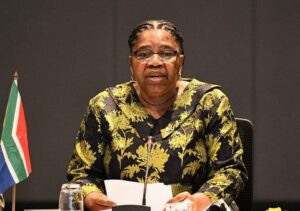
The Deputy Minister of International Relations and Cooperation, Ms Candith Mashego-Dlamini, co-chairs the 3rd Session of the South Africa-UAE Joint Commission

The Deputy Minister of International Relations and Cooperation, Ms Candith Mashego-Dlamini, made an official visit to the United Arab Emirates (UAE).

The Deputy Minister co-chaired the 3rd Session of the South Africa-UAE Joint Commission (JC) during her visit on 13 June 2023 with her host and counterpart, His Excellency Sheikh Shakhboot Al Nahyan.

South Africa and the UAE have enjoyed close bilateral and economic ties since 1994 and will celebrate the 30th anniversary of establishing diplomatic relations in 2024.

Relations between the two countries are focussed on enhancing and strengthening this bilateral and economic relationship through high-level visits and the JC.

The Deputy Minister’s visit provided the two countries with an opportunity to review and deliberate on the state of the bilateral and economic relationship.

During her visit, the Deputy Minister met and engaged with UAE and South African businesses through the Dubai Chambers of Commerce.

#saanduaerelations
#DIRCO
#SA
#UAE
#DiplomacyInAction
#sainuae

International Albinism Awareness Day 13 June

Today is International Albinism Awareness Day.
Every day, people with albinism suffer serious human rights violations. Yet, they continue to defy odds, overcome hurdles & face injustices with resilience.

What is albinism?

Albinism is a rare, non-contagious, genetically inherited difference present at birth. In almost all types of albinism, both parents must carry the gene for it to be passed on, even if they do not have albinism themselves. The condition is found in both sexes regardless of ethnicity and in all countries of the world.
Albinism results in a lack of pigmentation (melanin) in the hair, skin and eyes, causing vulnerability to the sun and bright light. As a result, almost all people with albinism are visually impaired and are prone to developing skin cancer. There is no cure for the absence of melanin that is central to albinism.

As many as 1 in 5,000 people in Sub-Saharan Africa and 1 in 20,000 people in Europe and North America have albinism.

In some countries people with albinism suffer discrimination, poverty, stigma, violence and even killings. International Albinism Awareness Day is observed on June 13th each year to raise awareness about albinism and promote the rights and well-being of people with albinism worldwide.

The main purpose of International Albinism Awareness Day is to dispel myths, stereotypes, and misconceptions associated with albinism. The challenges faced by people with albinism, include visual impairment, increased susceptibility to sunburn and skin cancer.

Thus, they need assistive devices like visual aids and sunscreen. Also, people with albinism often face discrimination, prejudice, and social exclusion due to a lack of understanding about their condition. This day aims to educate the public about albinism, promote social inclusion, and advocate for the protection of the rights of individuals with albinism.

The theme for 2023 International Albinism Awareness Day is “Inclusion is strength.” International Albinism Awareness Day also serves as a platform to celebrate the achievements and contributions of people with albinism to their communities and society as a whole. It encourages individuals with albinism to embrace their uniqueness and promotes a more inclusive society that respects and values diversity.

By promoting awareness, understanding, and acceptance, International Albinism Awareness Day strives to improve the lives of people with albinism, protect their rights, and create a more inclusive and equitable world for everyone.

Albinos are humans!
Do not discriminate against them!

#InclusionIsStrength #InclusiveFuture #AlbinismDay

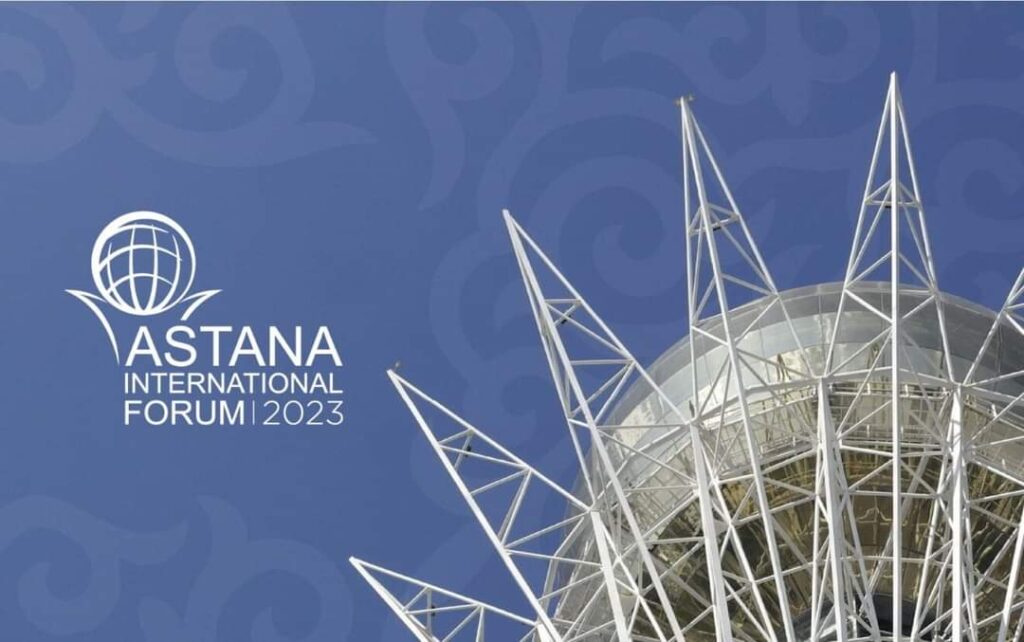
Astana International Forum 2023 – President Tokayev delivers insightful speech

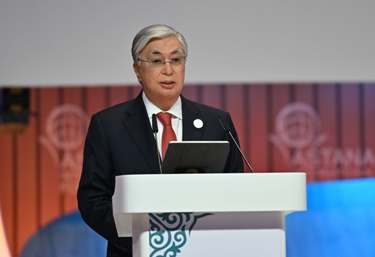
Photo: President Tokayev delivering his speech.

By Admin

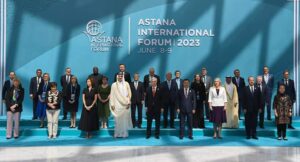
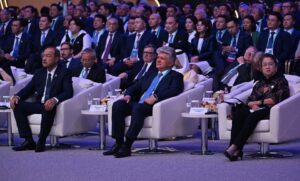
The plenary of the three-day Astana International Forum 2023 was held on 8 June 2023 at Astana, Kazakhstan.

President Kassym-Jomart Tokayev of Kazakhstan delivered the keynote address at the session moderated by the CNN journalist Richard Quest.

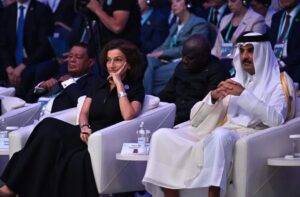
The speakers included the Chairman of the Presidium of Bosnia and Herzegovina Ms. Zelka Tsviyanovich, Prime Minister of Uzbekistan Abdulla Aripov, UNESCO Director General Audrey Azoulay, IMF Managing Director Kristalina Georgieva, OSCE Secretary General Helga Schmid, and Under-Secretary-General of the United Nations – Executive Secretary of ESCAP Armida Salsia Alisjabana. UN Secretary-General António Guterres addressed the forum participants with a video message.

The Emir of Qatar His Highness Sheikh Tamim bin Hamad Al Thani, and the President of Kyrgyzstan Sadyr Japarov were also present at the plenary session.

As the international community approaches an era of growing polarization and geopolitical division, Kazakhstan has launched this new platform for dialogue to join forces to address key global issues.

The programme of AIF is designed to address key issues facing the world and is organized into four categories:

Foreign policy and international security
International development and sustainability
Energy and climate change
Economics and finance
It is worth going through the speech of President Tokayev. Here is the translation of the complete text. Some passages of the speech have been highlighted editorially to draw attention to the main points:

Ladies and Gentlemen! Dear guests! I am sincerely glad to welcome you to the Astana International Forum. Our friends and colleagues from all over the world, as well as representatives of governments, diplomacy, business and academia, have gathered here.

I want to express my sincere gratitude to our special guests – the Emir of Qatar, the President of Kyrgyzstan, the Chairman of the Presidium of Bosnia and Herzegovina, the Prime Minister of Uzbekistan and other distinguished participants.

It is a great honor for us that you have personally chosen to come here and join us in what we hope will be a fruitful exchange of views on the current state of global economic affairs and issues of regional cooperation.

We believe that this is one way of expressing the true meaning of international partnership. In opening this Forum, let me also express my sincere gratitude to our strategic partner – the United Nations and its institutions, such as the IMF, UNESCO, UNDP, WTO, ESCAP and others, as well as our media partner CNN.

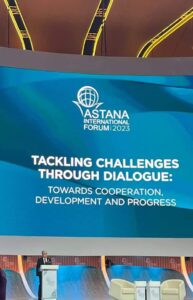
Dear participants! The Astana International Forum is a dialogue platform, the mission of which is as follows: First, to openly discuss the situation in the world; Secondly, to identify the main challenges and crises that we face; Thirdly, to face these challenges through dialogue in the spirit of mutual cooperation; Fourth, renew and restore the overall culture of multilateralism; And fifth, strengthen voices for peace, progress and solidarity.

This Forum directly contributes to greater engagement at a time when we need it more than ever – at a time of unprecedented geopolitical tension. To survive, the global system must work for all, bringing peace and prosperity to the many, not to the few.

Dear friends! We are witnessing the destruction of the very foundation of the world order that has been built since the founding of the United Nations.

The UN remains the only universal global organization that unites all of humanity. Meanwhile, we will not succeed in meeting the current challenges without a comprehensive reform of the Security Council. It is necessary that the voices of the representatives of the “middle powers” in the Council sound more weighty and be heard.

Recent “new crises” – from COVID-19 to armed conflict – threaten the fragile international ecosystem. However, the causes of this instability are rooted deep in our past.

We are also witnessing the return, after 30 years, of the former “bloc” thinking that divided us. The forces of division are not exclusively geopolitical. They also have economic implications. Economic policy itself is openly used as a weapon. This opposition includes sanctions and trade wars, targeted debt policy, restricting access to or isolating from sources of financing, and controlling investment. Together, these factors are gradually undermining the foundations on which global peace and prosperity have been based in recent decades: free trade, global investment, innovation and fair competition.

This, in turn, provokes social tension and a split within states and tension between them. A widening gap in culture and values: all these tendencies have turned into existential threats.

Efforts to reverse these trends are made more difficult by widespread misinformation, which is now even more sophisticated and dangerous.

In parallel, new technologies, from artificial intelligence (AI) to biotechnology, have global implications but are only deployed within narrow national boundaries.

Together, these factors are pushing the global world order to a breaking point.

The result is a growing mistrust that has a negative impact on the functioning of well-known international forums, existing frameworks, security regimes, non-proliferation mechanisms. Thus, we face uncertainty, growing instability and conflict.

This, in turn, encourages increased spending on defense, on the latest weapons, which, in the final analysis, do not guarantee anything. This is also evidenced by the fact that for the first time in half a century we are faced with the prospect of using nuclear weapons. All of this comes at a time when we urgently need to focus on the threat of existential climate change.

Ladies and Gentlemen! The bottom line is that while geopolitical pressures push us apart, we face a clear and powerful imperative to get closer, to interact, to cooperate, to move towards each other.

At a time like this, the Astana International Forum presents another opportunity to reverse this trend. Only by meeting, consulting, being mutually honest about our problems, concerns and hopes, will the international community be able to resolve these issues. Only in this way can we shape our common future and return to the gradual building of a more stable, just and prosperous world for all.

Dear friends! Kazakhstan has long been a crossroads between East and West, North and South. In many ways, this forum corresponds to the culture and history of the great Eurasian steppe.

We are proud of this heritage. It is from the continuous exchange of goods, cultural achievements and ideas that the unique national identity of Kazakhstan and its special brand of multilateral cooperation has developed.

Despite geopolitical upheavals, Kazakhstan continues to serve as the economic locomotive of Central Asia. We continue to attract significant foreign investment and provide exceptional conditions for doing business in Kazakhstan. At the same time, we hope for mutual responsibility on the part of our foreign partners. This is the basic principles of our policy.

In turn, this creates equal rights and opportunities for small and medium enterprises, which play a very important role in the economic development of our country. Last year, Kazakhstan’s exports increased by almost 40%. While a significant portion of our GDP still comes from the energy sector, our drive to diversify is growing stronger. We are seeing growth in industries such as automotive, pharmaceuticals, metalworking and engineering. We invite everyone who is interested in finding new opportunities for business and economic partnership.

For example, the Middle Corridor, or Trans-Caspian International Transport Route, linking China to the European Union, opens up new opportunities for trade and investment. This route will reduce the time of transportation of goods across the Indian Ocean by almost half.

I also want to emphasize the key role of Kazakhstan in the Belt and Road Initiative, which contributes to economic development and the strengthening of intra-regional contacts.

We seek to strengthen the physical connection between nations and people here today, and to strengthen the bonds between our communities as partners and friends.

Considering all these factors, today we can say that Kazakhstan is a truly global, and most importantly, reliable trade and economic partner.

Ladies and Gentlemen! Our country has always made every effort to strengthen peace and international security. We strongly support nuclear disarmament and are committed to the Treaty on the Non-Proliferation of Nuclear Weapons. Our country initiated the Astana peace process to resolve the Syrian crisis. Our capital has become a permanent venue for the congresses of leaders of world religions. The Conference on Interaction and Confidence Building Measures in Asia, headquartered in Astana, has become an authoritative mechanism for solving regional and global problems.

We are actively involved in overcoming the humanitarian crisis in Afghanistan. I would like to emphasize the need to further build up comprehensive assistance to the Afghan people under the auspices of the UN. In this context, it is important to establish the UN Regional Center for Sustainable Development Goals for Central Asia and Afghanistan in Almaty.

Kazakhstan is making every effort to maintain friendly relations with our global and regional partners. And we intend to build up regional cooperation with the fraternal countries of Central Asia.

Inside Kazakhstan, we are undertaking new reform efforts to introduce the principles of justice, the rule of law, equality and justice. My credo is clearly stated: law and order. This is a solid foundation for building a “New Just Kazakhstan”.

In a very short period of time, we have reformed our institutions, limited the powers of the President, amended the Constitution, rebooted the political and economic systems, and are fighting corruption. So modern Kazakhstan is different from what it was, say, two years ago.

Our journey of transforming the existing system is far from over. We understand that political reforms and investment in human capital can save us from the middle income trap and make our economy more resilient.

While significant changes have already been made, much remains to be done. However, we gain confidence by realizing that in order to successfully walk the path, you need to be ready to overcome many pitfalls. We are ready for it.

Dear guests! Of all the challenges we face, perhaps the most pressing is climate change. Central Asia is at the forefront of confronting this challenge. Even if we successfully limit global temperature rise to 1.5 degrees Celsius by 2050, which looks increasingly unlikely, we will experience 2 to 2.5 degrees Celsius of temperature rise here in Central Asia.

This will lead to a transformation or, more precisely, to the desertification and dehydration of our local environment. We must be prepared for great difficulties.

We are really concerned about the lack of water resources. Droughts and floods in Central Asia will damage 1.3% of GDP per year and reduce crop yields by 30%, resulting in about 5 million internal climate migrants by 2050.

Our glaciers have already shrunk by 30%. The water level in the two great rivers of our region – the Syr Darya and the Amu Darya – will decrease by about 15% by 2050. In order to prevent an ecological catastrophe in the region, we call for more resources to be allocated to support the International Fund for Saving the Aral Sea.

The problem of water and climate change are closely linked. Central Asia is a region where water security can only be achieved through close cooperation and well-chosen joint measures.

To discuss these and other issues related to the climate in the region, I propose to establish a project office for Central Asian countries in Almaty and hold a Regional Climate Summit in Kazakhstan in 2026 under the auspices of the UN and other international organizations.

Our country could offer huge green economy opportunities and become a center for renewable energy. However, time is not on our side. We need resources and partnerships to decarbonise and build a green economy at the speed we need.

Ladies and Gentlemen! The global climate emergency is the clearest example of our interdependence and shared destiny. Whether we like it or not, we are connected to each other.

Given this reality, those who figure out how to work together will succeed, while those who are incapable will fail. The principles and values of the United Nations that underpin multilateralism are not just the most effective way to deal with this problem, they are the only way.

These are the principles, the intellectual roots of the Astana International Forum – a space for dialogue in order to solve common problems and move towards cooperation, development and progress.

I am optimistic that the constructive discussions over the next two days will be able to move us towards potential solutions and further cooperation.

Let me end my remarks with a gentle warning. Openness, tolerance and compromise are needed to promote meaningful conversation and cooperation.

I wish positive results for each of you and for the entire Forum. Thank you again for joining us today and I wish you fruitful discussions.

The Astana International Forum in the capital of Kazakhstan, energy and climate will be key topics for discussion.


By Assel Nussupova in Astana International Forum, OP-ED

For Kazakhstan, the energy sector development is a highly relevant issue, touching on the country’s economic survival. Kazakhstan is a leading energy producer in the region, with vast oil and gas resources located in the western part of the country. According to the latest BP estimates, Kazakhstan has 30 billion barrels of proven oil reserves. Almost 80 percent of the Kazakh oil output is exported and is currently being supplied to international, mostly European, markets.

Kazakhstan has been an oil producer since 1911. Although the country did not begin extracting significant levels of oil until the 1960s and 1970s, during the Soviet era, it was the second-largest republic in terms of possession of oil reserves and the second-largest oil producer among the Soviet republics. In the Soviet bloc, only Russia had a greater oil share. With the breakup of the Soviet Union, Kazakhstan’s reliance on oil has become vital for the country’s survival as an independent country. In 2003, Kazakhstan exceeded 1 million barrels a day in oil production for the first time. This staggering success was partly due to the country’s ability to attract large foreign direct investment inflows to support the oil industry.

From the early days of the country’s independence, oil and gas industries have helped support Kazakhstan’s development and allowed it to maintain decent living standards for its population. Thirty-one years later, the oil and gas sector is still “responsible” for the country’s stable development, accounting for more than a third of Kazakhstan’s GDP.

The majority of Kazakhstan’s oil wealth comes from three giant oil fields: Tengiz, Karachaganak, and Kashagan. Tengiz, named for the Kazakh word for “sea,” was discovered by Soviet geologists in 1979 in a “remote, windblown steppe on the northeast shore of the Caspian,” as the Washington Post once put it. Today Tengiz is the world’s deepest-producing oilfield. According to Chevron’s official website, Tengiz is also the largest “single-trap producing reservoir.”

On April 6, it will be thirty years since the American company Chevron, then the fifth-largest private oil company in the world, signed a forty-year contract with the Kazakh government to develop the Tengiz field in western Kazakhstan. Today Chevron holds 50 percent of Tengizchevroil, a joint company that was created in 1993 to operate the Tengiz oil field and the nearby Korolev oil field. These two oil fields have a lucrative amount of recoverable crude oil reserves estimated in the range of 890 million to 1.3 billion tons (7.1 to 10.9 billion barrels). In 2016, the company decided to proceed with an expansion project at Tengiz, to bring overall production up to 850,000 barrels a day. According to the latest updates, the expanded production facilities will begin operating in 2024.

Besides Tengizchevroil, Chevron is involved in another large joint venture with Kazakhstan – Karachaganak Petroleum Operating B.V. (KPO). In this venture, the Americans hold an 18 percent equity interest. The Karachaganak oil and gas field is another large energy-producing field in Kazakhstan and one of the world’s largest oil and gas reserves. Production at Karachaganak began during the Soviet era in 1984. According to the latest available data from Economist Intelligence Unit (EIU), this field has produced between 220,000 and 250,000 barrels a day over the past decade.

In addition to the Tengiz area and Karachaganak oil field, Kazakhstan possesses its most precious oil asset – the Kashagan offshore oil field in the northern Caspian Sea. It is the largest oil field discovered in Kazakhstan to date. Production at this field started relatively recently, in 2013. Like Tengiz, the field will undergo an expansion project, with investors and the Kazakh government hoping to increase oil output to 500,000 barrels a day by 2025 and approach the million-barrel-a-day mark by 2042.

These three supergiant oil fields provide nearly two-thirds of Kazakhstan’s oil output. In a sense, their contribution helps to keep the country financially and economically stable. However, Kazakhstan’s dependence on the energy sector is not without significant risks to its sustainable development. As a landlocked and isolated country located far away from international oil markets, Kazakhstan remains highly dependent on Russia for transporting its oil to world markets. More than 90 percent of exported Kazakh oil still flows to the Russian port of Novorossiysk through the Caspian Pipeline Consortium. This same pipeline also carries some oil produced by Russian companies.

This is problematic given the current military conflict in Ukraine. The conflict between Russia and Ukraine has resulted in serious supply chain disruptions and caused many Western nations to impose sanctions against Russia, Kazakhstan’s major trade and economic partner. The export disruptions have put huge pressure on Kazakhstan’s investment profile, and the economy and well-being of the Kazakh people.

With energy prices currently set at a high level, Kazakhstan remains resilient during the regional instability caused by the conflict in Ukraine. However, if the conflict continues to escalate and does not reach any clear-cut resolution, and if oil prices are to go down in the nearest future, as forecasted by many international experts, Kazakhstan will have to deal with increased difficulties such as growing budget constraints, limitations in supporting the government’s expansive social security programs and further pressure on its monetary policies and exchange rate.

According to the latest estimates by the EIU, “Kazakhstan’s trend growth rate will slow from the 4.4 percent recorded over the past decade to an annual average of 3.8 percent in 2024-27.” The EIU experts emphasize that Kazakhstan’s economic growth “will be supported by activity” in the energy sector. According to their most recent report, the contributing factors towards the economic growth of Kazakhstan will all be related to developments in the energy sector. In particular, these factors include the expansion of the Tengiz oil field that, as mentioned above, is planned to come on line next year; KazMunayGas’ joint venture (together with the Russian company Lukoil) to restart the Zhenis offshore exploration project in the Caspian Sea, and new projects that will result from investment cooperation with the European Union and China.

Collaboration with the EU is promising to bring significant benefits to Kazakhstan’s economy as the EU has enforced an almost full embargo on oil imports from Russia. This embargo provides an excellent opportunity for Kazakh oil producers to enter the European market and supply it with Kazakh oil. Partnership with China also promises potential gains for Kazakhstan.

It is timely that the upcoming Astana International Forum will feature energy and climate discussions. The forum will provide an excellent opportunity to bring together government and private sector stakeholders, facilitating helpful dialogue on these key issues.

The author is an analyst with a Master’s Degree in Economics from Georgetown University in Washington, DC, with more than 20 years of experience working for the Kazakh government. She focuses on macroeconomics, commodity, financial markets, and economic and social policies in Kazakhstan and globally.

Astana Times

Photo: Official poster of Astana International Forum 2023.

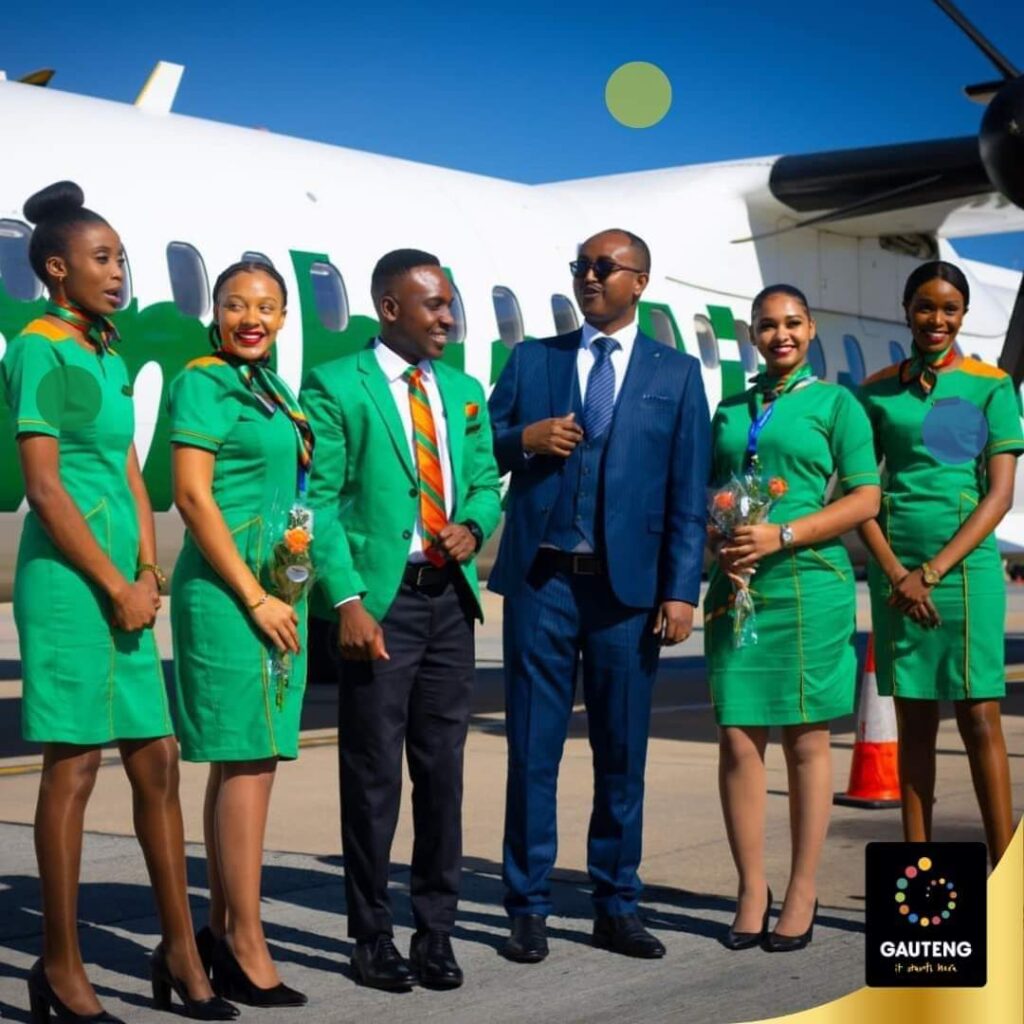
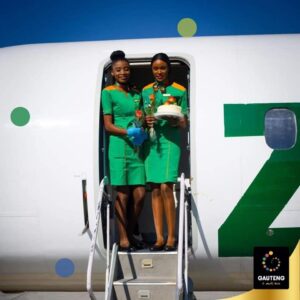
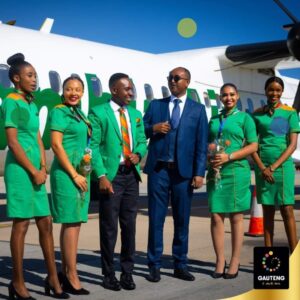
Zambia Airways launched its Lusaka to Johannesburg route

Zambia Airways launched its Lusaka to Johannesburg route, with flights running twice daily – 7 days a week.

We’re proud to announce that Gauteng Air Access, in collaboration with the Gauteng Tourism Authority (GTA), has been working closely with Zambia Airways to make this route a reality. Now, we’re ready to showcase our vibrant destination to the world!

Gauteng Tourism Authority (GTA) is dedicated to marketing Gauteng as the ultimate tourism hotspot, catering to international and domestic visitors. With a robust air access network, we’re set to boost our visitor, trade, and investment economies like never before!

Join us in mobilizing key stakeholders to support our vision of a Gauteng city region-wide air access network. Together, we’ll ensure the growth and expansion of our destination’s air connectivity hub status.

#ZambiaAirways #GautengAirAccess #GautengTourism #

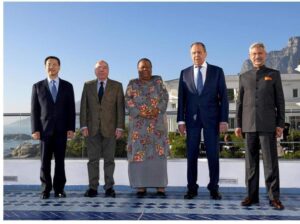
BRICS Ministers

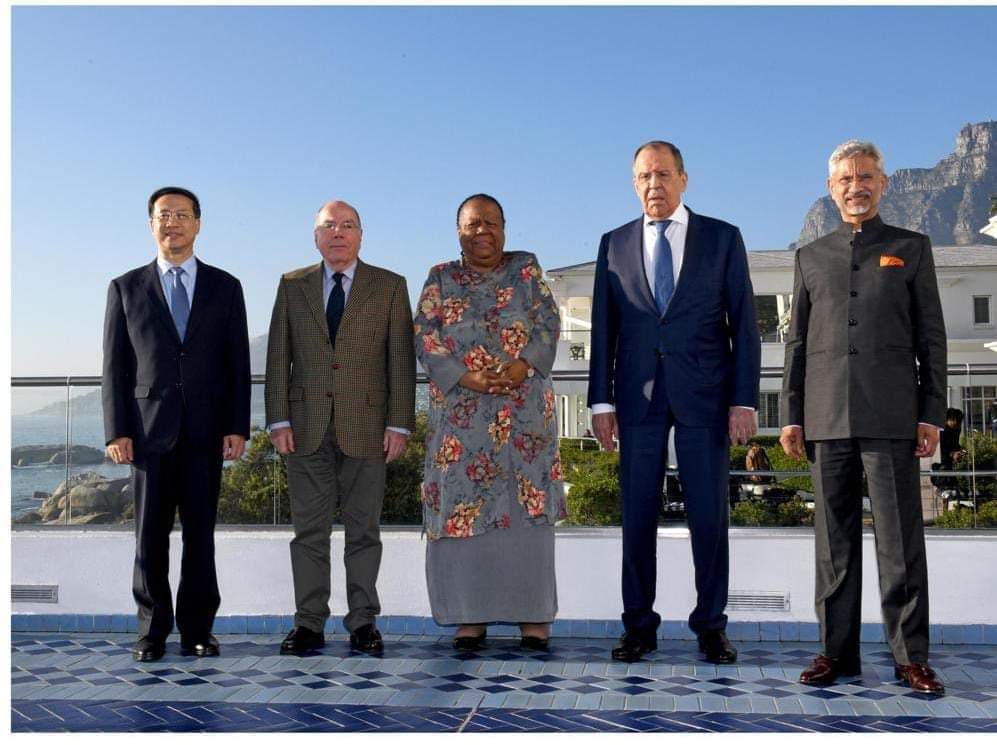
Photo: The BRICS Foreign Ministers’ Meeting in Cape Town. Minister Naledi Pandor with her counterparts. From L-R:
• Vice Minister MA Zhaoxu (China)
• Minister Mauro Vieira (Brazil)
• Minister Sergey Lavrov (Russia)
• Minister Subrahmanyam Jaishankar (India
Photo credit: Dirco
#BRICS #SouthAfrica🇿🇦.
#China #Brazil #Russia #india


#BRICSzaMinisterial – The Minister of International Relations and Cooperation, Dr Naledi Pandor, hosted the Meeting of BRICS Ministers of Foreign Affairs and International Relations on 01 June 2023 in Cape Town.

The mid-term meeting provided an opportunity for BRICS Foreign Ministers to reflect on regional and global developments.

Minister Pandor, as the Chair of the BRICS Ministerial Meeting, continued with the policy of inclusive engagement by inviting 15 Foreign Ministers from Africa and the global south to a “Friends of BRICS” meeting which was held on 02 June 2023.

The ministerial meetings were preceded by the meeting of Sherpas and Sous- Sherpas which took place from 29-30 May 2023.

#BRICSza
#BRICS

China’s first deep-sea floating wind farm connected to the power grid

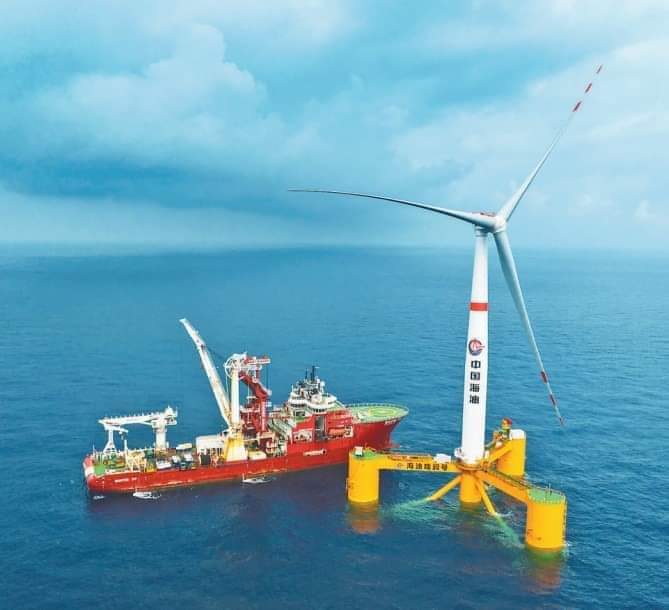
China’s first deep-sea floating wind power platform, named Haiyou Guanlan, was connected to the power grid of an offshore oilfield group in Wenchang, south China’s Hainan province on May 20.
The platform, built by the China National Offshore Oil Corporation (CNOOC), will generate green power for the operation and production of offshore oilfields. It marks major progress achieved by China in key technologies of deep-sea wind power generation.

The wind turbine, with a diameter of three impellers extending 158 meters, can cover an area of nearly 20,000 square meters in one rotation, which is equivalent to the size of 2.7 standard soccer fields. The green electricity generated will be sent to the power grid through a 5-kilometer dynamic subsea cable.
Currently, most of the offshore oilfields in the world are powered by fossil energy. Wind power generation offers a greener way of production for deep-sea offshore oilfields.

Haiyou Guanlan is expected to generate as much as 22 million kilowatt hours of electricity annually, which will all be used for oil and gas production. It can save nearly 10 million cubic meters of natural gas and reduce carbon dioxide emissions by 22,000 tonnes every year.

Full Article:
http://en.people.cn/n3/2023/0525/c90000-20023588.html

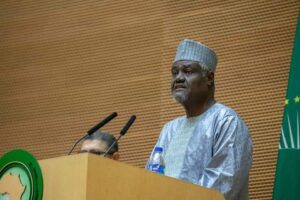
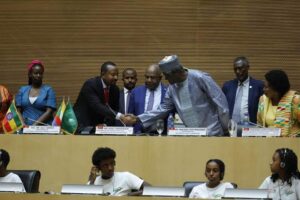
Speech of H.E. Moussa Faki Mahamat, Chairperson of the African Union Commission – Celebration of the 60th Anniversary of OAU/AU- 25th May 2023

Honourable Prime Minister of the Federal Democratic Republic of Ethiopia,

Excellency Madame Dlamini-Zuma, former Chairperson of the Commission,

Honourable Ministers, Madam Deputy Chairperson of the African Union Commission, Commissioners, Ambassadors, members of the Permanent Representatives Committee,

Acting Executive Secretary of the United Nations Economic Commission for Africa,

Heads of Diplomatic Mission, Distinguished Heads of Liaison Offices of the Regional Economic Communities and Regional Mechanisms,

Dear Staff members of the African Union,

Ladies and gentlemen,

On 25 May 1963, the Organisation of African Unity, the OAU, emerged from the baptismal font, here, in Addis Ababa. Sixty years later, in this month of May 2023, as every year, we celebrate the creative genius of the Founding Fathers who, in their PanAfricanist spirit, laid the foundation for an Africa to be built. This venture, to stand the test of time, had to be based on solid shared values, the most fundamental of which was embodied in the collective quest for political freedom, peace and social prosperity, as an essential prerequisite for development.

The African Union which succeeded it, some twenty years ago, hardly deviated from this path. Better still, it made up for the shortcomings noted on the difficult path of Conflict management and resolution, both normatively and operationally. Thus, during the celebration of the 50th Anniversary of the OAU in 2013, our leaders, by adopting Agenda 2063, coupled it with an ambitious project, that of “Silencing the Guns by 2020” in order not to leave to the future generations the burden of war and insecurity. This original deadline, for various rasons, has been revised.

Today, as we gather in this hall, with its evocative surname, the Nelson Mandela Hall, many of our Member States are in crisis. They are prey to deadly internal conflicts, fueled by the unbridled quest for supreme power, with the corollary of significant loss of human life. Beyond their political and social fragmentation, the significant elements of their national heritage are being destroyed and drowned in sometimes bloody pain.

When this tragic picture is compounded by other negative factors, such as the democratic decline through Unconstitutional Changes of Government, with their litany of oppression and gagging of freedoms, insecurity, the spread of terrorism, violent extremism, the uncontrolled circulation of arms, the harmful effects of Climate change, we have good reasons to place this celebration of the 60th Anniversary of the OAU, in the light of a meditation in solidarity with our brothers and sisters, who are forced to displacement or exile because of conflicts.

In the face of such a combination of circumstances and events that are asymmetrical to the proclaimed will of our leaders to build the Africa we want, there is need for reflection on the way to courageously identify the root causes but above all to endeavor to translate into deeds the pledge made, that of our Leaders to see Africa united.

Excellencies,

Ladies and Gentlemen,

The 60th Anniversary celebration intersects with other temporal milestones such as the 20th Anniversary of the AU, the launch of the Second Decade of implementation of Agenda 2063 and the mid-term journey of this Commission.

The concomitance of these various events confers a dazzling seal of historicity on this Year 2023 and particularly on this splendid and memorable day of 25 May 2023. It is in this capacity that Africa has mobilised its full cultural diversity, through discursive, human, culinary, artistic and other events within the compound of the Commission. I would, therefore, like to invite all participants to have fun visiting the various exhibition stands that are offered by our Member States.

Excellencies,

Ladies and Gentlemen,

I know that my remarks sometimes pick on the shadows of the Continent, a side that cannot hide the lights that sparkle on the other side, that of independence and victory against Apartheid, that of significant economic and scientific progress, sports, arts, the growing international role of Africa and so on. I do not belong to the intellectual school of Afro-Pessimism but on the contrary to that of an optimistic but realistic PanAfricanism at the same time.

I know that despite the difficulties of all kinds, Africa remains characterised by its great capacity for resilience. It was able, despite alarmist forecasts, at the time, to hold firm in the face of the onset of the COVID 19 pandemic. Better still, it seized the opportunity of this misfortune to rethink its Health Strategy, in a concerted action by our Heads of State and Government. An evidence that if Africa wants, it can, whatever the nature and type of adversity it may have to face.

This is what the AU records shows through the results of the evaluation of the implementation of the First Decade of Agenda 2063.

Significant progress has been made in various areas. They could have been greater, had it not been for the exogenous shocks that accentuated the fragilities which our efforts were already working to overcome.

Excellencies,

Ladies and Gentlemen,

To the shocks linked to the classic factors of fragility, such as excruciating debt service or the fall in the prices of raw materials, have been added the consequences of the intensification of the hegemonic struggle between the big powers. In this international context of confrontation of divergent geopolitical interests, the will of each side threatens to transform Africa into a geostrategic battleground, thereby, recreating a new version of the Cold War that is very detrimental to the effectiveness of multilateralism, on which global peace and security depend.

In this zero-sum game, where the gains of others would translate into losses for Africa, we must resist all forms of instrumentalisation of our Member States, taken individually and collectively, by sharing the strong conviction that our future remains and will depend on the patient and methodical building of our unity. Africa must unite, said Kwame Nkrumah.

The imperative duty that challenges us, today, with insistence, in this international environment marked by identity withdrawals and outbursts of protectionism, is to give real, dynamic content to this unity, if we are determined to build the Africa we want.

On this solemn day, the celebration of which plunges us back into the spirit of the Founding Fathers of the OAU, I would like to amplify their voices, which continue to reverberate, beyond their graves, by making a vibrant appeal to all of us, Africans of the Continent and of the Diaspora, so that the strength of our unity and our long-awaited and expected solidarity operate, henceforth, as indispensable levers for our power and emancipation.

Let us rely on ourselves first. The solidarity of our friends and partners will also come to supplement.

Long live Africa, long live the friendship between peoples!

I thank you for your kind attention.

Source: African Union

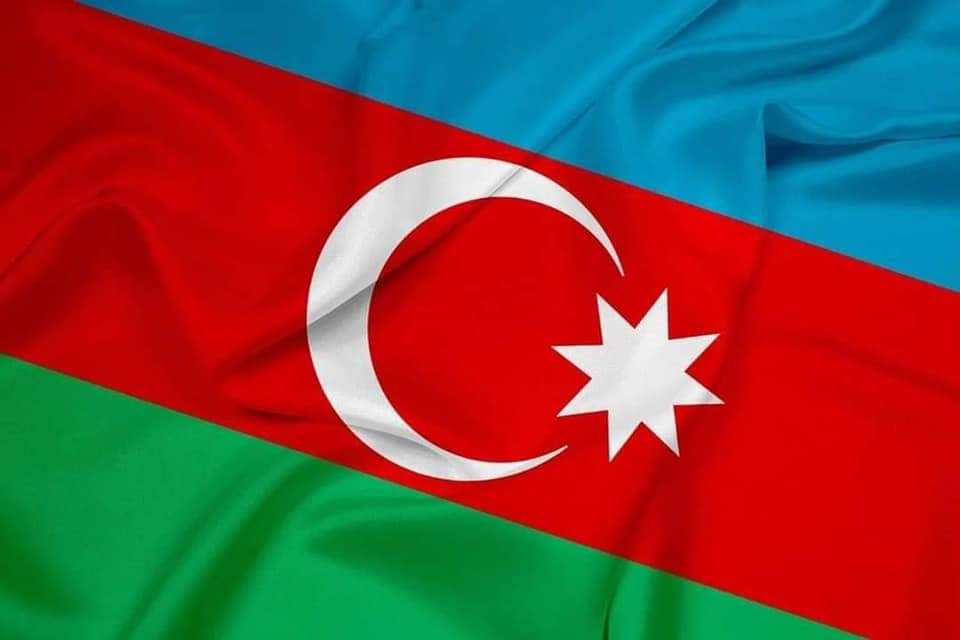
Azerbaijan Republic Day

The Diplomatic Informer Magazine SA wishes to congratulate the government and the people of Azerbaijan on the occasion of the 105th of Republic Day and wishes the government and the people of Azerbaijan Peace, Unity and Prosperity.

Azerbaijanis celebrates the Republic Day that honors the date on which the Azerbaijani Democratic Republic (ADR) was founded in 1918 as the first democratic republic in the entire Muslim East.

On May 18, Azerbaijan’s National Council declared the independent Azerbaijan Democratic Republic, which marked the country’s independence from the Russian Tsar regime.

The Azerbaijan Democratic Republic existed only 23 months. After the Bolshevik 11th Red Army’s occupation of Azerbaijan on April 28, 1920, the republic collapsed.

Although short-lived, the Azerbaijan Democratic Republic left impressive marks in the Azerbaijani history, making a series of reforms in many fields, including freedom of education, religion and conscience.

ADR is also remembered for being the first Muslim Republic to give women the right to vote in 1918 before the United States, France, and a number of other progressive countries.

Since 1990, May 28 has been celebrated as a national holiday in Azerbaijan.

Long Live Azerbaijan