
27 July 2021
South Africa’s surfing star Bianca Buitendag raised the country’s flag at the Tokyo Olympics in Japan.
Buitendag defeated United States’ Caroline Marks to bag a silver medal
#TokyoOlympics
#Surfing
#Japan


27 July 2021
South Africa’s surfing star Bianca Buitendag raised the country’s flag at the Tokyo Olympics in Japan.
Buitendag defeated United States’ Caroline Marks to bag a silver medal
#TokyoOlympics
#Surfing
#Japan

Team South Africa’s Tatjana Schoenmaker and Bianca Buitendag headline Day 4 proceedings of the Olympic Games with a silver medal victory and a guaranteed podium position, respectively.
#Tokyo2020
#TeamSouthAfrica

25 July 2021
My Fellow South Africans,
Since I last addressed you fourteen days ago, we have been fighting a battle on two fronts – the first against the deadly coronavirus, the second against the actions of those who have sought to create instability and chaos.
We have marshalled all of our resources to restore stability and order to KwaZulu-Natal and Gauteng, to ensure that we stabilise the situation and ensure that the violence of two weeks ago is ended.
To address these two crises, we have to take several actions at once.
Firstly, we have to contain the spread of the coronavirus and limit its impact on economic activity.
Secondly, we have to accelerate our vaccination programme so that the vast majority of adult South Africans can be vaccinated before the end of the year.
Thirdly, we need to ensure that peace and stability is maintained throughout the country and that there are no further incidents of violence.
Fourthly, in response to both the pandemic and the recent violence, we need to provide support and relief to poor households, in order to alleviate the hardships they are going through and reduce hunger.
Fifthly, we need to help businesses to rebuild. These are businesses affected by looting and destruction of property and those affected by the pandemic and the necessary measures we have taken to contain it.
Finally, we need to accelerate the implementation of our Economic Reconstruction and Recovery Plan to rebuild our economy, create employment and drive inclusive growth.
The coronavirus pandemic is the greatest threat to the lives and health of our people and to the recovery and transformation of our economy.
Accordingly we need to continue to do everything in in our means to contain the spread of the virus.
The latest figures suggest that we have largely passed the peak of the third wave of infections, although there are areas in the country where we still need to be concerned because the rates of infection have not yet shown signs of decline.
The measures that we put in place for the past 28 days, alongside the continued adherence of South Africans to basic health precautions, have been effective in reducing the rate of infection.
The average number of daily new infections over the last week was around 12,000 new cases a day, which represents a 20 per cent drop from the previous week.
In the last two weeks, the number of new infections in Gauteng – which has been the epicentre of the third wave – has steadily been declining.
However, as we have observed before, there are significant differences between provinces.
As infections in Gauteng fall, daily new infections in the Western Cape, Eastern Cape and KwaZuluNatal continue to rise.
There has also been a concerning rise of infections in the Northern Cape after a period of relative stability.
In all these cases, infections are being driven by the Delta variant, which as we said before is far more transmissible than previous variants.
Now, more than ever, we need to adhere to the basic precautions to limit the spread of the virus from one person to another.
We know that indoor gatherings, particularly in places that have poor ventilation, are the major cause of outbreaks and super spreader events.
We must continue wearing our masks at all times when in public, keep our distance from others and always ensure that windows are open and that there is a flow of fresh air.
The overall decline in new infections means that it is possible to gradually ease some of the restrictions on gatherings, movement and the sale of alcohol.
Based on the recommendations of the Ministerial Advisory Committee on COVID-19, and inputs from the President’s Coordinating Council, Cabinet this afternoon decided that the country should be moved from Adjusted Alert Level 4 and be placed on Adjusted Alert Level 3.
This will take effect later this evening once the regulations have been gazetted.
This means that:
The hours of curfew start at 10pm and end at 4am. Interprovincial travel for leisure may resume. Non-essential establishments like restaurants, taverns, bars and fitness centres may be opened. These establishments will however need to close by 9pm to allow their employees and patrons to travel home before the start of the curfew. Gatherings will be allowed but will be limited to a maximum of 50 people indoors and 100 people outdoors.
Where the venue is too small to accommodate these numbers with appropriate social distancing, then no more than 50 per cent of the capacity of the venue may be used.
Gatherings include religious services, political events and social gatherings.
The limits on venue capacity also apply to restaurants, gyms, fitness centres, bars, taverns and similar places.
Attendance at funerals and cremations may not exceed 50 people and all social distancing and health protocols must be observed.
Night vigils and after-funeral gatherings are still not allowed.
The sale of alcohol from retail outlets for off-site consumption will be permitted between 10am and 6pm from Monday to Thursday.
Alcohol sales for on-site consumption will be permitted as per licence conditions up to 8pm.
Schools will re-open tomorrow, Monday the 26th of July, according to strict health protocols and other measures announced by the Minister of Basic Education.
It remains mandatory for every person to wear a face mask that always covers their nose and mouth at all times when in public spaces.
The owners and managers of public buildings, centres, shops, restaurants, taxis and buses all have a responsibility to ensure that people on their premises or in their vehicles wear masks.
They must also ensure that the appropriate social distancing measures are in place and are adhered to.
It is important to remember that it is a criminal offence if the number of people on these premises exceeds the maximum number of customers or employees allowed.
As we ease restrictions, we must remember that infections remain high and that we need to continue to exercise caution.
As we have always said, our most effective weapon in the fight against COVID-19 is an effective and comprehensive vaccination programme.
In the last few weeks, our vaccination campaign has made huge strides.
We are now administering more than 240,000 vaccines every week day.
A month ago, this figure stood at around 100,000 vaccines per week day.
As a result, we have now administered more than 6.3 million vaccines, with over 10 per cent of our population having received a vaccine dose.
This has been possible through close collaboration between government and the private sector and with the active support of other social partners.
In the coming weeks, we will substantially increase the rate of vaccination.
We are increasing the number of vaccination sites and improving the vaccination registration system.
We will also increase our vaccination capacity on weekends.
We will now allow people between the ages of 18 and 34 to be vaccinated from the 1st of September 2021.
This will be in addition to the age groups that are currently eligible, which is everyone over 35 years of age.
We are now able to allow people to present themselves at a vaccination site without an appointment and be registered and vaccinated.
This substantial increase in the rate of vaccination is made possible by improvements in the supply of vaccines.
Within the next two to three months, we are scheduled to receive around 31 million additional doses from Pfizer and Johnson & Johnson.
This supply pipeline means that there will be sufficient vaccine doses available for the rest of the year.
We have made tremendous progress in addressing the challenges we faced as a country and the continent in access to vaccines.
As a result of our negotiations with pharmaceutical companies and various developed economy governments have, our country and our continent has been able to secure vaccines and is able to manufacture vaccines on our continent.
Aspen based in Gqeberha will from October be manufacturing vaccines solely for the African continent.
A few weeks ago the World Health Organization chose South Africa as hub for the manufacture of vaccines.
A few days ago, the Biovac Institute in Cape Town was appointed to manufacture the PfizerBioNTech COVID-19 vaccine for distribution within Africa.
While there is ample supply of vaccines for the short term, we must ensure that this supply is delivered on time and without disruption.
It is also important to monitor the emergence of new variants and to secure access to future vaccines that are adapted to these variants.
I urge all South Africans to register for vaccination as soon as they are eligible, whether online, via WhatsApp or USSD, or by calling the toll-free number on 0800 029 999.
Fellow South Africans,
Two weeks ago, the provinces of KwaZulu-Natal and Gauteng were hit by deliberate, planned and coordinated acts of violence designed to create the conditions for unrest.
This led to the loss of more than 300 lives, the looting of shops, warehouses and factories, damage to critical infrastructure, and disruption of the country’s economy.
We are still counting the cost of this violence, and coming to terms with the destruction that it left in its wake.
I speak of the lives that were cut short, and the families that lost their loved ones.
I speak of the business owner who in a single day lost what it took years to build.
And of the mothers and fathers who lost their jobs as a warehouse went up in flames, and now wonder how they will feed their children.
We have a duty to support those affected by this violence, and ensure that it never happens again.
To ensure that order and stability are maintained, particularly in KwaZulu-Natal and Gauteng, we have increased the deployment of SAPS and SANDF personnel.
We have maintained this deployment in areas regarded as potential hotspots, as well as key economic and government infrastructure, shopping centres, warehouses and factories.
Security forces are also responsible for keeping critical supply routes open and safeguarding the transport of goods.
Through these measures, we have been able to restore order in affected areas and to return the ports, freight rail network and road transport to full operational capacity.
Investigations into the violence and those behind it are continuing, led by our specialised law enforcement units, with a view to speedy arrests and effective prosecutions.
Special measures have been put in place to manage the large number of suspects who have been arrested for offences related to the unrest.
The SAPS has activated its Community Policing Strategy in areas throughout the country, which has involved communities in preventing further incidents.
I want to make it clear that law and order will be maintained.
There will be further arrests, particularly of those who conceptualised, planned and executed these actions that have led to so much destruction and loss of life.
Although calm has been restored to these areas, the impact of the violence and destruction continues to be felt by households, employees and businesses.
We are taking decisive action now to secure the livelihoods of millions of people that have been threatened by both the pandemic and the unrest.
This evening we are announcing a range of measures to support the recovery of the economy and provide relief to the poor and those who are vulnerable as a result of the measures that we had to impose to deal with COVID-19.
To support those who have no means of supporting themselves, we are reinstating the Social Relief of Distress Grant to provide a monthly payment of R350 until the end of March 2022.
This has been made possible by the slight improvement we have seen in our revenue collection.
We are expanding the number of people who are eligible for this grant by allowing unemployed caregivers who currently receive a Child Support Grant to apply.
Details on the reinstatement of the grant, including the process for application, will be announced shortly.
This will build on the strength of our existing social protection system, which is one of the greatest achievements of our democracy.
In addition to the food relief being provided by the Department of Social Development, government is contributing R400 million to the Humanitarian Crisis Relief Fund established by the Solidarity Fund to assist with the immediate needs of affected communities.
We are also implementing measures to help businesses to rebuild.
The most immediate need is to ensure that those businesses that were damaged or looted are able to rebuild and reopen as quickly as possible.
We are one of the few countries in the world to have a state-owned insurance company, SASRIA, which provides cover against incidents of public violence, strikes, riots and unrest.
Businesses that are insured will be covered by SASRIA.
SASRIA has committed to expedite the payment of all valid claims, and is working together with private insurers to ensure that assessments are completed without delay.
Government will ensure that SASRIA is able to honour all of its obligations and will provide whatever support is necessary in this regard.
In addition, however, some businesses that were victims of this violence may not have been insured.
This includes many small and medium-sized businesses, whether formal or informal.
Many of these businesses have lost everything, and will not be able to rebuild on their own.
We will not abandon them in their time of need.
We are therefore working to extend support to uninsured businesses that were affected by the violence.
Government will set aside dedicated funds for this purpose and we will soon announce a mechanism for these businesses to apply for support.
We will also be reprioritising funding for SMMEs affected by the pandemic through a once-off business survival funding mechanism.
We are also working with large business to determine their contribution to the support of SMMEs, job creation and eradication of hunger and poverty.
Two weeks ago, we announced that the COVID-19 TERS scheme would be extended for those sectors which were affected by Alert Level 4 restrictions during the past 28 days.
Applications for this period are open, and the UIF will facilitate payments as quickly as possible to support workers who have not received an income.
Most importantly, the UIF will provide income support to all those employees who have lost jobs as a result of the recent unrest.
This will ensure that jobs are protected and that workers can continue to earn an income as those businesses take time to rebuild.
While the TERS scheme has provided crucial support for many sectors that have been unable to operate, there is a need to provide even further relief to help businesses to recover.
We are therefore expanding the Employment Tax Incentive for a period of four months to include any employee earning below R6 500 and to increase the incentive amount by up to R750 per month.
This will encourage employers to hire and retain employees, especially those in the retail and hospitality sectors which have been worst affected.
We will also defer payment of PAYE taxes for a period of three months to provide businesses with additional cash flow, with an automatic deferral of 35 per cent of PAYE liabilities for employers with revenue below R100 million.
The payment of excise taxes by the alcohol sector will be deferred for a period of three months, to ease the burden on the sector as it recovers.
These interventions are designed to extend as much relief as possible to individuals and businesses that are in need of support, without compromising our fiscal sustainability.
No country can expect its economy to grow, or to live in peace and harmony, while many of its citizens remain marginalised, hungry and excluded.
The impact of recent events on our economy has made the implementation of our Economic Reconstruction and Recovery Plan even more important.
We have been working closely with our social partners on the further measures we will take to address poverty, accelerate the implementation of reforms, drive inclusive growth and create jobs.
We will shortly be able to make further announcements in this regard.
Fellow South Africans,
The effect of the recent violence on investor confidence is a great threat to our recovery.
We are taking steps to strengthen the capacity and preparedness of our security forces to prevent similar incidents in future.
This includes responding more quickly and decisively to reports that we are now receiving of extortion by criminal groups as businesses start to rebuild, especially in KwaZulu-Natal.
Anyone who threatens or engages in violence will face consequences.
While we have acknowledged that our response was too slow, our security forces have demonstrated that they are able to ensure stability and order.
More importantly, South Africans have demonstrated to the world that we are committed to democratic government, that we oppose violence and criminality, and that we will stand up to anyone who seeks to destabilise our country.
Our greatest strength lies in our Constitution, in the protection that it provides for our rights and freedoms, and in our open and democratic society.
Our constitutional order has stood firm.
As we move to rebuild our country from the effects of this violence and from the impact of this pandemic, let us do what our Constitution calls on us to do.
We must continue to heal the divisions of the past and establish a society based on democratic values, social justice and fundamental human rights.
The foundations of our democracy are based on the will of the people.
To strengthen our democracy we are called upon to improve the quality of life of all citizens and free the potential of each person.
It is our collective duty as South Africans to work together to build a united and democratic South Africa able to take its rightful place as a sovereign state in the family of nations.
Let us all join hands to continue building the South Africa of our dreams despite the many challenges we face.
May God protect our people.
Nkosi Sikelel’ iAfrika. Morena boloka setjhaba sa heso.
God seën Suid-Afrika. God bless South Africa.
Mudzimu fhatutshedza Afurika. Hosi katekisa Afrika.
I thank you.


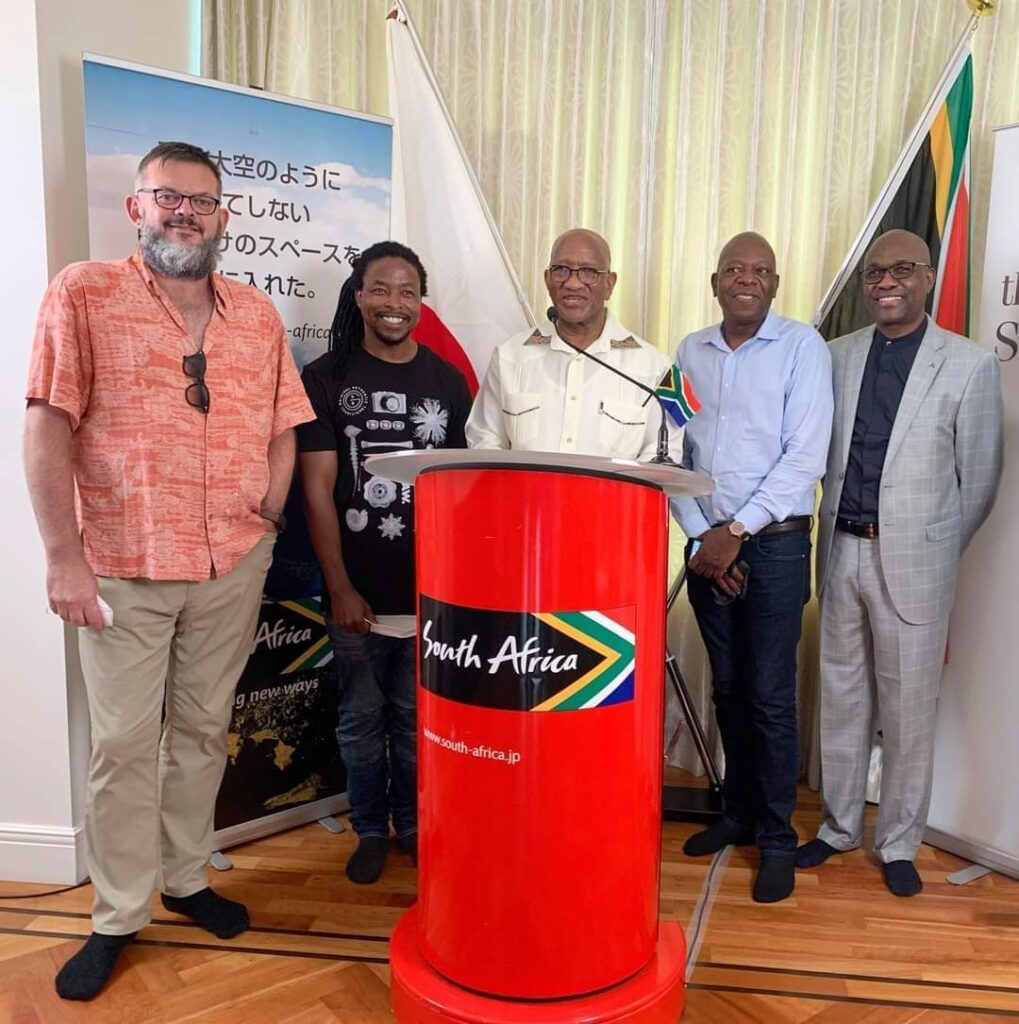
A Welcome Ceremony for the South African team at the 2020 Tokyo Olympic and Paralympic Games was hosted by the SA Embassy’s Official Residence, on July 22.
The theme was: “Bringing Back Ubuntu: Sport has the power to change the world—Nelson Mandela.”
South African Ambassador to Japan Lulama Smuts Ngonyama (centre) flanked by members of the South African Chamber of Commerce in Japan’s Board of Directors. From left: vice-chair Simon Farrell, Harrison “Chain” Hlabane, Lungile Christopher Siphambili, and ex officio Rakgwale R. Kubjane, who is also First Secretary, Political at the Embassy.
Guests enjoyed a traditional SA braai prepared by Embassy chefs after the Welcome Ceremony.

The Ministry of International Affairs and Cooperation wishes to inform that on 23rd July 2021, the Republic of Botswana will assume the Presidency of the United Nations (UN) Economic and Social Council (ECOSOC) for the 2022 Session, which will run from July 2021 to July 2022.
This will be the first time that Botswana assumes the Presidency. The country will be represented by Botswana’s Ambassador and Permanent Representative to the United Nations in New York, H.E. Mr. Collen Vixen Kelapile. The ceremony for assumption of the Presidency will take place during the Organisational Session of ECOSOC on 23rd July 2021. Members of the public are advised that they can follow the ceremony on UN Web TV (media.un.org/en/webtv), at 1000hrs (EDT), 1600hrs (CAT).
Established in 1945, ECOSOC is one of the six principal organs of the United Nations. The Council is mandated to promote international cooperation on economic, social and environmental issues. Accordingly, ECOSOC provides a vital platform for advancing the 2030 Agenda for Sustainable Development. The Council has a rotating membership which comprises 54 Members, elected by the UN General Assembly. Botswana was elected to ECOSOC in 2019 for a 3-year term and has been serving as Vice President of ECOSOC representing the African region responsible for the Management Segment. Previously, Botswana was a Member of ECOSOC during the periods of 1983-1985, 1991-1993 and 2012-2016.
As the President of ECOSOC, Botswana will be expected during the 2022 Session to provide strategic leadership to the Council. In this leadership role, the country will among others, preside over the Sustainable Development Goals Summit, Youth Forum and the Forum on Financing for Development. Additionally, in an effort to advance the vision of His Excellency the President, Dr. Mokgweetsi E.K. Masisi, of creating opportunities for Batswana youth to serve in international organisations, 6 Batswana youth will participate in an internship programme that will support Botswana’s ECOSOC Presidency.

By Abigail Klein Leichman
The United Arab Emirates’ Israeli Embassy was formally inaugurated on July 14 with a ceremonial ribbon-cutting by UAE Ambassador to Israel Mohamed Al Khaja and Israeli President Isaac Herzog.
Al Khaja noted that the two countries signed the Abraham Accords in Washington last September “with a vision of dignity, prosperity and peace for the two peoples. It is time for new approaches and thinking to set a new and better path for the future of the region.”
“It is our hope that the opening of the UAE Embassy in Tel Aviv will mark an important milestone in the growing relationship between our two countries and between the peoples of the UAE and Israel,” he said.
The new embassy is housed in the Tel Aviv Stock Exchange building, where the Israeli and Emirati dignitaries jointly rang the bell opening trading for the day. TASE had an Emirati flag flying outside next to its banner and the Israeli flag.
“To see the Emirati flag in the skies of Tel Aviv would have seemed a distant dream. Today it is a reality,” Herzog said.
Israel’s Foreign Ministry hailed the embassy opening as “another historic moment on the peace train.”
Earlier in the day, UAE Minister for Food and Water Security Mariam Al-Muhairi came to the Hebrew University of Jerusalem to promote a food-tech and ag-tech research and innovation partnership.
This meeting marked the first official visit of a senior UAE government official to an Israeli academic institution since the announcement of the Abraham Accords.
Left to right: UAE Ambassador to Israel Mohamed Al Khaja, Watergen CEO and President Michael Mirilashvili, BGU President Prof. Daniel Chamovitz and Mariam Almheiri, Minister of State for Food & Water Security, UAE. Photo by Dani Machlis/BGU
Also on July 14, Al-Muhairi and Al Khaja attended the opening of the Moshe Mirilashvili Center for Food Security in the Desert at Ben-Gurion University in Beersheva. Food security is one of the main areas in which the UAE is interested in innovation.
#DiplomaticTies
Israeli President Isaac Herzog and UAE Ambassador to Israel Mohamed Al Khaja cutting the ribbon on the United Arab Emirates embassy in Tel Aviv, July 14, 2021.
Photo by Miriam Alster/Flash90

21 Jul 2021
AU champion on Covid-19 President Cyril Ramaphosa welcomes Biovac-Pfizer collaboration
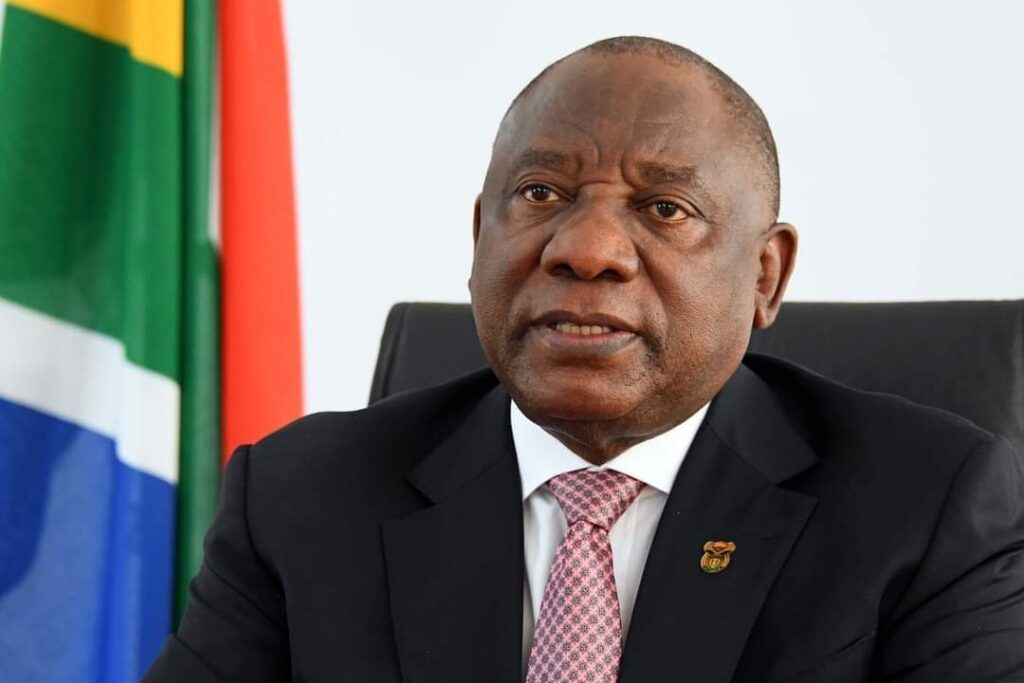
President Cyril Ramaphosa has welcomed today’s announcement of a collaboration between South Africa’s Biovac Institute and the global pharmaceutical producer Pfizer as a breakthrough in the protection of African nations against COVID-19.
Speaking in his capacity as African Union Champion on COVID-19, President Ramaphosa said: “Today’s agreement will contribute significantly to health security and sustainability on our continent, which currently has the least access to vaccination in the world.”
Biovac and Pfizer announced today, Wednesday 21 July 2021, that the Pfizer COVID-19 vaccine will be produced in Cape Town by the Biovac Institute. Biovac is a vaccine producer and public-private partnership between the South African government and the pharmaceutical private sector.
In terms of today’s announcement, Biovac has been appointed to manufacture the Pfizer-BioNTech COVID-19 vaccine for distribution within Africa, making it the first company on the continent to produce an mRNA-based vaccine.
Biovac will immediately embark on technological transfer activities that includes on-site development and equipment installation for the production of the Pfizer-BioNtech COVID-19 vaccines.
Biovac expects the facility will be brought into the Pfizer-BioNtech supply chain by the end of 2021.
Biovac will obtain drug substance from BioNTech’s facilities in Germany.
At full operational capacity, the annual COVID vaccine production will aim for 100 million finished doses annually.
All doses will exclusively be distributed within the 55 African Union member states.
Biovac’s expansion in production and acquisition of specialised equipment related to mRNA technology entails an investment of shared cost of R200million in the coming six months.
President Ramaphosa said: “The partnership between Biovac and Pfizer is a breakthrough in our effort to overcome global vaccine inequity. The protection of Africans is a necessary and critical contribution to the protection of humanity as a whole.
“This partnership demonstrates what we can achieve when the state sector and the private sector craft a shared vision and pool resources for the greater good of society.
“This collaboration recognises the talent and technology that exists on our continent that can be harnessed in our irreversible march of sustainable and inclusive development.”
President Ramaphosa wishes the partnership well and urges people throughout the continent to play their part by making themselves available to be vaccinated.
“The more we roll up our sleeves to receive our jabs, the safer we will be as individuals, families and communities. The safer we are, the more secure our future as a continent on the rise will be.”
Mr Strive Masiyiwa, African Union Special Envoy on COVID-19 and member of the African Vaccine Acquisition Task Team, joined President Ramaphosa in welcoming the Biovac-Pfizer initiative.
Mr Masiyiwa said: “The only way to guarantee Africa’s access to vaccines now and in the future is through this type of strategic manufacturing partnerships, which we welcome greatly.”

By Sebastian Castelier
The kingdom diversification plan goes head-to-head with flag carriers Emirates and Qatar Airways, as intra-Gulf economic rivalries heat up on all fronts.
Saudi Arabia plans to launch a second national airline “as soon as possible” to catapult the country into the fifth rank globally in air transit traffic, increase air connectivity to reach more than 250 destinations, and go head-to-head with flag carriers Emirates and Qatar Airways.
“It’s good for us. More competition means more job availability and better salaries,” said a pilot employed by a competing airline. But industry analysts remain skeptical. “It is simply too late; they have missed the boat,” said Alex Macheras, a UK-based aviation analyst. He told Al-Monitor, “There is no need for another airline to replicate what Qatar Airways and Emirates have already achieved in terms of being the global super-connector airlines.”
Indeed, the Qatari and Emirati flag carriers dominate the East-West transit market — when a passenger stops at an air hub en route to a destination — and Dubai International Airport holds the crown as the world’s busiest international airport for the seventh straight year.
The risk of a lack of competitive advantage is not the only challenge that awaits Riyadh. The aviation industry suffered its “worst year in history” as the COVID-19 pandemic decimated demand for long-haul travel. Emirates Group reported its first nonprofitable year in over three decades, and demand for international travel in the Middle East was still 81% lower in May 2021 than in May 2019, the International Air Transport Association reported.
Launching a carrier targeting long-haul travel in such market conditions is “a strange choice of timing,” said Robert Kokonis, president of Canada-based global aviation advisory AirTrav.
Some US and international passengers who are sensitive to human rights issues might avoid or boycott the airline because of the murder of the Saudi journalist Jamal Khashoggi in 2018 by Saudi operatives.
Clash of the Titans
The fierce economic competition that is likely to oppose Saudi Arabia’s future airline to Emirati and Qatari flag carriers is part of a broader rivalry for the Gulf’s economic leadership, as a global shift toward low-emissions energy jeopardizes the future of Gulf petro-states.
The similarities between Gulf states’ economic diversification plans risk pushing countries against one another. Riyadh announced in February that multinational companies whose regional headquarters are still located abroad after 2023 would be cut off from lucrative state contracts. The move is interpreted as an attempt to undermine Dubai, a business hub where most international companies active in Gulf markets have based their regional headquarters.
“I think there is no doubt that the Saudi diversification plan will siphon off business from the United Arab Emirates (UAE),” Najah al-Otaibi, a UK-based Saudi political analyst, told Al-Monitor. She noted investors are “keen to enter” the Middle East’s largest market to “engage with customers.”
“Gulf countries are caught in costly rat races,” wrote Frederic Schneider, economist and senior research associate at the University of Cambridge. “Instead of chasing each other in pointless projects, each Gulf country needs to lean into its own unique selling proposition.”
But following a rare public Saudi Arabia-UAE spat over oil production quotas, Saudi Arabia unilaterally decided to depart from the GCC tariff agreement. It excluded from preferential tariff concessions goods made in the Gulf’s free zones — a major driver of the UAE’s economy — or goods that contain components made in Israel or manufactured by Israeli businesses.
This aims to impact the UAE, where a US-brokered normalization deal with Israel led to a surge in investments between Israel and the federation of seven sheikhdoms — $1 billion in the last two months of 2020, the chairman of the Israel Export Institute told Al-Monitor.
Post-pandemic hub-and-spoke networks
Saudi Arabia’s plans to emerge as a third hub in the Gulf revive debates over the economic viability of hub-and-spoke networks that centralize a large volume of passengers on a hub at the crossroads of major air routes before dispatching them to their final destinations.
Existing business models built around hub-and-spoke networks such as Emirates are likely to aggressively defend their market shares, especially at a time when more fuel-efficient aircraft allow competitors to offer more point-to-point services, AirTrav’s Kokonis said.
“Big airport hubs like Dubai are hungry, and they need to be fed,” he told Al-Monitor.
Outside of the Gulf region, Saudi Arabia is also likely to face competition from Turkish flag carrier Turkish Airlines, whose hub in Istanbul has emerged as an alternative to Gulf hubs. Another limitation could be whether the airline would serve alcohol on board, especially in business and first-class. National airlines from the UAE, Qatar and Turkey all serve alcohol.
And the option of offering transit passengers a religious stopover to visit Mecca, the holiest city for Muslims, will not be a byproduct the new Saudi airline could market to the world’s 1.8 billion Muslims. Indeed, the new airline will be based in Riyadh, while Saudia, the existing national flag carrier, will keep operating from Jeddah, an hour’s drive from Mecca.
However, the upcoming airline could feed on the Gulf’s largest population center — Saudi Arabia has a native population of about 21 million citizens — as Riyadh’s nationalist narrative is likely to push Saudi travelers to favor the new airline over foreign carriers. In 2018, 14.6 million passengers flew out of the kingdom with a foreign airline.
“It seems like a vanity project”
At Hamad International Airport, the home base of Qatar Airways, construction is underway to expand capacity to over 53 million passengers a year in 2022 when Qatar will host the first FIFA World Cup in the Middle East and over 60 million passengers after the tournament. The airport media department did not respond to a request for comment on the progress.
The Saudi leadership might be envying the “success of the UAE and Qatar,” said aviation analyst Macheras. “Successful airlines have put them on the map, made those countries household names, and I think Saudi Arabia thinks it may be able to do the same.”
The Gulf nation is trying to shake off its ultra-conservative reputation and distance itself from the Wahhabi ideology, a hard-line strain of Islam. The country has used social media influencers and invested billions in attracting high-profile cultural and sporting events featuring global celebrities to bolster Saudi Arabia’s reputation internationally.
“An airline will be a strong tool for projecting nation-branding,” Otaibi believes.
The experience of Etihad Airways provides an insightful benchmark, though. The Emirati flag carrier has received around $22 billion from the Abu Dhabi government since it began flying in 2003. Yet it struggled to gain market shares and eventually scaled back its ambitions.
The Saudi Transport Ministry announced that the country would inject 550 billion riyals ($147 billion) into transport and logistics by 2030, including in the new airline and airport infrastructures, but it fell short of detailing the strategy to navigate depressed demand for international travel in a market plagued by overcapacity. “It seems like a vanity project,” Macheras concluded.
Although economic reforms led by Saudi Arabia’s de facto ruler Mohammed bin Salman fell short of goals, the kingdom stressed its plans to attract 100 million visitors a year by 2030, thus creating demand for the new airline. But there is a long way to go. Saudi Arabia opened its door to tourists in 2019 and attracted 16.5 million visitors. This is just 1.2 million more than in 2018, as religious visits continue to lead the demand for air travel to the kingdom.
KARIM SAHIB/AFP via Getty Images

The Diplomatic Informer Magazine wishes All Muslim community a Happy Eid Mubarak as they celebrated Eid-ul-Adha, marking the end of the haj or pilgrimage, one of the five pillars of Islam, and observed in South Africa on Wednesday , 21 July 2021.
Wishing all the Muslim community well in their celebration of Eid-ul-Adha even though celebrating Eid under difficult may You all continue to be resilient and remain steadfast in the face of this difficult times.

BY AMINA ZHARYLGAPOVA in KAZAKHSTAN’S INDEPENDENCE: 30 YEARS, OP-ED
20 JULY 2021
Kazakhstan’s anti-nuclear initiatives and activities are recognized worldwide. This recognition is based on the decisions made by Kazakhstan’s First President Nursultan Nazarbayev in the first years of independence.
The Semei nuclear test site was closed by the decree of the First President of Kazakhstan on August 29, 1991. This date became the starting point of the anti-nuclear movement in Kazakhstan. These measures then became an important decision that brought considerable benefits to the development of the country.
First of all, the newly independent Kazakhstan faced economic challenges due to the crisis of the 1990s, accompanied by hyperinflation, bankruptcies of thousands of enterprises, a colossal decline in GDP, and unemployment. This required immediate government actions.
Secondly, Kazakhstan is geographically located between two nuclear powers: Russia and China and the United States showed keen interest in the new country and its nuclear status. The presence of nuclear weapons would seriously complicate the establishment of constructive negotiations with partners and to prevent external pressure, which would threaten the national security of the newly emerged country.
Thirdly, a powerful professional army was needed, as well as specialists and technologies that would ensure the safety of the storage and operation of nuclear weapons. Thus, the politics of nuclear renunciation was justified at that time. This decision has significantly improved the country’s investment climate.
Initiatives of Kazakhstan
The path to the nuclear-weapon-free world is only possible with international treaties at the global level and bilateral agreements with nuclear powers.
For example, bilateral agreements were concluded between Russia and the United States, which account for 90 percent of the entire nuclear arsenal and this, according to the latest SIPRI data, is 11,805 nuclear warheads. The Treaty between Russia and the United States on Measures for Further Reduction and Limitation of Strategic Offensive Arms (START III) is among such agreements. Despite the numerous claims of the two parties, the agreement was nevertheless extended for five years until February 2026.
Kazakhstan is a party to almost all major nuclear treaties, including the Treaty on the Non-Proliferation of Nuclear Weapons (NPT) and the Comprehensive Nuclear-Test-Ban Treaty (CTBT).
Kazakhstan became a key driver in the creation of a Central Asian nuclear-weapon-free zone in 2006.
Kazakhstan has also always actively promoted the agenda of nuclear non-proliferation and disarmament.
Some 135 countries supported the Universal Declaration on Building a World Free of Nuclear Weapons, initiated by the First President of Kazakhstan during the 73rd session of the UN General Assembly in 2015.
The deployment of a low-enriched uranium bank under the auspices of the IAEA in Ust-Kamenogorsk became a clear practical confirmation of Kazakhstan’s leadership in the anti-nuclear sphere on the part of the world community. The bank is a storage facility for a physical stock of 90 metric tons of low enriched uranium, which can be used for peaceful purposes in the event of a disruption in the supply of fuel for nuclear power plants.
At the same time, it should be emphasized that today Kazakhstan plays an important role in the global nuclear energy market. At the end of 2020, our country accounts for 42 percent of all world uranium production.
The efforts being made by Kazakhstan and other countries are now aimed at developing an international legal mechanism that will ultimately result in creating a nuclear-free world.
Kazakhstan has proved its unconditional global moral authority on the global anti-nuclear agenda.
Nursultan Nazarbayev announced the initiative to create a Global Leadership Alliance (GAL) for nuclear security at the fifth meeting of the Astana Club in 2019. GAL aims to become one of the most authoritative international non-governmental platforms in its field.
Kazakhstan made a significant contribution to the creation of a world free from the threat of nuclear war.
The author is Amina Zharylgapova, the expert of the Institute of World Economics and Politics (IWEP) under the Nursultan Nazarbayev Foundation.