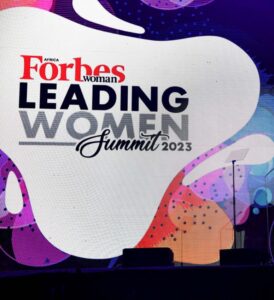
Photo: The 2023 FORBES WOMAN AFRICA Leading Women Summit!
April 2023
Last month, we celebrated International Women’s Day on 8th March 2023. Every year, March 8th is celebrated as International Women’s Day around the globe.
The day can be traced back to the feminist movements in Europe and America in the early 1900s. In 1917, women in Russia chose to protest and strike for “bread and peace,” and this fell on March 8 as per the Gregorian calendar.
This is how the idea of Women’s Day to be celebrated on March 8 came about. 1975 was observed as the International Women’s Year, and since then March 8, it is celebrated as International Women’s Day.
#FORBESWOMANAFRICA summit was held on 8 March at Sun Bet Arena, Time Square in Pretoria. The summit was an incredible opportunity for the audiences to interact with game-changers live, at what has fast become a calendar highlight.
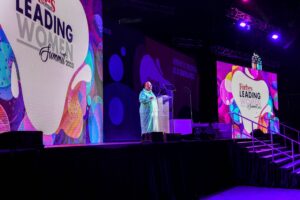
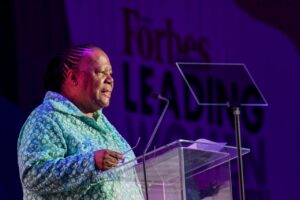
Photo: Dr Naledi Pandor, South Africa’s Minister for International Relations and Cooperation Delivering the opening address at #LWS2023
Minister Naledi Pandor attended the Forbes Africa Leading Women’s Summit as a key note speaker, and in her speech, Minister Pandor extended her gratitude to Forbes Africa for their invitation to deliver the keynote address at the exciting, vibrant, and in-person at the 2023 Forbes Africa Leading Women’s Summit.
In her remarks, Minister Pandor said it is wonderful to have such a diverse group of dynamic women here today who are committed to seeing change and bring about a more inclusive society. There are many inspiring women who have joined us today. We are honored to have with us South Africa’s recent Grammy-award-winning artists Wouter Kellerman and Nomcebo Zikode, the Tunisian pan-African activist Aya Chebbi, prominent speakers and guests from Nigeria to Kenya, Botswana and Uganda, and some of South Africa’s most renowned business leaders, including Wiphold CEOs Gloria Serobe and Louisa Mojela, Chair of Anglo-American Management Board Nolitha Fakude, and CEO of Awakened Global Nonkululeko Gobodo.
As you may be aware, today – 8th March – is commemorated as International Women’s Day.
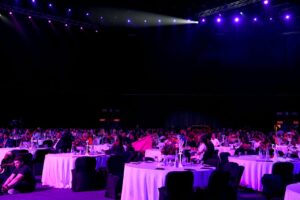 Photo: Guests at the 2023 FORBES WOMAN AFRICA Leading Women Summit
It was on this very day in 1857 where our fellow sisters in New York City decided to engage in a peaceful protest march to highlight unfair working conditions and wages as well as the unequal rights of women in the textile industry. It is because of these and other trailblazers on our continent that we understand the need to promote and protect the rights of women and young girls in Africa and globally.
This Summit is an excellent opportunity to recognise women who are making a difference in their organisations and communities and for us to advocate for African women’s social, economic, political, and cultural rights. None of the UN’s Sustainable Development Goals can be achieved without Goal 5 at the forefront of our efforts. It’s time to empower women and girls everywhere so they can reach their potential. In South Africa, we have reason to celebrate good news in a variety of 8 South African women in the workforce. As is evident in South African statistics, women are increasingly entering the workplace, constituting 43.8% of the labour force and are thus contributing significantly towards the economy. The increase in remuneration and access to jobs because of the decrease in gender discrimination, are contributing factors to the proliferation of women in the labour force.
However, only 32 percent of women occupy a managerial position in South Africa. Today in South Africa, many women are members of a union, and the major union federation COSATU is led by a woman – Zingiswa Losi.
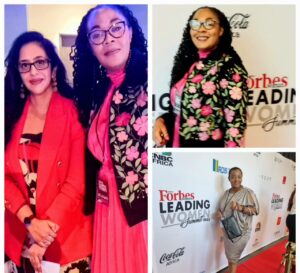 Photo: Renuka Methil Managing Editor, Forbes Africa, Susan Novela, CEO The Diplomatic Informer Magazine SA, and Nickoulah Chesa, Director of Circle Way Training, @forbesafrica
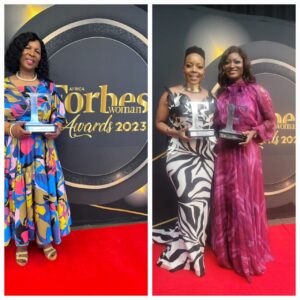
The prestigious FORBES WOMAN AFRICA AWARDS 2023 winners of the Forbes Woman Africa Businesswoman Award Nonkululeko Gobodo, Woman Africa Entertainer Award Nomcebo Zikode,Forbes Woman Africa Technology and Innovation Award Funmi Adewara#FWAA2023
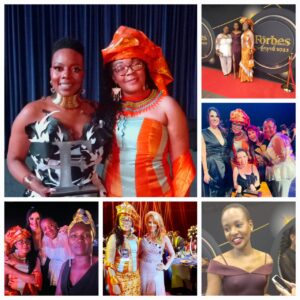
Photo: At the FORBES WOMAN AFRICA AWARDS 2023 #FWAA2023
Women in Decision-Making in South Africa.
Achieving gender equity in positions of decision-making – both in government and in the private sector – is crucial. A new report was released by Statistics South Africa titled Gender Series Volume IX: Women Empowerment, 2017–2022 found that from 2004 to 2019, South Africa saw an increase in the proportion of seats held by women in the National Assembly from 33 percent in 2004 to 46 percent in 2019, which remains the current percentage. Half of the South African cabinet positions are held by women.
Women in Science and Technology Innovation
In science, technology, and innovation in South Africa, women have shown incredible talent and leadership with Professor Glenda Gray serving as the first female president and CEO at Medical Research Council, and Professor Helen Rees is now a leading global researcher on children and HIV.
As a country, we need to acknowledge the pertinent role of science, Technology, Engineering, and Mathematics Education for young girls and women. These fields serve as a foundation for their development and economic empowerment, as well as for creating opportunities for research and development in exciting new fields such as artificial intelligence, and Data Science.
South Africa will be concluding her term as Chair of the United Nation Commission on the Status of Women during the 67th Session, which is taking place from 6 to 17 March this year in New York, under the theme:
“Innovation and technological change, education in the digital age for achieving gender equality and the empowerment of women and girls. ” The theme recognises that there are still many challenges and barriers that exist in closing the digital gender divide. We should commit to doing everything possible to narrow this gender divide so that all women and girls are empowered for the fourth industrial revolution.
Women in the Private Sector
The private sector has also shown progress with women owning major companies and serving as CEOs and Chairs of Boards. Women have also started digital start-ups and other innovative businesses. Across all JSE-listed companies, women make up 15% of executives and 30% of non-executive directors. According to a new PwC report, the percentage of female CEOs in JSE-listed companies improved to eight percent at the end of June last year from five per cent a year earlier.
Women in South African Universities
Our universities have been an important site for the empowerment of young women with over 58 percent of university students being women across all population groups. Currently, women constitute 15% of the 26 Vice- Chancellors in the country and out of 30 deputy Vice-chancellor 12 are women. The University of the Witwatersrand has been engaged in concerted efforts to transform the gender and racial profile of academics at the university. One of the cornerstones of Female Academic Leaders Fellowship (FALF) is the empowerment of black and coloured South African female academic scholars. Other universities are making similar efforts.
Women in the Legal Profession
The role of South African women judges, magistrates, lawyers, prosecutors, and other female judicial officers in the fight for equity, equality, and the fight against GBV is invaluable. During the inaugural International Day of Women Judges on 10 March 2021, the United Nations crisply observed that: “The representation of women in the judiciary is significant for many reasons. In addition to ensuring that the legal system is developed with all of society in mind. It also inspires the next generation of female judges and motivates them to achieve their goals. “
Justice Maya and her members in the South African Chapter of the International Association of Women Judges, given a proper space to influence women’s protection and empowerment measures, have the unmatched potential to positively change the plight of women – not only from the point of equal representation on the bench, but also with regard to the eradication of the scourge of GBV and women access to justice.
Despite these welcome developments toward gender equity, there exists terrible levels of gender inequality and brutal repression of women and girls in South Africa.
Gender based violence and femicide have been described as a pandemic by President Ramaphosa. During the most recent African Union Summit held in Addis Ababa, there was also an initiative aimed at advocating for addressing women’s developmental challenges and Gender-Based Violence on the continent with the partnership of President Ramaphosa, President Akufo Addo, and other African Heads of State who formed a Circle of Champions in this regard.
South Africa has the opportunity to make a real impact on achieving gender equality through its chairing of the Committee on the Status of Women (CSW), which we are chairing on behalf of the Africa Group, as well, as the role it plays in the Global Generation Equality Action Program and working groups.
In terms of national interventions, President Ramaphosa convened the 2nd Women’s Economic Assembly (WECONA) from 5 to 6 October 2022, under the theme “Gender-responsive value chains for a resilient economy.”
A key aspiration of this assembly was to address bottlenecks to women’s economic empowerment and development. Stakeholders from the private sector, government, and civil society gathered to connect and inspire innovation, thought leadership, and action to transform value-chain ecosystems and create clear pathways for women-owned businesses to participate in the mainstream economy across all sectors of industry.
We should remind ourselves that the launch of WECONA in 2021 is informed by one of the pillars of the National Strategic Plan (NSP) on Gender-Based Violence and Femicide (GBVF), which clearly advocates for the economic empowerment of women as a means to address and end GBVF in South Africa.
WECONA is on its way to becoming the largest gathering of private and public sector decision-makers, together with women entrepreneurs around the topic of women’s inclusion. Over the past year, WECONA has engaged industry leaders to set gender transformation targets in each industry.
The government has managed to activate public and private sector supply value chains to make sure that South Africa’s 40 percent preferential procurement from women-owned businesses becomes a reality. Procurement is a critical element with the potential to grow women owned businesses, which unfortunately attracts less than two percent of the global
procurement market according to the United Nations. This gap presents an opportunity to create gender equality through ethical supply chains to enable South Africa to achieve economic outcomes for businesses and communities.
There are many objectives of WECONA, as well as South Africa’s Leadership of the Generation Equality Forum’s Action Coalition on Economic Rights and Justice, that dovetail with today’s conference.
I wish you all successful deliberations and exchange of views as we try to collectively unpack ideas and strategies aimed at women empowerment and leadership during this Forbes Africa Leading Women’s Summit.
After a full day, engaging on critical issues and unlocking new opportunities, the summit culminated in the prestigious Awards, a glittering ceremony where the most accomplished leaders and luminaries were honored for their impactful work.
Africa at The Macallan in association with The Macallan and supported by Coca-Cola, the 2023 Forbes Woman Africa Leading Women Summit focused on topics ranging from wealth to Web 3.0 and mining to fintech, AgriTech, and climate resilience, all of which were debated and discussed by industry leaders.
Renuka Methil, managing editor, Forbes Africa, said that the 8th edition of the Forbes Woman Africa Leading Women Summit is already on track to become one of our most dynamic events as they will welcome an illustrious speaker line-up to the stage. “Considering the socio-economic challenges as a result of the pandemic, there is a lot we’re having to navigate. This summit is the ideal space to gain inspiration and guidance from those who are not only navigating these challenges but forging new paths for our future generation of female leaders,” Methil added.
Thami Banda, brand ambassador at The Macallan (Africa), said that the Macallan is extremely proud to collaborate with Forbes Woman Africa, as both brands respect values that women bring in the business world. “At The Macallan, we have a long history of inspirational women, from the current Lead Whisky Maker, Kirsteen Campbell to the exceptional Janet Harbinson, who – against all odds – steadied The Macallan ship after her husband’s passing. “Guided by her conviction and strong belief in doing the next right thing for everyone she cared about, she unconsciously made history by overseeing the process that produced the most expensive single malt whisky, The Macallan 1926. It is, therefore, only right that we pay tribute to African women who embody such spirit and courage,” said Banda Patricia Obozuwa, Coca-Cola Africa Vice President for Public Affairs, Communications and Sustainability, said Coca-Cola Africa is excited to support summit in the International Women’s Day and celebrating the achievements and resilience of women across Africa and the world.
Obuzwa said; “Empowering women to thrive is a global commitment by The Coca-Cola Company. We believe women are critical to the success of our business. Therefore, we aspire to be 50% led by women globally by 2030.”
“Women are integral to the continued success of the communities we proudly serve. Women and youth empowerment is one of the focus areas under Coca-Cola Africa’s sustainability platform, JAMII, where we commit to unlock economic opportunities for women across the continent.”
She continued to say that the impact of Coca-Cola is evident through initiatives such as the 5by20 Program, a global initiative to economically enable five million women entrepreneurs by 2020, which surpassed its target by enabling six million women – including over two million in Africa.
When women are empowered, their families and children are empowered. “Their communities are empowered. Their country is empowered, and our continent can flourish,” said Obuzwa.