Minister of Foreign Affairs of the Democratic Socialist Republic of Sri Lanka, H.E Mr Ali Sabry, undertakes a Study Visit to South Africa

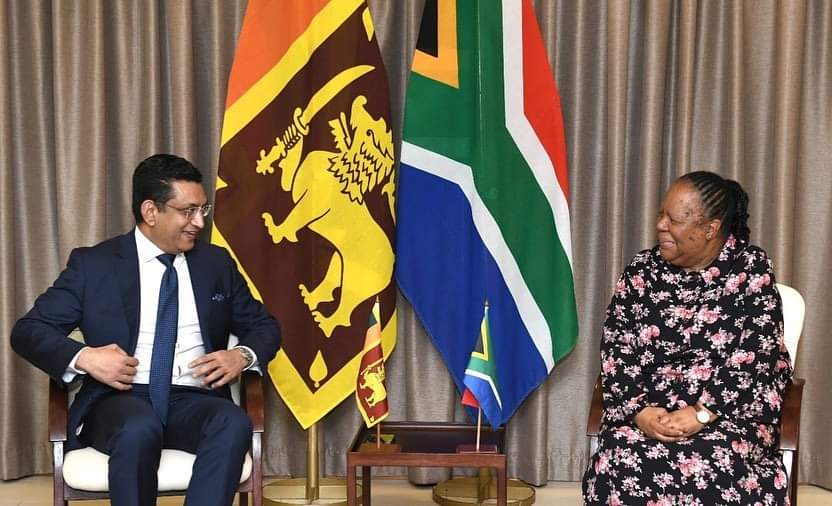
Photo: Minister of Foreign Affairs of the Democratic Socialist Republic of Sri Lanka, H.E Mr Ali Sabry and Minister of International Relations and Cooperation, Dr Naledi Pandor

Photo credit: Jacoline Schooness/DIRCO

23 March 2023

The Minister of International Relations and Cooperation, Dr Naledi Pandor, hosted a bilateral meeting with the Minister of Foreign Affairs of the Democratic Socialist Republic of Sri Lanka, H.E Mr Ali Sabry, who has undertaken a Study Visit to South Africa from 21 – 25 March 2023.

Minister Ali Sabry is leading a fact-finding delegation to South Africa to study South Africa’s Truth and Reconciliation Commission (TRC) and related processes that South Africa underwent in its quest towards a non-racist, non-sexist, democratic South Africa.

Sri Lanka committed to undergo a similar process following the end of its three-decade civil war in 2009.

During the meeting, Minister Sabry briefed Minister Pandor on developments in Sri Lanka relating to the country’s nation-building and reconciliation programme, and the objectives of undertaking this study tour.

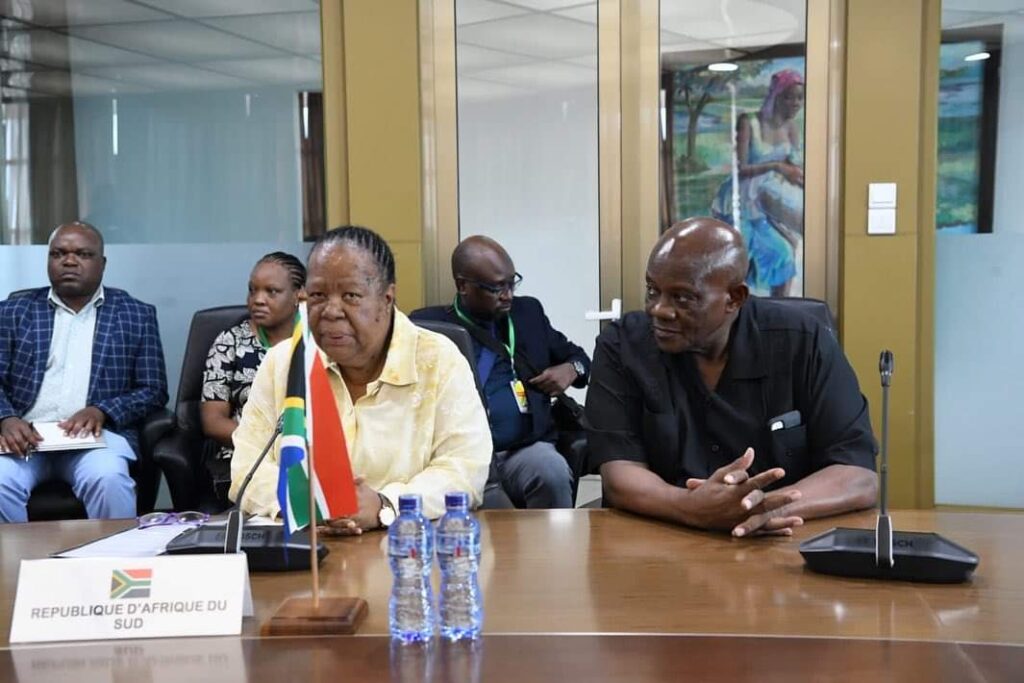
International Relations and Cooperation Minister, Dr. Naledi Pandor delivered remarks during a meeting with her Sri Lankan Counterpart, Minister Ali Sabry at OR Tambo Building, Pretoria.

The Democratic Socialist Republic of Sri Lanka established diplomatic relations with the Republic of South Africa on 12 September 1994. Sri Lanka opened its resident diplomatic mission in Pretoria on 1 October 1997, whilst South Africa opened its resident diplomatic mission in Colombo, Sri Lanka, in September 2007.

South Africa attaches great importance to its historic relationship with Sri Lanka in particular Sri Lanka’s solidarity and support for South Africa’s liberation struggle.

Bilateral relations between the two countries are cordial and conducted under the umbrella of the structured Partnership Forum (PF) that was established through the signing of the Agreement on the Establishment of a Partnership Forum on 1 December 2003. The last session (the 8th) of the Partnership Forum was held, virtually, on 15 February 2022 and it is expected that Sri Lanka will convene the 9th session of the PF at a mutually agreed date during 2023.

South Africa and Sri Lanka also share more cooperation on the Indian Ocean Rim Association (IORA) as both countries are members of the organisation. IORA is currently the Chair of the Working Group on Maritime Safety and Security till 2027, IORA Vice Chair for 2021-2023 and will take over as the IORA Chair this year.

#SASriLankaRelations🇿🇦🇱🇰

#SASrilankaRelations

#SriLankaInSA

Ramadan Kareem

23 March 2023

The Diplomatic Informer Magazine SA wishes all Muslim communities in South Africa and around the World a blessed Ramadan Kareem.

As Muslim families start Ramadan, we join our Muslim family and friends to pray for the well-being of the communities and a year ahead filled with the blessings of health, happiness & family.

May the fasting month be full of charity, learning, prayer, and May You all experience peace during this special time of fasting.

Ramadan Kareem!

#RamadanKareem

#Ramadanmonth

#Ramadan

#Fastingmonth

#monthofprayers

#monthofcharity

SADC Meeting of the Angola-DRC-South Africa

23 March 2023

#SADC Meeting of the Angola-DRC-South Africa Tripartite Mechanism took place on the margins of the SADC Council of Ministers’ Meeting in Kinshasa, Democratic Republic of Congo on the 19 March 2023.

Minister Pandor, her Angolan and DRC counterparts, led the meeting. Minister Pandor spoke about the urgency of getting the SADC Humanitarian and Emergency Operations Center up and running.

The Minister of International Relations and Cooperation, Dr Naledi Pandor, participated in the Meeting of the SADC Council of Ministers, held bilateral talks with her DRC counterpart and met representatives of South African businesses operating in the DRC.

The Council of Ministers Meeting, held from 18-19 March 2023, served the purpose of overseeing the functioning and development of SADC and ensuring that policies and decisions are implemented.

The Council consists of ministers from each of the 16 member states.

Minister Pandor’s Bilateral Meeting with her DRC counterpart, Minister Christophe Lutundula, provided the two countries with an opportunity to take stock of the decisions and commitments of the SA-DRC Bi-National Commission as well as the status of memoranda of understanding and agreements signed between the two countries.

In light of the ongoing conflict in the Eastern DRC, the two ministers exchanged views on the latest developments in the region and on regional efforts to bring about peace and stability in the eastern DRC.

On trade and investment relations, Minister Pandor recalled that South Africa had significant investments in the DRC. The main sectors for investment are financial services; mining and related services; construction and property development; retail; supplier services to the oil, gas and mobile telephony industries; ICT; security and guarding; logistics; and tourism and hospitality.

In the meeting with representatives of South African companies operating in the DRC, Minister Pandor said South Africa regarded the DRC as a key trade and investment partner and that the two countries were looking for ways to further expand two-way trade.

#Multilateralism

#BetterAfricaBetterWorld

The UN Secretary-General pays a visit to Belgium

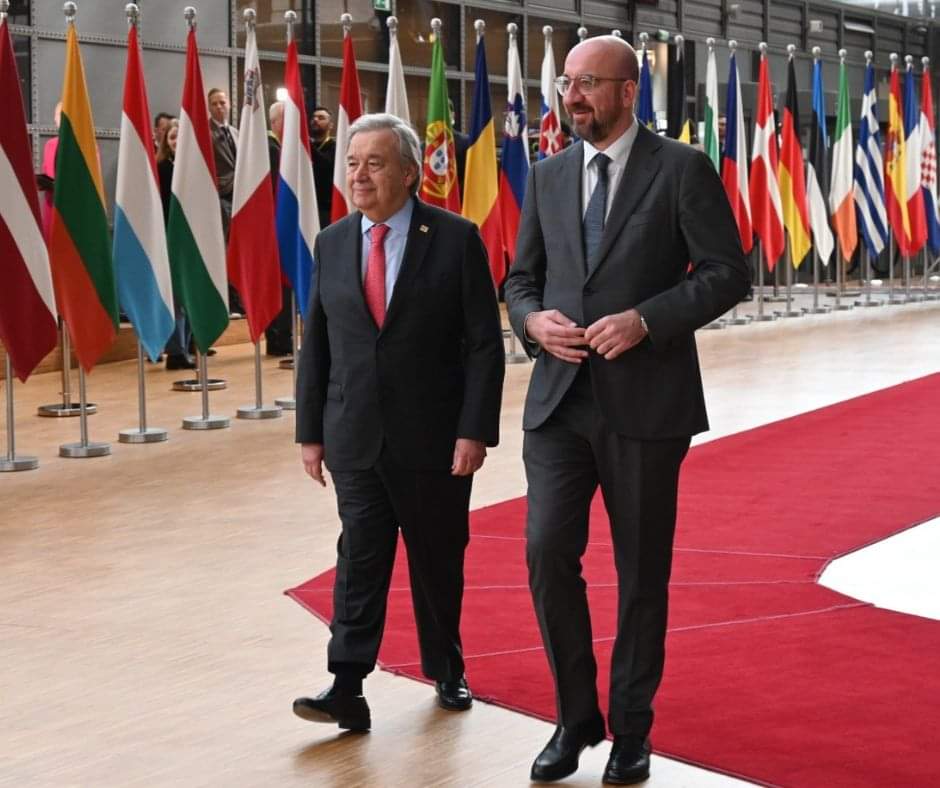
Photo: The UN Chief, António Guterres, with the President of the Council of the European Union, Charles Michel.
Photo credit: UN

23 March 2023

The UN Secretary-General is visiting Brussels, Belgium on 23 March to attend a session with the members of the European Council. Among the topics to be discussed are Ukraine, climate change and the Agenda 2030.

“This visit demonstrates the excellent cooperation between the #EuropeanUnion and the United Nations. This is indeed a crucial moment.” – said the UN Chief, António Guterres, during a joint press encounter with the President of the Council of the European Union, Charles Michel.

We have a perfect storm in many developing countries, a combination of factors that lead to a very dramatic situation. Sustainable Development Goals are moving backwards. More hunger, more poverty, less education, less health services in so many parts of the world. And, it is clear that our international financial system is not fit for purpose to deal with such a huge challenge.

And we very much count on the European Union to lead the transformations that are necessary in order to be able to put back on track the 2030 Agenda.

On the other hand, the last report of the Intergovernmental Panel on Climate Change shows a dramatic situation. We’re close to the tipping point that will make 1.5 degrees impossible to achieve.

So, we need dramatic action, we need an acceleration agenda and once again we count on the leadership of the European Union in this regard, as it has been demonstrated in several other moments.

And finally, the Russian invasion of Ukraine is causing tremendous suffering to the people of Ukraine but also having a huge impact globally and we will take profit of this occasion to exchange views on our best to confront these challenges.

World Bank approves $7 billion loan to support Egypt reforms

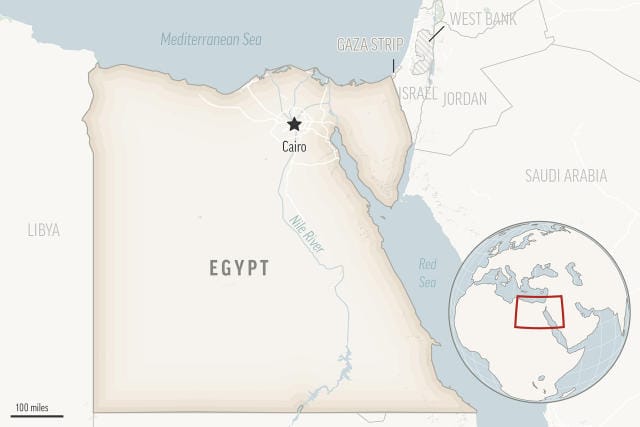
Photo: This is a locator map for Egypt with its capital, Cairo. 

(AP Photo) (Associated Press)

CAIRO (AP)

22 March 22, 2023

The World Bank said Wednesday it approved a $7 billion loan to support Egypt’s push to empower the private sector and enhance its efforts to combat the impacts of climate change.

The loan, approved Tuesday by the World Bank’s board of executive directors, is separate from a bailout loan from the International Monetary Fund, which Egypt secured in December.

In a statement, the World Bank said funds will be delivered over the next five years and would help Egypt generate “more and better” private sector jobs. It will also improve Egypt’s health and education services and social protection programs, it said.

“We are proud to continue our strategic partnership with Egypt and we are committed to supporting ongoing efforts dedicated to improving the quality of life for Egyptians,” said Marina Wes, the bank’s country director for Egypt, Yemen and Djibouti.

Wes said the World Bank’s partnership with Egypt supports the country’s efforts “to build back better by creating conditions for green, resilient, and inclusive development.”

The loan would also help Egypt improve its resilience to economic shocks and strengthen its ability to adapt to and mitigate climate change impacts, the World Bank said.

The deal comes as Egypt’s economy faces mounting challenges partly due to Russia’s invasion of Ukraine, which rattled the global economy. Over the past year, inflation has surged, and pressures on the poor and middle-class have mounted.

Over the past seven years, Egypt has received many loans from international financial institutions as it has embarked on a series of reforms to overhaul its battered economy and address the repercussions of the coronavirus pandemic and the Russian invasion of Ukraine.

Most recently, Egypt secured a $3 billion bailout loan in December from the International Monetary Fund in a deal that required the government to implement reforms including devaluation of the Egyptian pound and loosening the state’s grip on the economy.

The Russian-Chinese relations are at the highest level in history, President Vladimir Putin

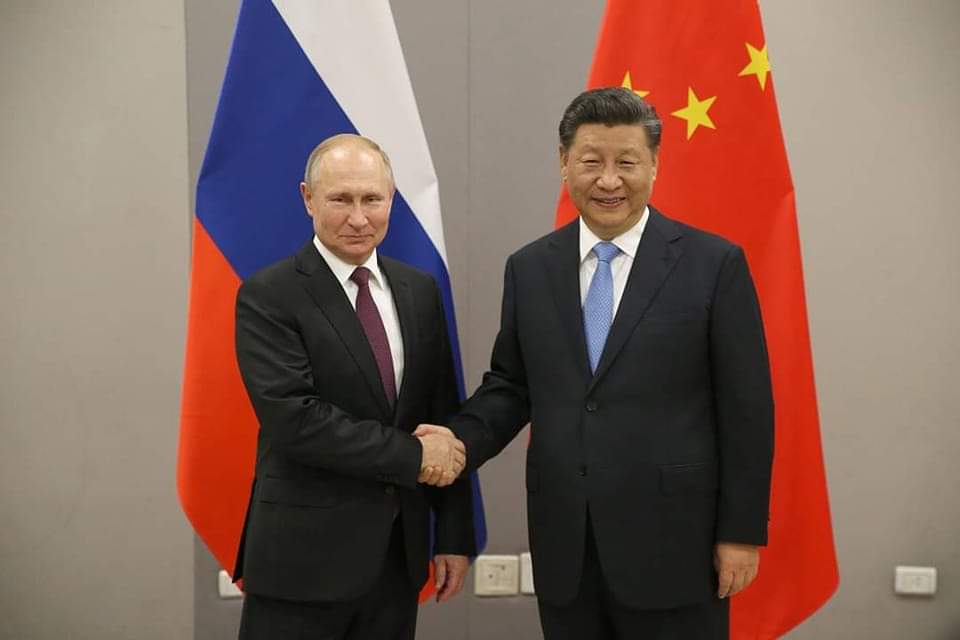
Photo: Russian President Vladimir Putin and Chinese President Xi Jinping

Photo credit: Russian Embassy in Pretoria

22 March 2023

In his statement following the Russian-Chinese talks, President Vladimir Putin’s said the Russian-Chinese relations are at the highest level in all our history, offering a model of a genuine comprehensive partnership and strategic cooperation.

When discussing topical international and regional problems, the President and I affirmed that Russia and China’s views on them are identical or very close.

Russia and China strongly oppose any state or bloc seeking to harm the legitimate interests of any other country in order to obtain military, political, and economic advantages.

Of course, we did not ignore developments around Ukraine. We believe that many of the provisions of the peace plan put forward by China are consonant with Russian approaches and can be taken as the basis for a peaceful settlement when the West and Kiev are ready for it. However, so far, we have not seen such readiness on their part.

It seems that the West really has decided to fight Russia to the last Ukrainian – no longer in words, but in deeds. But in this regard, I would like to note that if all this comes to pass, then Russia will have to respond accordingly. What I mean is that the collective West is already starting to use weapons with a nuclear component.

We jointly work to create a more just and democratic multipolar world order.

Of course, trade and economic cooperation remain a priority for us, considering that China has solidly established itself as the leading foreign trade partner for our country. Last year, trade increased by 30 percent to set a new record of $185 billion.

As of the end of the first three quarters of 2022, the share of the ruble and yuan in mutual commercial transactions reached 65 percent and continues to grow.

#russia #russian #putin #china #ukraine #kiev #multipolar

Source: Russian Embassy in the Republic of South Africa

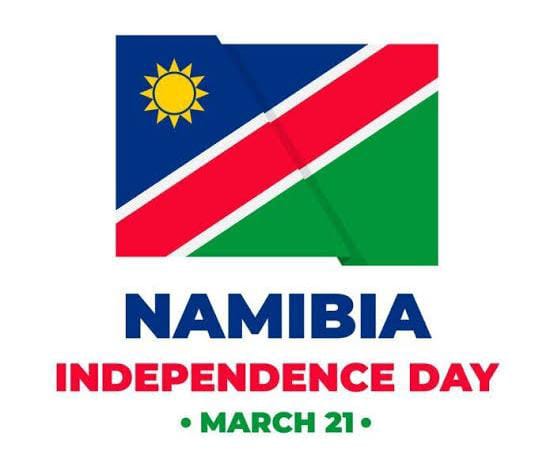
Happy 33rd Independence Day to the Republic of Namibia

21 March 2023

On the occasion of the 33rd Independence Day of the Republic of Namibia, the Diplomatic Informer Magazine SA wishes to convey to the Government and the people of Namibia our warm wishes, and would like to congratulate the Republic of Namibia in celebrating their 33rd National Day on 21 March 2023

Namibia Independence Day is marked on March 21 every year to commemorate the day the nation became a sovereign state. Namibia is a country located in the southern part of Africa that has seen many shifts in political power over the years. Namibia gained its full independence in 1990 and got its recognition as an independent nation. This independence day is marked as a national holiday in Namibia, and the day is celebrated with parades and political ceremonies attended by the top leaders. Proud citizens celebrate the day wishing prosperity and peace for the country.

HISTORY OF NAMIBIA INDEPENDENCE DAY

The country’s name has its origins in the word ‘nama’ which means ‘vast place.’ Nama was used to refer to the Namib desert, which is said to be the oldest desert in the world. In prehistoric times, Namibia was occupied by ethnic African tribes such as Nama, San, and Damara. The first European expedition to Namibia was in 1485 when Portuguese explorer Diogo Cao reached the southern African country.

In 1884, Namibia became a German colony under Otto Von Bismarck. At that time the country was known as Deutsch-Südwestafrika which translated to South-West Africa. In 1904, the German occupiers systematically executed over 10,000 natives of Namibia. After Germany’s defeat in World War 1, the country was taken over by South Africa. After World War 2, following the U.N.’s sanctions, South Africa was asked to give up control over Namibia, which it refused.

In the 1970s, the revolts for independence began. The people of Namibia were motivated as this is also the time when neighboring countries like Angola and Zambia had gained their independence from South Africa. The guerilla group, the People’s Liberation Army of Namibia led the struggle for the independence of Namibia from South Africa. In 1988, South Africa agreed to give Namibia its much-awaited freedom. On March 21, 1990, Namibia gained its freedom and the country was renamed the Republic of Namibia. Sam Nujoma was chosen as the first President of the Republic of Namibia.

Speech by His Excellency President Hage Geingob on the occasion of the 33rd Independence Day Anniversary at Outapi Stadium in Outapi, Omusati Region.

Fellow Namibians,

What is independence? By simple definition, independence is the freedom from the control and influence of others. In other words, one doesn’t depend on other people. It is the ability for one to pursue one’s own destiny without hindrance, without fear and without limitations. There is no greater guarantor of human dignity than independence. Independence is, without a doubt, the bulwark that safeguards the culture and identity of a people. It is a source of pride; a symbol of respect and standing in the global village. Indeed, independence is more valuable than wealth and prosperity because in its absence, no one can dare to dream, and no nation can dare to build.

In that context, it gives me great pleasure to be here in Outapi to join you in celebrating our 33rd Independence Day Anniversary.

It is said that the gift of independence can not be given to you but can only be taken. Indeed, as we commemorate this historic day, we pay tribute to those brave men and women who took it upon themselves to secure our independence from the clutches of tyranny and colonial oppression. We thank these gallant sons and daughters; from combatants to clergy, from teachers to students, from business people to workers, from athletes to artists, from young to old, from those who were in exile to those who were at the home front.

These freedom fighters, of whom some sacrificed their lives, all played an instrumental role in the struggle and thereby ensured that Namibians obtained independence and sovereignty. Thus, their unwavering determination changed the destiny of the Namibian people.

Thus, the declaration of our independence is written in the blood of our brave daughters and gallant sons. For as the Argentine revolutionary, Ernesto “Che” Guevara said, “We can not be sure of having something to live for unless we are willing to die for it.” Therefore, in order for us to live today as free and independent Namibians, others who came before us had to die for it. We should never forget that. We should never forget those who paid the ultimate price.

Furthermore, we also acknowledge the invaluable role played by the friendly nations of Africa led by the OAU/Liberation Committee and the Frontline States and the members of the international community led by the United Nations and the United Nations Council for Namibia and members of the International Community such as the Former USSR, the Russian Federation, the Republic of Cuba, the Peoples Republic of China, the Scandinavian countries and many others, like the support groups in America and the rest of Europe, who responded favourably in support of our just cause to fight for freedom.

With this in mind, let us appreciate the important date of March 21st, for this day should remind us of the momentous occasion in 1989, when for the first time, thousands of Namibians went to the polls and cast their vote for freedom and independence. That collective decision permanently and positively changed the lives of each and every Namibian. Therefore, today is a day to reflect on the positive emotions brought forward by the gift of independence. It is a day to look forward to hope and optimism and confidence in our national revival. It is a day to forget divisions and differences in order to bond with family, friends, and community under the single roof of our inclusive Namibian House.

At this stage in our nation’s history, we are cognizant of the fact that independence alone, without economic emancipation, will threaten our hard-won peace and security. For this reason, I outlined, in my State of the Nation Address last Thursday, that we intend to move with lightning speed to capitalize on the myriad of economic endowments we possess, in a coordinated manner, in recognition of the urgent need to create more new jobs.

Indeed, it is a given that we must be forward looking at, and what better time to move forward than at this time when green shoots are on the horizon and our revival is within reach. However, for us to forge the road ahead, we must acknowledge the path that has led us to this very day, this very year, in which we commemorate 33 years of nationhood. It is this path that will inform us of potential dangers, threats, and opportunities.

In this vein, as we celebrate the gift of freedom and sovereignty, we should endeavor to pursue our economic emancipation with determination. We should endeavor to place the national good above personal interest, bias, or prejudices. We must cultivate the positive aspects of our national identity and realize that only by holding hands and pulling together in one direction will we be able to continue our journey of development. Wherever there are shortcomings, we should all take responsibility to correct them for this is our national duty, this is our country, and this is the only place on earth that we can call home.

Fellow Namibians,

As your President, I have sworn to always protect our nation’s independence and sovereignty on behalf of all Namibians.

I am fully aware that after 33 years of sustained progress and numerous milestones, there is still work to be done for us to achieve the dreams and aspirations outlined in our National Development Plans and Vision 2030, which are augmented by the Harambee Prosperity Plans.

It is for this reason that several days ago, I outlined, in my State of the Nation Address, key government policies and strategies aimed at taking advantage of our natural resources and economic green shoots. Through these policies and strategies, we plan to develop the green hydrogen industry and oil and gas sub-sectors, as well as enhance agricultural production as a means for accelerating industrial development and job creation in Namibia. As a Government we understand the needs of our people for jobs, shelter, food and self-actualization, and therefore we remain seized with improving the livelihoods of all Namibia’s citizens with the understanding that only through shared prosperity can peace be maintained.

In this respect, we must ensure that the struggle for economic emancipation does not become a justification for the fomenting of social unrest and division.

 As a free and independent nation with a history of a long and bitter struggle, we should reject any efforts to divide our citizens based on tribal, ethnic, racial, gender or religious differences. As a Government committed to the improvement of the social welfare of Namibians, we will always strive to protect the fundamental rights of all and ensure that we all follow in the spirit of One Namibia, One Nation.

Fellow Namibians,

We live in an ever-changing world with numerous challenges as well as opportunities. Therefore, as we navigate our course towards prosperity and a better life for all, we must remain vigilant in order to circumvent the various obstacles that are ahead of us. Let us, therefore, take courage from our recent successes in curbing the onslaught of Covid-19 and adopt the tried and tested principles of unity and teamwork, which have enabled us to prevail against all odd I have the utmost confidence that if we continue in the Harambee spirit, we will enjoy countless successes moving forward as a nation.

On this 33rd Independence Day, we are encouraged by the fact that we have made tremendous strides as a people and as a nation, enjoying peace and stability and development. With each step we take, we get closer to the realization of our collective dreams and aspirations.

Fellow Namibians,

In this vein, we are grateful that 33 years after that monumental day on March 21, 1990, we can be joined by the icon who played center stage in the struggle and on that day. I speak of none other than Comrade Sam Shafiishuna Nujoma, Founding

President and Father of the Namibian Revolution, who is also the former President of SWAPO and Commander-In-Chief of the People’s Liberation Army of Namibia (PLAN) and the Head of State and Commander-in-Chief of the Namibian Army. This living legend, through his extraordinary leadership and his unyielding commitment to the freedom and independence of Namibia, provided the motivation and driving force for thousands of brave Namibians to sacrifice their lives in the name of freedom.

Let me also recognize the other icon, that’s our Second President Comrade, Hifikepunye Pohamba, who equally played a significant role in the liberation of Namibia. He is not with us today, but he sent his greetings to wish us a Happy Independence Day.

 Today, thanks to the blood of the brave that waters our freedom, we stand as a people free from the shackles of bondage, free from the pursuit of tyranny, free from the scourge of war. Today, we stand united as one person, one, one Namibia, one Nation. Today, we celebrate 33 years of unity, liberty, and justice.

I therefore wish all Namibians a joyful 33rd Independence Day. May God bless you all, and may God bless the Republic of Namibia.

LONG LIVE THE REPUBLIC OF NAMIBIA.

#namindependence2023

#namibia

#theAfricawewant

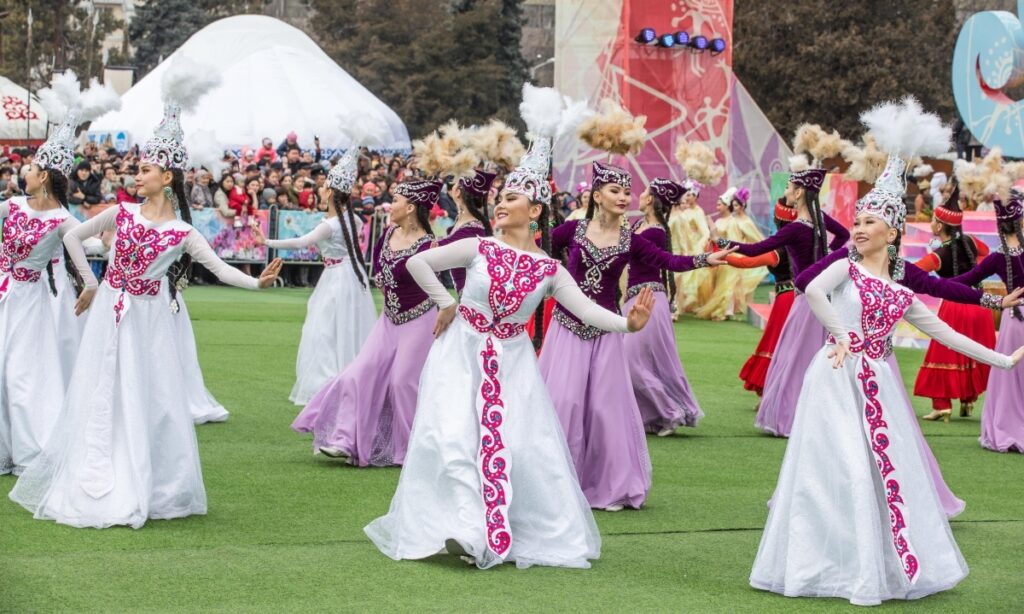
Kazakhstan Сelebrates Nauryz and Three Days of Festivities

Photo credit: assembly.kz.

Photo credit: total.kz.

Photo credit: assembly.kz.

21 March 2023

By Diana Baidauletova

ASTANA – Kazakh people across the country are preparing to celebrate Nauryz on March 22, along with their Central Asian neighbors, Iranian and Turkic ethnicities, and the Kazakh diaspora abroad. Three days’ worth of festivities, including concerts, exhibitions, sports competitions, and folk festivals, will take place on March 21-23.

The holiday of Nauryz marks the renewal of nature and the beginning of spring. Kazakhstan shares this tradition with diverse communities and ethnicities all over the world. Mostly associated with the natural beginning of the New Year, Nowruz is a celebration based on the Iranian Solar Hijri calendar, on the spring equinox – on or around March 21 on the Gregorian calendar. Nauryz is celebrated as a public holiday on March 21 in Albania, Azerbaijan, Georgia, Kyrgyzstan, Macedonia, Tajikistan, Turkmenistan, Türkiye and Uzbekistan.

In 2009, Nauryz was included in the United Nations Educational, Scientific and Cultural Organization (UNESCO) Representative List of the Intangible Cultural Heritage of Humanity.

Nauryz in Kazakhstan traditionally symbolizes fertility, friendship, and peace. On this day, people spend time with their family and friends and wish each other peace, prosperity, and joy. People congratulate each other with the phrase “Nauryz meiramy kutty bolsyn! Ak mol bolsyn!,” which means “Congratulations on Nauryz! Let there be abundance!” A person replies with “Birge bolsyn,” which means “And the same to you!”

People all over Kazakhstan gather to celebrate, sing and dance, and participate in folk games and festive activities.

Nauryz kozhe is a festive dish that is often served on this holiday. It is a symbol of prosperity and abundance in the new year and usually consists of seven food elements – milk, meat, butter, millet, rice, and corn, though the ingredients may vary.

It is customary to host impromptu competitions of witty folk poets, aitys, and competitions, including Qazaqsha kures folk wrestling, a game of logic called togyz kumalak, equestrian games like kyz kuu, baige and kokpar, and socializing activities like altybakan, where young girls and boys get together to chat and ride on a big traditional swing.

From March 21 to March 23, Astana will host the Nauryz Bazary oriental fair on the EXPO premises. The fair will offer Kazakh and other nomadic nations’ cultural heritage, food, and entertainment.

On March 21, the fair will run from 1 p.m. to 6 p.m., and on the second and third days, from 9 a.m. to 6 p.m.

The public will be able to enjoy oriental cuisine and purchase items from new collections of ethnic clothing, jewelry, and handicrafts made of ceramics, metal, felt, and silk. Farms and producers from different regions of the country will offer fresh produce.

Festive events will also be held on the square near the Kazakh Eli monument and the city square on March 21-22 from 11 a.m. to 4 p.m., and on March 23 from 11 a.m. to 2 p.m. Mass festivities will also be organized in residential areas throughout the city.

The Astana Times

Happy Human Rights Day in South Africa 

21 March 2023

Human Rights Day in South Africa is historically linked with 21 March 1960, the events of Sharpeville. On that day, 69 people died, and 180 were wounded when police fired on a peaceful crowd that had gathered in protest against the Pass laws.

This day marked an affirmation by ordinary people, rising in unison to proclaim their rights. It became an iconic date in our country’s history that today we commemorate as Human Rights Day as a reminder of our rights and the cost paid for our treasured human rights.

What are human rights?

Human rights are rights that everyone should have simply because they are human.

United Nations:

In 1948, the United Nations defined 30 articles of human rights in the Universal Declaration of Human Rights. It established universal human rights on the basis of humanity, freedom, justice, and peace.

SOUTH AFRICA

South Africa has included indivisible human rights in our own Bill of Rights, Chapter 2 of the Constitution of the Republic of South Africa, 1996. The articles of our Constitution can only be changed by a two-thirds majority in Parliament, which means it is difficult for anyone, including the government, to take away the basic rights of a citizen.

The Bill of Rights preserved in our Constitution is the cornerstone of our constitutional and representative democracy. The Constitution as our supreme law means that no laws may be passed that goes against it. The Bill of Rights also comprehensively addresses South Africa’s history of oppression, colonialism, slavery, racism and sexism, and other forms of human violations. The Bill of Rights embeds the rights of all people in our country in an enduring affirmation of the democratic values of human dignity, equality, and freedom.

THE DIPLOMATIC INFORMER MAGAZINE WISH YOU ALL A HAPPY HUMAN RIGHTS DAY

Preliminary Results of Legislative Election in Kazakhstan Announced

21 March 2023

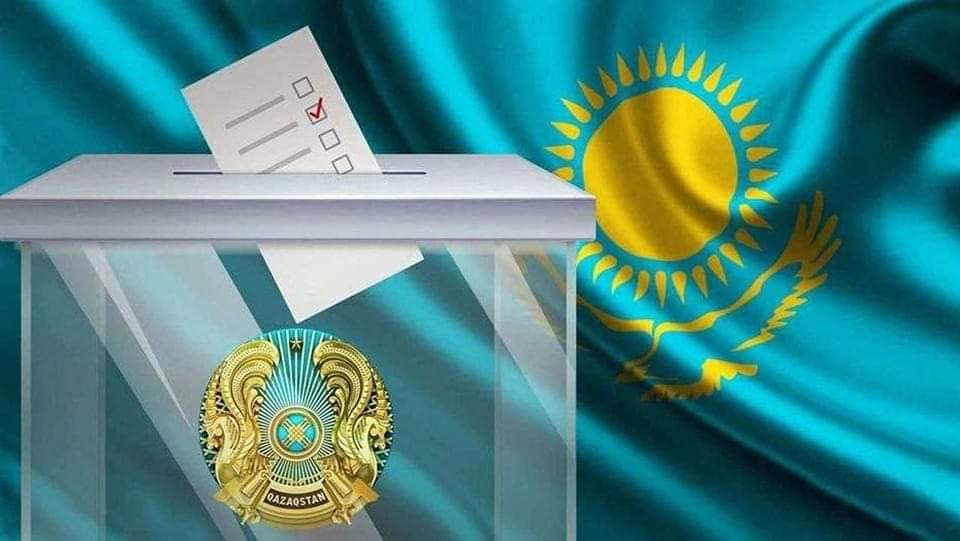
Astana – The Central Election Commission (CEC) announced the preliminary results of the March 19 election to the Mazhilis, the lower house of parliament of Kazakhstan. According to the results, six parties received enough votes to pass the required five percent threshold to gain seats in parliament:

Amanat – 53.9% (over 3.4 million votes)

Auyl – 10.9% (693,938 votes)

Respublica – 8.59% (547,154)

Aq Jol – 8.41% (535,139)

People’s Party of Kazakhstan – 6.8% (432,290)

National Social Democratic Party – 5.2% (331,058)

Baytaq – 2.30% (146,431)

3.90% of voters chose the option “against all” – 248,291 votes.

According to the preliminary data, over 6.3 million people voted in the election, a turnout of approximately 54%. Voting took place at 10,233 polling stations across the country, as well as in Kazakhstan’s overseas missions in 62 countries.

The election was monitored by the Central Election Commission and 793 observers from 12 international organizations and 41 countries. Most observers noted the transparency of the election, no irregularities or violations, as well as active and free campaign by candidates. “The increased competition, particularly with self-nominated candidates, is a significant development”, stated observers from the OSCE Parliamentary Assembly.

In line with constitutional changes implemented last year, a proportional-majoritarian model was used in the election for the first time since 2004, where 30 percent of Mazhilis members are elected in single-member districts. There were 281 party list candidates vying for 69 seats and approximately 370 single-mandate candidates (including independent and self-nominated) seeking 29 seats in the lower house.

The constitutional amendments and reforms passed last year have also granted more powers and influence to the Mazhilis and the local government.

The term in office for an elected member of parliament is five years, though the MPs are not prohibited from being re-elected.

This was the ninth legislative election in Kazakhstan since its independence. It marks the final stage in the political renewal cycle in the country, which started with a presidential election last year and a Senate election earlier this year.