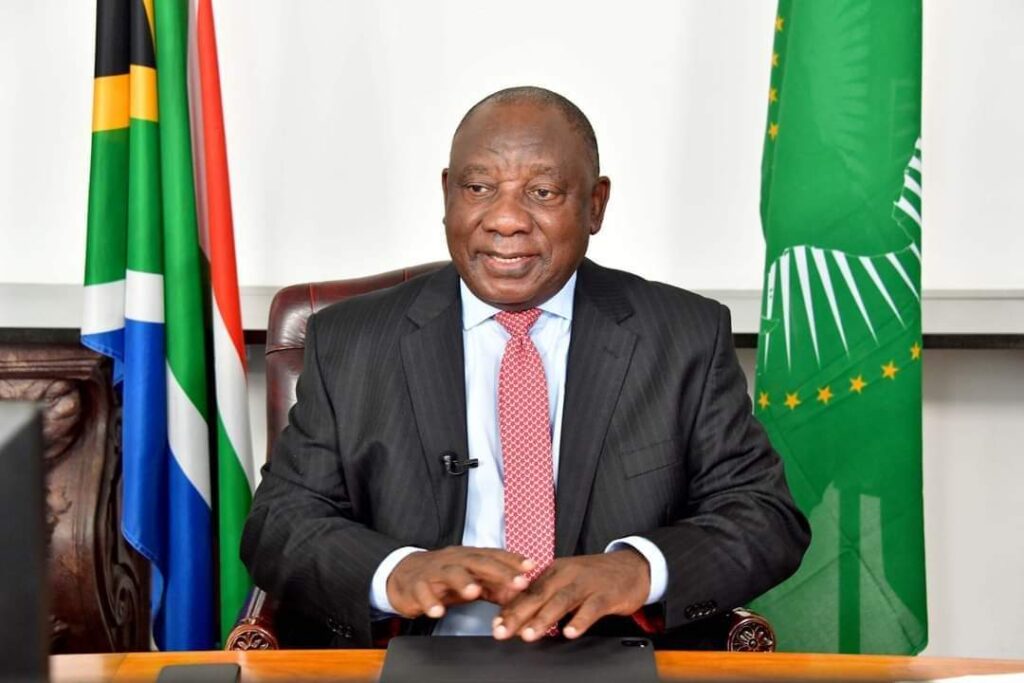
President Ramaphosa welcomes the Serum Institute funding initiative for establishment of AU Health Workforce

27 July 2022

President Cyril Ramaphosa has, in his capacity as AU COVID-19 Champion, welcomed the Serum Institute of India (SII) ground-breaking initiative to provide an initial USD 2,500,000 that will support the AU COVID-19 Commission as it implements the mandate to establish an AU Health Workforce Task Team, which will undertake the programmatic work, public engagement and consensus building towards a fit-for-purpose health workforce that can sustain Universal Health Coverage in Africa.

The AU COVID-19 Commission supports President Ramaphosa in its role as COVID-19 Champion.

It partners with Africa CDC (which forms the technical arm of the Secretariat), Serum Institute of India and Seed Global Health to execute this mandate.

This comes as the partner organisations take stock of the lessons learned from the COVID-19 pandemic in Africa and the need for sustained financing for health workforce development. The initial funds provided by the Serum Institute will galvanise investment into an African and global health workforce.

The SII announcement follows a meeting held on Tuesday 12 July to commemorate the first anniversary of the AU COVID-19 Commission, ahead of President Ramaphosa formally submitting a progress report to the 4th Mid- Year Coordinating Meeting between the African Union, the Regional Economic Communities and the Regional Mechanism on 17 July 2022.

President Ramaphosa established the COVID-19 Commission in 2021 to strengthen the continental institutions established as part of the AU’s continental response to COVID-19. This includes the Africa Joint Continental Strategy on Africa’s COVID-19 Response, the African Medical Supplies Platform, the African Vaccine Acquisition Task Team (AVATT) and others established during South Africa’s tenure as AU Chair in 2020.

President Ramaphosa seeks to align political, health and economic leaders with a long-term transformational plan to train and retain a complete health workforce in Africa through a compact amongst member states. He has secured a mandate to prioritise the health workforce agenda and maintain political attention on the issue.

The African Union Health Workforce Task Team (AU-HWTT) is an ambitious new initiative which aims to develop a comprehensive framework to build a full African healthcare workforce – in pursuit of economic recovery and global health security.

Health workforce development is a critical pillar of the AU’s New Public Health Order towards universal health coverage, pandemic preparedness and health security.

Data has shown that the social and financial returns on investing in the health workforce are estimated to be 9 to 1, and in some health areas such as midwifery, there is a 16-fold return for every dollar spent on training a new midwife.  For countries or continents where the youth population make up over 50 per cent, the health workforce represents a pathway for job creation, economic recovery and social inclusion.

The AU COVID-19 Commission will oversee Africa CDC’s implementation of the initiative in partnership with Seed Global Health. It is anticipated that SII’s initial donation will act as a catalyst and “global rallying cry” for other investors, charities and governments to step forward and help build the systems needed to recover from COVID-19.

President Ramaphosa has welcomed this seed funding from Serum Institute of India, saying:

“I am pleased to see that Serum, as the producer of medical countermeasures, understands that it is the health workforce that delivers these lifesaving tools to the people. We welcome this contribution to kick start the continental health workforce initiative and call on businesses, donors and other investors to follow Serum’s example.”

Adar Poonawalla, CEO of Serum Institute of India said:

“We have a long history of providing healthcare support in Africa, including billions of affordable routine vaccines against diseases such as measles and polio, and the development of new vaccines to protect against meningitis and malaria.

“But the pandemic has taught us the need not only for life saving medicines but for the life-saving health workers to administer them.

“The AU Health Workforce Task Team, will mark the first step in the building of the African healthcare workforce of the future.

“We call on governments, charities and companies alike to step forward and contribute to this historic process and empower the experts at the African Union and Seed Global Health to make this lasting systemic change.  This will not only help to ensure more people in Africa get vaccinated to finally end the acute phase of Covid-19 and prepare the continent for the health threats of tomorrow.”

Dr Ahmed E. Ogwell Ouma, Acting Director of Africa CDC has also welcomed this investment, adding:

“Africa CDC welcomes the support from the Serum Institute of India to support a key pillar of Africa’s New Public Health Order. This is also in line with our vision of respectful and action-oriented partnerships.”

Dr. Vanessa Kerry, CEO and founder of Seed Global Health, said:

“We are grateful to Serum Institute of India for their inspiring commitment which helps champion the necessary investments in the health workforce. Having worked alongside partners to help train over 36,000 health workers to meet patients’ needs, Seed has seen first-hand the damaging impact of not having enough health workers. COVID has exponentially exacerbated the crisis. Governments have committed to vaccine donations but rarely to the essential human resource infrastructure needed to deliver them. The compact is ambitious–we should be too. It will require historic up-front investment as well as investments in Universal Health Coverage grounded in the principles of access, quality, and financial protection.”

Along the SII announcement, President Ramaphosa also announced the introduction to Africa of the oral therapeutic Paxlovid that can now be purchased by AU member states at cost price.  Paxlovid is cheaper than other oral therapeutics, reduces death and hospitalisation by 89 per cent, is easy to administer, has few side effects and works against the Omicron variant.

This, coupled with increased vaccination, will significantly reduce the burden on Africa’s health systems that are being rebuilt to recover routine services and for future pandemic preparedness.

THE AU COVID-19 COMMISSION

The AU COVID-19 Commission was established by H.E. President Cyril Ramaphosa of South Africa upon his appointment as AU COVID-19 Champion in 2021. The Commission is mandated to support the President in his role by guiding the core response to the ongoing COVID-19 pandemic on the continent and to propose ways towards strong socioeconomic recovery for the continent.

The Secretariat of the Commission comprises the Office of the Presidency in South Africa and Africa Centres for Disease Control and Prevention (Africa CDC). Since its inaugural meeting in June 2021, the COVID-19 Commission has secured a number of key mandates to maintain the momentum of the core COVID-19 response and to build future health resilience.  These include committing to two hundred million tests on the continent, of which nearly 111 million tests have been completed through community testing, sentinel and wastewater surveillance.

Other key mandates secured by the COVID-19 Champion in the AU are:

– The establishment of the African Pandemic Preparedness and Response Authority, which will prepare and respond to future regional outbreaks.

– The conversion of the COVID-19 Relief Fund to the Africa Epidemic Fund and the replenishment of that fund for future pandemic preparedness.

– The Establishment of the Alliance on Health Systems Strengthening, which will pursue the determinations of the Abuja Declaration

SEED GLOBAL HEALTH

Seed Global Health, led by Dr. Vanessa Kerry, works in partnership with governments and academic institutions to train health workers across countries on the African continent – to date, which includes over 36,000 healthcare professionals who serve catchments of more than seventy million people. As a social enterprise, we are united in the belief that quality, dignified healthcare can and should be accessible for all. We have seen first-hand how dedication, discipline, and long-term investments in the health workforce can improve health outcomes in any setting.

SERUM INSTITUTE OF INDIA

Driven by the philanthropic philosophy of affordable vaccines, Serum Institute of India Pvt, Ltd. is the world’s largest vaccine manufacturer by number of doses produced and sold globally (more than 1.5 billion doses), supplying the world’s least expensive and WHO-accredited vaccines to as many as 170 countries.

It was founded in 1966 with the aim of manufacturing lifesaving immunobiological drugs including vaccines worldwide.  With a strong commitment towards global health, the institute’s objective has been proliferated by bringing down the prices of newer vaccines such as such as Diphtheria, Tetanus, Pertussis, Hib, BCG, r-Hepatitis B, Measles, Mumps and Rubella vaccines.

SII is credited with bringing world-class technology to India, through its state-of-the-art equipped multifunctional production facility in Manjari, Pune and government agencies to transform emergency medicine and critical care along with spearheading the race of vaccine development against the COVID-19 pandemic.

Serum Life Sciences Ltd is a subsidiary company of Serum Institute of India, with a global sales office in London to market COVID-19  vaccines manufactured by Serum Institute of India

The South African Presidency
PAP President Graces AUDA-NEPAD Meeting

27 July 2022

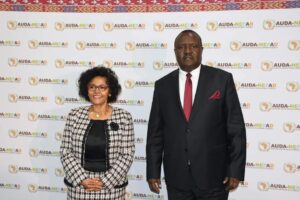
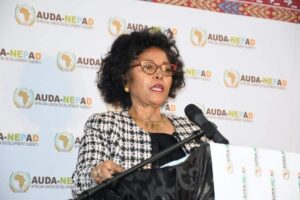
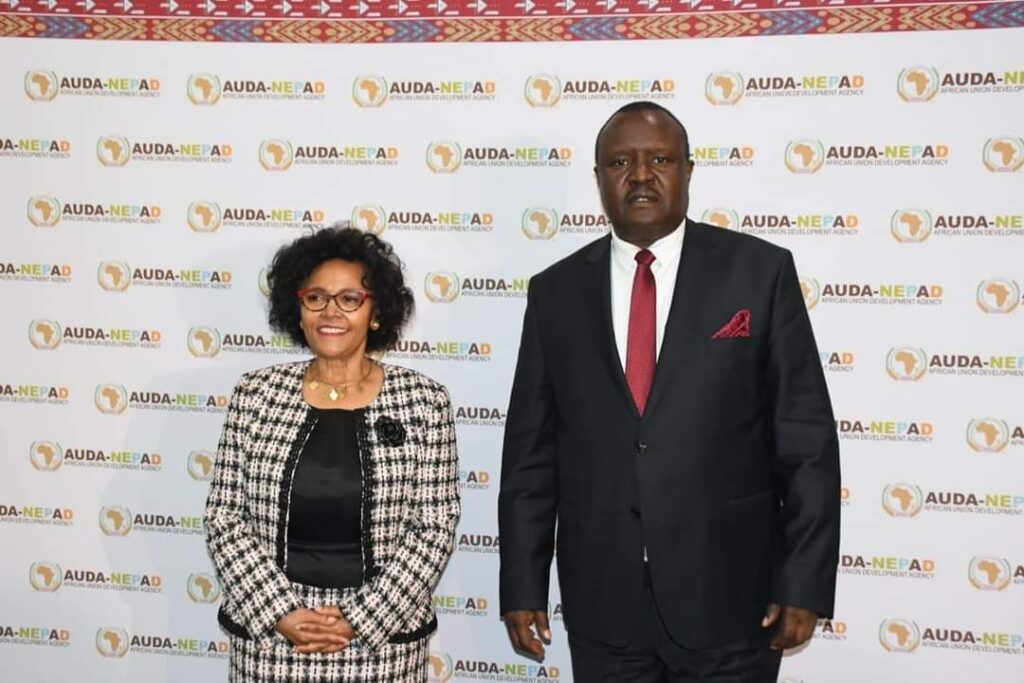
The President of the Pan-African Parliament (PAP) took part in the African Union Development Agency (AUDA-NEPAD)’s Chief Executive Officer (CEO) introductory meeting with the African Diplomatic Corps as well as cooperating and implementing partners, in Pretoria, South Africa.
Mrs. Nardos Bekele-Thomas officially assumed the role of AUDA-NEPAD’s CEO on 1st May 2022. The working lunch was convened to allow for discussions on strengthening and expanding the ongoing programmes with African Union Member States and Development Partners.

The platform also provided for discussions on the future initiatives, in the areas of Gender, Youth and Private Sector Engagement to advance the implementation of #Agenda2063 and AUDA NEPAD Programmes that are being implemented with Regional Economic Communities (RECs).

H.E. Chief Fortune Fortune Charumbira congratulated Mrs. Bekele-Thomas on her appointment and pledged the Pan-African Parliament’s support in the realisation of her mandate as the new CEO.

“The PAP and AU-NEPAD are two institutions that were establishment to concretize the commitment to make the African Union a people-centered organization.

With AU-NEPAD being the implementing arm, the PAP shall ensure that the citizens are given a platform to actively participate in the conceptualization of the policies aimed at achieving the Africa We Want.

The collaboration between the two institutions is therefore paramount,” said PAP President.

Professor Tshilidzi Marwala of South Africa appointed Rector of the United Nations University

Photo: Professor Marwala Photo Credit: University of Johannesburg

26 July 2022

Following consultations with the Director-General of the United Nations Educational, Scientific and Cultural Organization (UNESCO), Audrey Azoulay, and with her concurrence, United Nations Secretary-General António Guterres has appointed Professor Tshilidzi Marwala of South Africa as Rector of the United Nations University (UNU) in Tokyo.

Professor Marwala will be the seventh Rector of the United Nations University, as of 1 March 2023.  The decision to appoint Professor Marwala was taken after an extensive international search process.  Professor Marwala will succeed Professor David M. Malone of Canada who has served as UNU Rector since 2013.

Professor Marwala is an accomplished scholar and thought leader with multi-disciplinary research interests that include the theory and application of artificial intelligence to engineering, computer science, finance, social science and medicine.

He has an extensive track record in human capacity development and is committed to leveraging technology and global connectedness towards the pursuit of the Sustainable Development Goals.

Currently, Professor Marwala is the Vice-Chancellor and Principal of the University of Johannesburg.  Prior to this, he was the Deputy Vice-Chancellor for Research and Internationalization (2013-2017) and Executive Dean of the Faculty of Engineering and the Built Environment (2009-2013) at the University of Johannesburg.

From 2003 to 2008, he progressively held the positions of Associate Professor, Full Professor, the Carl and Emily Fuchs Chair of Systems and Control Engineering as well as the SARChI Chair of Systems Engineering at the Department of Electrical and Information Engineering at the University of the Witwatersrand.

He has been a visiting scholar at Harvard University, University of California at Berkeley, Wolfson College of the University of Cambridge and Nanjing Tech University. Furthermore, he has been a member of the International Consultative Council at the Silesian University of Technology, Gliwice, Poland, International Visiting Committee at Case Western Reserve University and a trustee of the Nelson Mandela Foundation.

Professor Marwala holds a doctorate specializing in Artificial Intelligence and Engineering from the University of Cambridge, a Master of Mechanical Engineering from the University of Pretoria and a Bachelor of Science in Mechanical Engineering (magna cum laude) from Case Western Reserve University.

He is a registered professional engineer, a Fellow of The World Academy of Sciences, the Academy of Science of South Africa, the African Academy of Sciences and the South African Academy of Engineering.

He is a member of the American Academy of Arts and Sciences, a Senior Member of the Institute of Electrical and Electronics Engineering and a distinguished member of the Association for Computing Machinery. He is fluent in English, Venda and Afrikaans.

UNU is a global think tank with 13 institutes in 12 countries. Through collaborative research and education, UNU supports efforts to resolve the pressing global challenges of human development and welfare that are the concern of the United Nations and its Member States.

UNU works in close partnership with other United Nations System organizations and leading research institutions to ensure that evidence-based research informs policymaking and generates solutions that improve the lives of people everywhere.

President Cyril Ramaphosa proudly congratulated Professor Tshilidzi Marwala on his new appointment as the Rector of the United Nations University.

The President described this appointment as well deserved, referring to Prof Marwala as an accomplished intellectual, having obtained numerous academic qualifications from various universities nationally and internationally and having held various key roles in the global academic landscape for development.

The President expressed  appreciation to Prof Marwala for his noble contribution to the country’s knowledge base and wished him great success in his new role, where he is confident that Prof Marwala will fly the South African flag higher and further.

Minister Pandor addresses the Palestinian Heads of Mission in Africa Conference

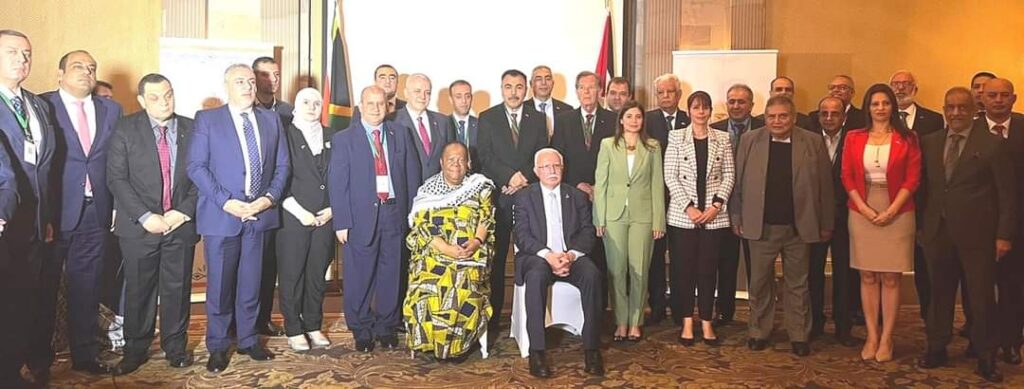
Photo: Minister Dr Naledi Pandor and Minister Dr Riad Malki with the Heads of Mission and delegates

26 July 2022

The Minister of International Relations and Cooperation, Dr Naledi Pandor, addressed the Palestinian Heads of Mission in Africa Conference at the Sheraton Hotel in Pretoria.

Minister Pandor was invited by the Palestinian Minister of Foreign Affairs and Expatriates, Dr Riad Malki, who visited South Africa to attend the Second Conference of the Palestinian African Heads of Mission, held on 26-27 July 2022, in Pretoria.

Since the dawn of democracy in 1994, South Africa has always been an ally of Palestine and has constantly highlighted the struggles of the Palestinian people, supported them on international platforms, and offered material assistance within its capacity.

The formal diplomatic relations were established on 15 February 1995.

The Palestinian Embassy was opened in South Africa in 1995, and the South African Representative Office was opened in 1999 in Ramallah. Based on historical solidarity and moral (human rights) grounds, the South African Government remains committed to the Palestinian struggle against Israeli occupation.

Address by Minister Pandor to the Conference of Palestinian Heads of Mission in Africa, Sheraton Hotel, Pretoria

His Excellency the Minister of Foreign Affairs of Palestine, Dr Malki,
Her Excellency, the Ambassador of Palestine to South Africa, Amb Hanan Jarrar,

Excellencies, the Ambassadors of Palestine to countries in Africa,

Ladies and Gentlemen,

It is my pleasure to warmly welcome our brothers and sisters from Palestine to South Africa. We are honoured that you chose South Africa as the venue for this important meeting.

The meeting here today could not have come at a more critical time in the history of your struggle for freedom and independence. The shifting sands in the geopolitical landscape of the Middle East present new challenges, as some countries might be considering new alliances in a changing world. We don’t know how this will impact the struggles of the Palestinian people and those we considered allies in your struggle. While some might be wavering in their commitment to the Palestinian cause, South Africa will remain steadfast in our support of your just quest for freedom, justice, and independence.

The Palestinian narrative evokes experiences of South Africa’s own history of racial segregation and oppression. As oppressed South Africans, we experienced first-hand the effects of racial inequality and discrimination, and we identify fully with the struggle for freedom and self-determination in Palestine.

Our position on Palestine has always been clear, consistent, and convergent with the broader international community. We will continue to support all efforts aimed at the establishment of a viable, contiguous Palestinian State, existing side-by-side in peace with Israel, within the internationally recognised 1967 borders, with East Jerusalem as its capital, in line with all relevant UN resolutions, and international law. We are aware that actions by Israel have sought to erase this possibility, this is the desire of the people of Palestine, and we support you.

South Africa affirms that the only way to achieve peace and stability in the Middle East is through reaching a lasting peace between Palestine and Israel, and restoring the legitimate rights of the Palestinian people, in accordance with the two-state solution and the relevant UN resolutions.

Israel’s continued pronouncements about the annexation of large parts of the West Bank and the building of additional settlements further undermines the prospects of peace and are glaring examples of violations of international law. Recent developments in Ukraine and the response of the most powerful in support of Ukraine should now make if plausible for the west to support the legitimate struggle of Palestinians.

Israel has consistently offended the UN charter and ignored territorial integrity and sovereignty. Since 1967, for over half a century, Israel has constructed over 160 settlements and outposts on land seized from the Palestinian people on which over 600,000 Israelis are living.

Since the adoption of the first UNSC resolution on the situation in Palestine in March 1948, and despite all subsequent resolutions, the international community has failed to ensure that these resolutions are implemented, and no concrete action has been taken to address the blatant violations of these resolutions.

How many more reports do we need that call Israel out on their unfair treatment of Palestinians and point out that Israel is implementing apartheid? That was a central part of Amnesty International’s ground-breaking report earlier this year, and the allegations were echoed by Israeli non-governmental organisations such as B’tselem, as well as Human Rights Watch and the UN Human Rights Council’s report “International Commission of Inquiry to Investigate Violations in the Occupied Palestinian Territory, including East Jerusalem. ”The latter report found Israel guilty of gross human rights abuses towards Palestinians. South African Dr Navi Pillay played a leading role as part of this Inquiry.

The Al-Mezan Centre for Human Rights report that was released in June this year shockingly recalls that over the last 15 years, Israeli military attacks have killed 5,418 Palestinians in the besieged Gaza Strip – 23% of the victims were children, 9% were women.

The fifteenth anniversary of the 2007 closure of the Gaza strip by Israel deprived its more than two million residents of opportunities to better their lives. The closure has devastated the economy in Gaza, contributed to fragmentation of the Palestinian people, and forms part of the Israeli authorities’ crimes against millions of Palestinians.

These reports are significant in raising global awareness of the conditions that Palestinians are subjected to, and they provide credence and support to an overwhelming body of factual evidence, all pointing to the fact that the State of Israel is committing crimes of Apartheid and persecution against Palestinians.

South Africa has urged the international community and the UN to ensure the safeguarding of the rights of the Palestinian people. In this regard, we welcomed the Special Session of the Human Rights Council, which was held in May last year, and we trust that the necessary action will be taken to follow-up on the Commissions’ findings.

South Africa’s view is that strong action to support Palestine must be taken by the UN and a committee on apartheid should be established under the auspices of the UN General Assembly to verify meets the criteria. If an apartheid state of the International Court of Justice should also be playing a stronger role in charging those linked to human rights violations.

In this regard, South Africa calls on UN Member States, as well as the international community to support efforts aimed at resolving the Israel/Palestine conflict and to continue putting pressure on Israel as the occupying power. South Africa calls upon the international community to work tirelessly for the attainment of peace, and to provide strong humanitarian, economic and political support.  Advocating for the rights of the Palestinian people must be accompanied by material and practical support.

South Africa is concerned at the continued human rights violations in the occupied territories and again reiterates that such violations only contribute to the fostering of hatred. Israel’s security and that of its future generations does not lie in the annexation of all Palestinian territories, the imprisonment of Palestinians, the erecting of high concrete walls and checkpoints, or the continued blockade of Gaza. Rather it lies in a peaceful and stable neighbour, a sovereign and independent Palestinian State, whose children, like Israeli children, can go to school, play, attend places of worship and compete in sporting activities in peace and security.

This can be achieved through sustained dialogue, negotiations and mediation, by both sides respecting one another and through compromise and understanding.

As Former President Mandela said, at a banquet in Cape Town for visiting President Yasser Arafat in 1998, I quote: “Our own humble experience has shown that negotiated solutions can be found even to conflicts that the world has come to regard as insoluble. It has taught us that such solutions emerge when former opponents reach out to find common ground”.

Your Excellencies, I cannot address this distinguished group of Ambassadors and not raise the issue of the African Union Commission’s decision to grant Israel Observer Status at the AU last year. As most of you know, this decision was taken unilaterally and without adequate consultation with all AU Members. The decision to grant Israel Observer Status is even more shocking in a year in which the oppressed people of Palestine were subjected to bombardments and continued illegal settlements on their land. The AU strenuously objected to the deaths of Palestinians and the destruction of civilian infrastructure. The decision by the AU Commission in this context is inexplicable.

The unjust actions committed by Israel offend the letter and spirit of the Charter of the AU. The AU embodies the aspirations of all Africans and reflects their confidence that it can lead the continent through the practical expression of the goals of the Charter, especially on issues relating to self-determination and decolonisation. Israel continues to illegally occupy Palestine in complete defiance of its international obligations and relevant UN resolutions.  It is therefore incomprehensible that the AU Commission chooses to reward Israel at a time when its oppression of Palestinians has been demonstrably more brutal.

South Africa objected to the granting of official observer status by the African Union on 22 July 2021. The matter was raised by South Africa at the AU on 6 February, at the 35th Ordinary Session of the AU Assembly, the decision to grant Israel observer status was unanimously suspended. In this regard, a committee will be set up to study the issue and the conclusions thereof to be presented at the AU Summit in 2023. I trust that this mistake will be corrected.

Your Excellency, against this backdrop, the meeting here in Pretoria is of particular importance, as it gives us an opportunity to chart our way forward in determining how we will put Palestine back onto the agenda of countries on the Continent. I trust that some of the important deliberations that will be undertaken during the Conference will serve as a guide on the way forward, particularly with regards to the continued and unwavering support for the Palestinian cause on the African continent.

Your Excellencies, allow me once more to convey our warmest greetings and a message of friendship and solidarity to the Palestinian People.

I wish you a fruitful and successful Conference.

Thank you.

Source: Dirco

Photo credit: Dirco

#PalestinianAfrican

#SAPalestinianRelations

#SolidarityForPalestin #Palestin

India Scripts History, First Tribal President Elected! 

25 July 2022

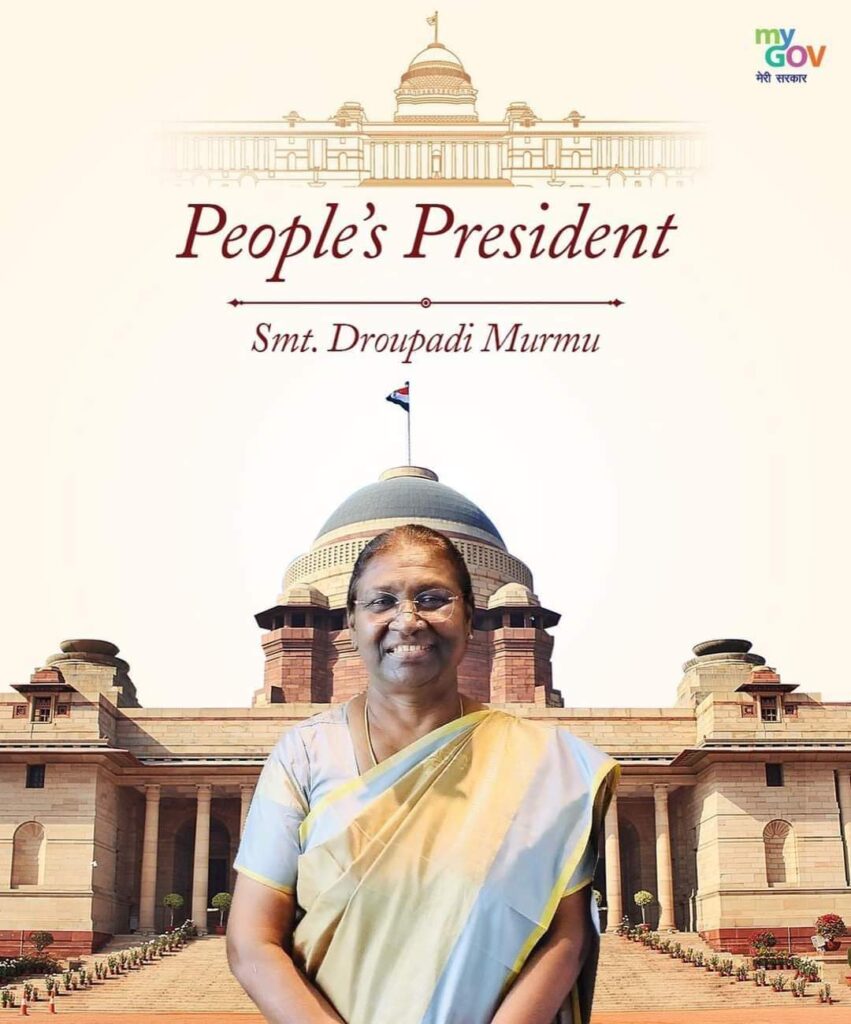
Congratulations Smt. Droupadi Murmu elected as India’s first tribal President! 🇮🇳

Smt. Droupadi Murmu scripted history to become the first tribal leader to be elected as the President of India.

Smt. Droupadi Murmu sealed her victory in the Presidential election over opposition candidate Yashwant Sinha by crossing the half-way mark and polling well over 53% votes by the end of third round itself.

She is the first President to be born after independence and is the youngest to occupy the top post. She is also the second woman to become the President.

National Democratic Alliance (NDA) candidate Droupadi Murmu secured victory in the Presidential poll after the third round of counting on Thursday.

After the end of the counting process that continued for more than 10 hours, returning officer P C Mody declared Murmu as the winner and said that she got 6,76,803 votes against Sinha’s 3,80,177 votes.

Murmu won by an overwhelming margin against Opposition’s Yashwant Sinha after receiving over 64 per cent valid votes in a day-long counting of ballots of MPs and MLAs, comprising the electoral college. With votes clearly stacked in Murmu’s favour, Prime Minister Narendra Modi congratulated President-elect and said that she had emerged as a ray of hope for our citizens, especially the poor, marginalised and the downtrodden.

Prime Minister also visited her residence to congratulate her after she emerged victorious in presidential poll.

“India scripts history. At a time when 1.3 billion Indians are marking Azadi Ka Amrit Mahotsav, a daughter of India hailing from a tribal community born in a remote part of eastern India has been elected our President!” PM said congratulating Murmu on this feat.

He noted that Murmu life, her early struggles, her rich service and her exemplary success motivates each and every Indian.

“She has emerged as a ray of hope for our citizens, especially the poor, marginalised and the downtrodden…Smt. Droupadi Murmu Ji has been an outstanding MLA and Minister.

She had an excellent tenure as Jharkhand Governor. I am certain she will be an outstanding President who will lead from the front and strengthen India’s development journey,” PM added in series of tweet.

#IndiaScriptsHistory

#FirstTribalPresidentElected

#SmtDroupadiMurmu

#indiasecondwomanpresident

Reinforcing Indonesia – South Africa Relations – A Book Launch

Photos: Charge D’Affaires of the Embassy, Victor J. Sambuaga Photo Credit: Embassy of Indonesia

25 July 2022

The Embassy of the Republic of Indonesia in Pretoria, South Africa, in collaboration with Awqaf SA, organized a book launch titled “Evaluating Shaykh Yusuf Al – Makassari and Imam ‘Abdullah Tidore’s Ideational Teachings: Reinforcing Indonesia – South Africa Relations”. The event was held in hybrid format in three different cities, namely Johannesburg, Durban, and Cape Town, and was also witnessed by virtual viewers both from South Africa and Indonesia.

The book is the result of a collaboration between the Indonesian Embassy in Pretoria and writers from South Africa and Indonesia who examined the roles and implications given by two prominent Indonesian figures, Shaykh Yusuf Al Makassari and Imam Abdullah Tidore (Tuan Guru) on the dynamics in South African society, especially from the socio-cultural aspects and religious practices. Furthermore, the book elaborates on how the teachings of the two figures influenced Indonesia-South Africa relations in the modern era.

The organization of the book launch was an effort by the Indonesian Embassy in Pretoria to socialize the information related to the book to relevant stakeholders. The event presented speakers from the contributors of book authors and officials from both countries, such as Ambassador Salman Al Farisi, former Indonesian Ambassador to South Africa (2018-2022), and Ambassador Ntombizodwa Msutukazi Lallie, Acting Deputy Director General for Asia and the Middle East, DIRCO.

In his remarks, Charge D’Affaires of the Embassy, Victor J. Sambuaga, emphasized the important role of non-state actors in establishing good relations between the two countries through people-to-people interactions, which has been proven by the impact that Sheikh Yusuf and Tuan Guru had on socio-cultural dynamics in South Africa. “The role of non-state actors must always be utilized by Indonesia and South Africa. The government, in this case, the Indonesian Embassy in Pretoria, will be the bridge that ensures the relationship between communities is well maintained”, said Sambuaga.

The launch was attended by around a hundred invitees who were present offline in the three cities and more than two hundred viewers who took part in the online activity from both South Africa and Indonesia. Various parties expressed their appreciation for the launch of this book and hoped that the book would benefit the readers.

Embassy of Indonesia in Pretoria South Africa

#EvaluatingShaykhYusufAlMakassari
#ImamAbdullahTidore’sIdeationalTeachings #ReinforcingIndonesiaSouthAfricaRelations

The Nation’s Pride Banyana Banyana

25 July 2022

South Africa🇿🇦 wins their first ever Women’s Nation Cup after beating host Morocco 🇲🇦 in the final of the tournament.

The SA national football women’s side became the pride of the country when they clinched the continental crown with a 2-1 victory in the final of the Women’s African Cup of Nations (WAFCON) in Morocco on Saturday night.

Banyana Banyana remained the only side to finish the tournament unbeaten after having defeated Nigeria 2-1 in their opening match before claiming wins over Burundi (3-1), Botswana (1-0), Tunisia (1-0), a semifinal victory over Zambia (1-0) and ultimately the title-deciding triumph over the hosts in the final.

The Diplomatic Informer Magazine SA together with the South Africans and continent, we are proud of the historic achievement by the Banyana Banyana team under coach, Desiree Ellis.

“This team of women have cemented their place as the pride of the nation and a great inspiration to many in South Africa and elsewhere. To achieve this milestone after five previous attempts speaks to the determination and hard work.

It is at times like these that we realise how much joy sports can bring to a nation.

“The Diplomatic Informer Magazine SA would like to convey our congratulatory wishes to the SA Football Association (SAFA) under Danny Jordaan, the coaching team under Desiree Ellis and, most importantly, the players who have raised the SA flag so high.

“We further congratulate Andile Dlamini, who was named Goalkeeper of the Tournament, and Desiree, who won the Coach of the Year (Women) award at the 2022 CAF Awards last week.

Photo credit: SAFA.net

Banyana_Banyana’s Desiree Ellis Named CAF Women’s Coach of the Year

23 July 2022

Congratulations Banyana Banyana head coach Desiree Ellis was named Women’s Coach of the Year at the 2022 CAF Awards in Rabat, Morocco.

It is the third consecutive time that she has won the award.

Under her stewardship, Banyana Banyana has made it to the final of the Women’s Africa Cup of Nations tournament. The South Africans also qualified for the 2023 Women’s World Cup.

#CAFAwards2022

#DesireeEllis

Egypt Celebrates the 70th anniversary of The Egyptian Revolution of the 23rd of July 1952  

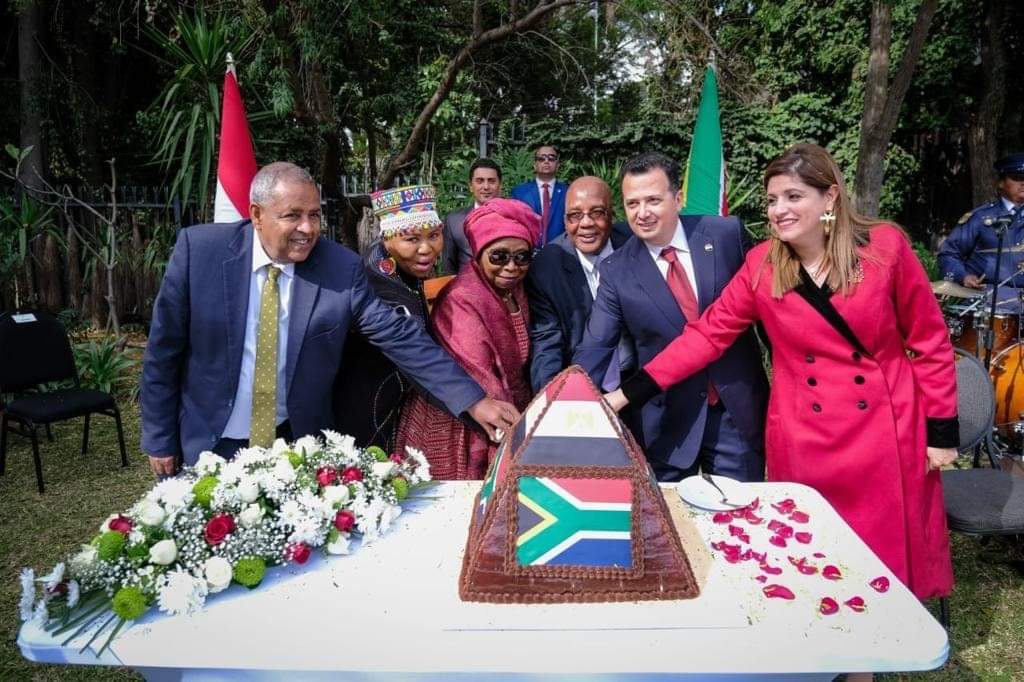
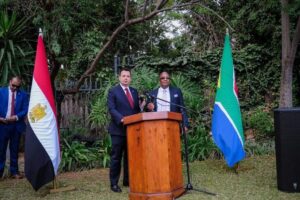
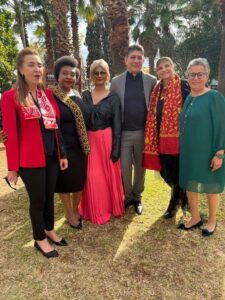
Photo: Cutting the cake are from Left to Right, Ambassador of Eritrea Salih Omar Abdu, Dean of the Diplomatic Corps, Minister Lindiwe Zulu, Minister Nkosazana Dlamini Zuma, Minister Aaron Motsoaledi, H.E. Ambassador Ahmed Elfadly of Egypt and Mrs Habiba Abdelrazek

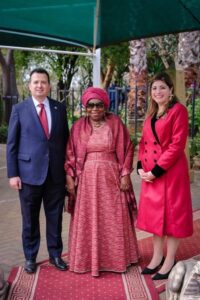
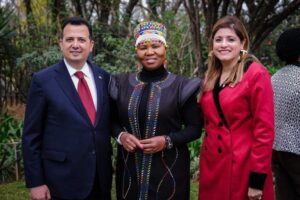
Photo: Left to Right, H.E. Ambassador Ahmed Elfadly of Egypt, Minister Nkosazana Dlamini Zuma and Mrs Habiba Abdelrazek

Photo: Left to Right, H.E. Ambassador Ahmed Elfadly of Egypt and Minister Aaron Motsoaledi

Photo: Left to Right, H.E. Ambassador Ahmed Elfadly of Egypt, Minister Lindiwe Zulu and Mrs Habiba Abdelrazek

23 July 2022

The National Day of Egypt is celebrated annually on 23 July, which coincides with the annual celebration of the Egyptian Revolution of 1952 when the modern Republic of Egypt was declared, ending the period of the Kingdom of Egypt.

The National Day/ Revolution Day, is the biggest non-religious public holiday in Egypt.

The Kingdom of Egypt, ruled by the Muhammad Ali Dynasty, was established in 1922 after Britain granted independence to Egypt. On 23 July 1952, a military coup led by General Muḥammad Naguib overthrew the king and established an independent Republic.

H.E. Ambassador Ahmed El Fadly and Mrs. Habiba Abdelrazek hosted the Embassy’s celebration of Egypt’s National day, commemorating the 70th anniversary of the 23rd of July Revolution.

The celebration was attended by H.E. Dr. Aaron Motsoaledi, Minister of Home Affairs, who officially represented the Government of South Africa, H.E. Dr. Nkosazana Dlamini Zuma, Minister of Cooperative Governance and Traditional Affairs and H.E. Lindiwe Zulu, Minister of Social Development.

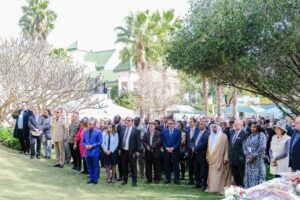
The Embassy was also honored to host all its guests from the Diplomatic Corps and from, the Egyptian community in South Africa, South Africans from the government, private sector, civil society and the media.

H.E. Ambassador Ahmed El Fadly seized the occasion of national day celebration as an opportunity to reflect on the great progress made towards advancing bilateral relations between Egypt and South Africa, and reasserted Egypt’s strong commitment that relations flourish not only for the benefit of the people’s of both countries, but for the benefit of the African continent as a whole.

Statement by H.E. Ambassador Ahmed Elfadly, Ambassador of the Arab Republic of Egypt to South Africa, Botswana & Lesotho on the occasion of the 70th anniversary of The Egyptian Revolution of the 23rd of July 1952

Welcome to the House of Egypt.

And thank you for bringing this beautiful sun with you.

It is an absolute privilege and pleasure to receive you on this very special day to commemorate the 70th anniversary of our 1952 Revolution, which also coincides this year with the centennial of our modern diplomacy that began when Egypt became a newly independent state in 1922. It also coincides with 80 years since the establishment of the first South African Mission in Egypt in 1942. Today, we also meet at a time where uncertainty appears to be the prevailing sentiment at this critical juncture of modern history in our “global village”.

Overnight, the once alarming news of COVID-19 with its lockdowns and loss of lives have been replaced by equally disturbing reports of military confrontations, economic sanctions and additional refugee crises, while the destructive effects of climate change are spreading across the globe.

Amidst these circumstances, and as the oldest nation state in the world, with over 7000 years of history, as well as multiple revolutions, preceding and succeeding the 1952 revolution, some may wonder why are we commemorating this specific revolution in particular?

The 1952 Revolution led by the late President Gamal Abdel Nasser was a major catalyst in asserting the Arab identity of Egypt, then enhancing her African identity in the 1950s, while leading a policy of non-alignment amidst the Cold War as of the 1960s. In this context, Egypt was a leading force behind the Pan-Arab, Pan-African and Non-Aligned Movements, supporting liberation movements throughout the Arab world and the African continent.

In the post-Cold War era, pursuing sustainable development as a peace dividend became a major challenge in this emerging global village. Hence, it was incumbent upon Egypt’s diplomacy to adapt to new challenges, such as water security, food security, climate change, cyber-security, illegal migration and other forms of organized crime. Upholding the principles of non-interference in the internal affairs of other nations, mutual respect, and the peaceful resolution of conflicts became paramount and have been basic tenets of Egypt’s diplomacy.

As we are currently embarking on establishing a New Republic in Egypt under the leadership of President Abdel Fattah El Sisi, we are firmly reasserting our African identity. Consequently, we are witnessing a renaissance in Egypt’s relations with her African brothers and sisters, particularly in the areas of peace and security, economic integration and development assistance.

The extensive Egyptian diplomatic presence in Africa helped precipitate this recent renaissance. To date, Cairo hosts 140 foreign embassies, and Egypt maintains diplomatic relations with 186 countries through 159 Resident Ambassadors and Consuls. In several capitals, Egypt is often the sole Arab and/or African voice by virtue of its extensive diplomatic representation.

As such, Egypt continues to play an instrumental role in peacekeeping operations in the world, and particularly in Africa, to protect civilians and rebuild peace, in spite of the numerous associated risks. Egypt is now the 7th largest troop and police contributing country to UN peacekeeping missions. It is also a major contributor to the African Peace and Security Architecture, with around 3200 Egyptian men and women deployed in harsh areas in various places in the world. In addition, last December, the African Union Center for Post-Conflict Reconstruction and Development was launched in Cairo, as a means to help prevent relapse into conflicts in the continent and as a contribution to “Silencing the Guns” in Africa.

We cannot simply honor the Founding Fathers of our African Union, such as Nasser, Nyerere, Nkrumah and others, by remembrance functions alone. We need to live up to their principles and ideals, guided by our common history of struggle against colonialism, the bonds of friendship and solidarity, and a common vision for the Africa We Want.

In this spirit, Agenda 2063 remains central to that vision and integrating the continent is key in achieving it. Presidents Ramaphosa & El Sisi see eye to eye on many continental challenges and opportunities in this regard. Testimony to that is the smooth transition of the Chairmanship of the African Union from South Africa to Egypt in February 2020, and South Africa’s support to Egypt’s membership in the New Development Bank of BRICS last year.

The Cape to Cairo road is another case in point. This developmental project is championed by President Ramaphosa and strongly supported by President El Sisi. It connects nine countries amounting to one third of the continent’s population and one half of its GDP. It is therefore a rare opportunity to redefine Africa according to its own interests, accelerating economic integration while boosting trade, investments and tourism, while bringing Africans closer together.

Both Presidents are also pioneering the continent’s effort to ensure Africans gain access to COVID vaccines, as well as the production of mRNA vaccines. I wish to also humbly recall President El Sisi’s initiative to provide medication to treat one million Africans suffering from Hepatitis-C … an initiative that is currently implemented or in planning phase in a number of African countries, including South Africa.

In addition, this November, Egypt will be honored to host COP27 on behalf of Africa, in Sharm El-Sheikh. It will be an opportunity for Africa to make its voice clearly heard, because our continent suffers from the most adverse impacts of climate change although it is not responsible for the current crisis, and we have seen it here recently with the devastating floods in KwaZulu-Natal. It also matters because Africa’s developmental gains and plans are at stake. But Egypt is already working hard, with its partners in the continent and beyond, to ensure that concrete climate action, is taken, for the benefit of the peoples of Africa and the entire world.

I am honored and blessed to serve as an Ambassador of Egypt to South Africa at a time where our leaders currently share a similar outlook to the continent and beyond. This was neither the case when South Africa was established as a nation state in 1910, nor when Egypt witnessed its 1952 Revolution.

South Africa opened its first Consulate General in Egypt in 1942. Egypt reciprocated in 1949. Then South Africa closed its mission in Egypt objecting to Egypt’s support to the liberation movements in South Africa in the 1950s. Later, Egypt formally severed relations with South Africa in 1960 for that same reason. It is no secret that Alfred Nzo, South Africa’s first Foreign Minister in the post-apartheid era was the head of the ANC Bureau in Cairo in the 1960s. Hence, it was only natural that these relations resumed after the demise of this apartheid regime and the onset of democracy in 1994.

However, after this long march to freedom, we have not yet achieved the Africa We Want. Africa has yet to build production capacities in its journey towards industrialization and the creation of wealth in accordance with Agenda 2063, instead of continuing to manage poverty. As we celebrated the Nelson Mandela Day yesterday, we are reminded by Madiba that “After climbing a great hill, one only finds that there are many more hills to climb “. But Madiba … as we were busy climbing the next hill, we lost one of your disciples two days ago, and a good friend of Egypt as well … Comrade Jessie Duarte, the Deputy Secretary General of the ANC.

I broke bread with Jessie a few months after assuming my Ambassadorial post in Pretoria. I admired her candor, her wit, her passion for her country and her strong belief in the importance of strengthening the bilateral relations between Egypt and South Africa. May Allah rest her soul in peace. I would also kindly request a moment of silence in her honor.

Honoring the people we cherish takes more than standing in moments of silence. In this spirit, allow me to share with you a number of developments in our bilateral relations with South Africa over the past year.

Trade and Investment have been at the core of these developments. Fully aware of the empowering potential of Intra-African Trade Fairs, H.E. Mrs. Nevein Gamea, Minister of Trade & Industry led 41 Egyptian companies to the Second Fair that took place in Durban last November. Egypt’s pavilion was the largest, in support of KZN, as this was the first major event to be held in South Africa after the civil unrest there in July 2021. Last April, Egypt resumed its participation in the 128 year old Rand Show and has been awarded the best international pavilion for this year.

We intend to triple our exports to Africa by 2025, from approximately $5 billion to $15 billion … Likewise, Egypt is the largest export market for South African goods and services in North Africa. Despite COVID-19, the volume of trade between both countries has already increased 61% in 2021 and we expect more in the years to come, as the AfCFTA is operationalized and non-trade barriers are removed, particularly in the agricultural and pharmaceutical sectors.

Investment has its share of positive results as well. Last January, Vodacom Group has received minority shareholder backing to acquire a 55% stake in Vodafone Egypt for $2.7 billion. This transaction further’s the group’s ambition of becoming one of Africa’s leading telecos. Last May, South Africa’s Sanlam & Allianz announced that they are merging their operations in Africa via a joint venture worth $2 billion. This shall mark Sanlam’s first entry into Egypt. Congratulations Vodacom and Sanlam!

Our investors have also been present in South Africa mainly as production centers not service providers. For example, MCV has been manufacturing commercial vehicles in South Africa since 2007, with a production capacity equivalent to 20% of domestic production in South Africa. You may have seen one of their buses on display as you entered. Feel free to check it out again! We salute MCV for staying the course as an important Egyptian production site on South African soil, despite increasing challenges in that sector. Other companies are considering entering the market in South Africa, namely in the power, pharmaceutical and construction sectors.

Sustaining these positive developments and more, shall require strong government to government relations and strong people to people relations.

In this context, I am pleased to indicate that the 9th Joint Cooperation Commission that took place in Cairo 23-25 May 2022 was a success. It was headed by Ministers Naledi Pandor and Sameh Shoukry after 12 years of inaction since the 8th JCC was held in 2010. Our two Ministers agreed to propose to their Principals the elevation of bilateral relations to the highest level possible.

As for people to people relations, allow me to share this anecdote : South Africans used to traditionally support the Zamalek football team, partly because they thought it was in the Zamalek neighborhood that housed the African Association the Association that supported African movements in exile. But as of October 2020, South Africans “defected” to support Zamalek’s main rival : Al Ahly. That was when Pitso Mosimane became the first African to coach Al Ahly and the first South African coach in the Egyptian Football League. During his tenure, Pitso earned the support of 60 million fans of Al Ahly and the vast majority of South Africans. As he chose to end his contract a few weeks ago, South Africans can now freely choose which Egyptian football team to support.

Free movement of people is equally important in people to people relations! As such, Egypt announced that as of 1st April 2022, South African nationals are eligible to obtain a visa upon arrival. Of course, we are aware that 1st of April is April Fool’s day but I assure you it was not a joke! In fact, South Africa became the first African country to enjoy this privilege. I sincerely hope that the Government of South Africa can reciprocate soon.

Ever since, our Egyptair flights, have been flying four times a week between Cairo and Johannesburg, and have been fully booked for weeks. Hence, we intend to work on expanding and deepening the presence of Egyptair in South Africa, which by the way celebrated its 90th anniversary a few months ago.

Tourism has also been on the rise. I am glad that South African influencers like Lerato Kganyago have visited Egypt and have enjoyed their trip there. We encourage everybody to visit the cradle of civilizations … and look forward to seeing you visit the Grand Egyptian Museum after its expected inauguration later this year.

In people to people relations, the diasporas in both countries play an important role. The increasing presence of Egyptian citizens in the diaspora to about 10 million citizens over the past five decades has also been an important asset in Egyptian diplomacy.

Finally, I would like to thank the Embassy Offices and staff for their efforts in organizing today’s event, always with a big smile on their faces. I don’t know how! Last, but not least, of course … a special warm thank you to my better half. Habiba Abdelrazek who without her, one would not have been able to continue climbing the hills that Madiba reminds us of.

Once again, thank you everybody.

The Diplomatic Informer Magazine SA wishes to congratulate the Government and the people of Egypt on the occasion of the 70th anniversary of the Egyptian Revolution. Wishing the Government and the people of Egypt continued unity, peace and prosperity.

– Embassy of the Arab Republic of Egypt to South Africa, Botswana & Lesotho

– The Diplomatic Informer Magazine SA

#EgyptSARelations

#EgyptNationalDay

#EgyptRevolutionDay

Department of International Relations and Cooperation and the Embassy of the State of Qatar spends 67 minutes of community work as part of Nelson Mandela International Day.

Deputy Minister Candith Mashego-Dlamini and the Ambassador of the State of Qatar, HE Tariq Ali Faraj Al-Ansari, visit the Mookgopong Old Age Centre, in Mookgopong, Limpopo Province, South Africa, 22 July 2022. Photo: Katlholo Maifadi / DIRCO

 22 July 2022

The Deputy Minister of the Department of International Relations and Cooperation, Ms Candith Mashego-Dlamini, joined by the Ambassador of the State of Qatar, HE Tariq Ali Faraj Al-Ansari, visited the town Mookgopong in the Limpopo Province, where they jointly spent 67 minutes of community work as part of Nelson Mandela International Day.

Mandela’s birth month of July presents an opportunity for all around the world to raise awareness and expand the reach of Madiba’s values – fighting injustice, practicing reconciliation and helping people in need. Accordingly, Deputy Minister Mashego-Dlamini and Ambassador Al-Ansari donated a number of items to the old age home.

As we continue to celebrate Nelson Mandela International Day and Mandela month, let us continue to reflect on justice, civil rights, combat discrimination, champion democracy, equality and humanrights.  🇿🇦

May the  life, work and the legacy of Nelson Mandela continues to inspire us all and people around the world.

#SAQatarRelations

#NelsonMandelaDay

#NelsonMandelaMonth

#makeeverydayamandeladay