Seminar on Youm-E-Istehsal (Exploitation Day), Jammu Kashmir

5 August 2022

Kashmir Solidarity Day or Kashmir Day, is a national holiday in Pakistan and also observed by Kashmiri nationalists on 5 February each year.

For the years Pakistan has been observing ‘Kashmir Day’ on February 5, to express solidarity with the people of India-administered Kashmir.

Besides observing a public holiday across the country, a one-minute silence at 10am is also held as a mark of respect to the thousands of Kashmiri people who have lost their lives in an independence struggle against India since 1989.

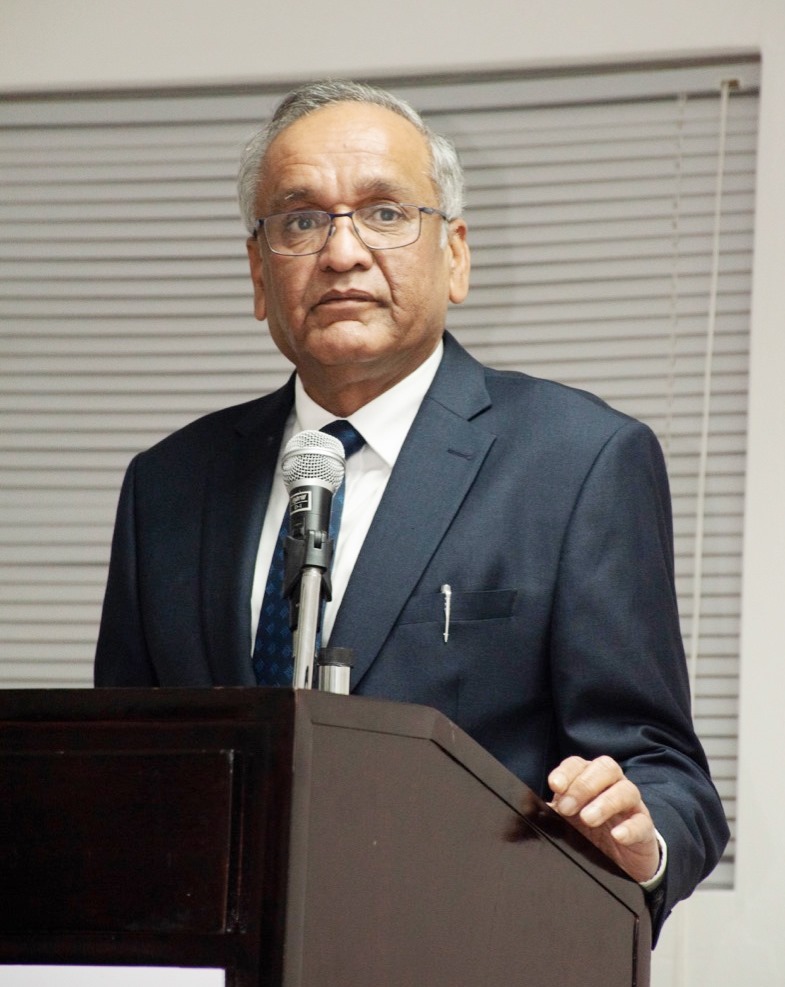
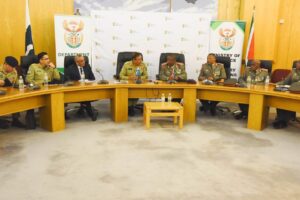
A Seminar was held on 4th August at the Pakistan High Commission Pretoria to mark the Youm-e-Istehsal (Exploitation Day), Jammu Kashmir 2022 falling on 5th August. The day marks the completion of three years since India’s illegal action of revoking the special status of Indian Illegally Occupied Jammu Kashmir (IIOJK).

The program was attended by around 30 intellectuals, academia, diplomats, journalists and Kashmir activists. Key note address was given by Dr. Haroon Aziz, titled ‘The Morphology of Article 370 of the Constitution of India from a South African liberationist perspective’. Dr. Haroon Aziz was himself imprisoned several times for struggle against apartheid. He is author of a large number of renowned books.

Speakers and participants condemned India’s illegal action of 5 August 2019 and the atrocities committed by the Indian security forces in the illegally occupied territory. They urged an early resolution of the Jammu Kashmir dispute according to the wishes of the people of Jammu Kashmir as enshrined in UN Security Council Resolutions. They also paid tribute to the martyrs of Kashmir, the freedom struggle and reaffirmed their unwavering support to the freedom of the people of the Jammu and Kashmir.

In his remarks, High Commissioner Mazhar Javed highlighted the illegal nature of India action of 5 August 2019 which was in clear violation of international law and the UN Security Council resolutions. The High Commissioner also exposed the India’s malicious campaign to convert the Muslims in IIOJK from a majority to a minority by issuing domiciles to non-Kashmiris and by reallocation of electoral constituencies through the so-called ‘delimitation commission’.

#KashmirSolidarityDay

#Kashmir Day

#Exploitation Day

#JammuKashmir

The State of Palestine condemns the Israeli occupation’s premeditated assault on the Palestinian people in Gaza

5 August 2022

The State of Palestine condemns the Israeli occupation’s premeditated assault on the Palestinian people in Gaza. It stresses that Israel’s continued aggression, including its recent assault on Gaza and the continued illegal siege of the Strip, is in flagrant and grave breach of every tenet of international law, including the Fourth Geneva Convention, and United Nations resolutions.

The Ministry calls on the international community, in particular the Security Council and High Contracting Parties to the Fourth Geneva Convention, to take immediate action to bring a halt to this Israeli military aggression against the defenseless Palestinian people in the Occupied Palestinian Territory and to save human lives.

The absence of international accountability continues to encourage Israel, the colonial occupying Power, to persist in carrying out serious international crimes against the Palestinian people, trampling on their human rights and causing widespread death, injury and wanton destruction.

The Security Council’s paralysis in particular and familiar to provide protection has led Israel to believe that it has the green light to kill Palestinians, including children, at will and that it can perpetrate its crimes without any consequence.

The priority right now is stopping the Israeli campaign of killing and destruction. Concurrently, ending the exceptional treatment of Israel, the colonial occupying Power, must come to an end. This exceptionalism and the application of double standards has only encouraged its impunity and allowed for the wanton killing and destruction to go on endlessly, shredding any credibility of the international system. Rogue states like Israel that do not respect international law and breach it with utter contempt should not be applauded and appeased by the international community. They must be denounced and held responsible for their crimes.

Kazakhstan Urges To Expand Nuclear-Free-Zones

5 August 2022

BY AIBARSHYN AKHMETKALI

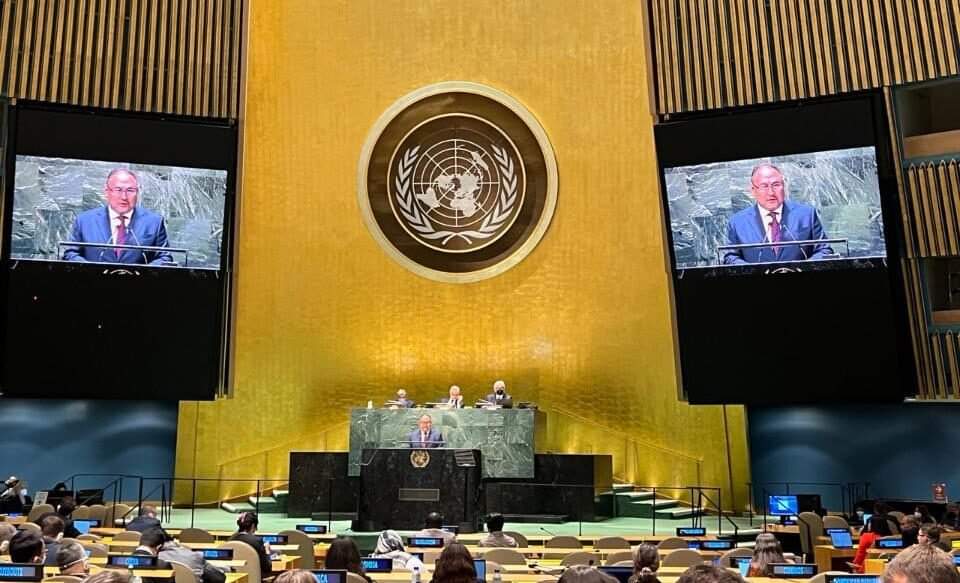
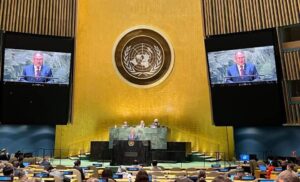
Kazakhstan has undertaken a deliberate policy to strengthen the nuclear non-proliferation regime and make efforts toward the universal goal of total elimination of nuclear weapons as well as expanding nuclear-weapon-free zones, said Akan Rakhmetullin, First Deputy Minister of Foreign Affairs during the Tenth Review Conference of the Treaty on the Non-Proliferation of Nuclear Weapons (NPT) on Aug. 3 in New York, reported the foreign ministry’s press service.

Kazakhstan, being one of the world’s largest nuclear test sites in the past, where the Soviet authorities conducted over 400 nuclear tests, closed its polygon in 1991 and voluntarily abandoned its nuclear arsenal, despite having the fourth largest arsenal in the world. Kazakhstan became a member state of the NPT in 1993.

The Kazakh delegation, led by Rakhmetullin, attended the review conference along with 133 state representatives and non-governmental organizations. The conference takes place in New York from Aug. 1 to 26.

According to Rakhmetullin, Kazakhstan strictly follows the three pillars of the treaty, which are nuclear disarmament, non–proliferation, and the use of atomic energy for peaceful purposes. Having experienced the detrimental consequences of nuclear tests, Kazakhstan urges other states to maintain strict compliance with all these “cornerstone principles of the NPT,” said Rakhmetullin.

United Nations Secretary-General António Guterres said that the world “needs the NPT as much as ever,” according to a UN press release.

He stressed that geopolitical tensions around the world make states “seek false security in stockpiling,” which on the contrary, increases instability. With around 13,000 nuclear weapons held in arsenals around the world, “humanity is just one misunderstanding, one miscalculation away from nuclear annihilation,” said Guterres.

In this regard, Rakhmetullin on behalf of the Central Asian Nuclear-Weapon-Free Zone (CANWFZ) states that include Kyrgyzstan, Tajikistan, Turkmenistan and Uzbekistan, encouraged the conference participants to support efforts to establish nuclear-weapon-free zones in other regions of the world.

Kazakhstan is committed to strengthening the nuclear non-proliferation regime during the country’s chairmanship on the First Committee that deals with disarmament, global challenges and threats to peace during the upcoming 77th session of the UN General Assembly.

Rakhmetullin also reiterated that Kazakhstan as a chair of the Third Conference of the Treaty on the Prohibition of Nuclear Weapons will make every effort to achieve the universal goal of the total elimination of nuclear weapons.

During the sideline , Rakhmetullin met with representatives of states party to NPT, including the U.S. Under Secretary of State Bonnie Jenkins, Assistant Minister for Trade of Australia Senator Tim Ayres, Secretary of State of the Ministry of Foreign Affairs and European Integration of Moldova Ruslan Bolbocean to discuss expansion of cooperation on the peaceful use of atomic energy.

The treaty was adopted by the UN General Assembly in 1968 and legalized the nuclear arsenals of the United Kingdom, China, Russia, the United States, and France. Other signatory states are obliged not to develop or purchase nuclear weapons while the recognized nuclear states took the commitment to work towards eventual nuclear disarmament. 191 states have signed the treaty to date. The review conference is organized every five years. The previous conference was held in 2015.

Photo: First Deputy Minister of Foreign Affairs Akan Rakhmetullin delivering a speech at Tenth Review Conference of NPT. Photo credit: gov.kz

Source: The Astana Times

Chairman, Joint Chiefs of Staff Committee of PAakistan Paid Official Visit To South Africa

5 August 2022

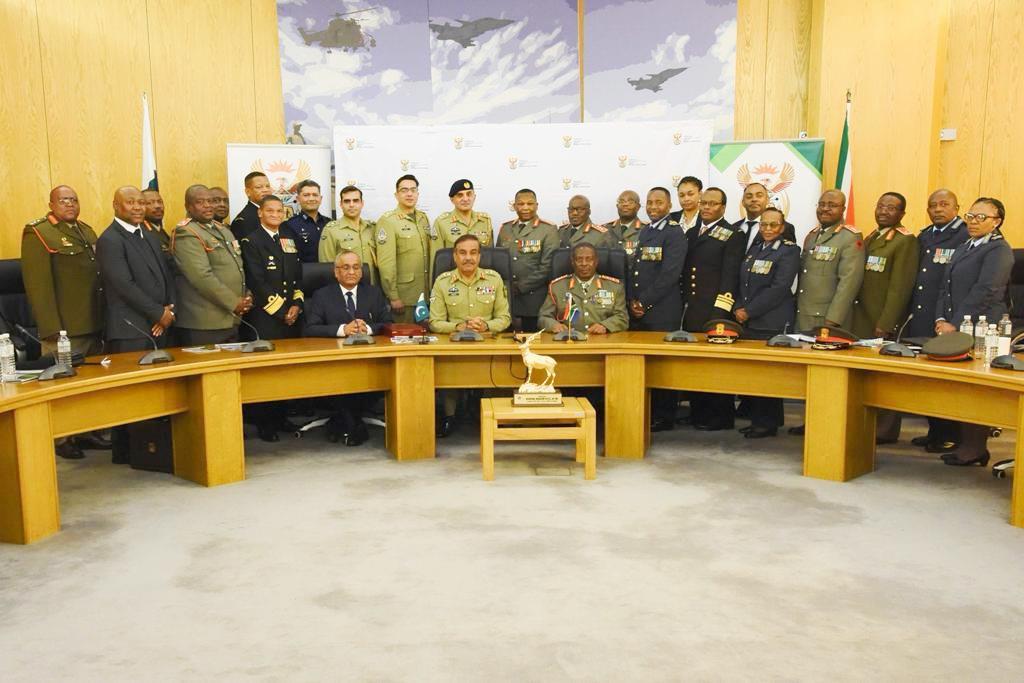
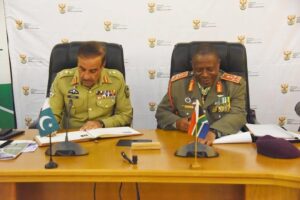
Chairman, Joint Chiefs of Staff Committee, General Nadeem Raza, visited South Africa from 24 to 28 July 2022 on an invitation by the Chief of the South African National Defence Force, General Rudzani Maphwanya.

The visit was aimed at nurturing the growing bilateral relations between the two country’s militaries. The visiting Chairman held meetings with the leadership of the South Africa National Defence Force (SANDF) and discussed ways and means to promote the existing friendly relations between the two institutions. The two countries enjoy friendly and mutually beneficial relations in the field of defense.

High Commission of Pakistan Pretoria, South Africa

The South Africa-Botswana Bi-National Commission (BNC)

5 August 2022

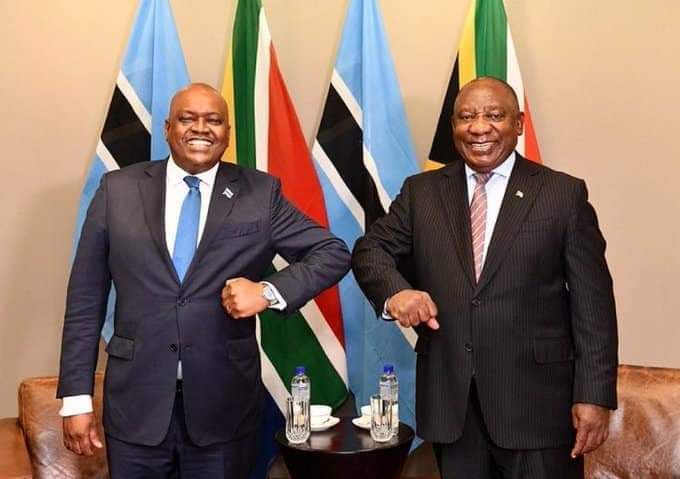
His Excellency President Cyril Ramaphosa arrived at the Sir Seretse Khama International Airport in the Republic of Botswana where he is on a working visit to lead talks at the High Level South Africa-Botswana Business Roundtable.

The High Level South Africa – Botswana Business Roundtable happens at the backdrop of the fifth session of the South Africa-Botswana Bi-National Commission (BNC) which took place on 22 April 2022 in Tshwane.

This year marks 28 years of diplomatic and bilateral cooperation for South Africa and Botswana – spanning across trade & investment, energy, agriculture, tourism, youth & sport, infrastructure development, culture, mining, defence & security, immigration, environmental conservation and management, transport as well as information and communication technologies.

Remarks by President Cyril Ramaphosa at the South Africa – Botswana Business Roundtable, Gaborone ICC, Gaborone

I am pleased that the undertaking we gave each other in April this year to hold this engagement has now materialised.

We have been looking forward to this visit to Gaborone to commemorate and celebrate 28 years of diplomatic ties between our two countries.

The trade and investment ties between our two countries have grown stronger over the years. They lay a firm basis for even greater economic cooperation and integration into the future.

My delegation comprises Ministers and officials, and representatives from our state-owned companies, financial institutions and South African business.

I am encouraged by the work that has already begun through our respective Trade and Industry Ministers to align our plans towards a common SACU plan of action for operationalising the African Continental Free Trade Area.

The joint export promotion platforms that are being discussed at SACU level for leveraging AfCFTA trade opportunities are promising.

I urge that the same vigour be given to concluding the work of creating industrial value-chains in the SACU.

Through these value-chains we will be able to grow our industrial exports to the rest of the continent.

New markets in West, East, North and Central Africa hold immense potential for both South Africa and Botswana.

We will be able to produce and export local goods, products and services to our fellow African countries that would otherwise be sourced from outside the continent.

Even as we do so, we do not seek to displace other African businesses.

The intention instead is complementary trade and industrial development.

Botswana and South Africa can both achieve more by working closely together.

The development of value-chains can also move SACU towards a brighter new future of joint investment and development.

I am also pleased to note that work is underway in SACU on a Work Programme on Industrialisation to promote industrial development and regional value chains, export promotion, investment attraction and promotion.

Work is already underway on leather and leather products, fresh produce, meat and meat products, textiles, clothing, cosmetics and essential oils.

These sectors present opportunities for the development of regional value chains across region.

They also present opportunities for SACU exports to the rest of Africa, to the United States under AGOA, to the European Union under the EPA, and to other strategic markets in Asia and the Middle East.

There are also opportunities for further cooperation in minerals.

Botswana is currently the chair of the Kimberley Process, an initiative that has successfully addressed concerns regarding the diamond industry, and last year was the world’s leading producer of diamonds by value.

In April this year you opened the first SACU Investment Roundtable in Gaborone under the theme “Positioning SACU as an industrial, investment, manufacturing and innovation hub for the African continent and beyond”

This remains our collective aspiration.

Over the past five years, South Africa’s foreign direct investment stock in Botswana has increased year-on-year, reaching US$ 5.1 billion in 2021.

While we will continue to encourage South African investment into Botswana, we are encouraged by the Botswana companies that have already invested in South Africa.

Between January 2003 and December 2021, we saw nine FDI projects from Botswana to South Africa.

They attracted capital investment worth R3.9 billion, resulting in the creation of over 2,000 jobs.

We would like to see these numbers grow exponentially.

Intra-African trade opportunities accruing from the AfCFTA can only be realised if we facilitate intra-Africa investments.

In particular, we need to encourage our respective companies to invest in areas that will address the continent’s infrastructure and industrial deficits.

South Africa is committed to supporting our partners on the continent to reach their industrialisation goals.

As Team South Africa we want to be part of the African growth story by way of strategic investments into the continent by our companies, financial institutions and state-owned companies.

It is our expectation that today’s session will unpack all these matters further, and that we will jointly identify the priorities for strengthening the Botswana-South Africa economic relationship.

I look forward to vibrant and productive discussions.

#SAinBotswana 🇿🇦🇧🇼 #BetterAfricaBetterWorld

#BetterAfricaBetterWorld 🌍

Deputy Minister Candith Mashego-Dlamini receives Vietnam delegation led by Mr Truong Quang Hoai Nam

2 August 2022

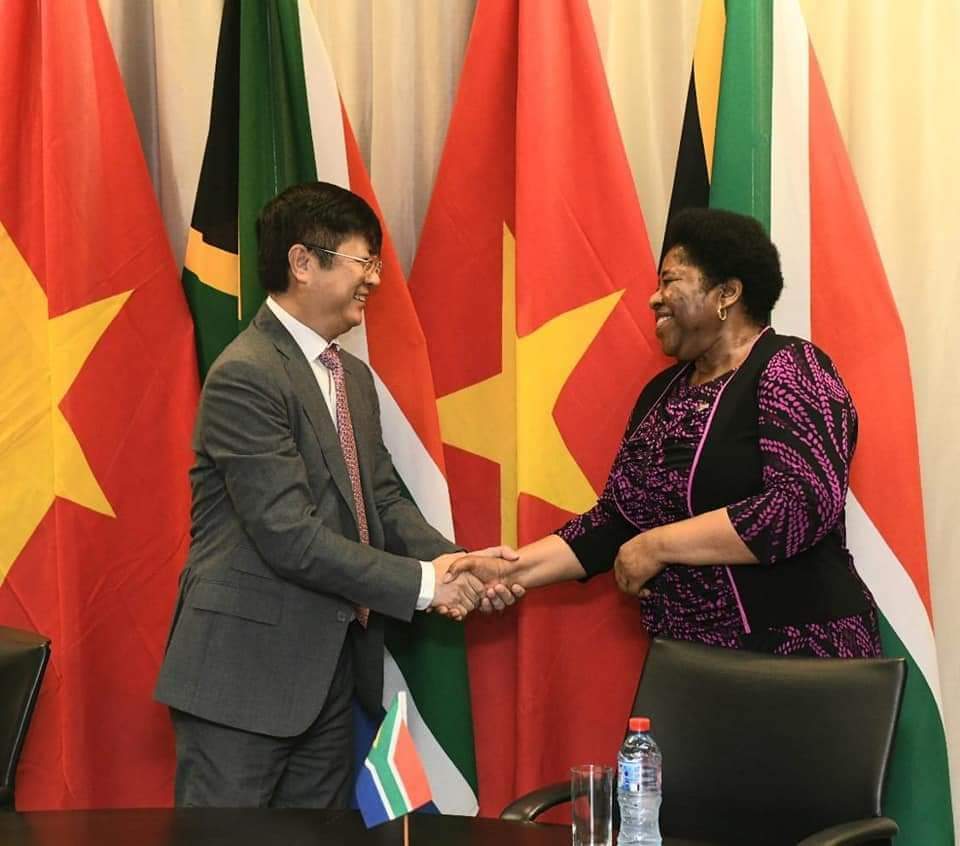
Deputy Minister Candith Mashego-Dlamini receiving a courtesy call from a Vietnam delegation led by Mr Truong Quang Hoai Nam.

South Africa and Vietnam established diplomatic relations in December 1993 which were initially managed through a non-resident Ambassador. Vietnam established a residential Embassy in Pretoria in 2000 and South Africa established a residential Embassy in Hanoi on 1 October 2002.

The Ambassador in Hanoi is only accredited to the Socialist Republic of Vietnam on a resident basis. South Africa has an Honorary Consul based in Ho Chi Minh City.

The Embassy primarily focuses on furthering the cordial bilateral relations, economic diplomacy and consular services. Economic diplomacy evolves around trade between the two countries that includes promoting South African exports to Viet Nam, Vietnamese investments to South Africa and promoting South Africa as a tourist destination to Vietnamese.

The South African Embassy in Hanoi issues visas to Vietnamese passport-holders wishing to visit the Republic of South Africa.

The South African foreign policy is driven by the domestic imperatives. Therefore, the work of the Embassy is in line and supports the South African government programmes of mitigating the COVID-19 pandemic, accelerating economic recovery and eradicating the triple burden of unemployment, inequality and poverty.

The two countries have since entered into different structural relationships.

Partnership Forum to promote bilateral relations and cooperation, especially in the areas of economics, trade, culture, science and technology.

Joint Trade Committee to strengthen relations, cooperate and jointly contribute to trade between the two countries.

Defence Dialogue to exchange issues of mutual interest, to identify and determine future areas of defence cooperation in accordance with each party’s national policies.

The two countries continue to enjoy interaction and visitations at the high levels of Presidency and Ministers.

Imports and exports between South Africa and Vietnam are on a healthy footing and there are many opportunities to increase bilateral trade as well as investment.

In 2020, bilateral trade between South Africa and Vietnam amounted to USD 1.4 billion, a considerable rise from USD 1.1 billion in 2019.

Trade statistics for the past five years:

2016

Total trade between South Africa and Vietnam – R20,589 billion

South African exports to Vietnam – R3,126 billion

Vietnam exports to South Africa – R17,463 billion

2017

Total trade between South Africa and Vietnam – R16,829 billion

South African exports to Vietnam – R3,225 billion

Vietnam exports to South Africa – R13,604 billion

2018

Total trade between South Africa and Vietnam – R16,352 billion

South African exports to Vietnam – R4,412 billion

Vietnam exports to South Africa – R11,940 billion

2019

Total trade between SA and Vietnam – R17,963 billion

Exports from SA to Vietnam – R4,084 billion

Imports from Vietnam to SA – R13,879 billion

2020

Total trade between SA and Vietnam – R23,825 billion

Exports from SA to Vietnam – R9,471 billion

Imports from Vietnam to SA – R14,354 billion

Tourism is a nascent market between the two countries which can be nurtured result in greater number of people to people interaction. SA Tourism is not represented in Vietnam; therefore, the Embassy in collaboration South African Tourism Hub promotes tourism to South Africa. In 2019, 3,271 Vietnamese tourists visited South Africa. In 2020 and 2021, the numbers declined significantly due to the COVID-19 pandemic.

Photos Credit Dirco

 #29YearsOfDiplomaticRelations

#TravelSmartWithDIRCO

#SAVietnamRelations 🇿🇦🇻🇳

NEW ZEALAND HIGH COMMISSION IN PRETORIA CELEBRATES MATARIKI

Photo: New Zealand High Commissioner H.E.Emma Dunlop-Bennett

30 JUL 2022

New Zealand High Commission celebrated “Matariki” a special occasion in
the New Zealand calendar which marks the start of the Māori New Year.
Signified by the Matariki cluster of stars reappearing in our night sky,
a time to reflect on the past year, celebrate the present, and plan for
the year ahead.

Matariki is a star cluster that appears in the early morning sky in New
Zealand during the mid-winter months. The star cluster is well known
throughout the world and at different times of the year can be seen
around the globe. It is one of the brightest clusters in the sky,
containing hundreds of member stars.

Matariki has different names around the world. In English, it is called
by its ancient Greek name, Pleiades or the Seven Sisters. In Hawaiian it
is Makali’i, ‘eyes of royalty’, and in Japan it is Subaru, meaning
‘gathered together’

Matariki is known as the Māori New Year in Te Ao Māori (the Māori world
view). Closely connected with the maramataka (the Māori lunar calendar),
the reappearance of the Matariki stars in the early morning sky brings
the past year to a close and marks the beginning of the New Year.
Mātauranga Māori (ancestral knowledge and wisdom) is at the heart of
celebrations of the Matariki public holiday and it will be a time for;

Remembrance – Honouring those we have lost since the last rising of
Matariki
Celebrating the present – Gathering together to give thanks for what we
have
Looking to the future – Looking forward to the promise of a new year
Historically, the stars of Matariki were also closely tied to planting,
harvesting and hunting. If the stars appeared clear and bright, it
signified an abundant season ahead.

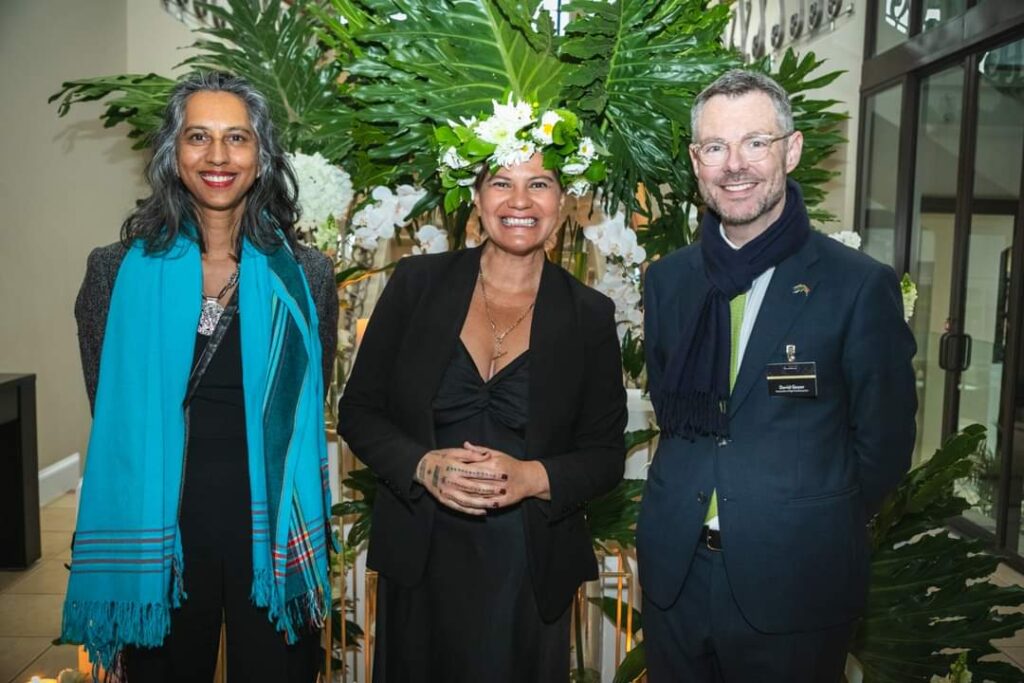
The New Zealand High Commission in Pretoria hosted the Diplomatic Corps,
Government officials, Academia, Civil Society, South African Community
and friends at the Official Residence on 20 June to celebrate Matariki,
“The rising of the Matariki stars – known in South Africa as the
IsiLimela stars” – marked the New Year for Māori.

A highlight of the beautiful winter’s evening in Pretoria was being able
to view star clusters through high-powered telescopes.  Professor David
Buckley gave incredible insight into the scientific and mythological
significance of the Matariki star cluster, as well as Professor Derck P
Smits and Dr Andri Prozesky from UNISA helped the guests with navigating
the southern African night sky.

Tukua kia tū takitahi ngā whetū o te rangi – Each star in the sky shines
its own light (as each of us do!)

SPEECH BY HER EXCELLENCY EMMA DUNLOP-BENNETT, NEW ZEALAND HIGH
COMMISSIONER TO THE REPUBLIC OF SOUTH AFRICA
“CELEBRATING THE RISING OF THE MATARIKI STARS”

Tena koutou, tena koutou, tena koutou katoa.
Nau mai, Haere mai mai ki tenei whare of Aotearoa
Welcome to Aotearoa New Zealand’s house.

My name is Emma Dunlop-Bennett, and on behalf of Te Aka Aorere, and the
New Zealand High Commission it is my absolute honour to welcome you
tonight to celebrate with us the rising of the Matariki stars.  We have
a diverse collective of people – senior members of the government,
ambassadors, business, civil society, academia and honorary consuls here
tonight. However, once you enter into Aotearoa’s house, you become
whanau – family. So welcome to Aotearoa’s house as whanau!

Matariki is a cluster of nine stars, which you may know as Pleiades.
Māori believe that appearance of Matariki in the morning sky in
mid-winter marks the Māori New Year.  Each of the nine stars symbolise a
particular aspect of the environment.  You will see nine easels with
posters depicting each star, through a te ao Māori lens, designed by a
Māori design student Jordan Tane.

For our tūpuna, our Māori ancestors, astronomy was interwoven with all
facets of life. Meticulous observations of the movements of the stars
and planets, the changing position of the sun, and the phases of the
moon were recorded and handed down from generation to generation.  The
knowledge was connected to seasonal activities such as planting and
harvesting of crops. If we take our Tohu wine, that we are serving
tonight for example, the appearance of the Matariki stars signals a time
to start planning and planting the grapes, while the disappearance of
the stars in autumn is a signal to harvest the grapes.

Matariki is an opportunity for us to come together and reflect on the
year that has passed, to celebrate the present, and to plan for the
future.  It is time where we reflect, remember, reconnect and renew, and
that is what lies at the heart of our coming together tonight.

When I reflect on the year that has passed:

•       I remember the passing of loved ones, the impact of events such as
COVID 19, the invasion of Ukraine, and the devastating floods in Kwa
Zulu Natal.
•       I also remember the good, and indeed focus on the good – the
resilience of people, their strength and their kindness.  Since I
arrived in South Africa as far back as 1999, the people’s overwhelming
kindness has humbled me.

As we look forward, I am excited at what lies ahead; I do have a sense
of optimism. Why? For many reasons, but the key one is connection.  When
I look around this room and see all of us together connecting in person,
we strengthen whanaungatanga. Whanaungatanga is the deep connection that
we make when we prioritise relationships.  Good always comes from when
we connect as whanaungatanga.

For me – as well as the New Zealand High Commission team –
whanaungatanga underpins everything we do in South Africa.  And over the
five months that I have been here, I have seen this whanaungatanga being
reciprocated on a daily basis by the government of South Africa, as well
as its people.

In line with whanaugatanga within the New Zealand High Commission, I
want to acknowledge the team tonight who have worked tirelessly to make
Matariki a success.  There is a Māori whakatauke:  mā te tika o muri –
ka tika a mua, which translates as: it is only through the efforts of
those who work at the back that the front can flourish.  This is
certainly true for tonight.  Thank you.

In celebrating Matariki, we are lucky tonight to have astronomical
expertise to allow us all to participate in some star gazing tonight,
and to learn a little bit more about the incredible sky above us. I am
delighted to introduce Professor David Buckley. David is an astronomer,
and currently is the Southern African Large Telescope Global Ambassador.
Another great example of a New Zealand – South African partnership.
Following advanced studies in New Zealand and Australia, David took up a
Postdoctoral Fellowship at the University of Cape Town before moving to
the South African Astronomical Observatory.  He worked there for over 30
years before retiring in January 2022. The Professor has an incredible
wealth of experience, and he will say a few words about Matariki.

As many of you know, some of my favourite things are flags, national
anthems and a good country crest. Therefore, as Professor Buckley is
making his way to the podium, we will play the national anthems of South
Africa and Aotearoa New Zealand.
#NewzealandSARelations
#NewZealandHighCommissionSA
#Matarikicelebrations
#MatarikiinSA

Bafana Bafana legend Benni McCarthy joins Premier League giants Manchester United as a first team coach

30 July 2022

 🇿🇦 Manchester United confirmed the appointment of Benni McCarthy as a first-team coach in Erik Ten Hag’s backroom staff. He will focus on “coaching attacking plays and positioning” 🟥

The former South Africa striker was a boyhood Reds fan and scored twice against us for Porto in the 2003/04 Champions League knockout stages.

“I support Man United and always wanted to play for them,” he once said. “I loved players like Mark Hughes, Andy Cole and Ryan Giggs.”

The 44-year-old also represented the likes of Ajax, Blackburn Rovers and West Ham United during his distinguished career.

McCarthy left his post as AmaZulu head coach in March after guiding the South African team to a record second position in the league. In 2020/21, he was named the South African Premier League’s Coach of the Season.

The ex-forward will specialise in coaching attacking plays and positioning.

The coaching team is now in place ahead of the start of the 2022/23 season, with Brighton & Hove Albion visiting Old Trafford on Sunday 7 August in our Premier League opener.

Ten Hag will work closely with assistants Mitchell van der Gaag and Steve McClaren, with Benni slotting in alongside Eric Ramsay and Darren Fletcher as coaches. Former midfielder Fletcher also has a wider remit as technical director, overseeing the path from Academy to the first team, plus players out on loan.

Richard Hartis and Craig Mawson are the goalkeeping coaches.

The Diplomatic Informer Magazine SA would like to extend a warm congratulations to Benni, upon joining the club.

SADC Youth Call for Climate Action: Promoting Peace and Good Governance for Sustainable Environment

28 July 2022

On Thursday, 27 July 2022. Deputy Minister Alvin Botes addressed the 4th SADC Youth Forum, titled “SADC Youth Call for Climate Action: Promoting Peace and Good Governance for Sustainable Environment”.

In his opening remarks Deputy Minister, acknowledged the Economic Reconstruction and Recovery Plan (ERRP), and the roles to be played by young people in reconstructing a post-Covid-19 socioeconomic South African edifice.

The Plan prioritises the youth in skills development that various sectors of education and training authorities are conducting. Young people are also seen as the nucleus of our green, blue, and circular industrialisation meant to address the persistent challenges of inequality, poverty and unemployment.

The ERRP, whilst meant to address South Africa’s idiosyncratic challenges, is also South Africa’s contribution to #SADC’s Industrialisation Strategy and the 2015-2063 roadmap adopted by the Summit to accelerate the region’s industrialisation programme.

By seeking to develop value chains in agro-processing, mineral beneficiation and services, the Strategy aims to transform the region into a manufacturing hub for the continent. The adoption of the African Continental Free Trade agreement with the estimated youth bulge and the right set of skills for the future global economy, ensures that young people stand to benefit from an integrated region and continent as their skills and capital will freely move across the continent to exploit opportunities.

In addition, the Deputy Minister highlighted the impact of climate change in parts of Southern Africa. The Special Report of the Intergovernmental Panel on Climate Change (IPCC) has confirmed, in concert with the international scientific community, that we are already seeing the consequences of climate change for people, nature and livelihoods and that the worst is yet to come. Its effects on agriculture, energy, human health, terrestrial and marine ecosystems, water resources, and other critical sectors across the world is plain to see.

South Africa is further accelerating its climate actions, in the context of just transition and sustainable development. Since COP26, which was held in 2021 in Glasgow, Scotland, the Transition Framework has been finalised, which will form the basis for our long-term climate action.

Deputy Minister also mentioned that the Department of Forestry, Fisheries and the Environment has developed a dedicated pilot support initiative for the youth and youth-led organisations. Through the pilot initiative, the department will provide project preparation development support equivalent to R1 million, to successful applicants. Youth and youth-led organisations will have the opportunity to apply for such funding and each successful applicant is eligible for financial support of up to R100 000 per project in areas of climate change, waste and biodiversity, with the view to contributing to achieving the sustainable development goals (SDGs).

#SADCYouthForum