Malawi Independence Day

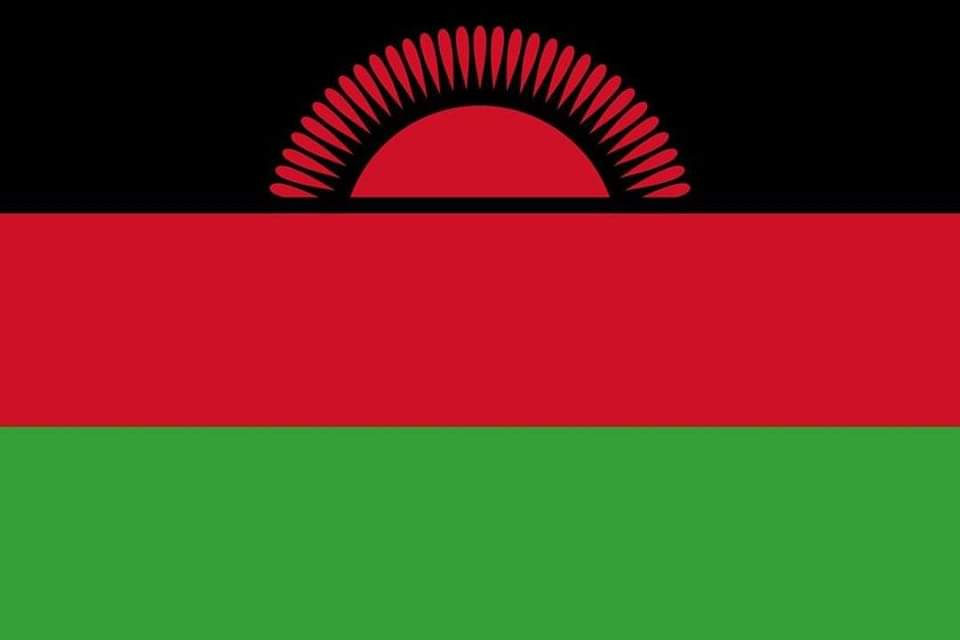
The Diplomatic Informer Magazine SA wishes to congratulate the Government and the people of the Republic of Malawi on the occasion of Independence Day. Wishing the Government and the people of Malawi continued peace, stability, unity, prosperity, and economic growth.

Independence Day is a public holiday in Malawi observed on July 6th each year. Also known as Republic Day, this is Malawi’s National Day and commemorates independence from Britain on this day in 1966.

The Warm Heart of Africa was colonised by the British in the late 19th century, with the British Central Africa Protectorate created in 1891.

The region was renamed Nyasaland (the name of the land before the arrival of the British) and joined with Northern and Southern Rhodesia in 1953 to form the Federation of Rhodesia and Nyasaland.

Local political efforts to seek independence in Malawi had begun as early as 1915 but gained momentum when Dr. Hastings Kamuzu Banda returned to the country in 1958. In 1961, his party won a clear victory in local elections, with the British Government agreed to give Nyasaland self-governing status in 1963.

Later that year, Hastings Banda became Prime Minister, and a new constitution took effect. The Federation was dissolved on December 31st 1963.

At midnight on July 6th, 1966, Malawi became a fully independent member of the Commonwealth.

#Malawi
#MalawiIndependenceDay

¡Bienvenida España! 🇪🇸 🇪🇺 The Spanish Presidency of the Council begins

On 1 July 2023, Spain took over the presidency of the Council of the European Union for six months.

The European Economic and Social Committee develops a set of activities in cooperation with the presidency, mainly preparing exploratory opinions at the request of the presidency and organising events on topics of common interest in cooperation with the presidency.

The main priorities of the Spanish presidency of the Council of the European Union are the following:

– Reindustrialise the EU and ensure its open strategic autonomy
– Advance in the green transition and the environmental adaptation
– Promoting greater social and economic justice
Strengthening European unity

President von der Leyen and the College of Commissioners spent the day in Madrid to mark the beginning of the Spanish Presidency of the Council of the European Union.

The motto of the Presidency is “Europe, closer” to underline Spain’s deep identification with and closeness to the European project.

Every six months, the baton passes from one EU country to another. This means that the country’s Presidency happens every 13-and-a-half years!

The Presidency helps ensure the smooth running of the EU legislative process, ensuring the continuity of the EU agenda and cooperation between EU countries.

#EU2023ES #EuropeanUnion

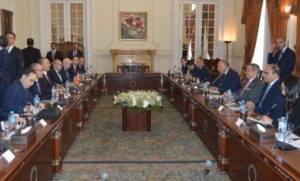
Egypt and Turkey Elevate Diplomatic Relations to Ambassador Level

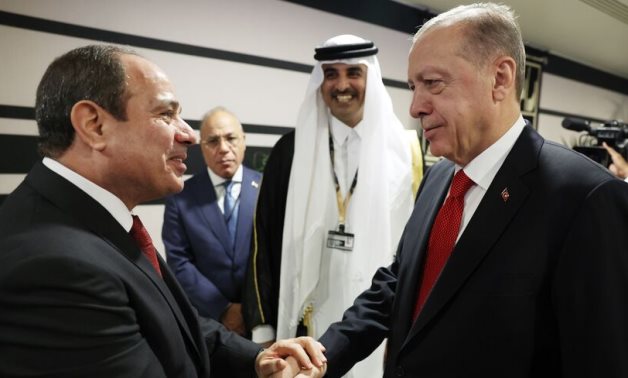
Photo: Egypt’s President Abdel Fattah El-Sisi shakes hands with his Turkish counterpart Recep Tayyip Erdogan in Doha, Qatar, in the presence of Qatar’s Emir Sheikh Tamim bin Hamad – Egyptian Presidency

Photo: Egypt, Turkey Talks

Egypt and Turkey announced the elevation of their diplomatic relations to the Ambassador level.

Egypt has nominated Amr Al-Hammamy as its Ambassador to Ankara, while Turkey has nominated Salih Mutlu Şen as its Ambassador to Cairo

This move comes as a result of the joint decision made by the two countries’ leaders to improve their diplomatic relations.

The aim of this step is to establish normal relations between the two countries once again and to demonstrate their shared determination to work towards enhancing their bilateral relations for the benefit of the Egyptian and Turkish people.

The decision to raise diplomatic relations between Egypt and Turkey is a significant development, given their recent history of strained relations. The move is expected to pave the way for increased cooperation between the two countries in various fields, including trade, tourism, and security, among others.

The decision is also likely to have a positive impact on the wider region, as it may help to reduce tensions and promote stability in the Middle East.

Arab League Secretary General Ahmed Abul Gheit welcomed upgrading diplomatic ties between Egypt and Turkey.

The two countries exchanged Ambassadors in order to restore normal diplomatic relations in line with a decision by their presidents, a statement by the Foreign Ministry said.

Amr el Hamami was named Egypt’s ambassador in Ankara. Turkey nominated Salih Mutlu Sen for the top diplomatic post in Cairo.

Deputy Minister Alvin Botes leads South Africa’s delegation to the Non-Aligned Movement (NAM) Ministerial Meeting of the Coordinating Bureau (CoB) in Azerbaijan

The Deputy Minister of International Relations and Cooperation, Mr. Alvin Botes, will lead the South African delegation to the Ministerial Meeting of the Non-Aligned Movement (NAM) Coordinating Bureau (CoB) to be held in Baku, Azerbaijan on 5 and 6 July 2023 under the theme: “NAM, United and steadfast in confronting emerging challenges.”

It is expected that the meeting will consider preparations for the upcoming 19th Summit Conference of the NAM Heads of State and Government to be held in Kampala, Uganda, from 15 to 20 January 2024. The meeting will review the Movement’s principled positions on global issues pertaining to development, human rights, peace and security, and the promotion and preservation of multilateralism, in line with the Charter of the United Nations and the Bandung Founding Principles of the NAM.

Inspired by its founding principles, since the outbreak of the COVID-19 pandemic, the Movement has proven itself to be one of the most united and efficient multilateral platforms.

A meeting of the NAM Ministerial Committee on Palestine will also be convened during the NAM Ministerial Meeting of the CoB. South Africa is a member of the NAM Committee on Palestine, which has the mandate to coordinate the NAM’s activities in support of the Palestinian struggle for self-determination.

The Ministerial Meeting will conclude with the adoption of the outcome documents of the meeting, including the “Baku Political Declaration” and the “Political Declaration of the NAM Ministerial Committee on Palestine”.

With its 120 Member States, the NAM is the largest grouping of countries outside of the UN, making it an important role player in global and multilateral affairs, especially in the current global context where geo-political divisions are negatively impacting the interest of developing countries. Since its inception in 1961, the Movement has played a crucial and highly visible political role in representing the interests of developing countries, particularly in the eradication of colonialism, supporting struggles for liberation and self-determination, the pursuit of world peace, and the search for a more equitable and just global order.

#NAMMinisterialMeeting
#NonAlignedMovement
#Azerbaijan
#SouthAfrica

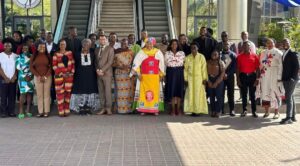
The Civil Society Engagement on the Legal Framework of the Draft Pan-African Parliament Model Law on Gender Equality kicks off in Lusaka

.

The aim of the Civil Society Engagement is to ensure that the policy framework on the Model Law on gender equality and the draft Model Law itself incorporates the views and aspirations of the people of Africa, in line with the mandate of the Pan-African Parliament.

The engagement process begins with Southern Africa-based civil society organisations on 3-5 July 2023 in Lusaka, Zambia. This pilot consultation is held in collaboration with the African Union Economic, Social and Cultural Council (ECOSOCC). The pilot Civil Society Engagement in Southern Africa will be followed by consultations with civil society organisations across the rest of the continent.

The Pan-African Parliament was established by article 17 of the African Union Constitutive Act, to ensure the full participation of African Peoples in the continent’s development and integration. Its core functions are inter alia, to facilitate the implementation of the African Union policies and objectives; to promote human and people’s rights; to facilitate the harmonization and coordination of the legislative texts of Member States in accordance with Article 11(3) of its Protocol, including those aimed at advancing the rights of women as guaranteed at the international and regional level.

#PeoplesVoice #AfricanPeoplesParliament #ConsultingThePeople

USA National Day

USA National Day is a celebration of unity, gratitude, and patriotism. A time when Americans gather to honor their country’s values and principles. From joyful gatherings to vibrant parades and fireworks, the spirit of the day fills the air. It’s an opportunity to reflect on past sacrifices, cherish present freedoms, and embrace a hopeful future.

July 4th, known as American Independence Day, is a significant national holiday in the United States. It commemorates the day when the Continental Congress adopted the Declaration of Independence in 1776, declaring independence from Great Britain and establishing the thirteen colonies as a new nation.

The Declaration of Independence, written primarily by Thomas Jefferson, articulated the fundamental principles of freedom, equality, and the unalienable rights of individuals. It proclaimed that all men are created equal and are endowed with certain rights, including life, liberty, and the pursuit of happiness. The signing of this historic document marked the birth of the United States of America as an independent nation.

On July 4th, Americans celebrate their independence with great enthusiasm and patriotism. The day is typically filled with various festivities, such as parades, fireworks displays, concerts, barbecues, picnics, and family gatherings. It is a time for people to come together and reflect upon the values and ideals that the country was founded upon.

Fireworks, in particular, have become synonymous with Independence Day celebrations. Spectacular displays light up the night sky, symbolizing the spirit of freedom and the resilience of the American people. Families and friends gather to watch these dazzling shows and create lasting memories.

Furthermore, Independence Day is a time to honor the brave men and women who have served and continue to serve in the U.S. military, protecting the freedoms that the nation holds dear. It is a day to recognize the sacrifices made by these individuals and express gratitude for their service.

In addition to the festivities, many Americans take the opportunity to reflect on the progress the country has made and the challenges it faces. It is a time to acknowledge both the achievements and the ongoing work needed to ensure that the principles of liberty, justice, and equality are upheld for all citizens.

American Independence Day is not only a celebration of the birth of a nation but also a reminder of the values that the United States strives to uphold. It serves as a unifying force, bringing people from diverse backgrounds together under the banner of freedom. July 4th is a day to cherish the legacy of the past and embrace the future with hope and determination.

#usa #nationalday #american

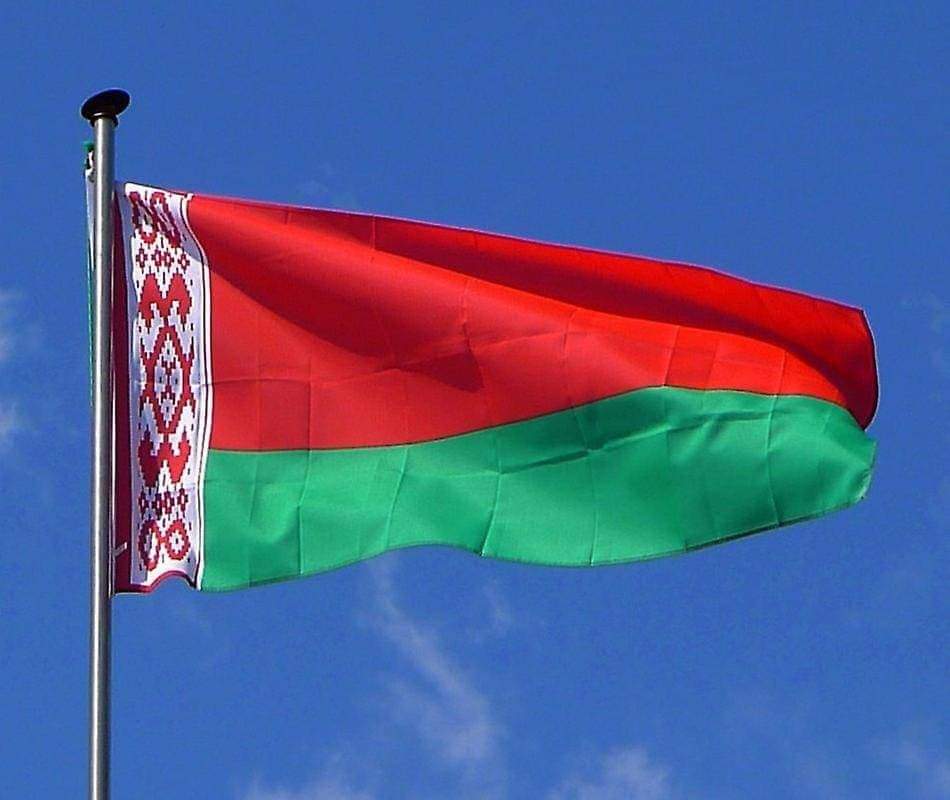
🇧🇾Belarus Independence Day

Our warmest wishes to the government and people of Belarus on their Independence Day on July 3rd.

The Diplomatic Informer wishes the government and the people of Belarus continued unity, peace, progress, and economic development.

Belarus celebrates Independence Day on 3. It is the National Day of Belarus and marks the liberation of Minsk on 3 July 1944.

The independence or national days of most ex-Soviet states takes place on the date that marks that country’s independence after the fall of the Soviet Union in the early nineties.

In Belarus, this was the case in 1990 when the Supreme Council of Belarus declared the country to be a sovereign nation free from the USSR on 27 July 1990. This date was celebrated as the Independence Day of Belarus until 1996.

In 1996, Alexander Lukashenko, the country’s first President, oversaw a referendum in which nearly 90% of Belarusians voted to celebrate Independence Day on 3 July. The date was chosen to honour those who fought to free the capital, Minsk from Nazi German occupation during the Great Patriotic War (Second World War).

When Nazi Germany invaded the Soviet Union on 22 June 1941, Belarus was the first to bear the brunt of the attack. On 24 June, Minsk came under massive artillery shelling and air strikes from nearly 150 bombers.

Despite resistance from local fighters, the Germans seized Minsk on 28 June 1941. Not accepting the occupation, the residents began a resistance movement that lasted 1,100 days. The efforts of the citizens helped the armies of the 1st and 3rd Belarusian Fronts with the support of the partisans liberating the Belarusian capital from the invaders on 3 July 1944.

Belarus paid a high price for freedom; a third of the population was killed during the war.

Independence Day is a tribute to the heroism and endurance of Minskers in their struggle to bring freedom to Belarus.

The main event of Independence Day is a large military parade in Pobeditilei Avenue, Minsk.

On Independence Day 2018, President Lukashenko commemorated the holiday, saying, “We are celebrating Independence Day, the day that has become the symbol of our free and peaceful life. Belarusians were unanimous in their choice when over 20 years ago they chose 3 July, the day of the liberation of Minsk Hero City from the Nazis, as the country’s main national holiday.”

#BelarusIndependenceDay #sabelarusrelations
#IndependenceDay2023 #SolidarityInAction #Progress

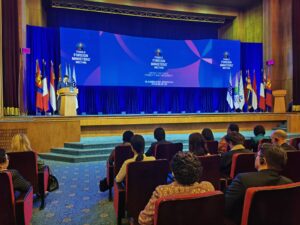
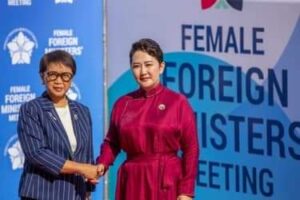
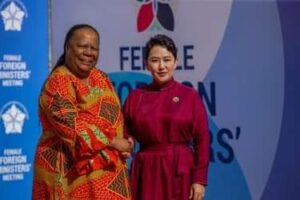
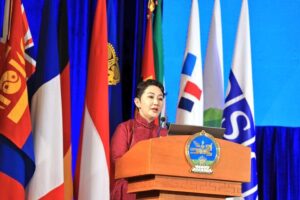
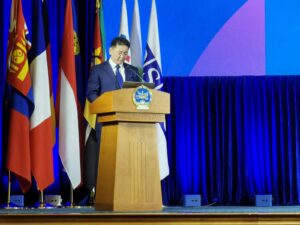
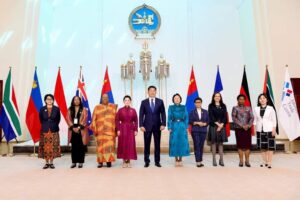
The Female Foreign Ministers’ Meeting witnessed the power of female diplomacy at work


Ulaanbaatar, Mongolia

Although countries around the world have progressed in advancing gender
equality and prohibiting discrimination, women’s share in the decision-making process still remains low globally.

Increasing women’s political empowerment and their economic participation are the areas of concern that need to be further addressed.
It is already a proven fact that women’s leadership has a positive impact on all
spheres of life.

Accordingly, amplifying women’s voice and promoting them in senior leading positions are important for inspiring young women and girls around the world to achieve greater social recognition, leadership, and participation.

Mongolian women, as leaders, have held a prominent social status and legacy
throughout our history.

Furthermore, Mongolia is a country with a long tradition of
pursuing feminist foreign policy, which features support for international initiatives for
women and the participation of Mongolian women peacekeepers in the UN
Peacekeeping.

To this end, the Foreign Minister of Mongolia Ms. Battsetseg Batmunkh put forward
an initiative to hold a Female Foreign Ministers’ Meeting for the first time in Mongolia to
discuss issues facing international relations and seek possible solutions.

The consensus and solidarity of Female Foreign Ministers would serve as a great impetus for promoting multilateral cooperation to address global challenges.
Mongolia also hopes that the meeting would benefit from shaping pro-women foreign policy in our greater neighborhood in Asia and believes that our initiative will contribute to the efforts
of other countries pursuing feminist foreign policy.

The meeting will provide an opportunity for participants to deliberate and exchange
information, and share their best practices of feminist foreign policymaking.

Guiding themes for discussion
The year 2022 has witnessed unprecedented geopolitical tensions that brought
not only added complexity to addressing the challenges facing the world community, but also exacerbated the existing challenges.

Threats such as climate change, natural disasters, and the COVID-19 pandemic
are on the rise, requiring greater cooperation among countries on the international stage
as no country can address them individually. All countries, especially small and poor
ones, suffer the most from the negative consequences, including rising unemployment
and poverty and political instability around the globe.

They also pose major risks that could undermine global peace and security and the hitherto achievements towards

The Female Foreign Ministers’ Meeting highlighted the crucial role of women in diplomacy and set the stage for meaningful discussions.

Heartwarming and powerful messages from Foreign Ministers and esteemed UN officials underscored the significance of the gathering and emphasized the importance of women’s leadership in international relations.

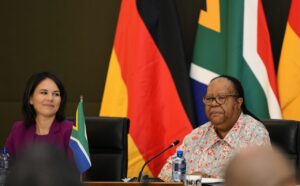
The Minister of International Relations and Cooperation of the Republic of South Africa, Dr Naledi Pandor, attended the two-day Female Foreign Ministers Meeting.

#WomenEmpowerment #WomenInDiplomacy
#F2M2 #FFMM
#WomenInLeadership

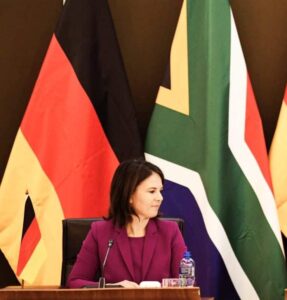
Statement by Foreign Minister Annalena Baerbock at the South African-German Bi-National Commission

As you said, I already wanted to be here in South Africa on Sunday, but given the situation in Russia, I had to delay my departure. We will certainly talk about this in the next two hours of our meeting.

I’m very glad to be here now. This visit has been very important to me because I believe that our two countries share something fundamental:

Both in South Africa and in Germany, our histories have taught us how precious our freedom and our democracies are.

When I think about South Africa, one image always comes to mind. The queues of 1994. It’s those images of millions of South Africans, of all skin colours, queuing up to cast their votes in South Africa’s first democratic election.

And there’s a wonderful image of Desmond Tutu casting his vote that day, saying: “The new South Africa has begun today.” And then he smiles and adds –: “Isn’t that fabulous?”

What a fabulous moment, indeed. South Africa’s path to freedom has been a beacon of hope, inspiring men and women around the world.

And particularly in Germany, in my country, which has known the terror of dictatorship, these images are still present today. In a country that has also known what immense power, the longing for freedom can unleash in us humans.

It was this power that led brave East Germans to bring down the Berlin Wall and to also live in freedom and democracy – finally, after the first demonstrations in 1953 were brutally put down by tanks and weapons.

In both our countries, we know how important the support of international partners was on that path towards freedom and democracy. And this is what guides, I think, both of our foreign policies today: The conviction that we do have a responsibility when others are fighting for freedom and peace for themselves.

But I also want to be very honest: West German governments failed to support the anti-apartheid struggle for far too long.

But learning from the past also shows me why foreign policy is more than just governmental exchange between politicians. Foreign policy is also about friendship between people and friendship between societies because humans all around the world share the same wish for themselves and their kids to live in freedom.

And therefore it was maybe no coincidence that, while the West German government stood on the wrong side of history and of freedom, many women, men and civil society actors in Germany were faster, standing on the right side, like the DAAD, the German Academic Exchange Service, which endorsed also at that time grants for black students so that black students could study during the apartheid regime. I am very happy that we have the DAAD’s president in our delegation today.

I believe that in our cooperation we should be conscious of where we come from, also because politics is about the future. Future generations learn from the past and thereby shape the future. We can not change our past. We can only learn from our past and bear the responsibility of shaping our future together.

Together, because the challenges to our hard-won freedom and our hard-won democracies are not unique to either Europe or Africa. On both our continents, our free societies are threatened by disinformation, populism, corruption, and, crucially, by growing social inequalities that risk dividing us.

Democracies are never complete. This is what makes them vulnerable and complicated. But the fact that democracies are never complete is also what makes them so strong: The fact that we can constantly improve, that we can constantly reflect on what we can do better in the future. And democracies can constantly learn from one another, too: how we can become better, more inclusive, and stronger together.

This is what our bilateral commission is all about: to listen, to discuss, to learn from each other, to grow stronger together. In South Africa, for example, almost half of your members of parliament are women. We Germans can learn from that because, unfortunately, our share of female parliamentarians is only one third.

You, dear Naledi, have highlighted that the inclusion of women makes the world a safer place – at every single conference I have attended with you. And I wholeheartedly agree. I am glad that together, we are firmly standing up for women’s rights internationally – to not only make our democracies stronger but also to make the world a safer place.

I believe that as two strong democracies on our own respective continents, we should also talk about the role we assume in this world.

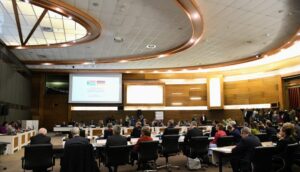
And we started our meeting with a discussion of this. It was three years ago that we last came together, as you have said, in the South African-German Binational Commission.

The world is a different place today – because of the pandemic, but also because of the wars around the world.

Russia’s war of aggression has not only brought terrible suffering over the people of Ukraine, it has also slashed a wound that reaches far beyond Europe, worsening a food and energy crisis in many parts of the world, in many parts of Africa.

For this suffering to end, the war must end. For the war to end, Russia must stop the bombings and withdraw its soldiers. This war is – and we have discussed this already – an attack on the UN Charter, on the very rules that bind and protect us all.

The African delegation led by President Cyril Ramaphosa made this very clear in Saint Petersburg: This war also concerns Africa. The UN Charter must be respected. We are thankful for his clear words.

We therefore took a bit more time, because it was very important for me to hear about the trip you have made together with the other African presidents to Ukraine and also to Russia, to hear about your visit to Kyiv and Saint Petersburg, but especially to hear about your visit to Bucha – standing there, you as a mother, me as a mother a few months prior, seeing what humans can do to other humans and feeling our common responsibility to prevent that in the future.

Colleagues,

To us, you are our key strategic partner in sub-Saharan Africa. We are really glad that we are meeting today again in person and not only virtually in this binational commission – because we cherish South Africa’s engagement in trying to resolve crises and conflicts in Ethiopia, the Sudan and the DR Congo, and now even beyond Africa’s shores.

That’s also why we agree with you that Africa – and South Africa – should have a stronger voice on the international stage. We support the AU in its bid to join the G20. And we support African aspirations for a permanent seat on the UN Security Council.

It’s clear to me that we can only address our global challenges together. That concerns the fight against pandemics. But it also concerns the biggest security challenge of our time, the climate crisis. I am glad that we are working closely together on how to move from fossil energies to green energies.

This is also the core topic of our binational commission this year. I would like to thank all those in our teams who have worked so hard over the last week to finalise so many different elements – from arts to culture, but especially cooperation in green energy. And we will have a conclusion on that in the joint declaration that will be signed – also a first – virtually between our ministries of economy and energy in the afternoon. This is a good lesson from the pandemic that we can combine in-person and virtual meetings.

And at the same time, we have to make sure that no one is left behind by this big transformation – that those working in the coal mining sector today will also be able to provide for their families in the future: through jobs in renewables, but also in other sectors, as you have mentioned, for example, in the automotive sector.

That is the goal of the Just Energy Transition Partnership, the JETP, that we are working on together.

I’m looking forward to taking all these measures forward in the next two hours.

As two partners who have learned through our history how precious strong and thriving democracies are.

And that it is up to us to strengthen them – to show that if we as democracies manage to work together for the better, for the future, that it will be nothing short of fabulous.

Opening Remarks by the Minister of International Relations and Cooperation, Dr Naledi Pandor, on the occasion of the Eleventh Meeting of the South Africa-Germany Bi-National Commission

I wish to extend a warm welcome to you, Madam Minister, and your delegation to South Africa. It has taken some time for us to find a mutually convenient date, but we are glad that you are here for the first time as Federal Minister of Foreign Affairs of Germany.

Our relationship with Germany is one of the most important and most strategic that we have with any country and our Bi-National Commission, one of the most substantive that we have. It is not difficult to see why that is so.

South Africa is Germany’s largest trading partner in Africa. At the same time, Germany is the third largest export market for South African products, most of which are value-added. The German economy is export-focused, and yet we have a healthy trade surplus. Your country is a major investor in South Africa and an important development partner.

Germany is the third largest source of overseas tourists to South Africa. Before the pandemic, we received about 350,000 German tourists a year. This dropped to only 44,000 in 2021 but is already back above the 200,000 mark.

COVID illustrated the importance of international cooperation to deal with international problems. We differed strongly on issues of vaccine equity during the pandemic, but Germany is today an important partner in the establishment of the mRNA vaccine transfer hub in South Africa.

Climate change is a matter of concern to all of us and will impact on all of us. Again, we can count on Germany as a valuable partner in our Just Energy Transition journey.

These are some of the highlights, but if one reads the Agreed Report of the BNC – almost fifty pages in total – it is clear that our relationship is very substantial, very diverse and that it benefits our people in various ways.

South Africa and Germany share many common values on matters of peace and security, human rights, climate change and sustainability, and economic development. In order to pursue these values more effectively, both South Africa and Germany believe in the need to reform the United Nations, and we will discuss that as part of our agenda today.

Minister, we have spoken before on ways in which we can cooperate on the Women, Peace and Security agenda and it is regrettable that your visit does not allow sufficient time to introduce you to some of the projects that we have in this regard. I remain very interested, however, to have a discussion on WPS and to find ways in which South Africa and Germany could cooperate to improve the lives of women in places such as Afghanistan and Palestine.

Minister, the world is a different place from the time that we had the Tenth Bi-National Commission in March 2020. That took place right at the start of the pandemic and was, in fact, the first BNC that we had on a virtual platform. Today, we are faced with different and equally serious global challenges in Africa and elsewhere in the world, including in Europe, where the war in Ukraine has had global ramifications. We will discuss these in more detail during our deliberations today.

In conclusion, Minister, I wish to say that South Africa is a country that is facing various challenges, but these challenges also bring great opportunities. You will be aware of our energy challenges, which can mostly be ascribed to our aging coal-fired power stations, which can no longer function at optimum level. However, at the same time, the development of alternative energy sources, be they renewable such as solar or wind, or green hydrogen, have grown exponentially. Our Government will publish its strategy for electric vehicles in a few months and we hope that the German automotive companies that are here already will utilise this opportunity to expand their capacity and produce electric vehicles in the same quantity and quality as they do internal combustion engine vehicles at the moment.

Let me close by welcoming you again to South Africa Minister. I look forward to our deliberations today.