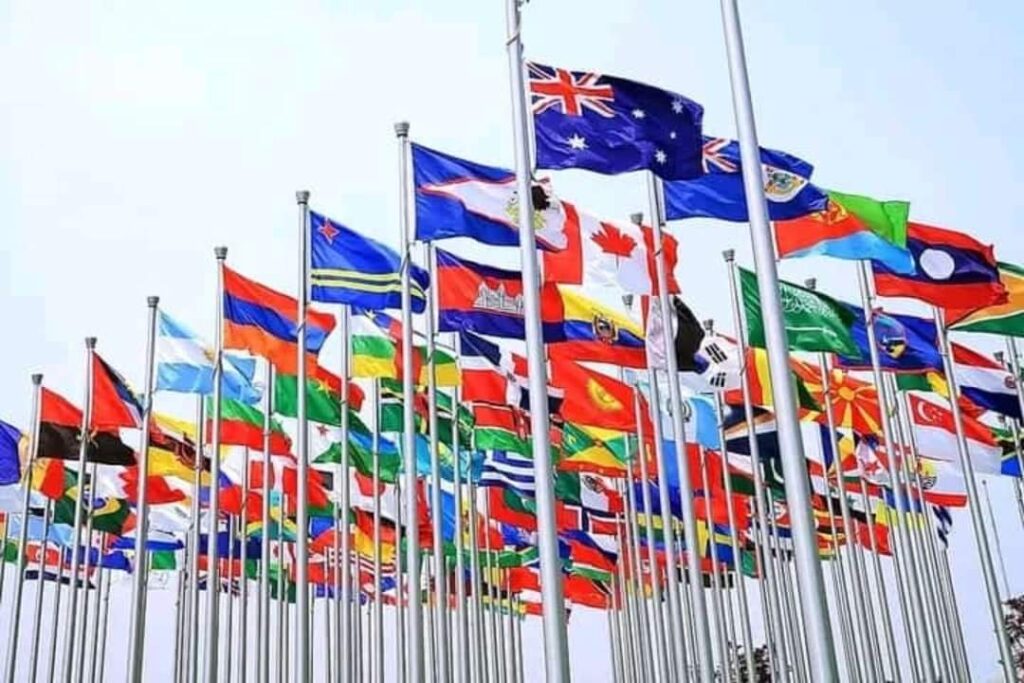
THE COMMONWEALTH HEADS OF GOVERNMENT MEETING (CHOGM) IN KIGALI, TO ADDRESS GLOBAL ISSUES AND COMMONWEALTH PRIORITIES

18 June 2022

Leaders from 54 countries will gather in Kigali, Rwanda, this week for the 2022 Commonwealth Heads of Government Meeting (CHOGM), the sixth time the event has been hosted by an African country. The week-long summit is expected to attract over 5,000 participants from government, business, and civil society under the theme ‘Delivering a Common Future: Connecting, Innovating, Transforming’.

Meetings begin in the Rwandan capital on Sunday 19 June with four forums – covering youth, women, business and civil society – culminating with the official Retreat for leaders at the Intare Conference Arena on Saturday 25 June. At the Leaders Retreat – unique to the Commonwealth – Heads of Government meet privately to discuss collaboration on global and Commonwealth priorities.

Commonwealth Secretary-General the Rt Hon Patricia Scotland QC said:

“Since the last time the Commonwealth family came together for CHOGM in 2018, the onset of COVID-19, new and ongoing conflicts, and the accelerated impact of climate change have fundamentally altered the global landscape and tested our resilience.

“This succession of events has changed lives, livelihoods, communities and economies. We know that in times of crises, the poor and most vulnerable are disproportionately affected. Many development gains, likewise, have been thrown off track, while others have regressed.

“That’s why with eight years to go until the Sustainable Development Goals ‘endgame,’ leaders at CHOGM are committed to harnessing lessons learned, working together and taking inspiration from the innovative solutions that we’ve seen emerge over the past few years.

“The Commonwealth is a bedrock for member states, rooted in a shared history, collective aspirations and progressive solutions. At a time when multilateralism is under serious strain, CHOGM offers a vital forum to deliver the objectives of member states and an opportunity to draw upon all the talents of the member states to deliver a smarter, more resilient, prosperous, confident and sustainable Commonwealth.”

A Ministerial Meeting for the Commonwealth’s 32 Small Island Developing States is scheduled for Wednesday 22 June at which economic vulnerability, climate action and access to finance and debt sustainability are expected to top the agenda. The Commonwealth has a long history championing the needs of Small States, which face unique challenges related to climate change and external economic shocks.

Commonwealth leaders The Commonwealth Ministerial Action Group – which assesses countries at risk of breaching fundamental political values – will also meet on 22 June.

On Thursday 23 June, Foreign Ministers will convene ahead of the main CHOGM sessions to review the leaders’ agenda and receive outcomes from the four forums for consideration by Heads. The traditional Commonwealth Sports Breakfast, also on Thursday 23 June, will showcase preparations for the Birmingham 2022 Commonwealth Games, which begin on 28 July.

Several side meetings will take place during CHOGM and cover topics including violence against women and girls, climate change, access to justice and sustainable ocean protection and economic development.

The formal Opening Ceremony takes place on Friday 24 June at the Kigali Convention Centre and is followed by closed-door Executive Sessions at which leaders will consider a range of topical issues including post COVID-19 economic recovery, debt sustainability, climate change, trade and food security.

Four Forums

The Women’s, Youth, People and Business Forums will run concurrently at different venues in Kigali. Participants will include Commonwealth leaders, government ministers, members of the British royal family, senior UN figures, business leaders, civil society activists and literary figures.

The Women’s Forum will explore the Commonwealth’s role in achieving gender equality in line with UN aspirations and the crucial role women have to play in politics, business and peace building. The theme for 2022 is ‘Delivering a Common Future: Transforming for Gender Equality’.

The Youth Forum, held under the theme ‘Taking Charge of Our Future’ will bring 350 young people together to network, exchange ideas, build skills, and generate solutions to the most pressing youth-related challenges. These priorities will be cemented in a Youth Declaration at the end of the three-day event and will be presented to leaders The six-point plan will be implemented by the Commonwealth Youth Council and youth-led organisations across the Commonwealth.

The People’s Forum is the single largest gathering of civil society representatives in the Commonwealth. It is aimed at discussing solutions and building solidarity around some of the most pressing issues facing Commonwealth people, from the COVID-19 pandemic to the climate crisis. This year’s forum will address the theme: Our Health, Our Planet, Our Future.

The Business Forum is a unique platform for dialogue, bringing together business and government leaders from across the Commonwealth. Hosted as a partnership between the Commonwealth Enterprise and Investment Council (CWEIC) and the Government of Rwanda, the Forum will discuss a range of issues affecting businesses across the Commonwealth with a focus on ‘A Global Reset’, dealing with the impact of the pandemic and the Commonwealth’s role in rebuilding and reinvigorating the global economy.

CHOGM 2022 was originally due to take place in 2020 but has twice been postponed due to COVID-19. The last country to host CHOGM in 2018 was the UK and the host country for CHOGM 2024 will be announced at this week’s summit.

CELEBRATING ALL FATHER’S ON FATHER’S DAY

18 June 2022

The Diplomatic Informer Magazine wishes all Father’s, A Happy Father’s Day!!

Father’s You are all important to us and to the world and You are appreciated!!!!

HAPPY FATHER’S DAY

#happyfathersday #fathersday

CELEBRATING YOUTH DAY

16 June 2022

Today, on the 16th of June we commemorate the Soweto youth uprising of 16 June 1976. A day when the youth took up the fight against inequality and oppression.

We must not forget the great courage and sacrifice of the 1976 generation. 1976 Youth A chosen generation, that possessed the ability to usher in a wave of change.

The Youth gives a generation the need to design, shape and build the world of tomorrow while renewing the old and outdated, and maintaining all that is good in society.

The youth, our tomorrow’s future. The Youth South Africa’s future leaders, The Youth the future of South Africa. Let us never forget the sacrifices of the past.

HAPPY YOUTH DAY


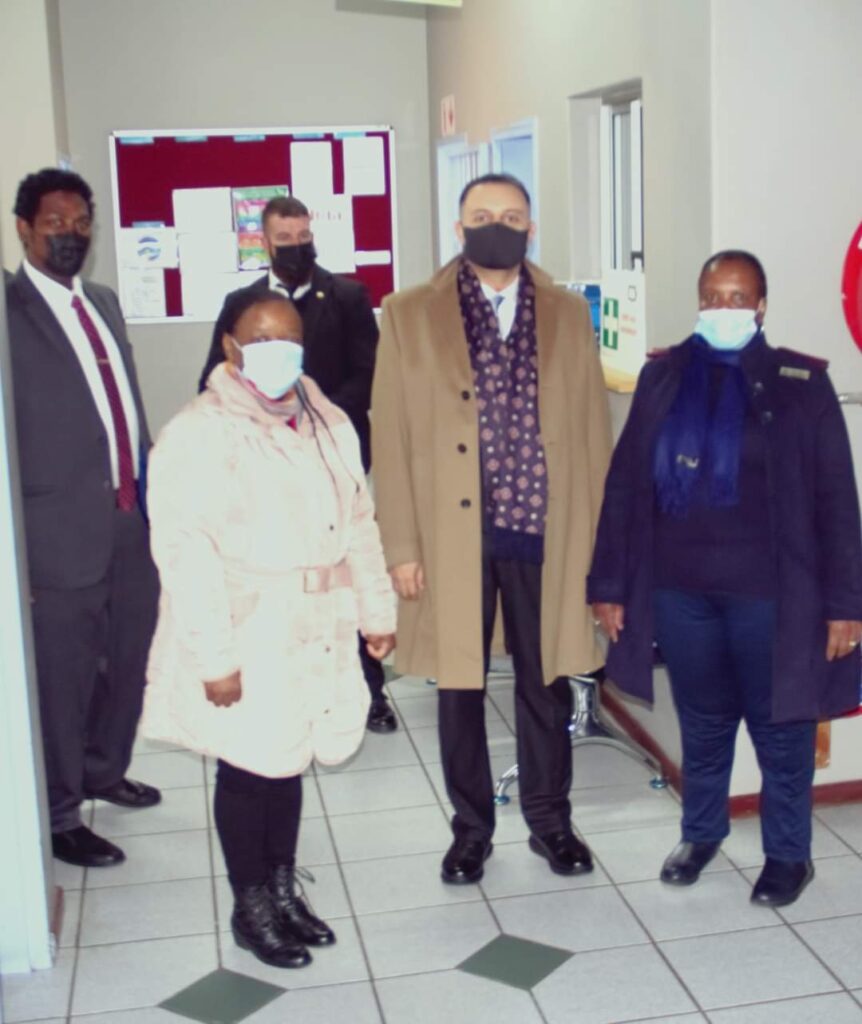
HIS EXCELLENCY AMBASSADOR TARIQ AL-ANSARI OF QATAR TO SOUTH AFRICA VISITED MAMELODI WEST CLINIC IN PRETORIA AND COMMIT TO SUPPORTING THE COMMUNITY’S HEALTH SYSTEM

15 June 2022

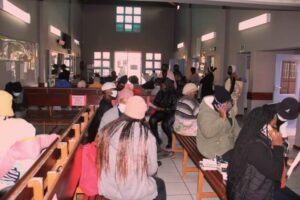
His Excellency Ambassador Tariq Al-Ansari visited Mamelodi West Clinic

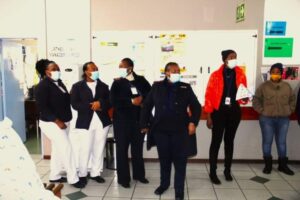
in collaboration with Moses Mabhida Foundation. A Foundation that focuses on Gender based violence, Youth, the elderly, health and feeding scheme. The purpose of the visit was to conduct an oversight assessment of what is needed at the clinic  as part of support to improve and strengthen the clinics health system.

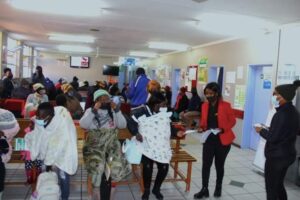
Mamelodi West Clinic was established in 1956 and is situated in a township of Mamelodi in the Capital City of Pretoria and has earned the respect of the community it serves, and forms the backbone of health services for the area, acting as a lead cluster facility for other smaller primary health centers.  Healthcare workers at the facility treat over 500 patients per day, and 9,249 patients per month and serve a full range of primary healthcare services for the community.

In his remarks during the oversight visit, His Excellency Ambassador Tariq Al-Ansari said Qatar is committed to supporting the community to strengthen its health systems and improve health outcomes, we want to see a healthy and productive community said Ambassador Al-Alnsari.

The Embassy will work with all the stakeholders to identify the list of equipment that is needed and Qatar Charity which offers a wide range of support and donations to the needy communities will purchase the equipment and donate to the clinic. Qatar Charity works in the fields of sustainable development, reducing poverty, and disaster relief and emergency response.


In commemoration of World Elder Abuse Awareness Day, Ambassador Tariq also visited the elderly community and the Youth at the far East of Mamelodi ( Show house , Extention 7 , Phase 3 Mamelodi East ) an informal human settlement where the population is too high and the community residing at Show house comes from the different nine Provinces to look for employmemt opportunities and the rate of GBV is extremely high.

Ambassador Al-Ansari addressed the elderly and the youth and assured  them of the Embassies support.

#qatar

#qatarembassypretoria

#QatarCharity

#qatarsarelations

#tariqalansari

#ambassadorofqatartosouthafrica

#mamelodiwestclinic

#mameloditshwane

ETHIOPIAN AIRLINES WINS AWARDS FOR “BEST ENTERTAINMENT”, “BEST CABIN SERVICE” IN AFRICA

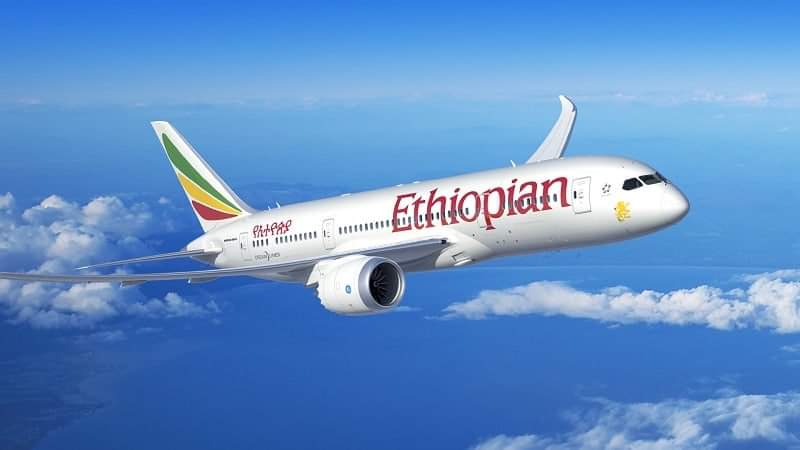
June 14, 2022 (ENA) Ethiopian Airlines has won the 2022 APEX Regional Passenger Choice Awards for “Best Entertainment” and “Best Cabin Service” in Africa.

According to a press release of Airline, the award ceremony was held in Dublin, Ireland, recognizing airlines in various regions for providing the best passenger experiences as rated by passengers.

For this year’s award, over one million flights were rated by passengers across more than 600 airlines from around the world using a five-star scale.

RUSSIAN EMBASSY IN PRETORIA CELEBRATES THE NATIONAL DAY OF RUSSIA

14 June 2022

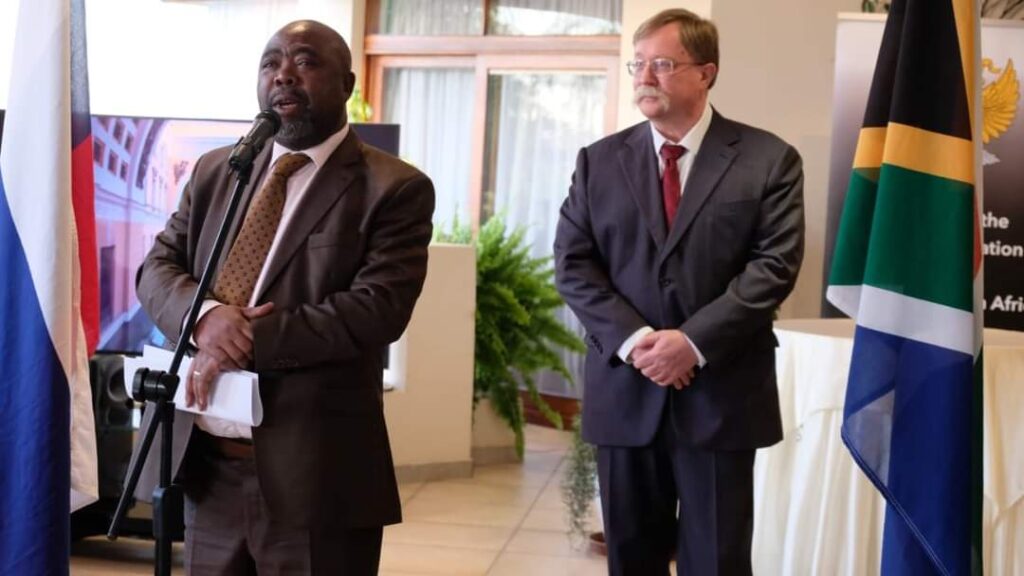
In celebration of the National Day of Russia,  His Excellency Ambassador Ilya Rogachev of Russia to the Republic of South Africa hosted Representatives of the South African Government, members of the Diplomatic Corps accredited in Pretoria, business, civil society  and Russians living in South African at his residence in Pretoria on Monday 13 June 2022.

Russia Day also known as the Day of adoption of the declaration of state sovereignty of the Russian Soviet Federation Socialist Republic (RSFSR) before 2002, is the national holiday of the Russian Federation.

It has been celebrated annually on June 12, since 1992. The passage of this Declaration by the First Congress of People’s Deputies marked the beginning of constitutional reforms in the Russian Soviet state.

In his welcoming remarks on the occassion of the National Day of Russia celebration,  Russia’s Ambassador to South Africa H.E. Mr.Ilya Rogachev noted that over a relatively short period of past three decades, Russia dramatically changed the situation in terms of strengthening its statehood, improving its economic standing, and enhancing prosperity and well-being of its citizens.

“We consistently focused our efforts on making Russia a truly independent country, where state power is derived from political stability, common goals and the consolidation of society. As a result, we have achieved a high degree of resilience that allows us to be confident of continued growth of our country’s and people’s welfare despite the impact of the current political and economic upheavals,” Ambassador Rogachev said.

His Excellency Ambassador Ilya Rogachev of Russia to the Republic of South Africa expressed confidence that the two countries will continue to develop their ties successfully for the benefit of both countries, international peace and security.

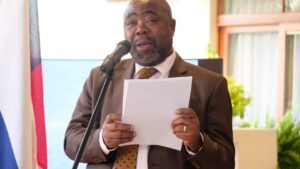
Honourable Minister of Employment and Labour of South Africa and acting Minister of Public Service and Administration  Mr.Thembelani  represented the South African Government, congratulated the Russians on the state holiday and expressed the desire of South Africa to preserve and enhance the good traditions of relations with Russia.

Hon. Minister Nxesi said that Russia has had a long-standing historical links and political relationship with South Africa and the historical links between South Africa and the Russian Federation are strong. Direct contacts between the former USSR and the ANC were established on a regular basis during 1963. In the era of the USSR, the latter was one of the key supporters of the struggle for liberation in South Africa.

With the dissolution of the USSR, South Africa became the first African state to recognise the independence of the Russian Federation said Minister TW Nxesi of Employment and Labour.

Full diplomatic relations were established between South Africa and the Russian Federation on 28 February 1992 and this year Russia and South Africa celebrates the milestone of 30 years of Diplomatic Relations.

This year’s celebrations come amid Russia’s war with the Ukraine.

#RussiaSARelations

#RussiaDay

#NationalDayofRussia

QATAR ENERGY SIGNS DEAL WITH TOTAL ENERGIES FOR NORTH FIELD EAST

13 Jun 2022

Qataren.tt_

Photo: Twitter / @PPouyanne

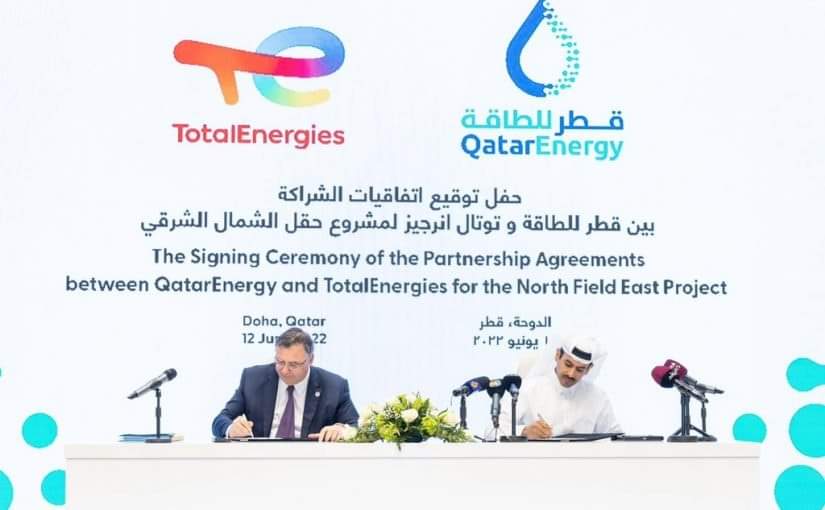
Qatar Energy signed a partnership deal with TotalEnergies for the North Field East expansion of the world’s largest liquefied natural gas (LNG) project, and said more partners would be announced in the coming days.

The Gulf state is partnering with international energy companies in the first and largest phase of a nearly $30bn expansion of the North Field project.

Saad al-Kaabi, who is president of QatarEnergy and also Qatar’s minister of state for energy, said the selection process for partners has been finalised and subsequent signings could be announced as soon as next week.

No company will have a stake higher than TotalEnergies, he added. France-based TotalEnergies Chief Executive Patrick Pouyanne said the company will have 25 percent of one train – or liquefaction and purification facility – in the project.

The North Field Expansion plan includes six LNG trains that will ramp up Qatar’s liquefaction capacity from 77 million tonnes per annum (mtpa) to 126 mtpa by 2027.

Oil majors have been bidding for four trains of the North Field East expansion, with the other two trains part of a second phase, North Field South.

Al-Kaabi said Qatar has a unified approach, where all four trains are considered one unit. TotalEnergies has a 25 percent stake in one virtual train, which gives it about 6.25 percent of the whole four trains.

“We had announced that we are no longer investing in any new project in Russia, so the signing of this project in Qatar is important for us,” said Pouyanne.

Photo: Twitter / @PPouyanne

Qatar is slated to sign more deals with energy firms for a nearly $30bn project that will solidify its position as a global liquefied natural gas leader.

RUSSIA DAY

12 June 2022

Today Russia commemorates national holiday – Russia Day.

On June 12, 1990, the First Congress of People’s Deputies of the RSFSR adopted the Declaration of State Sovereignty of the Russian Soviet Federative Socialist Republic, which proclaimed the equality of political parties and public associations, approved the principle of the separation of powers, and determined the supremacy of the RSFSR’s Constitution and laws on its entire territory.

On December 25, 1991, the RSFSR Law On Changing the Name of the State of the Russian Soviet Federative Socialist Republic was approved and came into force, establishing the country’s new name, the Russian Federation (Russia).

The Declaration of State Sovereignty signified the beginning of a new stage in the Russian state’s history. Since 2002, this holiday has been officially called Russia Day. On June 12, this country and its civil society, celebrates the national unity of all peoples of Russia.

The Diplomatic Informer Magazine extends our warmest congratulations to the Government and the people of Russia and wishing the Government and People of Russia renewed peace and prosperity. #russiaday #russiaday2022 #russia1love

PHILIPPINE CELEBRATING THE 124TH ANNIVERSARY OF THE PROCLAMATION OF PHILIPPINE INDEPENDENCE ON 12 JUNE 🇵🇭

One of the most significant dates in the Philippine’s history is Independence Day because it marks the nation’s independence from the Spanish rule on June 12, 1898. Filipinos celebrate it annually on June 12.

The annual June 12 observance of Philippine’s Independence Day came into effect after past President Diosdado Macapagal signed the Republic Act No. 4166 regarding this matter on August 4, 1964. This Act legalized the holiday, which is based on the Declaration of Independence on June 12, 1898 by General Emilio Aguinaldo and Filipino revolutionary forces from the Spanish colonization. The Philippines’ flag was raised and its national anthem was played for the first time in 1898. However, liberty was short-lived because Spain and the United States did not recognize the declaration.

The 1898 Treaty of Paris ended the war between Spain and the United States. Spain surrendered the entire archipelago comprising the Philippines to the United States. The Philippines started a revolt against the United States in 1899 and achieved national sovereignty on July 4, 1946, through the Treaty of Manila. Independence Day was officially observed on July 4 until the Republic Act No. 4166, which set out to move the holiday to June 12, was approved on August 4, 1964.

#phillipines

#SAPhillipinesrelations

#PretoriaPE

WHY GLOBAL SOUTH COUNTRIES DON’T WANT TO PICK A SIDE IN RUSSIA’S WAR IN UKRAINE – Vox Can the Global South find inspiration from the nonaligned movement?

Photo Credit Dirco: South African Deputy Minister of International Relations and Cooperation Mr Alvin Botes

11 June 2022

By Jonathan Guyer@mideastXmidwestjonathan.guyer@vox.com 9/06/22

Though Western Europe and NATO have found revived purpose in mobilizing against Russia’s war, many countries in the Global South — in Africa, Asia, and Latin America — have not taken as strong of a side.

In the first United Nations General Assembly vote in early March, 141 countries affirmed that Russia should “immediately, completely and unconditionally withdraw,” and in another resolution, 140 countries voted for humanitarian protections of Ukrainians.

But when the General Assembly voted in early April to expel Russia from the Human Rights Council, the majority was smaller. Ninety-three countries voted in favor, but 58 abstained and 24 voted against. The abstentions included Egypt, Ghana, India, and Indonesia, which were leaders of the Non-Aligned Movement — countries that created their own transnational grouping rather than back the US or Soviet Union during the Cold War. Brazil, Mexico, Nigeria, Pakistan, and South Africa also abstained. China voted against.

The US and NATO have led unprecedented sanctions against Russia. But almost no countries in the Global South have signed onto them.

Analysts looking at these responses see a reinvigorated nonaligned movement. “When you see a return to what looks a lot like Cold War politics, then it’s quite natural that people start to reach for the Cold War conceptual toolbox,” Richard Gowan, the UN director of the International Crisis Group, told me. “It’s a mirror to the ‘NATO is back’ talk.”

The Non-Aligned Movement of the 1960s was not about neutrality. It put forward a unifying agenda for developing countries caught between warring superpowers. A similar platform for the 21st century hasn’t emerged yet, but with the majority of people in the world living in the Global South and the Ukraine war heightening tensions between two of the world’s largest powers, there are signs that it could.

South African Deputy Minister of International Relations and Cooperation Alvin Botes emphasizes the importance of “Global South solidarity.” He says that South Africa’s nonaligned position allows the country to have tough conversations with Russia and Ukrainian leaders in pursuit of mediation. He also emphasizes that, with five powerful countries permanently holding veto power on the UN Security Council, “the conscience of the under-developed South is the nonaligned movement.”

“The role of the nonaligned movement today is as relevant today as it is in 1961,” Botes told me. “For as long as you have a constellation of interests that is driven from the big powers — sometimes being completely oblivious to the interests of the underdeveloped South — there is a need for the nonaligned movement.”

Why Global South countries have avoided taking sides

On February 22, the Kenyan ambassador to the UN delivered a speech likening Russia’s war to colonial aggression, with the diplomat firmly supporting Ukraine. “Kenya and almost every African country was birthed by the ending of empire. Our borders were not of our own drawing,” Martin Kimani said. The remarks went viral, and a week later Kenya joined 140 other countries in the General Assembly in a UN resolution condemning Russia’s war.

Less attention was paid in April to Kenya’s abstention from the vote to remove Russia from the Human Rights Council. “Look before jumping is a good guide in geopolitics,” Kimani tweeted then, and went on to note that Libya was expelled from the council in advance of the destructive NATO intervention in the country. Kenya’s abstention exemplified the nuance, deliberation, and trade-offs with which many countries are trying to navigate a war between two great powers in Europe that will have wide-ranging effects elsewhere.

There are multiple, complex reasons why countries might want to abstain from a UN vote, or vote against Russia in the UN but then not want to participate in sanctions against the country, or take any number of positions that don’t fully align with US policy.

“It’s not just an African phenomenon,” Zainab Usman, director of the Africa program at the Carnegie Endowment for International Peace, told me. “We’re seeing similar patterns playing out among Arab countries in the Middle East and in parts of South Asia and Southeast Asia.”

Broadly, there are three buckets that help explain why countries are seeking an approach that is neither Russia nor NATO.

The first reason relates to economics and trade. Russia is a major exporter of energy, food, and fertilizer. Many countries can’t afford to cut economic ties with Moscow. India also depends on Russia for arms sales. Though Russian investment is not in the top of countries in Latin America, it’s still a factor. Usman cited recent comments from the financial ministers of Ghana and Nigeria. “There isn’t enough focus on the economic impacts of the war itself,” she told me.

Second, there remains skepticism toward the US and NATO. The US invasion of Iraq was a violation of international law, and many nations see the West’s other regime-change efforts in Afghanistan and Libya as similarly flawed with ongoing spillover effects, according to experts with whom I spoke.

That skepticism extends to sanctions. Latin American countries are sensitive to violations of sovereignty, and 28 out of the 34 countries of the Organization of American States voted to condemn Russia in a March UN General Assembly vote. But the sanctions on Russia were not UN-approved. The leaders of Mexico and Brazil spoke out against them. According to Reuters, the Bahamas is the only OAS country that has signed onto Russia sanctions.

As Guillaume Long, the former foreign minister of Ecuador, told me, “A lot of Latin Americans feel and think that sanctions are applied in a sort of selective, politicized way with a lot of double standards — basically, a tool of the US hegemony rather than a tool of global justice.” He cited the unpopularity across Latin America of the US’s coercive economic measures against Cuba and how civilians are negatively affected by US sanctions on Venezuela.

And it’s not just the unilateral positions staked after the September 11, 2001, attacks. It’s worth noting that the Cold War was not very cold in many developing nations. “History has taught [African countries] that becoming pawns in an international conflict they cannot control generates few benefits and massive risks,” writes the scholar Nic Cheeseman.

The third factor is enduring solidarity with Russia, given its anti-colonial positions at times during the Cold War, when it was still part of the Soviet Union. The USSR was a superpower itself, making strategic foreign policy choices in its own perceived interest. Among more left-leaning governments, Russia also has a legacy of supporting independence from colonial powers. In particular, the African National Congress in South Africa was close to the Soviet Union and looks fondly on Russia for its staunch anti-apartheid position. Botes noted South Africa’s connections to Ukraine, too, and told me that Odesa, when it was part of the USSR, hosted ANC training camps.

More recently, Russian President Vladimir Putin has aggressively reached out to the Global South.

Mark Nieman, a political scientist at the University of Toronto, says that too often the interests of countries in the Global South are overlooked. “It’s not just the Biden administration. This is kind of an outgrowth of a long-running US foreign policy of either ignoring Global South concerns, showing outright indifference, or acting in ways that seem to violate what those rules [of international law] are,” he told me. “The agency of the Global South is ignored.”

These buckets don’t capture the whole of each country’s calculations. Volumes could be written about each country’s position — China pursuing its complicated and sometimes contradictory interests, Indonesia as fence-sitter, India carefully navigating superpowers, Saudi Arabia hedging, and so forth.

There’s also geopolitics at play. Some countries may avoid choosing a side as an insurance policy in case Russia were to win over Ukraine. And Russia is an important force in the international system, especially in the United Nations. “If you’re a Latin American country, and you’re trying to get some votes at the UN, you know, 50 percent of the time you might get the support of Russia,” Long said. “But you can be sure that Ukraine will vote with the United States.”

For all of those reasons, something approximating a nonaligned position has begun to take shape.

The Non-Aligned Movement had a vision that wasn’t just neutrality

The 1955 meeting in Bandung, Indonesia, was the first major meeting of Afro-Asian countries during the Cold War. The host of the conference, Indonesian President Sukarno, expressed a hopeful vision of how small countries can assert a global vision.

“What can we do? The peoples of Asia and Africa wield little physical power,” Sukarno said. “What can we do? We can do much! We can inject the voice of reason into world affairs. We can mobilize all the spiritual, all the moral, all the political strength of Asia and Africa on the side of peace. Yes, we!”

It was a call that, together with leadership especially from Egypt, Ghana, India, and Yugoslavia, cemented the movement in the Belgrade Summit of 1961. The movement did not represent neutrality or abstention from world affairs, but instead a utopian outlook for the world that spurred transnational cultural collaborations and revolutionary ideas around third-worldism that continue to inspire activists and political movements.

The movement also put forward its own radical ideas. “During the Cold War, the Non-Aligned Movement was a forceful bloc that was pushing issues on the global agenda — the fight against apartheid and the situation of the Palestinians,” said Gowan.

“Nonalignment was not simply a reactive exercise in continually rebalancing between the blocs and finding a midpoint,” said Robert Rakove, a Stanford historian who authored Kennedy, Johnson, and the Nonaligned World. “It involved an affirmative agenda, including the pursuit of decolonization and economic justice.”

Indonesian President Sukarno during the Conference of Non-Aligned Countries in Belgrade, September 2, 1961. Keystone-France/Gamma-Keystone via Getty ImagesTunisian President Habib Bourguiba, right, and Egyptian President Gamal Abdel Nasser at the first Conference of Non-Aligned Countries in Belgrade, Yugoslavia, September 1961.

Part of the legacy of the Non-Aligned Movement (NAM) is a commitment to mediation. The Belgrade gathering occurred amid the partition of Berlin, a particularly tense moment of the Cold War. And NAM dispatched two teams to meet separately with US President John F. Kennedy and Soviet leader Nikita Khrushchev. Rakove says NAM’s mediation efforts also continued during the Vietnam War.

The NAM was held together by leaders with huge personalities: Sukarno, Gamal Abdel Nasser of Egypt, Josip Broz Tito of Yugoslavia, Jawaharlal Nehru of India, Kwame Nkrumah of Ghana, among others. They weren’t all democrats, but they had populist credentials in standing up to great powers, which gave them great authority.

Together, they represented the post-colonial moment for the developing world, but their stance rankled Washington and Moscow, and the former worked to undermine them. Their successors were not as adept at stitching together the diversity of nonaligned countries. Later efforts to marshal and unite the bloc have not been as successful.

Still, the Non-Aligned Movement never went away, and the bloc of countries has endured since the end of the Cold War, much to the chagrin to US leaders, like then-Secretary of State Condoleezza Rice who in 2006 said dismissively, “I’ve never quite understood what it is they would be nonaligned against at this point.”

While the leaders of the Non-Aligned Movement of the ’60s were seen as representing the will of developing nations combating imperialism and colonialism, many of the countries today that have taken neutral positions are backsliding toward tyranny. India comes to mind, and Egypt is hardly a force of anti-colonial authority (despite its neutral UN votes) as it receives billions of dollars of US weapons annually. A reinvigorated movement might struggle to form a coherent philosophy and identity, then.

But the Russian invasion of Ukraine, and its clear example of the violation of sovereignty and the rights of a small country, is drawing attention to one core part of the nonalignment ethos. As Rakove says of the enduring relevance of NAM, “There’s a consistent desire to assert their sovereignty to forestall enlistment in one or another great power crusade.”

Botes told me that South Africa is “frowning” on the breach of Ukraine’s sovereignty. He added that great powers have not stood up enough for the sovereignty of Palestinians living under Israeli occupation and Western Saharans under Moroccan occupation. “What holds true for Peter must hold true for Paul,” he told me.

What nonalignment could mean for the 21st century

Even before the Russian invasion, practitioners like former Chilean Ambassador Jorge Heine have called for “active nonalignment” in response to global competition between the US and China.

“Over the long term, you are going to see a lot of Latin America not wanting to choose sides in this new Cold War,” said Long, who now works as an analyst at the Center for Economic and Policy Research, “because China is very present in Latin America now … you’re not going to have a Latin America aligning, like it did in the first Cold War, against the Soviet Union with the United States.”

It’s all the more muddled as President Joe Biden has framed the Ukraine war as a fight between democracy and autocracy — while the administration reaches out to autocracies like Saudi Arabia, where he’s likely to travel next month. In using the democracy-autocracy framing, the Biden administration challenges the world to choose, but not everyone will take the US position. Indeed the US may be alienating many countries in the process and, inadvertently, encouraging the creation of a new, nonaligned bloc.

The UN Security Council continues to meet almost weekly, directly or indirectly, on the Ukraine crisis, according to Gowan. But the General Assembly has been meeting less. “One of the reasons it’s quieting down is that, frankly, Ukraine’s allies just don’t believe that if you table more resolutions on the crisis, you’re gonna get the level of support that you got back in March,” he told me.

With echoes of Sukarno’s 1955 speech in Bandung, researcher Nontobeko Hlela last month called for a NAM reboot in the Kenyan publication The Elephant. “Only by standing together and speaking with one voice can the countries of the Global South hope to have any influence in international affairs and not continue to be just rubber-stampers of the positions of the West,” she wrote.

Significantly, a resistance to taking sides does not mean sitting out the conflict. The African Union, it might be noted, wants to play a mediation role in Ukraine. Senegal currently chairs the union, and Senegalese President Macky Sall visited Moscow last week to meet with Putin.