DAY OF GERMAN UNITY 2021

Dear fellow citizens, dear friends,

On 3 October, we celebrate the Day of German Unity. Our national day honours the German reunification in 1990. After decades of division and at the end of the cold war, the two German states with the help of their partners came back together again in freedom and peace.

Normally, this is a cause for a big celebration. But then again, what is “normal” these days? The Covid-19 pandemic still affects us all, be it in South Africa, in Germany, or anywhere else around the world. Even though the progressing vaccination drives let us hope for a return to normality, we are still far away from the life we knew before the pandemic.

Despite all that, we still want to celebrate the South African-German friendship – even in times of the pandemic. And we want to do that together with you. To this end, the German Embassy in Pretoria and the German Consulate General in Cape Town have put together a whole programme of events for and in the virtual space:

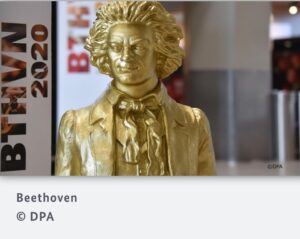
Last year we were not able to celebrate the 250th birthday of the famous German composer Ludwig van Beethoven because of the pandemic. That is why we are happy to announce a concert by the renowned South African conductor Richard Cock and his ensemble. This concert will celebrate Beethoven’s opus in an entertaining and informative way. You can watch the concert on 3 October from 6 p.m. here.

In cooperation with the Goethe Institute Johannesburg, we will show the acclaimed movie “Der Junge muss an die frische Luft” by Caroline Link online. We invite you to watch this very worthwhile German movie. It will be free to view online for one week from 3 October.

Furthermore, we want to celebrate the South African-German friendship by conducting three multimedia competitions. We are inviting South African musicians to compose a song, cartoonists to draw a cartoon representing the South African-German relations, and fashion designers to create a design for a facemask. The best entries will receive great prizes. With these competitions, we also want to support the South African creative industry that was badly affected by the pandemic. Submissions will be accepted until 10 October.

We hope to meet as many of you as possible at our online events celebrating our Day of German Unity.

Sincerely

Andreas Peschke

Ambassador Designate of the Federal Republic of Germany to South Africa, Lesotho and Eswatini

RWANDA EXPO 2020

President Kagame met with H.H. Sheikh Mohammed bin Rashid Al Maktoum, Vice-President and Prime Minister of the UAE and Ruler of Dubai. #RwandaExpo2020.

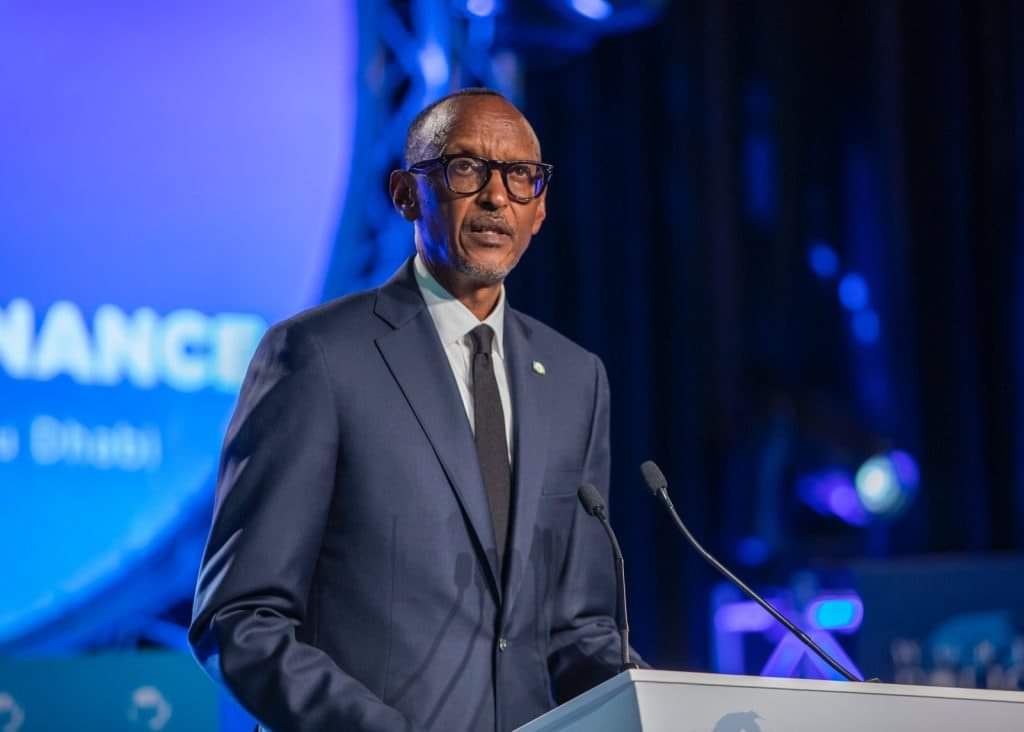
WORLD POLICY CONFERENCE REMARKS BY PRESIDENT KAGAME ABU DHABI

1 October 2021

Dr. Thierry de Montbrial, Founder and Chairman of the World Policy ConferenceExcellenciesHonourable Ministers and Senior Government OfficialsDistinguished Ladies and Gentlemen

I am happy to be back to the World Policy Conference, and I wish to thank Thierry de Montbrial for the invitation to join you here in Abu Dhabi.

The past two years have been particularly consequential.

The Covid pandemic is unprecedented, but it has exposed weaknesses, in both the national and global systems, that have been there all along.

This includes insufficiencies in both public health and governance.

The crisis has also revealed, quite starkly, the economic and power imbalances within the international community.

While major powers work to contain and constrain each other, Africa is at the receiving end, in all senses.

That means, of course, that when vaccine supplies are scarce, Africa is last in line to get doses.

Africa is also, almost as an afterthought, attacked for all sorts of things, in the name of so many things including democracy, human rights, as if these concepts or values are totally foreign to Africa.

You could say that one function of Africa in international relations, is to serve as a foil for the importance of universal values, precisely because so many states outside of Africa continue to fall short themselves.

The unspoken assumption is that only rich countries and their political elites have interests.

Poor countries should allow their interests to be looked after by others.

The rights and well-being of ordinary people are completely forgotten.

We cannot talk about a theoretical democracy that is not built on what the actual citizens of that place desire for themselves, their families, and their societies.

That’s the confusion, in some cases, for example, of contemporary liberal democracy with its singular emphasis on individual freedoms, identities, and desires, even at the expense of the common good.

This is not to say that there are no serious shortcomings in Africa, like elsewhere there is a lot to address in Africa. That is not the point at all.

But the double standards and hypocrisy that consistently applied to Africa, show that something else is going on.

However, where the main global players have stuck to certain principles, things can and do work.

We seem to be turning a corner on the pandemic, despite obstacles.

For example, COVAX was supposed to be a solution to assist low-income countries to get access to vaccines and therapies.

But Covax could not compete with wealthy countries for supply, and we saw examples of hoarding. In actual fact, the rich countries are the ones who were offering vaccine doses through COVAX.

To add insult to injury, we now see some travel restrictions based on where people were vaccinated, even though the vaccines themselves are exactly the same. So we have now an issue of where you’re vaccinated, something else that’s about to come or is slowly coming is; what type of vaccine.

Despite this, there is progress.

Access to vaccines has begun to increase, both through donations and doses we purchase for ourselves.

In Rwanda, we have administered more than 2 million doses, and 90% of residents of cities, especially the capital, Kigali, have received a dose.

We see also cooperating with various commercial and development partners to launch an ambitious program to manufacture vaccines and other pharmaceuticals for the African market, beginning next year.

So, even though things could have been better, we do appreciate the good cooperation that has been there.

Another area where good partnerships can produce results is in the fight against insecurity, terrorism, extremist ideologies, including genocide ideology.

There are cross-border challenges that require close cooperation.

Rwanda’s engagement in peacekeeping and peacebuilding missions in Africa falls under this rubric.

Islamist insurgents are now on the run in northern Mozambique in the province of Cabo Delgado, because of a good program of cooperation between Rwanda’s Defence Forces, and those of Mozambique and the region.

Similarly, our commitment to the Central African Republic, which is both bilateral and multilateral, through the United Nations, aims to create the space for the country to chart its own path to political reconciliation, peacefully.

The next step is to consolidate the gains and focus on providing services and guaranteeing rights for citizens.

These are just two examples that might link to some of the themes under discussion at this event.

Once again, I thank the World Policy Conference for this wonderful evening and opportunity. And thank you all for your kind attention and interest.

I look forward to our discussions to take place immediately.

Thank you.

Not under man of god, business man, politicians the word says awake from spiritual slumber for them that honour me i will honour for them despise me they 2nd chronicle 7 humble themselves prayer of genuine repentance brokenness. I have sinned against you.

AFRICAN UNION EXPO 2020 DUBAI

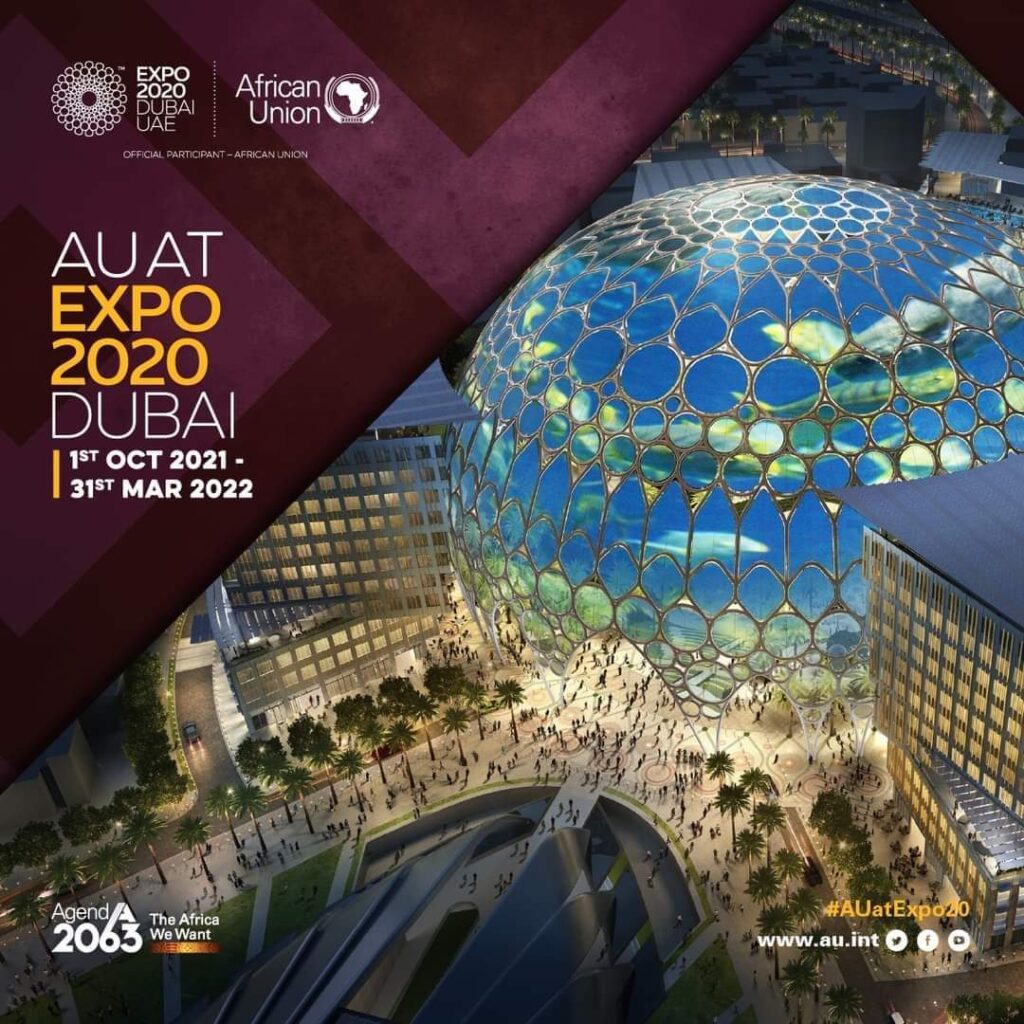
The much-anticipated World Expo Dubai 2020 official opening ceremony, to mark the official start of the greatest exhibition show on earth.

The African Union will [for the first time] be participating as an official partner to the Expo 2020 Dubai, throughout the six-month duration. The opening ceremony not only marks the start for the UAE Government and Expo 2020 team but serves as a turning point as we look to advance the implementation of the Agenda 2063 continental blueprint.

The commissioner general of the Au at Expo, call upon all African citizens join in on the opening ceremony glitz and glamour through.

SOUTH AFRICAN AND KENYA AIRWAYS TO WORK TOGETHER TO RECOVER AND IMPROVE SERVICE

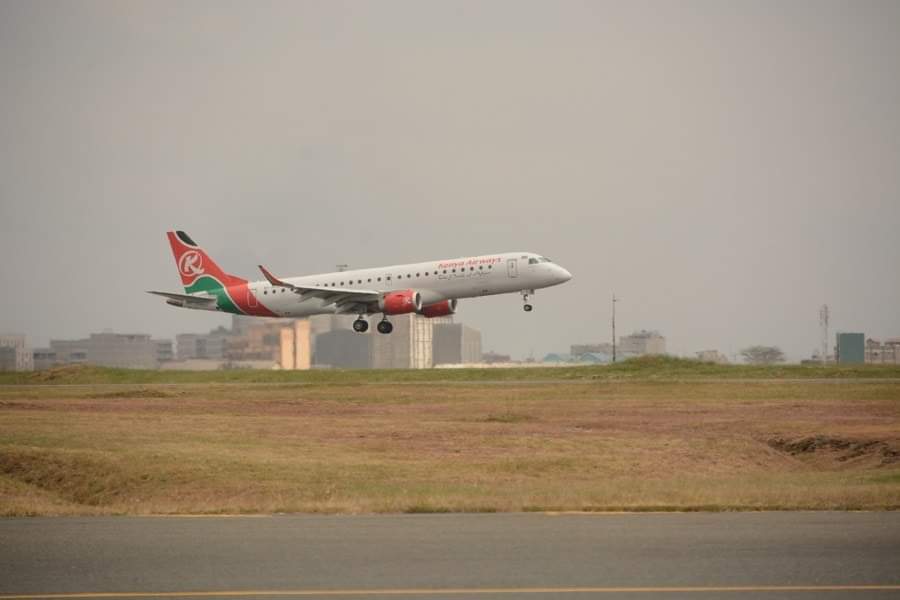
South African Airways has signed a Memorandum of Cooperation with Kenya Airways to enhance mutual growth potential, by taking advantage of the strengths of the two airlines’ busy hubs, said SAA on Tuesday.

The collaboration would assist both airlines in the current and post-pandemic business and travel environment and recovery.

According to the MoC, the two airlines would cooperate in the economic, technical, maintenance and repair, and take advantage of opportunities to achieve economies of scale.

SAA said this would help in the standardization of product and service offering that is in line with current global aviation trends. “As well as being a strong local carrier, part of our broader growth strategy is to become a major player in regional travel and this joint memorandum with Kenya Airways, one of the continent’s strongest and most respected carriers, will do just that,” said SAA interim CEO Thomas Kgokolo.

“Part of SAA’s core remit is to be a significant enabler of business and trade in Africa and it’s through a strategic understanding like this that real progress will be made in advancing South Africa and the continent’s growth.”

Kgokolo stated that the collaboration would assist both airlines in the current and post-pandemic business and travel environment and recovery. Their customers’ experience will also improve with a wider range of choices and destinations offered.

Kenya Airways CEO Allan Kilavuka said the partnership would assist in turning around the fortunes of both airlines.

“The future of aviation and its long-term sustenance is hinged on partnership and collaboration. Kenya Airways and South African Airways collaboration will enhance customer benefits by availing a larger combined passenger and cargo network, fostering the exchange of expertise, innovation, best practices, and adopting home-grown organic solutions to technical and operational challenges,” he said. ■

HAPPY INDEPENDENCE DAY BOTSWANA

30 SEPTEMBER

Botswana Day, September 30, commemorates Botswana’s independence from the British on 30 September 1966. The Republic of Botswana is a landlocked country in Southern Africa. Formerly a British protectorate of Bechuanaland, Botswana adopted its new name after becoming independent within the Commonwealth on 30 September 1966.

The earliest inhabitants of the region were the San, who were followed by the Tswana. About half the country today is ethnic Tswana. The term for the country’s people, Batswana, refers to national rather than ethnic origin. Encroachment by the Zulu in the 1820s and by Boers from Transvaal in the 1870s and 1880s threatened the peace of the region.

In 1885, Britain established the area as a protectorate, then known as Bechuanaland. When the Union of South Africa was formed in 1910 out of the main British colonies in the region, the Bechuanaland Protectorate, Basutoland (now Lesotho) and Swaziland (the “High Commission Territories”) were not included, but provision was made for their later incorporation. An expansion of British central authority and the evolution of tribal government resulted in the 1920 establishment of two advisory councils to represent both Africans and Europeans.

Proclamations in 1934 regularized tribal rule and powers. A European-African advisory council was formed in 1951, and the 1961 constitution established a consultative legislative council. In June 1964, Britain accepted proposals for a democratic self-government in Botswana. Self-government began in 1965, and on Sept. 30, 1966, the country became independent.

The Diplomatic Informer Magazine SA wishes the Government and the People of Botswana a Happy Independence Day.

STATEMENT BY PRESIDENT CYRIL RAMAPHOSA ON PROGRESS IN THE NATIONAL EFFORT TO CONTAIN THE COVID-19 PANDEMIC

30 September 2021

My fellow South Africans,

This evening, I would like to talk to you about four matters that are vital to our fight against the COVID-19 pandemic and the recovery of our society and economy.

These are, firstly, the intensification of our national vaccination campaign; secondly, the measures we will be taking to further open our economy; thirdly, the introduction of a vaccination certificate; and, fourthly, our engagements with the United Kingdom to restore travel, tourism and trade.

A few days ago, the South African COVID-19 Modelling Consortium confirmed that South Africa has emerged from a third wave of COVID-19 infections.

This wave, which was driven by the Delta variant, was far more severe than the previous two waves.

This third wave lasted more than 130 days, and was about two weeks longer than each of the earlier waves.

At the peak of the third wave, we were recording around 20,000 new cases each day.

In the last seven days, the average number of new cases was at around 1,800 a day.

There are also sustained decreases in COVID-19 hospitalisations and deaths in all provinces.

This is news that is welcome to all of us.

We have been living under the shadow of the pandemic for 574 days now, and all of us have taken strain.

We have experienced much hardship, and the most difficult of these has been the many relatives, colleagues and friends we have lost to this pandemic. We mourn each and every one of them.

Naturally we all want to resume many of the activities that we have been unable to do for much of the past two years.

We want to attend traditional rituals, birthday parties, weddings and other social functions freely with our friends and family.

We long for a time when we can go to church, to the mosque, to the shul and to the temple without restrictions, and to be able to hug and shake hands without worrying about getting sick.

The sports fans among us cannot wait to return to FNB, to Moses Mabhida, to Royal Bafokeng, to Newlands, and to Loftus to cheer on our teams.

We want to socialise freely again at restaurants, taverns and theatres, and we want to travel freely whenever and wherever we choose.

These freedoms, which we all long for, are within our reach.

But we will only be able to get there if we are all vaccinated and we all continue to observe the basic health protocols.

Since we launched our national vaccination drive, it has been gathering pace.

To date we have administered over 17 million vaccine doses.

Over 8.6 million people are fully vaccinated, which is more than one-fifth of the adult population.

Significantly, 60 per cent of South Africans over the age of 60, and 50 per cent of people between the ages of 50 and 59 have now received at least one vaccine dose.

These numbers give us confidence and hope.

We have set ourselves the target of vaccinating 70 per cent of the adult population in South Africa by the end of the year.

If we reach this target, the Department of Health estimates that we could save up to 20,000 lives.

That represents 20,000 people – mothers, fathers, sons and daughters – whose death can be prevented if the majority of us chooses to get vaccinated.

To reach our goal we need to administer an additional 16 million vaccine doses this year, which amounts to around 250,000 first dose vaccinations every single workday of every week until midDecember.

We know that the older you are, the greater the risk that you will get severely ill with COVID-19 or that you will need to be hospitalised.

We also know that the risk of death from COVID-19 is higher among the elderly than younger people.

To save lives and prevent our health facilities and staff from being overwhelmed, we have therefore prioritised those above 50 and those above 60 for vaccination.

This does not mean that people younger than 50 are not at risk.

In recent months, we have seen an increasing number of younger people being hospitalised and dying from COVID-19.

It is for this reason that from the 20th of August we extended our vaccination programme to all people in South Africa over 18 years of age.

While we have made important progress, and secured sufficient vaccine doses for the target population, our vaccination programme is still too slow.

We have therefore decided to upscale our vaccination campaign by launching the ‘Vooma Vaccination Weekends’ campaign from tomorrow.

The Vooma Vaccination Weekends campaign will be a countrywide drive to encourage our people to get vaccinated.

We know that getting to a vaccination site during weekdays can be difficult for many people, especially those who work, who have to commute long distances, or have family responsibilities.

Those who might not be able to get the vaccine during the week should take up this opportunity.

Tomorrow, the 1st of October and on Saturday the 2nd of October, we will be opening vaccination sites around the country to reach over half a million people.

The Department of Health has identified priority districts in each province based on the number of unvaccinated people and the current vaccination coverage in each district.

This will be the first Vooma Vaccination Weekend in a series of outreach programmes.

Leaders from across the political spectrum, civil society, religious leaders, traditional leaders, labour and business will mobilise communities to stay safe by being vaccinated.

The Deputy President and I, as well as Ministers, Deputy Ministers, Premiers, MECs, Mayors and Councillors, will also be out in communities on Friday and Saturday to encourage citizens to get vaccinated.

The vaccination is free to everyone living in South Africa, whether you are a South African citizen or from another country.

You can go to a government or a private health facility that offers vaccinations, even if you don’t have medical aid.

You can walk into your nearest vaccination site with your ID or other proof of identity and be registered on the spot.

The Vooma Vaccination Weekends are also an opportunity to acknowledge the immense contribution made by our frontline health workers and health service managers – from our community health workers who have gone door-to-door encouraging people to go to vaccination sites to our staff members at the sites and outreach vehicles and in health facilities across the country.

We also want to acknowledge the huge number of volunteers who have helped and the many initiatives by local leaders.

We must applaud the efforts that are being made by business to have their workers vaccinated.

We call on all businesses to facilitate the vaccination of their workers and encourage their workers to get vaccinated.

The involvement of all sectors of society in the national effort will become all the more critical in the run-up to local government elections in November.

Campaign activities pose the greatest risk to a surge in new infections.

Every one of us – from party leaders and organisers to supporters and elections staff – has a responsibility to ensure that the regulations are followed and all health protocols are observed during the election campaign.

The Independent Electoral Commission is putting in place measures to ensure that every voter can freely exercise their democratic right without being exposed to unnecessary risk.

Fellow South Africans,

When I announced on the 12th of September that the country would be moving to Adjusted Alert Level 2, I said that we would be reviewing the situation after two weeks.

The current trends in the progression of the pandemic mean that a number of the restrictions in place can be eased, as per the recommendations of the Ministerial Advisory Committee on COVID-19.

Following meetings of the National Coronavirus Command Council and the President’s Coordinating Council, Cabinet has decided to move South Africa from Adjusted Alert Level 2 to Adjusted Alert Level 1 from midnight tonight.

The following measures will apply as part of Alert Level 1:

The hours of the curfew will change, from 12 midnight to 4 am.

         Non-essential establishments like restaurants, bars and fitness centres will need to close by 11 pm to allow their employees and patrons to travel home before the start of the curfew.

The maximum number of people permitted to gather indoors will increase from 250 to 750, and the maximum number of people permitted to gather outdoors will increase from 500 to 2,000.

         Where the venue is too small to accommodate these numbers with appropriate social distancing, then no more than 50 per cent of the capacity of the venue may be used.

         This includes religious services, political events and social gatherings, as well as restaurants, bars, taverns and similar places.

The maximum number of people permitted at a funeral will increase from 50 to 100. As before, night vigils, after-funeral gatherings and ‘after-tears’ gatherings are not allowed.

The sale of alcohol – for both off-site and on-site consumption – will be permitted, according to normal licence provisions. However, no alcohol may be sold after 11 pm.

The wearing of masks in public places is still mandatory, and failure to wear a mask when required remains a criminal offence.

As part of the effort to return the most affected parts of the economy to operation we are looking at further relaxation of restrictions, particularly with respect to sporting and cultural events.

As I said earlier, we all long for our freedom back, and if we continue to work together as we have been doing, more areas of activity will open up.

The Department of Health will soon be rolling out a vaccination certificate, which will provide a secure and verifiable proof of vaccination.

It can be used to facilitate travel, access to establishments and gatherings and other forms of activity that require proof of vaccination status.

Our approach is informed by World Health Organization guidelines and is in line with international best practice.

Streamlining and standardising proof of vaccination will also go a long way towards getting a number of international travel restrictions both from and into our country eased.

Getting vaccinated is not only about protecting yourself and those around you.

It is also about preventing new and more dangerous variants from emerging, as the virus is able to spread and mutate in unvaccinated populations.

However, we should remember that even if we are vaccinated, we need to continue to adhere to the basic precautions to limit the spread of the virus from one person to another.

We know that indoor gatherings, particularly in places that have poor ventilation, are the major cause of outbreaks and super spreader events.

We must continue wearing our masks at all times when in public, keep our distance from others and always ensure that windows are open and that there is a flow of fresh air.

If we continue to adhere to these regulations, if we keep the rate of infections low, and most importantly if we vaccinate significant numbers of the adult population, we will keep the pandemic at bay and eventually, force it into decline.

In an effort to prevent rising infections, a number of countries around the world have opted to restrict travel from other countries.

The United Kingdom imposed a travel ban on South Africans by red listing our country.

This has put us in a disadvantaged position, since the United Kingdom is South Africa’s biggest source of tourism from the northern hemisphere and a significant trading partner.

While UK scientists were concerned about the presence of the Beta variant in South Africa, the reality is that the Delta variant is now by far the dominant variant in the country.

Earlier today I had a call with the British Prime Minister Boris Johnson to discuss this matter. I put South Africa’s case to him, which he understood very well.

We both agreed that decisions of this nature should be informed by science and are hopeful of a positive outcome when the issue comes up for review in the coming days.

Fellow South Africans,

Our greatest priority now is to ensure that the economy recovers as quickly as possible, so that we can create jobs and help businesses to get back on their feet.

The only way that we can do this is if more South Africans choose to get vaccinated, more quickly.

If the majority of our population is vaccinated, we can declare South Africa to be a safe destination and welcome tourists back over the summer season.

We can resume sporting events and concerts, lift restrictions on restaurants and bars, and encourage people to return safely to their workplaces, shops and public spaces.

If we can reach our vaccination targets by the end of this year, we can avoid further restrictions and kick our economic recovery into high gear.

I want to urge you all to take advantage of Vooma Vaccination Weekends.

Let us all go out and get vaccinated.

Let us take our friends and family who are not yet vaccinated to go and get vaccinated.

Let us as one to reach our 70 per cent target by December.

Let us pick up the pace. Let us Vooma.

May God bless South Africa and continue to protect her people.

I thank you.

COURTESY CALL ON MINISTER NALEDI PANDOR BY THE AMBASSADOR OF ALGERIA H.E RACHID BENIOUNES, THIS MORNING, 30 SEPTEMBER 2021

Ambassador Beniounes’ visit with Dr Pandor is followed by a farewell breakfast in his honour, hosted by Deputy Minister Mashego-Dlamini at the Jonny Makhathini Diplomatic Guesthouse in Pretoria.

Political relations between the South African liberation movement and Algeria dates back to the 1950s/60s.

We bid farewell to Ambassador Rachid Beniounes as his tour of duty to South Africa ends. Many thanks for continuing to build stronger relations between our two countries. 🇿🇦 🇩🇿

#SAAlgeriaRelations

#AlgeriaInSA

#BilateralRelations‬

Photos: Jacoline Schoonees (DIRCO)

CHINESE ECONOMY’S ‘HISTORIC TRANSFORMATION’ IN 70 YEARS

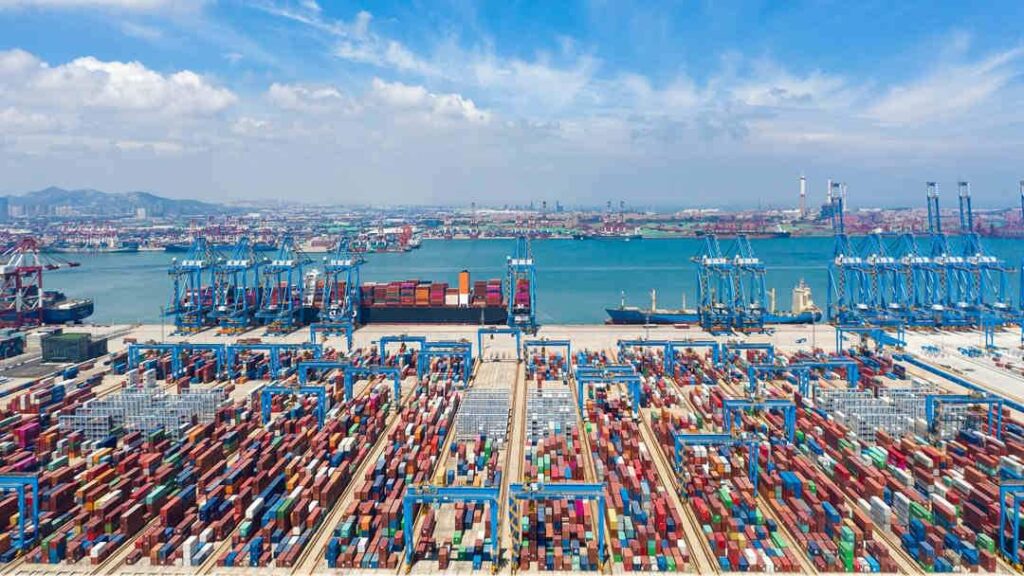
China’s economic strength has increased significantly over the past 70 years, with GDP soaring from 67.9 billion yuan ($10.5 billion) in 1952 to 101.6 trillion yuan in 2020, according to a white paper “China’s Epic Journey from Poverty to Prosperity” released on Tuesday.

The world’s second largest economy, China now accounts for over 17 percent of global GDP. And for the past 11 years, it has been the world’s largest manufacturer, with an output of over 220 major industrial products, the white paper said.

China also ranks first in the world in terms of trade in goods and foreign exchange reserves, and second in terms of its trade in services and consumer market.

“China has achieved a historic transformation from a low-income country to an upper-middle-income country, with per capita GDP rising from less than $100 in 1952 to over $10,000 in 2020,” the white paper noted.

“The country has a middle-income group of over 400 million people, and this number keeps expanding, offering a supersized market that is growing faster than any other place in the world,” it said.

In 2020, China was the first country to reopen its economy after bringing COVID-19 under control. It was also the first economy to shift back from negative to positive growth, reflecting the resilience of the economy.

China’s employed population has risen from 180 million in 1949 to 750 million in 2020, and the job market remains stable, according to the white paper.

Decades ago, farmers made up a large proportion of the population. But the employment structure has changed and 47.7 percent of the workforce is now employed in the tertiary sector, while 61.6 percent is working in cities.

New jobs, such as deliverymen and ride-hailing drivers have emerged, which has brought a profound change to the mindset of the workforce, broadened their choices and expanded the forms of employment available, the white paper also said.