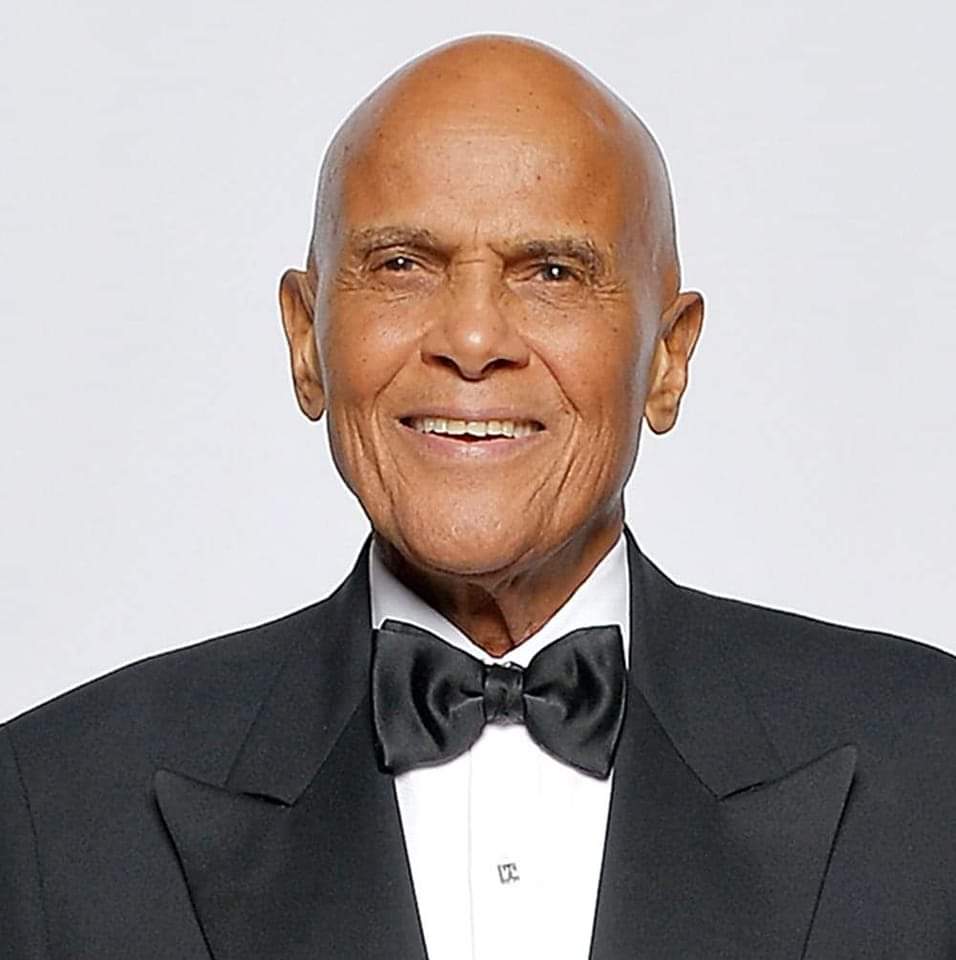
Thabo Mbeki Foundation Tribute To Harry Belafonte

As news of Harold George ‘Harry’ Belafonte’s passing spread around the world, fans and admirers alike mourned the loss of a true icon. The legendary calypso singer and actor was more than a talented entertainer, but also a passionate activist, humanitarian, and advocate for the oppressed.

Born in 1927 in New York City, Belafonte began his career in the late 1940s, rising to fame with his hit recordings of Calypso music.

His smooth voice and infectious rhythms captured the hearts of audiences everywhere, and he became known as the “King of Calypso.” He sold millions of albums and toured around the world, spreading the joy of his music, and putting Calypso on the map as a distinct genre of its own.

But Belafonte was more than just a musical talent. He was also deeply committed to using his platform and voice to speak out against racism and social injustice. In the 1960s, he became a close friend and confidant of Martin Luther King Jr. and was one of the most prominent supporters of the Civil Rights Movement. He used his celebrity status to raise awareness and mobilise resources for the cause and marched alongside King and other activists in the historic Selma to Montgomery march of 1965.

Belafonte’s activism went beyond the United States as well. He was a noted advocate for human rights and humanitarian causes around the world, especially on the African continent. In the 1980s he was one of the key figures in the US anti-Apartheid movement. Together with the legendary tennis player Arthur Ashe, was the co-founder of the group Artists for a Free South Africa, which included such luminaries as Paul Simon, Bonnie Raitt, and Wynton Marsalis, among others.

Belafonte’s humanitarian work extended beyond political activism. He was a tireless advocate against poverty and underdevelopment around the world and worked tirelessly to improve the lives of those in need. In 1985, he helped organize the Live Aid benefit concert, which raised millions of dollars for famine relief efforts in Africa. He also founded the Harry Belafonte 21st Century Library, which provides educational resources to underprivileged children in the United States.

As we mourn the departure of this extraordinarily humane human being, we also celebrate his life by remembering his contributions to all facets of human life his talents and works could reach. He set an example for worth emulating by all of us remain!

The Patron of the Thabo Mbeki Foundation, President Thabo Mbeki, our board, and staff would like to convey our deepest condolences to Harry Belafonte’s family, his children, and grandchildren.

May his soul rest in eternal peace!

Issued by the Thabo Mbeki Foundation

26 April 2023

Deputy Minister Alvin Botes launched the Romanian Assistance Programme for Township and Rural Schools in South Africa

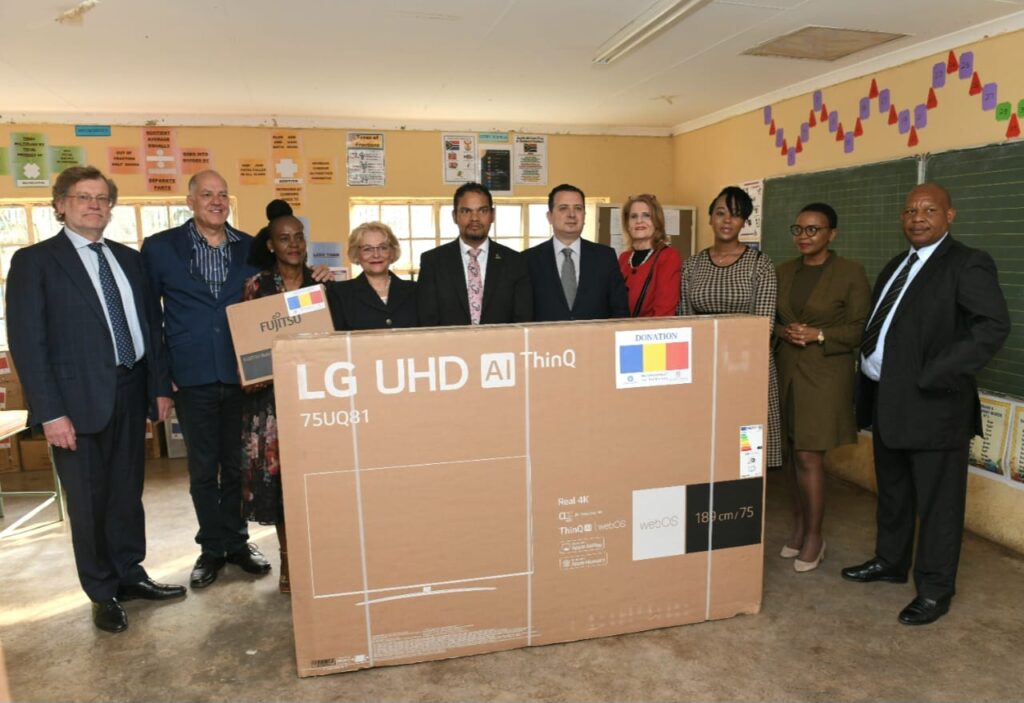
Photo: Electronics and ICT equipment (TV sets and Laptops), handed over to Laezonia school
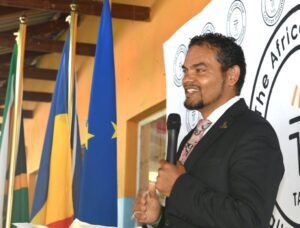
Photo: Deputy Minister Alvin Botes during his speech at the launch of the Romanian Assistance Programme for Township and Rural Schools in South Africa.

The Deputy Minister of International Relations and Cooperation, Mr Alvin Botes, working in partnership with the Embassy of Romania, participated in the launch of the Romanian Assistance Programme for Township and Rural Schools in South Africa on 25 April 2023.

The programme was launched at Laezonia Primary School in Doornrandje, Centurion. The Romanian Embassy handed over electronics and ICT equipment (TV sets and Laptops), stationery, kitchenware, and sports equipment, as well as learning and teaching materials. The programme is part of the Official Development Assistance (ODA) for South Africa and is facilitated by the Romanian Government through the Romanian Agency for International Development (RoAid).

The European Union, Slovak, Lithuanian, Turkish, Egyptian and Palestinian Ambassadors, MEC for education, South African government officials, community leaders and scholars attended the vibrant event.

In his remarks, the Deputy Minister of International Relations and Cooperation, Mr Alvin Botes, on behalf of the government, expressed his thanks and gratitude towards the contribution to the school’s vision and welcomed the great initiative by the Romanian government, in light of the fact that South Africa values education highly. 

The Deputy Minister said that South Africa values education as it is the priority for the future leaders and commended the commitment of the Ambassador of Romania, H.E. Ms. Monica Sitaru for following up and fulfilling the Laezonia commitment, as sometimes people commit, but they do not follow through.
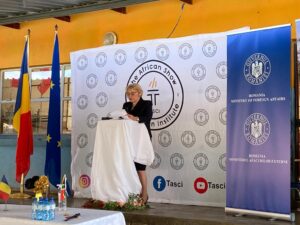
Photo: The Ambassador of Romania, H.E. Ms. Monica Sitaru, during her speech at the launch of the Romanian Assistance Programme for Township and Rural Schools in South Africa

In her speech, the Ambassador of Romania, H.E. Ms. Monica Sitaru, thanked everyone for attending the event and said she was very glad to be at the Laezonia school on the very special occasion, and it was her great joy to announce the launch of the rural school’s assistance program by the Romanian Government through the Romanian Agency for International Development.

Romania has decided to increase the annual allocation to the African Continent from 14.5% provided in 2021 to 17% of the total Ministry of Foreign Affairs’ Official Development Assistance budget for the period of 2022-2025.

During the European Union-African Union Summit, that took place in Brussels in February last year, the President of Romania, H.E. Mr. Klaus Iohannis emphasized that for Romania, education has traditionally been a prominent area for cooperation with Africa. “We take great pride in the fact that thousands of African citizens, former students in my country, use the competences gained in Romanian universities to serve their countries and to build bridges between the countries of origin and Romania. “
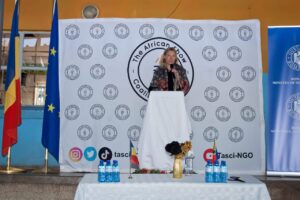
Photo: EU Ambassador H.E. Ms. Sandra Kramer, during her remarks at the Laezonia School Student
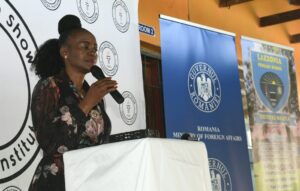
Photo: Mrs. Martha Raholane, the Principal of the Laezonia school
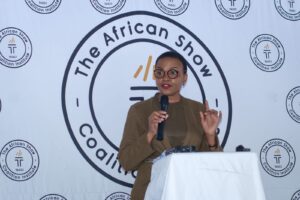
Photo: Ms. Bathandwa, founder of the African Show Coalition Institute
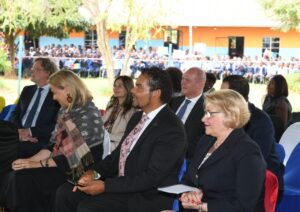
Photo: Deputy Minister Alvin Botes, Ambassadors, and scholars attending the vibrant event.
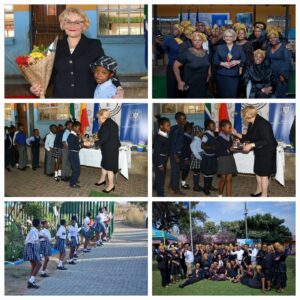
Photo: #Romania Embassy in South Africa contributing to South Africa’s values and vision of education.

“This is why we intend to scale up our commitment to strong educational partnerships with Africa in the years to come. Over 17,500 young Africans have studied in our universities in the past five years, and around 3,500 students from at least 40 countries are enrolled annually in Romanian universities, enriching our country’s academic life through their presence and stimulating a better understanding between people of the two continents, ” she added. 

” I am very proud to inform you that Laezonia is the first project for the rural schools in South Africa, but this will not be the last one.

This is a flagship and impactful initiative meant to support the quality of the education and the students’ skills in South Africa’s rural and township schools.

“Today, we are handing over to Laezonia Primary School electronic equipment (TV sets and laptops), stationery, kitchenware, and sports equipment worth around 25 thousand Euros, ” she intimated. 

It is her hope that the Romanian Government’s initiative launched today will help to overcome the challenges that rural areas and townships face.

Romania’s commitment to South Africa’s educational sector does not end with this donation. It will continue in the years to come and will contribute to strengthening the ties between Romania and South Africa.

“We believe that such kind of projects are really useful for the South African learners and teachers as well as the local communities, ” she added.

Access to quality education for all, at all levels is a top priority for the European Union as well, and Romania, as a member of the European Union is strongly committed to support this goal, including through the Team Europe Initiatives in the field of education.

“Ladies and Gentlemen,

Improving basic education in the rural areas will make a significant impact on economic development and will bring huge benefits to the country. In President’s Mandela words, ‘no country can really develop unless its citizens are educated. President Mandela also said that education is the most powerful weapon which you can use to change the world. ‘

Before I conclude, I would like to thank again the Deputy Minister Alvin Botes and his Office, the EU Ambassador Ms. Sandra Kramer, Gauteng

Education Member of Executive Council Mr. Matome Chiloane and all the Ambassadors for being with us today.”

” I would like to thank Ms. Bathandwa, founder of the African Show Coalition Institute for her wonderful assistance on putting this event together.

I also commend the Institute for its tireless efforts and devotion to improving the quality of education in rural and townships schools.”

“I would also like to thank Mrs. Martha Raholane, the Principal of the school for the excellent organisation of the event and her personal involvement.

Last but not least, I would like to thank M&T Solutions Pty Ltd Company for supporting us in ensuring the transportation of the goods to the

Laezonia school. “

High Commissions of New Zealand and Australia in Pretoria host 25th April 2023 ANZAC Day Commemorative Dawn service

A beautiful sunrise commemoration service of ANZAC day was held at #FreedomPark, Pretoria. It was hosted by their Excellencies High Commissioner of New Zealand, H.E. Dr Emma Dunlop-Bennett and High Commissioner of Australia, H.E. Ms Tegan Brink.

Photo: Photo:(L-R)High Commissioner of New Zealand, H.E. Dr Emma Dunlop-Bennett and High Commissioner of Australia, H.E. Ms. Tegan Brink, laying their Wreaths as part of the Anzac Day Dawn Service

Photo: (L-R) High Commissioner of New Zealand, H.E. Dr Emma Dunlop-Bennett, Minister of Public Service and Administration Hon. Noxolo Kiviet and High Commissioner of Australia, H.E. Ms. Tegan Brink

Photo: The High Commissioners, Ambassadors, diplomatic community, South African Government Officials, Civil Society and South African community took part in the Anzac Day Wreath Laying as part of the Anzac Day Dawn Service, honouring those who served and died in all wars, conflicts and peacekeeping operations.

Photo: A beautiful sunrise commemoration service of ANZAC Day held at Freedom Park, Pretoria.

Photo: Guests attending the beautiful sunrise commemoration service of ANZAC Day at Freedom Park, Pretoria.

Minister of Public Service and Administration Honourable Noxolo Kiviet, their Excellencies , High Commissioners, Ambassadors of Missions accredited to Pretoria, the diplomatic community, South African Government Officials, Civil Society and South African community attended the ANZAC Commemorative Dawn Service.

H.E. Ms Aysegul Kandas, Ambassador of Turkiye to South Africa, delivered the words of Mustafa Kemal Ataturk, founder and first President of the Republic of Turkiye.

Every year, April 25 marks the National Remembrance Day of New Zealand and Australia to honour the members of the Australian and New Zealand Army Corps (ANZAC) for their engagement in World War I.

It commemorates New Zealanders and Australians killed in war and honours returned and serving servicemen and women.

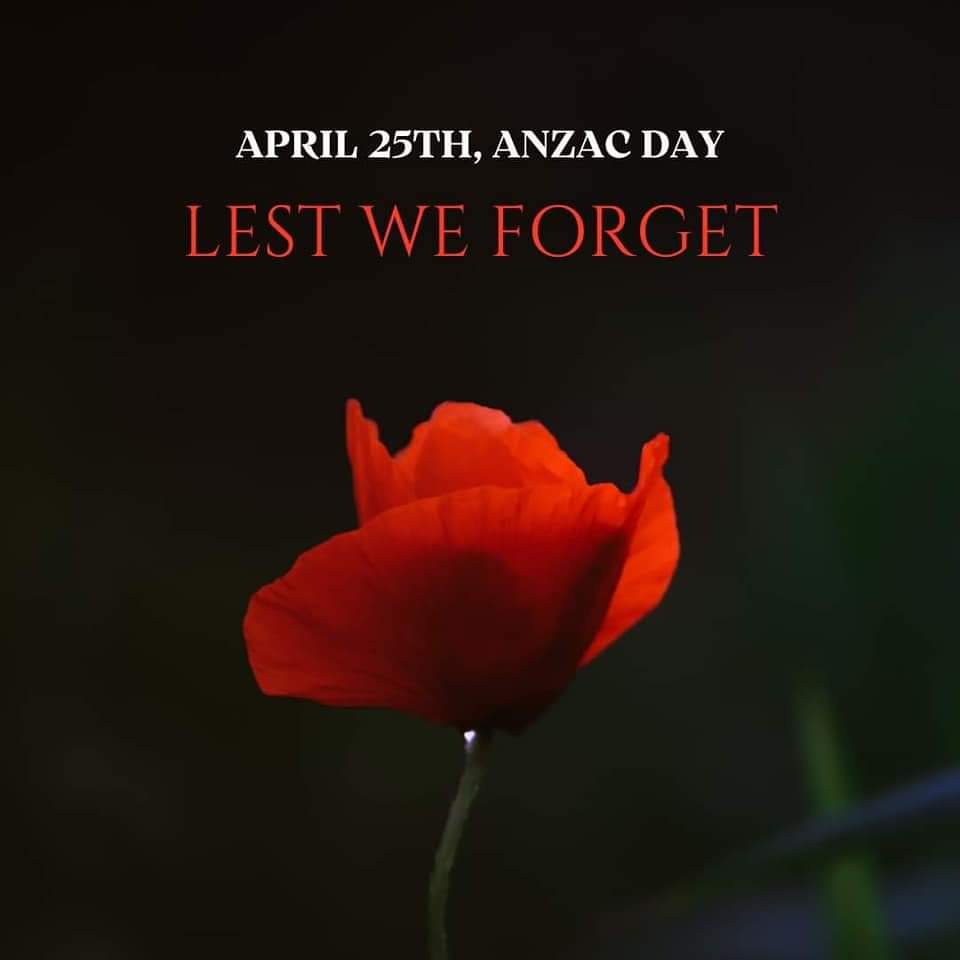
The remembrance Poppy, a symbolic artificial flower, has been used to commemorate the soldiers since 1921.

The date marks the anniversary of the landing of Australian and New Zealand soldiers – the Anzacs on the Gallipoli Peninsula in 1915. The aim was to capture the Dardanelles and open a sea route to the Bosphorus and the Black Sea. At the end of the campaign, Gallipoli was still held by its Ottoman Turkish defenders.

Thousands lost their lives during the Gallipoli campaign – 87,000 Ottoman Turks, 44,000 men from France, and the British Empire, including 8,500 Australians. To this day, Australia also marks the events of 25 April. Among the dead were 2,779 New Zealanders – about one in six of those who served on Gallipoli.

They may have ended in military defeat, but for many New Zealanders then and since, the Gallipoli landings signalled that New Zealand was becoming a distinct nation, even as it fought on the other side of the world in the name of the British Empire.

Anzac Day was first observed in 1916. The day has gone through many changes since then. The ceremonies that are held at war memorials up and down New Zealand, and in places overseas where New Zealanders gather, are modelled on a military funeral and remain rich in tradition and ritual.

Wreath laying was part of the Anzac Day Dawn Service in Pretoria.

Their Excellencies, High Commissioner of New Zealand, H.E. Dr Emma Dunlop-Bennett, High Commissioner of Australia, H.E. Ms. Tegan Brink, the Minister of Public Service and Administration Hon. Noxolo Kiviet, High Commissioners, Ambassadors, diplomatic community, South African Government Officials, Civil Society and South African community took part in the Anzac Day Wreath Laying as part of the Anzac Day Dawn Service, honouring those who served and died in all wars, conflicts and peacekeeping operations.

Loyalty, selflessness, and courage reflect the Anzac spirit!

Lest we forget!

WE WILL REMEMBER THEM!

#AnzacDay

#anzacday2023

#lestweforget2023

#freedompark

#LestWeForget

The International Day of Multilateralism and Diplomacy for Peace

Photo: Creator Paz y Cooperación

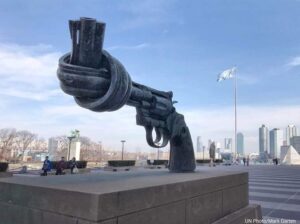
Photo: UN Photo/Mark Garten

24 April was established by the UN General Assembly in 2018 as the International Day of Multilateralism and Diplomacy for Peace following a declaration by a Ministerial Meeting of the Non-Aligned Movement (NAM).

Multilateralism is usually defined as collaboration between several countries in pursuit of a common goal, where other parties such as civil society or the private sector may also be involved.

Preserving the values of multilateralism and international cooperation, which underpin the UN Charter and the 2030 Agenda for Sustainable Development, is fundamental to promote and support the three pillars of the UN: peace and security, development and human rights.

The international norms and rules-based system that have steered nations through seven decades must rise to meet the mounting challenges of protectionism and isolationism. Global issues such as climate change, geopolitical tensions, humanitarian and migratory crises are cross-cutting, implicating the values and interests of nations. They require collective attention and action. Technological advancement has also impacted the political and socio-economic landscape and inter-state relations

The International Day of Multilateralism and Diplomacy for Peace seeks to reaffirm the UN Charter and its principles of resolving disputes among countries through peaceful means. The Day acknowledges the use of multilateral decision-making and diplomacy in achieving peaceful resolutions to conflicts among nations.

It was established on the 12th of December 2018 through resolution A/RES/73/127 and was first observed on the 24th of April 2019. Since then it is observed annually on the 24th of April.

Multilateralism is not simply a practice or a question of the number of actors involved. It involves adherence to a common political project based on the respect of a shared system of norms and values. In particular, multilateralism is based on founding principles such as consultation, inclusion, and solidarity. Its operation is determined by collectively developed rules that ensure sustainable and effective cooperation. In particular, they guarantee all actors the same rights and obligations by applying themselves continuously (and not on a case-by-case basis, depending on the issue handled). Multilateralism is, therefore, both a method of cooperation and a form of organization of the international system.

Multilateralism is part of the United Nations DNA. The Charter does not simply define the structure, mission and functioning of the Organisation. It is one of the pillars of the international system in which we live today. In his report on the work of the United Nations to the General Assembly in 2018, the United Nations Secretary-General António Guterres recalled that the Charter remains the “moral compass to promote peace, advance human dignity, prosperity and uphold human rights and the rule of law.” (Guterres, 2018).

While the United Nations has been the multilateral framework par excellence for more than 75 years, multilateral processes have diversified. One of the most visible developments in multilateral diplomacy is undoubtedly represented by the increase in the number of Member States: from 51 in 1945 to 193 today. In addition to this horizontal expansion, the multilateral framework has also expanded vertically, including new actors, such as non-governmental organizations (NGOs), private actors, and other international organizations. Today, more than 1,000 NGOs and international organizations have observer status at the United Nations.

The United Nations came into being in 1945, following the devastation of the Second World War, with one central mission: the maintenance of international peace and security. The Charter of the United Nations states that one of the United Nations purposes and principles is the commitment to settle disputes through peaceful means and the determination to succeeding generations from the scourge of war.

Chinese enterprises make remarkable contributions to South Africa’s industrialization

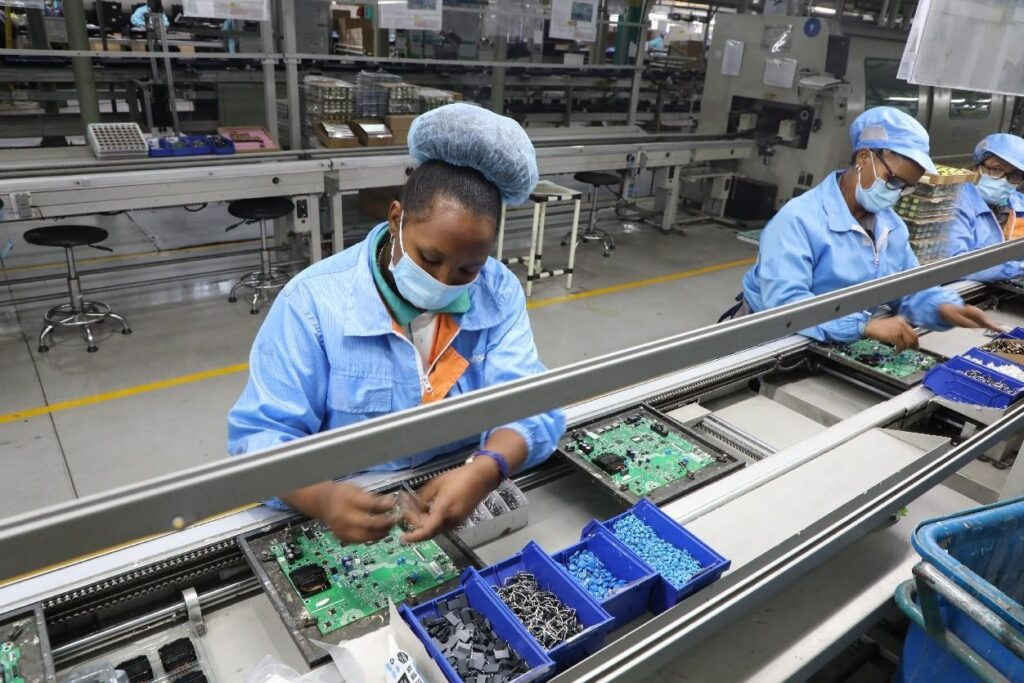
Photo: Local employees assemble motors in a workshop in the Hisense South Africa Industrial Park. (People’s Daily/Zou Song)

Photo: Local employees work in a workshop of the Hisense South Africa Industrial Park. (People’s Daily/Zou Song)

Photo: Local employees work in a workshop of the Hisense South Africa Industrial Park. (People’s Daily/Zou Song)

By Zou Song (People’s Daily)

23 April 2023

Wide and flat roads, orderly traffic flow, and neatly built factory facilities – these are the most prominent features of the Hisense South Africa Industrial Park, a manufacturing quarter built by Chinese home appliance giant Hisense in Cape Town, South Africa.

“I’ve been working in this industry for nearly 30 years, and this year marks the 10th year for me to work in the industrial park. I’m glad to see the young people gaining better and better vocational skills today,” said Valeri, Workshop Director of Industrial Park Television Factory.

Valeri is about to retire. She had gone through the hardships of factory shutdowns and unemployment. For a time, she had to do some vending businesses to make a living.

After the Hisense South Africa Industrial Park was built in the Atlantis industrial area in Cape Town, the woman immediately applied for a job there.

She started from the most basic position and became a team leader and then workshop director after training. Valeri now has apprentices. The products manufactured by her factory are available in many home appliance shops in South Africa, which makes her proud, Valeri told People’s Daily.

The Hisense South Africa Industrial Park was jointly built by Hisense and the China-Africa Development Fund in 2013 with an investment of $350 million. After years of development, the park is able to produce 400,000 television sets and 400,000 refrigerators on an annual basis today.

Now, Hisense televisions, air conditioners, refrigerators and other home appliance products are sold in over 5,000 shops under 18 major chain stores across South Africa, accounting for 30 percent of the market share in the country. Besides, these products are exported to more than 10 African countries such as Mozambique, Zimbabwe, and Madagascar, as well as European destinations, including the UK.

More and more factories on the supply chain of the home appliance industry have been built in the Atlantis industrial area because of the influence of the Hisense South Africa Industrial Park. The Atlantis industrial area has become an important manufacturing hub for electronic and home appliance products in South Africa and designated as a national-level special economic zone.

Sizo Nkala, a researcher at University of Johannesburg Centre for Africa-China Studies, told People’s Daily that the Hisense South Africa Industrial Park, attracting more and more Chinese enterprises to South Africa, has contributed to South Africa’s re-industrialization.

While promoting industrialization in South Africa, Chinese enterprises attach high importance to talent cultivation, which helps improve vocational skills of the local workforce.

Many local workers, including Valeri, have joined vocational training programs launched by Chinese enterprises, and now about 70 percent of the management positions are held by local employees.

Besides, to improve the vocational skills of local young employees, Hisense and a local middle school have jointly established an electronics technology research and development training base, which offers electronic, software, and equipment operation courses. So far, the base has trained a total of more than 1,400 people.

Today, Valeri and her family are living an obviously better life than before. She said her job has brought dramatic changes to her family. “We expanded our residence, and I can enjoy my twilight years after retirement,” she told People’s Daily.

A number of residents in the Atlantis industrial area have secured a job near their homes, and many of them have bought their own cars. Since the Hisense South Africa Industrial Park was put into use, it has created around 1,000 jobs for local people and indirectly offered 5,000 jobs.

This year marks the 25th anniversary of the establishment of diplomatic ties between China and South Africa. Alvin Botes, Deputy Minister of International Relations and Cooperation of South Africa, noted that Chinese enterprises have made constant and remarkable contributions to promoting South Africa’s industrialization. He hopes that the two countries can achieve more fruitful results in their future cooperation.

IMF Reaches Staff-Level Agreement on a 40-Month Extended Credit Facility with Burundi

IMF staff and Burundian authorities have reached a staff-level agreement on economic policies and reforms to be supported by a new 40-month arrangement under the Extended Credit Facility (ECF) of about US$ 261.7 million.

The staff-level agreement is subject to IMF Management approval and consideration by the Executive Board.

Burundi’s reform program aims to support economic recovery from shocks, restore external sustainability, and strengthen debt sustainability, while creating fiscal space for accelerated and inclusive growth.

Beyond a carefully calibrated macroeconomic policy mix, undertaking growth- and governance-enhancing reforms while being attuned to financial sector vulnerabilities will be essential to address the multi-dimensional challenges.

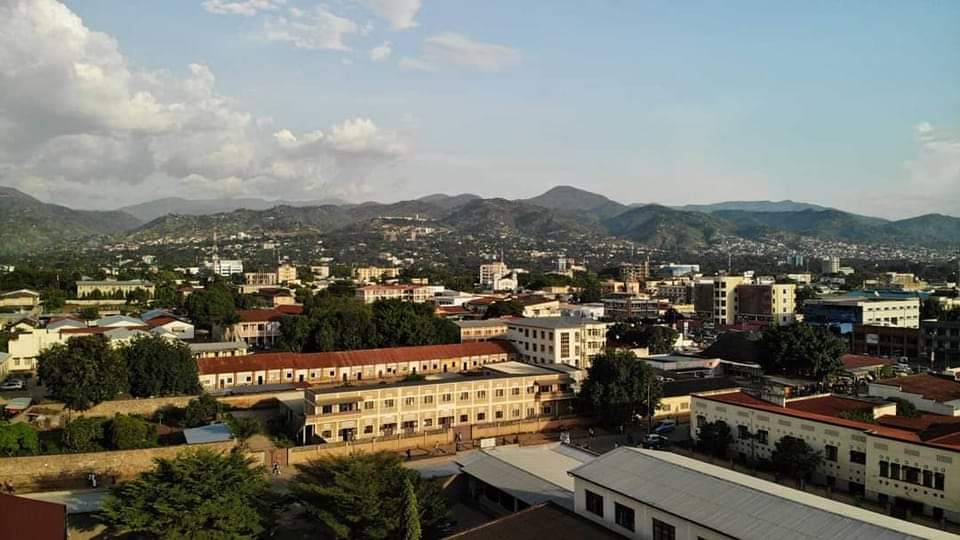
Washington, DC: An International Monetary Fund (IMF) team led by Ms. Mame Astou Diouf, Mission Chief for Burundi, visited Bujumbura during February 2−12 and held follow-up virtual meetings during February 22−April 6 to discuss with the Burundian authorities IMF support for their macro-economic policies and reform plan.

At the end of the discussions, Ms. Mame Astou Diouf issued the following statement:

“The Burundian authorities and IMF staff team have reached a staff-level agreement on a 40-month arrangement under the Extended Credit Facility (ECF) with access of SDR 200.2 million (or about US$ 261.7 million, representing 130 percent of quota). This is the first Upper Credit Tranche-quality program for Burundi supported by the Fund since 2015. The program aims to support a calibrated macroeconomic policy mix to restore external sustainability, strengthen debt sustainability, while supporting economic recovery from shocks and creating fiscal space for accelerated and inclusive growth. The staff-level agreement is subject to IMF Management approval and consideration by the Executive Board.

“Discussions held with the Burundian authorities covered recent macro-developments, the impact of the various domestic and external shocks faced by Burundi, and Burundi’s macro-policy plans and structural reform agenda.

“Burundi’s economy has been hit by several shocks, halting its recovery from the negative effects of the COVID-19 pandemic and heightening its macroeconomic imbalances. Delayed rainfall in the last quarter of 2022 and limited availability of fertilizer— driven by higher prices in the context of limited foreign exchange (FX) availability for imports, supply disruptions linked to the war in Ukraine, and insufficient domestic production to cover local farmers’ demand— hampered agricultural production. Outbreaks of the rift valley and porcine fevers impacted Burundi’s livestock production. Higher import prices triggered by the war in Ukraine have pushed up inflation, widened the fiscal deficit, and heightened current account (CA) pressures.

“Real GDP Growth is estimated to have slowed down to 1.8 percent in 2022 (from 3.1 percent in 2021) but is projected to rebound to 3.3 percent in 2023. Delayed harvest and lower crop of 2022 will impact agricultural production in 2023 owing to reduced land and seed availability.

“Inflation pressures have not receded. Inflation averaged 18.9 percent in 2022 and has continued accelerating (28.6 percent y/y at end-January 2023), driven by food prices. It is projected to remain high, at around 18 percent in 2023.

“With the support of the ECF arrangement, the Burundian authorities have planned a broad-based near- and medium-term macroeconomic reform agenda aimed at tackling key challenges:

“Resuming pro-growth fiscal consolidation to support debt sustainability while protecting the vulnerable population. The fiscal position is projected to weaken in FY2022/23 (July-June) because of slow revenue collection from measures adopted in the last two budget laws and spending overruns including large fertilizer subsidies. A return to fiscal consolidation is planned starting in FY2023/24, building on strengthened revenue collection efforts and current spending restraint while preserving social spending and efficient investment scaling up under the authorities’ Public Investment Plan (PIP). Public debt will be declining over the medium term under the program.

“External rebalancing and unwinding monetary financing. The central bank (BRB) is committed to recalibrating monetary and external policies to address the below-adequacy FX reserves (1.5 months of imports at end-2022) and large parallel FX market premium. In preparation for the external rebalancing, the BRB has initiated FX market liberalization and reduced financing provision to commercial banks. This will also help curb inflation pressures. Limiting BRB financing to the budget will also be essential.

“Governance and structural reforms will be at the core of the authorities’ medium-term program to ensure a business environment conducive to private-led diversified and inclusive growth and job creation.

“The mission met with H.E. Prime Minister Gervais Ndirakobuca, H.E. Audace Niyonzima, Minister of Finance, Budget and Economic Planning (MFBPE); Mr. Dieudonné Murengerantwari, Governor of the Bank of the Republic of Burundi (BRB); Mr. Désiré Musharitse, First Vice-Governor of the BRB; Ms. Francine Inarukundo, Permanent Secretary of the MFBPE. The mission also met with other officials of the government and the BRB, as well as representatives of commercial banks, the private sector, non-governmental organizations, and the donor community.

“The mission would like to take this opportunity to thank the Burundian authorities for their hospitality and cooperation, and fruitful and open discussions.

Source: IMF

International Mother Earth Day.

Mother Earth is clearly urging a call to action. Nature is suffering. Oceans filling with plastic and turning more acidic. Extreme heat, wildfires and floods, have affected millions of people. Even these days, we are still trying to get back on track from COVID-19, a worldwide health pandemic linked to the health of our ecosystem.

Climate change, man-made changes to nature as well as crimes that disrupt biodiversity, such as deforestation, land-use change, intensified agriculture and livestock production or the growing illegal wildlife trade, can accelerate the speed of destruction of the planet.

This is the second Mother Earth Day celebrated within the UN Decade on Ecosystem Restoration. Ecosystems support all life on Earth. The healthier our ecosystems are, the healthier the planet – and its people. Restoring our damaged ecosystems will help to end poverty, combat climate change and prevent mass extinction. But we will only succeed if everyone plays a part.

For this International Mother Earth Day, let’s remind ourselves – more than ever – that we need a shift to a more sustainable economy that works for both people and the planet. Let’s promote harmony with nature and the Earth.

What is International Mother Earth Day?

It’s a special celebration that brings together people from around the world to remember that planet Earth is our home and we want to live in harmony with nature. We are all responsible for protecting our planet and looking after all the species that live here. April 22 was first established by the UN as International Mother Earth Day in 2009, joining groups that had previously celebrated Earth Day on the same date. The UN website explains that the idea of ‘Mother Earth’ is used because it ‘reflects the interdependence that exists among human beings, other living species and the planet we all inhabit’.

Why is it important?

On this day, environmental organisations from all over the world come together to highlight the urgent need to protect the many ecosystems that make up our environment. These ecosystems are under attack from climate change and the natural disasters caused by rising temperatures: forest fires, floods and terrible storms. More than a million animal and plant species are in danger of extinction through loss of habitat, mainly due to human activity. This, in turn, is leading to outbreaks of deadly diseases that spread from wildlife to humans. On International Mother Earth Day, environmentalists call for action to reverse this damage.

How did it start?

The first Earth Day was celebrated in 1970 in the USA after a decade of local protests about air and water pollution in the United States. In 1969, people were angry about a terrible oil spill in Santa Barbara, California, and the damage it caused. US Senator Gaylord Nelson called for a national ‘teach-in’, bringing together students and teachers to discuss key issues of pollution and conservation.

On 22 April 1970, 20 million people, approximately ten per cent of the total population of the States at the time, joined the ‘teach-in’ and met in streets, parks and universities across the land to call for a healthy, clean, sustainable environment. Some people think of that day as the birth of the modern environmental movement.

Twenty years later, in 1990, Earth Day went global. More than 200 million people in 141 countries came together to call for environmental issues to be discussed on the world stage. In 1995, Senator Nelson was given an award for his work for the environment.

Today more than one billion people all over the world come together each year to celebrate International Mother Earth Day and remind politicians that action needs to be taken to move towards a more sustainable way of life that works for both people and the planet.

#Earthday #MotherEarthDay
#earthday2023

Happy EID Mubarak to all Muslims in South Africa & around the World as the Month of Ramadan comes to an end!

The Diplomatic Informer Magazine SA wishes to congratulate all Muslims in South Africa and around the world on the occasion of Eid Mubarak, the Festival of Breaking the Fast which concludes the holy month of Ramadan.

May the blessings of this auspicious Eid ul-Fitr enrich your lives with good health, happiness, peace, love and prosperity!

Many devote the days of Ramadan and Eid to care for others, as well as provide support to those in need.

May peace, unity, and tranquility reign, May the Almighty accept your prayers and bless you with the rewards of Ramadan.

Happy Eid Mubarak to you and your families from all of us at The Diplomatic Informer Magazine!

#HappyEidMubarak

#EidMubarak

#eidmubarak2023

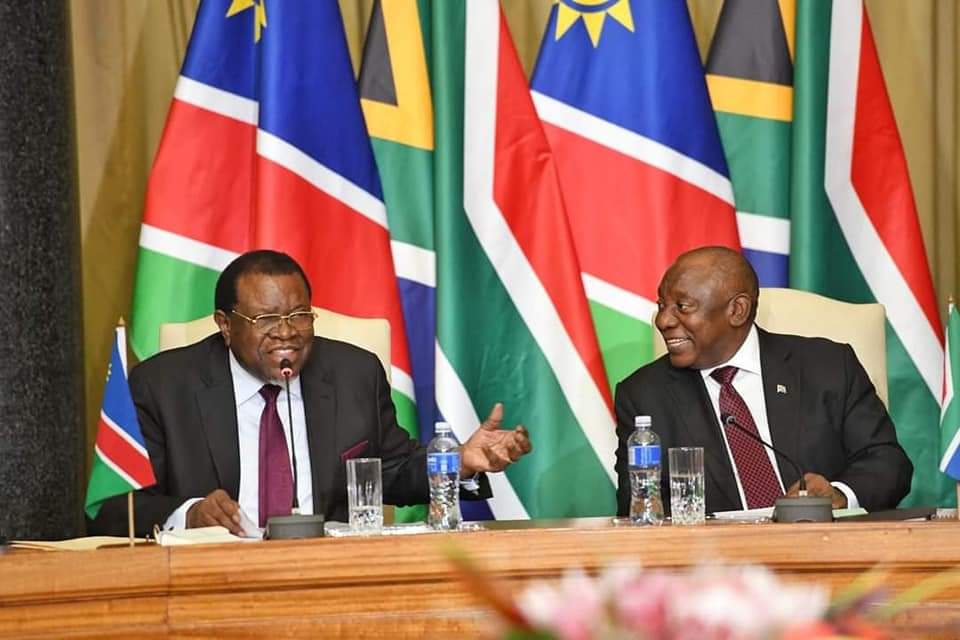
Statement by His Excellency Dr Hage G. Geingob, President of the Republic of Namibia on the Occasion of the Official Talks During the State Visit to the Republic of South Africa, Pretoria this week

Photo: His Excellency Dr Hage G. Geingob, President of the Republic of Namibia on the Occasion of the Official Talks During the State Visit to the Republic of South Africa, Pretoria with President Cyril Ramaphosa

Thirty-three years ago, I could not have imagined joining you in a free and non-racial South Africa. I could not have imagined that this day would come, where leaders and citizens of our two formerly oppressed sister nations would hold hands and pull together in the same direction of shared prosperity and peaceful socio-economic development.

Our two Governing Parties, SWAPO and the ANC are inseparably bound by a difficult history of struggle against the tyranny of Apartheid oppression. Our camaraderie has been forged in the fiery cauldron of the war of liberation for the emancipation of both South Africa and Namibia. As freedom fighters, we walked hand in hand and worked side by side in different capitals of Africa such as Dar es Salaam, Lusaka, Cairo, Luanda, Accra, Lagos, and in New York at the United Nations as well as other cities of the world, with the objective to end Apartheid in our two sister countries. Therefore, the bonds of solidarity between our two nations are etched in sweat and blood. They are etched in our collective and glorious history of struggle and triumph against the brutality of Apartheid.

I always say that you can choose your friends, but you cannot choose your neighbors. However, in South Africa, we are not only with a neighbor – we are with friends and comrades with whom we are sharing a painful past and building an optimistic future of shared opportunities.

My term as President of the people of the Land of the Brave is coming to an end in 22 months’ time, on March 21, 2025. I am therefore delighted to be here to consolidate our partnership with the people of South Africa. I thank my Dear Brother, President Ramaphosa for the kind invitation and honor of a State Visit, which I am confident will add another chapter in the excellent bilateral relations between our two countries.

Long live the friendship between Namibia and South Africa.

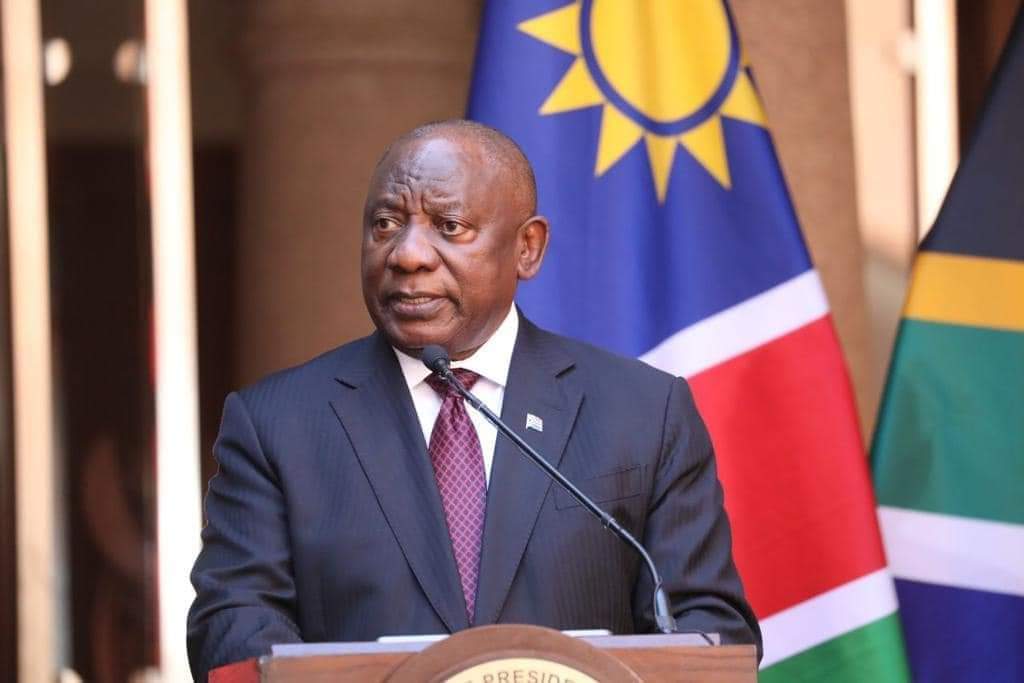
Briefing by President Cyril Ramaphosa and President Hage Geingob of the Republic of Namibia during the occasion of the State Visit, at the Union Buildings

Photo: President Cyril Ramaphosa

Photo: President Hage Geingob


President Cyril Ramaphosa hosted President Hage Geingob of the Republic of Namibia.

During a media briefing on the occasion of the State Visit by President Hage Geingob of the Republic of Namibia, Union Buildings, President Ramaphosa said the purpose of the visit was to discuss, review, and strengthen our political, social, and economic relations.

During the official talks, we considered broad areas of cooperation and evaluated progress in the implementation of previous decisions and agreements.

We have agreed to deepen trade and investment between our two countries.

Our ministers responsible for trade and industry will convene a Business Forum later this year to be attended by business people from both countries.

Photo: During media briefing

We also agreed that the ministers of trade of the two countries should put in place a mechanism to protect investments in our respective countries.

We will work together to leverage the opportunities presented by the African Continental Free Trade Area and the Tripartite Free Trade Area between the Southern African Development Community (SADC), the Common Market for East and Southern Africa (COMESA) and the East African Community.

We welcomed the progress made in implementing the African Continental Free Trade Area, including ongoing work to finalise the rules of origin for the remaining set of products.

This progress has been made possible through resolve and commitment.

President Geingob and I also discussed political, economic, and security issues in our region. This includes developments in the Democratic Republic of Congo, Mozambique, Lesotho, and Eswatini.

As South Africa, we wish Namibia well in its role as chair of the SADC Organ on Politics, Defence and Security Cooperation, which is playing a central role in advancing peace and stability in the region

I have assured President Geingob that we will continue, as part of the SADC collective and within available resources, to assist with regional initiatives such as the SADC Mission in Mozambique.

We wish the people of Eswatini, Zimbabwe, and Madagascar well as they prepare to hold elections this year.

President Dr. Geingob and I deliberated on continental and international issues of mutual concern, including the implementation of the AU’s Agenda 2063.

We expressed our concern at the current situation in Sudan, the ongoing occupation of Western Sahara, the continued denial of the aspirations of the Palestinian people, and the ongoing conflict between Russia and Ukraine.

This State Visit has done much to reinforce the solid political, social, and economic relations between our two countries in pursuit of mutual development and prosperity – President Ramaphosa

#NamibiaSARelations

#NamibiaStateVisit