Africa Adaptation Summit in Rotterdam 

7 September 2022

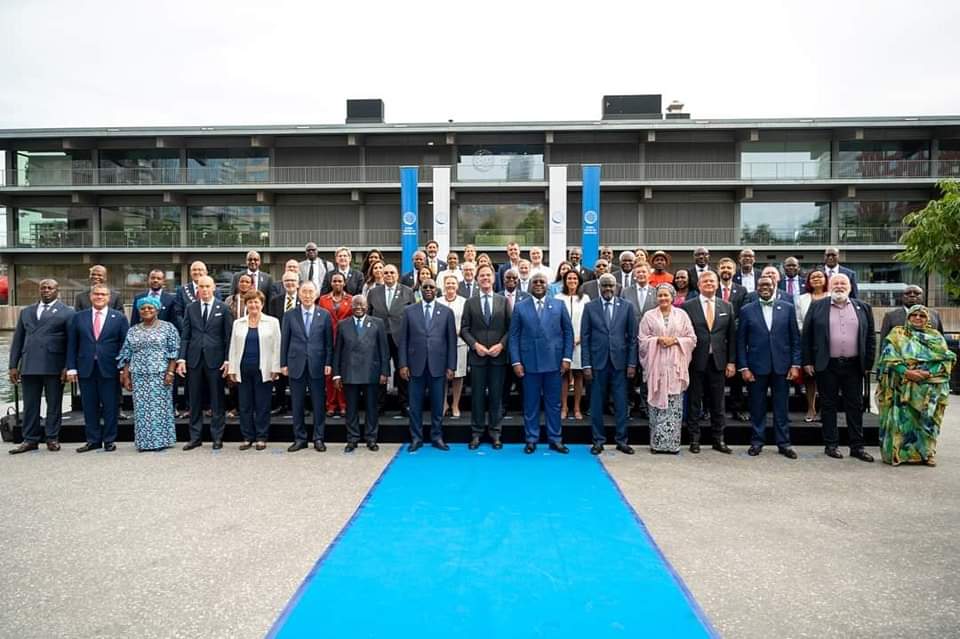
African and other global leaders rallied at the Africa Adaptation Summit in Rotterdam to highlight the urgency of #climateadaptation funding for #Africa.

They warned that the continent is at a tipping point for adaptation action.

The summit’s five-point Communique emphasized that success at the upcoming #COP27 in Egypt will depend on whether the needs of Africa, the world’s most climate-vulnerable continent, are met with finance flowing into such key country-led adaptation programs as the Africa Adaptation Acceleration Program (AAAP).

A joint initiative of the African Development Bank and the Global Center on Adaptation (GCA), #AAAP will mobilize $25 billion, over five years, to accelerate and scale climate adaptation action across the continent.

In addition, the #AfricanDevelopmentFund, the concessional financing window of the Bank that supports its low income Regional Member Countries, had introduced a #ClimateAction Window to mobilize $4 billion to $13 billion for climate adaptation for the Fund’s member countries. “This will be used to support 20 million farmers with access to climate resilient agricultural technologies, access of 20 million farmers and pastoralists to weather-indexed crop insurance, reviving 1 million hectares of degraded land, and provision of renewable energy for about 9.5 million people,” said Dr Akinwumi Adesina, President of the African Development Bank Group.

More from #GCA2022: https://bit.ly/3Rn900M

Brazil Celebrates 200th Anniversary of Independence

7 September 2022

The Diplomatic Informer Magazine wishes to congratulate the Government and the people of Brazil on the occasion of anniversary of independence day and wish Brazil continued peace, unity and prosperity.

Brazil Independence Day is a national holiday that is observed in Brazil every year on 7 September.

Brazil Independence Day celebrates the country’s declaration of Independence from the United Kingdom of Portugal, Brazil, and the Algarves back on September 7, 1822. A political revolution erupted in Portugal in 1820 forcing the royal family to return.

In 1821, the Portuguese Assembly demanded Brazil to return to its former condition of a colony and return to its heir prince to Portugal. However, Pedro refused to return on January 9, 1822, a date which became known as Dia do Fico (I’ll Stay Day). Pedro further went against his native country, established the Brazilian country and declared the country’s independence on September 7, 1822.

The Portuguese had landed on the shores of Brazil in 1500 and steadily started capturing it whole. Portugal’s rule in Brazil lasted for over 300 years till 1822 when the Portuguese Monarch and their heir to the throne declared Independence of Brazil from his native country Portugal.

Notably, Brazil is the largest country in both South America and Latin America and is the world’s fifth largest country by area and the seventh most populous.

The South American country celebrates its Independence Day with military parades and patriotic performances. During Brazil Independence Day, there are fireworks that make the day more happening and celebratory. The national celebration in Brazil is hosted at the Ministries Esplanade with the President of Brazil spearheading the civil-military parade.

On Brazil Independence Day, thousands of Brazilians gather on the streets and celebrate the day by waving flags and banners. They dance, sing songs play football, and go for outdoor fun activities

On Brazil Independence Day 2022, lets learn more about the history of Brazil.

After 200 years of Independence, Brazil is an economic superpower. With high growth and low inflation, we are a safe haven for investments.

The Brazilian government launched the largest privatization and concession program in its history. Since 2019, 168 auctions have been held that have raised US$77.2 bil. through privatizations and concessions; a result that exceeds by 15% the US$67.5 billion of privatizations carried out from 1980 to 2018.

Within the scope of the privatization program, R$ 1.3 trillion was committed to investments in Brazil. According to the Investment Monitor of the Ministry of Economy, if the already structured projects are executed, R$ 2.9 trillion should be attracted in the decade.

Brazil carried out a myriad of structural reforms, such as: Economic Freedom Act, Doing Business Law, New Agro Law, Legal Taxpayer Law, Positive Credit Registry, New Gas Law, Opening of the Gas Market, New Law on Regulatory Agencies, New Bankruptcy Law, Tax Liability Law Reform.

And more: Central Bank Autonomy, New Telecommunications Framework, Reform of Labor Standards, Pension Reform, New IoT Law, New Free-trade Zone Law, New Bidding Law, Legal Framework for Startups, Voluntary Deposit Law, and New Law on Industrial Property.

Ane that is not all. The structural reforms also included: New Exchange Law, New Railways Framework, New Basic Sanitation Framework, New Cabotage Framework, New Distributed Generation Framework, New Electricity Sector Framework, 15 New Financing Instruments, amidst many others.

Today Brazil has its lowest unemployment rate since 2015; 9.1%; And has broken historical records of registered employees, reaching up to 98.7 million people. In 2021, Brazil had already broken records, by creating job to over 2.7 million people.

In 2021, 4 million businesses have been created in Brazil. Due to the reforms, the time to open a business has dropped from 120 days (World Bank) in the past decade to 1 day and 23 hours, thanks to the Brazilian govt being the most digitized in the Americas; 7th in the world.

Last but not least, besides having one of the largest industrial parks in the world, and being great producers of ores of niobium, iron, copper, aluminum and manganese, Brazil is also an agricultural powerhouse, the world’s 4th largest grain producer, feeding 800 million people.

Since 2019, Brazil has signed 15 trade agreements and 200+ agricultural markets have been opened.

Our country ranks among the main producers of coffee, sugar, corn, soy, beef, pork, chicken, fruits. The WTO has acknowledged Brazil’s essential role in global food security.

#EmbaixadadaRepúblicadaAfricadoSul

#BrazilianEmbassyinPretoria

#brazilindependence

#brazil200

#brazilindependenceday

Independence Day in Eswatini (Swaziland) is celebrated on September 6

6 September 2022

This national holiday commemorates the independence of the Kingdom of Eswatini, then known as Swaziland, from Great Britain in 1968. Independence Day of Eswatini, also known as Somhlolo Day, is celebrated nationwide. The main celebration is held at the Somhlolo National Stadium in Lobamba, the royal and legislative capital of Eswatini.

Eswatini, also known as Swaziland, is a country in Southern Africa; it is one of the few remaining absolute monarchies in the world.

Swaziland became a British protectorate in 1906,following the British Empire victory in the Anglo-Boer War. The protectorate was governed by a British resident commissioner.

In 1921, the first legislative body in Swaziland was established. It consisted of elected white representatives. That same year, Sobhuza II became head of the Swazi nation. After the Second World War, Sobhuza with the support of the traditional Swazi leaders formed the Imbokodvo National Movement (INM) that protected the traditional Swazi way of life.

In 1964, the elections to the first Legislative Council of Swaziland were held. The INM won all the seats. On September 6, 1968, Swaziland became an independent nation. Originally, it was a constitutional monarchy, but in 1973, Sobhuza assumed full power. In 2018, KIng Mswati III renamed the country Eswatini (also spelled eSwatini).

The Diplomatic Informer Magazine wishes to congratulate the Government and the people of the Kingdom of Eswatini and we sincerely wish the Government & the people of Eswatini unity, peace and increased prosperity.

African Development Bank president to inaugurate Port of Maio during visit to Cabo Verde

06 September 2022

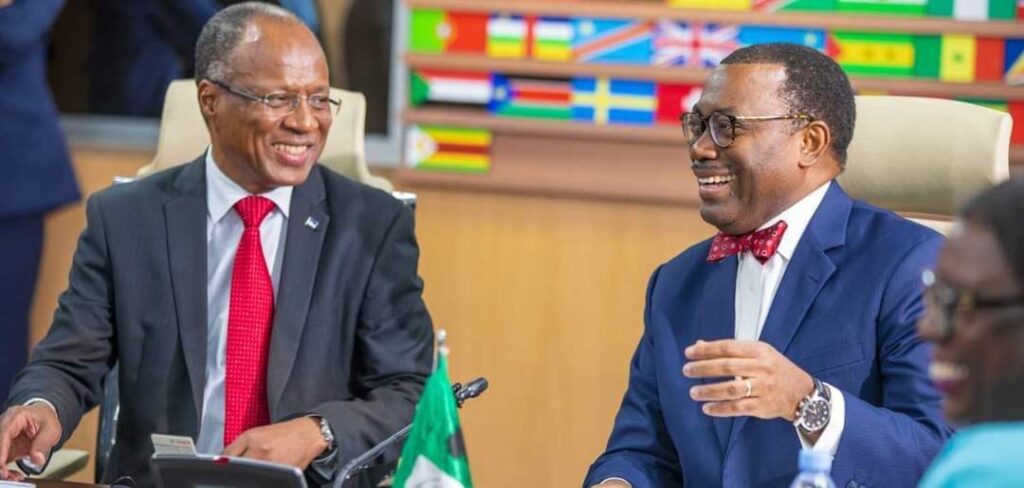
Cabo Verde PM José Ulisses de Pina Correia e Silva with African Development Bank Group President Dr. Akinwumi Adesina at a July meeting in Abidjan

African Development Bank Group President Dr. Akinwumi Adesina will inaugurate the upgraded Port of Maio on Wednesday during a three-day visit to Cabo Verde.

The President will travel to Cabo Verde at the invitation of Prime Minister, Dr. José Ulisses Correia e Silva.

In 2018, the African Development Bank approved a $26 million facility to upgrade the ports of Maio and Palmeira. The European Union co-financed the project with a grant of €10 million.

The growth of maritime transportation is critical for the West African country, given its geographic location. Cabo Verde is an archipelago in the central Atlantic Ocean.

The Cabo Verdean government is working to create a dependable transportation network to improve economic ties between the islands, lower transportation and storage costs, and promote inclusive growth. Tourism, which accounts for 25% of GDP, 23% of formal jobs and 55% of the nation’s exports, is critical to its economy.

During his visit to Praia- the nation’s capital, Adesina will meet with Prime Minister Correia e Silva and Finance Minister and deputy Olavo Correia to discuss the Bank’s strategic priorities, engagement, and opportunities for future partnerships.

Adesina will also meet with key partners of the Budget Support Group (Portugal, Spain, European Union, Luxembourg, and the World Bank) to discuss ways to support Cabo Verde’s efforts to strengthen its socioeconomic infrastructure. He will also meet with representatives of business associations about improving the business environment.

In July, Prime Minister Correia e Silva visited the Abidjan headquarters of the African Development Bank Group, where he discussed Cabo Verde’s economic condition with President Adesina. He sought support for his country to enable it tackle exogenous shocks such as those caused by the war in Ukraine and the Covid-19 outbreak.

The African Development Bank and Cabo Verde have been working together since 1977. Since then, the Bank has invested more than €619 million in 69 projects in the country.

African Development Bank

China unveils plans to boost green development of electrical equipment

5 September 2022

China on Monday unveiled an action plan to expedite the green and low-carbon development of electrical equipment as part of its efforts to meet the carbon peak and neutrality goals.

Efforts will be made to boost the green transition of power generation equipment, promote breakthroughs in core technologies and accelerate the smart transition of electrical equipment by deepening integration with new information technologies, according to the plan released by the Ministry of Industry and Information Technology and four other government bodies.

Within five to eight years, a marked improvement will be made in the demand and supply structure of China’s electrical equipment, and the efficiency of its power grid will be significantly enhanced, the plan states.

The Embassy of Japan in South Africa together with Japan Foundation will host the 28th Japanese Film Festival in Johannesburg

4 September 2022

Announcing the 28th Japanese Film Festival!

Spring has arrived! That means it’s time for the much anticipated Japanese Film Festival.

The Embassy of Japan in South Africa together with Japan Foundation brings you four exciting films about family, living with difficulties, and protecting what you love.

It starts next month, 14 – 16 October at Rosebank Nouveau cinema in Johannesburg. If you miss it there, you can catch it again on 4 – 6 November at Labia Theater in Cape Town.

The first of the films showing, The Lone Ume Tree, is a touching drama following the lives of an autistic man and his mother.

The House of the Lost on the Cape is an animated film about two girls adrift in the world until they are taken in by an old lady to stay in her mysterious house on the coast.

A Long Goodbye is a family drama about coping with memory loss and saying goodbye.

We end off with Cinematic Liars of Asahi-za, an uplifting drama about a small group of people trying to save a 100 year old cinema.

Two weekends. Four films. Reels of fun!

#Japansarelations

#Japaneseembassyinsa

Tourism has the incredible power to advance prosperity and drive sustainable development

3 September 2022

Tourism has the incredible power and potential to advance prosperity and drive inclusive, sustainable development.

Sri Lanka is a popular island destination with serene beaches, timeless ruins,  famous tea, flavourful food and welcoming people. It is also has many hidden treasures across the provinces that can increase visitors and enhance tourism income.

Now, Sri Lanka’s 🇱🇰 tourism sector has been subject to a series of challenges but is at a critical juncture to leverage the current crisis to bounce back towards a greener, sustainable and environmentally conscious tourism offering outlines the country’s pathway to green development.

Together with European Union in Sri Lanka and the Maldives  and Sri Lanka Tourism Development Authority, we are supporting the #TransformingTourism initiative to train tour guides and spotlight hidden tourist destinations specially in the Central Province of Sri Lanka 🇱🇰:

 https://go.undp.org/SriLankaTourism

undp.org

Ethiopia’s President calls for enhanced actions on women empowerment

2 September 2022

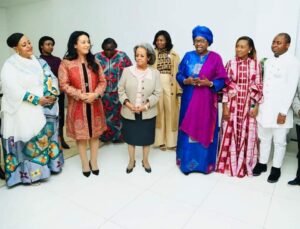
The President of the Federal Democratic Republic of Ethiopia, H.E. Sahle-Work Zewde, has challenged African women and girls to take up positions of leadership to steer the transformation of the continent. Speaking during a reception she hosted at the Grand Palace for the African Women Leaders’ Network (AWLN) National Chapters from across the continent, the President, an AWLN pioneer, and in her capacity as the Patron of the AWLN Ethiopian Chapter, lauded the AWLN for the progress and impact it has achieved since its establishment in 2017 during which thirty (30) National Chapters have been established in various member states across the continent.

Elaborating on the importance of developing and enhancing avenues for women empowerment while citing efforts to sustain women empowerment, the President cited the Presidential Leadership Program She launched early this year targeting women leaders in middle level leadership positions in the government, the private and civil societies. The training program aims at bridging the gap in women’s participation in leadership and decision-making positions in the country. Additionally, mentorship program is being implemented in five universities in the country.

H.E. Sahle-Work Zewde further shared her experiences in the ladder of leadership in the various positions she has held as the first-ever female President of Ethiopia, a diplomat, and as leader in the global peace and security sector. She encouraged women and the young generation to boldly tackle the challenges hampering the realization of gender equality, underscoring that women should not be characterized only as victims of inequality but as drivers of positive change and enablers of innovative solutions to existing and emerging challenges on women empowerment.

On her part, Bineta Diop, African Union Special Envoy on Women, Peace and Security and co-convener of AWLN observed that the continent will not achieve its vision of sustainable development without the active and meaningful participation of women and youth in all spheres of life. In reflecting on the progress made by AWLN in its commitment to enhance the leadership of women in the transformation of Africa, in line with Africa Agenda 2063 Aspiration 6 which envisions an Africa that is people-centered, with gender equality, and where women are empowered and play their rightful role in all spheres of life, and aligned to the 2030 Sustainable Development Goal 5, Mme. Diop underlined the impact of the 30 AWLN national chapters in driving change at the national level through the mobilization of all women including those at the grassroot level, to ensure no woman is left behind.

Mme. Diop further noted the leadership role of H.E. Ellen Johnson Sirleaf, former President of Liberia and AWLN Patron, in guiding the Network and drive chance toward the fulfillment of its vision. She particularly challenged the women to champion and advocate for the ratification, domestication and implementation of policies and frameworks that uphold and advance the rights of women.

Also present at the reception were Dr. Ergogie Tesfaye, Minister of Women and Social Affairs of Ethiopia, Amb. Konjit Sinegiorgis, an accomplished diplomat and former Ethiopia’s Permanent Representative to the African Union (AU), and Mrs. Awa Ndiaye Seck, UN Women’s Special Representative to AU and UNECA.

Established in 2017, AWLN envisions to serve as a conduit for enhanced mobilization of women, in various sectors, to impact the road to peace and development on the continent and serve as an overall instrument of transformation. The network comprises a diversity of women, including young women in leadership from all sectors of society including the political, public, and private sector, civil society, and grassroots women with recognized and emerging constituencies, and who actively engage in mobilization and participation at community levels.

African Union

UNWTO Joins Partners in Galicia to Promote Thermal Tourism Regions

2 September 2022

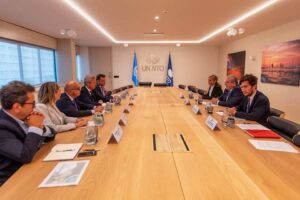
Tourism, Heritage, and Experience!Within the framework of preparations for World Tourism Day 2022, UNWTO and the Historic Thermal Towns and Turismo de Galicia announce the celebration of the “International Congress on Thermal Tourism”

The World Tourism Organization (UNWTO) has joined the European Historic Thermal Towns Association (EHTTA) and the Spanish region of Galicia in the north of the country (Axencia Turismo Galicia) to announce plans for this year’s “International Congress on Thermal Tourism”, which kicks off on World Tourism Day (27-29 September in Ourense, Galicia).

To coincide with the announcement, UNWTO and its Affiliate Member, the EHTTA, have signed a Memorandum of Understanding aimed at further promoting thermal tourism and its benefits.

The Association´s President , Manuel Baltar, said: “The growing demand for open-air and nature-based tourism activities after the pandemic makes thermal tourism an important segment for the future”.

The President of the Regional Government of Galicia and head of the Axencia Turismo Galicia, Alfonso Rueda added: “Galicia is the first thermal destination in Spain and the second in Europe, with admirable thermal stations such as Ourense”.

Thermal Tourism is closely connected to the natural and cultural environment and represents one of the most valuable forms of sustainable tourism. As well as promoting health, well-being, learning, entertainment and mindfulness, it also supports jobs and promotes social opportunity, including in rural destinations.  UNWTO is committed to promoting thermal tourism as a powerful tool to contribute to safeguarding the world’s cultural and natural heritage as well as to provide socio-economic benefits, including the revitalization of rural areas and the creation of stable employment and income-earning opportunities.

The UNWTO Affiliate Members will be part of the official World Tourism Day celebration, due to be held in Bali, Indonesia (27 September), bringing the voices of business, academia and civil society to conversations around this year’s theme of “Rethinking Tourism”.

UNWTO

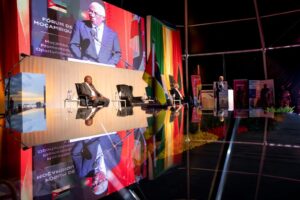
Nyusi invites Portuguese Companies to invest in Mozambique

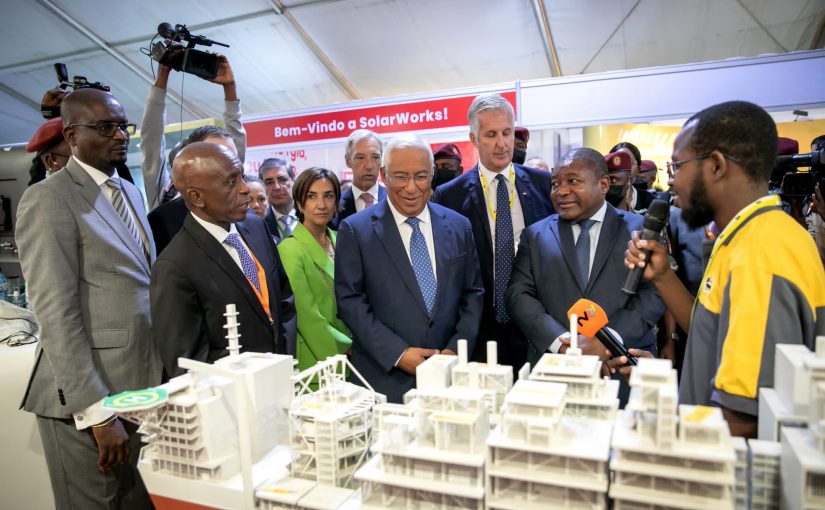
President Filipe Nyusi and the Portuguese Prime Minister António Costa visiting FACIM this morning. [Photo Credit: Twitter/ @antoniocostapm]

2 Sep 2022

The president of Mozambique, Filipe Nyusi, on Friday invited Portuguese companies to invest in the country and explore its resources. The prime minister of Portugal said that Portuguese businesspeople “are not just passing through.

Filipe Nyusi and António Costa participated today in opening the Mozambique- Portugal Business and Investment Forum taking place on the sidelines of the 5th Luso-Moçambican Summit, after having visited three pavilions of FACIM (Maputo International Trade Fair) this morning, including Portuguese exhibitors.

In his speech, President Nyusi said that the forum aimed to bring together businesspeople from the two countries and facilitate business opportunities, in a “cooperation that is mutually beneficial.

Nyusi regretted the downward revision of the “good prospects for a quick and robust economic recovery,” but highlighted the “introduction of a package of 20 measures to stimulate the economy” in the country.

“The economies of our countries have a high degree of complementarity,” he noted, pointing out that “Portugal is among the top ten investors in Mozambique.

Considering that “more can be done,” Nyusi said that Portuguese companies “have shown skills” in sectors such as banking, construction and tourism.

“We invite Portugal’s private sector to explore the language that unites us” and explore Mozambique’s potential, such as “location, favourable weather conditions and the long coastline,” turning “existing resources into wealth.”

Pointing out that there are “mutual advantages,” the president urged Mozambican businesspeople to “build partnerships with the private sector in Portugal.

At a press conference after the opening of the forum, Nyusi expressed the country’s intention to be a “facilitator of the economy.

In his speech, Portugal’s Prime Minister António Costa pointed out that Portuguese investments are already underway in Mozambique, adding that there are “over 500 companies” in the country and that there are “1,500 Portuguese companies exporting to Mozambique.”

“Portuguese companies are not just passing through Mozambique, they have been there for a long time and have been at all times, in the difficult times and the promising times,” he said.

Costa said that “this is a promising time” for companies to invest in Mozambique, and “unique conditions are created to increase private business activity in Mozambique”.

During the press conference, Costa also highlighted the opportunity for Portugal to “import excellent quality Mozambican products”, which will “balance the trade balance and help the development” of the country.

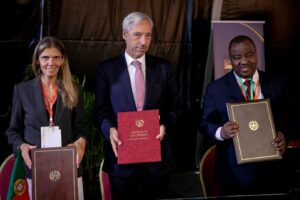
During the Mozambique-Portugal Business and Investment Forum, nine bilateral cooperation agreements were signed, including the Lusophone Compact, which provides Portuguese state guarantees worth €400 million for investments in Portuguese-speaking African countries (PALOP) and another to review the Portuguese Cooperation Business Fund.

Another agreement involves GALP, the Camões institute and the Mozambican Ministry of Science, Technology and Higher Education. It aims to set up a reference centre in oil and gas in Cabo Delgado province.

A memorandum of understanding was also signed between Mozambique’s Hidroelétrica de Cahora-Bassa (HCB), Electricidade de Moçambique (EDM), and Portugal’s REN and Visabeira Global to identify “cooperation opportunities in the energy sector” and “collaboration in the construction, operation, maintenance of distribution networks, electricity transmission networks and energy production through wind farms and photovoltaics.

Source: Lusa