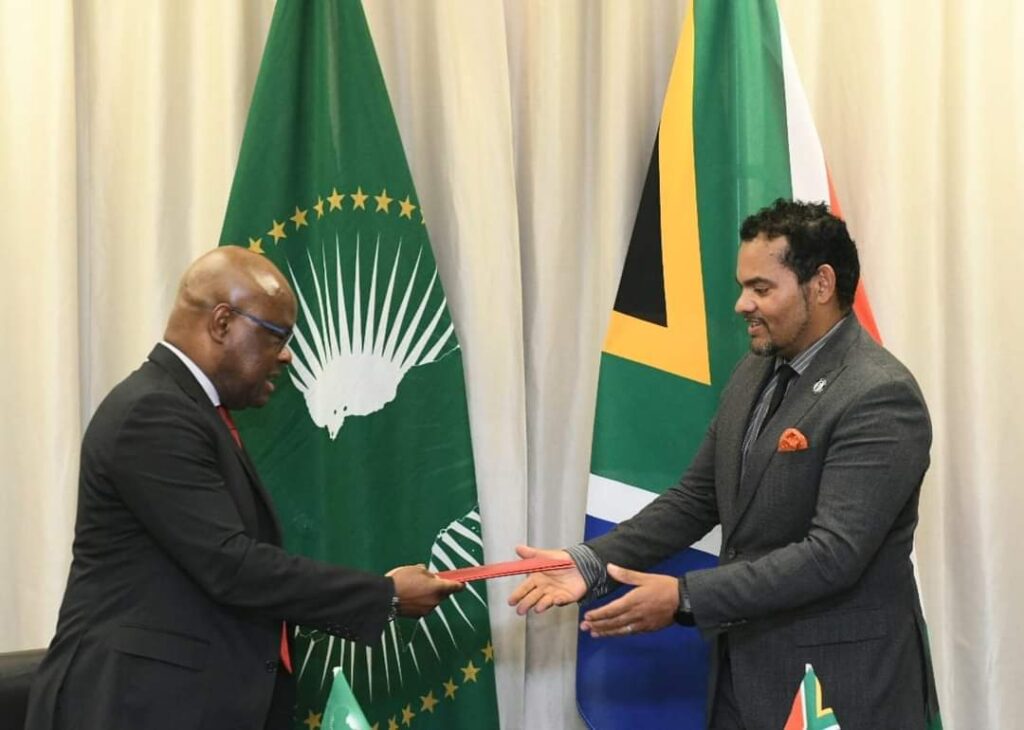
Deputy Minister Alvin Botes Receives Credential Letters from Mr Kennedy Mbekeani, Country Manager of the African Development Bank (AfDB), resident in South Africa

Photo Credit Dirco: L-R Mr. Kennedy Mbekeani, Country Manager of the African Development Bank (AfDB) with Deputy Minister of International Relations and Cooperation Mr. Alvin Botes

2 September 2022

Deputy Minister received credential letters from Mr. Kennedy Mbekeani, Country Manager of the African Development Bank (AfDB), resident in South Africa.

Mr. Kennedy Mbekeani is a seasoned development economist, originally from Malawi with over 20 years of experience in development finance, project management, policy advisory services, and knowledge generation, he was appointed as the regional deputy director for the Bank’s Southern Africa operations in 2021.

Commenting on his appointment in 2021, he said: “I am pleased to work with President Adesina to support execution of his vision for the Bank and the continent and accelerate delivery on the High 5s”.

Kennedy Mbekeani joined the AfDB in 2009 as Chief Trade & Regional Integration Officer, where he provided leadership in formulating the Bank’s trade assistance strategy to regional economic communities & policy research on international trade, economic integration & development.

He was Lead Regional Economist (2012-2014) at the South African Resource Centre. Prior to joining the AfDB, Mr Kennedy Mbekeani worked for the United Nations Development Programme (UNDP) as a Trade, Debt and Globalisation Advisor for East and Southern Africa. Prior to that he worked as a Senior Research Fellow at the Botswana Institute for Development Policy Analysis, and as Senior Economist at the National Institute for Economic Policy in South Africa.

Mr. Kennedy Mbekeani holds a Bachelor of Social Science degree from the University of Malawi, MPhil (Monetary Economics) from the University of Glasgow, MA and a PhD in International Economics from the University of California. He has published on trade, regional integration, and infrastructure development in Africa.

#EconomicDiplomacy

#MultilateralMatters

#AfDB

#BetterAfricaBetterWorld

Mozambique: Portugal’s PM announces 40% increase in cooperation prog. – Watch

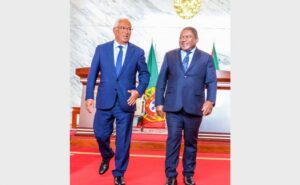
Photo Credit Notícias: (L-R)Portugal’s Prime Minister, António Costa and President of Mozambique, Filipe Nyusi

2 Sep 2022

Portugal’s prime minister, António Costa, announced on Thursday a 40% increase in the funds allocated to projects under the Strategic Cooperation Programme with Mozambique, representing more than €90 million.

“Within the scope of this summit, we can reinforce the amount of the next Strategic Cooperation Programme [PEC] 2022-2026, which is the foundation of our strategic partnership between Mozambique and Portugal and will thus have a 40% increase in the funds dedicated to programmes, projects and actions, which will exceed €90 million,” he announced.

Costa made this announcement in Maputo at a press conference at the end of a meeting with the president of Mozambique, Filipe Nyusi, as part of the 5th Luso-Moçambican Summit.

The PEC, signed in November 2021, is for five years. Costa said it “will focus on traditional areas of sovereignty, such as defence, justice, internal administration,” and “deepens and renews cooperation in the strategic areas of education and health.

Photo: Notícias

Indicating that until 2021 the PEC “spent €135 million”, Costa added that the new framework foresees “€185 million”.

Considering that the future “necessarily involves strengthening economic relations,” Costa also said that as part of the 5th Luso-Moçambican Summit, “two instruments to support business investment in Mozambique, the business fund for cooperation and the specific programme for business investment in Mozambique,” would be reviewed and modernised.

Costa added that, on the sidelines of the summit, the “Lusophone Compact” would be signed, a programme through which Portugal will provide guarantees of €400 million in funding from the African Development Bank for business investment in the community of Portuguese-speaking African Countries (PALOP).

The Portuguese prime minister also noted two other protocols that would be signed on Friday and that “aim to strengthen the development potential of the Cabo Delgado region,” with the installation of “a research centre dedicated to gas and oil and a vocational training programme in the area of gas, which will be aimed at around 1,200 young Mozambicans.

Photo: Domingo

“We are fighting terrorism not only from a military and humanitarian point of view but also from the point of view of the region’s development,” he noted.

Costa considered that Mozambique “has enormous potential from an agricultural point of view”.

“And if humanity faces a huge challenge in its energy transition, it faces no less of a challenge from the point of view of food security, and so diversification, increase and quality of food is an ever greater challenge and where Mozambique has a decisive role,” he told reporters.

The governments of Portugal and Mozambique signed six cooperation protocols on Thursday as part of the 5th Luso-Moçambican Summit in education, heritage rehabilitation, technical and operational skills of the Mozambican security forces and services, justice and agriculture.

“On all fronts, from the point of view of political cooperation, military cooperation in the fight against terrorism, development in the area of health or education, or from the point of view of economic relations, this 5th summit will certainly be a significant milestone in our relations,” Costa said.

Drawing a picture of the situation in Mozambique compared to the last summit in 2019, the prime minister said that the country “has a new framework, frankly favourable to investment,” particularly by Portuguese companies, with the resumption of financial support from the International Monetary Fund (after the hidden debts’ scandal) and the retreat of terrorism.

Source:TVM
Photo: Notícias

Photo Credit: Domingo

Statement on The Conclusion of The 10th  Review Conference of The Nuclear NON-Proliferation Treaty, United NAations, New York

31 August 2022

South Africa is deeply disappointed and dismayed at yet another failed Review Conference of the Nuclear Non-Proliferation Treaty (NPT). The NPT Review Conference concluded without an outcome on 26 August 2022, at the United Nations in New York.

We attribute this failure to the refusal by the nuclear-weapon States, namely the United States, the Russian Federation, the United Kingdom, China and France, to agree to any tangible progress on the implementation of agreed nuclear disarmament commitments.

This Review Conference was an opportunity for the five nuclear-weapon States to recommit to fulfilling their unmet commitments to rid themselves and the world of nuclear weapons, and to save the rest of humanity from the devastating humanitarian impact of a nuclear detonation or nuclear war.

It is disconcerting that these States continue to see nuclear weapons as central to their own narrow security interests and global political influence. It was clear from the Review Conference that there is a total deficit of trust and a breakdown of communication amongst the weapon States.

South Africa is further concerned that the postures and divisions amongst the nuclear-weapon States are eroding the integrity of the NPT and undermining the attachment and commitment of non-nuclear-weapon States to the Treaty. The NPT framework cannot remain standing on the backs and commitments of the non-nuclear weapon States that are dutifully fulfilling their non-proliferation obligations.

South Africa values the NPT and will not waiver in its moral leadership to push for progress on nuclear disarmament. This moral leadership was born out of its voluntary, verifiable and irreversible destruction of its weapons.  The NPT does not grant the nuclear weapon states the right to possess nuclear weapons indefinitely, but the opposite.

As long as Nuclear Weapons States and their allies possess nuclear weapons and rely on these weapons for their security, humanity is not safe.

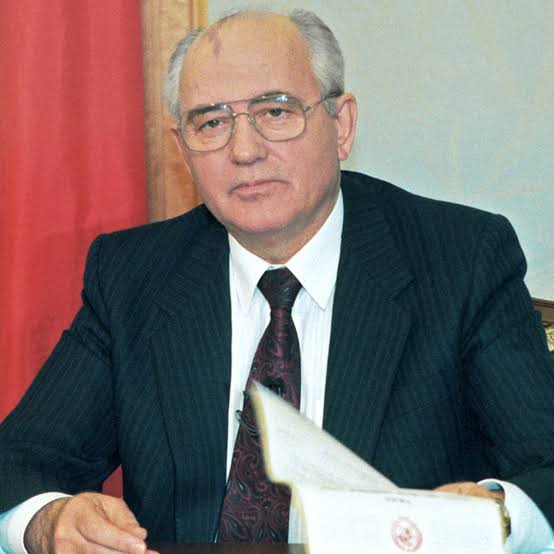
President Ramaphosa Expresses Condolences on the Passing of Mikhail Gorbachev


31 August 2022

President Cyril Ramaphosa has expressed his sincere condolences at the passing of His Excellency Mikhail Gorbachev, Nobel Laureate and last leader of the Soviet Union.

Mr Gorbachev passed away at the age of 91, with his political career crowned by the glasnost and perestroika reforms he initiated in the late 1980s, to transform the Union of Soviet Socialist Republics and to end the Cold War, which marked geopolitical tension between the Soviet Union and the United States.

The President joins the international community in offering his condolences to Mr Gorbachev’s family and associates, including the esteemed circle of Nobel Laureates, among whom President Nelson Mandela was numbered.

South Africa is greatly indebted to the support provided by the Soviet Union over an extended period – including Mr Gorbachev’s term of office – to South Africa’s liberation movement and to anti-colonial struggles in Southern Africa.

As the first President of a democratic South Africa, President Mandela visited the Russian Federation in 1999 to express his appreciation for this solidarity.

In November 1986, Mr Gorbachev, as General Secretary of the Communist Party of the Soviet Union’s Central Committee, hosted African National Congress President Oliver Tambo and former President Thabo Mbeki, for deliberations in Moscow on the anti-apartheid struggle and international questions.

President Ramaphosa said: “Mikhail Gorbachev was a statesman who was able to balance his love for his country and the advancement of its interests with the vision of a world in which conflict was reduced and humanity was able to live in conditions of peace and tolerance.

“In support of our own liberation, Mikhail Gorbachev sustained the Soviet Union’s support for our struggle in the critical period that led to the unbanning of the liberation movement and our transition to democracy.

“We are humbled by the regard he expressed for Nelson Mandela as an inspiration to him and as a model of leadership to the world.

“We will remember Mikhail Gorbachev with appreciation for his role in making our country a better place within a better world.”

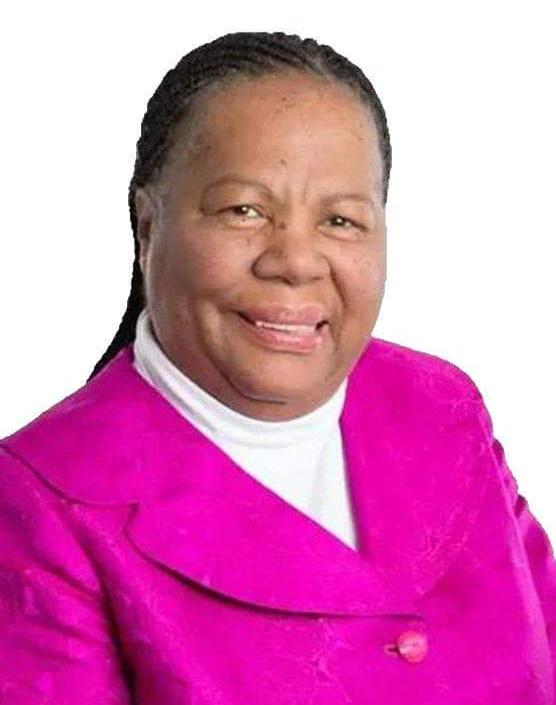
Minister Naledi Pandor attends the 48th Edition of the Intelligence on the World, Europe and Italy Forum in Italy

31 August 2022

The Minister of International Relations and Cooperation, Dr Naledi Pandor, has arrived in Milan, Italy to participate in the 48th Edition of the Intelligence on the world, Europe and Italy Forum, starting on 02 – 04 September 2022.

The Forum is one of the most important meetings which brings together a selected group of government leaders, business leaders, academics, Nobel Price Laureates and other influential personalities from around the world.

Minister Pandor is invited to speak at the opening session of the Forum, under the theme: “Future global challenges and impacts on Business – The clash has happened: Now What?”

Minister Pandor’s speech will focus on South Africa’s role in the current geopolitical turmoil.

Other speakers include H.E. Iiham Aliyev, President of Azerbaijan; Mr Jose Manuel Barroso, Former President of the European Commission; Mr Tharman Shanmugaratnam, Senior Minister and Coordinating Minister for social policies of Singapore; Mr Subramanyam Jiashankaet, Minister of External Affairs of India and Mr Fu Ying, former Deputy Minister of Foreign Affairs of China.

H.E, Luigi Di Maio, the Minister of Foreign Affairs and International Cooperation of Italy will close the session.

On 01 September 2022, Minister Pandor will deliver a key-note address at the Business Roundtable event,  under the theme – South Africa and Italy : co-operation towards sustainability transitions.

The Business Roundtable, an initiative of South Africa’s Mission in Rome, will be attended by the captains of various big businesses from the Lombadia region, where the city of Milan is based.

Minister Pandor will also use the opportunity of her visit to Italy to hold bilateral discussions with some of her counterparts, including the Minister of Foreign and International Cooperation of Italy, H.E Luigi Di Maio.

South Africa sends message of condolence and solidarity to Pakistan

30 August 2022

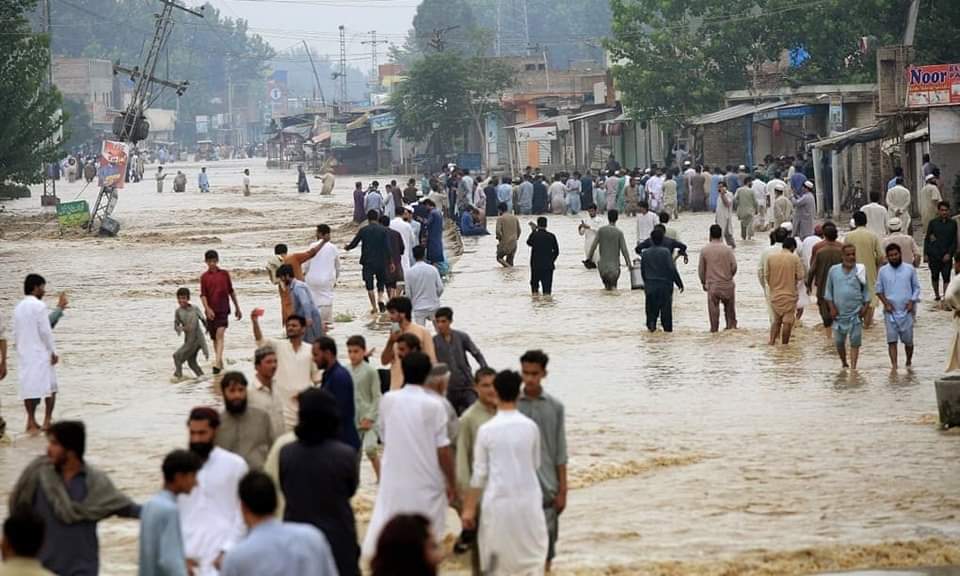
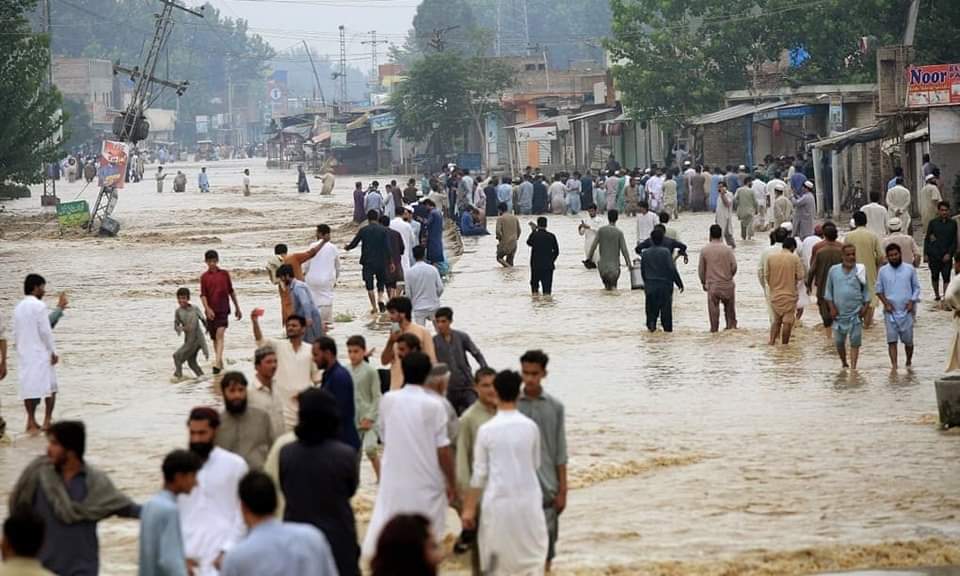
South Africa sends message of condolence and solidarity to Pakistan following the devastating floods experienced during the current Monsoon season

The South African Government wishes to express its condolences to the Government and people of Pakistan following the large-scale destruction and loss of thousands of lives in the wake of the recent flooding witnessed in Pakistan.

Minister Pandor said, “We are saddened by the losses you have suffered as a result of the devastating floods that have occurred during the current Monsoon season and wish to express our solidarity with you during this trying time.”

The South African Government and its people extend sincere condolences to the Government and people of Pakistan amidst the unfolding climate catastrophe, stands in solidarity with those affected and salutes the emergency personnel working tirelessly to assist those in need.

The thoughts of the South African people are with the people of Pakistan and others affected by this catastrophe in the rest of South Asia.

Deputy Minister Mashego-Dlamini concludes successful visit to the Middle East Region

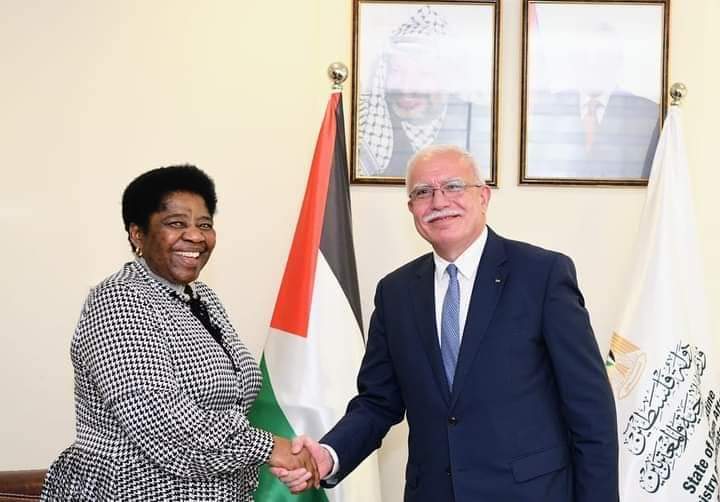
Photo Credit Dirco: H. E. Dr. Riad Malki, Minister of Foreign Affairs and Expatriates of the State of Palestine received Deputy Minister of International Relations and Cooperation of South Africa H. E. Candith Dlamini 🇿🇦🇵🇸

Photo Credit Dirco: Deputy Minister of International Relations and Cooperation of South Africa H. E. Candith Mashego-Dlamini launched Palestine-South Africa Strategic Dialogue committee with her counterpart, Dr. Amal Jadou, Deputy Minister of the Palestinian Ministry of Foreign Affairs and Expatriates.

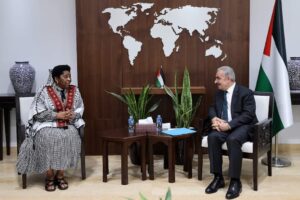
Photo Credit Dirco:H. E. Dr. Mohammed Shtayyeh, Prime Minister of the State of Palestine received Deputy Minister of International Relations and Cooperation of South Africa H. E. Candith Dlamini in Ramallah. 🇿🇦🇵🇸

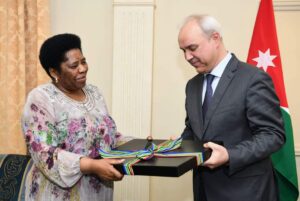
Photo Credit Dirco: Deputy Minister Candith Mashego-Dlamini met with Ambassador Hazem Al Khatib, Acting Secretary-General of the Ministry of Foreign Affairs and Expatriates of the Hashemite Kingdom of Jordan.

Photo Credit Dirco: Deputy Minister Mashego-Dlamini met with the Minister of Foreign Affairs and Emigrants of Lebanon, Dr Abdullah Bou Habib

Photo Credit Dirco: Deputy Minister Mashego-Dlamini paid a courtesy call on President Bashar Al-Assad of Syria

30 August 2022

The Deputy Minister of International Relations and Cooperation, Ms Candith Mashego-Dlamini, has concluded her successful visit to the Middle East region.

Deputy Minister Mashego-Dlamini began her visit in Ramallah, Palestine, where she co-chaired the launch of the Strategic Dialogue with her Palestinian counterpart, Deputy Minister Dr Amal Jadou. At the beginning of the meeting, Dr Jadou also expressed Palestine’s gratitude to South Africa for her firm stance towards the Palestinian cause.

On her part, Deputy Minister Mashego-Dlamini commended the Palestinian people’s efforts and steadfastness in defending their just cause.

The two sides stressed the need to maintain the strong relationship that connects the two countries and to search for means of cooperation at the various levels, including advocating more strongly for an end to the Israeli occupation of Palestine.

Deputy Minister Mashego-Dlamini proceeded to Amman, Jordan, where she met with her counterpart, Ambassador Hazem Issam Al Khatib.

Formal diplomatic relations between South Africa and Jordan were established in September 1993. The two delegations reaffirmed the warm and cordial relations which exist between South Africa and Jordan bilaterally and multilaterally.

Deputy Minister Mashego-Dlamini and Ambassador Al Khatib also exchanged views and insights on political developments within the African continent and the Middle East.

During her visit to Beirut, Lebanon, Deputy Minister Mashego-Dlamini paid a courtesy visit on Prime Minister Najib Mikati and the Speaker of Parliament, HE Nabih Berri. South Africa and Lebanon enjoy cordial bilateral relations. Formal diplomatic ties were establishment on in June 1994.

During their deliberations, the South African and Lebanese delegations agreed on the urgent need to seek further opportunities for cooperation in the areas of trade and investment, among other areas.

In Damascus, Syria, Deputy Minister Mashego-Dlamini paid a courtesy call on President Bashar Al-Assad. South Africa and Syria enjoy cordial bilateral relations. Formal diplomatic ties were established in June 1994. Both countries hold common positions on issues affecting the Middle East region.

During her visit to Syria, the Deputy Minister also held meetings with various NGOs and multilateral organisations.

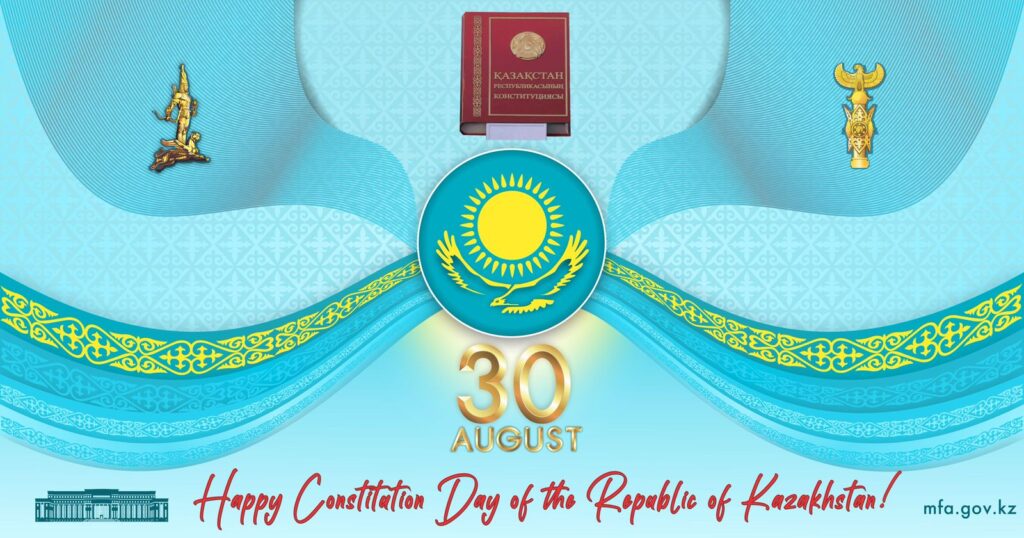
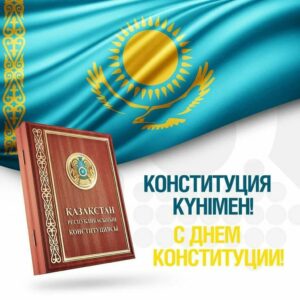
Happy Constitution Day, Kazakhstan!


30 August 2022

August 30 is traditionally celebrated in Kazakhstan as Constitution Day.

It was on this day in 1995 that a new draft Constitution was adopted at

a nation-wide referendum. Drafted by a panel of experts and passed through broad public discussion, the Constitution embodied the will of the people and considered the necessary values, which the young nation wished to exemplify on its journey.

Underpinned by the unalienable values of freedom, granted to every

citizen, the Constitution has proven central to the accomplishments of

Kazakhstan and provided the country with the guide for development and prosperity which the state enjoys today.

Looking back over the years since Kazakhstan’s Constitution was

overwhelmingly approved in a national referendum in 1995, it is very

clear how important it has been to the country’s progress. The Constitution has provided both the principles and mechanics which have

enabled Kazakhstan to rise to every challenge it has faced. The strong

emphasis, for example, placed on individual rights and equality before

the law has helped forge a tolerant harmonious society which has won

international respect.

In ensuring the freedoms of speech, assembly and religion, as well as

political diversity and personal liberty, the constitution has provided

a blueprint for the country’s social, economic and political

development. The country’s tolerant society, where every citizen –

regardless of their creed – can feel valued and free, as well as the

state’s wider domestic prosperity, is a testament to the forward-thinking nature of the Constitution as a guide to success, unbound by time or historic context.

Beyond this, the strength of any constitution can be measured by its

ability to adapt to an ever-changing society, while remaining true to

its fundamental values. In this regard, the adoption of amendments and additions to the constitution, by the nation-wide referendum in June 2022 is a historic moment for Kazakhstan.

The constitutional reform in 2022, proposed by President Kassym-Jomart Tokayev, is aimed at a comprehensive transformation of the entire state model, which includes the final transition from a “super-presidential”

form of government to a presidential republic with an influential

parliament and an accountable government, which entails limiting the

powers of the President.

In addition, the constitutional reform, being developed by subsequent

laws currently, will significantly strengthen the representative branch

of power, strengthen the system of checks and balances, and increase the independence of maslikhats (local representative bodies). Furthermore, a

mixed majority-proportional model for the election of deputies to the Mazhilis and regional maslikhats would be introduced. Part of the amendments focus on enhancing the protection of human rights, by

establishing the Constitutional Court, consolidating the status of the Commissioner for Human Rights at the constitutional level, and fully banning the death penalty.

If a constitution is not amended to reflect modern challenges and

realities, there is a danger that it becomes to act like a straitjacket,

limiting the right response to changing conditions. Kazakhstan has not fallen into this trap as the recent constitutional reforms have underlined. These significant democratic and institutional reforms are aimed at ensuring the Constitution is an important platform for

Kazakhstan’s continued development in the future.

Following the most recent amendments and additions to the country’s

Constitution, Constitution Day on 30 August takes on extra significance

and importance. As Kazakhstan commemorates Constitution Day, we are

granted the opportunity to reflect on the progress which Kazakhstan has

made in the past 30 years. At the time when the Constitution was first

approved in 1995, Kazakhstan was a young nation facing the many

challenges encountered by newly independent countries all over the

world. Looking to escape the legacy of the Soviet Union and forge its

own national identity, Kazakhstan’s Constitution – under strong leadership – codified the values that we hold dear and outlined the

principles that laid the foundation for our stability and achievements.

As Kazakhstan marks Constitution Day, it is also worth celebrating the citizens of Kazakhstan, both past and present, who have embodied its

fundamental values to promote a peace-loving and civil society,

dedicated to the ideals of freedom, equality, and concord.

Happy Constitution Day, our dear Brothers and Sisters from Kazakhstan!

Congratulation of the Head of Kazakhstan on the Constitution Day

Dear compatriots,

I congratulate you on the Constitution Day of Kazakhstan!

This year, this holiday acquires a special political significance. The

results of the national referendum on constitutional amendments

demonstrated the unity of our people and their strong support for

large-scale reforms aimed at comprehensive modernization of the country.

Together we are building a New Kazakhstan, guided by the principles of the rule of law, justice and equal opportunities for all. The time has

come when every responsible citizen can become an active participant in

reforms and contribute to the development of the state.

The values of democracy proclaimed in the Constitution, guarantees of the rights and freedoms of citizens clearly define the strategic vector

of development of the Republic of Kazakhstan.

The main goal of the planned reforms will be to increase the well-being

of citizens, the consistent strengthening of statehood and the

harmonious development of society. To fulfill these difficult tasks, our

country needs each of you, dear fellow citizens!

I sincerely wish you good health, happiness, achievement of all your

goals, success for the benefit of our Motherland!

Condolences To The Government and People of Pakistan Following The Devastating Floods 

30 August 2022

The Diplomatic Informer Magazine wishes to  extend our heartfelt condolences to the Government and People of Pakistan following the devastating floods which have hit the country.

Our prayers are with the people of Pakistan, the families of the victims, the injured and all those affected by this natural calamity and we hope for an early restoration of normalcy.

Flash floods triggered by destructive monsoon rains across much of Pakistan have killed more than 1,000 people and injured and displaced thousands more since June, officials have said.

The new death toll came a day after the prime minister, Shehbaz. More than 33 million people have been displaced.

The government declared a state of emergency to deal with monsoon flooding, which began in June and continues to wreak havoc in Pakistan.

The extreme weather event, which follows some of the highest recorded temperatures across South Asia, is a “climate catastrophe,” Sherry Rehman, Pakistan’s federal Minister for Climate Change, said in a news interview posted on her Twitter feed.

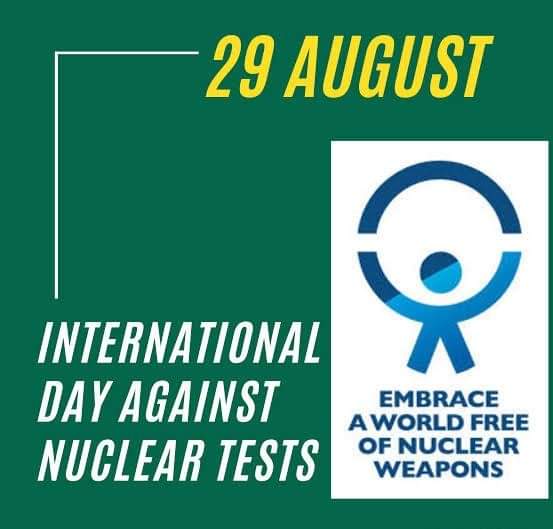
International Day Against Nuclear Tests

29 August

Since nuclear weapons testing began on 16 July 1945, over 2,000 have taken place. In the early days of nuclear testing little consideration was given to its devastating effects on human life, let alone the dangers of nuclear fallout from atmospheric tests.

Hindsight and history have shown us the terrifying and tragic effects of nuclear weapons testing, especially when controlled conditions go awry, and in light of the far more powerful and destructive nuclear weapons that exist today.

On 2 December 2009, the 64th session of the United Nations General Assembly declared 29 August the International Day against Nuclear Tests by unanimously adopting resolution 64/35.

The resolution calls for increasing awareness and education “about the effects of nuclear weapon test explosions or any other nuclear explosions and the need for their cessation as one of the means of achieving the goal of a nuclear-weapon-free world.”

The resolution was initiated by the Republic of Kazakhstan, together with a large number of sponsors and cosponsors with a view to commemorating the closure of the Semipalatinsk Nuclear Test site on 29 August 1991.

2010 marked the inaugural commemoration of the International Day against Nuclear Tests. In each subsequent year, the day has been observed by coordinating various activities throughout the world, such as symposia, conferences, exhibits, competitions, publications, lectures, media broadcasts and other initiatives.

Since its establishment, many bilateral and multilateral governmental level developments as well as broad movements in civil society have helped to advance the cause of banning nuclear tests.

Moreover, “convinced that nuclear disarmament and the total elimination of nuclear weapons are the only absolute guarantee against the use or threat of nuclear weapons,” the General Assembly designated 26 September as the “International Day for the Total Elimination of Nuclear Weapons”, which is devoted to furthering the objective of the total elimination of nuclear weapons, through the mobilization of international efforts.

The International Day for the Total Elimination of Nuclear Weapons was observed for the first time in September 2014. The International Day against Nuclear Tests, together with other events and actions, has fostered a global environment that strongly advocates for a world free of nuclear weapons.

The international instrument to put an end to all forms of nuclear testing is the 1996 Comprehensive Nuclear-Test-Ban Treaty (CTBT). Unfortunately, this has yet to enter into force.

As the Secretary-General recognized in his disarmament agenda “Securing our Common Future” launched on 24 May 2018, the norm against testing is an example of a measure that serves both disarmament and non-proliferation objectives. By constraining the development of advanced new types of nuclear weapons, the CTBT puts a brake on the arms race. It also serves as a powerful normative barrier against potential States that might seek to develop, manufacture and subsequently acquire nuclear weapons in violation of their non-proliferation commitments.

Every effort needs to be made to ensure the entry into force of the CTBT and to preserve its place in the international architecture. In this regard, the Secretary-General appeals to all remaining States whose ratifications are required for the CTBT to enter into force to commit to sign the Treaty at an early date if they have not already done so, and to accelerate the completion of their ratification processes.

It is the hope of the UN that one day all nuclear weapons will be eliminated. Until then, there is a need to observe International Day against Nuclear Tests as the world works towards promoting peace and security.