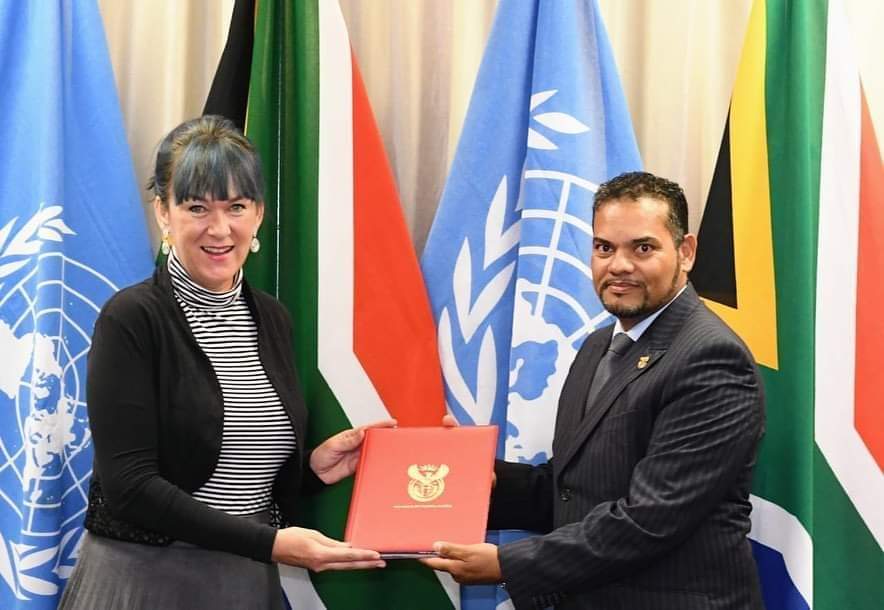
Deputy Minister Alvin Botes Receives Letters of Credence from the New Head of UN Women Office in South Africa, Ms Aleta Miller

14 July 2022

Deputy Minister Alvin Botes participated in the Credentials ceremony for the new Head of the UN Women Office in #SouthAfrica, Ms Aleta Miller.

Ms Aleta Miller, originally from Australia, has been part of UN Women since June 2015 as the representative at the Fiji Multi-Country Office in Suva, Fiji.

A psychologist, Ms Miller has extensive experience in gender and human rights and has held a variety of positions around the world including:

* UNFPA, New York: Gender and human rights adviser

* Myanmar: working on HIV

* Australia: managing harm reduction programmes for drug users

* Hong Kong: working with young Vietnamese refugees

* Papua New Guinea region: community development project leader

* advising the Chinese Government on national initiatives with sex workers and drug users.

Welcome to South Africa, Ms Aleta Miller. Best wishes.

DIRCO

PHOTOS CREDIT: DIRCO

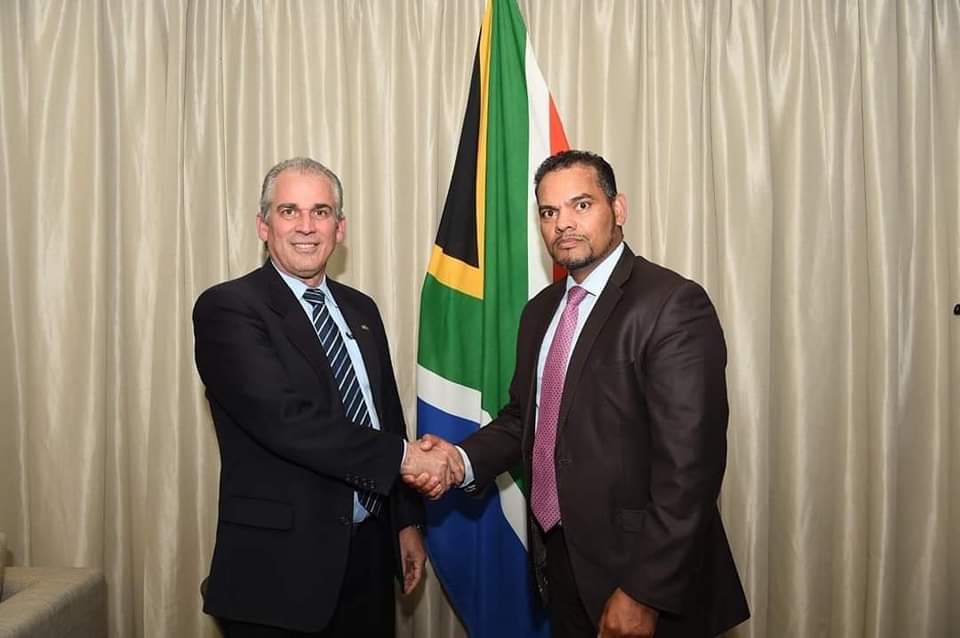
Cuba’s Ambassador to South Africa, H.E Enrique Orta González pays a courtesy call to Deputy Minister Alvin Botes

12 July 2022

Deputy Minister Alvin Botes had a courtesy meeting with Cuba’s Ambassador to South Africa, H.E Enrique Orta González.

On 15 May 1994, soon after South Africa’s democratic transition, SA 🇿🇦 and Cuba 🇨🇺 established formal diplomatic relations and opened resident Embassies in Pretoria (1994) and Havana (1995), respectively.

Cuba has since become an established strategic partner for South Africa in the Latin American region and in multilateral fora. The relations are characterised by high level political dialogue.

#SACubaRelations serve as a successful and exemplary model of South-South cooperation particularly in health training & services, human settlements technical exchange, public works technical assistance, cooperation on water resource management and water supply & on basic education.

#CubaInSA

#SouthSouthCooperation

📷 Yandisa Monakali (DIRCO)

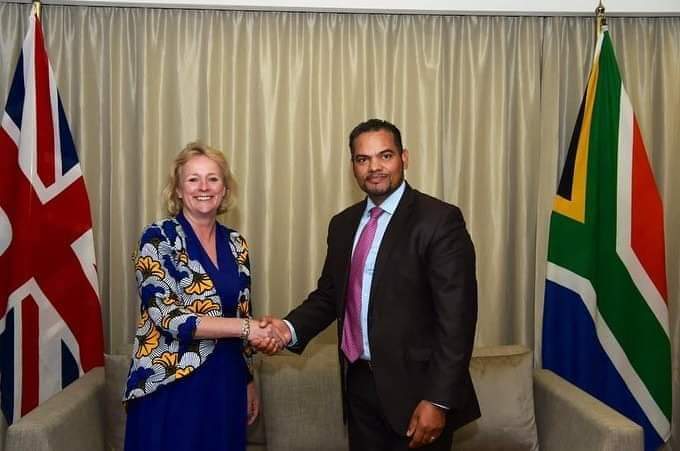
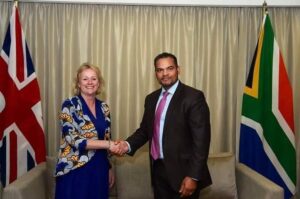
Deputy Minister Botes to host United Kingdom’s Minister of Africa

12 July 2022

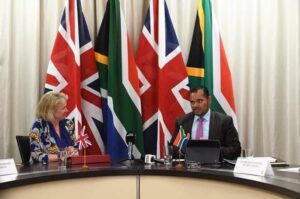
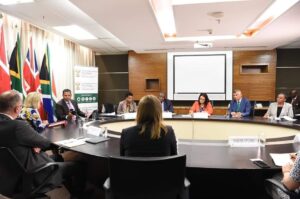
Deputy Minister Alvin Botes held a bilateral consultation with the United Kingdom’s Foreign Minister for Africa, Ms Vicky Ford at the Department of International Relations and Cooperation on Tuesday, 12 July 2022.

The purpose of the meeting was to review the progress made on the commitments undertaken during the South Africa – United Kingdom Bilateral Forum held in May 2021 between Minister Naledi Pandor and former Foreign Secretary, Rt. Hon Dominic Raab.

Bilateral relations between South Africa and the UK are managed through the Bilateral Forum at the level of the Foreign Minister and meet biennially. The 12th Session of the Bilateral Forum was held on the sidelines of the G7 Foreign Ministers Meeting in May 2021 in the United Kingdom.

The discussion during the meeting included the review of the progress made on the commitments undertaken during the South Africa – United Kingdom 🇿🇦🇬🇧 Bilateral Forum held in May 2021 between Minister Naledi Pandor and former Foreign Secretary, Rt. Hon Dominic Raab.

The Bilateral Consultations renewed commitment to strengthening relations between South Africa and the United Kingdom, with greater emphasis on implementing current agreements and finalising outstanding Memorandums of Understanding and Agreements.

Over 50% of total South African exports to the United Kingdom are either precious metals or “unclassified goods”. The United Kingdom remains South Africa’s most important export market not only for fruit, vegetables and other agricultural products but also for manufactured, value added exports such as clothing, automotive equipment, wine, furniture and a host of other products.

#UKinSA

#SAUKRelations

The Minister of International Relations and Cooperation, Dr Naledi Pandor visits Uganda

11 July 2022

The Minister of International Relations and Cooperation, Dr Naledi Pandor visited Uganda to co-chair the 2nd Session of South Africa- Uganda Joint Commission for Cooperation (JCC), with her counterpart, H.E. Jeje Abubakhar Odongo, the Ugandan Minister of Foreign Affairs during 11 – 12 July 2022

South Africa hosted the first session of the JCC in 2012.

Amongst the key objectives, the JCC meeting seeked to strengthen and deepen bilateral relations and cooperation between the two countries, consolidate political, economic and social cooperation, oversee the implementation of the signed agreements and Memoranda of Understanding; explore possible new areas of economic, trade and investment cooperation, including the opportunities for bilateral commercial cooperation, joint ventures and possible collaborative projects presented by the operationalisation of the AfCFTA.

The meeting also provided an opportunity for both leaders to discuss issues of mutual concern and interest, especially issues of peace, security and development in the continent to advance the African Union (AU) Agenda 2063 and lastly, enhance the two countries’ strategic cooperation on the Continent to amplify Africa’s voice and the call for the reform of the multilateral institutions, especially the United Nations Security Council.

South Africa and Uganda enjoy longstanding historical relations dating back to the struggle against colonialism and apartheid. Uganda hosted and trained South African anti-apartheid activists and freedom fighters in the late 1980s. Political and economic relations between South Africa and Uganda have been improving since 1994.

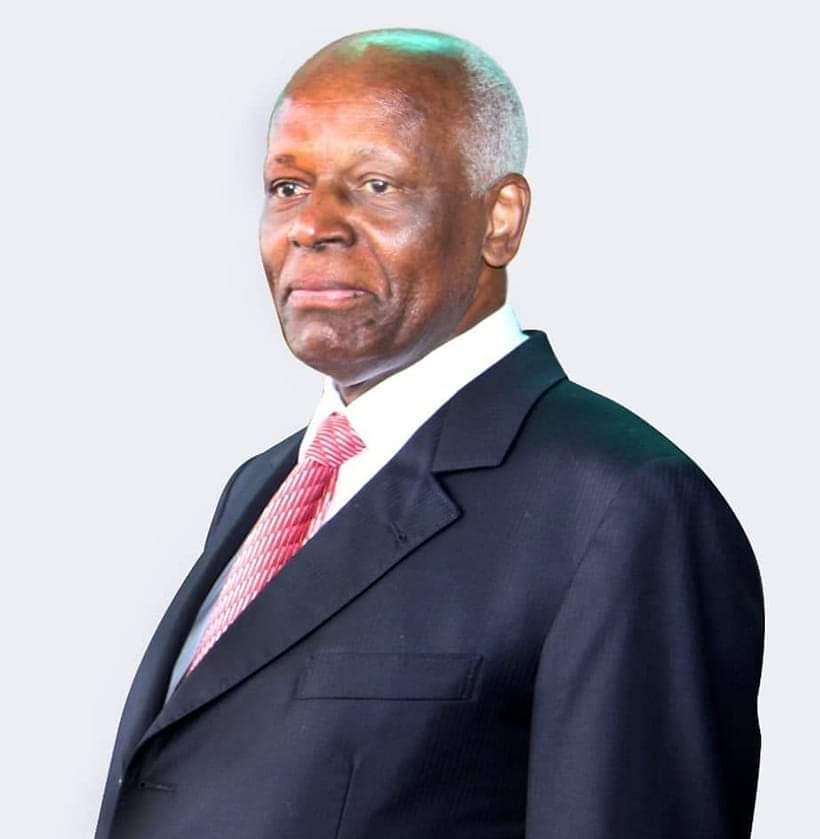
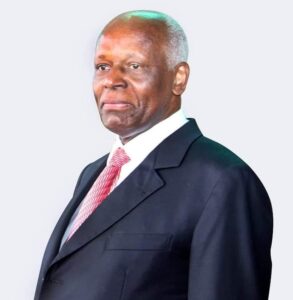
Angola’s Former President Josè Eduardo  Santos Dies at 79 Years of Age

8 July 2022

One of Africa’s longest serving leader,  former President of Angola President Jose Eduardo dos Santos has died at the age of 79.

The 79-year-old passed away at a clinic in Barcelona, Spain

Dos Santos ruled Africa’s second biggest oil producer for nearly four decades, died on Friday. Mr. dos Santos ruled his country for 38 years, from Angola’s first President Mr. Agostinho Neto’s death in 1979, four years after Angola won independence from Portugal until 2017, when he stepped down voluntarily as president, though not as leader of the dominant political party, the Popular Movement for the Liberation of Angola a position he relinquished a year later.

His diplomacy was central to an accord in 1989 among South Africa, Cuba and Angola that allowed Namibia to declare its independence under a SWAPO government in 1990 after the withdrawal of Cuban forces from Angola.

His decades in power placed him in the uppermost reaches of a league of longtime African rulers, including Robert Mugabe of Zimbabwe and President Teodoro Obiang Nguema Mbasogo of Equatorial Guinea.

When he left the presidency, he was replaced by a chosen successor, João Lourenço, the country’s defense minister.

The Diplomatic Informer Magazine wishes to extend our heartfelt condolences to the Government and the people of Angola and our thoughts and prayers are with the former President’s family, the Government and the people of Angola.

South Africa Remembers Former Prime Minister of Japan Shinzo Abe

8 July 2022

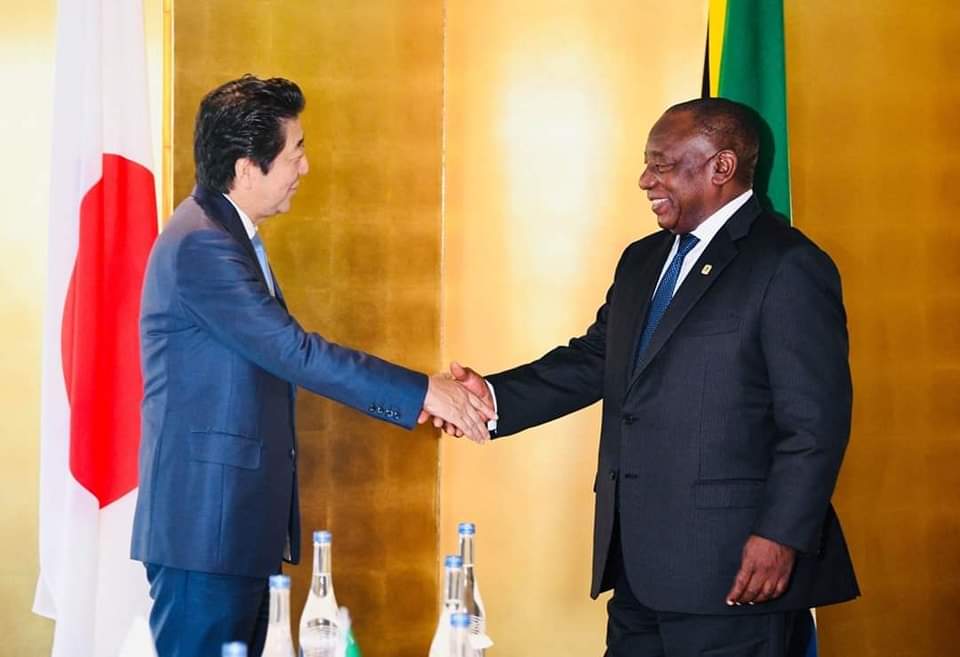
“Statement by President Cyril Ramaphosa on the passing of Former Prime Minister of Japan Shinzo Abe”

I have learned with sadness and shock of the passing of former Japan Prime Minister Shinzo Abe.

On behalf of the Government and people of South Africa, I offer my sincere condolences to Mr Abe’s family, friends and colleagues, as well as the Government and people of Japan as a close and special partner to our nation.

The violence that claimed Prime Minister Abe’s life is a call on all of us to work for non-violence, peace and tolerance in all parts of the globe.

 I have been privileged to have a close association with Prime Minister Abe during my term as Deputy President and President of the Republic.

I recall my warm and productive interactions with Prime Minister Abe during my August 2015 visit to Japan as where we made significant progress in strengthening our bilateral relations, especially in the economic sphere, as well as South Africa’s cooperation with Japan in addressing issues on the global agenda.

I reflect similarly on my participation as President of the Republic in the 7th Tokyo International Conference on African Development (TICAD) in Yokohama in August 2019.

Prime Minister Abe convened this platform under the theme “Advancing Africa’s development through Technology, Innovation and People”, which sought to further deepen trade and investment, capacity and skills development, networking and people’s exchange between African nations and Japan.

Soon after TICAD, I had the pleasure to return to Japan to experience Prime Minister Abe and the government and nation of Japan hosting people from all over the world for the 2019 Rugby World Cup with characteristic efficiency and hospitality.

For the championship final on Saturday, 2 November 2019, I had the honour of sharing a Yokohama International Stadium stand with Prime Minister Abe as we witnessed the Springboks triumph as world champions. His warm embrace and handshake at the final whistle embodied the relationship between our two countries.

It is my wish that the people of Japan and South Africa will find solace in the legacy Prime Minister Abe established in Japan, globally and in the depth of relations between our two countries.

May his soul rest in peace.

The South African Presidency

#FormerPrimeMinisterShinzoAbe

#ShinzoAbe

#Japansarelations

#Japan

Minister Pandor attends G20 Foreign Ministers Meeting in Bali, Indonesia

08 July 2022

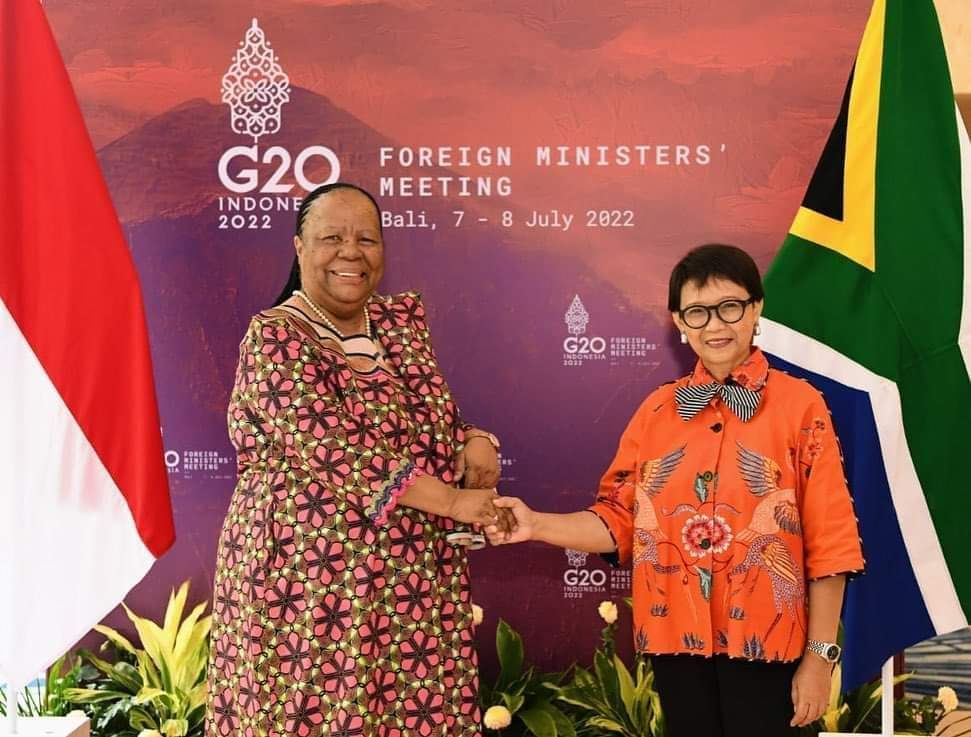
The Minister of International Relations and Cooperation, Dr Naledi Pandor, arrived in Bali, Indonesia, to attend a two-day G20 Foreign Ministers Meeting (G20 FMM), taking place from 07-08 July 2022.

Held under the theme “Recover Together, Recover Stronger”, the G20 Foreign Minister’s Meeting, discussed the current geopolitical tensions across the world, their humanitarian as well as socio-economic impacts and the role and contribution of the G20 in strengthening multilateralism.

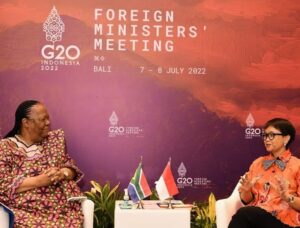
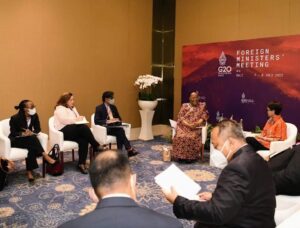
On the margins of the #G20 meeting, Minister Pandor had bilateral discussions with some of her counterparts, discussed issues of multilateral cooperation & mutual interests. Minister met her counterpart, Ms Retno Marsudi, Foreign Affairs Minister of Indonesia.

The Republic of South Africa 🇿🇦 and the Republic of Indonesia 🇮🇩 established diplomatic relations in August 1994.

Content and Photos Credit: Dirco

#SAIndonesiaRelations

#SAInIndonesia

FAREWELL AMBASSADOR MUBARAK AL ZAKWAN OF OMAN TO SOUTH AFRICA

8 July 2022

Deputy Minister Candith Mashego-Dlamini hosted a farewell lunch for Ambassador Mubarak Al Zakwani of Oman,  Dean of the Arab Diplomatic Corps.

Oman and South Africa shares warm and cordial relations that are based on the principles of solidarity, working towards creating a better life for the people, the regions and the world.

“Oman was among the first few nations to foster political relations with South Africa in 1995 as a gesture of goodwill when the country emerged from apartheid and has emerged as a top priority market for South Africa in the GCC due to its stable environment and ease of doing business.

There has been increased collaboration and cooperation projects in the fields of agriculture, mining, infrastructure development, defence and security, economy and finance, trade and investments as well as social and humanitarian affairs raising bilateral relations to new levels.

“Furthermore, South Africa and Oman are both leaders in their respective regions and the shared view of the world around both countries, this has also contributed to the quality and durability of the two countries bilateral relationship,”

H. E. Mr Mubarak Salim Ali Al-Zakwani

Ambassador Extraordinary and Plenipotentiary assumed his duties on  29.05. 2015.

The Diplomatic Informer Magazine SA wishes H. E. Mr Mubarak Salim Ali Al-Zakwani

Ambassador Extraordinary and Plenipotentiary

of the Sultanate of Oman and Dean of the Arab Diplomatic Corps success in all his future endeavors.

📷 Jacoline Schoonees (DIRCO) #SAOmanRelations #OmanInSA

#MubarakSalimAliAlZakwani

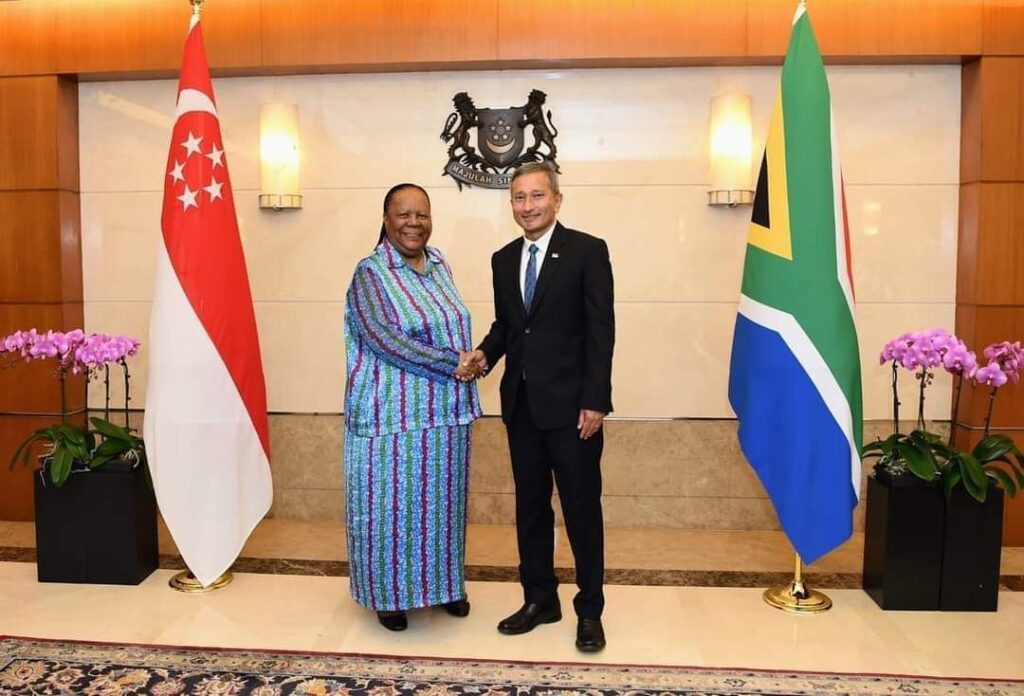
Minister Pandor Official Visit to Singapore

8 July 2022

The Minister of International Relations and Cooperation, Dr Naledi Pandor, Visited Singapore, during  05-06 July 2022, at the invitation of the Honourable Vivian Balakrishnan, Minister of Foreign Affairs of Singapore.

During the visit bilateral and multilateral cooperation issues of mutual interest were discussed.  Minister Pandor addressed and  engaged with various government and business entities such as the National Research Foundation (NRF) and the Singapore Institute of Technical Education (ITE).

The engagements further lead to the expansion of cooperation and skills development exchanges between South Africa and Singapore.

Minister of International Relations and Cooperation, Dr Naledi Pandor, met with her Singapore counterpart, Dr Vivian Balakrishnan.

South Africa and the Republic of Singapore established diplomatic relations in 1992, when embassies were opened in Singapore and Pretoria. South Africa and Singapore Relations on the Economic Diplomacy continue to grow. In 2013, the Overseas Centre was established in Johannesburg, South Africa in order to facilitate business interest and grow economic cooperation.

Singapore is an important trade and investment partner of South Africa. The total value of bilateral trade between the two countries in 2021 was R13 billion, with exports at R7.9 billion and imports at R5.1 billion. There is much potential to increase South African exports in the agricultural, food processing and food production sectors.

Minister Pandor paid a courtesy call on Honourable Prime Minister Lee Hsien Loong and focused on enhancement of the bilateral relationship and encouraged high-level visits between the two countries.

#BilateralRelations

#SAinSingapore

#BetterAfricaBetterWorld

#SASingaporeRelations

 #EconomicDiplomacy

📷Katlholo Maifadi (DIRCO)

KAZAKHSTAN CELEBRATES ITS CAPITAL CITY DAY 

6 July 2022

NUR-SULTAN

Nur-Sultan, known as Astana before March 2019, is the capital city of Kazakhstan. A 2020 official estimate reported a population of over 1.1 million people. It is located in the north-central part of the country,

along the Ishim River. Located in the center of Kazakhstan, the territory of Nur-Sultan exceeds 722 square kilometers with a population of more than one million.

Since becoming the capital of the country, Nur-Sultan has become a political, economic, and cultural center of independent Kazakhstan, as well as a major center of diplomacy, peacemaking and international

development.

The new capital has become well-known worldwide and has received global recognition – in 1999 it received the title “City of Peace” by the

decision of UNESCO.

Economic indicators of Nur-Sultan

Over the 23-year history, the city of Nur-Sultan has transformed from a provincial town into a regional economic powerhouse.

Gross regional product and the business sector

In 2020, the gross regional product (GRP) value in the city of Nur-Sultan amounted to 7.81 trillion tenge and increased 303-fold

compared to 1997. The gross regional product for Nur-Sultan for January-June 2021 amounted to 3,210,908.6 million tenge, or 105.1% compared to the corresponding period of 2020.

In monetary terms, GRP indicators have been continuously growing for twenty-two years, having slightly decreased in 2020 due to the global COVID-19 pandemic. In 2020, the production of goods contributed 14% of

the total GRP, while the production of services contributed 81%. The rest is taxes on products. As such, services of various types – trade, real estate transactions, finance and insurance provide more added value

than production. 84,067 enterprises are registered in the city, of which 305 are large, 504 are medium, while 83,230 are small. In comparison to 1999, their number has increased by 13-fold. Most of the enterprises work in the

trade, construction, education, telecommunications, and manufacturing sectors.

The business sector is the main employer in the capital – every third resident of Nur-Sultan is employed by the private sector, contributing about 50% of GRP. The business sector provides approximately half of tax

revenues.

Investment

Since 2003, the volume of investments in the city of Nur-Sultan has exceeded 11 trillion tenge. According to the statistics of the National Bank, from 2014 to 2020, the volume of attracted foreign investments amounted to $4.3 billion.

Overall, the above indicators reflect the dynamic development of the economy of Nur-Sultan.

Furthermore, the city’s favourable location in the centre of the Eurasian continent makes it an economically advantageous transport, communication, logistics and financial centre – a natural bridge between Europe and Asia and a point of integration into the global economy for the region. It is for this reason that the capital has become the largest business centre in Kazakhstan, with industrial production increasing more than thirty-fold. It is also why Nur-Sultan became an obvious location for the Astana International Financial Centre, the

first organisation of its kind in the region.

As well as a hub for finance, trade and transportation, Nur-Sultan is also a hub for innovations, green technologies, and sustainable development, a role which the city performed perfectly when it hosted EXPO-2017, which with the participation of around 100 countries focused on the theme of future energies. Now, the International Center for Green Technologies and Investment Projects is continuing the legacy of EXPO-2017.

Nur-Sultan as a hub of diplomacy

Nur-Sultan has become a centre for diplomacy where regional and global initiatives are launched to promote security and cooperation, enhance trade, and encourage sustainable development. For example, Nur-Sultan is

where Chinese President Xi Jinping announced the creation of the One Belt One Road, an initiative which Kazakhstan greatly contributes to. It was also where the proposal to establish the Eurasian Economic Union was

made. In 2010 Nur-Sultan hosted the Organisation for Security and Co-operation in Europe (OSCE) Summit.

Following this meeting, the Astana Declaration was announced, which put forward a bold vision for the

future of Eurasia. The heads of state and government put forward a vision of “a free, democratic, common and indivisible Euro-Atlantic and Eurasian security community in the space from Vancouver to Vladivostok,

based on agreed principles, joint commitments and common goals”.

The capital of Kazakhstan has also hosted important regional security and cooperation summits of the Conference On Interaction and Confidence-Building Measures in Asia, the Shanghai Cooperation

Organization, the Commonwealth of Independent States, the Collective Security Treaty Organization, the cooperation Council of Turkic-speaking

states, as well as the first working consultative meeting of the heads of state of Central Asia. Major inter-parliamentary forums are also held in the capital.

More recently, the city has hosted several rounds of the Astana Process, which remains one of the only platforms that brought together all the main parties in the Syrian crisis. In the sphere of ethnic and religious harmony, the capital continues to host the triannual Congress of Leaders of World and Traditional Religions, recognised as a major international platform for inter-faith dialogue.

Tourism and culture of Nur-Sultan

Modern Nur-Sultan consists of unique futuristic architecture and Kazakh flair. The city is also home to educational and cultural institutions, including several universities, such as the Nazarbayev University, the

Eurasian National University named after L.N. Gumilev, the Kazakh National University of Arts, the Kazakh Agrotechnical University named after S. Seifullin, Kazakhstan branch of Moscow State University named

after M.V. Lomonosov, Astana Medical University and others.

Nur-Sultan also houses an opera, a symphony orchestra, museums, and shopping malls. with a unique mix of futuristic architecture. It is home to many impressive government buildings, such as the Presidential

Palace, Parliament House, and the Supreme Court.

Noteworthy tourist spots include the Bayterek, a 97-metre-high monument and observation tower completed in 1997. It embodies a Kazakh folk tale about a mythical tree of life and a magic bird of happiness.

The height of the tower commemorates the year that Nur-Sultan became the nation’s capital in 1997.

Other unique architectural structures include the Palace of Peace and Accord, designed by the famous British architect Norman Foster and made in the shape of a pyramid; the “Khan Shatyr” shopping and entertainment

center – the tallest tent-shaped building in the world; the most remote from the sea aquarium – “Duman”; the Opera and Ballet Theatre “Astana Opera”; the largest mosque in Central Asia “Hazret Sultan”; the Cathedral in honour of the Dormition of the Mother of God; the Roman

Catholic Cathedral of the Archdiocese of the Blessed Damosel Mary; the synagogue “Beit Rachel Khabad Lyubavich”; the Central Concert Hall “Kazakhstan”; the monument “Kazakh Ely”; the Museum of Contemporary Art and the Presidential Cultural Center.

Also reflecting Nur-Sultan’s cutting-edge arts culture is the city’s Modern Art Gallery. The gallery is located in the now iconic Palace of Peace and Harmony, often referred to as the Pyramid. This open-style granite and glazed glass pyramid was designed by renowned British

architecture firm Foster and Partners and opened in 2006 to host the Congress of Leaders of World and Traditional Religions.

More traditional arts can be found in the Maxim Gorky Russian Drama Theatre. This theatre was founded in 1899 and is one of the largest and most popular drama theatres in Central Asia. It regularly presents performances of William Shakespeare, Tennessee Williams, Anton Chekhov, Nikolai Gogol and others.