BELARUS INDEPENDENCE DAY 3 JULY

Belarus celebrates Independence Day on 3. It is the National Day of Belarus and marks the liberation of Minsk on 3 July 1944.

The independence or national days of most ex-Soviet states takes place on the date that marks that country’s independence after the fall of the Soviet Union in the early nineties.

In Belarus, this was the case in 1990 when the Supreme Council of Belarus declared the country to be a sovereign nation free from the USSR on 27 July 1990. This date was celebrated as the Independence Day of Belarus until 1996.

In 1996, Alexander Lukashenko, country’s first President oversaw a referendum in which nearly 90% of Belarusians voted to celebrate Independence Day on 3 July. The date was chosen to honour those who fought to free the capital, Minsk from Nazi German occupation during the Great Patriotic War (Second World War).

When Nazi Germany invaded the Soviet Union on 22 June 1941, Belarus was the first to bear the brunt of the attack. On 24 June, Minsk came under massive artillery shelling and air strikes from nearly 150 bombers.

Despite resistance from local fighters, the Germans seized Minsk on 28 June 1941. Not accepting the occupation, the residents began a resistance movement that lasted 1,100 days. The efforts of the citizens helped the armies of the 1st and 3rd Belarusian Fronts with the support of the partisans liberate the Belarusian capital from the invaders on 3 July 1944.

Belarus paid a high price for the freedom; a third of the population was killed during the war.

Independence Day is a tribute to the heroism and endurance of Minskers in their struggle to bring freedom to Belarus.

The main event of Independence Day is a large military parade in Pobeditilei Avenue, Minsk.

On Independence Day 2018, President Lukashenko commemorated the holiday, saying “We are celebrating Independence Day, the day that has become the symbol of our free and peaceful life. Belarusians were unanimous in their choice when over 20 years ago they chose 3 July, the day of the liberation of Minsk Hero City from the Nazis, as the country’s main national holiday.”

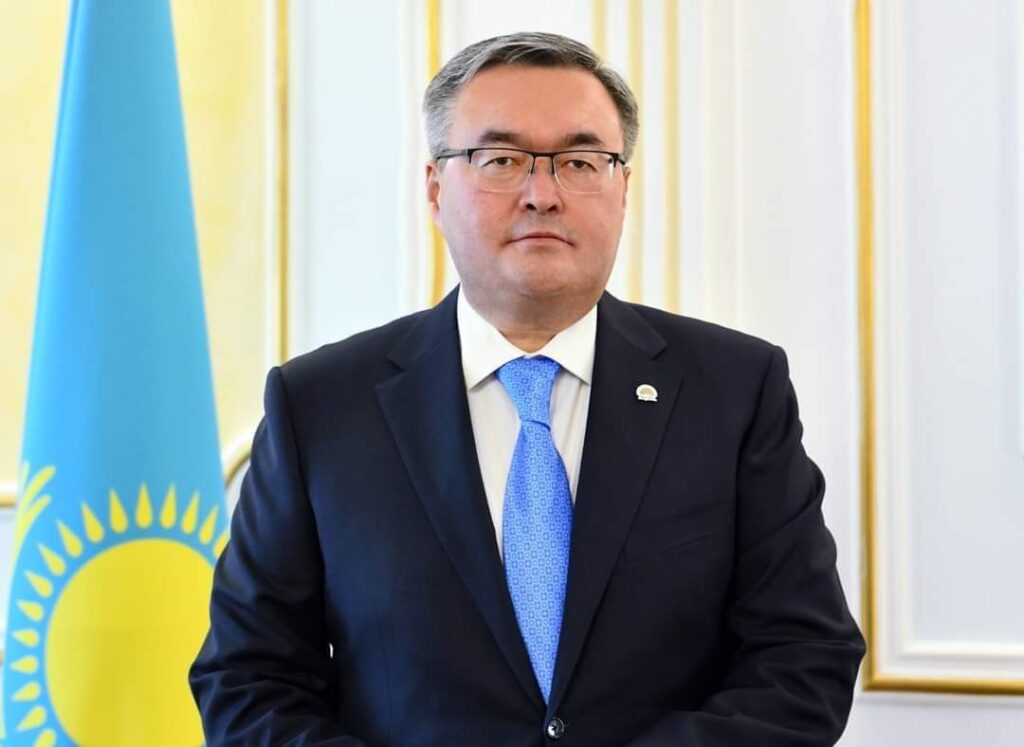
EMBASSY OF KAZAKHSTAN IN SOUTH AFRICA

2 July 2022

This year marks the symbolic 30th anniversary of the development and implementation of Kazakhstan’s independent foreign policy.

On July 2, 1992, the President of Kazakhstan signed Decrees approving the Regulations on the Ministry of Foreign Affairs, on the Embassy of the Republic of Kazakhstan, and on the Basic Duties and Rights of the Ambassador Extraordinary and Plenipotentiary of Kazakhstan.

Since then, Kazakhstan’s foreign policy has demonstrated its success, ensuring stability and security along our borders and favorable conditions for domestic development.

Kazakhstan has established itself as a predictable, reasonable, and responsible actor in the global system of international relations. Thanks to its effective foreign policy, our country avoided being drawn into conflicts with other states. As a result, today we have good relations with all the members of the international community. Overall, Kazakhstan’s diplomacy has made a significant contribution to strengthening our statehood.

Since independence, the main principle of Kazakhstan’s foreign policy has been multidimensionality and balance. Guided by this agenda, Kazakhstan has become a member of many reputable international organizations, regularly interacting with the UN and its various specialized agencies (UNDP, WHO, IMF, UNICEF, UNESCO, etc.) and strengthening cooperation with other influential multilateral structures such as the WTO, the World Bank, ADB, EBRD, IAEA, and others.

The legal formalization of Kazakhstan’s state border should be highlighted as one of the landmark achievements of our foreign policy. Globally, delimitation and demarcation of state borders is a very sensitive issue, which has been causing tension and military conflicts in many regions of the world for centuries. We managed to resolve the border issue with China, Russia, and our neighbors in Central Asia in a short period of time. This was done while taking into account our national interests. Similarly, we signed the Convention on the Legal Status of the Caspian Sea, which secured its status as a zone of peace and mutually beneficial cooperation.

Furthermore, our active contribution to nuclear non-proliferation has become the trademark of Kazakhstan. During discussions with our officials, the leaders of various countries frequently express their respect and gratitude to Kazakhstan for voluntarily renouncing the fourth largest nuclear arsenal. Paying tribute to our efforts in this area, the United Nations declared August 29 – the day of the official closure of the Semipalatinsk test site – the International Day against Nuclear Tests. Last year we celebrated the 30th anniversary of this historic event. Kazakhstan continues to actively promote nuclear disarmament and remains committed to efforts toward the adoption of the Universal Declaration on Building a World Free of Nuclear Weapons by all UN Member States.

The signing of the Semipalatinsk Treaty on the Central Asian Nuclear-Weapon-Free Zone by Kazakhstan and its neighbors in the region on September 8, 2006, which created the first such zone in the Northern hemisphere, was the manifestation of concrete steps to strengthen the international nuclear non-proliferation regime. An important addition to it was the Protocol on Negative Security Assurances, which stipulates that countries possessing nuclear weapons undertake not to use them on the parties to the Treaty. Last year, the Ministers of Foreign Affairs of the States Parties to the Treaty made a joint statement on its 15th anniversary, in which they reaffirmed their unshakable commitment to its provisions and called on the United States to ratify the Protocol as soon as possible.

In addition to the efforts to promote the idea of a nuclear-free world, Kazakhstan enjoys the respect of the international community for its meaningful contribution to strengthening global and regional security.

Kazakhstan initiated the Conference on Interaction and Confidence-Building Measures in Asia (CICA), which today unites 27 member states and 8 observer states. The objectives of the CICA are reflected in the very name of the organization. Motivated by the necessity to adapt to the new realities and needs of the international agenda, its activities expanded to also cover new areas, including epidemiological security, public health, information technology, and digitalization, among other issues.

Kazakhstan’s election as a non-permanent member of the UN Security Council in 2017-2018 can also be considered one of the most historic achievements of our diplomacy. The international community greatly appreciated the responsible and principled position of Kazakhstan in the framework of this mission.

Furthermore, in 2017 Kazakhstan successfully held the International Specialised Exhibition EXPO 2017 on Future Energy, which facilitated the development of “green” technologies.

Another area worth mentioning is Kazakhstan’s own unique model of interethnic and interfaith harmony in our society, which we created over the years of independence. The important visit of Pope John Paul II to Kazakhstan in the autumn of 2001 was a reflection of Kazakhstan’s global role in this field. Held less than two weeks after the tragic terrorist attacks in the United States on September 11, which sharply exacerbated discussions of an inevitable “clash of civilizations,” Kazakhstan attracted widespread international attention as an example of how a country can actively promote and ensure a culture of peace and effective interfaith dialogue both on a national and global scale.

Subsequently, our country introduced several popular initiatives in the field of inter-civilizational and intercultural dialogue. The most significant among them is the Congress of Leaders of World and Traditional Religions, which has been held triennially in the capital of our country since 2003. The seventh Congress will take place on September 14-15 this year, with participation from Pope Francis, Patriarch Kirill of Moscow and all Rus’, the Chief Rabbis of Israel, Ashkenazi David Lau and Sephardi Yitzhak Yosef, and other established leaders of various religious communities around the world.

Strengthening multilateral diplomacy and expanding cooperation with international and regional organizations remains the priority of Kazakhstan’s foreign policy. Here I would like to particularly emphasize Kazakhstan’s successful hosting of the summits of the OSCE, OIC, SCO and other organizations in the capacity of the presiding country.

In the realm of regional economic integration processes, Kazakhstan is known to be a responsible member of the Eurasian Economic Union (EAEU). This union facilitates increased trade, economic and investment ties and the implementation of large-scale joint projects.

Due to Kazakhstan’s reputation as an impartial and objective mediator, our country has over the years contributed to the resolution of several diplomatic and international crises, including hosting the Astana Process talks on the conflict in Syria, hosting negotiations in 2013 on the Iranian nuclear program, resolving the diplomatic rift between Russia and Turkey in 2015-2016, and supporting the launch of the Minsk Process on Ukraine in 2014.

Our country has also become a full member of the World Trade Organisation and a party to the Paris Agreement on combating climate change. Furthermore, climate diplomacy is becoming a new and important area of our foreign policy. We have set ourselves an ambitious task to decarbonize our economy by 2060. To this end, we are developing a Low-Carbon Development Concept. We are consistently promoting renewable energy sources, which should make up 15% of the country’s energy mix by 2030. We are also actively involved in the global processes of developing a green economy.

Over the past two years, the COVID-19 pandemic has become a new and unexpected global challenge exposing humanity’s vulnerability to biological threats. In this regard, at the 75th session of the UN General Assembly, the President of Kazakhstan Kassym-Jomart Tokayev proposed to establish an International Agency for Biological Safety aimed at preventing biological threats and exchanging data on dangerous diseases. The implementation of this important initiative is currently one of the priorities of the Ministry of Foreign Affairs.

Priority tasks of the Foreign Ministry also include systematic attraction of foreign direct investment for our country’s economy, transfer of advanced technologies and, most importantly, creation of new jobs for our citizens. Our diplomats have contributed to the attraction of about 380 billion US dollars of direct investment to Kazakhstan’s economy over the past years. Undoubtedly, the Foreign Ministry, in close cooperation with other government institutions and national business communities, will continue to improve the strategy and practice of operating in this pivotal area for the country.

Guided by the idea and values of the New Kazakhstan, the Foreign Ministry prioritizes the human dimension and considers the protection of the rights and interests of our citizens and national businesses abroad one of its key objectives. Kazakhstan’s diplomacy is becoming increasingly applied and focused on the specific needs of society and every citizen.

Unfortunately, there is currently an increased degree of volatility and unpredictability in the international arena. New challenges and threats have emerged, including the crisis of confidence and increase in the confrontation between various international actors, the erosion of fundamental principles of international law, aggravation of the threat of terrorism, an arms race, and exacerbating hybrid, cyber, trade and currency wars. These new challenges require timely adaptation and adjustment of Kazakhstan’s foreign policy.

In this regard, on March 6, 2020, the Decree of the President approved the 2020-2030 Foreign Policy Concept of the Republic of Kazakhstan. The key provisions of the updated document are predicated on the principles of a multi-vector policy, sustainability, pragmatism, and the protection of national interests. From his first days in office, President Tokayev clearly underlined continuity in the course of our foreign policy. Our country continues to maintain its multi-vector diplomacy, which has proven its effectiveness, ensuring a positive trend in the engagement of the country with all its international partners. Therefore, our foreign policy priorities remain unchanged.

Kazakhstan has been, is, and will be a reliable partner of the international community.

RWANDA INDEPENDENCE DAY 1 JULY

Rwanda celebrates independence day on 1 July.

The Diplomatic Informer Magazine SA wishes to congratulate the Government and the people of the Republic of Rwanda on the occasion of Independence Anniversary on, 1 July, 2022.

Wishing the Government and the people of Rwanda continued Peace, Unity and Prosperity.

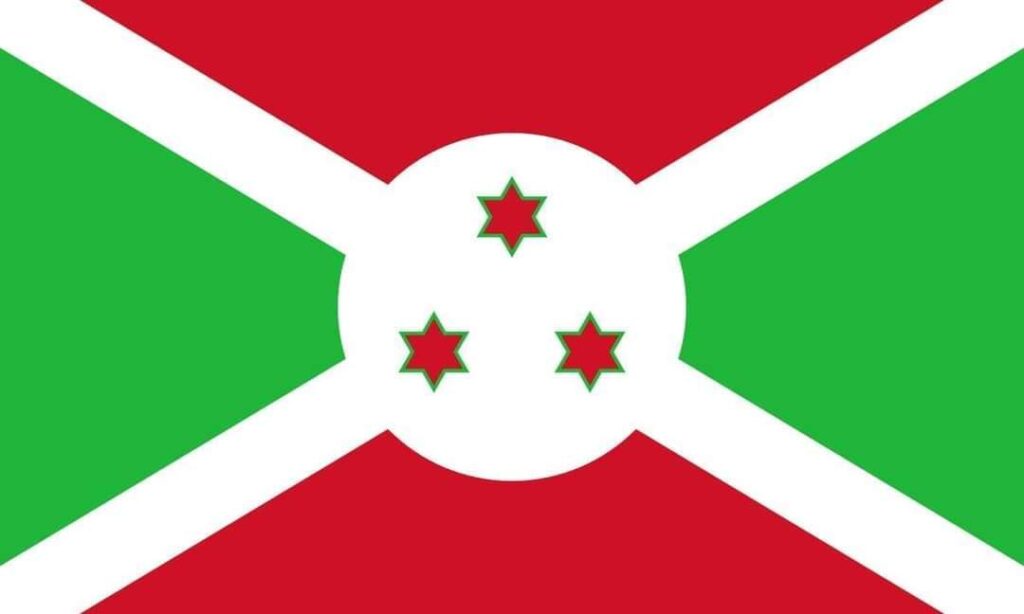
BURUNDI INDEPENDENCE DAY 1 JULY

The Republic of Burundi was freed from Belgium on July 1, 1962!

The Diplomatic Informer Magazine SA wishes to congratulate the Government and the people of the Republic of Burundi on the occasion of Independence Day. Wishing the Government and the people of Burundi continued Peace, stability, Unity Prosperity and economic growth.

Burundi is a landlocked region in central Africa. It was an independent kingdom until it became part of the colony of German East Africa, which included Burundi, Rwanda, and the mainland part of Tanzania in the 1890s.

After Germany’s defeat in the First World War, control of the western part of German East Africa was ceded to Belgium under the Treaty of Versailles in 1919.

In October 1924, Ruanda-Urundi, which consisted of modern-day Rwanda and Burundi, became a Belgian League of Nations mandate territory.

Despite the control by the two European powers, the monarchy in Burundi had continued, and In 1959, Burundi’s ruler Mwami Mwambutsa IV requested independence from Belgium and dissolution of the Ruanda-Urundi union.

The country declared its independence on July 1st 1962 and changed its name from Ruanda-Urundi to Burundi. Burundi became a constitutional monarchy with Mwami Mwambutsa IV as king. On September 18th 1962 Burundi joined the United Nations.

Following independence, Burundi has had a tumultuous series of decades with coups, civil war and genocide. The country has been peaceful since 2006 and Independence Day is seen as a day to show patriotism for Burundi but also to bring people together after the violent past.

Department of International Relations and Cooperation, SA

UbuntuRadioZA

#Burundi

#Burundiindependenceday

 🇧🇮

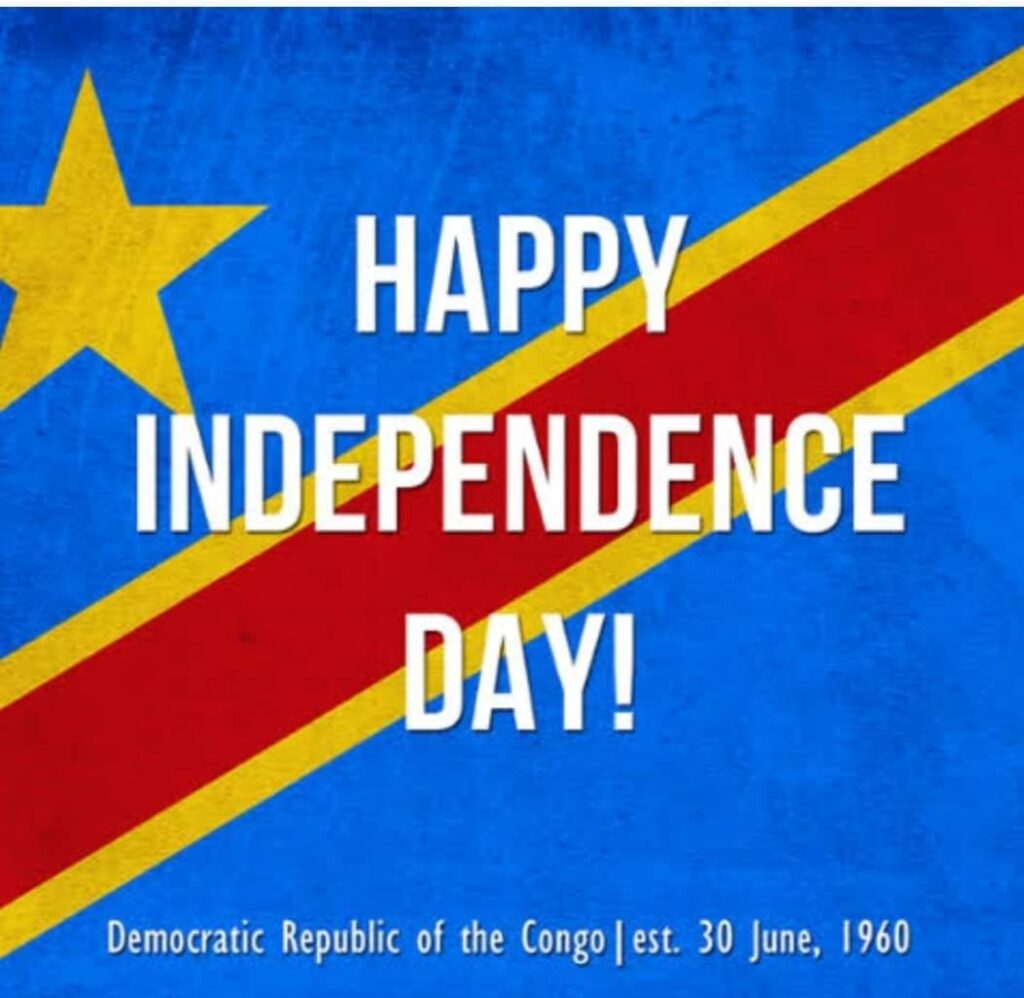
DRC INDEPENDENCE DAY 30 JUNE

DRC celebrates independence day on 30 June. The Diplomatic Informer Magazine SA wishes to congratulate the Government and the people of the Democratic Republic of Congo on the occasion of Independence Anniversary on, 30 June, 2022.

Wishing the Government and the people of Democratic Republic of Congo Peace, Unity and Prosperity.

PRESIDENT RAMAPHOSA ARRIVED IN BOTSWANA FOR THE 7TH SACU SUMMIT OF HEADS OF STATE AND GOVERNMENT

30 June 2022

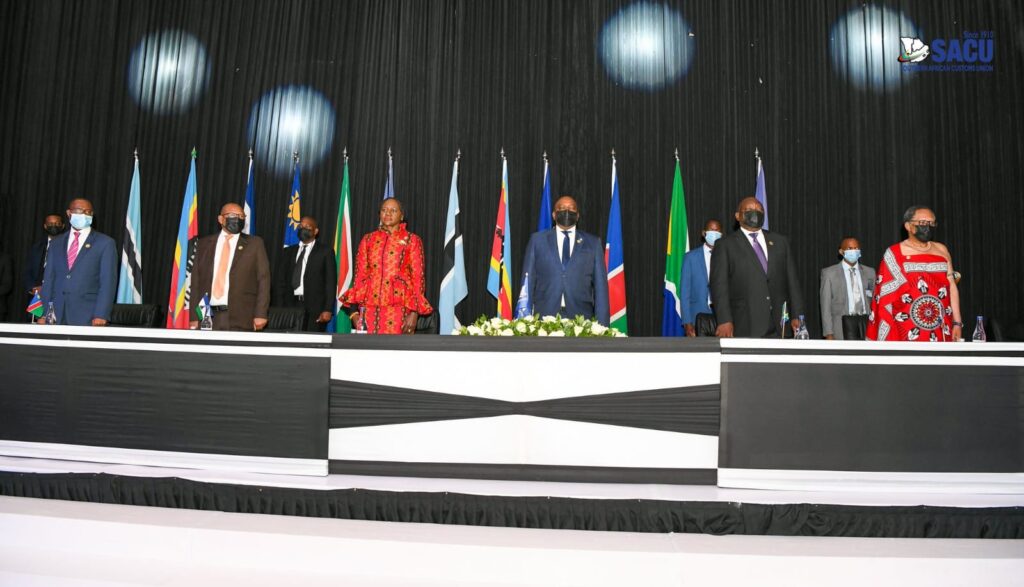
President Cyril Ramaphosa has, today, Thursday, 30 June 2022, arrived in the Republic of Botswana on a Working Visit to attend the 7th Southern African Customs Union (SACU) Summit of Heads of State and Government.

The Summit will be held at the Gaborone International Convention Centre and will be attended by Heads of State and Government and representatives of SACU Member States.

Member States include the Republic of Botswana as the summit host and the current chair of the Union; the Kingdom of Eswatini; the Kingdom of Lesotho; the Republic of Namibia; and the Republic of South Africa.

SACU is the oldest Customs Union in the world and its Summit is held annually to discuss progress on the implementation of it’s agreed upon Work Programme.

The Summit will consider progress made on the implementation of the refocused Work Programme whose priorities include:

• Industrialisation through the development of regional value chains, investment attraction and export promotion;

• Regional Financing Mechanism;

• Trade Facilitation and Logistics; and

• Implementation of the African Continental Free Trade Area (AfCFTA).

The Summit will further consider the five-year SACU Strategic Plan as approved by the Council of Ministers on the 2nd June 2022.

The Summit is preceded by the meetings of its institutions namely

• 64th Meeting of the Finance and Audit Committee: 22 June 2022;

• 68th Meeting of the SACU Commission: 23-24 June 2022; and

• 47th Meeting of the SACU Council of Ministers: 28-29 June 2022. 6

President Ramaphosa is accompanied by Minister Ebrahim Patel of Trade and Industry and Deputy Ministers David Masondo of Finance and the South African Revenue Service Commissioner Edward Kieswetter.

UNBOUND TWITTER THOUGHTS FOR THE HEART AND MIND BY VERLAINE-DIANE SOOBROYDOO

30 June 2022

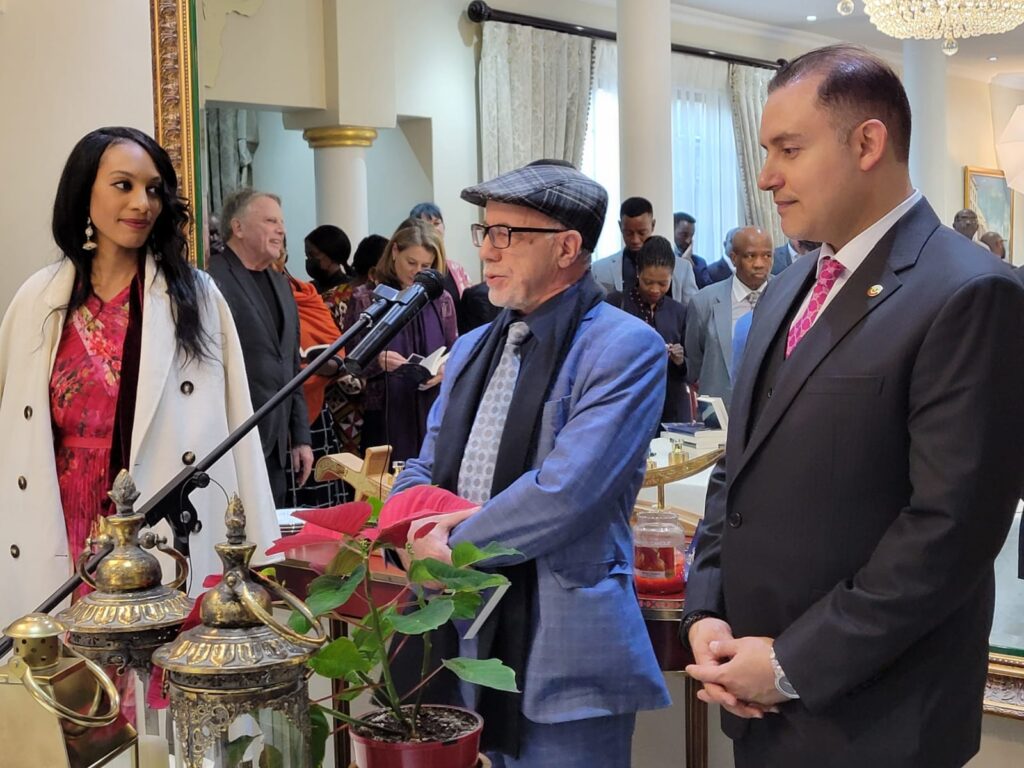
Unbound Twitter thoughts for the heart and mind  book by  Author Verlaine-Diane Soobroydoo was launched at  the residence of Tariq Al-Ansari, Ambassador of the State of Qatar to the Republic of South Africa, in Pretoria.

Unbound Twitter thoughts for the heart and mind is a collection of tweets, poetry, and affirmations that have already reached over 500,000 thousand people on Twitter.

Author Verlaine-Diane Soobroydoo shares the lyrical writing journey that saved her in moments of darkness. Her collection, written in seven parts, reflects our journey as human beings ascending from darkness, growing, changing and eventually reaching completeness.

Each ode incorporates enduring tweets and tips to becoming Unbound…taking you on a journey of reflection, healing and transformation and one that allows you to hear the whispers of your heart so you can and sings them whenever you feel. The words on the pages engage the power to conceptualize being in community with each other.

Everything your heart needed and you didn’t know it…

“I have taken daily inspiration from Verlaine-Diane’s Twitter feed for some time and this collection is an incredible extension of what my heart needs to hear….Not only is it beautifully written, it uplifts my spirits and leaves me feeling empowered, hopeful and grateful…she’s championing the human experience…and connecting us as a community!”

–Malia Baker, Actress

“We are experiencing a world traumatized by a pandemic that is harshest on the poor, unconnected and the discriminated. You long for a voice to soothe the pain, words to get lost in and words to boost the confidence of women and girls. Verlaine does that beautifully in Unbound.”

–Phumzile Mlambo-Ngcuka, Former Executive Director of UN Women

“Verlaine is a true champion for women…I am so glad she is using her unique voice to share her wisdom through this collection of heartfelt poems. Unbound is a handbook for finding beauty, tenacity and strength, even in life’s most difficult moments. By sharing her struggles, and her path out of it, she gives us words of encouragement to keep pushing forward to find an inner peace that cannot be broken.”

–Shelly Zelis, CEO, The Female Quotient

The  author Author Verlaine-Diane Soobroydoo  was born in Paris to a Mauritian mother and a Congolese father.

She worked at the United Nations (UN) for UN Women headed by South Africa’s former Deputy President Phumzile Mlambo-Ngcuka who attended the book launch at the residence of  His Excellency Tariq Al-Ansari who also worked with Verlaine at the UN when he was Chief of Staff at the UN High Representative and he acknowledged Verlaine for her outstanding contribution to his mission.

The Diplomatic Corps,  academics, government dignitaries and officials  were among those who attended the book launch and had the opportunity to interact with the author and received signed copies of the book.

HON. CHIEF FORTUNE CHARUMBIRA ELECTED AS THE NEW LEADER OF THE PAN-AFRICAN PARLIAMENT (PAP) 

29 June 2022

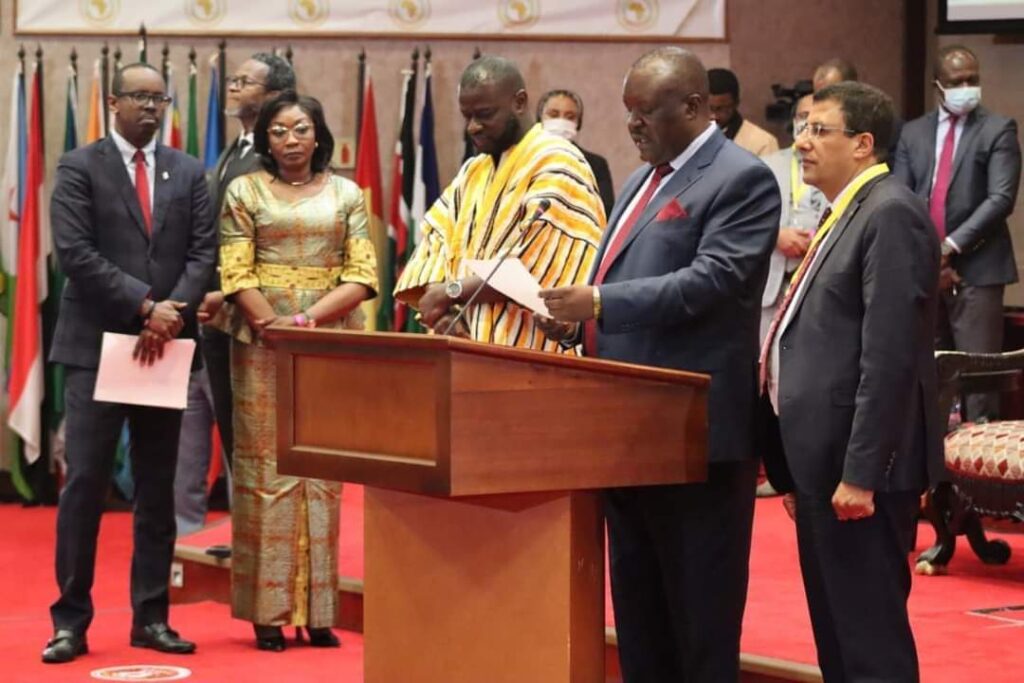
Hon. Senator, Chief Fortune Charumbira from Zimbabwe has been elected as the new leader of the Pan-African Parliament (PAP) at the currently underway Pan-Africa Parliament (PAP) Ordinary Session of the Fifth Parliament held in Midrand, South Africa.

“I want us to come together; we need to immediately fight and destroy the divisions caused by these foreign languages in Africa imposed on us by outside continents and resulted in us identifying one another as Anglophones, Francophones and Lusophones,” said Hon. Charumbira soon after his election victory, pledging to unite and develop the PAP.

Hon. Charumbira who was seconded to contest for Presidency of the PAP Bureau by his Southern Africa Caucus got 161 votes out of 203 votes cast with 31 abstaining and 11 spoilt papers.

“I am a President for everyone despite how you voted, it is high time we put our African people forward and do away with unnecessary conflicts. Together we can achieve more, we will only develop our continent when united and this is an essential thing for our people to see and experience in our lifetime,” added Hon. Charumbira.

Hon. Chief Charumbira is a traditional leader in Zimbabwe and the current President of the Chief’s Council. He was inaugurated as the substantive Chief on 24 May 2000. In 2013, he was retained as President of the Chief’s Council in elections conducted by the Zimbabwe Electoral Commission in Harare. He served as Deputy Minister in the Ministry of Local Government and Public Works in 2000.

He holds Masters in Business Administration (MBA) as well as Bachelor in Administration Law and Labor Law. He is a specialist in Institutional Change and Performance Improvement.

The elections come following a stalemate that saw the legislative arm of the African Union failing to choose its leaders owing to differences on modalities of handling the election last year.

The deadlock was resolved by an Executive Council decision in October 2021, which reiterated the adoption of the principle of rotation when electing the leadership of the institution. The decision also charged the Office of the Legal Counsel of the Union to prepare modalities and conduct the elections of the new Bureau of the Pan-African Parliament.

The much-awaited elections were presided over by the Chairperson of the African Union Commission Chairperson, the Chief Executive Officer and Legal Representative of the African Union, H.E Moussa Faki Mahamat. H.E Mahamat was representing H.E. Macky Sall, President of the Republic of Senegal and incumbent Chairperson of the African Union, who was meant to supervise the Session on an exceptional measure guided by Article 14 (1) of the PAP Protocol, which stipulates that the Plenary Session of the Parliament shall be presided by the Chairperson of the Union on the absence of the Bureau of PAP until the election of the President of the Parliament who shall thereafter preside over entire processes of the institution.

-Ends-

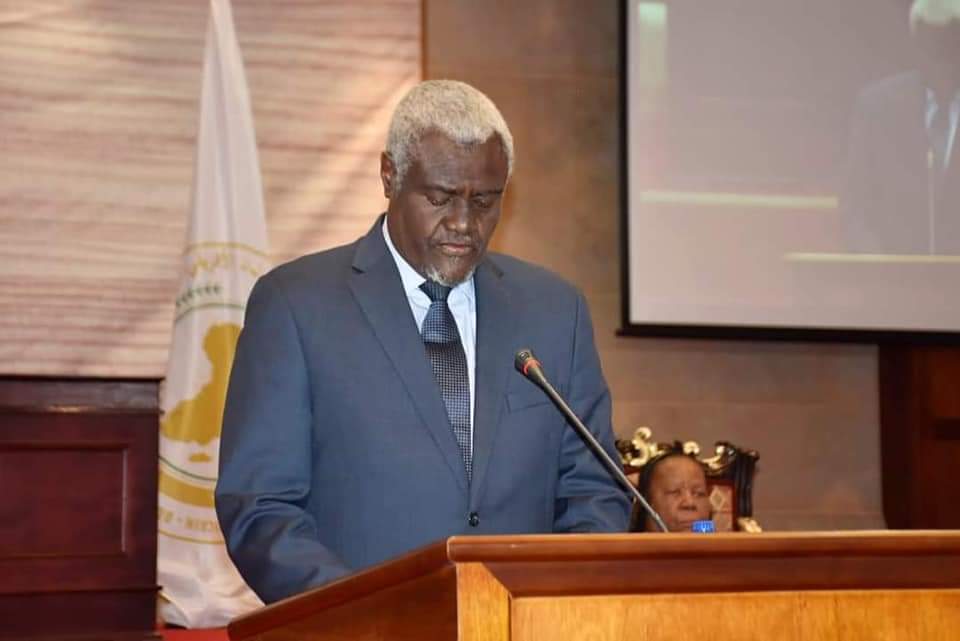
SPEECH BY HE MOUSSA FAKI MAHAMAT ON THE OCCASION OF THE FOURTH SESSION OF THE FIFTH LEGISLATURE OF THE PAN AFRICAN PARLIAMENT

28 June 2022

Excellency Naledi Pandor, Minister for International Relations and Cooperation of the Republic of South Africa

Honorable Pan-African Parliamentarians,

Ambassador Bankolé Adeoye, Commissioner for Political Affairs, Peace and Security of the African Union,

Your Excellencies, Members of the Diplomatic Corps,

Distinguished Guests,

Ladies and gentlemen,

It is with great pleasure and a poignant sense of solemnity that I take the floor today in this high place of African parliamentarism. In this hemicycle where the voice of the African peoples is freely expressed, I send you my warmest fraternal greetings.

Your massive presence at this session, the importance of which escapes no one, alone proves the gravity of the moment and gives the measure of the expectations and hopes tied around the session which opens this morning.

Established under Article 2 of the Protocol relating to the African Economic Community adopted in Sirte in Libya on March 2, 2001, the Pan-African Parliament, despite the immense hopes it aroused, has remained in search of its true anchorage and efficient functionality.

The Constitutive Act of the African Union has given it a privileged place in the institutional architecture of our Union. I recognize, however, that despite this declared desire of our Heads of State to position it in third place after the Conference of Heads of State and Government and the Executive Council, the Pan-African Parliament has remained essentially consultative, quite keen on away from the requirements of an active and law-creating institution. The full participation of African peoples in the development and economic integration of the continent through it has remained below expectations. Honorable Pan-African parliamentarians, we and our governments have a long way to go here so that you can, as reason and wisdom dictate,

Need I stress that this noble mission is precisely the one that dictates the ethics and moral virtues that must inspire your actions, your behavior and your political strategies.

It is known and recognized that parliaments, throughout the world, are high places of debate and confrontation of ideas. These debates can, here and there, from time to time, take on a more or less stormy character. Debating and not fighting is the hallmark of parliamentary life.

In certain circumstances, the most established social codes and norms of behavior can be challenged in abrupt, brutal and unexpected ways. It is not useless to remind one and all of the duties of moderation, weighting, sense of proportion, self-control which must, at all times, be the prerogative of personalities belonging to such an honorable and prestigious institution.

The unfortunate events that occurred in this hemicycle on May 27 and June 30, 2021 on the occasion of the aborted elections for the office of the Pan-African Parliament have cast great discredit on the image of this institution and that of the whole continent. The unbearable scenes broadcast by television channels and in social networks have moved African citizens dumbfounded by such a lowering of Parliament. These acts of transgression and dishonor have been condemned across the continent.

In my capacity as legal representative of the Union and guarantor of the proper functioning of all its organs and institutions, I then asked, all business ceased, for the suspension of parliamentary activities until further notice. Of course, in this type of situation, it is always advisable to make allowances and to establish the responsibilities of each other.

Obviously, not all parliamentarians participated in the brawls of May 27 and June 30, 2021. Many of you condemned these excesses and dissociated yourself from them. It is to be congratulated. This is the place to recall that we find in this parliament high personalities who are part of the cream of the African political elite: presidents of national assemblies, presidents of the Senate, former prime ministers, former ministers, presidents of national parliamentary groups and many others. The scenes recalled above must have broken their hearts.

Honorable Ladies and Gentlemen,

The time has come to definitively turn these sad and dark pages in the history of the Pan-African Parliament and to distribute on the right foot. The time has therefore come to reconnect with the noble behaviors which have long characterized Pan-African parliamentarians and which have made the African Union proud. The time has finally come for fraternal dialogue, in a peaceful climate, to take precedence over confrontation.

The resumption of parliamentary activities so desired by the overwhelming majority of you obviously requires the election of a new office. This election has already caused much ink to flow. The five regional caucuses spoke at length during the consultations held here in Midrand for the Southern Africa caucus and in Addis Ababa for the Central, North, East and East Africa caucuses. West. The positions of each other are known in particular on the principle of rotation. The legal debate on this issue is healthy and useful.

I would like here to be clear and sincere with all of you.

It is in fact regrettable that the protocol instituting the rotation has not yet entered into force, for lack of a sufficient number of ratifications. From a strictly legal point of view, this is not without effect. Obviously.

It is also undeniable that rotation is a fundamental principle of fairness and justice. It governs most of our institutions.

You all know how the Conference of Heads of State and Government had to cancel and rerun the elections for the position of Director General of AUDA NEPAD for the simple fact that all the candidates who came out on top were from the region of the outgoing Director.

So, I ask you clearly what should be preferred? Legal formalism resulting from delays in ratifying a text or attachment to a founding principle? What do we stick to? Form or substance in this controversy?

At this turning point in the history of our continent, it seems more relevant to me to stick to the essentials. And the main thing is to come together around our convergences by minimizing our differences, the main thing is to align ourselves behind our ideals of solidarity, sharing and harmony in order to better prepare ourselves to face the challenges together. enormous challenges facing our continent: health challenges with the Covid 19 pandemic and its serious economic and social consequences; security challenge with the continuous progression of terrorism and its procession of deaths and shattered lives; climate challenge with the terrible drought and the multiple floods that hit certain parts of the continent, causing desolation and despair; food challenge with the already visible consequences of the war in Ukraine;

These multiple challenges challenge to the highest point the conscience of the representatives of the African peoples that you are. Faced with these colossal challenges and the need for general mobilization, the African Union cannot afford the luxury of a continuing crisis within one of its key organs.

The Pan-African Parliament must put itself in battle order to become resolutely involved in advocating for the continent.

Decisions 1128 and 1148 taken by the Executive Council and approved by the Conference of Heads of State and Government prescribe the holding of elections to the bureau of the Pan-African Parliament according to the principle of rotation to allow those of the two regions that have not yet chaired the office to do so. These decisions are not aimed at erasing the legal texts in force within Parliament. Their only and ultimate objective is to enable the unblocking of a situation that has become untenable. They must be respected and applied. An exceptional situation, an exceptional solution. It is a question of the responsibility of last resort of the supreme organ of the Union which is the Conference of Heads of State and Government. It is only a great honor to apply it.

Honorable Ladies and Gentlemen,

In doing so, there will be no winners or losers. It will be a collective victory, the victory of reason, self-transcendence and fair play, the victory of the Africa we want.

Africa will not be built by Manichean majorities. Nor by Pyrrhic victories. Even less to the cries according to me, the deluge.

Africa will triumph by transcending what Mandela called the human fragilities of selfishness, the inability to forgive and the spirit of revenge.

Let us together honor his memory, especially here in South Africa.

Honorable Pan-African parliamentarians, I therefore invite you to go to the polls en masse tomorrow, June 29, 2022 to fulfill your electoral duty and thus open a new page in the life of your institution and in the forward march of our continental organization in view of the triumph ideals of Pan-Africanism so dear to our Founding Fathers.

Thank you for your kind attention.

Photo Credit: AUC/ PAN

PRESIDENT CYRIL RAMAPHOSA CONCLUDES A SUCCESSFUL VISIT TO THE G7 LEADERS’ SUMMIT

28 June 2022

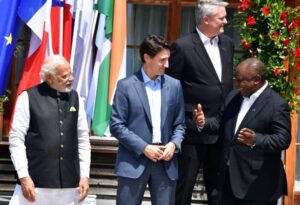
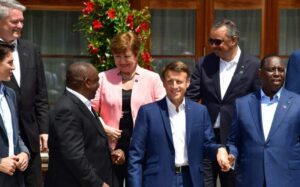
Together with leaders of G7 countries, invited Heads of State and Government from Argentina, India, Indonesia, as well as the African Union Chairperson, European Union President and leaders of other International Organisations, President Ramaphosa participated in working sessions where Climate, Energy, Health as well Global Food Security and Gender Equality were discussed.

In these discussions, President Ramaphosa highlighted concerns regarding the absence of equity and transparency in the availability of vaccines for African countries, which has been sharply exposed by the COVID-19 pandemic. He urged the international community to work together towards a new international treaty for pandemic preparedness and response.

In this regard, President Ramaphosa pointed out that the financing gap for the ACT Accelerator, which currently stands at more than USD 16 billion for 2022 needs to be narrowed , among other issues.

On energy, President Ramaphosa cautioned against adverse ramifications of the proposed revision of the European Union Renewable Energy Directive, which is intended to accelerate green hydrogen investments.

The President highlighted that the proposed regulations have the potential to limit the ability of enterprises to supply key export industries with sustainable energy solutions and impact their global competitiveness.

“As we pursue a just transition, developing economies need development space to address high levels of inequality, unemployment, under-development and the economic impact of the COVID-19 pandemic.

Abrupt disinvestment from fossil fuels by international financiers poses a great risk to Africa because of the impact on jobs, stranded assets, national economies, energy and food security,” said President Ramaphosa.

President Ramaphosa urged that all climate related actions should find expression within the context of both the right to development and a just transition. He emphasised the need for a just transition that is well resourced to enable the move to a low carbon economy that is phased and planned. “A transition that catalyses new economic opportunities, while protecting affected workers and communities”, the President said.

To a greater extent, the President expressed that South Africa is pleased with the progress that has been made in advancing the long-term collaboration under the groundbreaking Just Energy Transition Partnership.

The President also indicated that South Africa looks forward to a successful COP27 that delivers far more significant outcomes with regards to means of implementation support, adaptation and addressing loss and damage caused by climate change.

President Ramaphosa discussed issues of food security, fuel supply and increasing local production on items that are currently in low supply due to the conflict in Ukraine.

He expressed the need to enhance the resilience of food and agricultural production systems through adaptation, reducing agricultural greenhouse gas emissions and safeguarding national food security.

He then further made a special proposal that developing countries on the African continent, working together with the G7 countries, should be self-reliant in the production of fertilizers to ensure food security.

President Ramaphosa reiterated South Africa’s commitment to working with the international community, including the G7 countries, in the collective quest to end global hunger.

“We also remain committed to forging the necessary partnerships with business, academia, the scientific community and our development partners to build agricultural resilience and increase production and thereby lift millions out of dire poverty. This includes the urgent consideration and support to the proposal of capacitating the African continent to be self sufficient on the production of fertilisers to enhance food security ,” said President Ramaphosa.

Furthermore, the President shared South Africa’s commitments and interventions on advancing Gender Equality, mentioning the public employment programme in which 62 per cent of participants are women. As well as the promotion of women’s financial inclusion through a national policy that calls for 40 per cent of all public procurement to go to women-owned businesses and South Africa’s successful chairing of the 66th session of the Commission on the Status of Women.

On the margins of the Summit, the President met with several Heads of State and Government, including the Prime Minister of Japan and the German Chancellor.

He also met the Prime Minister of India, H.E Narendra Modi. The leaders discussed cooperation between the two countries in the fight against the Covid-19 pandemic which resulted in the World Trade Organisation’s acceptance of the TRIPS Waiver. They also discussed the enhancement of trade relations and commitment in multilateralism and BRICS cooperation.

President Ramaphosa also met Prime Minister of the United Kingdom, H.E Boris Johnson.
The leaders discussed their commitment to the speedy resolution of the Russsia-Ukraine conflict and further enhancement of bilateral trade relations. They also discussed opportunities in Green Hydrogen and Fuel Cells.

He further had discussions with the African Union Chairperson, President Macky Sall of Senegal, who shared a report from his his recent trip to Russia.