2ND ANTALYA DIPLOMACY FORUM, 11 – 13 MARCH 2022

12 March 2022

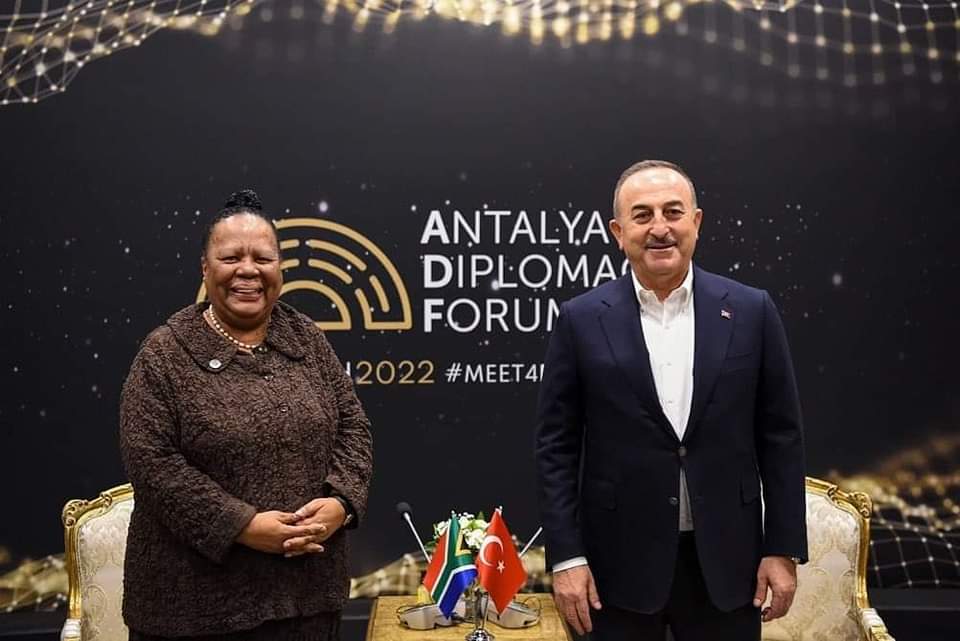
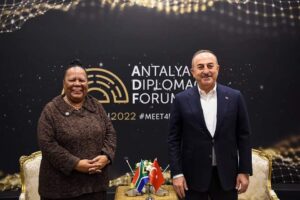
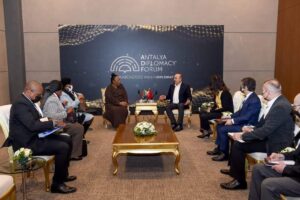
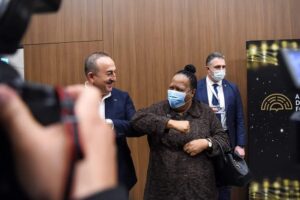
International Relations and Cooperation Minister, Dr. Naledi Pandor attended  the 2nd Antalya Diplomacy Forum in Turkey where she  participated in the Antalya Diplomacy Forum panel discussion on Multilateralism.

Minister, Dr. Naledi Pandor also had a bilateral meeting with her counter part the Turkish Foreign Minister, Mr. Mevlut Cavusoglu.

“Antalya Diplomacy Forum” is a high-level gathering of professionals who deal with diplomacy such as political leaders, diplomats, opinion makers or academics. It presents an excellent platform for regional and global actors from the spheres of diplomacy, policy, and business to exchange ideas and address international challenges.

Diplomacy remains the core method of communication among leaders and states. There is a whole set of other structural and systemic changes in the international environment that the diplomacy profession should respond to.
With the participation of more than 2000 guests comprising Heads of State and Governments, Ministers of Foreign Affairs and high-level representatives of the International Organizations, the first Antalya Diplomacy Forum (ADF) provided and fruitful communications on global and regional issues among the representatives of politics, science, media and business. ADF has become the first conference held with physical participation and remarkable attendance in post- pandemic period and was noted as an important event in the field of foreign policy and diplomacy.

2nd Antalya Diplomacy Forum, hosted by Foreign Minister Mevlüt Çavuşoğlu, was held in Antalya with the theme ‘’Recoding Diplomacy’’ under the auspices of President Recep Tayyip Erdoğan between 11-13 March 2022.

Foreign Minister Mevlüt Çavuşoğlu made the inauguration speech and stated that Antalya Diplomacy Forum provided an intellectual environment not only for Turkish diplomacy, but also for regional and world diplomacy

Minister Çavuşoğlu emphasized that the motto of the Forum “Think Together, Act Together”, brought together participants from 75 countries, mainly 17 Heads of State and Government, 80 Ministers, 39 International Organization representatives.

Minister Çavuşoğlu added that this year’s theme of the Antalya Diplomacy Forum had been determined as “Recoding Diplomacy” and that the need for a new evaluation, validation, reinforcement, invention and restructuring in diplomacy, that is, recoding, could not be postponed any longer.

Minister Çavuşoğlu underlined that Antalya Diplomacy Forum was one of the lasting gifts to the world of the Turkish Foreign Ministry, of which we would celebrate its 500th Anniversary next year.

#Multlilateralism.
#2ndantalyadiplomacyforum
#antalya

HAPPY INDEPENDENCE TO MAURITIUS🇲🇺

12 March 2022

National Day in Mauritius is on March 12th. National Day in Mauritius is a public holiday that is celebrated annually on March 12th.

Known as Independence and Republic Day, this holiday is the national day of Mauritius and it marks two key events in the recent history of the country that both took place on March 12th; independence from Britain in 1968 and becoming a republic in 1992.

Diplomatic relations between South Africa & the Republic of Mauritius were established in 1994 upon South Africa’s return to the Commonwealth, relations have been conducted at the level of High Commission.

#Happyindependencedaymauritius
#Happynationaldaymauritius

DEPARTMENT OF INTERNATIONAL RELATIONS AND COOPERATION COMMUNITY OUTREACH PROGRAMME

11 March 2022

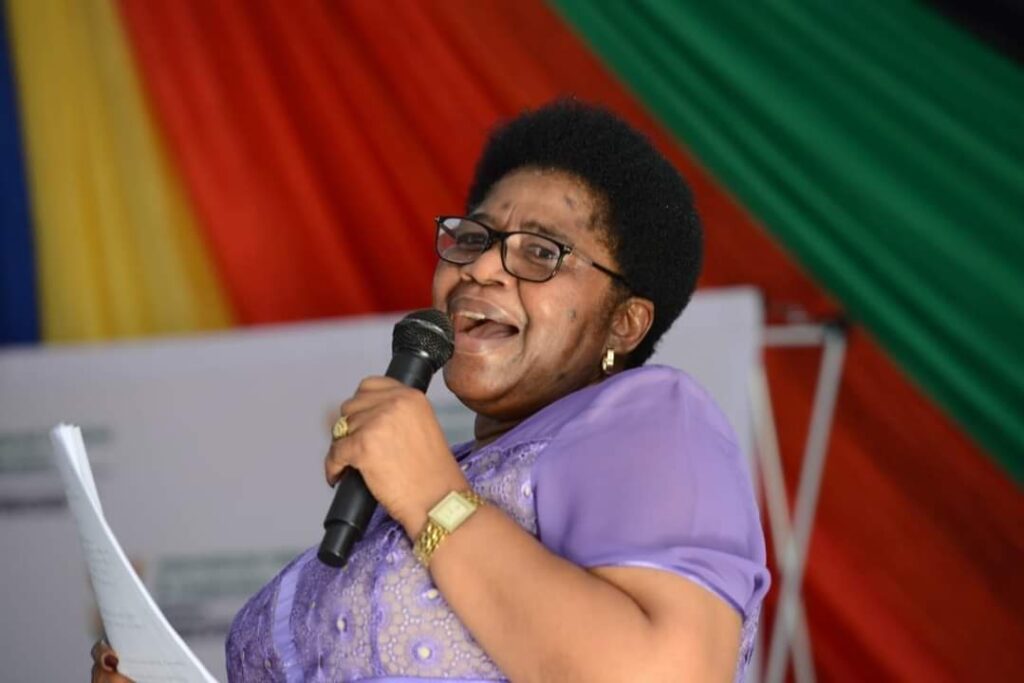
Deputy Minister of International Relations and Cooperation Ms Candith Mashego-Dlamini visited Mookgopong in Limpopo for a Community Outreach Programme, under the theme: Fighting Gender-Based Violence and Femicide in the era of COVID19.

The purpose of this programme was to support the awareness about socio-economic challenges facing women in that area during this difficult period.

Mookgophong is situated in the Waterberg District, Limpopo.  The main minerals available in this area are platinum and tin. Despite its beautiful geographical area, communities in and around are living under severe socioeconomic challenges.

These challenges are characterised by unemployment, drug and substances abuse such as nyaope etc, gender-based violence. In addressing these challenges, Government has a number of appropriate instruments and mechanisms.

For example, to combat drug and substance abuse, the National Drug Master Plan (NDMP) 2013-2017 is in place. It was drafted in accordance with the stipulations of the Prevention of and Treatment for Substance Abuse Act (No 70 of 2008).

For combating GBV, the National Strategy Plan (NSP) on Gender Based Violence and Femicide (GBV& F) is in place. It is complemented by the National Action Plan on Women, Peace and Security.

With the advent of the COVID19 pandemic, South Africa experienced an exponential increase in forms of violence such as gruesome killings of women, girls and members of the LGBTIQ+ community.

All of these challenges form the basis of engagement in the dialogue that the Deputy Minister Mashego-Dlamini is holding with young people in Mookgophong today,

#DIRCOOutreachProgramme
📸 Jacoline Schoonees (DIRCO)

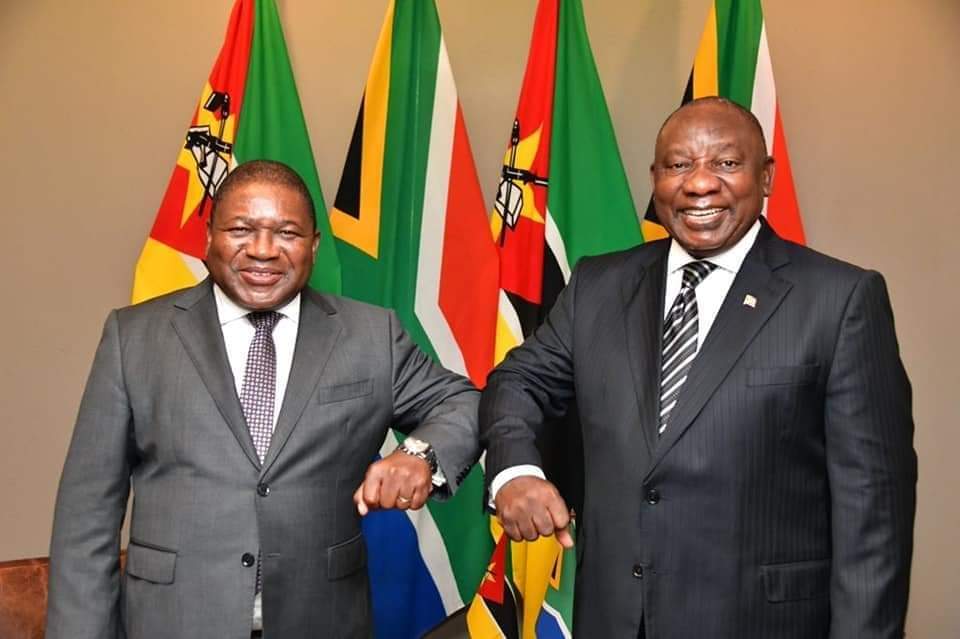
SOUTH AFRICA, MOZAMBIQUE COMMIT TO CONTINUED BILATERAL COOPERATION

11 March 2022

President Cyril Ramaphosa says as the world strives to emerge from the economic devastation of the COVID-19 pandemic, neighbouring countries like Mozambique and South Africa must continue to deepen and strengthen the already existing ties between them.

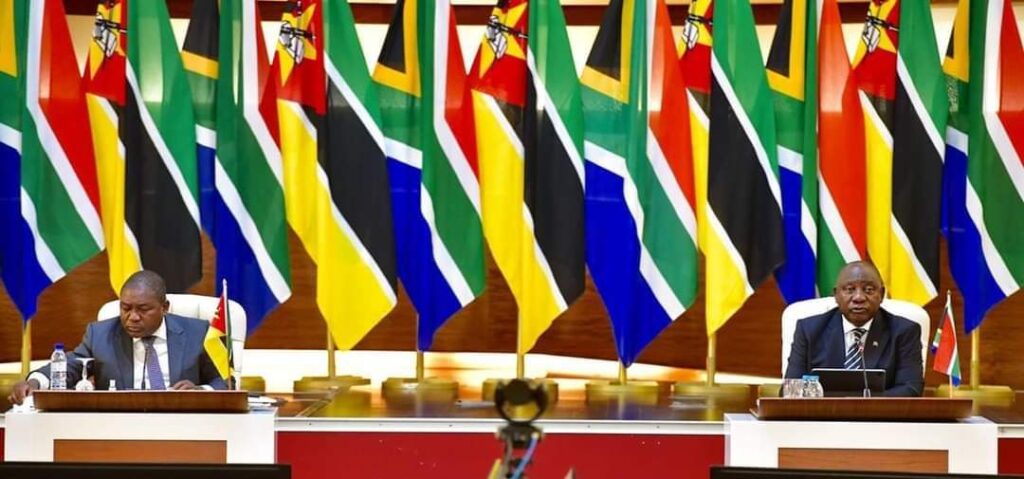
The President was speaking at a Plenary Session of the third South Africa-Mozambique Bi-National Commission (BNC) held in Pretoria.

The commission promotes cooperation between the two countries and encompasses committees in politics and diplomacy, defence and security, the economy and social development.

“Our two countries share a common view on issues of peace, stability, economic development, regional and continental integration.

“We are both undertaking programmes to advance youth development, women’s empowerment, poverty alleviation and job creation.

“These are some of the concrete steps we are taking to realise the vision of the AU’s Agenda 2063 and to improve the lives of our people,” President Ramaphosa said on Friday.

Energy

President Ramaphosa told the commission that South Africa is expanding cooperation with Mozambique, particularly in the energy sector.

Currently, the country supplies South Africa with at least 1 000MW of electricity per day from the Cahora Bassa Hydroelectric power station.

“Mozambique remains one of South Africa’s top trading partners in the region, and there are several opportunities for expansion. South Africa is keen, in particular, to expand cooperation in the energy sector.

“Mozambique is endowed with significant volumes of natural gas. This can benefit not only the people of Mozambique and South Africa, but also the rest of the SADC region.

“Energy security is vital to economic growth in our respective countries, and we look forward to significant progress towards securing and sustaining our energy needs,” the President said.

Security and international relations

President Ramaphosa recommitted South Africa’s support – through the Southern African Development Community (SADC) – for Mozambique in the fight against terrorism-backed conflict and insurgency in Mozambique’s Cabo Delgado region.

“We have weathered many difficulties in the past and through our resilience, we have emerged stronger. The crisis you are confronting in Cabo Delgado is no different.

“We will face it together with the same determination, certain that the forces of democracy and peace will be victorious,” he said.

The President revealed that on the international stage, South Africa will back Mozambique’s bid to have a non-permanent seat on the United Nations Security Council.

“Our countries share similar views on the need to reform the United Nations Security Council, to make it an organ that is representative, where the African continent can have a voice.

“South Africa fully supports Mozambique’s candidature for a non-permanent seat at the UN Security Council. Together with South Africa’s tenure in the AU Peace and Security Council, this will provide an opportunity for our countries to further cement cooperation between the two councils, especially in the area of financing peace support operations,” he said. SAnews.gov.za
#SAMozambiquerelations #Mozambiquesouthafrica #SAMozambique

JOINT COMMUNIQUE ON THE OCCASION OF A WORKING VISIT BY HIS EXCELLENCY, MR. FILIPE JACINTO NYUSI, PRESIDENT OF THE REPUBLIC OF MOZAMBIQUE, TO THE REPUBLIC OF SOUTH AFRICA

11 March 2022

1. At the invitation of His Excellency Matamela Cyril Ramaphosa, President of the Republic of South Africa, His Excellency Filipe Jacinto Nyusi, President of the Republic of Mozambique, paid a Working Visit to South Africa on 11 March 2022 and Co-Chaired the 3rd Session of the Bi-National Commission between the two countries.

2. Both Heads of State were accompanied by delegations of Ministers and Senior Government Officials.

3. The two Heads of State held substantive and fruitful discussions on a wide range of issues of common interest across the bilateral, regional, and international spectrum.

4. H.E. President Matamela Cyril Ramaphosa and H.E. President Filipe Jacinto Nyusi expressed appreciation for the excellent ties of friendship, solidarity and cooperation which exist between their peoples and their two countries, and reaffirmed their willingness to further deepen them.

5. In this regard, H.E. President Ramaphosa and H.E. President Nyusi reviewed the work and progress of the bilateral cooperation since the 2nd Session of the South Africa – Mozambique Bi-National Commission (BNC), which was held from 23 to 25 August 2017 in Maputo, Mozambique.

6. The two Heads of State agreed on an implementation plan which is aimed at ensuring that there are strict timeframes with regard to the execution and implementation of the commitments and decisions taken during the BNC.

7. The two Heads of State reiterated the importance of ongoing economic cooperation between the two countries. They emphasised the need to intensify collaboration on areas that hold promise for immediate impact and benefit.

8. They also expressed the necessity of strengthening the African Union and subregional organisations in Africa with a view to promoting peace, security, stability and sustainable development.

9. The two Heads of State raised concern on the increased number of unconstitutional change of governments in the African continent including the Republics of Mali, Burkina Faso and Guinea, while the security situation in the Sahel region, Eastern DRC and Northern parts of Cabo Delgado Province of Mozambique remain of concern.

10. The two Heads of State emphasised the importance of the values of PanAfricanism and solidarity. They expressed concern over the manner in which the observer status of Israel in the African Union was granted by the African Union Commission. In this regard, they called upon members of the African Union to safeguard the values of the African Union for it to remain true to the intent of its founders.

11. The two Heads of State urged the United Nations Security Council to expedite the process towards the realisation of the right to selfdetermination of the people of Saharawi.

12. The two Heads of State further reconfirmed the correctness of the position of their countries’ vote in the United Nations General Assembly on Russia’s incursion into Ukraine on 2 March 2022. The two Presidents noted that the decision to abstain was based on the conviction that the resolution was not grounded on a balanced assessment of the underlying causes of the conflict. The Presidents called for a balanced approach to the conflict through dialogue that will address the security concerns of both parties to the conflict.

The two Presidents called upon the United Nations Security Council to mandate the United Nations Secretary General to initiate a dialogue between Russia and Ukraine.

The two Presidents also expressed concern at the increasing humanitarian crisis in Ukraine.

13. H.E. President Ramaphosa and H.E. President Nyusi reaffirmed the urgency to reform the United Nations Security Council.

14. President Ramaphosa reiterated South Africa’s support for the candidature of Mozambique to serve on the United Nations Security Council (UNSC) as a nonpermanent member for the year 2022/23.

15. H.E. President Nyusi expressed his gratitude for the warm reception and hospitality accorded to him and his delegation and further extended an invitation to H.E. President Ramaphosa to Maputo, Mozambique for the fourth Bi-National Commission in 2023 at a date to be mutually determined through diplomatic channels.

PHOTOS: DIRCO

PRESIDENT CYRIL RAMAPHOSA RECEIVES HIS EXCELLENCY FILlPE NYUSI, PRESIDENT OF THE REPUBLIC OF MOZAMBIQUE

11 March 2022

President Nyusi attended the 3rd Session of the Bi-National Commission of Cooperation (BNC) between the Republic of South Africa and the Republic of Mozambique.

South Africa and Mozambique share strong historical ties arising from the solidarity formed during the two nations’ struggles against colonialism and apartheid.

Beginning in 1997, bilateral relations between South Africa and Mozambique were conducted at the level of the Heads of State Economic Bilateral Forum (HOSEB).

However, on 13 December 2011, the two countries signed an agreement on the establishment of Bi-National Commission of Cooperation (BNC), thus elevating the status of the relations to highest level.

The BNC comprises a Political and Diplomatic Committee; Defence and Security Committee; Economic Committee, and Social Committee which promote cooperation in these areas.

Since the establishment of the BNC in 2011, cooperation has resulted in the signing of a range of sectoral agreements and memoranda of understanding.

The BNC is preceded by meetings of senior officials and Ministers.

The two Heads of State also shared views on regional, continental and global issues of mutual interest, particularly peace, security and economic development matters.

The Commission evaluated progress on all outstanding projects and the implementation of commitments of the 2nd BNC, and will reaffirm the bilateral relations and enhance cooperation between South Africa and its eastern neighbour.

In his opening remarks during the Plenary Session of the 3rd South Africa-Mozambique Bi-National Commission, OR Tambo Building, Pretoria, President Cyril Ramaphosa said
it was an honour and a privilege to receive his counter part as guest.

We meet at a time when our two countries – and all the countries of the world – are striving to recover from the COVID-19 pandemic.

Had it not been for the pandemic, this Bi-National Commission would have taken place some time ago.
It is encouraging to see how the relations between our two countries have expanded and deepened at both a political and economic level.

As neighbours, we must recognise and nurture our economic interdependence.
Mozambique remains one of South Africa’s top trading partners in the region, and there are several opportunities for expansion.

South Africa is keen, in particular, to expand cooperation in the energy sector.

Mozambique is endowed with significant volumes of natural gas.

This can benefit not only the people of Mozambique and South Africa, but also the rest of the SADC region.

Energy security is vital to economic growth in our respective countries, and we look forward to significant progress towards securing and sustaining our energy needs.

Our two countries share a common view on issues of peace, stability, economic development, regional and continental integration.

We are both undertaking programmes to advance youth development, women’s empowerment, poverty alleviation and job creation.

These are some of the concrete steps we are taking to realise the vision of the AU’s Agenda 2063 and to improve the lives of our people.

We have weathered many difficulties in the past, and through our resilience we have emerged stronger.

The crisis you are confronting in Cabo Delgado is no different.

We will face it together, with the same determination, certain that the forces of democracy and peace will be victorious.

Our countries share similar views on the need to reform the United Nations Security Council, to make it an organ that is representative and where the African continent can have a voice.

South Africa fully supports Mozambique’s candidature for a non-permanent seat at the UN Security Council.

Together with South Africa’s tenure in the AU Peace and Security Council, this will provide an opportunity for our countries to further cement cooperation between the two Councils, especially in the area of financing peace support operations.

We are confident that our deliberations today will afford us an opportunity to address issues that will further enhance our bilateral cooperation and forge closer working ties.

Once again, Mr President, may I express my sincere appreciation for agreeing to my invitation and would like to assure you of South Africa’s commitment to our shared future.

PHOTOS: The Presidency

DEPUTY MINISTER ALVIN BOTES VISITS  OLOF PALME CENTER IN SWEDEN 🇸🇪

11 March 2022

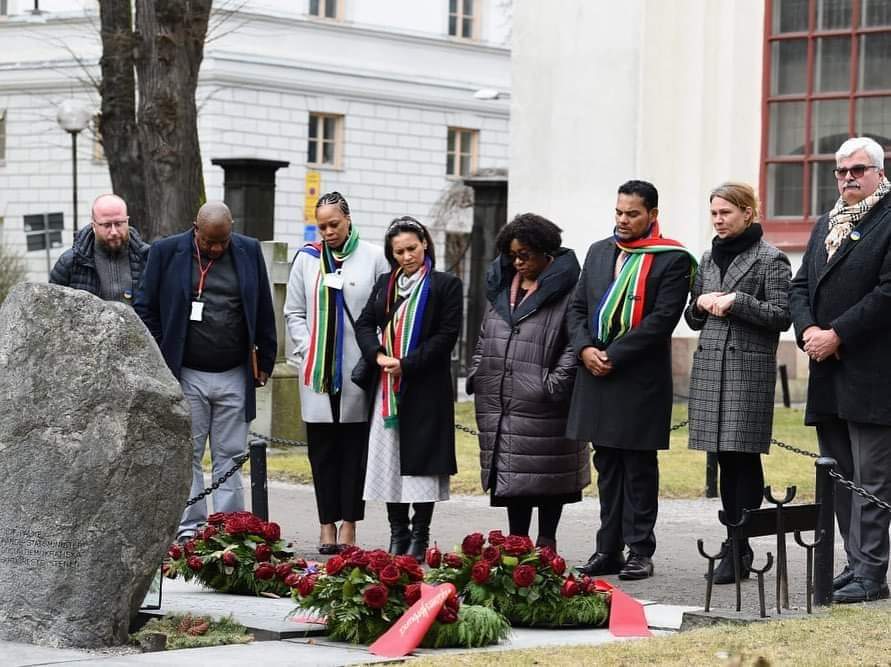
International Relations and Cooperation Deputy Minister Alvin Botes visited Sweden 🇸🇪 at the invitation of the Swedish State Secretary in the Ministry of Foreign Affairs, Ms. Karin Wallensteen.

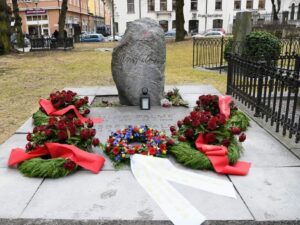
The Deputy Minister visited the Olof Palme Center for a wreath-laying ceremony and to hold discussions with Ms. Anna Sundström, Secretary-General of the Centre. Deputy Minister Botes laid a wreath on the former Swedish Prime Minister’s gravesite in Stockholm, Sweden.

Sven Olof Joachim Palme was a Swedish politician and statesman. Palme served as chairman of the Social Democratic party from 1969 and prime minister of Sweden from 1969 to 1976 and again from 1982 to 1986, when he was assassinated on February.

Mr. Palme left office after failing to form a government after the 1976 general election, which ended 40 years of unbroken rule by the. While Leader of the Opposition – Social Democratic Party, he served as special mediator of the United Nations in the Iran–Iraq War, and was President of the Nordic Council in 1979.

He faced a second defeat in 1979, but he returned as Prime Minister after electoral victories in 1982 and 1985, and served until his death.

Palme was a pivotal figure domestically as well as in international politics from the 1960s onward. He was steadfast in his non-alignment policy towards the superpowers, accompanied by support for numerous liberation movements following decolonisation including, most controversially, economic and vocal support for a number of Third World governments.

The assassination of Olof Palme on 28 February 1986 was the first murder of a national leader in Sweden since Gustav III in 1792, and had a great impact across Scandinavia.
Photos: DIRCO

#saswedenrelations
#SAinSweden
#SASwedenRelations

SOUTH AFRICA – MOZAMBIQUE BI-NATIONAL COMMISSION

11 March 2022

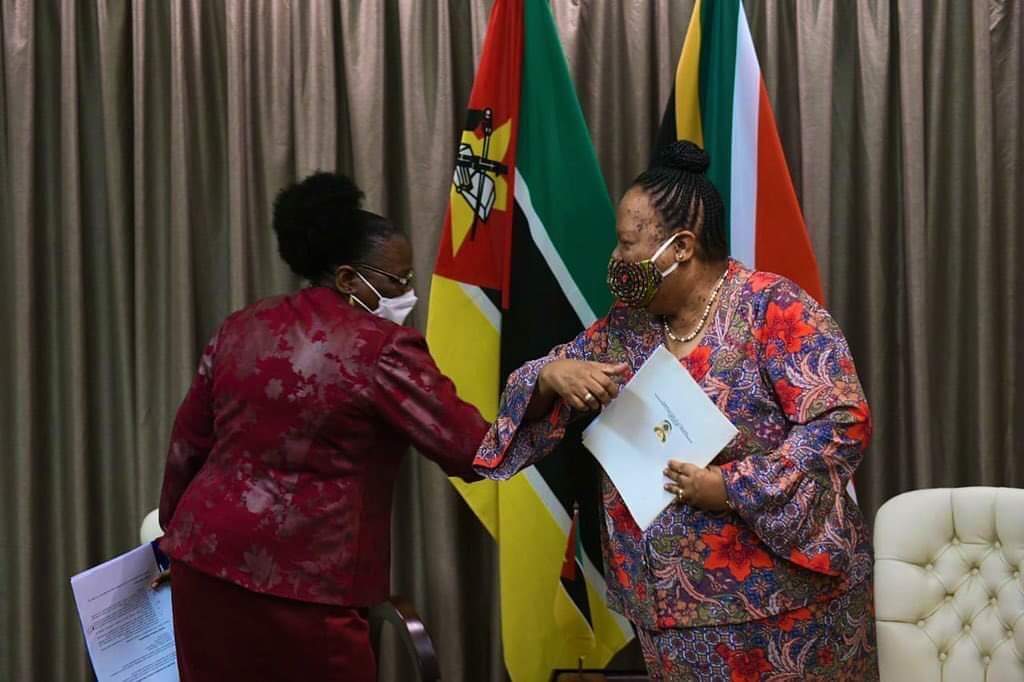
International Relations Minister, Dr. Naledi Pandor together with her Mozambican counterpart, Minister Verónica Macamo Dhlovo co-chaired the Ministerial Segment of the South Africa-Mozambique Bi-National Commission (BNC), at OR Tambo Building on 10 March 2022.

This third SA Mozambique BNC took place from 10-11 March 2022, since the advent of democracy in South Africa 🇿🇦 in 1994 and peace in Mozambique 🇲🇿, the two countries have strengthened their relations, especially the area of economic cooperation and investment.

This economic cooperation resulted in the implementation of multi-billion rand economic projects, inter alia, the Maputo Development Corridor and the Trilateral Spatial Development Initiative with Swaziland.

In 1997, SouthAfrica & Mozambique agreed to elevate Bilateral Relations, resulting in the conversion of the Joint Permanent Commission for Cooperation (JPC) chaired at Ministerial level, to a Bi-National Commission of Cooperation (BNC) chaired at Presidential level.

Furthermore, the SA Mozambique BNC has enabled the two countries to further explore new areas of cooperation.

#SAMozambiqueBNC
#MozambiqueInSA
#BetterAfricaBetterWorld

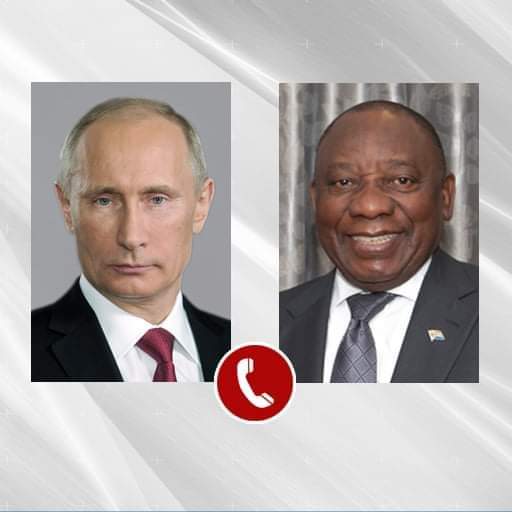
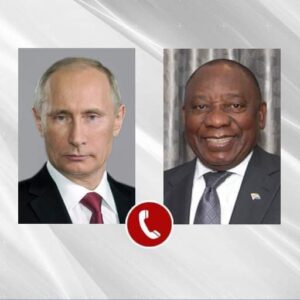
PRESIDENT OF RUSSIA VLADIMIR PUTIN HAD A TELEPHONE CONVERSATION WITH PRESIDENT OF THE REPUBLIC OF SOUTH AFRICA CYRIL RAMAPHOSA


11 March 2022
President of Russia Vladimir Putin had a telephone conversation with President of the Republic of South Africa Cyril Ramaphosa at the South African side’s initiative.

The leaders exchanged congratulations on the occasion of the 30th anniversary of diplomatic relations between Russia and South Africa and reaffirmed their commitment to further develop the bilateral strategic partnership, noting, in particular, their readiness to expand trade, economic and humanitarian cooperation, as well as joint COVID-19 response efforts. The presidents underscored the importance of continuing interaction within the BRICS framework and at other international venues.

At the request of President Cyril Ramaphosa, Vladimir Putin spoke about the reasons for and goals of the special military operation to protect Donbass. He also informed the South African leader about the situation regarding talks with representatives of the Ukrainian authorities. The President of South Africa supported the ongoing political and diplomatic efforts.

Vladimir Putin and Cyril Ramaphosa agreed to continue their contacts.

#russia #southafrica #putin #ramaphosa

KAZAKHSTAN AND AZERBAIJAN TO INTENSIFY CARGO TRANSPORTATION ALONG TRANS-CASPIAN ROUTE

BY STAFF REPORT, BUSINESS 10 MARCH 2022

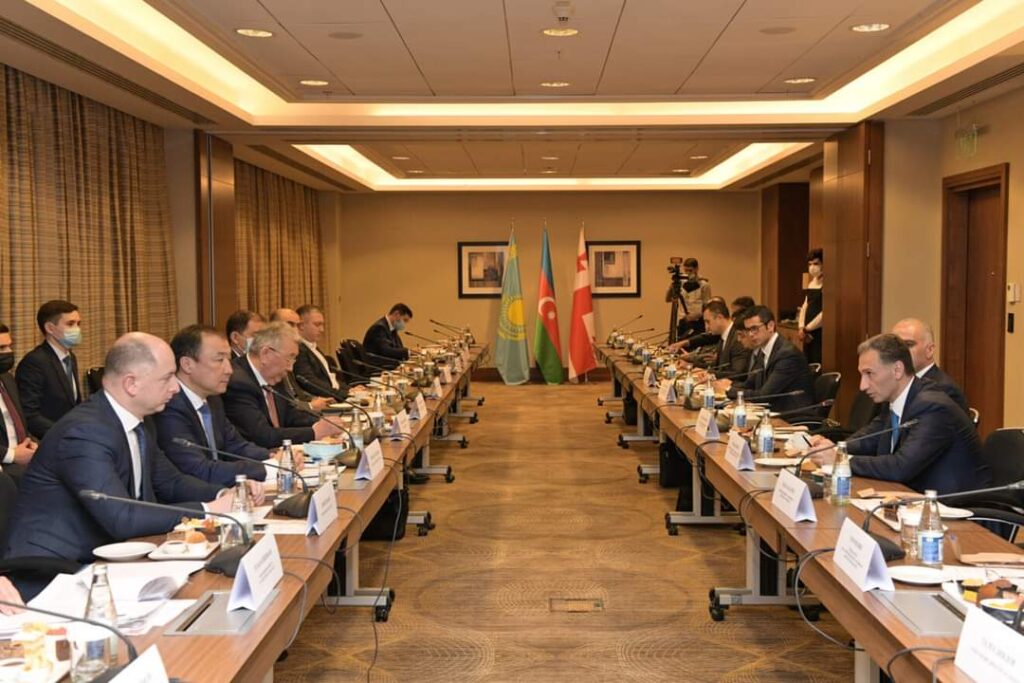
NUR-SULTAN – Kazakhstan and Azerbaijan agreed to establish a joint venture to develop the Trans-Caspian international transport route. This was announced during the meeting between the Chair of the Board of Samruk Kazyna Wealth Fund Almassadam Satkaliev and Minister of Economy of Azerbaijan Mikayil Jabbarov on March 9 in Baku.

“The new joint venture will contribute to the tariff setting and cargo declaration, ensure unified IT solutions and consolidate transit cargo on this route. The Kazakh delegation noted the importance of reorienting export cargo flows from Kazakhstan to Europe along the trans-Caspian route. The parties also noted a potential for cooperation in the field of oil transportation through Azerbaijan, which could become an alternative route,” reads the release.

Satkaliev also discussed fostering cooperation in transportation with the Minister of Digital Development and Transport of Azerbaijan Rashad Nabiyev during his visit.

Nabiyev noted that transport links between Azerbaijan and Kazakhstan are developing on the basis of positive trends, reported the minister’s press office. The unification of tariffs along the corridor, simplification and the harmonization of regulatory and customs procedures for transit cargo are important.

The officials noted that due to the recent events in the region and the geopolitical situation, demand will exceed supply, and this will affect the consumer directly. The cost of delivery and the waiting period will increase. In connection to these factors, a new framework for cooperation and the establishment of transit and transport communications is necessary.

The geographical features of Azerbaijan and Kazakhstan and their location between the largest economic centers of Europe and Asia create conditions for an efficient and well-established transport network between the countries. The construction of the Baku-Tbilisi-Kars railway line will give an additional impetus to the route development. This will reduce the delivery time from China to Turkey through Kazakhstan to 12 days.

The expected forecast volumes of cargo transportation along the Trans-Caspian route, the capacity of the Caspian Sea railways, the conditions for the reorientation of additional cargo flows, and the creation of the so-called Middle Corridor were on the agenda during the meeting.

Kazakhstan and Azerbaijan also plan to increase the number of flights, as reported by the Kazakh Ministry of Industry and Infrastructural Development on March 10.

Photo credit: Press service of the Ministry of Economy of Azerbaijan.
ASTANA