MOZAMBIQUE: NEW PM WANTS TO BOOST OUTPUT, ENSURE FINANCIAL INDEPENDENCE

04 Mar 2022

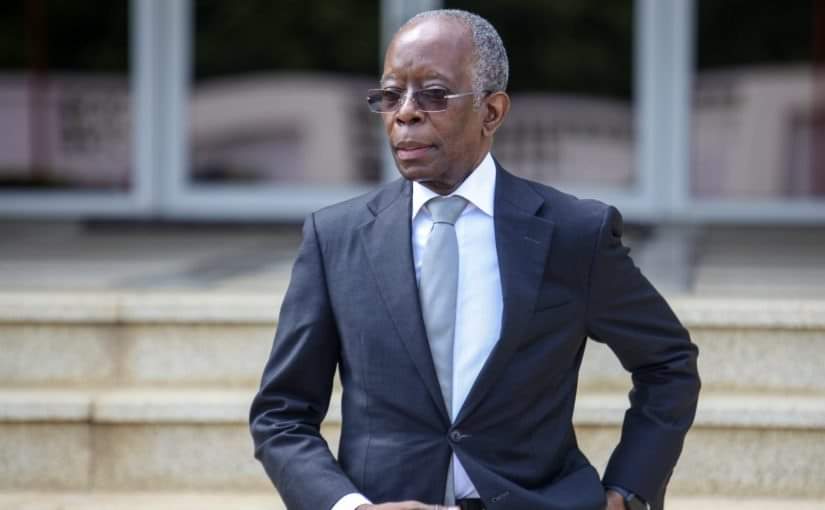
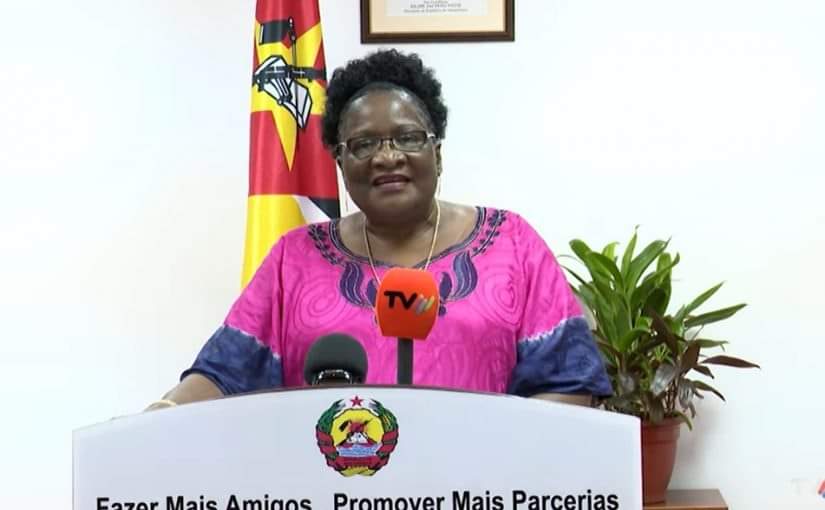
Mozambique’s new prime minister, Adriano Maleiane, on Friday called for a boost to production to ensure the country’s “financial independence” and said that containing spending was fundamental.

“We cannot spend more than we have because if we do that, we will have problems,” said Maleiane, speaking to the media moments after the swearing-in ceremony at the Presidency in Maputo.

For the new Mozambican prime minister, increasing exports is among the most appropriate solutions to improve the country’s economy, but this option requires increasing production.

“When we produce, we can collect more taxes. Today our revenues cover about 75% or 77% [of needs]. We have to move towards a situation where we at least manage to have revenues for what we are building,” he said.

Adriano Maleiane, who until the date of his appointment as prime minister was minister of economy and finance, reiterated that negotiations are “quite advanced” for a new programme with the International Monetary Fund, one of the partners that suspended direct aid to Mozambique in 2016 following the discovery of the scandal of the state’s hidden debts.

“Right now, we are in the phase of quantifying the targets and discussing the structural measures that will be in the programme. The programme is important for the country,” said the new Mozambican prime minister, stressing that a new programme is vital to improve Mozambique’s image in the international financial market.

In February, an IMF source told Lusa that Mozambique could have a new programme by the end of June if the recent meetings were successful.

Adriano Maleiane replaces Carlos Agostinho do Rosário, who had been appointed to the post in 2015 when Mozambican head of state Filipe Nyusi formed his first term government after winning the 2014 general elections.

Photo: Lusa
Source: Lusa

MOZAMBIQUE: PRESIDENT SWEARS IN NEW PRIME MINISTER AND MINISTERS

04 Mar 2022

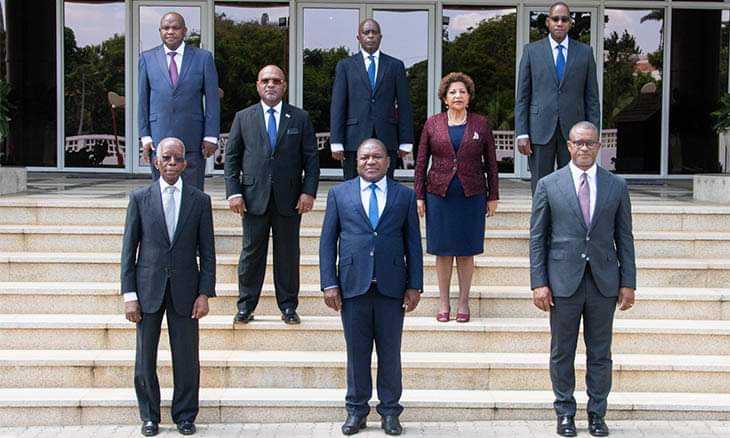
Mozambican President Filipe Nyusi swore in the new prime minister, Adriano Maleiane, and other members government as part of the reshuffle.

The head of state on Thursday appointed former economy and finance minister Adriano Maleiane as the new prime minister, with the state’s accounts being handled by Max Tonela – who in turn is leaving the ministry of mineral resources and energy to be led by Carlos Zacarias, until now president of the National Petroleum Institute (INP).

Carlos Mesquita transits from industry and commerce to minister of public works, housing and water resources.

Maleiane, Tonela and Mesquita have been with President Nyusi’s cabinet since (2015-2020).

Also taking office was Amilcar Tivane as deputy minister of Economy and Finance, Silvino Moreno as minister of Industry and Trade and Lídia Cardoso as the new minister of Sea, Inland Waters and Fisheries.

On Wednesday, Nyusi dismissed six of his 18 ministers and on Thursday morning announced the dismissal of the prime minister, Carlos Agostinho do Rosário.

Photo: O País
Source: Luso

UKRAINE: MOZAMBIQUE’S GOVT ISSUED STATEMENT CALLING FOR “CESSATION OF HOSTILITIES” AND “CONSTRUCTIVE DIALOGUE”

03 Mar 2022

The Mozambican government on Wednesday issued a statement advocating the “cessation of hostilities” in the conflict between Moscow and Kyiv, and the relaunch of “constructive dialogue”, adding that it is in contact with Mozambicans who fled Ukraine because of the Russian invasion.

“We call for the exercise of moderation, the protection of human life, the cessation of hostilities and for the re-launch of a constructive dialogue between the parties involved, with a view to a lasting political solution,” reads a press release from the Ministry of Foreign Affairs and Cooperation, the first official pronouncement from the Mozambican government on the matter.

For the Ministry of Foreign Affairs, the solution to the conflict must be based on the “cardinal principles of the Charter of the United Nations, in order to guarantee the peaceful coexistence of the parties to the conflict”, or the hostilities could have “harmful consequences” for Europe and the world.

The Maputo government also reiterates that it is in contact with the Mozambicans who fled Ukraine because of the conflict, a group mainly composed of students now being supported by Mozambicans living in neighbouring countries.

“We currently have 15 Mozambican students in Ukraine. Of this number, four are in Poland, five in Hungary, two in Romania, one in Moldova, two on their way to Slovakia and one is already back in Mozambique,” the ministry details, although the number of students in Ukraine differs from that announced yesterday by the honorary consul of Ukraine in Maputo, Abílio Soeiro, who told Lusa that there were 18 students there.

At the United Nations General Assembly, also this Wednesday, five countries voted against the resolution demanding an end to the Russian invasion. Mozambique, along with Angola and 33 other countries, abstained.

The Mozambique Liberation Front (Frelimo, party in power since independence) was an ally of Moscow during the time of the former USSR, and received military support during the fight against Portuguese colonialism and economic aid after independence in 1975

MINISTER, DR. NALEDI PANDOR MET WITH THE HIGH COMMISSIONER OF THE UNITED NATIONS HUMAN RIGHTS COUNCIL (UNHRC) MS. MICHELLE BACHELE

3 March 2022

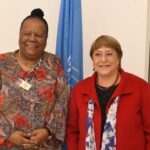
International Relations and Cooperation Minister, Dr. Naledi Pandor met with the High Commissioner of the United Nations Human Rights Council (UNHRC) Ms. Michelle Bachelet.

H.E Michelle Bachelet assumed her office and functions as the United Nations High Commissioner for Human Rights in September 2018. She is a former resident of Chile, the first female to lead the South American country.

Ms Bachelet previously promoted the rights of all, particularly the most vulnerable groups. Among her many achievements, is the creation of the National Institute for Human Rights and the Museum of Memory and Human Rights. Furthermore, she established the Ministry of Women and Gender Equality.

Another notable achievement of Ms Bachelet in the #HumanRights sphere is the adoption of quotas to increase women’s political participation, and the approval of Civil Union Act legislation, granting rights to same sex couples and thus, advancing LGBT rights.

📸: Jacoline Schoonees (DIRCO)
#GenerationEquality

KAZAKHSTAN- SOUTH AFRICA CELEBRATES 30 YEARS OF DIPLOMATIC RELATIONS

3 March 2022

This year Kazakhstan and South Africa celebrates 30 years of Diplomatic Relations. South Africa and Kazakhstan established full diplomatic
relations on 5 March 1992.

The South African Embassy was first established in December 2003 in Almaty; but in 2008, the Embassy relocated to Astana; there after it relocated to Nur-Sultan in 2019.

On Thursday, 3 March 2022, Kazakhstan Embassy in Pretoria hosted the Award Ceremony of the Essay Competition for South African schools
dedicated to the legacy of Great Sufi Leader and Ahmed Yassawi, in celebration of the up coming 30th Anniversary of Diplomatic Relations between Kazakhstan and South Africa on 5th March 2022.

The Government of the Republic of South Africa was represented by the Guest of Honour Ms Sindiswa Mququ, Acting DDG of the Department of International Relations and Cooperation (DIRCO), and in her remarks Ms Sindiswa Mququ conveyed congratulatory message on behalf of the South African Government and noted the strong ties with Kazakhstan.

Heads of Missions, their Excellencies Ambassadors and High Commissioners, H.E. Mr Mubarak Saliom Ali AL Zakwani, Ambassador of Oman, Dean of the Arab Group, H.E. Mr Mohamad Nizan Bin Mohamad, High Commissioner of Malaysia, Deputy Dean of the Asian Group, H.E. Ms Mairin J. Moreno-Merida, Ambassador of Venezuela, Dean of the Latin American Group, H.E. Mr Arshad Omar Esmaeel, Ambassador of Iraq, Dean of the Turkic Speaking Group, H.E. Ms Ayşegül Kandaş, Ambassador of Turkey, Mr Yamin Jafarov, Chargé d’Affaires of Azerbaijan, also attended the Event with Special Guests Honourable Mr Sharif Pandor, CEO, Ikamva Investments Holdings, and Honourable Prof. Ndileka Mandela, CEO, Thembekile Mandela Foundation, Chair of the G-Global Africa, Sheikh Abdulkader Kurtha and Dr Asadullah Abdulkarimzada, on behalf of the AMKA Group.

Photo: Mr. Abdullaaziz, Director of the Johannesburg Yunus Emre, Heads of Missions, their Excellencies, Mr Yamin Jafarov, Chargé d’Affaires of Azerbaijan, H.E. Mr Arshad Omar Esmaeel, Ambassador of Iraq, Dean of the Turkic Speaking Group, H.E. Ms Ayşegül Kandaş, Ambassador of Turkey, H.E. Ms Mairin J. Moreno-Merida, Ambassador of Venezuela, Dean of the Latin American Group, Honourable Prof. Ndileka Mandela, CEO, Thembekile Mandela Foundation, Chair of the G-Global Africa, Ambassadors and High Commissioners, H.E. Mr Mubarak Saliom Ali Al-Zakwani, Ambassador of Oman, Mr Terry Govender, Department of International Relations and His Excellency Ambassador Kanat Tumysh of Kazakhstan

Photo: From Left His Excellency Ambassador Kanat Tumysh of Kazakhstan to South Africa and Hon. Prof. Ndileka Mandela, CEO of Thembekile Mandela Foundation and Chair of G-Global Africa

In his opening remarks His Excellency Ambassador Kanat Tumysh said on the 5th of March, we will celebrate the 30th Anniversary of diplomatic relations between Kazakhstan and South Africa; it will be our Pearl Jubilee.

Based on the modern history of our two states, that very date, when our diplomatic relations were officially established, is the beginning of the Kazakh-South African cooperation.

A milestone event in the development of bilateral relations was the opening of the Embassy of South Africa to the Republic of Kazakhstan in December 2003.

Since December 2016, H.E. Ms. Kiitumetsi Matthews has been the Ambassador of South Africa to Kazakhstan. On the other hand, the Embassy of the Republic of Kazakhstan in South Africa was opened in December 2013, and it is the only diplomatic mission of Kazakhstan in the vast region of Southern Africa. In July 2019, I was appointed as the Ambassador of Kazakhstan to South Africa.

Ambassador Kanat Tumysh lamented that the strength of Kazakh-South African political, economic, cultural and humanitarian relations aimed at strengthening interstate cooperation across the entire spectrum of ties.

Our countries have much in common. Both South Africa and Kazakhstan boast diverse populations with different ethnicities, religions, and traditions – a diversity that strengthens and enriches our countries.

I have personally experienced the depth (брэтс) of South Africa’s history and culture.

Likewise, I also always try to utilize opportunities to share the Kazakh culture with the people of South Africa.

Ambassador Tumysh stressed that Kazakhstan’s leadership’s interest to further build efforts to improve mechanisms of mutually beneficial cooperation.

In this vein, it is important also to promote cooperation in the mining industry, engineering, healthcare and agriculture, in particular, in the exchange of advanced technologies.

We have already agreed to strengthen economic partnership and have pledged to conclude the Enhanced Trade and Economic Cooperatio Agreement that seeks to give preference to Kazakh and South African companies to win goods and services contracts in both countries. In future, we will launch a bi national Business Forum as a vehicle through which our two countries can promote and advance economic and development goals that are beneficial to both countries. Our business leaders work together to create jobs and grow our economies. Both countries strive to build a genuinely attractive business environment for foreign companies.

We believe that together with South Africa we will work closely towards catalysing private financing to develop our economies.

We also share common values and a strong commitment to contribute jointly to the principles of multilateralism and UN pillars, having worked in particular, as non-permanent members of the UN Security Council. For instance, we work hand-in-hand to make Africa, Middle East and Asia inhospitable terrains for extremists and terrorists, freeing our planet from nuclear weapons and nuclear tests, advancing effective and sustainable primary healthcare for all, promoting empowerment of women and in many other spheres.

Our state also proposed the creation of a new geopolitical reality based on the establishment of direct dialogue among the United States, Russia,
China and the EU. Many of the troubles of the contemporary world lie in the lack of trust and dialogue.

We believe that such a reputable state as South Africa, being a full member of NAM and BRICS, as well as being an authoritative African leader, will be instrumental in the implementation of this agenda.

I look forward to being constantly in touch with the Government and people of South Africa in order to continue our tradition of partnership. For 30 years, since we established our diplomatic relations, these ties have grown steadily and smoothly. Even during some difficult times for our planet, we have worked together and accomplished much in pursuit of shared goals, most particularly to build a more just, more prosperous and safer world. This work rests on our shared commitment to maintain the peace and security, ensure sustainable development, as well as to promote humanitarianism.

As the relationship between our countries grows and develops, our shared values ensure that we will remain close said H.E. Ambassador Kanat Tumysh.

This year’s winners of the Essay Competition were:

1. Ms Sikhweza Ayabulela (Clarkebury, Eastern Cape, South Africa – Agricultural School);


2. Mr Farhan Karim (Tajikistan-South Africa – Al Ghazali College);

3. Ms Nuriya Alli (Pretoria, Gauteng, South Africa – Al Ghazali College).

#SAKazakhstanRelations
#30yearsofdiplomaticrelations
#Kazakhstan
#SouthAfrica

Images: The Diplomatic Informer Magazine SA

SOUTH AFRICA’S STATEMENT IN EXPLANATION OF VOTE ON UKRAINE IN THE UN GENERAL ASSEMBLY EMERGENCY SPECIAL SESSION

 2 March 2022

South Africa has voted to abstain.

Our position as expressed during the discussions of the Emergency Special Session over the last few days, is that South Africa remains deeply concerned by the escalation of the conflict in Ukraine and the regional and international socio-economic implications. We strongly urge all sides to uphold international law, including humanitarian law and human rights law, as well as the principles of the UN Charter, including sovereignty and territorial integrity.

The conflict involves two members of the United Nations in an armed conflict, which this organisation has at its foundation the responsibility to prevent. The United Nations, therefore, must take decisions and actions that will lead to a constructive outcome conducive to the creation of sustainable peace between the parties.

The resolution that we have considered today does not create an environment conducive for diplomacy, dialogue, and mediation. While we agree with, and support the efforts taken by Member States to bring to the attention of the international community the situation in Ukraine, South Africa feels that greater attention should have been paid to bringing the sides closer to dialogue. For South Africa, the text in its current form could drive a deeper wedge between the parties rather than contributing to a resolution of the conflict.

The resolution should have welcomed the commencement of negotiations between the parties.

Additionally, the role of the Security Council as well as the Good Offices of the UN Secretary-General could have been given more prominence in the resolution.

It is understood that one of the root causes of the conflict is related to the security concerns of the parties. This should have been addressed in the resolution.

Even though this Emergency Special Session of the General Assembly is being held after the failure of the Security Council to address the matter, we believe that the Security Council should still be urged to play its role as mandated by the Charter to maintain international peace and security.

South Africa believes that the UN, especially in the context of Emergency Special Sessions, whose nature and significance speak to the gravity of issues we bring before the international community, should be used as a platform to build bridges, address the divergence of views, provide recommendations and support for the parties to engage with the spirit of compromise, while deescalating tensions, committing to the cessation of hostilities, and building trust and confidence.

Unfortunately, the text before us does not do that.

South Africa would have also preferred an open and transparent process to negotiate the resolution today. This would have allowed all of us, as equal members of the Assembly, to present our views and ideally reach a level of understanding before the text was tabled.

As member states of the organisation committed to global peace and development, we must continue to work together to promote peace. Gestures that merely create the impression of promoting peace without meaningful action will not assist.

Statement delivered by South Africa’s Permanent Representative to the United Nations, Ambassador Mathu Joyini.

ISSUED BY THE DEPARTMENT OF INTERNATIONAL RELATIONS AND COOPERATION

ON 2ND MARCH, KAZAKHSTAN’S CELEBRATED 30 YEARS OF UNITED NATIONS MEMBERSHIP

READ: OP-ED BY AKMARAL ARYSTANBEKOVA 2 March 2022

In the second half of the 20th century, for many new states, access to the high tribune of the UN meant international recognition of their sovereignty and independence. The same was true for the Republic of Kazakhstan, which joined the United Nations on March 2, 1992.

On this historic day, our new independent state was recognized as a full member of the world community and a full-fledged subject of international law. Since that day, the United Nations became the guarantor of sovereignty and international tribune for our young state.

Membership in the UN contributed to progressive establishment of a new state on the world arena, strengthening its national security. By joining the Organization and taking an active part in its work, Kazakhstan received the right and genuine opportunity to make its contribution to the solution of urgent international problems, elaboration of approaches and resolutions on many issues, particularly those that are in the sphere of vital interests of our country. Naturally, like all members of the UN, Kazakhstan has sought to protect its own national interests, especially in creating favorable conditions for its development and full integration into the international community and the global economic system.

By virtue of fate, I was entrusted by First President Nursultan Nazarbayev to prepare Kazakhstan’s accession to the UN, to create the foundation for our cooperation with this major international organization and to represent our country in it for eight years.

On Dec. 20, 1991, I arrived in New York, where the UN is headquartered, and assumed the post of Senior Counselor to the Permanent Mission of the USSR (later the Russian Federation) to the UN and the Representative of Kazakhstan.

Those unforgettable days of late December 1991 were filled with the breathtaking dynamism of a truly dramatic moment of geopolitical shift on the world stage, caused by the collapse of the Soviet Union, the end of the Cold War and the emergence of new independent states on the global political map. On Dec. 21, at the Alma-Ata meeting of heads of sovereign states, which created the Commonwealth of Independent States, it was decided that the Russian Federation would continue the USSR’s membership in the UN and that new independent states would join the Organization. On Dec. 24, the flag of the Russian Federation, which became a permanent member of the Security Council, was hoisted at the UN instead of the flag of the USSR. Incidentally, African ambassadors later told me that they had asked the U.S. Ambassador to the UN to give this seat to Africa, not represented among the permanent members of the Security Council but had been refused. On the same day, I sent to the Head of State a draft text of a statement on joining the UN that I received from the Secretariat of the Organization.

On Dec. 31, 1991, I received by fax the application of the Republic of Kazakhstan for admission to the United Nations and handed it to the Secretary General of the Organization. On Jan. 3, 1992, the Secretary-General passed on the Application to the Security Council and forwarded it to all the Member States. The consideration of the application began on the same day.

The Security Council determines whether a State wishing to become a Member of the United Nations fulfills its obligations under the Charter. This means that the UN Security Council must decide whether the applicant state is peaceful and able to fulfill its obligations under the UN Charter.

On Jan. 23 1992, after considering our application, the UN Security Council recommended that the General Assembly admit the Republic of Kazakhstan to the UN. In his statement on behalf of the members of the UN Security Council, the President of the Security Council commended this decision as a historic event and expressed his confidence that Kazakhstan, as a peace-loving nation, capable and prepared to fulfill its obligations under the UN Charter, would contribute actively and constructively to the implementation of the purposes and principles of the Charter and would make an important contribution to all areas of the work of the Organization. Kazakhstan was the first to apply and the first to receive a recommendation from the Security Council, but it was necessary to wait for other states prior to the plenary session of the General Assembly, which also went through the established procedures.

Those days of January 1992 were filled to the brim with work – meetings with the President of the Security Council, the President of the 46th session of the General Assembly, the Secretary-General and his deputies, ambassadors of the UN member states, members of the Secretariat, preparation of documents for meetings of the Security Council and the General Assembly. Their attitude to the admission of our country to the UN was favorable. The only question that arose was about the inherited nuclear weapons, but I provided thorough clarifications about the firm commitment of our state to the principle of non-proliferation of nuclear weapons, which is expressed in the Law “On State Independence” and the statements of the top leadership of the country.

I would like to gratefully acknowledge the tremendous assistance and support I received from the Ambassador and diplomats of the Permanent Mission of Russia to the UN. I also received support from the Ambassador and diplomats of the U.S. Mission to the UN, as well as from the management and staff of the UN Secretariat.

On March 2, 1992, a historical plenary session of the 46th UN General Assembly was held, during which the Republic of Kazakhstan was unanimously admitted as a Member of the United Nations. Along with our country, seven new states of the CIS, as well as the oldest republic in the world, San Marino, became members of the UN. After the plenary session, the state flags of the new UN member states were hoisted in a solemn ceremony in front of the Organization’s headquarters. This marked the international recognition of the state sovereignty and independence of our country. We became the 168th member of the Organization, bringing the total that day to 175 members.

I am eternally grateful to fate for those moments of extraordinary emotional elation and joy, the highest pride for my country, which I had the opportunity to experience, speaking on that historic day on behalf of the President and the people of Kazakhstan, seeing the State flag of our country raised above the headquarters of the most prestigious international organization in the world.

From the first days of its membership in the UN, Kazakhstan took an active stance in addressing the most pressing international problems and issues on the agenda of the Organization. The voluntary renunciation of the world’s fourth most powerful nuclear arsenal, which we inherited, and the closure of the Semipalatinsk test site were highly praised at the UN as a real contribution of the new independent state to disarmament, strengthening the nuclear nonproliferation regime and ending nuclear testing on the planet. The first international initiative of Kazakhstan was to convene the Conference on Interaction and Confidence Building Measures in Asia (CICA), which was put forward at the 47th session of the UN General Assembly in 1992. As a result of active diplomatic efforts, today the CICA has become a genuine contributor to strengthening security and cooperation on the Asian continent, uniting 27 states.

The first international treaties that Kazakhstan joined were the Treaty on the Non-Proliferation of Nuclear Weapons and the Convention on the Rights of the Child. Kazakhstan is one of the initiators of the Central Asian Nuclear-Weapon-Free Zone, which entered into force in 2009 as the only such zone in the northern hemisphere. Recognizing Kazakhstan’s contribution to nuclear disarmament, the UN General Assembly declared August 29, the day the country closed the Semipalatinsk test site, as the International Day against Nuclear Tests.

Participating in the UN disarmament efforts, Kazakhstan has always firmly defended its principled position on the prohibition of nuclear testing. Already in 1990, at the 45th session of the UN General Assembly, speaking on behalf of the Soviet Union as Minister of Foreign Affairs of the Kazakh SSR, I briefed representatives of UN member states on the work being done in our country at that time to end nuclear testing on its territory. In 1996, already as a member of the UN, Kazakhstan was one of the first countries which signed the Comprehensive Nuclear-Test-Ban Treaty. This active position allowed us to achieve the adoption in 1997 of the special resolution of the UN General Assembly (UNGA) on rendering assistance of the international community in overcoming the consequences of many years of tests at the Semipalatinsk test site, which has been regularly considered at sessions of the General Assembly for the past 25 years.

The use of the opportunities and unique experience of the UN has greatly contributed to the implementation of economic reforms in our young state. In 1993, at the 48th session of the UNGA we initiated the adoption of a special resolution on aiding and supporting the landlocked countries in developing transit and transport systems and providing access to world markets. With the active participation of our country over the years, this work has become a separate area of UN activity.

Kazakhstan’s comprehensive cooperation with the UN relates to other areas of the Organization’s activities, including peacekeeping, sustainable development, environmental protection, protection and promotion of human rights, humanitarian activities, and development of international law. In 2017-18, Kazakhstan was elected as a non-permanent member of the UN Security Council, bringing to the work of this main body for peace and security the accumulated experience of real participation in preventive diplomacy and conflict resolution, confidence-building measures and regional security.

At various stages of its history, the UN has always been a reflection of geopolitical changes in relations among its member states. The major changes in the last decade of the 20th century provided an opportunity to move from the rigid confrontational conditions of the Cold War to a holistic interaction of the global community in addressing acute problems. The end of the Cold War brought a general sense of euphoria and hope for economic and social progress in the UN, based on the “peace dividend” resulting from the end of the costly arms race. I recall speeches by world leaders at the general policy debate of the 47th session of the UNGA in 1992, which reflected member states’ awareness of the emerging realities of the beginning of the post-confrontational period, their general disposition for the successful development of a new global system. However, the optimistic expectations were not realized, and the violent regional conflicts on ethnic and religious grounds that broke out in the 1990s demonstrated the different approaches of the states to the use of force in solving international problems, the right to intervene not only to maintain peace and security, but also for “humanitarian reasons.”

The 21st century, which has entered its third decade, has intensified global geopolitical shifts of the late twentieth century on the world stage. The escalating arms race and new uncertainties that threaten to undermine strategic nuclear stability in the world, erosion of trust between the leading powers, the erosion of international law, the growing interdependence of states under globalization and the new challenges of the time, like the COVID-19 pandemic, have become major determinants of global politics. The complex international political context of the first decades of the new century has multiplied the role and importance of diplomacy as a fundamental instrument of regulating international relations.

In this situation, the increasing role and importance of multilateral diplomacy, the main tool of which for 76 years has been the UN, a universal international institution with a comprehensive mandate and composition, is quite natural. Despite incessant criticism of the activities of this world organization during all the years of its existence, the UN has been and remains a recognized global center for joint action of member states in response to new threats and challenges.

Over the 30 years of its membership in this Organization, Kazakhstan has consistently supported its central role in addressing the world’s pressing problems and strengthening the international legal framework for interstate cooperation and collaboration.

Speaking to world leaders at the 75th anniversary session of the UN General Assembly in September 2020, President Tokayev emphasized that “Kazakhstan will always remain a strong supporter of the UN and will actively participate in fulfilling our collective aspiration for a better and happier future.”

The accession of the Republic of Kazakhstan to the UN on March 2, 1992, is forever inscribed in gold letters in the history of our independent state.

The author is the Minister of Foreign Affairs of the Kazakh SSR and Kazakhstan in 1989-91, the first Permanent Representative of Kazakhstan to the UN (1992-99).

Guarantor of Independence: On 30th Anniversary of Kazakhstan’s Membership in UN

IRELAND LAUNCHES IRISH TECH CHALLENGE SOUTH AFRICA

Embassy of Ireland in South Africa

1 March 2022

The Embassy of Ireland in South Africa together with the Department of

Science and Innovation and the Technology Innovation Agency launched a new innovation fund to nurture entrepreneurship and technology

partnerships between South Africa and Ireland.

The Irish Tech Challenge South Africa aims to encourage mutually

beneficial partnerships between leading Irish technology experts and

South African entrepreneurs to support innovation, technology

development, technology deployment and commercialisation in South Africa.

Minister of State for Overseas Development Aid and Diaspora, Mr Colm Brophy officially launched the fund and affirmed Ireland’s commitment to

supporting technology innovation for economic transformation in South

Africa.

“The Tech Challenge signals Ireland’s commitment to deepening our trade

and investment relations with South Africa and signals our support for

inclusive economic growth in South Africa, through investment in

education and skills and support for entrepreneurship among women and young people.

“All across South Africa, there is enormous entrepreneurial potential

and creativity, particularly in the tech space. That creativity is particularly vibrant among young entrepreneurs and women entrepreneurs,

and you have a dynamic and growing tech ecosystem in this country,”

Minister Brophy stated.

An all-woman panel moderated by Ayanda Allie explored the role of

technology partnerships in economic transformation and the participation of women in tech entrepreneurship.

“Programmes such as these [Irish Tech Challenge South Africa] are very instrumental and having relationships across different countries is an important element of technology partnerships. Some of the challenges that entrepreneurs face are access to markets, access to a network,

access to an eco-system and by creating these cross-country relationships you are opening the market for entrepreneurs to have

customers so that they can grow and scale their businesses,” enthused

panellist member Kwena Mabotja, Global Director of Purpose and Sustainability Marketing at SAP.

Senisha Moonsamy, Head of Department at the Technology Innovation Agency

added, “It’s about really moving from aiding process and giving out

grants to looking at market access and this is the key thing about this

programme. We are not only looking at just funding entrepreneurs and putting them in a programme, we’re looking at moving towards commercialisation and getting the trade aspects right.”

Ambassador of Ireland to South Africa, Fionnuala Gilsenan stated, “We

have designed the Irish Tech Challenge South Africa to focus on

collaboration and to focus on the introduction of young tech entrepreneurs to the Irish eco-system and to look at the possibility of

mentorships. There is a financial element to this, but we are looking at

it as an opportunity to expose young South Africans to the Irish tech

scene and to make those connections with other young tech entrepreneurs.”

The Irish Tech Challenge South Africa will target five majority-owned

South African tech businesses that address the United Nations

Sustainable Development Goals (SDGs) with a particular focus on climate and medical technology solutions. Women and young entrepreneurs from

historically disadvantaged communities are encouraged to apply.

For more application information visit: irishtechchallenge

STATEMENT BY SOUTH AFRICA AT THE EMERGENCY UNITED NATIONS GENERAL ASSEMBLY SPECIAL SESSION ON UKRAINE

1 March 2022

South Africa remains deeply concerned by the escalation of the conflict in Ukraine. We welcome the commencement of talks between Ukraine and Russia. We hope that these discussions will lead to a diplomatic solution that will result in a sustainable political solution.

South Africa is of the view that this armed conflict, like all others, will result in unnecessary human suffering and destruction with global ramifications. In situations of conflict, the most vulnerable tend to suffer most, during and post the conflict.

It is regrettable that at a time when the world is struggling to emerge from the effects of the COVID-19 pandemic, we are seized with a conflict that will further delay the world’s recovery. UN Secretary-General, Guterres reminded us of this when he stated that the conflict will have a huge impact on the “global economy in a moment when we are emerging from the COVID-19 pandemic and so many developing countries need to have space for the recovery”.

The UN was founded after the horrors of the Second World War, with the aim of saving succeeding generations from the scourge of war. It is for this reason that the Charter of the United Nations enjoins all member states to settle their disputes by peaceful means in such a manner that international peace, security, and justice are not endangered.

We stress that peace is best built through diplomacy and dialogue within the framework of the institutions of global dialogue, especially the United Nations. It is important for all nations to respect and uphold the principles of international law, including international humanitarian law and the provisions of the UN Charter.

The UN is now in its 76th year of existence and the events of the last two weeks have again reminded us of the urgent need to reform the UN, especially the UN Security Council, which is long overdue. We need a Council free from the legacy of the Cold War so that it can genuinely be the space where the community of nations comes together to resolve conflict and build a more just and peaceful world.

South Africa always appreciates the value that dialogue has in averting a crisis and de-escalating conflict. This is in line with our strong commitment to the peaceful resolution of conflict. In this regard, we also urge the Security Council to utilise existing tools at its disposal in support of the pacific settlement of disputes. We also believe that the Good Offices of the UN Secretary-General could make a positive contribution in finding a lasting solution to this conflict and should be utilised.

We urge all parties to approach the situation in a spirit of compromise, with all sides upholding human rights, abiding by their obligations under international law and international humanitarian law.

A diplomatic solution to the problem should address the security concerns of the parties.

South Africa continues to support and encourage regional initiatives such as the Minsk Agreements, and we welcome the work of the Normandy Format, the Trilateral Contact Group and the Organisation for Security and Cooperation in Europe (OSCE).

This meeting is being held under the Uniting for Peace Formula, which requires the General Assembly to meet if, and when, the Security Council is unable to act, however it remains necessary for the Security Council to exercise its responsibility fully in the current situation.

The situation in Ukraine should not be allowed to affect negatively other priorities of the international community and the rest of the work of the United Nations.

We furthermore note with concern that not all situations of conflict have received the same attention, indeed whilst there is this focus on Ukraine, long-standing situations that the Security Council is seized with continue without resolution. It is necessary that we devote equal attention to other long-standing conflicts where the UN Charter and human rights are being violated.

In conclusion, South Africa endorses the statement issued by the African Union Commission expressing concern at the treatment given to African nationals and people of African descent at the borders of Ukraine, some of whom are not allowed to cross and move to safety. We urge European countries to take steps to resolve this situation as all people have a right to cross international borders during times of conflict.

Statement delivered by Ambassador Mathu Joyini, South Africa’s Permanent Representative to the United Nations.

Issued by DIRCO.

RUSSIA- SOUTH AFRICA CELEBRATES 30 YEARS OF DIPLOMATIC RELATIONS, ACHIEVEMENTS AND PROSPECTS

By Embassy of the Russian Federation in the Republic of South Africa 28 February 2022

This year Russia and South Africa celebrate an important anniversary, as on 28 February 1992 our countries have established diplomatic relations. We would like to congratulate our South African friends on this occasion – for thirty years our countries have been walking together on the path of mutual understanding, respect and friendship.

Traditionally friendly ties between our countries date back to the times of the struggle against the apartheid regime. The trust and people-to-people ties we had forged back then grow stronger as years pass. We can say with confidence that this served as a basis for our relations – our peoples have never been indifferent to the fates of one another. Many prominent ANC members, stalwarts of the revolution such as Josiah Gumede, Moses Kotane and John Beaver Marks visited the Soviet Union in the 1920-1930’s. This line of interaction between our peoples continued well into the 1960’s and 1980’s when the USSR rendered assistance to liberation movements that fought against apartheid, first and foremost – to the South African Communist Party and the ANC. The Soviet Union provided humanitarian, financial, organizational support, as well as training for military and civilian specialists among the black population of South Africa. Meanwhile the Soviet diplomacy worked tirelessly to attract the international community’s attention to the anti-human nature of the regime of racial segregation. Such resolve was fully supported by the common citizens of the Soviet Union, who experienced the horrors of the Nazis’ wicked racial theories themselves.

We in Russia are honoured with the fact that South Africans cherish the memory of those Soviet citizens who sacrificed their lives to assist the liberation struggle in the region of Southern Africa, including the anti-apartheid struggle in South Africa. The Russian section of the Wall of Names with the names of 67 Soviet military specialists was solemnly unveiled on 13 December 2018 in Freedom Park, the heritage memorial complex in Pretoria. This day is now rightfully one of the commemorative dates in the calendar of Russian-South African bilateral relations. Russia also preserves the memory of our common history. In 2015, the ashes of Moses Kotane and John Beaver Marks, who had been buried in Moscow in the 1970’s, were given to the South African side for reinternment, their cenotaphs are being kept at the cemetery as a memorial. Besides that, the Russian side is working with the government of Moscow on giving one of the city’s administrative and territorial unit (a street or a square) the name of Nelson Mandela in light of the personal input of South Africa’s first democratically elected President in the fight against the apartheid regime as well as colonial yoke over the African continent as a whole.

Today the ties between our countries are based on two fundamental bilateral treaties: Treaty on Friendship and Partnership 2006 and Joint Declaration on the Establishment of a Comprehensive Strategic Partnership 2013. As of today, the legal framework of Russian-South African relations include over 80 treaties in various areas of cooperation. Interesting fact: South Africa became the first country of the Sub-Saharan region to be visited by the head of the Russian state. The President of the Russian Federation Vladimir Putin visited South Africa in 2006, when he and the President of the Republic of South Africa signed the Treaty on Friendship and Partnership mentioned above.

Another dimension of our cooperation at the political level that is worth mentioning is the parliamentary and intergovernmental interaction. The United Russia and the African National Congress are maintaining steady party-to-party ties. The representatives of both lower and upper chambers of SA Parliament took part in observing the 2021 legislative elections in Russia. As for intergovernmental interaction, we are actively cooperating on a wide range of issues such as education, science, sports and preservation of historical memory. A series of mechanisms of intergovernmental cooperation have been established, including the Intergovernmental Committee on Trade and Economic Cooperation (ITEC).

Our trade and economic cooperation are also developing steadily. A number of major Russian companies, such as Renova, Kaspersky, Severstal and Transmashholding are operating in South Africa. In their turn, Naspers, SABMiller and Mondi are working actively in Russia. According to Russian statistics, the total turnover after 3 quarters of 2021 reached 1,04 billion USD. The trade between our countries shows positive dynamics, and in this area, we still have vast opportunities to explore.

Russia and South Africa successfully cooperate in the international arena within the framework of various international fora such as the UN, G20 and, of course, BRICS, since 2010 when South Africa joined this association. Our two countries, as well as other BRICS partners, steadily develop mutually beneficial cooperation in all three major tracks: politics and security, economy and finances, humanitarian area. Russia attaches great importance to joint work within BRICS, as today it is one of the world’s leading associations promoting a more just world order based on the principles of adherence to international law, non-interference in domestic affairs, mutual respect and understanding. We see South Africa as the African continent’s voice in BRICS – a platform that unites three continents in total: Eurasia, Africa and South America, as well as over 40% of the world population. In the upcoming year of 2023, South Africa will attain BRICS Chairship. We have no doubt that the anniversary XV BRICS Summit as well as other events under the aegis of BRICS will be a success.

In 2019 the first Russia-Africa Summit was held in Sochi. We are delighted to say that our South African friends expressed interest in and support for this initiative. President of South Africa Cyril Ramaphosa attended the Summit where he held talks with Russian President Vladimir Putin. We see this Summit as a platform to turn a new page in Russia’s relations with the African continent. We are confident that together with South Africa, as well as other African nations, we will be able to make that page in history truly glorious. We in Russia are committed to achieving that goal with the second Russia-Africa Summit that is scheduled for 2022.

We would like to congratulate our South African friends once again on the occasion of the 30th anniversary of establishment of diplomatic relations between Russia and South Africa. We wish you peace, happiness and prosperity. With the rich history of bilateral ties that we already have, we are ready to expand this legacy further, explore new ways and areas of cooperation for the benefit of our nations. Let this 30th anniversary become a new impulse for our relations that will bring us to new achievements that will benefit the peoples of our two countries.