TRAVEL + LEISURE RICK STEVES CANCELS TOURS TO RUSSIA IN POWERFUL MESSAGE TO TRAVELERS

By Alison Fox

February 28, 2022

“Russia’s aggressive action is heartbreaking for the death, suffering, and economic turmoil it will cause in Ukraine and, indirectly at least, beyond.”

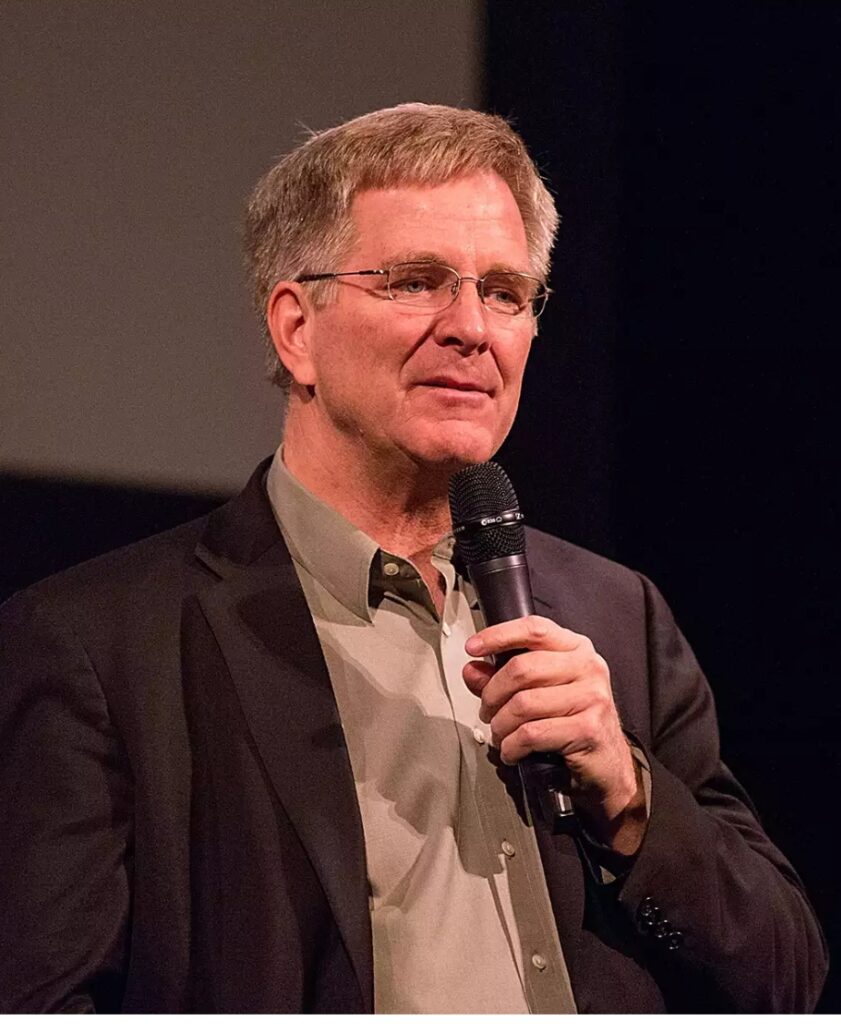
Famed travel guidebook writer Rick Steves has canceled tours to Russia amid the country’s ongoing invasion of Ukraine, deeming Russia’s actions “aggressive” and “heartbreaking.”

“Russia’s aggressive action is heartbreaking for the death, suffering, and economic turmoil it will cause in Ukraine and, indirectly at least, beyond,” Steves’ company wrote in a statement. “Our mission at [Rick Steves’ Europe] is to help Americans better know and understand our neighbors through travel. But when we bring travelers to another country, we also bring their dollars — dollars that would support Putin’s aggression,”

In his message he also announced that “we have canceled all 2022 tours that include a stop in Russia.”

Steves’ company, which operates tours throughout the continent, previously led trips to St. Petersburg as part of the “Best of St. Petersburg, Tallinn, and Helsinki in 9 Days Tour,” according to the Washington Post. The tour was scheduled to start in May with departures sold out through September.

Steves said he would continue to “keep a close eye on unfolding events,” but would not be canceling other European itineraries in the meantime, adding it was “important to keep geographic realities in mind and remember that a war in Ukraine is as far from our European vacation dreams as a war in Guatemala would be from Texas or Florida.”

“For 40 years now, we have lived, worked, and traveled through many periods of tragic warfare in lands far from where we lead our tours (and some closer),” he added. “And at this time, we see no reason to change the rest of our travel and touring plans.”

MOZAMBIQUE: DIPLOMATS UNITE IN CONDEMNING AGGRESSION AGAINST UKRAINE – AIM report

28 Feb 2022

Western heads of diplomatic missions in Maputo on Monday jointly condemned the Russian invasion of Ukraine and demanded the immediate withdrawal of Russian troops.

The European Union ambassador, Antonio Gaspar, said the invasion was “an unjustified and unprovoked attack” which “violates the basic principles of international law and of the United Nations Charter”.

It had led the EU to respond with the most sweeping package of sanctions it had ever imposed.

Mozambique, he added, “knows well the sufferings of war, and has bitter memories”

Gaspar told AIM he regarded as “very serious” the threats made by Russian President Vladimir Putin against Sweden and Finland, warning them of dire consequences if they should opt to join NATO. He was also alarmed by the declared intention of the President of Belarus, Alexander Lukashenko, to station nuclear weapons on his territory.

“They are threatening a cataclysm”, said Gaspar, “but the only thing we can do is stay firm”.

The French ambassador, David Izzo, said the EU and its partners “are responding to this act of war with determination and unity”. He promised “we shall not be weak” and warned that the sanctions imposed will wreck the Russian economy and destroy the power of Russian oligarchs.

The invasion is not only an attack against Ukraine, said Canadian High Commissioner Caroline Delaney, “but also an attack against the UN charter and its principles”

The United States Deputy Chief of Mission, Abigail Dressel, declared that ”Russia’s premeditated, unprovoked and unjustified attack on Ukraine is a threat to international peace and security, a blatant violation of international law, and an assault on the very principles that uphold global peace”.

Acknowledging “the bravery and heroism of the Ukrainian people and government”, Dressel declared “We must hold Russia accountable for its war of choice”.

MINISTER DR NALEDI PANDOR PARTICIPATES IN THE 49TH SESSION OF THE UNITED NATIONS HUMAN RIGHTS COUNCIL IN GENEVA

28 February 2022

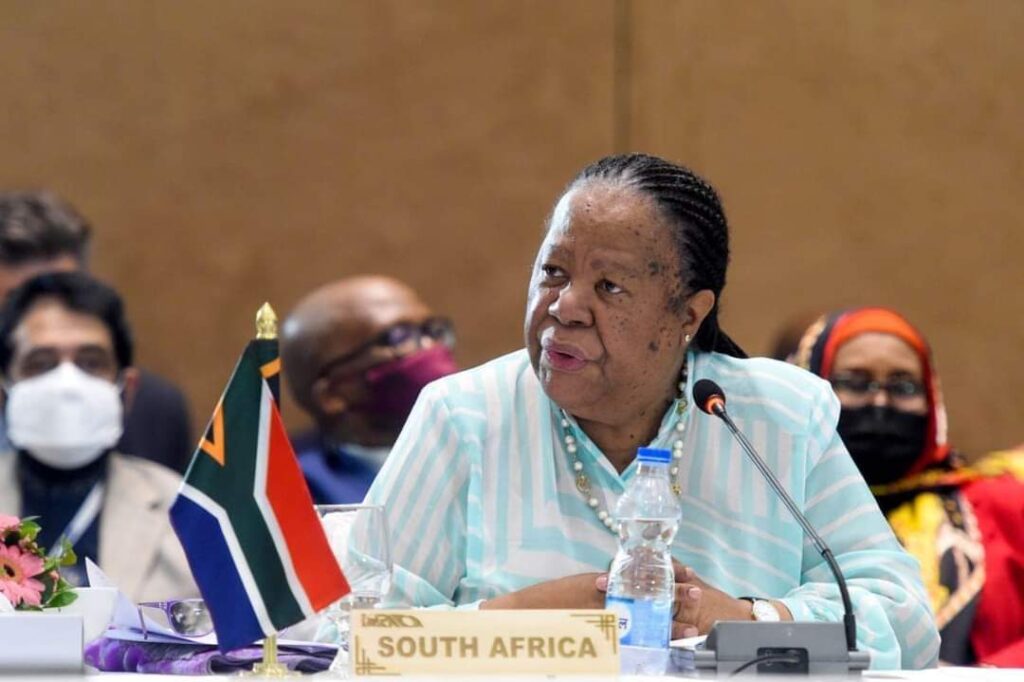
The Minister of International Relations and Cooperation, Dr Naledi Pandor, will participate in the High-Level Segment of the 49th Session of the United Nations Human Rights Council in Geneva, Switzerland from 28 February to 02 March 2022.

The High-Level Segment will afford countries, represented by Heads of State and Governments, Foreign Affairs Ministers and/or Deputy Foreign Affairs Ministers, the opportunity to address the Council on their national efforts to promote and protect human rights and international cooperation, including outlining their foreign policy approach to human rights.

Minister Pandor will deliver South Africa’s statements at the High-Level Segment and on the High-Level Mainstreaming Panel in the afternoon of 28 February 2022. Minister Pandor will also use the opportunity of the High-Level Segment to launch South Africa’s campaign for membership of the Human Rights Council for the period 2023-2025.

The Annual High-Level Panel on Human Rights Mainstreaming will be held under the theme “The Contribution of Universal Participation to the Mainstreaming of Human Rights Throughout the United Nations System, on the Occasion of the Tenth Anniversary of the Voluntary Trust Fund to Support the Participation of Least Developed Countries and Small Island Developing States in the Work of the Human Rights Council”.

Other dignitaries expected to participate in the High-Level Session are, the President of the General Assembly, Mr Abdulla Shahid, the United Nations Secretary-General, Mr. António Guterres; the President of the Human Rights Council, Ambassador Frederico Villegas (Argentina); the UN High Commissioner for Human Rights, Ms. Michelle Bachelet and the representative of the host country (Switzerland).

In the evening of Monday, 28 February 2022, Minister Pandor will deliver the keynote address at the event organised to launch South Africa’s campaign for membership of the Human Rights Council for the period 2023 – 2025.

The HRC is made up of 47 United Nations (UN) Member States. Every year, UN member states elect a third of the UNHRC members directly and individually by secret ballot for a period of three years. Members of the Council serve for a period of three years and are not eligible for immediate re-election after serving two consecutive terms. When electing members of the Council, the UN General Assembly considers the contribution of the candidate state to the promotion and protection of human rights and their voluntary pledges and commitments made thereto.

The composition of the Council is based on equitable geographical distribution and seats are distributed as follows among regional groups: African States (13 seats), Asia-Pacific States (13 seats), Latin American and Caribbean States (8 seats), Western European and other States (7 seats), Eastern European States (6 seats).

The thirteen (13) African States seats are occupied by: Benin (2024), Cameroon (2024), Cote d’Ivoire (2023), Eritrea (2024), Gabon (2023), Gambia (2024), Libya (2022), Malawi (2023), Mauritania (2022), Namibia (2023), Senegal (2023), Somalia (2021), and Sudan (2022). Benin covers human rights issues from Paris, with limited capacity.

Minister Pandor will also use the opportunity of her visit to Geneva to hold bilateral discussions with some of her counterparts.

FROM THE DESK OF THE PRESIDENT, A BUDGET FOR GROWTH AND EMPLOYMENT

 28 February 2022

Our country’s path to recovery is steep and will be extremely challenging. But with the measures we set out in SONA, with the Budget that has been presented, and with the cooperation and involvement of all South Africans, we will succeed: President Ramaphosa

Last week, Minister of Finance Enoch Godongwana presented a Budget that supports and reinforces the programme of action I announced in the State of the Nation Address (SONA) to grow the economy and create jobs.

The Budget provides details on how government plans to raise money and where it is going to spend that money to improve the lives of South Africans.

Few South Africans need to be reminded how devastating the COVID-19 pandemic has been for our economy. Despite the substantial economic and social support package we introduced in 2020, businesses have gone under and as many as two million people have lost their jobs. Many households have been spared from hunger only due to the increases in social grants.

As the pandemic has battered the economy, so it has further worsened the country’s financial position. At the height of the pandemic, less revenue was collected and more money had to be spent on strengthening our health response and providing social support. As a result, the country had to borrow more and do so at a greater cost.

The pandemic followed a decade of huge increases in public spending, even as economic growth remained low. One of the most important tasks of this administration has been to restore our public finances to health so that government can perform its role effectively.

As I said in SONA, the only way out of this dire situation is to grow the economy. And the most effective way to reduce poverty and hunger in a sustainable way is to create employment.

That is why the pursuit of growth and jobs is at the centre of the programme outlined in both SONA and the Budget.

This programme includes far-reaching economic reforms that promote investment and growth. These reforms will ensure that our country has enough affordable electricity to meet growing demand, that our ports and rail lines are more efficient, that we improve access to faster, cheaper broadband, that homes and businesses have the water they need, and that we can attract the skills and investment we need to create a productive and dynamic economy.

At a time when public resources are constrained, these reforms will enable greater private investment in the vital infrastructure that our economy needs to grow. This takes place alongside a revised framework for public-private partnerships and innovative new ways to blend public and private resources for infrastructure investment.

We will do this in a way that improves the performance and financial position of key state owned enterprises. This will place these enterprises in a far better position to fulfil their developmental mandates, while ensuring that critical national infrastructure remains firmly in state hands.

To support this work, R17.5 billion was allocated in the Budget for catalytic infrastructure projects over the next three years. This will, among others, support the upgrading of roads, bridges, water and sewer, transport, schools, hospitals and clinics.

The Budget supports the efforts announced in SONA to unleash the potential of small, micro and informal businesses.

For example, R15 billion has been set aside for a redesigned loan guarantee scheme that will make it easier for small businesses to access funding to ‘bounce back’ from the effects of the pandemic.

The Employment Tax Incentive, which has been so successful in giving many young people their first jobs, is being expanded to encourage small businesses to hire more people.

Recognising the importance of basic services both for quality of life and for investment and business activity, the Budget significantly increases the allocation for service delivery. For example, it adds an extra R30.7 billion to local government allocations for basic municipal services.

All of these measures encourage the growth and expansion of firms and support the establishment of new firms to create new jobs.

These efforts will, however, take time to absorb the millions of South Africans looking for work. We have therefore extended the Presidential Employment Stimulus, which has provided work and livelihood opportunities to over 800,000 people in its first 16 months. An additional R18.4 billion has been allocated over the next two years so that the stimulus can continue to provide vital income, skills development and work experience to hundreds of thousands of unemployed, mostly young, people.

The Budget also supports the extension of the R350 Social Relief of Distress Grant for another year. This will provide basic support for around 10 million unemployed beneficiaries as they look for work. This grant significantly broadens the country’s social safety net, with around 46% of the population now receiving grants.

In short, this is a Budget that seeks to leave no one behind.

Even with our severe fiscal situation, the Budget directs resources to areas with the greatest potential for growth and jobs, specifically structural reform, infrastructure and support for small businesses. At the same time, it supports young people through public and social employment programmes, and extends social protection for the most vulnerable.

While it promotes growth, the Budget also charts a clear path towards sustainable levels of public debt. The interest rate that we pay on our debt is higher than our growth rate, creating a risk that debt could spiral out of control if not managed carefully. Our country now spends more on debt service costs than on health, basic education and policing.

Unsustainable levels of debt are bad for all South Africans, but for the poor in particular. The cost of debt reduces the amount of money that government has to improve services, provide social protection and invest in social and economic infrastructure.

With this Budget, we are now on track to reduce our budget deficit – and hence our borrowing requirements – while responding to the challenges that South Africans face, now and into the future.

The Budget demonstrates our ability and commitment to strike this balance. It is a difficult balance to achieve, but with more efficient use of resources, ending wastage and corruption, and shifting spending from consumption to investment, we can achieve fiscal sustainability while continuing to support growth.

Our country’s path to recovery is steep and will be extremely challenging. But with the measures we set out in SONA, with the Budget that has been presented, and with the cooperation and involvement of all South Africans, we will succeed.

www.thepresidency.gov.za
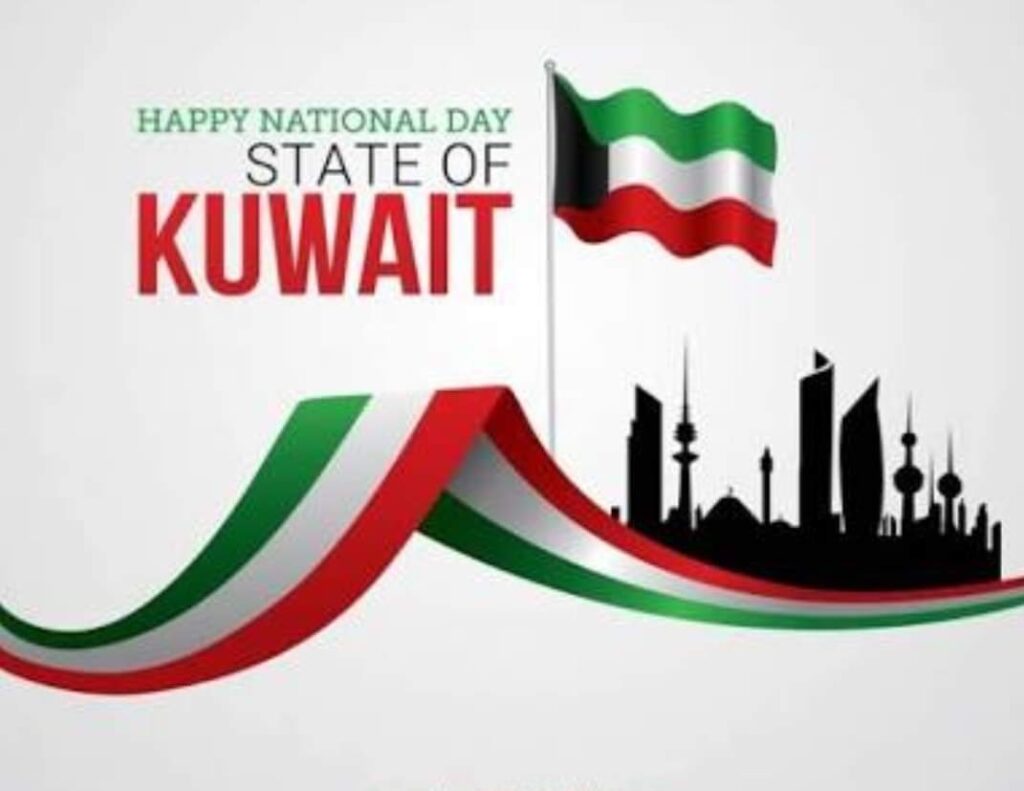
HAPPY NATIONAL DAY STATE OF KUWAIT

26 February 2022

Kuwait National Day is celebrated on 25 February each year. This date marks Sheikh Abdullah Al-Salem Al-Sabah’s ascension to the throne of Kuwait in 1950.

This date also marks Sheikh Abdullah Al-Salem Al-Sabah’s death in 1965. In an effort to compete with the Ottoman Empire, he sought to modernise Kuwait.

Originally a fishing village, the nation has become an active voice for cooperation in the region and internationally.

Located in the northern Arabian Gulf, Kuwait gained independence from its status as a British Protectorate in June of 1961. Two years later, to avoid the extreme June heat, the government moved National Day to February 25th.

Also established in 1961 was the country’s modern flag with its pan-Arab colors of red, black, green, and white, as depicted in the Doodle artwork. In 2019, Kuwait set a world record for the longest flag at a whopping 2019 meters.

National Day festivities often include fireworks, concerts, and music. Many locals show their national pride by donning traditional clothing, spending the day visiting Messilah Beach, or sharing the country’s national dish, machboos, with friends and family.

Happy National Day, Kuwait!

WAR IN UKRAINE – SUPPORT FOR CHILDREN AND FAMILIES NEED HELP URGENTLY

26 February 2022

UNICEF and partners are on the ground providing support to children and families in desperate need of safety, stability and protection.

The war in Ukraine is having a devastating impact on the country’s 7.5 million children. Humanitarian needs are multiplying by the hour as the fighting continues. Children continue to be killed, wounded and deeply

traumatized by the violence all around them. Families are terrified, in shock, and desperate for safety.

The past eight years of conflict in Ukraine have already inflicted profound and lasting harm on children. Now, the threats to Ukraine’s

children have grown as homes, schools, orphanages, and hospitals have all come under attack. Two million children have been forced to flee Ukraine, with more than 2.5 million children estimated to have been internally displaced. Such large displacements could have lasting consequences for generations to come. Children fleeing war in Ukraine

are also at heightened risk of human trafficking and exploitation.

Meanwhile, civilian infrastructure like water and sanitation facilities have been hit, leaving millions with limited or no access to safe water. UNICEF is working with partners to reach vulnerable children and families with essential services – including health, education,

protection, water and sanitation – as well as life-saving supplies.

Image Unicef: Katya Joined other Ukrainian Children who fled from their homes

The war in Ukraine poses an enormous threat to the country’s 7.5 million children. Many homes have been damaged or destroyed, while damage to civilian infrastructure has left hundreds of thousands of people without

safe water or electricity. The country is running low on critical medical supplies. Fears of a wider public health crisis are growing as

people have fled their homes and health services are interrupted.

Two million children have been forced to flee Ukraine, while an morethan 2.5 million children are estimated to have been internally displaced. Women and girls travelling on their own are especially at risk of gender-based violence.

For many others, life has moved

underground as families seek safety in shelters, subways, or basements,

often for hours on end. Women are giving birth in makeshift maternity wards with limited medical supplies. Children across Ukraine are in desperate need of safety, stability,

protection and psychosocial care.

War and mass displacement has harmed

families’ livelihoods and economic opportunities, leaving many without

sufficient income to meet their basic needs and unable to provide adequate support for their children.

After eight years of conflict in eastern Ukraine, children and their families need systematic protection services to address gender-based

violence and violence against children, and to access psychosocial care.

Mine risk education and mine victim assistance are critical as explosive

ordnance contamination remains a major threat to life, safety and

stability.

UNICEF calls for an immediate cease-fire and reminds all parties of their international obligations to protect children from harm, and to ensure that humanitarian actors can safely and quickly reach children in need.

For more on the situation visit UNICEF Ukraine and UNICEF in Europe and

Central Asia

unicef.org/ukraineconflict

#UkraineChildren

30TH ANNIVERSARY OF THE KHOJALY GENOCIDE, ONE OF THE BIGGEST TRAGEDIES OF THE 20TH CENTURY

26 February 2022

On the 30th Anniversary of the Khojaly Genocide, we remember #Khojaly

victims with deep respect. The Khojaly genocide is one of the most tragic human catastrophes of the 20th century in Azerbaijan and the most heinous crimes of genocide committed against Azerbaijani civilian

population during Armenia’s war of aggression against Azerbaijan.

After the dissolution of the Soviet Union, Karabakh conflict flared up in 1988. The conflict spans two timelines – the periods before and after the Khojaly genocide. The Khojaly genocide took place in the town

Khojaly on 26 February 1992.

In Khojaly, Armenian aggression towards Turks, especially Azerbaijani Turks was evident. Atrocious acts targeted civilians; it did not matter whether they were kids, elderly, women or pregnant women. The Armenian

forces showed no mercy as being a Turk was enough reason to be victimized.

The 366th guards Motor Rifle Regiment of the Soviet Union assisted Armenia to conquer Karabakh. The Khojaly genocide remains engraved forever in the memories of Azerbaijanis.

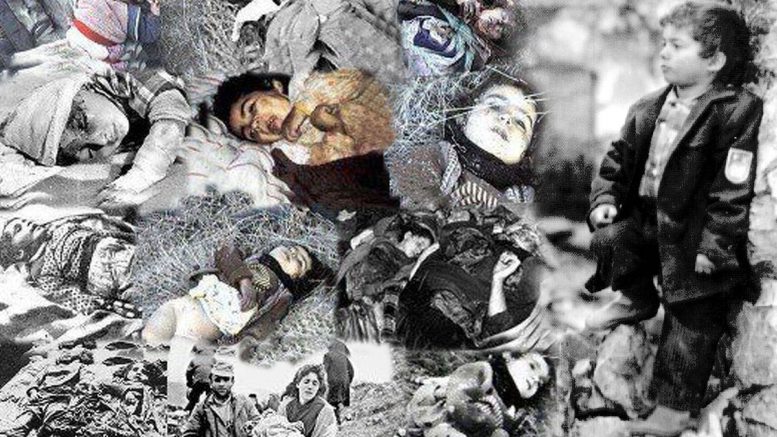
We will always remember the 613 civilians that died at the hands of merciless Armenian troops, 106 women, 63 children & 70 elderly  were killed, 487 were wounded, 1275 were taken hostage and 150 are still missing.

It is quite distasteful that a state that claimed genocide against its own people previously, would commit such atrocities Armenia shot down Khojaly’s helicopters, which were meant to rescue civilians and blockaded every aid route, thereby putting into proper perspective the real objective of the ear. Armenia intended erasing ethnic Azerbaijani Turks from a region that did not belong to Armenia historically and by international recognition.

Karabakh is recognized as part of Azerbaijan, a claim backed up by 4 United Nations Security Council Resolutions that demanded Armenia’s

immediate withdrawal of its forces from the region. Armenia’s puppet government that was dismantled with the victory of Karabakh war on the 10 November 2020, claimed sovereignty over the region.

Last year’s victory proved justice prevailed.

However, no lives lost in Khojaly in 1992 along with other massacres committed by the Armenian forces during the first Karabakh war could be replaced.

In 2020, Armenian forces bombed civilian infrastructure, which included Ganja, Barda and Mingechevir. This was proof once again that the goal of Armenian forces was to cause civilian casualties and target civilians.

Below are the disturbing images of the Khojaly genocide.

By Susan Novela, The Diplomatic Informer SA

The Khojaly Genocide Article was also published in the Pretoria News on

26 February 2022, by Susan Novela, The Diplomatic Informer SA

PRESIDENT CYRIL RAMAPHOSA HAS SPOKEN OUT ON THE CONFLICT BETWEEN RUSSIA AND UKRAINE

25 February 2022

President Cyril Ramaphosa has spoken out on the conflict between Russia and Ukraine and is calling for mediation. He says though it seems impossible, anything is possible through negotiations.

The South African President Cyril Ramaphosa says theres no need for people to die in the conflict and calls on the United Nations Security Council to engage, to bring hostilities to an end.

#UkraineRussiaConflict

THE SOUTH AFRICAN GOVERNMENT IS CONCERNED ABOUT THE ONGOING TENSIONS IN THE UKRAINE AND RUSSIA BORDER

The South African Government is concerned about the ongoing tensions in the Ukraine and Russia border, a situation if allowed to further deteriorate, could have regional and global ramifications.

SA urges all parties to devote increased efforts to diplomacy and to find a solution that will help de-escalate tensions and avert armed conflict.

Commenting on the situation, the Minister of International Relations and Cooperation, Dr Naledi Pandor said: “All parties have much to gain from a negotiated outcome and much to lose from an unnecessary and violent conflict.”

South Africa further calls on the UN Security Council to play a central role in the search for peace.

“The UNSC is the body given the mandate for maintenance of international peace and security and it must exercise its role fully. As South Africa, we believe all the issues of concern to any of the parties must be addressed in inclusive talks led by the UNSG.” Minister Pandor said.

The world does not need another war as that will result in death and destruction, hence our call for enhanced diplomacy.

THE EMBASSY OF THE UNITED STATES IN SOUTH AFRICA HOSTED THE 12Th ANNUAL Bilateral Forum (ABF) on 23 February 2022.

The ABF Co-Chairs were Ambassador Maud Dlomo, Deputy Director-General: Americas and Europe at the Department of International Relations and Cooperation (DIRCO) and Mr

Todd Haskell, Chargé d’Affaires, ad interim of the Embassy of the United States.

The ABF is a key component of the Strategic Partnership between South Africa and the United States with the objective to review the

implementation of the numerous ongoing cooperation programmes and projects between the two countries, which are aligned to South Africa’s domestic priorities and the National Development Plan (NDP), which aims

to eliminate poverty and reduce inequality by 2030.

Senior officials from South African Government Departments and their

counterparts from the US Embassy made recommendations for continued and

improved cooperation that advances the interests of both countries.  The

discussions within eight Working Groups focused on current and future

bilateral cooperation in areas such as trade and investment, health, basic and higher education, agriculture, energy, water, environment, transportation, science and innovation, and safety and security.

Upon receiving positive feedback from all projects that are implemented by different sectors, both sides agreed that the partnership is based on a strong global health collaboration which has been improving for many decades.

The South African Government and the United States reaffirmed their collaboration in the ongoing response to the COVID-19 pandemic, as well as the two nations’ longstanding partnership to address HIV/AIDS and

tuberculosis.  While the COVID-19 pandemic has posed unprecedented challenges to these efforts, the meeting affirmed the commitment to reaching HIV epidemic control as soon as possible and to collaborate on emerging global health threats and epidemic preparedness.

With regard to safety and security, both parties welcomed the robust and mutually beneficial cooperation and agreed to intensify collaboration in mutual legal assistance and other justice related matters.  The two sides looked forward to relaunching the Bilateral Strategic Energy and Climate Change Dialogue and to work with other partners to support the

Just Transition to a low carbon economy and a climate resilient society in South Africa.

In relation to the bilateral trade and investment relationship, it was noted that two-way trade in goods between the two countries grew from

$13.9 billion in 2010 to a peak of $21 billion in 2021. Significantly, in 2021, the US ranked as the 2nd largest destination for South Africa’s

exports globally. South Africa looked forward to hosting the AGOA Forum in 2022 and both sides undertook to work collaboratively to resolve non-tariff barriers to trade.

In science and technology there was appreciation for the good cooperation in the field of astronomy between SANSA and NASA, while the creation of hubs in South Africa for vaccine production and support for innovation to address diseases of relevance to South Africa and the African continent was welcomed.  Reference was made to the robust and constructive cooperation in both higher and basic education, with an expansion in cooperation and US support for Technical and Vocational Educational Training (TVET) in South Africa. The parties further

appreciated the ongoing interventions, at both national and local levels, to address gender-based violence (GBV), including community-based programmes targeting the youth and young women.

The parties agreed that the ABF remains an important platform to review