THE GOVERNMENT OF NAMIBIA MEDIA RELEASE: SECURITY SITUATION IN UKRAINE

24 February 2022

Issued by:  Penda A. Naanda, Executive Director

The Government of the Republic of Namibia has been following the events which are rapidly leading to the deterioration of the security situation in Ukraine. Guided by the provision of our Constitution, which commits Namibia to encourage the settlement of disputes by peaceful means and in

the spirit of the Charter of the United Nations “to unite our strength to maintain international peace and security”, we reiterate our call for

all parties to find an amicable solution that will minimize tensions and put a halt on the current worrisome situation in Ukraine.

Namibia firmly believes in the principle of respect for national sovereignty, territorial integrity, and the peaceful settlement of disputes in accordance with relevant international laws.

Namibia, therefore, calls on the United Nations, in particular the Security Council, to work towards the peaceful resolution of the conflict in Ukraine. In the same vein, Namibia urges the international

community to contribute to the immediate de escalation and to avoid

taking further counterproductive measures that will inflame the

situation.

The Namibian Government regards the safety of nationals as very important, and MIRCO is in constant contact with Namibian students studying in Ukraine. According to the information at hand, there are currently around 100 Namibians, including 92 students in Ukraine. MIRCO is consultation with all stakeholders, such as NSFAF, in finding an

immediate solution to ensure their safety and safe return home should it become necessary.

/END

MESSAGE FROM H. E. MR. MARUYAMA NORIO, AMBASSADOR OF JAPAN TO THE REPUBLIC OF SOUTH AFRICA, ON THE OCCASION OF HIS MAJESTY THE EMPEROR’S BIRTHDAY


23 February 2022
Fourth year of Reiwa

Today I would like to celebrate the 62nd birthday of His Majesty the Emperor. Due to difficulties caused by the COVID-19 pandemic, it is
highly unfortunate that I am unable to host the reception to celebrate His Majesty the Emperor’s birthday this year, as we were also unable to celebrate last year.
On this auspicious day, I would like to share with you my thoughts on
relations between Japan and South Africa, especially in light of the
Eighth Tokyo International Conference on African Development (TICAD8),
which will be held this year in August.
Commitment by TICAD7 and Benefit to South Africa
TICAD has been developing into a pioneering forum on development in
Africa, led by the Government of Japan in collaboration with the United Nations, the United Nations Development Programme (UNDP), the World
Bank, and the African Union Commission (AUC).
At TICAD7 in 2019 held in Yokohama, Japan made commitments to develop
industrial human resources, promote innovation and investment, expand
UHC and strengthen the Africa Health Initiative, institutional building
and governance, and has implemented these commitments sincerely and concretely.
These commitments have tangible benefits throughout the entire African continent, including South Africa. In terms of investment, at TICAD7, Japan committed to a total of $20 billion on the African continent in the next three years, as it did in the three years since TICAD6.
These investments are part of that commitment. Among the investments
done in South Africa, the most recent example is that Toyota began
production of its first hybrid vehicle on the African continent just
before the 2021 United Nations climate change conference (COP26), after overcoming COVID-19 and the unrest in July 2021. Nissan and Isuzu also made capital investment for local production of new models in South
Africa.
In accordance with its commitment to TICAD7, Japan also provided support in collaboration with international organizations. Toyota, with the support of the Japanese government and the UNDP, a cosponsor of TICAD,
opened a “Toyota Manufacturing School” in KwaZulu-Natal and is fully committed to the education of and employment creation for South African youth, including job placement for those who complete the program. This
support is a tripartite partnership between the public and private
sectors and international organizations.

In addition, the Government of Japan, through the UNDP, has been working on measures to combat COVID-19 infection and to provide employment
support to workers affected by COVID-19, support for vulnerable women against COVID-19 and GBV through UN Women, and measures against marine plastic litter through UNIDO. These are also the outcomes of discussions
at TICAD.
In particular, the Toyota Manufacturing School is one of the major
achievements of TICAD, which was achieved through the cooperation of the
Japanese government, international organizations and private companies.
In addition, based on its commitment to TICAD7, Japan has been providing
a variety of support to meet the needs of local communities and civil
society.
One example is the various projects that Japan has been implementing in
South Africa since the 1990s in the framework of Grant Assistance for
Grass-Roots Human Security Projects. Since TICAD7, 19 cooperation
projects have been implemented in various parts of South Africa,including Gauteng, Limpopo, Western Cape and Eastern Cape, the areas
of health, education, women’s health and empowerment, disability
support, and skills development, over the three-year period 2019-2021.
I recently had the opportunity to visit the Tharollo Drop-In-Centre in
Tshamahansi, Limpopo Province. The renovation of this center was one of
the projects done in 2016 as a part of support to the local community,
when a Japanese company decided to participate in the mining operation
going on in this area. During my visit, I realized how well it has taken
root in and contributed to the local community during the past six
years.
This is one of the examples of cooperation between Japanese companies
and the Government of Japan to address the issues facing South African
local communities. Human resource development is essential to South
Africa’s economic growth and was one of the central themes at TICAD7.
One example is the African Business Education Initiative, known as ABE
Initiative, which is in line with South Africa’s policy of emphasizing
the promotion of business relations with Japan. Under the ABE
Initiative, 123 South Africans have studied at Japanese universities and
are now contributing to the business and economic development of South Africa by utilizing their experiences, including employment at Japanese
companies in South Africa.
Business Environment I have a strong desire to see Japanese companies
continue to expand their operations in South Africa and create jobs, but to do that I would like to emphasize once again that the protection and
safety of all lives, property of the investors and property of employees is of primary importance in the activities of Japanese companies.
From this point of view, the unrest that occurred in KZN and Gauteng in
July 2021 was regrettable. I strongly hope that such incidents will
never occur again in the future, and I welcome any kind of concrete
measures the South African government will take to prevent its
recurrence. Also related to this, there are urgent needs to launch the
Japan-South Africa Business Forum, which both countries committed to in
the presence of President Cyril Ramaphosa at the Investment Conference
in 2019. Japan is ready for that.
Carbon Neutral Society In order for the further strengthening of the
relationship between Japan and South Africa in the future, discussions
toward a decarbonized society have become particularly important in
recent years, especially cooperation in the field of hydrogen. South
Africa not only has an abundance of renewable energy sources for solar
and wind power, but also has crucial minerals necessary for fuel cell
and the capacity to produce hydrogen on its own land.
In this respect, South Africa is such a blessed country in the world
and attracting worldwide attention. Japanese companies are also paying close attention to South Africa’s potential, and I would like to further
promote the cooperation between Japan and South Africa toward a Carbon Neutral Society.
In this connection, I highly appreciate that the Minister of Higher
Education, Science and Innovation, Dr. Blade Nzimande, has participated
twice in the annual Hydrogen Energy Ministerial Meeting held by Japan, where he delivered very meaningful speeches. Science and technology are the keys to advancing a hydrogen society.
Scientists in Japan and South Africa have been conducting joint research
in various fields, including decarbonization, under several cooperative
frameworks such as Agreement on Co-operation in Science and Technology
in 2003, SATREPS, and AJ-CORE.
The Government of Japan will continue to support these trends.
Culture brings people of South Africa and Japan closer together even
though they are geographically distant, and reminds us of the importance
of interest in and understanding of each other’s cultures to the
advancement of the relationship between our two nations.
For the first time since 2019, I have the pleasure to announce that we
will hold the 27th Japanese Film Festival in Pretoria and Johannesburg
in March. I hope that you will enjoy the latest trend in Japanese films.
Japan is promoting Japanese food around the world; Japanese Cuisine
Goodwill Ambassador is one of the programmes that serves this purpose.
In January this year, Mr Peter Tempelhoff at FYN Restaurant in Cape Town
was appointed as the first Goodwill Ambassador to promote Japanese
Cuisine in South Africa. FYN has been promoting the appeal of the taste
of Japan through its fine cuisine and I am grateful that Mr Tempelhoff
will take on the role as a Goodwill Ambassador in South Africa.
We will keep up our strive towards making South Africa feel closer to
Japan. I will continue to maintain and accelerate close relations
between our two countries at all levels. In this regard, I strongly hope
that the Japan-South Africa Partnership Forum, which has not been held
since 2013, will be held in Japan as soon as the COVID-19 situation
permits, to further promote cooperation between Japan and South Africa.
I would like to close my message by offering my heartfelt prayers and
wishes for His Majesty’s continued good health, and the prosperity of
the Imperial Court, as well as the good health of everyone else reading
this message.
End

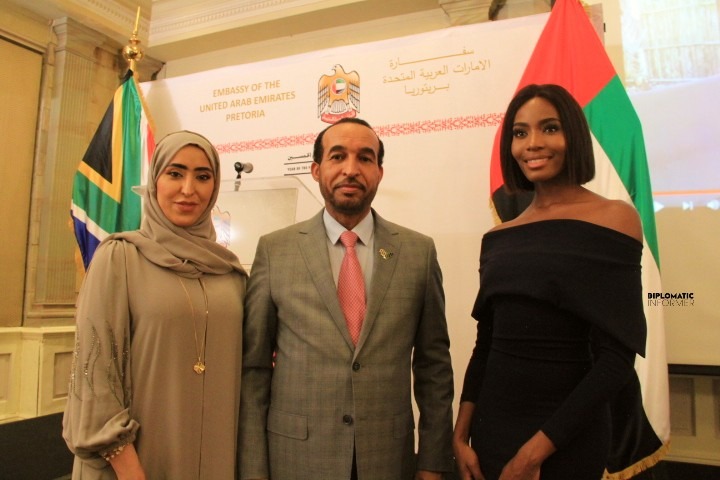
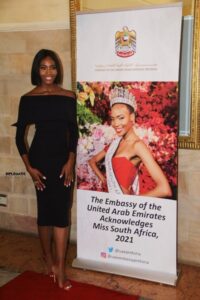
THE UAE EMBASSY IN PRETORIA HONOURS MISS SOUTH AFRICA 2021, LALELA MSWANE IN CELEBRATION OF WOMEN’S MONTH

23 February 2022

In the United Arab Emirates Women have achieved a lot in the last 50 years. Since the country’s founding in 1971, the Government has supported women’s empowerment fully.

The UAE is a dynamic, modern society where women participate meaningfully in every facet of social and political life.

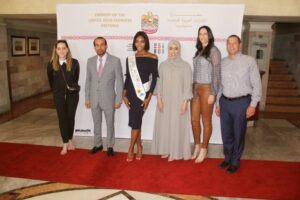
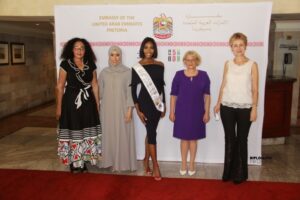
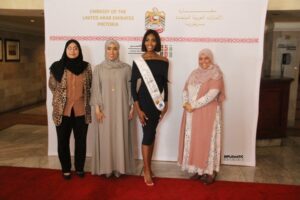
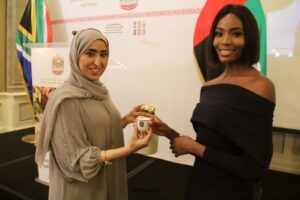
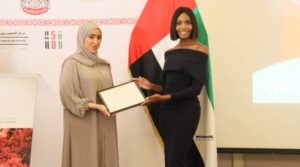
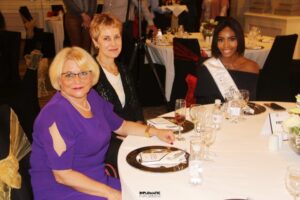
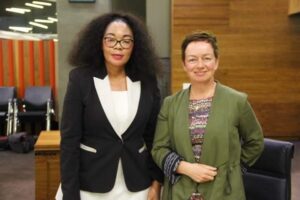
In celebrating women’s empowerment and  Women’s Month, His Excellency Ambassador Mahash Saeed Alhameli of the United Arab Emirates to The Republic of South Africa and his spouse, Mrs.  Kalthoom Alhameli hosted an event in honour of Miss South Africa 2021, Lalela Mswane at the Sheraton Hotel in Pretoria.

Miss South Africa 2021, Lalela Mswane, was the second princess of the 70th Miss Universe pageant, held in Eilat, Israel.  The 24-year-old
Mswane hails from KwaSokhulu outside Richards Bay in KwaZulu-Natal. She came third while Miss India coveted the 2021 Miss Universe crown with Miss Paraguay as the first princess.

Government’s decision to withdraw its support for Miss SA Lalela Mswane for her participation in the Miss Universe pageant in Israel did not deter the Miss South Africa 2021.  Lalela Mswane faced criticism,
largely from South Africa’s friendly relations with the State of Palestine and the branding of Israel as an apartheid state by South Africans.

Regardless, Lalela Mswane showed courage, strength and determination in pursuit of her dream until the end. Many felt her participation was out of step with South Africa’s Foreign
Policy. As the Department of International Relations and Cooperation, DIRCO outlines, “The formalisation of diplomatic relations gave
expression to strong and long-standing ties of friendship and mutual support between the peoples of South Africa and Palestine.” However, these matters should not impede participation in what is a global event
that presents itself as part of cultural diplomacy.

In his opening remarks, His Excellency Ambassador Mahash said, “Women form a very key constituency of our daily livelihoods and their immense contribution to the country’s development agenda remains
inestimable.

UAE believe deeply in the equality and humanity of women, and passionately supports Women’s Rights.” “We celebrate all the accomplishments and sacrifices women and girls are making around the world. We are challenged to give women and girls equal
opportunity in all spheres of human advancement for them to exploit
their capabilities fully.

UAE continues to making women an integral part of our national development agenda through appointments in key leadership positions and investment in their well-being,” said Ambassador Mahash.

In her speech, Miss South Africa said she could never thank the UAE enough for its support. “When my country abandoned me, I took refuge in Dubai where all my
arrangements to participate were taken careof.

The UAE assisted me with making sure that my garments, shoes were available, and that I could finally managed to travel to Israel. I truly appreciate the support, kindness and generosity that the UAE extended to me and will forever be grateful for it,” she said.

Mswane said she was overwhelmed to have made it into the top three of the competition. “The whole experience has been beyond my wildest expectations I am deeply thankful to all the amazing people who have supported and uplifted me,” she intimated.

Miss Mswane expressed her gratitude to all the women Ambassadors/High Commissioner’s and women guests who attended the event and urged young women to choose courage over comfort during her speech. “I would like young women to
know that since the beginning of time they have had everything within them to achieve anything they wanted,”

There were petitions, threats and boycotts but she refused to listen to them all and instead went ahead to compete in the Miss Universe pageant in Israel. She noted that she would have regretted it for the rest of her life if she had not gone.  She expressed pride in making it into the top three, something that made her convictions worthwhile.

The Diplomatic Informer Magazine SA would like to congratulate Miss South Africa Lalela Mswane on finishing as the second princess at the Miss Universe pageant contest in Israel.

Lalela showed courage, strength and determination in pursuing her dream to the end. She remains a winner in our hearts.
We must all remember that the attainment of gender equality is everyone’s collective responsibility!

Photos: The Diplomatic Informer Magazine SA

#UAEMissSA2021
#MissSA2021
#UAEEmbassyMissSA2021
#LalelaMswane
#UAE

PRESIDENT CYRIL RAMAPHOSA VISITS KINSHASA, THE DEMOCRATIC REPUBLIC OF CONGO (DRC)

23 February 2022

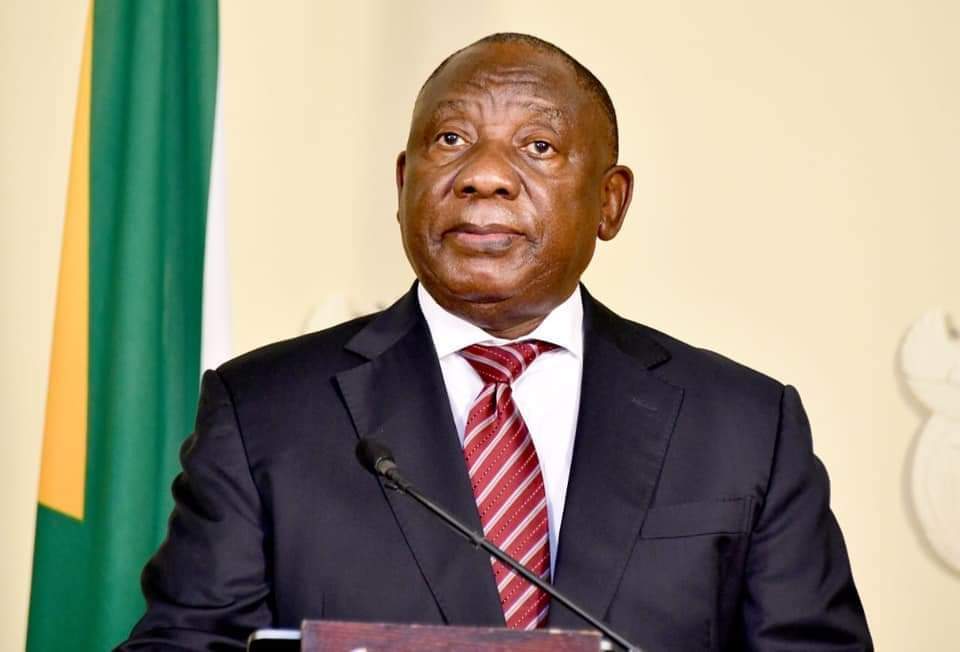
President Cyril Ramaphosa on 23 February 2022, visited Kinshasa in the Democratic Republic of Congo (DRC)

The President participated in the 10th High-Level Meeting of the Regional Oversight Mechanism of the Peace, Security and Cooperation Framework for the DRC and the region.

President Ramaphosa attended this High Level meeting at the invitation of the President of the Democratic Republic of Congo and current Chair of the Regional Oversight Mechanism, His Excellency President Felix Tshisekedi.

President Ramaphosa represented South Africa as a signatory to the Peace, Security and Cooperation (PSC) Framework for the Democratic Republic of the Congo.

Heads of State and Government of the signatory countries to the Peace, Security and Cooperation (PSC) Framework for the Democratic Republic of the Congo, with the support of the Guarantor institutions, namely, the United Nations (UN), the African Union (AU), the International Conference on the Great Lakes Region (ICGLR) convened in Kinshasa on Thursday, 24 February.

During the meeting the Heads of State discussed political and security cooperation, as well as initiatives to deepen economic development and regional integration through integrative cross-border projects.

The Regional Oversight Mechanism is the main oversight body under the Peace, Security and Cooperation Framework agreement for the DRC and the region

It meets once a year at the Head of State and Government level to review progress in the implementation of national and regional commitments under the Framework agreement signed by 13 countries and four Guarantor institutions (UN, AU, ICGLR and SADC) on 24 February 2013 in Addis-Ababa, Ethiopia.

The initial signatory countries were Angola, Burundi, the Central African Republic, the Democratic Republic of the Congo, the Republic of Congo, Rwanda, South Africa, South Sudan, Tanzania, Uganda and Zambia. Kenya and Sudan joined on 31 January 2014, becoming the 12th and 13th signatories to the peace agreement.

President Ramaphosa was accompanied by the Minister of International Relations and Cooperation, Dr Naledi Pandor.

DEPUTY PRESIDENT DAVID MABUZA RECEIVED VICE PRESIDENT OF ANGOLA, DR BORNITO DE SOUSA BALTAZAR DIOGO

23 February 2022

Deputy President David Mabuza received a courtesy call from Vice President of Angola, Dr Bornito de Sousa Baltazar Diogo at OR Tambo House.

The two Vice President and Deputy President discussed issues of mutual interest and reiterated their commitment to increase political and economic cooperation in the areas of tourism agriculture and mining.

The two Principals further discussed the programme to repatriate mortal remains of fallen heroes who died in the battle of Cuito Cuanavale.

Deputy President Mabuza was joined by Deputy Minister of International Relations and Cooperation, Ms Candith Mashego-Dlamini.

DEPUTY MINISTER BOTES HOSTED HIS IRISH COUNTERPART

22 February 2022

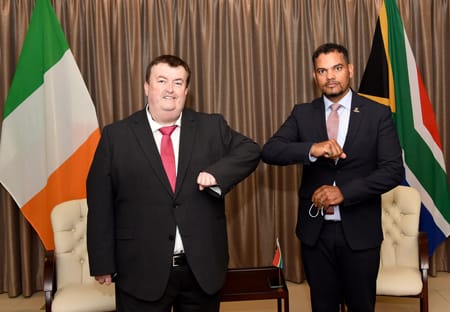
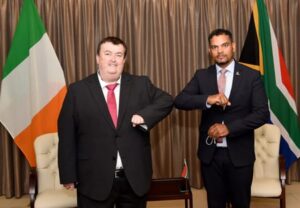
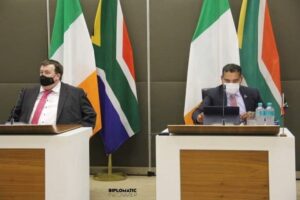
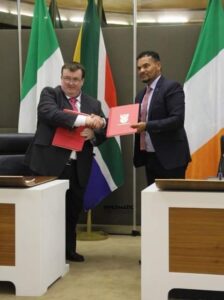
South Africa hosted a successful second South Africa–Ireland Joint Commission for Cooperation (JCC). The meeting was co-chaired by the Deputy Minister of International Relations and Cooperation of the Republic of South Africa, Mr Alvin Botes, and the Minister of State for Overseas Development and Diaspora of Ireland, Mr Colm Brophy.

The Deputy Minister of International Relations and Cooperation, Mr Alvin Botes, hosted the Irish Minister of State for Overseas Development Aid and Diaspora of Ireland, Mr Colm Brophy, for the 2nd South Africa-Ireland Joint Commission for Cooperation (JCC) on Tuesday, 22 February 2022, in Pretoria.

The second meeting of the JCC follows the successful inaugural meeting held in Dublin in 2019. The JCC was established in 2017 through the signing of a Memorandum of Understanding at the sixth South Africa-Ireland Partnership Forum (SAIPF) meeting in Pretoria, South Africa, and represents a deepening of the commitment of both countries to strong bilateral cooperation.

Bilateral relations between South Africa and Ireland are managed through the JCC at the level of Deputy Ministers. South Africa and Ireland enjoy a healthy bilateral trade and investment relationship with both parties

recognising that there are great opportunities for further economic cooperation.

Bilateral relations between the two countries remain strong with the JCC meeting underlining the close ties of friendship between the people of South Africa and Ireland as well as the common interests and values that the two countries share.

During the meeting, both Ministers identified several areas in which cooperation could be further strengthened and welcomed the substantial cooperation in the area of tertiary and higher-level education, which has expanded rapidly in recent years.

Through the implementation of a Memorandum of Understanding between the Technological Higher Education Association (THEA) and the South African Technology Network (SATN), learning exchanges and research relationships have been established

which will bring mutual benefit to the technological higher education systems of both countries.

The Embassy of Ireland’s Kader Asmal Fellowship Programme, which has also received support from the Department of Higher Education and Training, continues to contribute to skills development among future

leaders in South Africa, and has an increased focus on women and students from historically disadvantaged communities.

The healthy bilateral trade and investment relationship was recognised by both parties, who also identified that they were great opportunities for further economic cooperation between Ireland and South Africa,

despite the challenging global economic conditions, trade and investment which has been consistently maintained.

On Immigration, both parties expressed satisfaction on the significant success achieved in the management of the communication channel established between Department of Home Affairs (DHA) and Irish

Naturalisation and Immigration Services (INIS), which has improved the ease and accuracy of decision-making at the ports of entry.

Both parties welcomed the continuing visa free regimes for travel between the two countries. Developments and ongoing cooperation on a range of other sectors including, tourism, arts and culture, and

agriculture were also discussed.

Ireland-South Africa relationship was

noted with appreciation. The Co-Chairs exchanged views on International and regional issues including Mozambique, Zimbabwe, Palestine, and the situation concerning

Western Sahara.

Further, they discussed European Union (EU) – African Union (AU) collaboration and reiterated the need for greater cooperation.

#SouthafricaIrelandrelations

#IrishSARelations

#2ndSouthAfricaIrelandJointCommissionforCooperation

#2ndSAIrelandJCC

THE EMBASSY OF QATAR IN PRETORIA HOSTS A MEDIA LUNCH TO MARK THE  START OF EVENTS LEADING UP TO THE 2022 QATAR WORLD CUP IN DOHA

Qatar has started rolling out events leading up to the 2022 World Cup in Doha, which will start on the 18 November this year. The Qatar Embassy in South Africa hosted a media lunch at His Excellency Ambassador Tariq

Ali Faraj Al-Ansari of Qatar’s residence.  He also represents Qatar to Angola, Botswana, Lesotho, Namibia, and Zimbabwe in non-resident capacity.

With only about 8 months left until the world’s premier football tournament kicks off for the first time in the Middle East and the Arab world, it was an opportunity for the Media to learn more about Qatar, its culture and the FIFA World Cup 2022. The conversations also focused

on the friendship between Qatar and South Africa, as well as the many business and other opportunities Qatar has to offer.

In his opening remarks His Excellency Ambassador Tariq Ali Faraj Al-Ansari, said the bilateral relations between the State of Qatar and the Republic of South Africa, officially commenced on 10 May 1994, the same day that Nelson Mandela was sworn in as the first democratic President of South Africa, after the fall of the Apartheid regime. Qatar was one of the first countries that the former late President Nelson Mandela visited in April 1995.

The bilateral relations between the two countries culminated in two historic visits by His Highness Sheikh Hamad bin Khalifa al-Thani (may God protect him the father’s father), in May 2002 to South Africa. The second was His Highness the Emir Sheikh Tamim bin Hamad Al Thani’s visit in April 2017.

The Emir of Qatar, Sheikh Hamad bin Khalifa Al-Thani’s state visit to South Africa in May 2002 led to the opening of an Embassy of South Africa in Doha, the capital of Qatar, in September 2002. Dr Nkosazana Dlamini Zuma the then Ministers of Foreign Affairs for South Africa

officially opened the embassy on 21 October 2003. Reciprocatively, Qatar opened its embassy in Pretoria in January 2003.

The cordial relations between the State of Qatar and the Republic of South Africa and high-level official visits reflect burgeoning development in political, economic and investment areas.

In addition to the Ambassador, Qatar Embassy Staff, CEO’s of Media Houses, Editor in Chief, Editors and Reporters from the different media houses such as SABC, Al-Jazeera, Pretoria News, Sunday Times, News Room

Afrika, Power FM Radio, Radio 702, Dunya Media, The Diplomatic Informer Magazine SA, The Diplomatic Society and many more attended the luncheon.

“I want to thank you all for coming; I am pleased to host this media lunch for the first time during my tenure in South Africa. Media plays a vital role in the dissemination of information, exchange of ideas and promotion of our countries to our societies, in the context of deepening

ties between our countries.  I believe that Media highlight the momentum that we should build in the following three areas to promote our friendship and cooperation,” he opened his remarks

“First, we need to enhance mutual understanding. Mutual understanding is the very foundation on which we build friendship and cooperation. Our two countries   require more exchange of visits at all levels to gain better knowledge about each other. We also invite more Media people from South Africa to visit Qatar,” he continued

“Second, in terms of economic cooperation, I am glad that we have already made some progress. Going forward, we should tap further into our potential, boost our economic cooperation and make it more fruitful,

expand cultural and people-to-people exchanges. We already have some success stories in this area. Therefore, our two sides can scale up exchanges in culture and sport. These will render more substance in our relations,” he advised.

“The COVID-19 pandemic has further revealed the great extent to which the modern world depends on technology and digital tools. In line with what other aspects of life have experienced, diplomacy also had to go digital, with many activities transferred to online platforms due to

pandemic-related gathering restrictions,” he reminded the audience

“Zoom, Google Meet, and such other platforms became important platforms for global decision-making gatherings, diplomatic meetings, events, lunches and conferences in lieu of travel. In many ways, the pandemic’s disruptive element has helped unleash new forms of virtual decision-making processes. However, it is great to finally have the Media physically present now,” he concluded.

GO FIFA WORLD CUP QATAR 2022!

SIX AFRICAN NATIONS TO GET OWN mRNA JAB PRODUCTION

18 February 2022

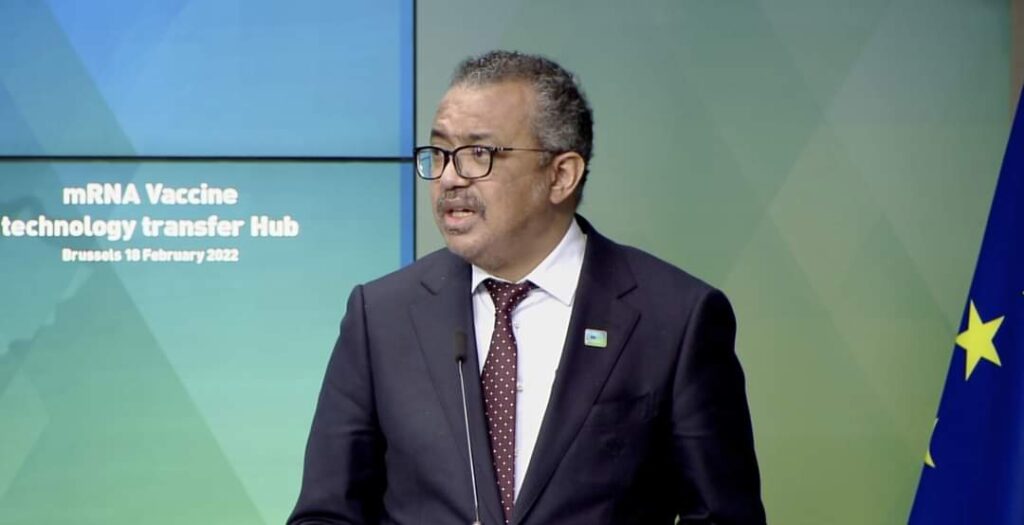
Six African countries have been chosen to establish their own mRNA vaccine production, the World Health Organization said Friday, with the continent largely shut out of access to Covid jabs.

Egypt, Kenya, Nigeria, Senegal, South Africa and Tunisia were selected as the first recipients of technology from the WHO’s global mRNA vaccine hub, in a push to ensure Africa can make its own jabs to fight the Covid and other diseases.

“More than 80 percent of the population of Africa is yet to receive a single dose. Much of this inequity has been driven by the fact that globally, vaccine production is concentrated in a few mostly high-income countries,” WHO chief Tedros Adhanom Ghebreyesus told a ceremony on the sidelines of an EU-Africa summit in Brussels.

“One of the most obvious lessons of the Covid-19 pandemic, therefore, is the urgent need to increase local production of vaccines, especially in low and middle-income countries.”

Tedros has continually called for equitable access to vaccines in order to beat the pandemic, and rails against the way wealthy nations have hogged doses, leaving Africa lagging behind other continents in the global vaccination effort.

Currently only one percent of the vaccines used in Africa are produced on the continent of some 1.3 billion people.

The WHO set up a global mRNA technology transfer hub in South Africa last year to support manufacturers in low- and middle-income countries to produce their own vaccines.

The global hub’s role is to ensure that manufacturers in those nations have the know-how to make mRNA vaccines at scale and according to international standards.

As used in the Pfizer/BioNTech and Moderna Covid-19 vaccines, mRNA technology provokes an immune response by delivering genetic molecules containing the code for key parts of a pathogen into human cells.

Primarily set up to address the Covid-19 pandemic, the global hub has the potential to expand manufacturing capacity for other vaccines and products, such as insulin to treat diabetes, cancer medicines and, potentially, vaccines for diseases such as malaria, tuberculosis and HIV.

The scheme’s ultimate goal is to spread capacity for national and regional production to all health technologies.

“The goal is in 2040 to have reached a level of 60% of vaccines produced in Africa that are administered in Africa,” said EU chief Ursula von der Leyen.

The WHO said it would work with the first six countries chosen to develop a roadmap of training and support so they can start producing vaccines as soon as possible. Training will begin in March.

The South African hub is already producing mRNA vaccines at laboratory scale and is currently scaling up towards commercial scale.

But the announcement of the tech transfers does not solve the thorny issue of Covid-19 patents that has set Africa at loggerheads with Europe.

African — and other developing — nations are pushing at the World Trade Organization for the temporary intellectual property waiver to allow the generic production of vaccines and treatments.

Europe — the home of some of the major companies behind the vaccines — has opposed the move arguing that the first priority was to build up production capacity in poorer countries.

“We are talking about the lives of millions, hundreds of millions of people, rather than the profitability of the few companies,” South African President Cyril Ramaphosa said.

“It is not acceptable that Africa is consistently at the back of the queue in relation to access to medicines.”

French President Emmanuel Macron pushed back against the calls for a waiver, but mooted other options including “compulsory licensing” that could see the patents used in limited cases.

“We have to be consistent with everything we do, we have to protect intellectual property, because it’s very important for us to continue to create, to innovate, to invent,” Macron said.

“We have to make sure that this intellectual property never hinders the dissemination of knowledge and the building of its capacities.”

MALAWI DECLARES FIRST AFRICA POLIO CASE IN YEARS

18 February 2022

Polio is a highly infectious disease. The virus invades the nervous system and can cause total paralysis within hours.

A case of wild polio has emerged in Africa for the first time in five years, the World Health Organization (WHO) said.

Malawian health authorities have declared an outbreak of wild poliovirus type 1 after a case was detected in the capital Lilongwe, the WHO said.

The poliovirus paralysed a three-year-old girl.

A laboratory test found the strain to be the same as one circulating in Pakistan, the health authorities said.

Afghanistan and Pakistan are the only two countries where wild polio is endemic.

The last known case of wild polio in Africa occurred in 2016 in Borno state, Nigeria. The continent was declared free of indigenous wild polio in 2020.

EUROPE COMMITS $170 BILLION TO AFRICA, CONTINENT

18 February 2022

The European Union has pledged 150 billion euros ($170 billion) for investment in Africa as it seeks to gain influence on the continent and become its partner of choice.

But the continent’s leaders were hoping for more, including vaccine patent waivers and the redirecting of billions of dollars of potential International Monetary Fund reserves from richer nations to more vulnerable ones to aid their recovery from the coronavirus pandemic.

Most of the 150 billion euros will go to the Global Gateway, Europe’s initiative to rival China’s massive investment plan in the continent and will support health, infrastructure and the fight against climate change over the next seven years.

“As Africa sets sail on the future, the European Union wants to be Africa’s partner of choice,” said European Commission President Ursula von der Leyen at the EU-Africa Summit in Brussels. “It means remaining an economic partner you can trust and the European Union is the first trading partner and the first investor in Africa.”

But with 12% of Africa’s 1.3 billion people fully inoculated so far, the bloc failed to agree to calls to waive patents to allow for the generic production of vaccines and treatments.

The issue, under discussion since 2020, may now only be resolved in the next few months, said Senegal President and African Union Chairperson Macky Sall.

Though Von der Leyen did concede it may be necessary to compel drugmakers to share their mRNA technology if Africa is ever to reduce its heavy reliance on the West for life-saving vaccines.

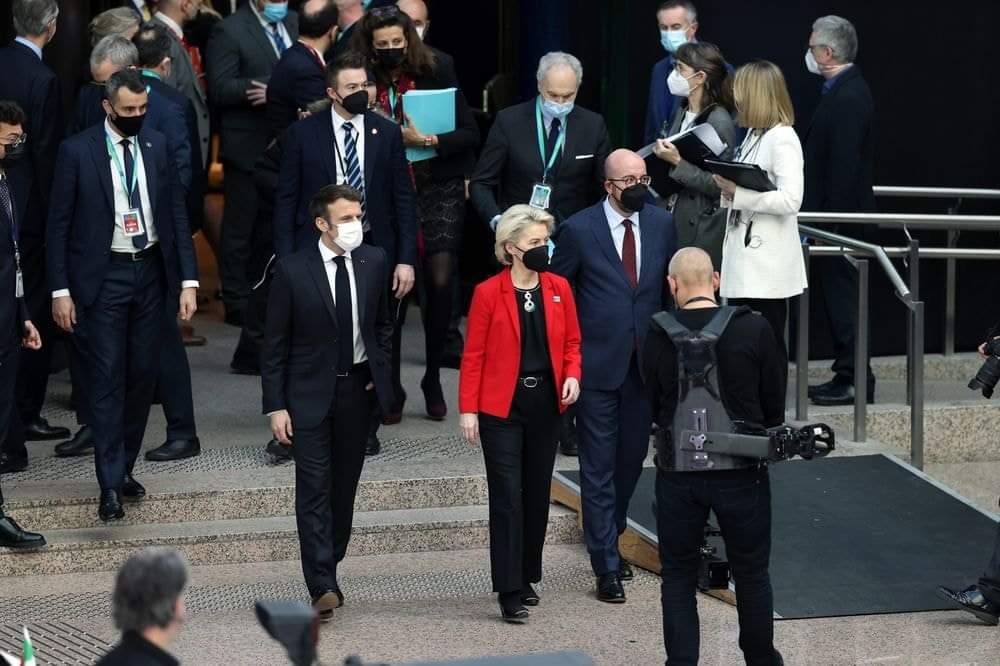
Photographer: Dursun Aydemir/Bloomberg

By Samuel Gebre

Emmanuel Macron, France’s president, from left, Ursula von der Leyen, president of the European Commission, and Charles Michel, president of the European Council, at the European Union-Africa Union Summit in Brussels, Belgium.