KAZAKHSTAN CELEBRATES 30TH ANNIVERSARY OF INDEPENDENCE, ON 16TH DECEMBER 2021

This year Kazakhstan celebrates 30th anniversary of Independence! December 16, 1991, a memorable date in Kazakhstan history.

On the occasion of Kazakhstan 30th Anniversary of Independence,, The Diplomatic Informer Magazine SA would like to extend our sincere felicitations and best wishes to the Government and the people of Kazakhstan on the occasion of the National Day and wish the Government and people of Kazakhstan well, continued progress, peace, unity stability and prosperity.

On this day, the Supreme Council of the Republic of Kazakhstan adopted a historical document – Constitutional Law No. 1008-XII “On the State Independence of the Republic of Kazakhstan”.

Now this date is celebrated as the main state holiday – Independence Day of the Republic of Kazakhstan.

In a historically short period of time, the people of Kazakhstan under the leadership of the First President of the Republic of Kazakhstan – Elbasy Nursultan Nazarbayev has made tremendous progress in all spheres of activity the transition from a planned to a market economy, improving living standards of the population, the formation of a legal and democratic state, the movement to create the welfare state, further strengthening the state sovereignty, security and stability, deepening state-building.

As the President of the Republic of Kazakhstan, Kassym-Jomart Tokayev, noted, “Independence serves as a strong pillar of Kazakhstan’s statehood. For Kazakhstan, a country with a rich history and deep roots, there is no greater value. It is the most precious treasure, the most precious possession.

Happy 30TH Years of Independence Kazakhstan!

NATIONAL DAY OF RECONCILIATION

16 December

The Diplomatic Informer Magazine SA would like to wish the people of South Africa a Happy Day of Reconciliation

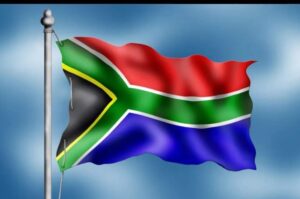
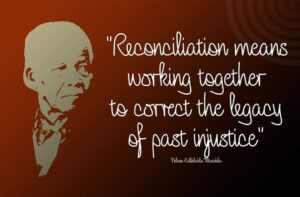
South Africa annually observes 16 December as National Day of Reconciliation to foster reconciliation among all race groups and to promote national unity for a shared future for all.

The Day of Reconciliation was created to mark the end of apartheid. The day, therefore, has been in existence since 1995. South Africa’s first non-racial and democratic government was tasked with promoting reconciliation and national unity. One way in which it aimed to do this symbolically was to acknowledge the significance of the 16 December in both the Afrikaner and liberation struggle traditions and to rename this day as the Day of Reconciliation. On 16 December 1995, the Day of Reconciliation was celebrated as a public holiday in South Africa for the first time.

There is no denying that this is one of the most significant and important dates in history. It is a day whereby we remember the past history of the country. While the date is an important one in South African history, it is also a day that is honored all around the world. After all, we can all appreciate the importance of building bridges and working on healing.

It is a sad fact that there are a lot of ethnic groups that feel underappreciate and discriminated against all around the world. On Day of Reconciliation, the best thing that we can do is work on healing any damage and moving forward so that we can reach a date whereby we’re not talking about color.

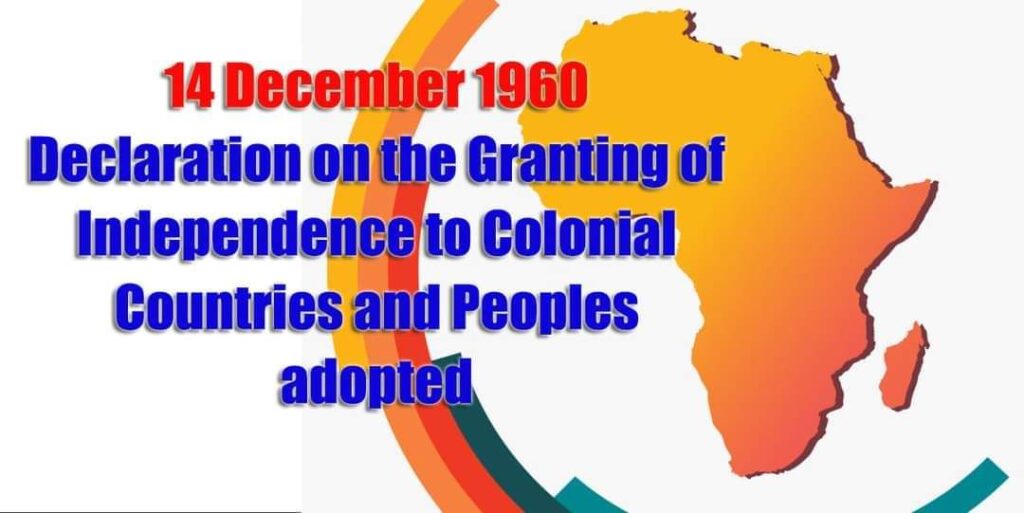
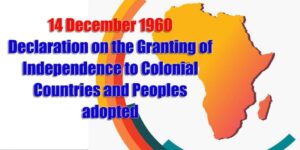
14 DECEMBER 1960, DECLARATION ON THE GRANTING OF INDEPENDENCE TO COLONIAL COUNTRIES AND PEOPLES ADOPTED

14 December 2021

On Dec 14, 1960, the Declaration on the Granting of Independence to Colonial Countries and Peoples was adopted by the UN General Assembly.

Its implementation has released around 750 million people from colonial yoke. At the time this was one-third of the world’s population. It also drastically changed the political map of the world and resulted in the establishment of over 80 new states in Africa, Asia, Latin America and Oceania.

It is no exaggeration to say that the Declaration has changed the world’s legal order forever. It gave a powerful impulse to the colonial territories’ movement for independence and stated the necessity of putting a speedy end to colonialism, thus becoming a true milestone in the decolonization process.

We are particularly proud of the fact that it was our country, the Soviet Union, that came up with the initiative of developing this Declaration and, together with other states, ensured its adoption, despite fierce resistance of colonial powers which insisted that the “colonies were not yet ready for independence”.

However, the USSR went far beyond initializing the development of the Declaration – building relations with African states was an important part of Soviet foreign policy. Our country actively supported newly established, young African states both diplomatically and on economic level.

The USSR provided economic and technical support to help African countries create multifaceted economies. USSR concluded agreements on technical and economical support with 37 countries on African continent. Their implementation entailed the creation of some 600 new various industrial objects.

Embassy of Russian Federation in South Africa

#colonialism #liberation #USSR #Soviet #decolonization #decolonizeyourmind

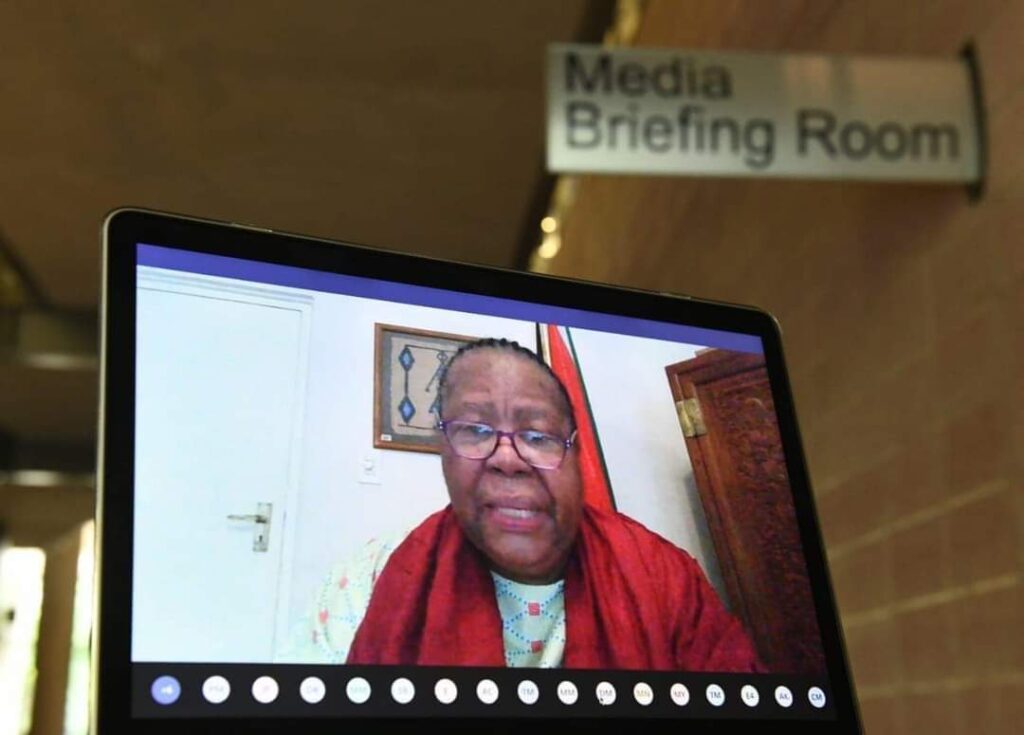
DR NALEDI PANDOR, MINISTER OF INTERNATIONAL RELATIONS AND COOPERATION, ON THE OCCASION OF THE END-OF-YEAR MEDIA BRIEFING

 14 DECEMBER 2021

This briefing is being held to provide you with an overview of work done in implementing South Africa’s foreign policy in 2021. This is the second year in which we work under the challenging conditions imposed by the pandemic.

I am addressing you following a very successful working visit to four West African countries, I will say more about this later.

I will thus focus on the work we have done – and will continue to do – to pursue our foreign policy mission of “championing an African continent which is prosperous, peaceful, democratic, non-racial, non-sexist and united and which aspires for a world that is just and equitable.”

I shall give an overview of some of our work, which includes:

SADC’s role in restoring peace and stability in the region;Fostering closer bilateral political and economic ties with fellow African states;International solidarity work relating to Palestine and Western Sahara; andSouth Africa in the multilateral system (the UN, its institutions and other bodies).

South Africa’s role in the maintenance of peace and stability in the SADC region

South Africa continues to play an active role within the Southern African Development Community (SADC), working as part of a regional collective and assuming specific responsibilities as assigned through the decision-making structures of the regional body.

SADC has undergone changes, this year, the most notable of which is the appointment of a new Executive Secretary, His Excellency Elias Mpedi Magosi. South Africa will continue to support the work of the SADC Secretariat, which is tasked, among other things, with coordinating our response to the development and security challenges facing the region.

The situation in the Republic of Mozambique is of particular concern to all of us in the region. Following extensive discussions, SADC has deployed the Regional Coordination Mechanism on the operations of SADC Mission in Mozambique (SAMIM).

The last Extraordinary Summit of the SADC Troika, which met in Pretoria in October 2021, approved the extension of the SAMIM “to continue with offensive operations against terrorists and violent extremists to consolidate the stability of security and create a conducive environment for resettlement of the population and facilitate humanitarian assistance operations and sustainable development.”

The SADC region remains unwavering in its commitment to continue supporting the Republic of Mozambique in achieving peace and security in some parts of the central and northern Cabo Delgado province. The leaders of our region have committed to contributing towards the efforts to bring about lasting peace and security, as well as reconciliation and development in the Republic of Mozambique.

In August 2021, South Africa took over the role of Chair of the SADC Organ for Politics, Defence and Security. Our responsibility is to continue to support efforts aimed at supporting the achievement and maintenance of security and the rule of law in the SADC region. The SADC Treaty, the Protocol on Politics, Defence and Security Affairs and the Strategic Indicative Plan for the Organ (SIPO) II are the key documents that guide the activities of the Organ.

Fostering closer bilateral political and economic ties with fellow African states

South Africa is a strong proponent of African unity and solidarity. We believe that continental unity, peace and prosperity begins at bilateral levels when individual states reach out to others and forge closer bilateral ties. Strong bilateral ties provide the foundation for greater pan-African unity. This is, we worked harder at forging closer bilateral ties with several of Africa’s leading economies, including Kenya, Namibia, Nigeria, Ghana, Côte d’Ivoire and Senegal.

President Cyril Ramaphosa recently hosted his Kenyan counterpart, President Uhuru Kenyatta, on a State Visit to South Africa. South Africa and Kenya share friendship, mutual respect, common values, and solidarity not only on issues of bilateral concern but also on the vision for the continent. Both countries are proponents of unity and integration and have a common vision for the development and Renaissance of Africa as encapsulated in the AU Agenda 2063: The Africa We Want.

After the Kenya State Visit, President Ramaphosa led a delegation comprising of government and business leaders on a State Visit to the Federal Republic of Nigeria, at the invitation of President Muhammadu Buhari.

The State Visit to Nigeria coincided with the 10th Session of the Nigeria-South Africa Bi-National Commission (BNC), which reflected on the progress made in advancing trade and investment between the two countries.

President Ramaphosa also undertook a State Visit to the Republic of Côte d’Ivoire at the invitation of His Excellency President Alassane Dramane Ouattara.

The State Visit was historic. It was the first since diplomatic relations between South Africa and the Republic of Côte d’Ivoire were established in May 1992.

A third State Visit was to the Republic of Ghana at the invitation of President Nana Addo Akufo-Addo.

Bilateral relations between South Africa and Ghana have grown significantly over the years. We are focused on the implementation of the African Continental Free Trade Area (AfCFTA) and advancing the objectives of the economic integration of our continent.

Business relations are thriving. There are over 200 South African companies registered in Ghana, employing nearly 20,000 Ghanaians and around 500 expatriates. There is, however, still room for improvement, and our two countries are exploring more opportunities for further economic collaboration.

President Ramaphosa undertook a further Official Visit to the Republic of Senegal at the invitation of President Macky Sall. The President took part in the Dakar Peace and Security Forum.

South Africa and Senegal enjoy cordial bilateral political, economic and social relations underpinned by strong historical ties dating back to the years of the liberation struggle.

A visit to Goree Island was a moving highlight of the visit.

Managing the COVID-19 Pandemic

As part of its continuous response and effort in fighting against COVID-19, South Africa has (through the African Renaissance Fund) paid a grant into the African Vaccine Acquisition Trust which was established by the African Union, when President Ramaphosa served as Chair of the African Union (“AU”), this followed the establishment of the COVID-19 African Vaccine Acquisition Task Team (“AVATT”) in November 2020. The main purpose of the Task Team is to ensure that the African Continent secures vaccines and blended financing resources for achieving Africa’s COVID-19 vaccination strategy which targets vaccinating a minimum of 60 per cent of Africa’s population.

The recent announcement that Johnson & Johnson has granted South African Pharmaceutical Company Aspen, an intellectual property license to produce its vaccines under the new brand name, “Aspenovax”, is not only a step in the right direction but also a good sign that our diplomacy and advocacy work is bearing fruit. This is what South Africa has been calling for.

International solidarity work relating to Palestine and Western Sahara

In 2021, we have highlighted concern that the situation relating to Western Sahara and Palestine remains deadlocked – in some instances even worsening. The question of Palestine is still unresolved after 70 years and continues to challenge human conscience and international justice.

In keeping with South Africa’s long-term and principled support for the Palestinian People, the Government of South Africa remains committed to supporting initiatives aimed at refocusing the international agenda on Palestine and the Middle East Peace Process. The Palestinian question remains at the heart of the Middle East situation.

The South African Government believes that the only way to bring about lasting peace in the Middle East is to have a comprehensive and unconditional negotiated settlement to end the Israeli occupation of the Palestinian territories and Israel’s continued blockade of Gaza. The ongoing delay in achieving such a settlement leads to an unending cycle of violence.

In the context of Israel’s continuing violations of its international law obligations, we have worryingly seen the African Union Commission this year granting Israel the status of an Observer in the AU. This came as a shock, given that the decision was made at a time when the oppressed people of Palestine were hounded by destructive bombardments and continued illegal settlements of their land.

The unjust actions committed by Israel offend the letter and spirit of the Charter of the African Union. The AU embodies the aspirations of all Africans and reflects their confidence that it can lead the continent through the practical expression of the goals of the Charter, especially on issues relating to self-determination and decolonisation. The decision by the AU Commission in this context remains inexplicable. We look forward to the 35th Ordinary Summit of the African Union where the Heads of State will discuss this matter.

South Africa in the multilateral system (the UN, its institutions and other bodies)

South Africa is a proud member of the world community of nations. During this year, we continued to play active roles in institutions of global governance, including the United Nations, the G20 and BRICS. We are currently serving in the UN Peacebuilding Commission for 2021-2022.

South Africa participated in the United Nations 76th Session of the General Assembly (UNGA76) in September 2021 under the theme: “Building resilience through hope – to recover from COVID-19, rebuild sustainably, respond to the needs of the planet, respect the rights of people, and revitalise the United Nations.”

In his address to the General Assembly, President Ramaphosa called for fair and equitable distribution of vaccines saying “In this interconnected world, no country is safe until every country is safe”.

In the G20 held in Rome, Italy, South Africa joined other countries in discussions aimed at forging a common global recovery effort from the COVID-19 crisis and enable sustainable and inclusive growth. Together with other G20 members, South Africa committed itself to overcoming the global health and economic crisis stemming from the pandemic, which has affected billions of lives, dramatically hampering progress towards the achievement of the Sustainable Development Goals and disrupting global supply chains and international mobility.

The year 2021 saw the BRICS commemorate 15 years of its existence. Together with its BRICS partners, South Africa takes pride in the achievements of this organisation. These achievements include the creation and operationalisation of the New Development Bank (NDB), the Contingent Reserve Arrangement (CRA), the Energy Research Cooperation Platform, Partnership for New Industrial Revolution (PartNIR) and the Science, Technology and Innovation Framework, to name but a few.

Cooperation among BRICS member states continues to grow. Last week we announced that the South African Government has invited scientists from Brazil, Russia, India and China (BRICS) to collaborate on research, including sharing of data and information on COVID-19 with a particular focus on Omicron – the new variant first discovered and reported by South African scientists.

South Africa is currently the host of the BRICS Vaccine Research Centre and the research on the Omicron variant will form part of the centre’s initiatives.

Lastly, we have been and continue to engage all countries that have imposed unscientific and discriminatory travel bans on our country and region. We are pleased that diplomacy is bearing fruits. Some of them have already begun lifting these restrictions that are inflicting so much harm on our economy and families. It turn out that the Omicron variant had long been in the backyard of most of these countries who rushed to close their borders, ignoring science and warnings from the World Health Organisation and the United Nations.

This year we launched the Charlotte Maxeke African Women’s Economic Justice and Rights (AWEJR) Initiative.

This will be our contribution to the empowerment of women and girls in the global agenda of economic justice, peace, security, reconstruction and development.

This summary is not the total of the work we’ve done this year. Our diplomats work tirelessly daily to market South Africa as a trade, investment and tourism destination of choice. This is one of the ways in which we contribute to the fight against poverty, inequality and unemployment in our country and continent.

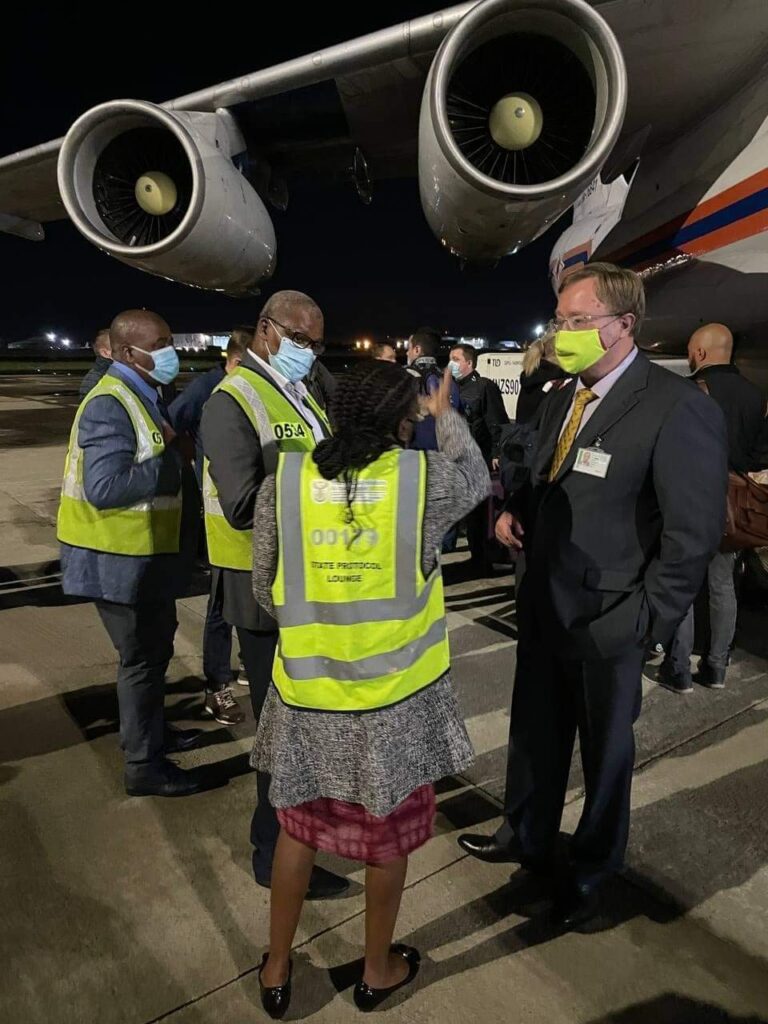
A TASK FORCE OF RUSSIAN VIROLOGISTS ARRIVE IN SOUTH AFRICA

Photo: Ambassador of Russia to South Africa H.E.Mr.Ilya Rogachev and Director General of the National Department of Health of RSA Dr. Sandile Buthelezi.

14 December 2021

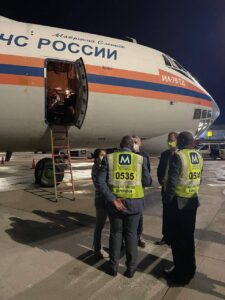
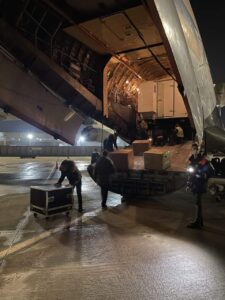
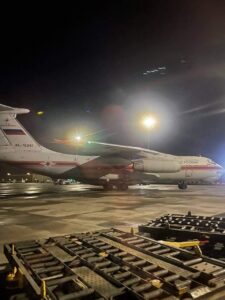
On Dec 13, 2021, an aircraft of the Russian Ministry of Emergency Situations (EMERCOM) carrying a group of experts as well as mobile lab and other medical equipment arrived in RSA. Russian scientists, doctors of Rospotrebnadzor service and the Health Ministry of Russia and EMERCOM team were deployed to South Africa to jointly carry out scientific research of СOVID-19 and its variants, exchange experience in combatting the spread of the coronavirus with South African counterparts.

At the O.R. Tambo international airport, the task force was greeted by Ambassador of Russia to South Africa H.E.Mr.Ilya Rogachev and Director General of the National Department of Health of RSA Dr. Sandile Buthelezi.

The mission is carried out following the agreement between the Presidents of the two countries as part of the efforts aimed at strengthening Russian – South African cooperation in fight against the pandemic within the context of the detection of the ‘Omicron’ variant.

Embassy of Russian Federation in South Africa

#Russia #SouthAfrica #RussiaAfrica #russiasarelations #pandemic

INTERVIEW WITH H.E. MR KANAT TUMYSH, AMBASSADOR OF KAZAKHSTAN TO SOUTH AFRICA KAZAKHSTAN’S PEARL JUBILEE: 30th Independence Anniversary of the Land of Great Steppe

Photo: First President of Kazakhstan, Elbasy H.E. Nursultan Nazarbayev
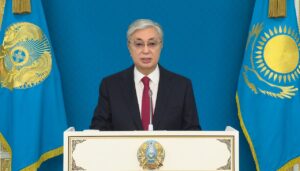
Photo: H.E. Kassym-Jomart Tokayev President of Kazakhstan
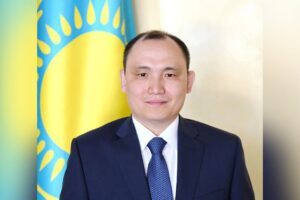
  H. E. Kanat Tumysh, Ambassador of Kazakhstan to the Republic of South Africa

13 December 2021

Very soon, Kazakhstan will commemorate its 30th Independence Anniversary. How has your country in the heart of Eurasia changed during the last thirty years? What are the most significant initiatives and achievements the Kazakh leadership has garnered?

Throughout this year, Kazakhstan has been celebrating a glorious and memorable landmark event for our country – the 30th Anniversary of our

cherished Independence.

Thanks to our First President and Leader of the nation H.E. Mr. Nursultan Nazarbayev’s forward looking policy, Kazakhstan has registered notable

success and has become known all over the world. In unity and harmony, we were able to build our newly independent state, as our greatest accomplishment.

We have strengthened the spirit of the nation by laying a solid foundation for development.

Our people have built a strong statehood; thus, sovereignty is not just an empty slogan. It is important for us that every citizen should enjoy the fruits of

Independence – a peaceful life, social harmony and improved well-being. All our endeavours are aimed at this. Thanks to the unity and constructive labour of the people of Kazakhstan, we have successfully overcome all difficulties and trials.

Our country is about to enter the fourth decade of Independence. It is already clear that this period will not be easy. Therefore, we must be ready for any

challenges and threats.

During the first years of our Independence (1991 to 2021) we joined the World’s Top-50 most competitive

countries with high GDP per capita, which grew more than twenty times (currently $26,500).

In His Excellency’s article entitled “Independence is the Most Precious Treasure”, published in the

Kazakhstani leading media outlet Egemen Qazaqstan in January 2021, President Kassym-Jomart Tokayev

shared the following milestones in our modern history:

The first decade of our Independence entailed the laying of the foundation for a new Kazakhstan. At the time, under the leadership of Elbasy, the symbols

of our statehood were established, and the state governmental system, i.e., administrative authorities and powers were formed. We created our Armed

Forces in 1992, and we adopted our Constitution in 1993-1995. Our national currency Kazakhstani Teñge came into circulation in 1993. We established

diplomatic relations with 183 foreign countries, including South Africa on 5 March 1992. We shifted our capital from Almaty to Nur-Sultan in 1997. Our

country has become a member of authoritative and reputable international organizations, such as UN,

OIC, OSCE, CIS, CSTO, SCO, Interpol, International Olympic Committee, FIFA, UEFA and many others. Kazakhstan managed to close the world’s

second largest nuclear test site in Semipalatinsk and voluntarily dismantled the planet’s fourth largest nuclear arsenal.

In the second decade of our Independence, we defined development priorities for the Kazakh state. The position of our country strengthened and our economic potential increased. We established the legality of all our land borders. We implemented the

“Cultural Heritage” programme and recorded our history. We saved the North Aral Sea and reclaimed the receding sea. We are also:

• Initiated tri-annual Congresses of the Leaders of

World Traditional Religions (in 2003);

• Co-established as the founding fathers of the Cooperation Council of Turkic-speaking States (Turkic Council) in 2009, which was renamed the Organization of Turkic States and enforced in November 2021. Its current members are

Azerbaijan, Kazakhstan, Kyrgyzstan, Turkey and Uzbekistan, while observers are Hungary and Turkmenistan. This structure is an important priority of our foreign policy.

• Chaired the Organization for Security and Cooperation in Europe (OSCE) and hosted its 7th Summit (2010);

• Chaired the Shanghai Cooperation Organization (SCO) and hosted its 5th, 11th and 17th Summits of (2005, 2011 & 2017);

• Inaugurated and chaired the Conference on Interaction and Confidence Building Measures in

Asia (CICA) and hosted its 1st and 2nd Summits (2002&2006) and will host the 6th Summit in NurSultan in 2022;

• Tabled, following the Initiative by the Kazakh leadership, the UNGA Resolution 64/35 of 2009, which established International Day against Nuclear Tests, observed annually on 29th of August

(very special day in 1991 when the Semipalatinsk Nuclear Test Site was shut down once and forever);

• Сhaired OIC and hosted its historic Ministerial Council in Nur-Sultan (Astana) in 2011, where the Organization managed to change its logo and

name – from the “Organization of the Islamic Conference” to the “Organization of Islamic Cooperation”;

• Co-established as the founding fathers the Eurasian Economic Union (EAEU), comprising 5 post-soviet states located in Eastern Europe and Central Asia (2014);

• Attracted significant foreign investment into our country;

• Turned our capital Nur-Sultan, which grew up on the banks of the Esil River, into our national showpiece;

• Launched major infrastructure projects, such as the Western Europe – Western China international transportation corridor;

• Accelerated housing construction at an

unprecedented pace.

In the third decade of our Independence, our country grew and became a prosperous state. We adopted the Strategy “Kazakhstan2050” and

planned to join the top 30 developed countries. We implemented large-scale Programmes such as,“Sustainable Industrial-Innovative Development,”

“Nurly Jol” (lit. “Radiant Path”), “100 Concrete Steps”in each region.

On foreign policy, we finally resolved all the border issues with our neighbours. We were elected to the UN Security Council for 2017-2018, a first for a country from Central Asia, and chaired this authoritative UN body in January 2018. In summer and autumn

2021, respectively, we were also elected to the UN Economic and Social Council and UN Human Rights Council, for 2022-2024. Kazakhstan joined the Second Optional Protocol of the International

Covenant on Civil and Political Rights, abolishing the death penalty.

In the same decade pioneered several significant international initiatives including:

• The ATOM Project (August 2012), an

international campaign by the Nazarbayev Centre of Kazakhstan. The primary goal of the campaign is to build international support for the abolishment of nuclear testing. ATOM stands

for “Abolish Testing. Our Mission.” The aim is to achieve the goals of the Comprehensive Nuclear Test Ban Treaty through online petitions and other

methods;

• G-Global Platform (2013) a global coalition for a green economy and development, an international

ICT virtual project, a platform with the expert community, who have constant interactive, open and public discussions and debates on global issues;

• The Universal Declaration on the Achievement of a Nuclear-Weapon-Free World (adopted by the UN General Assembly with its Resolution 70/57

in December 2015);

• The Code of Conduct towards Achieving a World Free of Terrorism (adopted in New York in 2018),

joined to the date by around 90 states;

• Kazakhstan at that decade also gained the status of the Member-Observer of the African Union in 2013.

What are the major new goals and objectives that H.E. President Tokayev has initiated for the next decade of Kazakhstan’s Independence?

As our country and people are entering the fourth decade of our Independence, the entire world has entered a completely new era and faces unprecedented new challenges. The path of development of our civilization and the fundamental basis of the global

architecture are undergoing radical change. The main task is to overcome the consequences of the Covid-19

pandemic. The 21st year of the twenty first century is a turning point for entire humanity, as it sets the tone for the coming decade.

In such difficult times, we should not waste time for even a moment. Therefore, in the year of the 30th

Anniversary we carried out comprehensive reforms

in our country. Our leadership proposed successful economic and social programmes for the Kazakh

people. President Tokayev signed a historic Decree “On further measures of the Republic of Kazakhstan

in the field of human rights,” which instructs the Kazakh Government to adopt measures and approve

the nation-wide action plan setting out human rights as a priority area for our state. These measures align with the recommendations by the National Council of Public Trust and aim at addressing human rights issues innovatively and protecting our citizens,

especially children and youth, from cyberbullying, and combat human trafficking and torture.

Working together (as the famous proverb of my and many other nations says – Jumyla kötergen jük jeŋil, i.e. Many hands make light work), all the Kazakhstanis have created the necessary conditions for a confident

future. We intend to keep this pace up.

We will focus on building an effective state and a just society. The main priority of our country’s leadership is to improve the quality of life and welfare of our

population by focusing on real results. We are directly involving all active citizens in this large-scale work,

inter alia, in making decisions that affect the country.

The long-term development of our state is based on the principles of Continuity, Justice and Progress.

The Kazakh leadership is pursuing the main goal of making consistent changes/reforms in all areas.

We introduced a service model of interaction with our citizens. We ensured public security utilising new digital technologies. Our Parliament strengthened the legal framework for the principles of the rule of law, fair competition, and protection of property.

Today, we are working on several legislative proposals

Yet, the biggest task of the fourth decade is to become a powerful country and a mature nation. Along that road, we need to continue the process of

political and economic reforms and modernization of our consciousness, to form a new identity of the nation adapted to modern requirements.

Our new tasks and priorities for the years to come include:

І. Economic development in the post-pandemic

period

II. Effective social policy targeting the following:

• Improving the efficiency of our health care system

• Ensuring quality education for our people

• Formation of an effective labour market

• Improving domestic and regional policies

III. Political modernization and protection of human rights

Economic development. Our major goal

for economic development is to create a strong competitive national economy, attract foreign investment, as well as ensuring digitization and a green economy. We also want to promote innovation and industrialisation to enable us to join the ranks of

the most advanced 30 developed countries. We aim for a state that boasts healthy, educated, and prosperous

people. Therefore, the main task of our state is to create conditions for e fully-fledged development and prosperity. By 2025, we will create an effective

institutional and infrastructural environment for every citizen.

Effective social policy is key to building a strong and inclusive society. That is why our President Mr Tokayev successfully implemented his concept of “a State that listens to the voice of its People” (in short, a ‘Listening State’) in 2019. We intend to utilize the

creative potential of our nation.

Our leader also emphasised education and science. Recently, Kazakhstan has made progress in reforming these sectors. The world is moving towards the “knowledge economy.” The post Independence generation makes

up more than 50% of the population today. Today’s children and youth

will dominate the labour market of Kazakhstan by 2050. The prosperity of our country in the future depends on their competitiveness. It is important to

understand that being a “young nation” gives us longterm benefits, but we need to take advantage of the same. We shall thus carry out consistent work on the

development of human capital. Investment in young people will certainly pay off many times over.

To this end, we have developed, and are

implementing a special national project. The modernization of national healthcare is particularly important. In the context of the pandemic, the

urgency of this problem has become obvious. Thus, our government is taking a definitive step towards the creation of a healthcare system that will be patientcentric. The transition to such a model is possible through personalisation, the introduction of digital tools, and expansion of people’s access to qualified medical care.

Kazakhstan is paying special attention to the development of most important industries that connect all our regions into a single economic space,

inter alia, transport, energy and digital infrastructure. Our authorities are striving to promote centres of

development, given the advantages of managed urbanization. We are prioritising the improvement of

infrastructure that connects regions, cities, districts and villages.

This year, our country started to modernize more than 3,500 villages. We will completely repair roads to each village and highways of national importance, which are the bedrocks of surrounding settlements. To improve local self-governance further, we plan

to simplify budget procedures and increase the independence of local representatives and executive bodies.

Political modernization. This January we

conducted truly free and transparent parliamentary elections. The main principle of our political modernization is to make all changes/reforms in an

evolutionary way, based on nation-wide dialogue and compromise. Political reforms provided new opportunities for parties and gave impetus to the

democratic development of our country. I would like to briefly outline the main principles of our President’s package of political reforms:

• Registration barrier for creating political parties was halved;

• A 30 % quota was introduced for women and youth on electoral party lists;

• Institution of parliamentary opposition was formalised and strengthened;

• Decriminalisation of Article 130 (defamation) and humanisation of Article 174 (inciting social discord) of the Criminal Code were initiated;

• A new law on assemblies was implemented, which made it easier to organise and participate in rallies;

• Transition to the first-ever direct elections of rural akims/administrative heads (successfully conducted on 25 July 2021).

• Elaboration of the Concept for the Development of Local Self-Governance and the Law on Public Control;

• Creation of a single institution for online-petitions;

• Improvement of the legislation to combat torture, human trafficking, and protect citizens (especially children) from cyberbullying;

• Accession to the Optional Protocol to the Convention on the Rights of the Child on a Communications Procedure;

• Increasing the political competition.

Because of these reforms, qualified and respectable people came to the Majilis (National Assembly), Maslikhats (local representative bodies) and rural authorities. The introduction of a proportional system for Maslikhat elections has increased the activity of parties in the regions. Involving citizens as much as possible in the local political process in our regions also proved

helpful. The institution of parliamentary opposition significantly strengthens the role of small political forces. Thus, we have given a significant impetus to

the development of a multi-party system as well as to strengthening of parliamentarism in our country.

In the future, we will create a list of party

members and other related procedures online. It will be beneficial to use the opportunities of the E-Government for this purpose.

In Kazakhstan, the Parliament has a control function alongside the legislative one. We have proven its effectiveness. The efficacious use of this most

important competence will significantly reinforce the institutional basis of modern parliamentarism in Kazakhstan. This is in line with President Tokayev’s

political formula entitled, “Strong President. Influential Parliament. Responsible Government”.

Honourable Ambassador, could you please kindly tell us briefly about the history of Kazakhstan?

Kazakhs are Turkic people. Our ancestors duelled Eurasian steppes, even Anno Domini and domesticated horses for the first time in the World’s

history.

We are legitimate inheritors of the Golden Horde, vast and great Eurasian Empire. Its 750th Anniversary was prettily commemorated last year in Kazakhstan and worldwide. As our President has mentioned, “Golden Horde is included in the important links of

the cultural code of Kazakhs”.

I would like to stress that Kazakhstan is in essence and in geography, a Eurasian state. Of course, most parts of our territory are located in Asia. However,

we must not forget that another part of Kazakhstan comparable to the territory of several UN member states is located on the European continent.

After the dissolution of the Golden Horde, we formed the independent Kazakh Khanate in 1465, which administratively was divided into the three hordes – Senior (Uly Jüz), Middle (Orta Jüz) and Junior (Kishi Jüz). They grouped together in settlements and lived in dome-shaped tents made of

felt material, called yurts. Nomadic Kazakhs migrated seasonally within the Khanate’s territory to find pastures for their herds of sheep, horses, goats and

camels.

In 1917, after the October Revolution in the Russian Empire, we created our sovereign state called Alash

Orda (Horde of Alash) that existed between 1917 and 1920 on the approximate territory of the present-day

Republic of Kazakhstan. The capital city was “Alash Qala” (City of Alash, currently Semey).

Nevertheless, after three years, in 1920, this establishment lost its sovereignty and Kazakhstan became part of the USSR as an Autonomous Republic.

In 1936 Kazakhstan became a constituting part of the Soviet Union as a full-fledged Republic. Unfortunately, the same year governmental authorities

also started a mass campaign of political repression in the Soviet Union, usually called the Great Purge. They

forced Kazakhs to settle on collective and state farms. The result of repression against some ethnicities was that large numbers of their representatives were

deported/exiled to our Republic.

Praise be to Almighty, Most Gracious, Most Merciful, in 1991, we gained our cherished Independence.

To summarise, I would like to underscore that the eternal triad of our Sovereignty consists of:

• Our vast land, stretching from Altai mountains in the east to Atyrau (Caspian Depression) in the west, from Alatau mountains (other names: Täŋirtau, Mountains of Heaven) in the south to

Saryarqa (Kazakh Uplands) in the north:

• Our sacred language, which is nourished by our mother’s white milk; and

• Our prosperity and unity that our ancestors protected and provided to our nation as their legacy despite all difficulties.

We cherish these three values.

Finally, what are your wishes to the peoples of Kazakhstan and South Africa?

Today we are experiencing an unprecedented time with challenges such as global turbulence, trade wars

and the Covid pandemic, which has seriously affected the citizens of both of our countries. Therefore, I would like to wish our peoples good health, stability,

prosperity and fruitful cooperation. We have also witnessed the fact that due to the pandemic, many people have lost their jobs and are undergoing extremely difficult times.

I sincerely hope that our governments will be able to quickly and effectively implement the whole package

of measures against the Covid crisis. I have no doubt that the able leadership of Presidents Tokayev and Ramaphosa will soon impact very positively on the

socio-economic plight of our citizens, as our Heads of State are doing their best for the good of our peoples.

The paths of both states are unshakable, and the ultimate goal is clear. We know what needs to be done to achieve it. We consistently transform our plans into reality, and we will complete all our endeavours. We are ready for any challenges and difficulties. Today, in order to complete the tasks that we have, it is necessary to consolidate the state and the society. Otherwise, tomorrow it might be too late.

Kazakhstan and South Africa are now entering a decisive stage in our development. In this vein, their

state systems are obliged to function as effective mechanisms. Only in this way will we ensure the achievement of the set goals.

The cohesion of the nation is the main factor in the success of every country. When we are one, we are

invincible. It is not for nothing that the people say: “Where there is agreement, there is happiness.”

Our strength lies in unity! Let us therefore restore the 1956 Bandung spirit of Afro-Asian co-operation!

Together we shall work for the good of our esteemed countries, our beloved Asia and Africa, and the entire

international community!

May our sacred Homelands live eternally!

#30yearsofindependencekazakhstan

#kazakhstan #Kazakhs

#landofgreatsteppe

CONGRATULATIONS TO THE NEW MISS UNIVERSE 2021 HARNAAZ SANDHU, MISS INDIA

13 December 2021

Miss Universe 2021 was the 70th Miss Universe pageant, held on December 13, 2021, at Universe Dome in Eilat, Israel.

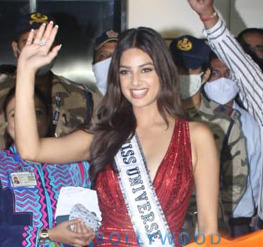
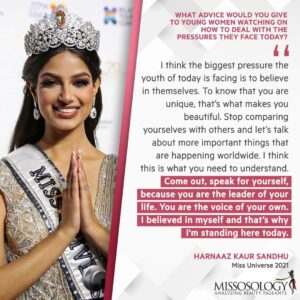
India’s Harnaaz Sandhu took home the crown at the 70th edition of Miss Universe on Sunday. This is India’s first victory in 21 years, and Sandhu is the first Sikh woman to win the title of Miss Universe. Andrea Meza crowned her successor during the three-hour event held in Eilat, Israel.

The 21-year-old becomes the third contestant from India to win the Miss Universe title. In 2000, India’s Lara Dutta took the crown, while in 1994, Sushmita Sen gave India its first Miss Universe win.

Actress-model Harnaaz Sandhu made India proud after she beat contestants from 80 countries to win the Miss Universe title.

Harnaaz Kaur Sandhu is a Model and Beauty pageant titleholder who recently won 70th Miss Universe 2021 crown. Harnaaz Sandhu is from Chandigarh, India who was born and raised in Jat Sikh family.

She completed her schooling from Shivalik Public School and Post Graduation from Government College for Girls.

Paraguay’s Nadia Ferreira became the first runner-up and Lalela Mswane of South Africa secured the position for second-runner up.

Sandhu was crowned by former Miss Universe 2020 Andrea Meza at the 70th edition of Miss Universe held in Eilat, Israel.

#MissUniverse 2021

TRAVEL UPDATE: EGYPTAIR INTENDS TO RESUME FLIGHTS BETWEEN CAIRO & JOHANNESBURG FROM 16TH DECEMBER 2021

10 December 2021

EGYPTAIR intends to resume flights between CAIRO and JOHANNESBURG starting from 16th December by one flight weekly until further notice.

The Embassy of Egypt wishes to inform all traveler’s coming from South Africa, Botswana and Lesotho that the previously mentioned precautions are still in place. Kindly check the posts on this page for all the relevant information: https://www.facebook.com/126495567366618/posts/5261661093850014/

Ambassador of Egypt in SA, Ahmed El Fadly

The Embassy of Egypt in Pretoria

25 YEARS OF THE SOUTH AFRICAN  CONSTITUTION

10 December 2021

25 years ago, on 10 December 1996, President Nelson Mandela signed the Constitution of the Republic of South Africa into law in Sharpeville, Gauteng, a major milestone in the life of the South African nation.

The Constitution enshrines the rights of all people in our country and affirms the democratic values of human dignity, equality and freedom. The state must respect, protect, promote and fulfil the rights in the Bill of Rights.

“South Africa has the best Constitution in the world. It is hailed by many and used as an example for many other countries. It is a model for law and constitutional experts. It seeks to establish a society based on democratic values, social justice and fundamental human rights.”

“We, the people of South Africa, Recognise the injustices of our past; Honour those who suffered for justice and freedom in our land; Respect those who have worked to build and develop our country; and Believe that South Africa belongs to all who live in it, united in our diversity”

The Constitution of South Africa is the supreme law of the Republic of South Africa. It provides the legal foundation for the existence of the republic, it sets out the rights and duties of its citizens, and defines the structure of the Government. The current constitution, the country’s fifth, was drawn up by the Parliament elected in 1994 in the South African general election, 1994.

It was promulgated by President Nelson Mandela on 18 December 1996 and came into effect on 4 February 1997, replacing the Interim Constitution of 1993. The first constitution was enacted by the South Africa Act 1909, the longest-lasting to date. Since 1961, the constitutions have promulgated a Republican form of government.

#25YearsoftheConstitution

SOUTH AFRICA INVITES BRICS SCIENTISTS TO COOPERATE ON COVID-19 RESEARCH

10 December 2021

President Cyril Ramaphosa has invited scientists from fellow BRICS countries – Brazil, Russia, India and China – to work alongside South African scientists in further researching the various characteristics of the COVID-19 virus and its mutations.

This initiative is a contribution to intra-BRICS cooperation to strengthen preparedness and responses to the pandemic as articulated in the New Delhi Declaration, which was adopted at the 13th BRICS Summit in September 2021.

This cooperation takes place within the context of the establishment of the BRICS Vaccine Research and Development Centre in a virtual format.

President Ramaphosa has appointed the Chairperson of the Ministerial Advisory Council on COVID-19, Prof Koleka Mlisana, to lead a task team of South African researchers in the area of genomic sequencing to work with their counterparts from other BRICS countries.

Scientists from the BRICS countries will be supported by officials from the Departments of Health and Higher Education, Science and Innovation.

South Africa is currently the host of the BRICS Vaccine Research Centre and the research on the Omicron variant will form part of the centre’s initiatives.

The international team will exchange and share information on laboratory, clinical and epidemiological experiences regarding the virus in order to help clinicians and policy makers in BRICS countries better prepare for future manifestations of the disease.

President Ramaphosa said: “Humanity will only overcome this pandemic if the countries of the world work in closer cooperation by sharing information, expertise and resources. This cooperation must be underpinned by the principles of solidarity, partnership and mutual respect.”

“The spread of the different COVID-19 variants to all corners of the earth underlines the importance of effective surveillance, scientific transparency and collaborative research. Every country is affected and every country must be able to develop responses based on sound scientific evidence.

“The collaboration among BRICS countries is intended to broaden our knowledge of the COVID-19 virus not only for the benefit of member countries, but for the global community more broadly,” President Ramaphosa said.