THE SECRET TO A PROSPEROUS CHIINA-AFRICA RELATIONSHIP

10 December 2021

China and Africa have stood together through times of adversity and success, setting a strong example for the building of a global community with a shared future.

The 8th Ministerial Conference of the Forum on China-Africa Cooperation (FOCAC) will convene despite disruptions caused by the COVID-19 pandemic, showing the great significance that Africa and China attach to furthering their ties, as well as a deep mutual trust that will create more opportunities for the two traditional partners to collaborate.

Economy-wise, statistics show China has been Africa’s largest trading partner for the 12 years since 2009. China-Africa trade accounted for more than 21 percent of Africa’s total external trade in 2020. China has increased its imports of non-resource products, and offered zero-tariff treatment to 97 percent of taxable items by the 33 least-developed countries in Africa.

CHINA TO HELP AFRICA RECOVER FROM EPIDEMIC, IMPROVE COMPETITIVENESS IN GLOBAL MARKET

7 December 2021

China will help Africa recover from the COVID-19 epidemic and improve its competitiveness in the global market, Russia’s Sputnik news agency has reported.

“China emphasized that it is a reliable friend of Africa, and this has been confirmed in practice every time,” Tatiana Deych, leading research fellow at the Institute for African Studies of the Russian Academy of Sciences, was quoted as saying.

“China’s support for agricultural exports will help African countries reduce trade imbalances and reduce their dependence on export of raw materials to China. This will improve Africa’s competitiveness in the world market,” Deych added.

China has strengthened its credibility as a reliable partner of African countries and refuted rumors that slandered China-Africa cooperation, according to Sputnik.

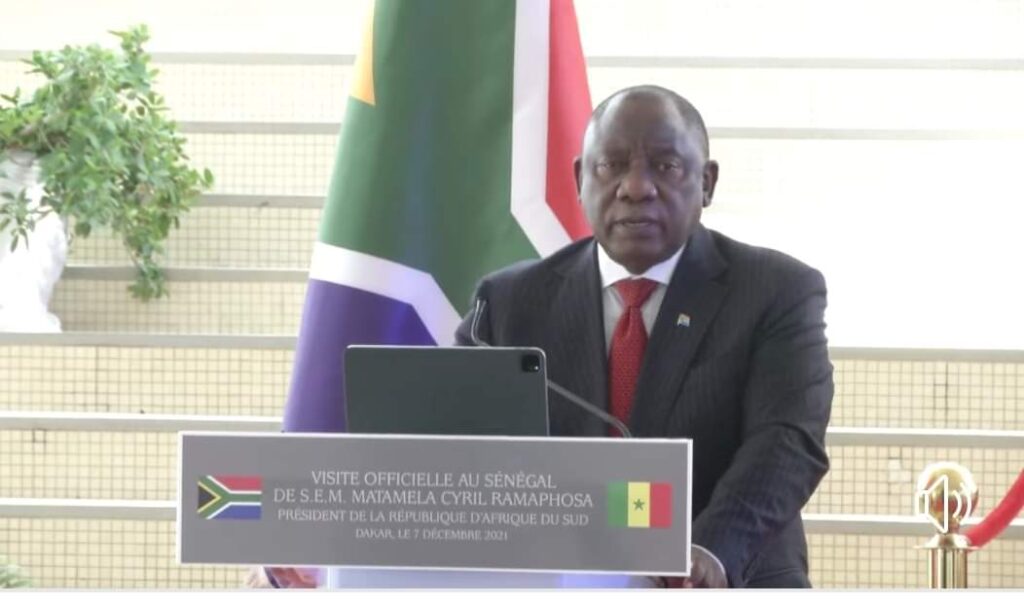
REMARKS BY PRESIDENT CYRIL RAMAPHOSA ON THE OCCASION OF OFFICIAL TALKS DURING HIS STATE VISIT TO THE REPUBLIC OF SENEGAL


7 December 2021

On behalf of my Government and the people of South Africa, I would like to thank you for inviting us to visit your beautiful country and for hosting us.

This visit takes place after the 7th International Dakar Forum on Peace and Security in Africa, where I was privileged to share our perspective on building resilience in the post COVID-19 era.

Your demonstration of support for South Africa at the Forum yesterday was powerful, forceful and deeply moving.

The travel ban imposed on South Africa and a number of countries in the region in response to the detection by our scientists of the Omicron variant of the coronavirus, is both unjustified and unscientific.

To have the leader of Senegal, a powerhouse of the region, express your support on this global platform means a great deal to us.

It is in line with the sustained and principled solidarity Senegal has extended to South Africa over the years. So once again, thank you.

Our historic ties are rooted Senegal’s support for our liberation struggle.

The 1987 Dakar Conference would not have been possible were it not for the assistance of President Abdou Diouf, who allowed delegates to meet in his country, at a time when the liberation movements were still banned in South Africa.

We share a commitment to solidarity, mutual respect and a common vision of a Better Africa and a Better World.

Today we will be signing a number of Memoranda of Understanding as well as Agreements.

The Agreement on a Joint Commission for Bilateral Cooperation emphasises the importance of our growing political, economic and social ties.

We are also signing an MOU on Political and Diplomatic Consultations, and an Agreement on Technical and Economic Cooperation in the Field of Fisheries and Aquaculture

Our work has just begun.

We need to consolidate the areas of cooperation that anchor our relations, explore new ones within the current state of global affairs and at the same time address challenges that will affect our people in the future.

We are committed to taking practical measures to address the imbalances in bilateral trade between our two countries.

As part of our contribution to intra-African trade, we should give preference to our state-owned companies and private businesses when bidding for significant procurement contracts in each other’s countries, instead of sourcing these from outside the continent. Both our countries have the know-how and expertise to benefit the other.

At a legacy and cultural level we look forward to the twinning of Robben and Goree Islands, which will increase tourism between our two countries.

Pockets of insecurity and conflict within countries and between neighbouring countries remain a challenge for our continent.

The Sahel is such a region that requires our attention.

We strongly reject and condemn any attempts at unconstitutional change of government, in particular in Mali and the Republic of Guinea.

We call on all the parties to engage in constructive and peaceful dialogue in good faith, and to restore constitutional order through the guidance of ECOWAS.

The reality is that much more still needs to be done to achieve the goals of last year’s African Union theme of Silencing the Guns.

We note for example the recent UN Security Council Resolution to extend the mandate of the United Nations Mission for the Referendum in Western Sahara (MINURSO) until 31 October 2022.

South Africa is concerned at the endless delays in holding the Referendum, without which the people of Western Sahara will not be able to determine their destiny.

South Africa remains committed to global peace, security and stability.

The need for lasting peace and security on our Continent becomes more urgent with the operationalisation of the African Continental Free Trade Agreement on 1 January this year.

As we seek to strengthen multilateralism in the cause of global peace and security, please be assured of our full support of your Chairship of the African Union.

We are meeting at a time of great distress and devastation caused by the COVID-19 pandemic.

Although there has been great progress in the development and distribution of vaccines, as well as acts of solidarity and cooperation across the world, the global response to the pandemic has been uneven.

It is of concern that the global community has not sustained the principle of solidarity when it comes to securing equitable access to COVID-19 vaccines.

I am confident we can count on the government of Senegal in this regard by supporting our proposal to the WTO for a temporary waiver of the TRIPS agreement. As African countries we must stand as one on this critical matter, as we have done since the onset of the pandemic.

Your Excellency, in conclusion, I thank you once again for hosting me and my delegation here in Dakar.

I trust that we will have productive discussions on the current state of our bilateral relations.

LECTURE ON CONFERMENT OF THE DOCTORATE HONORIS CAUSA FROM CHEIK ANTA DIOP UNIVERSITY, DAKAR, SENEGAL

7 December 2021

On Monday, 06 December 2021, H.E President Cyril Ramaphosa visited the University of Cheik Anta Diop (UCAD) in Dakar, Senegal where he was awarded an Honorary Doctorate. He is the second SA Head of State to receive this honour after President Nelson Mandela was awarded one by the same institution in 1992.

President Ramaphosa was in the Republic of Senegal for an official visit on invitation by His Excellency President Macky Sall, where he concluded a four-nation visit to West Africa which also included the Republics of Nigeria, Côte d’Ivoire and Ghana.

In his remarks President Cyril Ramaphosa said  ” this is indeed the greatest of honours, to be bestowed with a doctorate Honoris Causa by one of Africa’s and the world’s pre-eminent universities”.

In the course of my career I have received a number of honorary doctorates. I can say with the utmost conviction that this one, from Cheik Anta Diop University, gives me the greatest pride of all.

As a young student in South Africa in the 1970’s I was drawn to the black consciousness movement, and came to know about pan-Africanism, the mass movement that was then stirring across the continent and the diaspora.

I immersed myself in the thought of WEB du Bois, C.L.R James, Kwame Nkrumah, Jomo Kenyatta, Julius Nyerere, and Cheik Anta Diop.

My consciousness was also shaped by the Négritude movement, and I keenly studied the writings of its leading lights, amongst them Franz Fanon, Aimé Césaire, and of course the first President of Senegal,  Léopold Sédar Senghor.

They all a great influence on me as a young man; an influence that prevails to this day.

For my name to now be associated with Cheik Anta Diop fills me with pride.

He was a towering figure. His writings galvanized an entire people to cast off the chains of mental slavery.

This was at a time when we were being told and taught that being black and being African was a mark of inferiority.

I accept this honour on behalf of all the people of South Africa who have entrusted me with the responsibility of being their President.

I am mindful that I stand on the shoulders of giants.

Since its founding in 1957, Cheik Anta Diop University has produced too many luminaries to cite here.

It has produced political leaders, Prime Ministers and Presidents; scientists and Chief Justices; playwrights, musicians and novelists.

Twenty-nine years ago this university recognized President Nelson Mandela with the same doctorate I am receiving today.

In accepting the doctorate, President Mandela made a commitment to this university and to the people of Senegal.

He promised that we would uphold the banner of freedom, truth, human dignity and integrity.

In 1992, President Mandela came here from a South Africa where our people were still in chains.

Today I visit Cheik Anta Diop University as President of a free South Africa, where all enjoy the protection of a Constitution and a Bill of Rights.

In less than a week from now, we will be celebrating 25 years since President Mandela signed our Constitution into law.

I am gratified that I am able to tell this esteemed congregation at this university that honoured the father of our nation that we have made good on this promise.

South Africa is a vastly different place than what it was in 1992.

Our society is rooted in human rights and fundamental freedoms.

The right to vote and to participate in the national life of one’s country has been long-won, and we have just held another successful free and fair election.

We have made significant strides in improving the quality of life for millions of our people, particularly the black majority.

We have been hard at work to give effect to our people’s rights to education, to basic services and healthcare.

We have advanced progressive policies to return land to our people who were disposed by apartheid, and to transform our economy so it benefits all.

At the same time we know that significant challenges remain.

We know that in South Africa, in Senegal, and in many countries on our continent, the spectre of underdevelopment looms large.

We know that the COVID-19 pandemic has significantly eroded the developmental gains we have made as a continent, and pushed millions of people into unemployment and worsening poverty.

The hoarding of vaccines by rich countries has been at the detriment of Africa, and continues to hold back our recovery and put our peoples’ lives at risk.

Even as we wage battles on this front to ensure our people get vaccinated, we are hard at work driving an economic recovery.

For this recovery to be sustainable and inclusive, all of society must come together.

Our task is to address the immediate impacts of the pandemic, but also the formidable legacy of underdevelopment across our continent.

We have to strive with renewed energy to meet the Sustainable Development Goals as well as the objectives of the African Union’s Agenda 2063.

In this regard, African academia is called upon to play a more prominent role.

In 1963 President Kwame Nkrumah gave a speech at the opening of the Institute for African Studies and the University of Ghana, where he asked what kind of institution, and what kind of graduates the country needed at that time.

“For what kind of service are we preparing students of this Institute and our universities?”, he asked.

It is a question as critical today as it was then.

Institutions of higher learning are foremost occupied with knowledge production.

In a developing country context they have another equally important role. They must drive development, advance progress and contribute to the upliftment of the human condition.

Africa today has many challenges.

They include slow economic growth, worsening unemployment, especially for young people, rising social inequality, conflict and instability, climate change, and poor health outcomes worsened by COVID-19.

In this context we must indeed ask ourselves a question.

For what purpose, and to what end, is the knowledge being produced here at Cheik Anta Diop University; at Makerere University; at the University of Dar es Salaam, at the University of Ibadan, at Fort Hare, and at the University of Cape Town?

“Education,” President Nkrumah said, “consists not only in the sum of what one knows or the skill with which one can put this to one’s own advantage. Education must be measured chiefly in the power to understand and appreciate the needs of one’s fellow man and woman, and be of service to them.”

The role of the African university is to be of service to Africa.

For this to happen, it must be socially embedded, working with and within communities, and helping to advance national development.

The Plan for an Emerging Senegal is very much in step with South Africa’s National Development Plan (NDP) as well as that of Agenda 2063.

Its focus is on the improvement of people’s living conditions, on fighting social inequalities, on driving economic growth, and on developing new sectors that create wealth, jobs and social inclusion.

This excellent vision and blueprint for Senegal is being driven by the work being done here at Cheik Anta Diop University.

I am extremely impressed by the solid, world-class research outputs of Senegal’s most famous university.

There is cutting-edge work being done across a range of sectors, from COVID-19 research and epidemiology, to migration and labour trends, to smart cities.

Cheik Anta Diop University is engaged in 4th Industrial Revolution knowledge exchange through the African Research Universities Alliance that also includes South African universities.

The university’s Center for Research and Training in Internet Technologies is playing a leading role in Dakar’s Digital Technologies Park project.

Earlier today I visited the Park to attend the 7th International Dakar Forum on Peace and Security in Africa and was extremely impressed by the world-class infrastructure. I hope to get a full tour on my next visit to Senegal.

As if this is not impressive enough, UCAD has also been involved in research around the implications and benefits of the Africa Continental Free Trade Area that came into operation earlier this year.

My visit to Senegal comes at the end of successful visits to Nigeria, Cote d’Ivoire and Ghana, where all our deliberations included how we can work together to ensure the AfCFTA is a success.

For it to be fully a success, we must continue to invest in human capital so that our respective peoples are able to harness its potential to do business, to trade, to learn new skills and to uplift themselves and their communities.

The knowledge produced by our institutions of higher learning can and must play a leading role in advising and guiding policy, in measuring implementation and in broadening our horizons to new frontiers of development.

Knowledge is the torch that has lit our way as a people for millennia, and propelled human advancement.

For 64 years the thirst for knowledge has attracted men and women from across our continent to Cheik Anta Diop University.

Having acquired it, they returned to their countries to serve the cause of development.

If we are to realize the Africa we Want, the learning taking place within these four walls must not end here.

It must not end with the publication of a study. It must not end on a desk or in a library.

Knowledge must permeate into society and change it for the better. It must result in improved outcomes for communities, for individuals, and for national economies.

In April 2020 a group of Africa’s most prominent intellectuals, including from this university, penned an open letter in response to the pandemic, titled The Time to Act is Now.

They wrote:

“The realization of the second wave of our political independence will depend on political creativity, as well as our capacity to take charge of our common destiny.”

They added:

“Pan-Africanism also needs a new lease on life, and to be reconciled with its original inspiration, following decades of shortcomings. The African continent must take its destiny back into its own hands. For it is in the most trying moments that new orientations must be explored, and lasting solutions adopted.”

It is right here, in our institutions of higher learning, that such creativity is birthed.

These new orientations and solutions must empower Africa, restore her glory and enable her to take her rightful place in global affairs.

The task before us is to harness knowledge for betterment, for development, for growth, and for peace.

I want to conclude with a message to the representatives of the student population who are with us this evening.

Your graduation scroll will carry the name of one of Africa’s finest sons.

The focus of its life’s work was not only on his chosen discipline of physics.

His writings restored our pride in our origins as a people, and in Africa’s contribution to the advancement of the human race.

He inspired millions of people, including myself.

It can be said that as an intellectual he didn’t only advance knowledge, but also human freedom.

We know that being able to speak or act freely is not the only definition of freedom.

Freedom is above all about having the opportunity to improve one’s material condition.

As Amilcar Cabral said, we fight not for ideas, but to live better, in peace, to benefit from progress, and for the better future of our children.

The greatest threats to Africa’s freedom today are poverty, inequality and underdevelopment.

By engaging in work that contributes to the eradication of the scourges that continue to plague Africa, you will be upholding the legacy of Cheik Anta Diop.

It is a legacy I have no doubt you will all strive to live up to.

It is a legacy that I will strive to live up to.

I wish all the faculty, staff and members of this proud African institution well as it carries forward the mission of uplifting our continent. Thank you for honouring me.

Here, in Senegal, a nation that once suffered worst excesses of humankind, Cheik Anta Diop University stands as a symbol of Africa’s ability to recover, to reinvent, and to progress.

May we realize the vision of a better Africa that the generations who came before longed for. We owe it to ourselves, and we owe it to them.

In the words of the great Léopold Sédar Senghor, “let us listen to the voices of our Forebears. In the smoky cabin, souls that wish us well are murmuring.”

THE EMBASSY OF THE UNITED ARAB EMIRATES CELEBRATES FIVE DECADES OF SUCCESS AND THE PROMISE OF AN EVEN BRIGHTER FUTURE

Photos: H.E. Ambassador Mahash Saeed Alhameli of the United Arab Emirates, Deputy Dean of the Arab Diplomatic Corps

7 December 2021

The UAE celebrated its Golden Jubilee on 2 December 2021. His Excellency

Mr. Mahash Saeed Alhameli, Ambassador of the United Arab Emirates to the Republic of South Africa and the Deputy Dean of the Arab Diplomatic

Corps hosted the celebration at the UAE Embassy in Pretoria, in a physical and virtual setting. Honourable Minister Pravin Gordhan, Minister of Public Enterprises of the Republic of South Africa, H.E. Ambassador Mubarak bin Salem Al-Zakwani of Oman, the Dean of the Arab Diplomatic Corps, H.E. Ambassador Sultan Al-Angari of Saudi Arabia, H.E. Ambassador Tariq Al-Ansari of Qatar, H.E. Ambassador Ayman Mohammad Youssef Al-dsani of Kuwait and the various members of the diplomatic corps, among others, graced the auspicious occasion.

This year the UAE commemorated 50 years of independence with a showcase

of the UAE’s 50 key initiatives.

In his speech, H.E. Ambassador Alhameli described the 50th National Day

Celebration as “a historic day that marks the UAE’s key milestones or achievements” whose foundation the founder of the country, the late

Sheikh Zayed bin Sultan Al Nahyan (may his soul rest in peace), his

brothers and the rest of the founding fathers laid down. His Highness

Sheikh Khalifa bin Zayed Al Nahyan, President of the State (may God

protect him) continues to walk in their wise shoes.

The policy of ostentation and cooperation that the United Arab Emirates has pursued since its birth is a sincere expression of the rational

foreign policy His Highness Sheikh Zayed bin Sultan Al Nahyan, President

of the State announced. It governs the State agencies in their pursuit of a renaissance and support for the Union.

Since its independence on 2 December 1971, the UAE has promoted security, peace and sustainable development in the Gulf region and in various parts of the world. It is a principled and fundamental approach that drives its foreign policy and whose foundations the late Sheikh Zayed Bin Sultan Al Nahyan laid. His Highness Sheikh Khalifa bin Zayed Al Nahyan, President of the State’s wise leadership continues to espouse the same.

Esteemed guests grace the auspicious occasion from Left to right H.E. Ambassador Tariq Al-Ansari of Qatar, H.E. Ambassador Mubarak bin Salem Al-Zakwani of Oman, Dean of the Arab Diplomatic Corps, H.E. Ambassador Mahash Saeed Alhameli of UAE, Deputy Dean of the Arab Diplomatic Corps, H.E. Ambassador Sultan Al-Angari of Saudi Arabia, H.E. Ambassador Ayman Mohammad Youssef Al-dsani of Kuwait

Following the example of his father, Sheikh Khalifa emphasizes, and

lives out this principle through the great UAE contributions in various

humanitarian, political and economic fora and initiatives. Islamic

teachings that emphasize tolerance, goodwill, love, respect, and care

for the neighbour inspire Emirati rulers in their thoughts, etiquette

and morals.

The late Sheikh Zayed bin Sultan Al Nahyan, established the first

building blocks of the country’s foreign policy thus:

“The foreign policy of the UAE aims to support Arab and Islamic causes

and interests, strengthen ties of friendship and cooperation with all

countries and peoples based on the United Nations Charter and international instruments and ideals.”

The UAE has achieved great success at the international level. The country’s prominent position in the Arab world and internationally serves as ample evidence, thanks to its noble values. It bases its

policies and positions on the principles of truth, justice and peace, out of the conviction that peace is an urgent need for all of humanity.

As far as mutual coexistence is concerned, the UAE hosts more than 200

nationalities from all over the world, living with dignity and in harmony. The UAE commits to a better future for humanity where everyone enjoys security, peace and stability. Pluralism and coexistence have become a global model for tolerance, happiness, prosperity, freedom and peace. The historical Human Brotherhood declaration that the UAE launched represents a global call for hope, and the revival of human values that encourage goodwill and love between East and West, and North and South.

Esteemed guests grace the auspicious occasion from Left to right H.E. Ambassador Tariq Al-Ansari of Qatar, H.E. Ambassador Mubarak bin Salem Al-Zakwani of Oman, Dean of the Arab Diplomatic Corps, H.E. Ambassador Mahash Saeed Alhameli of UAE, Deputy Dean of the Arab Diplomatic Corps,
H.E. Ambassador Sultan Al-Angari of Saudi Arabia, H.E. Ambassador Ayman Mohammad Youssef Al-dsani of Kuwait

The UAE Ministry of Foreign Affairs and International Cooperation has

highlighted two themes from the Declaration. The first is the strengthening of partnerships on tolerance and coexistence in the region

and globally. Second is the continuation of strengthening of the UAE’s position as a centre for coexistence and tolerance, and its efforts to promote shared human principles and values. The UAE pins this on its belief that all religions encourage the practice of common human principles among all global societies and dialogue among all civilizations and cultures to achieve development and prosperity.

The Ministry maintains a watchful eye on the safety of UAE citizens abroad around the clock. It seeks to link them with their wise leaders through all its departments, embassies and consulates around the world in an effort to strengthen friendship and cooperation with other

countries, and to foster economic and cultural development and peace in the world.

The international community appreciates the UAE’s role in the spreading of peace. The United Nations General Assembly expressed this appreciation by electing the UAE to the Security Council for the period 2022-2023 on 11 June this year.

The election reflects the UAE’s successful diplomacy that it bases on spreading peace and love among all

peoples. This is the International community’s significant token of

international appreciation to the UAE.

Furthermore, in another gesture that reflects the depth of international

respect it enjoys and its prominent role in supporting human rights, the United Nations Human Rights Council elected the UAE to its membership for the period 2022-2024 last October.

The UAE also hosted a Conference of the Parties to the United Nations Framework Convention on Climate Change “COP 28”, which is the most important and largest international conference on climate action; this is tantamount to a confirmation of the UAE’s leadership and the world’s appreciation for its efforts in climate sustainability. The UAE’s presidency of INTERPOL for four years as the first Arab country to chair the International Criminal Police Organization since its inception a century ago highlights the prestigious position and the growing confidence the UAE enjoys, thus making it a source of

inspiration for the rest of the world.

The role of women in Emirati diplomacy is cogent, as Emirati women have assumed a distinguished position in the field of diplomacy. They have contributed successfully to the establishment of the country’s wide network of relations and the strengthening of its regional and

international partnerships.

They have also played a significant role in the Ministry of Foreign Affairs and International Cooperation, especially during the outbreak of the Covid-19 pandemic, in enhancing the diplomatic approach the state adopted. This is dependent on cooperation with the rest of the world to extend a helping hand to the societies that need support and assistance.

This resides within the framework of consolidation and strengthening

international and multilateral cooperation in light of the unprecedented circumstances that the world is going through today. This is a natural progression of the policy of women empowerment.

The UAE celebrates its Golden jubilee in a context of unprecedented historical achievements that crown its golden jubilee and lay the ground work for an even more prosperous future.

The UAE’s achievements confirm its success in realizing its Vision 2021

“to be among the best countries in the world in terms of economic and social development by the advent of the golden jubilee of the Union.”

The 50th Anniversary is a milestone in the history of the UAE and serves

as a springboard towards its goal for the next fifty years “to be the best country in the world” on the centenary of the Union in 2071.

The United Nations Educational, Scientific and Cultural Organization

(UNESCO) has adopted 2 December as the International Day for the future,

celebrated by the world in conjunction with the UAE National Day.

This is an invitation to the rest of the world to focus their interest on the

future and develop their capabilities in foresight, readiness and proactive policy-making, in an enabling manner to ensure sustainable development for future generations.

The UAE has become an indomitable global player and has gained influence

on regional and global levels. Today, the country plays a pivotal role on various issues due to its political and economic weight that has made it an active and proactive state. Ambassador Alhameli noted that the country would not have achieved the prestigious position without the wisdom, steadiness and patience that characterizes its foreign policy.

Only fifty years ago, the UAE was just trying to secure the world’s recognition as a nascent State.

“We have reached a stage where countries from different continents of

the world are seeking to build partnerships and alliances with our

country as a result of its reputation and prestigious position. This is confirmed by the large international presence in the UAE, where 130 Arab and foreign embassies are hosted in the capital Abu Dhabi,” he shared proudly.

He also paid tribute to the quality of bilateral relations that brings

together two friendly countries – UAE and SA, which are based on the principles of cooperation and mutual respect. He noted further that in recent years the relations have reached the level of strategic partnership between the two countries and peoples. The mutual visits of the leaders of the two countries, and the ever-increasing levels of trade, economic and cultural exchanges, are strong testimony to the salubriety of the bilateral relations in various fields.

The UAE praises the cooperation steps that the South African government

took since the dawn of freedom and democracy in the country; it believes

in its enormous growth potential. This is largely due to the rational and wise leadership of two late great leaders Nelson Mandela and Sheikh Sayed bin Sultan Al Nahyan both of whom the Ambassador honoured at the event.

Ambassador Alhameli concluded with the words of His Highness Sheikh

Mohammed bin Zayed Al Nahyan, Crown Prince of Abu Dhabi and Deputy

Supreme Commander of the Armed Forces:

  “We complete a phase full of exceptional achievements and start a new

phase full of extraordinary achievements. Our ambitions embrace the sky. The challenge is greater, and the competition is more intense, but our

will, our ambition and our spirit of challenge, are stronger. Our people

are the source of our strength, and we welcome talents and extend our hands with goodness, cooperation and peace for all countries and peoples of the world.”

In his speech, Honourable Minister Pravin Gordhan, Minister of Public

Enterprises of the Republic of South Africa said he felt honoured and

grateful to represent the Government and People of the Republic of South

Africa in solidarity with the Government and People of the United Arab

Emirates, as they celebrated and congratulated them on their 50th

National Day.

“We are honoured to celebrate the UAE’s early dreamers with you as you

proudly look back on your country’s achievements and embark on a new

journey with determination and enthusiasm,” he congratulated the UAE.

South Africa and the United Arab Emirates have developed excellent

bilateral political and economic relations, which have also recently been elevated to a strategic level, since the countries established formal diplomatic ties in 1994. The UAE is the main import partner of South African goods within the Gulf Cooperation Council, with many South African companies benefitting from opportunities in the UAE in a variety

of sectors. The two countries premised the partnership on the leveraging of both countries’ economic potential to create a better world.

The last two years have challenged all of humanity. The damage and suffering that COVID-19 has unleashed remains immeasurable and will continue in the years to come. It was, however, through the hardship that South Africa realized the true value of international partnerships and friendships. In this regard, the friendship and support that the UAE rendered to South are truly remarkable.

From the outset, the UAE Government and its people assisted South Africa with the donations of medical equipment, the repatriation of citizens under very difficult circumstances, and more importantly, continued to trade with South Africa. This is clearly visible in the bilateral trade figures for 2020,

which amounted to more than R45.5 billion.

Globally, the economic devastation poses a threat to billions of people.

Covid 19 has battered economies severely and South Africa is no

exception. In response to the devastation, President Ramaphosa launched the South African Reconstruction and Recovery Plan in October 2020, focusing on job creation through infrastructure development,

re-industrialization of the economy, acceleration of economic reforms,

investment and growth, fighting crime and corruption, and improving the

state’s capability to deliver.

“We look to our global partners to explore investment opportunities and

deepen trade relations with South Africa. These are crucial requirements

if we are to overcome our reconstruction and recovery challenges.

In this regard, we thank the UAE for these investments, including the R12.7

billion acquisition offer from Dubai Ports (DP) World’s acquisition of Imperial Logistics. We are confident that the UAE and South Africa will further intensify efforts to help stimulate and elevate trade and economic cooperation that will bolster our economic recovery efforts in

the medium and long term,” Minister Gordhan shared.

He took the opportunity to congratulate the leadership and people of the

United Arab Emirates on hosting the Expo2020. According to the Minister,

although the pandemic delayed it, the feedback from participating government departments and officials, Expo 2020 is exceeding all expectations. South Africa is taking full advantage of this very

important and influential platform to showcase itself. Next year

President Cyril Ramaphosa plans to visit the South African Pavilion in

Dubai on 28 March. Minister Gordhan emphasized that it is important to encourage increased people-to-people exchanges between the UAE and South Africa. The two countries can learn much from each other’s cultures and traditions.

The Minister concluded by expressing once again South Africa’s warmest

wishes to the entire leadership and the people of the United Arab Emirates. He also stressed that as the two peoples continue to walk down this growth and development path, they must do so guided by the wisdom and the undying spirit of the founding fathers in the persons of the late President Nelson Mandela and His Highness Sheikh Zayed Bin Sultan Al Nahyan.

On post-Pandemic Diplomacy, Ambition and Hope in the future, the United

Arab Emirates Ministry of Foreign Affairs and International Cooperation

said that the UAE has always sought to build bridges and play a constructive role on both regional and global levels. Over the coming years, the UAE commits to the strengthening of this vision by continuing to play a positive role to improve cooperation, foster dialogue,

diplomacy and effective engagement.

The UAE will continue to support all efforts that contribute to this goal and stand by any initiative that facilitates development, peace and prosperity. It will also continue to strengthen political and economic strategic interests through effective diplomacy that supports stability and sustainable development, and reinforces collaboration and coexistence.

To demonstrate its belief in the voice of the Youth, The Ministry of Foreign Affairs and International Cooperation allocated the Youth Council a permanent seat in its various committees and task forces in

the Ministry. They work to develop and foster the quality of life of the Youth and create a positive working environment in the Ministry of Foreign Affairs and International Cooperation.

Since its inception, the Youth Council of the Ministry of Foreign Affairs and International Cooperation adopted the slogan “Diplomacy of the Future, Ambition and Hope.” Its vision is to prepare a promising generation of innovative young diplomats who contribute to the achievement of the vision and agenda of the Ministry of Foreign Affairs and International Cooperation and hence the National Youth Agenda.

Since its establishment, the Council has worked hard through its agenda

to improve the lives of young people by encouraging them to adopt healthy lifestyles, promoting good mental health and adopting positive thinking as a basic value. Furthermore, it has fostered the building of life skills, as well as honing and developing the skills, abilities and

competencies of the Emirati youth.

Finally, it has empowered young people to embrace their aspirations and hopes, and advance diplomatic work based on knowledge and innovation to achieve excellence in foreign policy.

“The perfect conclusion and a new beginning, the opening of Expo 2020

Dubai in October 2021 marked the conclusion of five decades of achievements as well as the kick-off of the next fifty years. Never before has an edition of an international event hosted so many countries and brought together so many cultures, to work together to achieve so much good for the many people. The world gathered in the UAE to chart the course of the future and work in unison to make a difference in the

quality of life for future generations,” The UAE Ministry of Foreign Affairs and International Cooperation concluded.

SOME KEY FACTS ABOUT THE UAE ACHIEVEMENTS

⦁       April 2006: Masdar, Abu Dhabi’s renewable energy company is launched

⦁       June 2009: Abu Dhabi becomes home to the headquarters of the

International Renewable Energy Agency (IRENA)

⦁       January 2010: World’s tallest tower, Burj Khalifa opens in Dubai

⦁       March 2013: Inauguration of Shams 1, the largest solar power plant in

Madinat Zayed

⦁       November 2013: The nation wins bid to host Expo 2020 in Dubai

⦁       July 2014: UAE Space Agency is established to supervise the Mars

mission

⦁       October 2017: Launch of national strategy for Artificial Intelligence

⦁       February 2019: Pope Francis becomes first pope to visit the UAE and

signing of Human Fraternity document

⦁       September 2019: Hazzaa Al Mansoori becomes first Emirati to reach

space

⦁       July 2020: UAE joins space club with successful launch of the Hope

Probe from Japan

⦁       April 2021: Two new Emiratis are selected to be part of the UAE’s

astronaut corps, including the Arab world’s first female astronaut

⦁       September 2020: Signing of Abraham Accords, which marked the

commencement of bilateral relations between the UAE and Israel. The

Retirement Visa was launched, offering Dubai residents an easy and

hassle-free retirement option.

⦁       September 2021: Overhaul of new UAE visa reforms to confirm UAE’s

position as an ideal destination for work, investment, entrepreneurship

and education

⦁       November 2021: UAE enacts largest legal reform in its 50-year history.

For the past 50 years, the UAE has not only developed into one of the

safest and most technologically advanced countries in the world, but it

has also become an oasis of hope and prosperity for entrepreneurs and

people with various talents.

The Golden Jubilee celebration inspires everyone to think about the

words that best describe the Emirates – A visionary country where the Founding Fathers’ vision, the determination to pursue every goal for the nation and people holds sway.

The UAE’s vision to strive for excellence – not to rest on its laurels but continuously aim higher is a stark reminder to dare to dream bigger

and not stop once it has achieved initial goals.

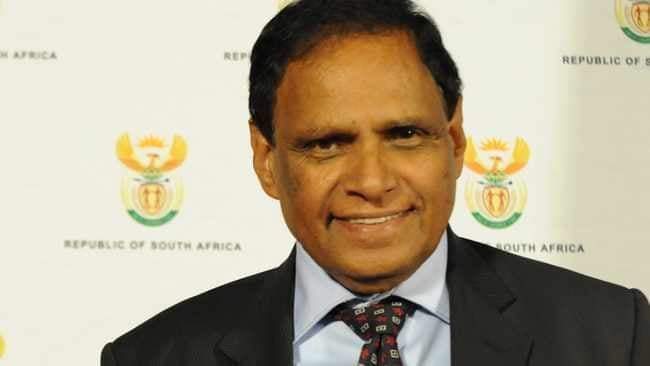
FORMER DEPUTY MINISTER OF INTERNATIONAL RELATIONS AND COOPERATION, DR EBRAHIM EBRAHIM, DIES AT 84

7 December 2021
Dr Ebrahim served as the Deputy Minister of International Relations and Cooperation during (2009 – 2014)

Dr Ebrahim spent years of imprisonment on Robben Island alongside Nelson Mandela. Ebrahim was a renowned freedom fighter and respected leader of the people who was committed to his country, his organisation and his family.”

Dr Ebrahim was honoured with a Special Provincial Official Funeral, Category 2 this afternoon.

The National Flag are flying at half-mast at every flag station in the country, until this evening of the burial today, 7 December 2021.

The Diplomatic Informer Magazine SA wish to convey our heartfelt condolences to the Ebrahim family, friends and the organisation he dedicated himself to on the loss of Dr Ebrahim

May his soul rest in peace.

REMEMBERING NELSON MANDELA

5 December 2021

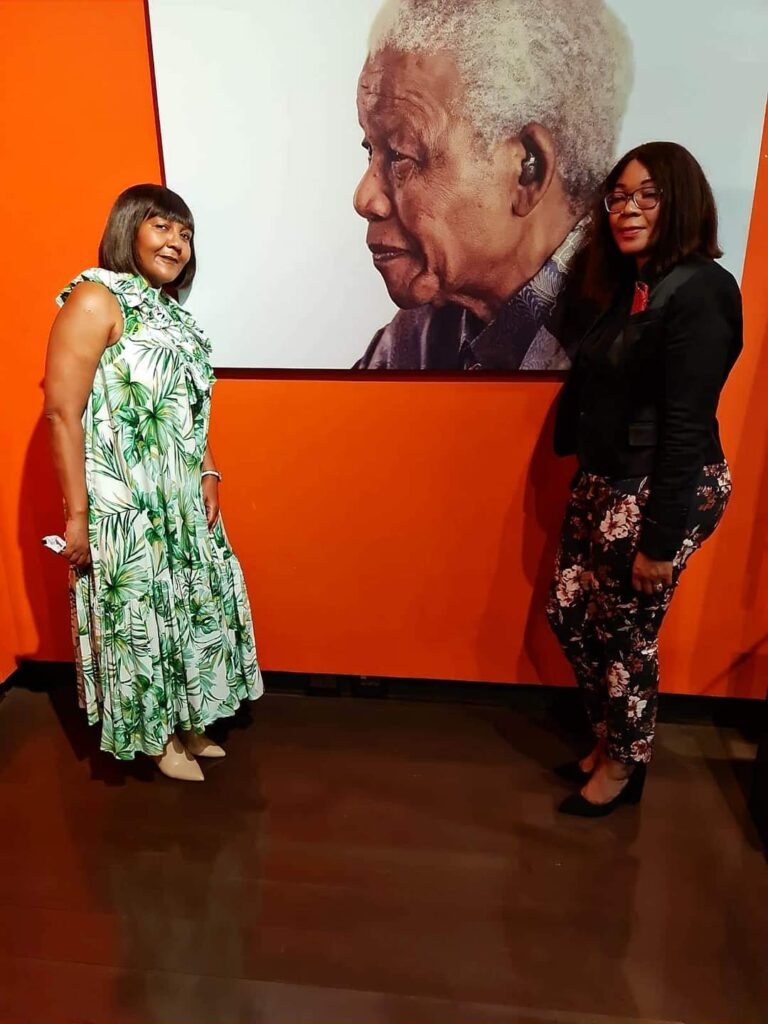
Today “5th December 2021 marks 8 years since the passing of Nelson Mandela, the 1st democratically elected President of South Africa.

Nelson Mandela passed away eight years ago today. We continue to celebrate his life and honouring the great work and sacrifices that Nelson Mandela the global icon did and fought for.

Live his legacy, #Nelson Mandela, the great peacemaker, a brave & wise man who fought consistently for his views & convictions. Madiba will remain in our hearts forever.

#NelsonMandela.

#Madiba

#RememberingNelsonMandela.

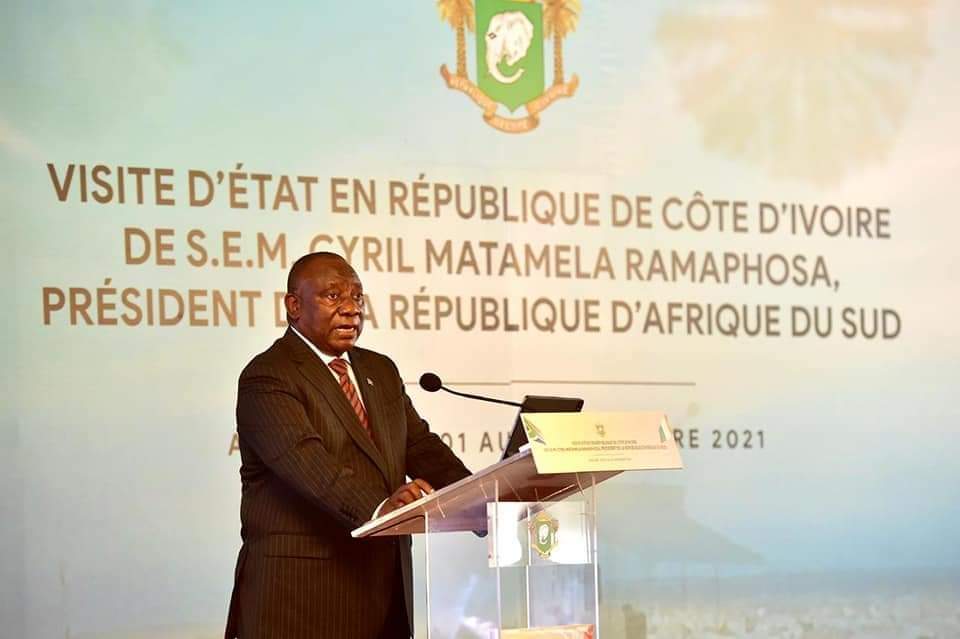
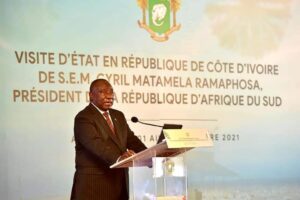
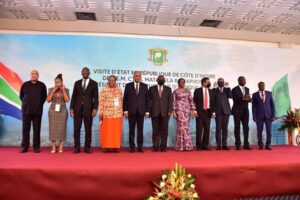
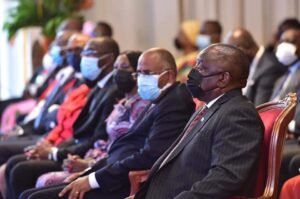
REMARKS BY HIS EXCELLENCY PRESIDENT CYRIL RAMAPHOSA, DURING A MEDIA BRIEFING ON THE OCCASION OF HIS STATE VISIT TO COTE D’IVOIRE

2 Dec 2021

We have just concluded an historic and very significant engagement between South Africa and Côte d’Ivoire.

It is historic because this is the first State Visit between our two countries since the establishment of diplomatic relations many years ago.

It is significant because of the ambition of our efforts at political and economic collaboration between our two countries.

This State Visit aims to strengthen bilateral relations between our two countries with a view to create a strategic partnership that will be enduring and mutually-beneficial.

We have just witnessed the signing of ten Memoranda of Understanding and Agreements in various areas of cooperation.

We have undertaken to deepen trade and investment between our two countries.

Based on the priorities and comparative advantages of both our countries, we have agreed on the need to increase investment in value addition in agriculture and agro-processing, and in the development of the mining sector.

We will prioritise investment in public-private infrastructure projects as outlined in the Ivorian National Development Plan 2021-2025.

We are looking to expand trade in petroleum products, fresh produce, retail and agricultural products, and to explore opportunities for medical and educational tourism.

The portfolio of South African investment in Côte d’Ivoire is growing rapidly.

A number of South African companies, including major banks and telecommunication companies that are operating in Côte d’Ivoire.

Several of our state-owned enterprises are negotiating investment promotion activities in sectors such as oil and gas, mining and geoscience.

Tomorrow, your Prime Minister and I will address a Business Forum that brings together South African and Ivorian business people to promote trade and investment between the two countries.

By increasing economic cooperation, we are looking to address our common challenges of poverty, unemployment and inequality, with a particular focus on the empowerment of women, youth and people with disabilities.

In this regard, I am particularly pleased with the signing of an agreement on Cooperation in the Field of Youth, and a cooperation agreement in the fields of Women’s Empowerment and Gender Equality.

As countries, and as a continent, we remain seized with the COVID-19 pandemic and the need for an urgent and effective recovery.

I want to use this opportunity to thank President Ouattara for the demonstration of solidarity in agreeing that this State Visit should go ahead.

The imposition of travel bans on South Africa and a number of countries in the Southern African region are regrettable, unfair and unscientific.

Given that it was our own African scientists who first detected the Omicron variant, it is also a slap in the face of African excellence and expertise.

These bans will cause untold damage in particular to travel and tourism industries that sustain businesses and livelihoods in South Africa and the Southern African region.

I want to use this opportunity to once again call on the countries who have imposed these travel restrictions to urgently reconsider their decision and lift these bans.

Whilst we respect the right of every country to take measures to protect their people, the sustained global cooperation we need to overcome the pandemic necessitates that we are led by science.

As South Africa we stand firmly against any form of health apartheid in the fight against this pandemic.

Your Excellency, You and I remain concerned that Africa and the rest of the developing world continue to struggle with limited access to the much-needed lifesaving vaccines.

Governments and international partners need to unite around a global guarantee which ensures that vaccines and treatments are produced at scale and made freely and equitably available to all people.

President Ouattara and I also discussed opportunities to strengthen our collaboration in advancing the goals of the African Union for peace, security and development.

We remain firmly focused on efforts to strengthen the African Peace and Security Architecture and its structures.

We also discussed the consolidation of democracy on the African continent along the principles of the African Charter on Democracy, Elections and Governance.

We applaud the efforts of the President and Ivorian people to foster national reconciliation.

South Africa remains ready to share its experience whenever called upon in this regard.

We have agreed to work together on multilateral and global issues of mutual concern, including the reform of the UN Security Council.

In conclusion, this has been for us a most productive and rewarding State Visit and engagement, giving real meaning and purpose to this historic first State Visit.

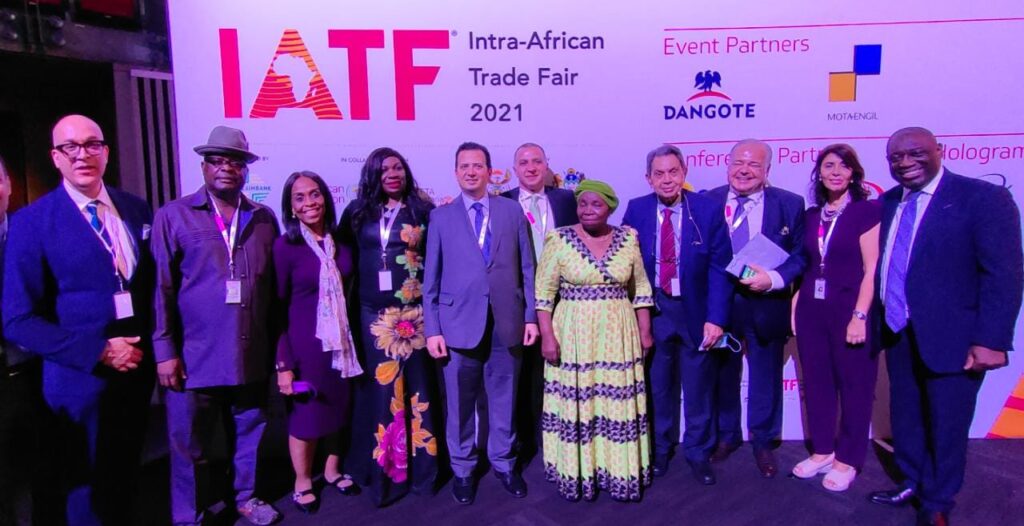
DLAMINI ZUMA: EGYPT DRIVING AGENDA 2063, THE AFRICA WE WANT TO SEE IS AN

INSPIRATION TO ALL OF US.

25 November 2021

Egypt’s Ambassador to South Africa, H.E. Ahmed El Fadly, chaired a

session during the Egyptian Day component the Intra-African Trade Fair

IATF2021 that took place from the 15th to the 21st of this month in

Durban, entitled “Egypt’s Role in Achieving Integration in Africa:

The Africa We Want”, during which Egypt’s vision of how to achieve

integration on the African continent through industry and trade was

showcased. That vision put forth how African countries can move from a

stage of poverty management to one wealth creation.

At the beginning of the session, Ambassador El Fadly addressed the

importance of achieving integration on the continent within a new

framework that goes beyond the traditional geographical divisions

inherited from colonialism (North, South, East, West and Central). He

pointed to the Cairo-Cape road as one alternative framework for

integration, citing that the road links together nine African countries

from North to South, including two of Africa’s largest economic

powerhouses, Egypt and South Africa, and that these countries combined

represent a third of the continent’s population and half of its GDP.

He emphasized that were these nine countries to deepen the economic ties

between them, they would greatly elevate the state of economic

integration on the continent and create a model for others to follow.

This he said can only be achieved if the effort was led by both Egypt

and South Africa, and must start by the deepening of economic ties

between them. This he said would be greatly helped by the recent launch

of the African Continental Free Trade Area AfCFTA, which will increase

the exchange of trade and joint investments between African countries,

helping all Africans achieve “the Africa we want”.

Mr. Mohamed El-Masry, First Vice-President of the Federation of Egyptian

Chambers of Commerce, presented the economic reform steps taken by the

Egyptian government during the past six years and its contribution to

stabilizing markets and achieving economic development. He stressed the

importance of the African Continental Free Trade Area Agreement, and the

need for it to be supported by establishing networks of integrated

roads, ports and other means of connectivity and communication within

the continent, as well as by removing non-tariff barriers.

For his part Engineer Ahmed El Sewedy, Chairman of the Board of

Directors of El Sewedy Electric Company, also highlighted the projects

that the company is carrying out in a number of African countries,

including Uganda, Tanzania, Ethiopia and Zambia, as models of success in

terms of African cooperation. He stressed the importance of the fact

that these projects are being done in African countries, by African

companies, using African sources of finance.

Another key area the session focused on was Pharmaceuticals. Dr. Maged

George, Chairman of the Export Council for medical industries, laid out

Egypt’s experience in localizing the production of medical supplies,

and how this can be translated to the wider continent. He said that

there are still serious challenges to trade among African markets,

including logistical challenges such as transport, shipping and banking

transactions. He added that Egypt envisions overcoming those challenges

in the pharmaceutical sector by establishing Egyptian factories in 12

African countries, through an alliance between different Egyptian

pharmaceutical companies, to produce medicine in those countries, and

exporting medicines to neighboring countries.

Ms. Nkosazana Dlamini Zuma, Minister of Governance and Traditional

Affairs in the Presidency, participated in the session, and commented on

the proceedings saying “It’s very exciting for us to see how Egypt

is developing … and to see Egypt driving Agenda 2063: the Africa we

Want, is an inspiration to all of us”. She also highlighted the

importance of the “Cairo-Cape Town” road in achieving African

integration, noting the importance of the role of women and youth in

achieving the desired economic development in Africa.

Ambassador Ahmed El Fadly also emphasized that women and youth have a

pivotal role in all aspects of development, pointing out that there are

eight women ministers in the Egyptian government and two deputy

ministers that are working on issues related to development. He also

referred to the leadership of women and youth in the private sector and

particularly in the field of small and medium-sized enterprises, noting

the presence of a number of them at the exhibition. El Fadly also

highlighted a number of Egyptian initiatives to integrate women and

youth in decision-making in Egypt, pointing to the Egyptian President

Abdel Fattah El-Sisi’s adoption of the annual “World Youth

Conference” initiative, which is hosted annually in Egypt.

At the end of the session, a contract worth one billion dollars was

signed between El Sewedy Electric Company and the government of Malawi,

to implement a number of strategic projects, including hydropower

projects, solar power plants and e-government, funded by the African

Export-Import Bank (AFREXIMBANK). El Fadly described the contract as one

of the largest deals concluded during the exhibition and a tangible

example of Egypt’s commitment to achieving integration and reaching the

“Africa we want”.

By: Ayman Walash Counselor- Head of the Press & Information Office

Embassy of the Arab Republic of Egypt

KAZAKHSTAN TIGHTENS TRAVEL RULES AS OMICRON VARIANT SPREADS

BY ASSEL SATUBALDINA

INTERNATIONAL

2 December 2021

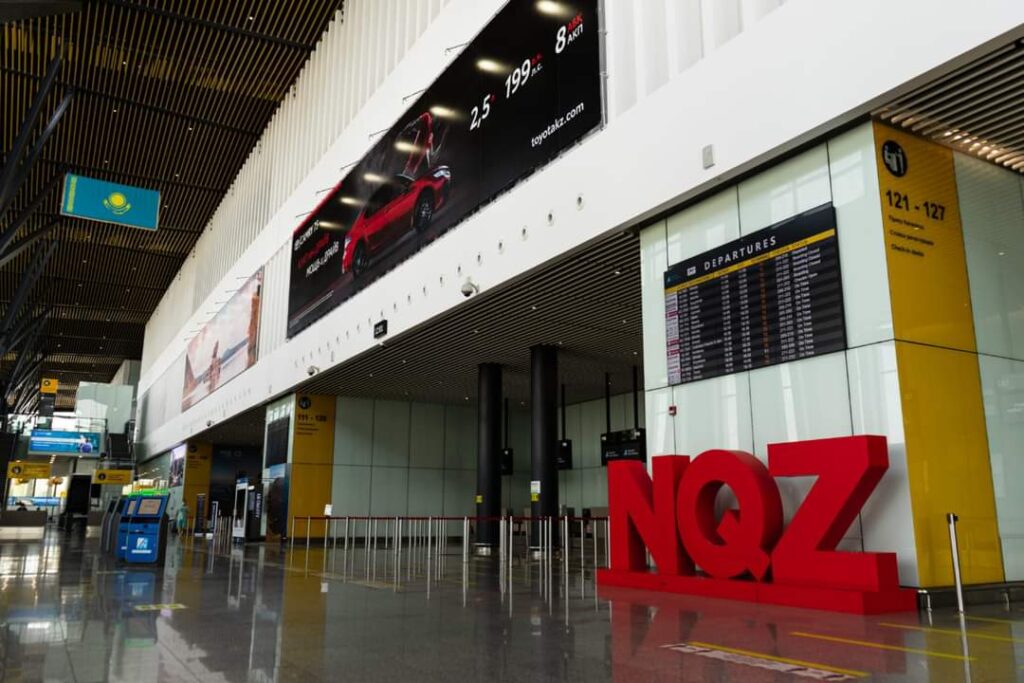
NUR-SULTAN – Kazakhstan will tighten travel rules for international arrivals from Dec. 3 over the concerns of a new Omicron variant, First Vice Healthcare Minister Marat Shoranov told a government meeting on Tuesday.

Foreign nationals from Botswana, South Africa, Lesotho, Namibia, Zimbabwe, Mozambique, Madagascar, Eswatini, Tanzania, Malawi, and Hong Kong will not be able to visit Kazakhstan, while those arriving from Israel, the Czech Republic, the Netherlands, Belgium, United Kingdom, Italy, Germany, Australia, and Canada, would have to present a PCR test result and would be quarantined for 7 days regardless of the test result.

Air travel to Egypt, which has also confirmed the new variant, will be suspended due to high passenger traffic between the countries.

“WHO has designated it (Omicron) as a variant for concern. According to preliminary data compared to other types of coronavirus infection, the Omicron variant is more contagious than the Delta, affects mostly people aged 20-30 years, and there is also the risk of reinfection,” said Shoranov noting that the epidemiological situation in Kazakhstan remains stable.

As of Dec. 2, Kazakhstan reported 973,045 coronavirus cases and 82,734 coronavirus pneumonia cases.

Kazakhstan was not the first country to impose travel restrictions on arrivals from Africa. As South Africa first reported the new variant with the growing concerns of easier transmission, countries around the world rushed to tighten restrictions. Omicron has now spread to more than 20 countries, including the United States., Germany, Saudi Arabia, and Australia, but the World Health Organization said these restrictions “place a heavy burden on lives and livelihoods.”

“In addition, they can adversely impact global health efforts during a pandemic by disincentivizing countries to report and share epidemiological and sequencing data. All countries should ensure that the measures are regularly reviewed and updated when new evidence becomes available on the epidemiological and clinical characteristics of Omicron or any other variant of concern,” said the WHO in a statement.

Photo: International arrivals and depatures terminal of Nursultan Nazarbayev international airport in the Kazakh capital. Photo credit: nn-airport.kz