REMARKS BY PRESIDENT CYRIL RAMAPHOSA AT THE JOINT PRESS BRRIEFING WITH PRESIDENT BUHARI OF THE FEDERAL REPUBLIC OF NIGERIA

2 December 2021

Allow me to express my gratitude to President Buhari and the government of Nigeria for receiving us so warmly in Abuja.

I think it is important that I emphasize this in the light of the discovery by South African scientists of the Omicron variant of the coronavirus, and the subsequent imposition of extremely harsh and unfair travel restrictions on flights from and to South Africa, as well as on a number of other African countries.

President Buhari, the solidarity expressed by yourself and the government of Nigeria sends the strongest of messages.

It says that as African countries we are standing united against the imposition of arbitrary and discriminatory restrictions that are not only unscientific, but counter-productive in the long run.

Indeed, the leaders of Cote d’Ivoire, where we will be travelling to later today, as well as of Ghana and Senegal, have also expressed their dissatisfaction with the travel ban against South Africa and our sister countries in Southern Africa.

This is a global pandemic, and overcoming it requires that we collaborate and work together as a collective.

The resulting damage from this ban to national economies on the continent will be considerable and long-lasting.

 I want to use this opportunity to once again call on the countries who have imposed these travel bans to reverse their decisions.

Of the many areas of cooperation explored during this BNC was Nigeria and South Africa working to build resilience in our respective health systems and around our shared health priorities. A draft MOU in this regard is being processed. As African countries we affirmed that healthcare cooperation is a critical focus area in the current climate, as well as in furtherance of the AU’s Agenda 2063.

Members of the media from Nigeria and South Africa, I want to thank you for being here today.

You play a valuable role in communicating the work that is being done, and in faithfully imparting the message that Nigeria and South Africa are as committed as ever to strengthening their ties.

We have just concluded a successful 10th Session of the Nigeria-South Africa Bi-National Commission.

President Buhari and I witnessed the signing of a number of Agreements and Memoranda of Understanding to advance trade and investment, development, economic upliftment and youth empowerment, among others.

These new agreements broaden the scope of our cooperation on issues of common interest and mutual benefit, and we will work together to ensure their implementation.

At present our two countries have signed approximately 32 agreements, and today we have added three more to the current portfolio. They are an MOU in the field of Youth Development, an Agreement on Audiovisual Co-operation, and a Programme of Cooperation on Arts and Culture.

The Youth Development MOU will be key to improving people to people relations and to capacitating young people in our respective countries.

South Africa and Nigeria both have rich cultural, vibrant arts and flourishing sports sectors, all of which will be greatly enriched through greater collaboration through the Programme of Cooperation.

The Agreement on Audio-visual Cooperation will be a boost to the film production industries in our respective countries, and we as South Africa stand to benefit greatly from cooperation with the world-famous Nollywood.

I am also pleased that additional MOU’s on Political Consultation and on an Early Warning Mechanism will be signed as soon as legal processes have been concluded.

During this BNC we also launched two groundbreaking initiatives.

The first is a Joint Ministerial Advisory Council on Trade, Investment and Industry.

This Council will promote economic relations between our two countries, and serve as a platform through which obstacles to doing business can be overcome. The Trade, Finance and Industry Working Group of the BNC has recommended we look into these constraints facing businesses in both countries.

It is furthermore a means for our Ministers to interact and share ideas about new opportunities in trade and investment between our two countries.

We want to improve the balance of trade between our countries, and we are extremely encouraged by the interest expressed by a number of Nigerian businesses in accessing the South African market. We are particularly encouraged by the interest from Nigerian banks, and it has been recommended they work with South African regulatory authorities to facilitate their access into the financial sector in South Africa.

The second initiative we have launched is the inaugural South Africa-Nigeria Youth Dialogue.

The purpose of this dialogue is to build the capacity of both South African and Nigerian youth across a range of sectors, from peacebuilding to conflict prevention and resolution, from intercultural learning to civic education, from human rights education and democracy to promoting tolerance and diversity.

We will be working towards regularizing this dialogue such that it becomes an integral part of the BNC programme in our future engagements.

As South Africa we will be looking at how we can establish a youth exchange and leadership development programme, rallying around the legacy of President Nelson Mandela who was a champion for youth development. It will include important components such as civics education, value systems inculcation, social cohesion and promoting a culture of service.

More details will be provided in due course so please watch this space.

In conclusion, let me thank all who have been part of making this 10th Bi-National Commission a resounding success.

I wish to thank you once again, President Buhari, for the fruitful engagements and measurable outcomes we have agreed on today.

May the good work continue and may our relations as Nigeria and South Africa continue to grow from strength to strength.

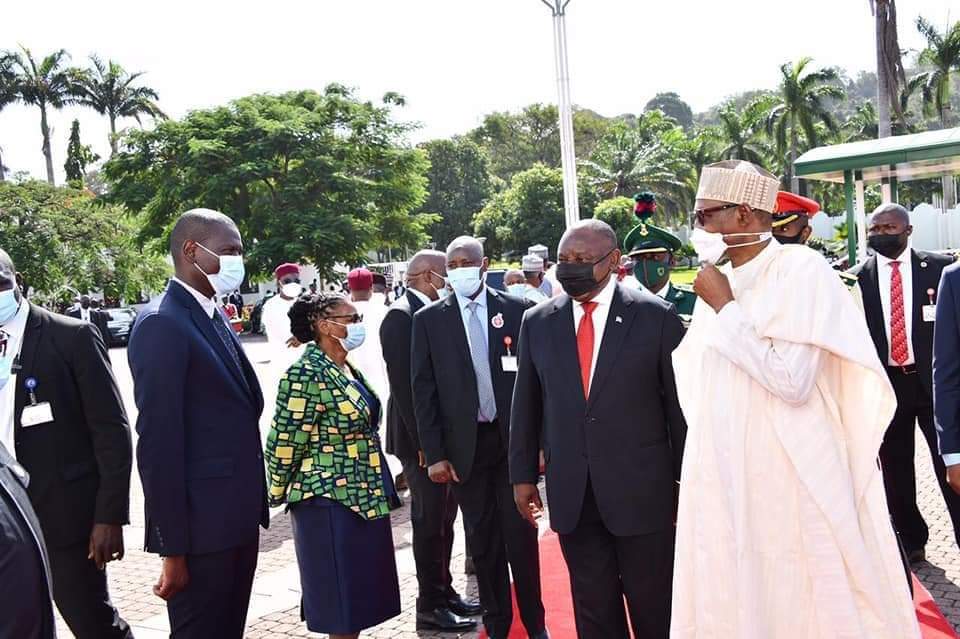
HIS EXCELLENCY PRESIDENT RAMAPHOSA ARRIVES IN ABUJA ON STATE VISIT IN THE FEDERAL REPUBLIC OF NIGERIA

30 November 2021

His Excellency President Cyril Ramaphosa has arrived at the Nnamdi Azikiwe International Airport at the beginning of a State Visit to the Federal Republic of Nigeria from 30 November to 1 December 2021.

The visit to Nigeria forms part of a four-nation visit which includes the republics of Côte d’Ivoire, Ghana and Senegal.

The visit to Nigeria coincides with the 10th Session of the Bi-National Commission (BNC) between Nigeria and South Africa.

This year also marks the 20th anniversary of the Bi-National Commission.

The BNC will provide an opportunity for South Africa and Nigeria to deepen relations across the spectrum of South Africa’s national priorities, including political cooperation and the strengthening of economic development cooperation.

The 10th BNC is expected to review and follow up on decisions taken by the 9th Session of the Commission which, among others, included the establishment of an Early Warning Mechanism, the re-establishment of the South Africa-Nigeria Consular Forum, an agreement on Diplomatic Consultations, and the reaffirmation of the historical and political relations between the two countries.

South Africa and Nigeria are also committed to regular consultations on bilateral issues, and continental and global issues of mutual concern.

During this BNC a number of Memoranda of Understanding/Agreement will be signed.

South Africa and Nigeria have strong historical ties dating back to the days of the struggle against apartheid and colonialism. In March 2016, the BNC was elevated from the Deputy/Vice President level to be presided over by the Heads of State, which signifies the strategic importance attached to the bilateral relations and cooperation between the two countries.

President Ramaphosa is accompanied by the Minister of International Relations and Cooperation, Ms Naledi Pandor; Minister of Defence and Military Veterans Ms Thandi Modise; Minister of Police Mr Bhekokwakhe Cele; Minister of Justice and Correctional Services Mr Ronald Lamola, Minister in the Presidency Mr Mondli Gungubelele, and Minister in the Presidency for Women, Youth and Persons with Disabilities Ms Maite Nkoana Mashabane; Minister of Mineral Resources and Energy Mr Gwede Mantashe; Minister of Health Dr Mathume Phaahla; Minister of Trade, Industry and Competition Mr Ebrahim Patel; Minister of Transport Mr Fikile Mbalula, and Deputy Minister of State Security Mr Zizi Kodwa.

PRESIDENT COMMENCES HIS FOUR-NATION WEST AFRICA VISIT

30 November 2021

President Cyril Ramaphosa has today, Tuesday, 30 November 2021, departed South Africa for the Federal Republic of Nigeria commencing his week-long, four-nation visit to the Western Africa region.

The President will visit Nigeria, Côte d’Ivoire, Ghana and Senegal. The visit, which concludes on 7 December, serves to reinforce South Africa’s bilateral relations with the countries concerned and to strengthen partnerships directed at African development and cooperation in multilateral forums.

During this visit South Africa and the partner states will explore ways to leverage the opportunities presented by the African Continental Free Trade Area for mutual benefit and with greater support for businesses conducting intra-African trade and investment.

President Ramaphosa will be accompanied by a delegation of Ministers and business leaders in view of growing economic relations and people-to-people interaction between South Africa and these West African countries.

FEDERAL REPUBLIC OF NIGERIA

On 30 November and 1 December President Ramaphosa will visit the Federal Republic of Nigeria for a State Visit at the invitation of His Excellency President Muhammadu Buhari.

The State Visit to the Federal Republic of Nigeria will coincide with the 10th Session of the Nigeria-South Africa Bi-National Commission (BNC) and will reflect on progress made in advancing trade and investment between the two countries.

The BNC is the highest structured bilateral mechanism between the Federal Republic of Nigeria and the Republic of South Africa.

The 10th Session will allow the presidents to review progress made in the implementation of decisions and agree on new programmes to be implemented by the respective governments.

It is expected that five new agreements and Memoranda of Understanding will be concluded by the respective Ministers.

REPUBLIC OF CÔTE D’IVOIRE

President Ramaphosa will visit the Republic of Côte d’Ivoire on 2 and 3 December 2021, where he will be hosted on a State Visit at the invitation of His Excellency President Alassane Dramane Ouattara.

The State Visit is significant and historic given that it is the first since diplomatic relations between South Africa and the Republic of Côte d’Ivoire were established in May 1992.

In the Ivorian capital, Abidjan, President Ramaphosa will also address the opening session of the Africa Investment Forum, jointly organised by the Government of Cote d’Ivoire and the African Development Bank, under the theme: “Accelerating Transformative Investment in Africa”.

REPUBLIC OF GHANA

On conclusion of his visit to the Republic of Côte d’Ivoire, President Ramaphosa will proceed to the Republic of Ghana from 4 to 5 December 2021, where he will be hosted on a State Visit by His Excellency President Nana Addo Dankwa Akufo Addo.

The visit to the Republic of Ghana will culminate in an inaugural session of the Bi-National Commission.

The bilateral relations between South Africa and Ghana have grown signficantly over the years.

Underlining these strong relations is the elevation of structured bilateral relations from a Permanent Joint Commission for Cooperation (PJCC) to a Bi-National Commission, to be chaired by the Heads of State.

REPUBLIC OF SENEGAL

The four-nation West Africa regional visit will conclude in the Republic of Senegal where President Ramaphosa will be on an official visit from 6 to 7 December 2021.

President Ramaphosa will on 6 December participate in the Dakar Peace and Security Forum.

On 7 December 2021, President Ramaphosa will together with his delegation of Ministers, engage in an Official Visit programme between South Africa and Senegal.

South Africa and Senegal already enjoy cordial bilateral political, economic and social relations underpinned by strong historical ties dating back to the years of the liberation struggle.

A number of agreements will be signed between South Africa and Senegal during this visit, which will include an agreement to elevate the Joint Commission for Bilateral Cooperation from Ministerial level to Presidential level. This will allow for the further consolidation of ties between the two countries.

All COVID-19 health protocols will be observed throughout the West African visit. This will include regular PCR testing of delegates.

#BetterAfricaBetterWorld

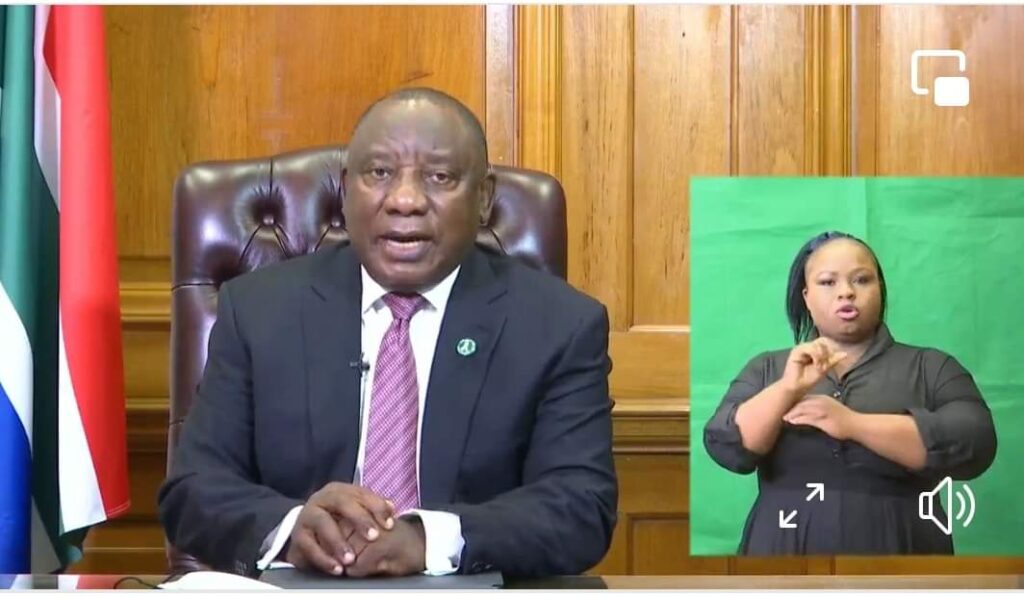
STATEMENT BY PRESIDENT CYRIL RAMAPHOSA ON PROGRESS IN THE NATIONAL EFFORT TO CONTAIN THE COVID-19 PANDEMIC

UNION BUILDINGS, TSHWANE 28 NOVEMBER 2021

My Fellow South Africans,

Earlier this week, our scientists identified a new variant of the coronavirus that causes the COVID-19 disease.

The World Health Organization has named it Omicron and has declared it a ‘variant of concern’.

The Omicron variant was first described in Botswana and subsequently in South Africa, and scientists have also identified cases in countries such as Hong Kong, Australia, Belgium, Italy, the United Kingdom, Germany, Austria, Denmark and Israel.

The early identification of this variant is a result of the excellent work done by our scientists in South Africa and is a direct result of the investment that our Science and Innovation and Health Departments have made in our genomic surveillance capabilities.

We are one of the countries in the world that set up a surveillance network throughout the country to help us monitor the behaviour of COVID-19.

The early detection of this variant and the work that has already gone in to understanding its properties and possible effects means that we are better equipped to respond to the variant.

We pay tribute to all our scientists who are world-renowned and widely respected and have demonstrated that they have a deep knowledge of epidemiology.

There are a number of things that we already know about the variant as a result of the work our scientists have been doing on genome surveillance.

Firstly, we now know that Omicron has far more mutations than any previous variant.

Secondly, we know that Omicron is readily detected by the current COVID-19 tests.

This means that people who are showing COVID-19 symptoms or have been in contact with someone who is COVID-19 positive, should still get tested.

Thirdly, we know that this variant is different from other circulating variants and that it is not directly related to the Delta or Beta variants.

Fourthly, we know that the variant is responsible for most of the infections found in Gauteng over the last two weeks and is now showing up in all other provinces.

There are still a number of things about the variant that we do not know, and that scientists in South Africa and elsewhere in the world are still hard at work to establish.

Over the next few days and weeks, as more data becomes available, we will have a better understanding of:

whether Omicron is transmitted more easily between people,

whether it increases the risk of reinfection,

whether the variant causes more severe disease, and,

how effective the current vaccines are against the variant Omicron.

The identification of Omicron coincides with a sudden rise in COVID-19 infections.

This increase has been centred in Gauteng, although cases are also rising in other provinces.

We have seen an average of 1,600 new cases in the last 7 days, compared to just 500 new daily cases in the previous week, and 275 new daily cases the week before that.

The proportion of COVID-19 tests that are positive has risen from around 2 per cent to 9 per cent in less than a week.

This is an extremely sharp rise in infections in a short space of time.

If cases continue to climb, we can expect to enter a fourth wave of infections within the next few weeks, if not sooner.

This should not come as a surprise.

Epidemiologists and disease modellers have told us that we should expect a fourth wave in early December.

Scientists have also told us to expect the emergence of new variants.

There are several concerns about the Omicron variant, and we are still not sure exactly how it will behave going forward.

However, we already have the tools that we need to protect ourselves against it.

We know enough about the variant to know what we need to do to reduce transmission and to protect ourselves against severe disease and death.

The first, the most powerful, tool we have is vaccination.

Since the first COVID-19 vaccines became available late last year, we have seen how vaccines have dramatically reduced severe illness, hospitalisation and death in South Africa and across the world.

Vaccines do work. Vaccines are saving lives.

Since we launched our public vaccination programme in May 2021, over 25 million vaccines doses have been administered in South Africa.

This is a remarkable achievement.

It is by far the most extensive health intervention undertaken in this country in such a short period of time.

Forty-one percent of the adult population have received at least one vaccine dose, and 35.6 per cent of adult South Africans are fully vaccinated against COVID-19.

Significantly, 57 per cent of people 60 years old and above are fully vaccinated, and 53 per cent of people aged between 50 and 60 are fully vaccinated.

While this is welcome progress, it is not enough to enable us to reduce infections, prevent illness and death and restore our economy.

Vaccination against COVID-19 is free.

Tonight, I would like to call on every person who has not been vaccinated to go to their nearest vaccination station without delay.

If there is someone in your family or among your friends who is not vaccinated, I call on you to encourage them to get vaccinated.

Vaccination is by far the most important way to protect yourself and those around you against the Omicron variant, to reduce the impact of the fourth wave and to help restore the social freedoms we all yearn for.

Vaccination is also vital to the return of our economy to full operation, to the resumption of travel and to the recovery of vulnerable sectors like tourism and hospitality.

The development of the vaccines we have against COVID-19 has been made possible thanks to the millions of ordinary people who have volunteered to participate in these trials to advance scientific knowledge for the benefit of humanity.

They are the people who have proven that these vaccines are safe and effective.

These people are our heroes.

They join the ranks of the health care workers who have been at the forefront of the fight against the pandemic for close on two years, and who continue to care for the sick, who continue to administer vaccines, and who continue to save lives.

We need to be thinking about the people who have been courageous when we consider getting vaccinated.

By getting vaccinated, we are not only protecting ourselves, but we are also reducing the pressure on our health care system and our health care workers and reducing the risks faced by our healthcare workers.

South Africa, like a number of other countries, is looking at booster vaccines for people who are at greatest risk and for whom a booster may be beneficial.

Health care workers in the Sisonke trial, many of whom who were vaccinated more than six months ago, are being offered Johnson & Johnson booster doses.

Pfizer has filed an application to the South African Health Products Regulatory Authority for a third dose to be administered after the two dose primary series.

The Ministerial Advisory Committee on Vaccines has already indicated that it will recommend a staged introduction of boosters commencing with the older population.

Other people with immunodeficiency, such as those on cancer treatment, renal dialysis and on steroids treatment for auto-immune diseases, are allowed booster doses on recommendation of their doctors.

As individuals, as companies and as government, we have a responsibility to ensure that all people in this country can work, travel and socialise safely.

We have therefore been undertaking engagements with social partners and other stakeholders on introducing measures that make vaccination a condition for access to workplaces, public events, public transport and public establishments.

This includes discussions that have been taking place at NEDLAC between government, labour, business and the community constituency, where there is broad agreement on the need for such measures.

Government has set up a task team that will undertake broad consultations on making vaccination mandatory for specific activities and locations.

The task team will report to the Inter-Ministerial Committee on Vaccination chaired by the Deputy President, which will make recommendations to Cabinet on a fair and sustainable approach to vaccine mandates.

We realise that the introduction of such measures is a difficult and complex issue, but if we do not address this seriously and as a matter of urgency, we will continue to be vulnerable to new variants and will continue to suffer new waves of infection.

The second tool we have to fight the new variant is to continue to wear our face masks whenever we are in public spaces and in the company of people outside our households.

There is now overwhelming evidence that the proper and consistent wearing of a cloth mask or other suitable face covering over both the nose and mouth is the best way to prevent the transmission of the virus from one person to another.

The third tool we have to fight the new variant is the cheapest and the most abundant: fresh air.

This means that we must try as much as possible to be outdoors when we meet people outside our household.

When we are indoors with other people, or in cars, buses and taxis, we need to keep windows open to ensure that air can flow freely through the space.

The fourth tool we have to fight the new variant is to avoid gatherings, particularly indoor gatherings.

Mass gatherings such as major conferences and meetings, especially those that require a large number of people to be in close contact over extended periods, should be changed to virtual formats.

End-of-year parties and matric year-end raves as well as other celebrations should ideally be postponed, and every person should think twice before attending or organising a gathering.

Where gatherings do take place, all the necessary COVID protocols must be closely observed.

Every additional contact we have increases our risk of becoming infected or infecting someone else.

Fellow South Africans,

The National Coronavirus Command Council met yesterday to consider the recent rise in infections and the possible impact of the Omicron variant.

This was followed by meetings earlier today of the President’s Coordinating Council and Cabinet, where a decision was taken that the country should remain on Coronavirus Alert Level 1 for now and that the National State of Disaster should remain in place.

In taking the decision not to impose further restrictions at this stage, we considered the fact that when we encountered previous waves of infection, vaccines were not widely available and far fewer people were vaccinated.

That is no longer the case. Vaccines are available to anyone aged 12 and above, free of charge, at thousands of sites across the country.

We know that they prevent severe disease and hospitalisation.

We also know that the coronavirus will be with us for the long term. We must therefore find ways of managing the pandemic while limiting disruptions to the economy and ensuring continuity.

However, this approach will not be sustainable if we do not increase the vaccination rate, if we do not wear masks, or if we fail to adhere to basic health precautions.

We should all remember that in terms of Alert Level 1 regulations:

There is still a curfew in place from 12 midnight to 4 am.

No more than 750 people may gather indoors and no more than 2,000 people may gather outdoors. Where the venue is too small to accommodate these numbers with appropriate social distancing, then no more than 50 per cent of the capacity of the venue may be used.

No more than 100 people are permitted at a funeral, and night vigils, after-funeral gatherings and ‘after-tears’ gatherings are not allowed.

The wearing of masks in public places is still mandatory, and failure to wear a mask when required remains a criminal offence.

The sale of alcohol is permitted according to the regular licence conditions, but may not be sold during curfew hours.

We will closely monitor infection rates and hospitalisation over the coming days and will review the situation in another week.

We will then need to determine whether the existing measures are adequate or whether changes need to be made to the current regulations.

We have started the process of amending our health regulations so that we can review the use of the Disaster Management Act to manage our response to the pandemic, with a view to ultimately lifting the National State of Disaster.

We will also implement our national resurgence plan to ensure that hospitals and other medical facilities are ready for the fourth wave.

We are focusing on effective clinical governance, contact tracing and screening, effective clinical care, availability of health personnel.

To ensure our facilities are ready, all hospital beds that were available or required during the third wave of COVID-19 are planned and prepared for the fourth wave.

We are also working to ensure that oxygen supply is available to all beds earmarked for COVID-19 care.

We will continue to be guided by the World Health Organization on international travel, which advises against the closure of borders.

Like most other countries, we already have the means to control the importation of variants to other countries.

This includes the requirement that travellers produce a vaccination certificate and a negative PCR test taken within 72 hours of travel, and that masks are worn for the duration of travel.

We are deeply disappointed by the decision of several countries to prohibit travel from a number of Southern African countries following the identification of the Omicron variant.

This is a clear and completely unjustified departure from the commitment that many of these countries made at the meeting of G20 countries in Rome last month.

They pledged at that meeting to restart international travel in a safe and orderly manner, consistent with the work of relevant international organisations such as the World Health Organization, the International Civil Aviation Organization, the International Maritime Organization and the OECD.

The G20 Rome Declaration noted the plight of the tourism sector in developing countries, and made a commitment to support a “rapid, resilient, inclusive and sustainable recovery of the tourism sector”.

Countries that have imposed travel restrictions on our country and some of our Southern African sister countries include the United Kingdom, United States, European Union members, Canada, Turkey, Sri Lanka, Oman, the United Arab Emirates, Australia, Japan, Thailand, Seychelles, Brazil and Guatemala, among others.

These restrictions are unjustified and unfairly discriminate against our country and our Southern African sister countries.

The prohibition of travel is not informed by science, nor will it be effective in preventing the spread of this variant.

The only thing the prohibition on travel will do is to further damage the economies of the affected countries and undermine their ability to respond to, and recover from, the pandemic.

We call upon all those countries that have imposed travel bans on our country and our Southern African sister countries to urgently reverse their decisions and lift the ban they have imposed before any further damage is done to our economies and to the livelihoods of our people.

There is no scientific justification for keeping these restrictions in place.

We know that this virus, like all viruses, does mutate and form new variants.

We also know that the likelihood of the emergence of more severe forms of variants is increased significantly where people are not vaccinated.

That is why we have joined many countries, organisations and people around the world who have been fighting for equal access to vaccines for everyone.

We have said that vaccine inequality not only costs lives and livelihoods in those countries that are denied access, but that it also threatens global efforts to overcome the pandemic.

The emergence of the Omicron variant should be a wake-up call to the world that vaccine inequality cannot be allowed to continue.

Until everyone is vaccinated, everyone will be at risk.

Until everyone is vaccinated, we should expect that more variants will emerge.

These variants may well be more transmissible, may cause more severe disease, and may be more resistant to the current vaccines.

Instead of prohibiting travel, the rich countries of the world need to support the efforts of developing economies to access and to manufacture enough vaccine doses for their people without delay.

Fellow South Africans,

The emergence of the Omicron variant and the recent rise in cases have made it clear that we will have to live with this virus for some time to come.

We have the knowledge, we have the experience and we have the tools to manage this pandemic, to resume many of our daily activities, and to rebuild our economy.

We have the ability to determine the path our country will take.

Every one of us needs to get vaccinated.

Every one of us needs to practice the basic health protocols like wearing masks, washing or sanitising our hands regularly, and avoiding crowded and closed spaces.

Every one of us needs to take responsibility for our own health and the health of those around us.

Every one of us has a role to play.

We will not be defeated by this pandemic.

We have already started learning to live with it.

We will endure, we will overcome and we will thrive.

God bless South Africa and protect her people.

I thank you.

SOUTH AFRICA’S RESPONSE TO TRAVEL RESTRICTIONS IMPOSED BY SEVERAL COUNTRIES

27 November 2021

The South African government has noted the announcements by several countries to institute temporary travel restrictions on South Africa and other countries in our region.

This follows the detection of the new Omicron variant.

South Africa aligns itself with the World Health Organisation’s position on the latest travel bans.

The World Health Organisation has pleaded with world leaders not to engage in knee-jerk reactions and has cautioned against the imposition of travel restrictions.

Dr. Michael Ryan (WHO Head of Emergencies) has stressed the importance of waiting to see what the data will show.

“We’ve seen in the past, the minute there’s any kind of mention of any kind of variation and everyone is closing borders and restricting travel. It’s really important that we remain open, and stay focused,” Ryan said.

We also note that new variants have been detected in other countries. Each of those cases have had no recent links with Southern Africa. It’s worth noting that the reaction to those countries is starkly different to cases in Southern Africa.

This latest round of travel bans is akin to punishing South Africa for its advanced genomic sequencing and the ability to detect new variants quicker. Excellent science should be applauded and not punished. The global community needs collaboration and partnerships in the management of the COVID-19 pandemic.

A combination of South Africa’s capacity to test and it’s ramped-up vaccination programme, backed up by world class scientific community, should give our global partners the comfort that we are doing as well as they are in managing the pandemic. South Africa follows and enforces globally recognized COVID-19 health protocols on travel. No infected individuals are permitted to leave the country.

Minister Naledi Pandor said: “Whilst we respect the right of all countries to take the necessary precautionary measures to protect their citizens, we need to remember that this pandemic requires collaboration and sharing of expertise. Our immediate concern is the damage that these restrictions are causing to families, the travel and tourism industries and business”.

South Africa has already started engaging countries that have imposed travel bans with the view to persuade them to reconsider.

Tokayev Stresses Kazakhstan’s Special Role in Central Asia, Plans to Create Unified Foreign Policy Strategy Going Forward

BY ASSEL SATUBALDINA

in INTERNATIONAL 19 NOVEMBER 2021

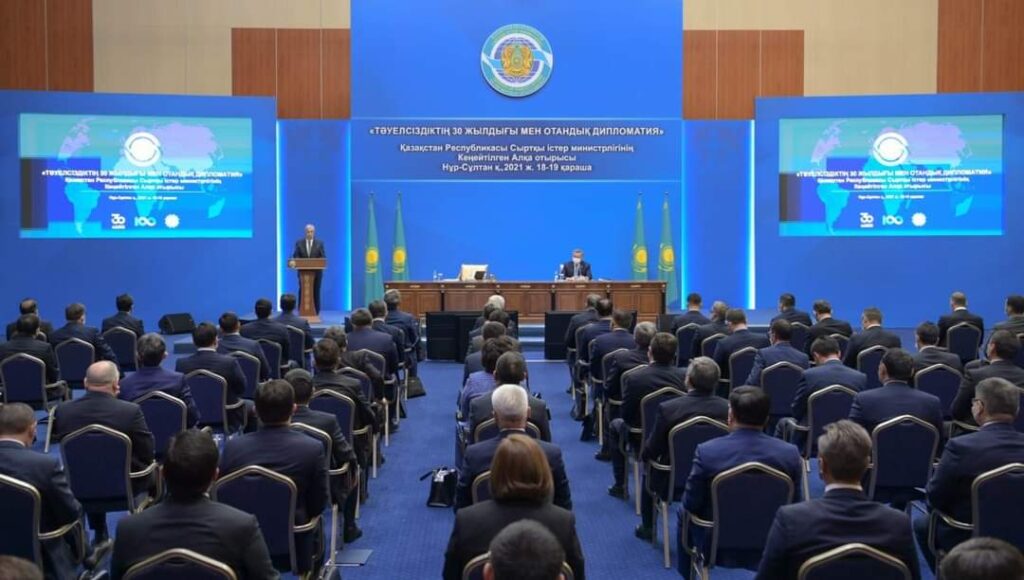
NUR-SULTAN – Kazakh diplomacy is known for its unique approach to seeking solutions to many international problems, said President of Kazakhstan Kassym-Jomart Tokayev during the expanded meeting of the Ministry of Foreign Affairs on Thursday, reports the Akorda press service.

“Our country has put forward peacemaking initiatives and undertaken mediation efforts aimed at resolving interstate and civil conflicts. We seek to establish harmonious relations among civilizations and hold the Congress of Leaders of World and Traditional Religions. All this was highly appreciated and fully supported by our foreign partners,” said Tokayev.

He highlighted the upcoming 30th anniversary of independence on Dec. 16 and said that the country’s path is marked by significant achievements ranging from the legal consolidation of borders, which he described as a “truly unprecedented historic achievement” to the signing of the Convention on the Legal Status of the Caspian Sea that ended a three-decade-long dispute and the voluntary dismantling of what was once the world’s fourth-largest nuclear arsenal inherited from the Soviet Union.

Kazakhstan’s multivector foreign policy, where the country managed to establish and maintain friendly relations with strategic partners, is also among these achievements.

He emphasized that Kazakhstan was at the forefront of co-founding multilateral institutions on the Eurasian continent. “With our brotherly states, we transformed the Turkic Council into a full-fledged organization. This event marked the beginning of a new stage of cooperation among the Turkic-speaking states,” he added.

In all of these efforts, the role of civil service workers can hardly be overestimated, said Tokayev.

Tokayev praised the efforts of the diplomatic corps that assisted thousands of Kazakh citizens abroad when the pandemic began and helped them return to Kazakhstan.

“Thanks to the efforts of diplomats, Kazakhstan received humanitarian aid. For our part, we have also provided support to many countries. Vaccine diplomacy has contributed to the stabilization of the epidemiological situation in Central Asia. Despite all the difficulties, you continue to solve your strategic tasks,” said Tokayev.

While outlining the country’s achievements, Tokayev also underlined the tasks for the ministry ahead. “There is no truly unified national strategy for Kazakhstan in its external policy. This is a systemic problem. In this regard, the Ministry of Foreign Affairs should establish close interdepartmental coordination,” he said.

Among the priorities are also resetting Kazakhstan’s economic diplomacy and strengthening Kazakhstan’s leading position in the Central Asian region.

“I think we should boldly declare our special regional status because we have every reason to do so. Our economy is much stronger than other Central Asian economies. Our central geostrategic location is at the crossroads of key transport corridors in Eurasia. Large-scale and profound economic and democratic transformations, intellectual and human potential, high prestige on the international arena – these factors give us a special responsibility for the fate of Central Asia,” said Tokayev.

Tokayev reaffirmed Kazakhstan’s commitment to a balanced foreign policy based on pragmatism and the country’s continued respect for its bilateral and multilateral obligations.

“We will never allow any agreements that would compromise our sacred values of independence, sovereignty, inviolability of borders, and territorial integrity. Above all, we must defend the interests of Kazakhstan,” said Tokayev.

Get The Astana Times stories sent directly to you! Sign up via the website or subscribe to our Twitter and Telegram!

Tokayev chairs the meeting. Photo credit: Akorda press service

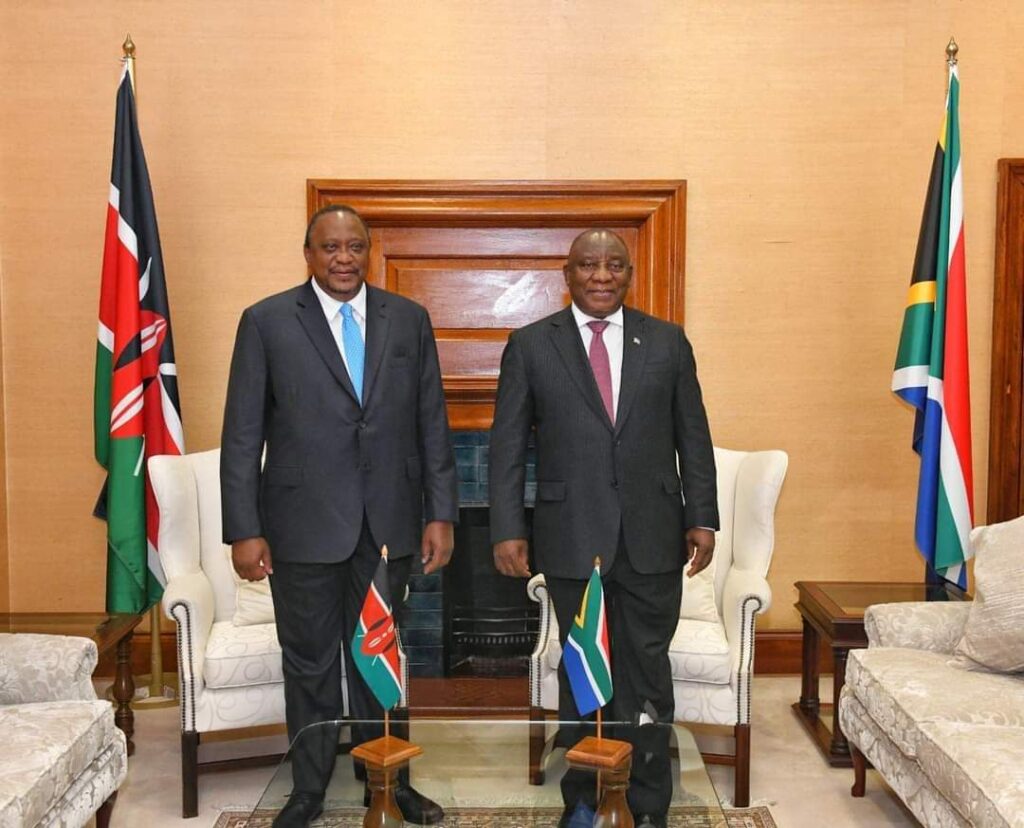
JOINT COMMUNIQUE ON THE OCCASION OF THE STATE VISIT OF H.E. UHURU KENYATTA, PRESIDENT OF THE REPUBLIC OF KENYA, TO SOUTH AFRICA, FROM 22 – 24 NOVEMBER 2021

24 November 2021

1. At the invitation of H.E Matamela Cyril Ramaphosa, the President of the Republic of South Africa, H.E. Uhuru Kenyatta, President of the Republic of Kenya, paid a State Visit to the Republic of South Africa from 22nd – 24th November, 2021. The main purpose of the visit was to take stock of the current state of bilateral relations between the two countries whilst also providing an opportunity to explore other areas of mutual interest and benefit for the peoples of South Africa and Kenya.

2. President Ramaphosa was accompanied by ten Ministers representing the following portfolios: International Relations and Cooperation; Agriculture, Land Reform and Rural Development; Home Affairs; Trade, Industry and Competition; Defence and Military Veterans; Transport; Human Settlements; Public Enterprises; Health and Tourism.

3. President Kenyatta led a high level delegation from Kenya comprising of Cabinet Secretaries in charge of: Foreign Affairs; Industrialization; Trade and Enterprise Development; Tourism and Wildlife; Transport, Infrastructure, Housing, Urban Development and Public Works and Health. The delegation also included senior government officials and representatives of the business community.

4. President Ramaphosa and President Kenyatta held high level talks in Pretoria on 23 November, 2021. The discussions were held in the spirit of friendship, during which the two Presidents recalled the deep-rooted historical links and friendship, forged over many years since the struggle for freedom and equality against colonialism and apartheid. They noted that South Africa and Kenya share friendship, mutual respect, common values, and solidarity not only on issues of bilateral concern, but also on the vision for the Continent. Both countries are proponents of Pan-Africanism and hold a common vision for the development and Renaissance of Africa as encapsulated in Agenda 2063: The Africa We Want.

5. The two Leaders reaffirmed the strategic importance of bilateral relations between the two countries and reiterated their commitment to elevate the nature of the relationship through the conclusion of a Strategic Partnership Agreement. In this regard, they directed the respective Foreign Ministers to take this process forward.

6. The two Leaders noted the successful 1st Session of the Kenya – South Africa Joint Commission for Cooperation (JCC), which took place from 9th – 12 August, 2021, in Nairobi.

7. To upscale the level and the scope of cooperation between the two countries, the Heads of State presided over the signing of Agreements and Memoranda of Understanding in the fields of: Diplomatic Consultations; Diplomatic Training; Tourism; Migration Matters; Return of Nationals Refused Entry and Illegal Entrants; Health; Transport Related Matters; Government Printing Works; and Bilateral Air Services. The two leaders directed the respective Ministers to ensure implementation of Agreements and MoUs executed, and decisions taken.

8. On trade and investment, both leaders agreed that as partners and strong advocates of Pan-Africanism and intra-Africa trade, South Africa and Kenya ought to set the example by increasing both the volume and composition of bilateral trade as well as investing more in each other’s economies.

9. To this end, the two Presidents further acknowledged the signing of the Strategic Partnership Framework between South African Airways and Kenya Airways, which will ultimately facilitate more trade and investment and enhance people to people exchanges between the two countries and ultimately, the region and beyond.

10. The two leaders further welcomed the engagements between the business community from the two countries, which were centered on trade and investment. To this end, the two Presidents noted the successful conclusion of the Business Forum, which took place on 23 November, 2021 in Pretoria, where participants had the opportunity to share information and experiences in the business environment and opportunities in their sectors, whilst exploring concrete proposals and projects for trade and investment in both countries. The two Presidents affirmed the commitment of their respective governments to support and facilitate the business community to implement the commitments arising from the business forum.

11. President Ramaphosa congratulated President Kenyatta on progress made in the implementation of the Lamu Port South-Sudan Ethiopia Transport (LAPSSET) Corridor Project. He noted that LAPSSET, which is a regional multimodal infrastructure programme involves the construction of a port, integrating roads, railway and pipeline components in Kenya, South Sudan and Ethiopia that would benefit over 150 Million people. The two Leaders reaffirmed their commitment to the Memorandum of Understanding that was concluded in 2016 and agreed to resuscitate South Africa’s participation in the LAPSSET Project in particular with respect to berths 4 (bulk agricultural terminal) and 5 (bulk liquid fuels terminal) at Lamu Port and to explore further areas of participation.

12. President Kenyatta congratulated President Ramaphosa on the significant success of South Africa in the field of health through its accelerated progress towards universal health coverage (UHC) with health systems reforms. He expressed Kenya’s desire to achieve this agenda through building its capacities in the health sector. He conveyed that Kenya will be looking to South Africa for support in knowledge exchange and human resource development in the areas of primary, secondary and emergency healthcare provision; opportunities for medical training in Kenya’s health priority areas; strengthening disease prevention and epidemic surveillance; technological transfer and capacity building in research, development and production of pharmaceuticals, human vaccines, biologicals and medical devices.

13. President Ramaphosa and President Kenyatta further emphasized the significance of enhancing people-to-people exchanges in the context of bringing into fruition, the objectives of the African Union Agenda 2063 and the Africa Continental Free Trade Area (AfCFTA). To this end, they acknowledged that the immigration departments of the two countries had finalized consultations on the technical requirements on immigration matters and concluded two legal instruments. These instruments as well as the recent launch of the e-visa system will contribute towards simplifying visa processes and enable easier movement of people between the two countries. It was decided to set up a task team at the level of the two Presidents, to look into any challenges pertaining to the visa regime and to address them with the required speed.

14. On Housing and Human Settlements, the two Presidents noted the transformative role the sector plays in creating a decent quality of life and achieving South African National Development Plan and Kenya’s Big Four Agenda. They acknowledged that technical exchanges between the two countries are at an advanced stage and were encouraged by the intention to formalize the cooperation through an Agreement. Upon conclusion, the Agreement will promote conducive frameworks for the development of affordable housing, human settlements, and urban development.

15. At the continental level, the two Leaders discussed the latest political developments affecting the African Continent and the situation in their respective regions: Southern Africa and East Africa. They expressed concern over the unfolding events in Ethiopia and the Sudan. The Presidents regretted the misery and suffering of the people of these two countries and the negative impact of the internal conflict and instability in the region and on the Continent.

16. In support of the mediation efforts of the High Representative for the AU Commission Chairperson on the Horn of Africa, former President Obasanjo, President Ramaphosa and President Kenyatta called for the immediate end to the armed conflict in Ethiopia. Both leaders expressed the conviction that there is hope for dialogue between the protagonists in Ethiopia, and called on all parties to the conflict to urgently commit to an immediate unconditional ceasefire, enhanced humanitarian access and an inclusive political dialogue.

17. The two Presidents further rejected and condemned any attempt at unconstitutional changes of government on the Continent. In this regard, South Africa and Kenya join the Africa Union, the United Nations, the EU and other international organizations and countries, in condemning any actions which would further precipitate instability and derail the Sudanese Transitional process.

18. The Leaders commended the SADC initiative to support the Republic of Mozambique in dealing with the terror threats in the north of the Country and acknowledged support extended by other African countries to Mozambique.

19. Both leaders reiterated the need for long-lasting peace and security in the Continent, which has become urgent following the operationalization of the historic African Continental Free Trade Agreement (AfCFTA) on 1 January, 2021. The leaders commended the successful holding of the Intra-African Trade Fair (IATF) 2021 in Durban, from 15 to 21 November 2021, which was attended by several African Heads of State, as a sign of the commencement of the operationalization of the AfCFTA.

20. At the global level, the two Leaders underscored the need for continuing consultations in order to build partnerships in multilateral fora and to ensure that the agenda of the South is prioritized. The two Leaders further emphasized the need for the reform of the UN and other multilateral organizations and undertook to enhance cooperation and coordination in this regard.

21. President Ramaphosa re-assured President Kenyatta of South Africa’s continued support during Kenya’s tenure as a non-permanent member of the United Nations Security Council (UNSC) for 2021 – 2022. South Africa continues to work closely with Kenya and the other two African elected members of UNSC to share experiences of South Africa’s tenure in the Security Council, including its chairmanship of the Security Council Adhoc Working Group on Conflict Prevention and Resolution in Africa.

22. President Ramaphosa expressed his appreciation for Kenya’s undertaking to promote the Women, Peace and Security (WPS) agenda during its tenure on the UNSC. While both leaders welcomed progress that has been made in the implementation of the WPS agenda since the adoption of resolution 1325 in 2000, they expressed their firm conviction that individual States and the international community must take positive actions to accelerate the implementation of the WPS agenda, to address barriers that still impede the full, effective and meaningful role of women in peace processes.

23. President Ramaphosa and President Kenyatta noted the recent UNSC Resolution to extend the mandate of the United Nations Mission for the Referendum on self-determination for the people of Western Sahara (MINURSO) until 31 October 2022. They agreed that it is important for the Security Council to support the work of the UN Mission which is primarily tasked with convening the long awaited Referendum and for the Security Council to support the reconvening of negotiations by the SecretaryGeneral’s Personal Envoy. However, the two leaders expressed concern at the delay in holding the Referendum which is necessary for the realization of the right to self-determination for the people of the Western Sahara. They further expressed concern at the inadequate protection of the human rights of the people of Western Sahara.

24. President Ramaphosa acknowledged that as a recipient of international solidarity in their struggle for liberation, South Africa appreciates Kenya’s support and stand together with the rest of the international community, in support of similar causes for freedom and justice, such as the cases of Palestine and Western Sahara in their struggle for self-determination and nationhood.

25. With respect to the Israel-Palestine conflict, the two Presidents agreed on the need for a peaceful resolution to the conflict in line with the two-state solution principle.

26. On health matters, the two Presidents discussed the latest developments around the global response to the COVID-19 pandemic, including the important matter of vaccine manufacturing and distribution. They reaffirmed their call for the fair and equitable distribution of vaccines and urged all Members of the World Trade Organization (WTO) to support the proposal for a temporary waiver of certain provisions of the Agreement on Trade-Related Aspects of Intellectual Property Rights to allow more countries, particularly low- and middle-income countries, produce COVID19 vaccines. In view of the experience with the Covid-19 pandemic, whereby supply chains were disrupted and countries went into vaccine hoarding.

27. To this end, President Kenyatta’s programme included a visit to the Aspen Pharmacare facility in Gqeberha on 24 November, 2021 to witness South Africa’s technical capacity to manufacture and distribute human vaccines for a global market in accordance with international standards as well as to highlight areas of possible cooperation with Kenya.

28. At the conclusion of the State Visit, President Kenyatta expressed profound gratitude and appreciation to President Ramaphosa, the Government and the people of the Republic of South Africa for the warm reception and hospitality extended to him and to his delegation.

29. As a testimony to the existing warm and cordial relations, President Kenyatta extended an invitation to President Ramaphosa to undertake a State Visit to Kenya.

30. President Ramaphosa thanked President Kenyatta for undertaking the State Visit to the Republic of South Africa and for his firm assurance to continue working closely in strengthening bilateral relations between the two countries. President Ramaphosa graciously accepted the invitation extended to him.

31. While wishing President Kenyatta good health and a long life, President Ramaphosa conveyed best wishes of peace and stability to the Government and the people of the Republic of Kenya.

SOUTH AFRICA AND KENYA CONTINUES TO WORKING CLOSELY IN STRENGTHENING BILATERAL RELATIONS BETWEEN THE TWO COUNTRIES

24 November 2021

South African Government and the people of South Africa, welcomed His Excellency Mr Uhuru Kenyatta, President of the Republic of Kenya and his delegation on the occasion of the historic state visit. The visit is another manifestation of the very strong and cordial bilateral relations between our two countries.

In his opening remarks during official talks President Cyril Ramaphosa said while relations between South Africa and Kenya were warm and constructive, it was time to elevate the ties to that of a strategic partnership.

Our historic ties are rooted in Kenya’s principled support for our struggle for liberation, racial equality and democracy. For this, we remain eternally grateful to the people of Kenya. Solidarity, mutual respect and a common vision of a better Africa and a better world form the foundation of our relations today and into the future”

This State Visit takes place after the successful inauguration of the Kenya – South Africa Joint Commission for Cooperation, which took place on 11 August 2021 in Nairobi.
The Joint Commission for Cooperation provided an opportunity to take stock of our current bilateral relations while laying the foundation for more regular exchanges and meetings between our government officials.

This would signify the importance of our political, economic and social
ties and the leadership role we play in our respective regions. We need to consolidate those areas of cooperation that anchor our
relations, explore new ones within the current state of global affairs and address challenges that will affect our people in the future.

A good starting point are the economic ties between our two countries. Over the past five years bilateral trade has been constant, while
investment has mainly been characterised by South African companies investing in Kenya.

Much more can and ought to be done.
I am therefore most pleased that His Excellency has brought along a
Kenyan business delegation that is currently participating in the Business Forum

As vocal advocates of Pan-Africanism and intra-African trade, South Africa and Kenya ought to set the example by increasing the volume and composition of our trade and investing more in each other’s economies.

We are committed to taking practical measures to address the imbalances in bilateral trade between our two countries, ensuring that South Africa becomes a ready destination for goods and services from Kenya.

I would like to request our respective Ministers to remove any unreasonable barriers or challenges that are stifling these efforts.

As part of our contribution to intra-African trade, we should give
preference to our own state-owned companies and private businesses when
bidding for significant procurement contracts in each other’s
countries instead of sourcing these from outside of the Continent.

Each of our countries has the indigenous knowledge and expertise to
benefit the other.

These efforts to strengthen economic ties are not possible without the facilitation of movement of people between our two countries.

In this regard, we are most pleased to witness the signing today of the Memorandum of Understanding on Migration Matters and the Agreement on
the Return of Nationals Refused Entry and Illegal Entrants.

The strong foundation of our bilateral relations has ensured excellent
cooperation and coordination of our positions on multilateral issues.

South Africa and Kenya both seek to strengthen multilateral approaches
to improve global peace and security.

Please be assured of our continued support during Kenya’s tenure as a non-permanent member of the United Nations Security Council for 2021-2022.

President Ramaphosa congratulated Kenya for its successful chairing of the Security Council
in October, when it strongly voiced the concerns of our Continent and emphasised the need for a rules-based multilateral approach to global challenges.

As a recipient of international solidarity in the struggle for liberation, we stand together with the rest of the international community in support of the people of Palestine and Western Sahara in their struggle for self-determination and nationhood.

We note the recent Security Council Resolution to extend the mandate of the United Nations Mission for the Referendum in Western Sahara until 31 October 2022.

South Africa agrees with Kenya that it is important for the Security
Council to support the work of the UN Mission and the reconvening of
negotiations by the Secretary-General’s Personal Envoy.

Like Kenya, we remain concerned at the delay in holding the long-awaited referendum, which is necessary for the realisation of the right to
self-determination for the people of the Western Sahara.

We are also concerned at the inadequate protection of the human rights
of the Saharawi people.

We commend Kenya for having undertaken to promote the Women, Peace and
Security agenda during its tenure on the UN Security Council.

It is a concern that while most of the African Continent enjoys peace, democracy and stability, there are still pockets of insecurity and conflict within countries and between neighbouring countries.

The reality is that much more still needs to be done to ‘Silence the
Guns’ in Africa.

In particular, we note with concern the recent conflicts and resultant
suffering in our sister countries, Ethiopia, Sudan and Mozambique.

South Africa remains committed to regional peace, security and stability.

To this end, we will work closely with Kenya on all platforms to promote
peace and security on the African Continent.

We fully support and align ourselves with the SADC position to support
and assist Mozambique as directed by the 40th SADC Summit.

We strongly condemn any attempt at an unconstitutional change of
government in the Sudan and call on all the parties to engage in
constructive, good faith and peaceful dialogue to restore the Sudan’s
constitutional order.

We are most alarmed by the unfolding situation in Ethiopia and the
consequences it may have for the stability of the country and the
region.

There is an urgent need for all parties to the conflict to commit to an
immediate, indefinite, negotiated ceasefire and an inclusive political
dialogue to begin the difficult work of forging a lasting resolution to
the country’s ethnic and political divisions.

The need for lasting peace and security on our Continent becomes more
urgent with the operationalisation of the historic African Continental
Free Trade Agreement on 1 January this year.

I wish to congratulate Kenya for being among the countries that have
ratified the AfCFTA, which aims to accelerate intra-African trade and
industrialisation, and which offers great opportunities for Africa’s
economic integration and development.

We meet at a time of great distress and devastation caused by the
COVID-19 pandemic.

Although there has been great progress in the development and
distribution of vaccines, as well as acts of solidarity and cooperation
across the world, the global response to the pandemic has been uneven.

It is a grave concern that the global community has not sustained the
principles of solidarity and cooperation in securing equitable access to
COVID19 vaccines.

While we welcome some of the recent developments in making vaccines more
accessible, the strategic goal for both of our countries and others on
the Continent should be to acquire and manufacture vaccines on the
Continent.

South Africa and Kenya have proven capacity and expertise in this
regard.

I am pleased to see that His Excellency’s programme includes a visit
to Aspen Pharmacare in Gqeberha, which will provide first-hand
experience of our capacity to produce vaccines and highlight areas of
possible cooperation with your Government.

Your Excellency, in conclusion, I thank you once again for your presence
here today.

As is customary among close friends, I trust that we will have frank and
fruitful discussions on the current state of our bilateral relations.

We call on all relevant role players to work towards finding sustainable solutions to these conflicts “President Cyril Ramaphosa”

The Deputy Minister of International Relations and Cooperation, Mr Alvin Botes, will undertake a working visit to Denmark and Finland for Bilateral Political Consultations. The visit is scheduled for 22-25 November 2021

The Deputy Minister of International Relations and Cooperation, Mr Alvin Botes, will undertake a working visit to Denmark and Finland for Bilateral Political Consultations. The visit is scheduled for 22-25 November 2021.

The Danish State Secretary for Development Policy, Ms Lotte Machon, has invited Deputy Minister Botes to Copenhagen for Political Consultations on 22 and 23 November 2021.

The Deputy Minister will hold consultations with the Danish Minister for Development Cooperation and Nordic Cooperation, Mr Flemming Møller Mortensen.

The Deputy Minister will also engage the Nordic Council on their Security and Foreign Policy review of 2020.

The visit also presents an opportunity to promote South Africa’s investment objectives. A seminar will be hosted with the Danish Confederation of Industries (DI).

In Finland, Deputy Minister Botes will hold Political and Economic Consultations with the Minister for Foreign Trade and Development, Mr Ville Skinnari.

The Deputy Minister will also have a wide range of discussions with Finnish institutions involved in issues such as peace mediation, crisis management and innovation.

Bilateral relations between Finland and South Africa are deep-rooted due to Finnish support for the liberation movements in Southern Africa. Relations have grown since 1994 in all areas of bilateral engagement, and Finnish investment is a major priority for both countries, with R1.8b new investments recorded during 2019/20.

Photo: Dirco

SOUTH AFRICA – BELGIUM

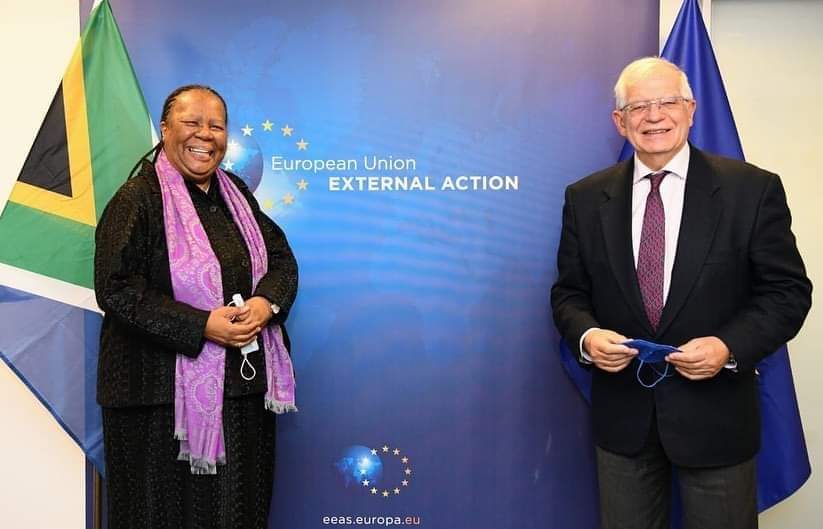
Minister of International Relations and Cooperation, Dr. Naledi Pandor, has concluded her successful visit to the Kingdom of Belgium, where she held a series of meetings aimed at strengthening cooperation between South Africa and Belgium and between South Africa and the European Union (EU). Minister Pandor met Belgian and EU representatives on 19 November 2021 in Brussels.

From Belgium, Minister Pandor will proceed to The Hague in the Netherlands, where she will take part in the Second Meeting of the South Africa-Netherlands Joint Commission for Cooperation (JCC). The meeting will be chaired by Dr. Ben Knapen, the Minister of Foreign Affairs of the Netherlands.

In addition to the JCC, the Minister will also meet with the CEO of the Port of Rotterdam and undertake a tour of the Port. The Port has recently signed a Memorandum of Understanding with the Northern Cape Economic Development Agency for the development of the Port of Boegoebaai.

Latest figures show that total trade between South Africa and the Netherlands increased by 28%, from R70 billion in 2020 to R89 billion during the twelve months to end of June 2021. The sharp increase can be ascribed to the surge in commodity exports over recent months.

It is expected that the JCC will focus on expanding cooperation between the two countries on bilateral and multilateral issues.

In particular, the JCC will discuss bilateral cooperation in the areas of trade and investment, agriculture and water, arts and culture as well as science and innovation.

On multilateral affairs, the two delegations will discuss cooperation on matters relating to the COVID-19 pandemic, peace and security and human rights.