RUSSIA’S DEPUTY FOREIGN MINISTER MIKHAIL BOGDANOV VISITS SOUTH AFRICA

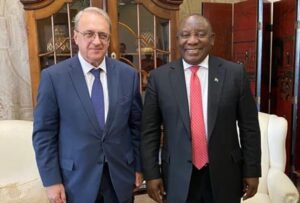
Photo: Russia’s Deputy Foreign Minister Mikhail Bogdanov with South Africa’s President Cyril Ramaphosa

20 November 2021

Russia’s Deputy Minister of Foreign Affairs and Special Representative

of the President of the Russian Federation for the Middle East and

Africa, Mr Mikhail L. Bogdanov visited South Africa on an official visit

and met with South African President Cyril Ramaphosa, officials from the

Department of Trade and Industry,Deputy Minster of International Relations Mr Alvin Botes and the Heads of Mission from the Middle East countries accredited to the Republic of South Africa.

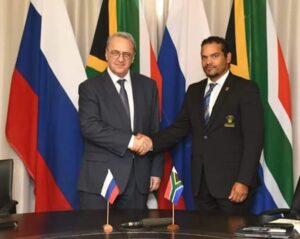
Photo: Russia’s Deputy Foreign Minister Mikhail Bogdanov meeting with South Africa’s Deputy Minister of International Relations and Cooperation, Alvin Botes


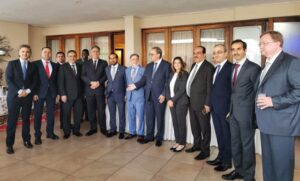
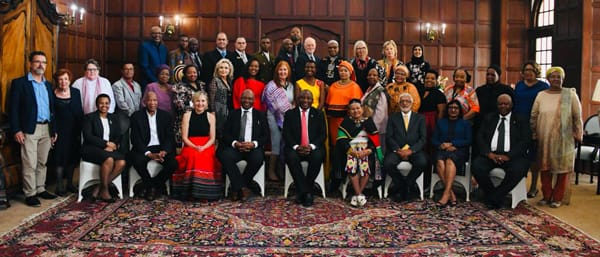
Russia’s Deputy Minister Bogdanov (centre) and Russian Ambassador Ilya Rogachev (right) interacting with Heads of Mission of the Middle East represented in South Africa

South Africa and Russia enjoys cordial and bilateral relations. During the meeting with President Ramaphosa, the Deputy Foreign Minister

Mikhail Bogdanov and Special Representative of the President of the

Russian Federation, conveyed a message from President of the Russian

Federation Vladimir Putinas as well as discussed matters of mutual

interest and issues of future development between Russia-South Africa

relations. Issues of cooperation in trade, economy, science, technology,

culture, humanitarian sphere and other fields as well as the

reaffirmation of mutual commitment of Moscow and Pretoria in

strengthening and deepening trust on political dialogue and effectively

coordinating actions at various international organisations such as the

UN, BRICS and the G20 and the preparation for the Second Russia-Africa

Summit, scheduled for the autumn of 2022 were also discussed.

At a press briefing held in Pretoria, the Russia’s Deputy Foreign

Minister Mikhail Bogdanov said the purpose of his visit was to establish

the framework of the cooperation with Africa after the inaugural

Russia-Africa summit in 2019 as agreed, the summit will take place every

3 years with the 2022 meeting underway. The Minister thanked the media

for their attendance and for the valuable role of journalisim and looked

forward to media cooperation and the exchange of reporters and

correspondents between Russia and Africa.

When asked about the Russia’s historical relations and support for

Africa’s the Deputy Minister said Russia’s historical relations and

support for Africa’sliberation from the time of colonialism is well

documented, we are building mutual respect and trust through bilateral

and multilateral fora through our engagements and technical cooperation

through our interaction in BRICS, G20 the UN amongst others.

When asked about the role of arts, culture and sport the Minister said

creating greater awareness and understanding among humanity was vital

for People to people soft diplomacy which could be achieved through

travel, tourism and hospitality cooperation and this could lead to

trade, business and investment opportunities.

EXHIBITION OF THE POETRY OF YUNUS EMRE & THE HISTORICAL HERITAGE AT THE YUNUS EMRE INSTITUTE IN JOHANNESBURG

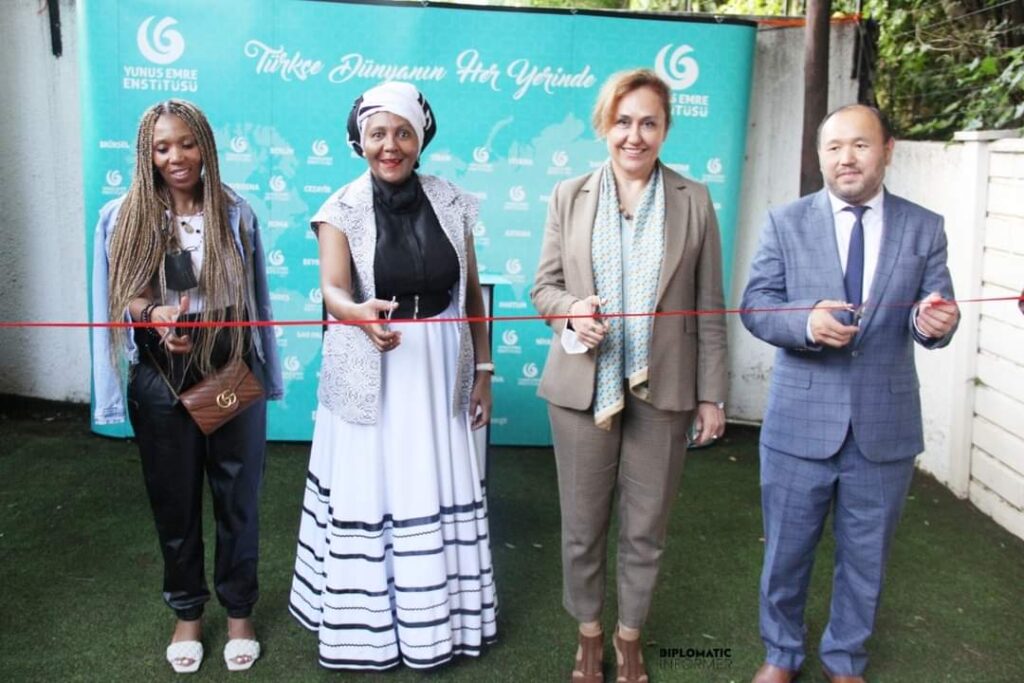
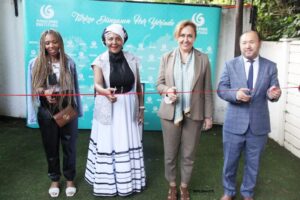
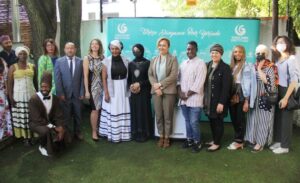
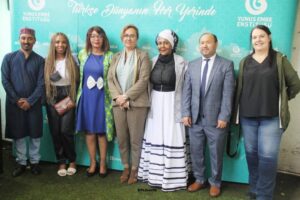
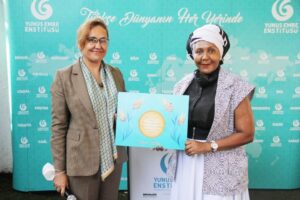
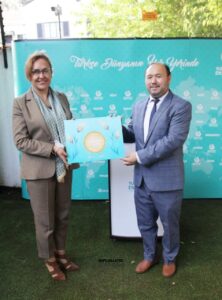
Photo: Princess Swati Dlamini Mandela, Hon. Ndileka Mandela, Ambassador Ayşegül Kandaş of Turkey to South Africa and Abdülaziz Yiğit, Director at the Yunus Emre Institute


20 November 2021

The year 2021 has been declared as the “Year of Yunus Emre” by UNESCO

commemorating the 700th anniversary of the celebrated poet.

The Yunus Emre Institute in Johannesburg, South Africa organised an

exhibition of the poetry of Yunus Emre and the historical heritage of

Turkey on 19 November in the Nelson Mandela Conference Hall of the Yunus Emre Institute.

The Turkish poet, played a major role in the development of the ancient

Turkish language in Anatolia. He contributed to some of the most

beautiful poems. His style of poetry was unique and different from other

poets.

The opening of Yunus Emre poetry exhibition was attended by among others

the Turkish Ambassador HE Ayşegül Kandaş, Hon. Ndileka Mandela, Princess

Swati Dlamini Mandela and Abdülaziz Yiğit, the Director of the Yunus

Emre Institute.

In her opening remarks at the exhibition Ambassador Ayşegül Kandaş of

Turkey to South Africa said the exhibition goes into the soul of Yunus

Emre because when you see his poems written in Turkish and English, one

can learn about his life, his Sufi traditions and the Anatolian culture

and that art speaks to the soul.

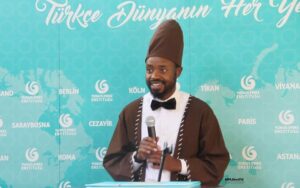
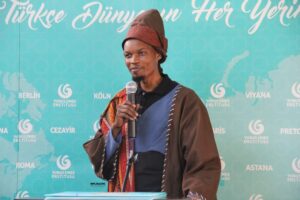
The evening included poetry reading by South Africans Mxolisi Carrington

Mayisai and Camillo Zimba who both recited the poems in well articulated

Turkish language, art of Yunus Emre’s poetry by Tasneem Chilwan,

drawings of Turkey by Alex Maswanganyi, art and sculptures by Nazli

Sahinoglu and Calligraphy by Zunaida Moosa-Wadiwala. Tasneem Chilwan

shared the process, her journey and thoughts on the drawings that

accompanied Yunus Emre’s poetry and Zunaida Moosa-Wadiwala, who learnt

calligraphy at the Institute said that she was honoured to have been chosen for the exhibition.

Turkish Ambassador Her Excellency Ms Ayşegül Kandaş, Hon. Ndileka

Mandela, and Princess Swati Dlamini Mandela were each presented with beautiful artwork of a Tulip from Turkey and a Protea from South Africa

by Tasneem Chilwan a South African artist.

CELEBRATING DISTINGUISHED SOUTH AFRICANS & EMINENT FOREIGN NATIONALS AT THE PRESENTATION OF THE NATIONAL ORDERS AWARDS 2021

Photo:President Cyril Ramaphosa with recipients of the National Orders Credit:
Siyabulela Duda/GCIS

19 November 2021

“National Orders are the highest awards that our country bestows on its
citizens and eminent foreign nationals who have contributed towards the
advancement of democracy and have made a significant impact on improving
the lives of South Africans.
“The National Orders recognise the contributions made by individuals
towards building a non-racial, non-sexist, democratic and prosperous
South Africa as envisaged in our Constitution.”

In his his remarks President Cyril Ramaphosa said two years have passed
since the last held a Presentation of National Orders. Since we last
gathered here for this noble purpose, the COVID-19 pandemic has caused
great devastation in our country and across the world. It has cost many
lives, threatened many livelihoods, and disrupted almost every part of
our lives.
While we acknowledge that the pandemic is still very much with us, we
also recognise the important duty we have to honour those among us who
have made outstanding contributions towards the betterment of our
country and of the human condition.

Through these national orders we recognise many outstanding individuals
who defied great odds and made immense sacrifices not only for us to
attain freedom, but so that such freedom is meaningful. The outstanding
individuals that we honour here today are, in different ways, champions
of freedom, peace, human rights, social justice and equality. Regardless
of the sphere of life in which they applied themselves, the recipients
of the awards today have honoured and upheld the values which combined
represent the highest ideals of humanity.

We are conferring today the Order of Mendi for Bravery.
Awards of this Order are made to South Africans who have performed acts
of bravery, often putting their lives in great danger or losing their
lives in their efforts to save others. The awards are made to people
who, in the most exceptional manner possible, have placed the lives of
their fellow men and women above any risk that they themselves faced.

We are also conferring the Order of Ikhamanga, which is awarded to South
Africans who have excelled in the field of arts, culture, literature,
music, journalism and sport. We confer it on some of our country’s most
dedicated and outstanding athletes, to musicians whose brought us
comfort and hope during the darkest days of apartheid. We confer it on
the artists who make our democracy enjoyable and who remain the
conscience of the nation, reminding us through their works to fulfil,
and not betray, the promise of freedom. These are the people who use
their tremendous talent not only to entertain, provoke and inspire, but
to strive for a better, more just and humane society. We honour the
writers who have chronicled both the suffering of our people and their
remarkable triumphs, their fears and their hopes, their everyday cares
and their timeless desires.

The Order of the Baobab is awarded to South African citizens for
distinguished service in the fields of business and the economy,
science, medicine, and for technological innovation and community
service. These people – some of whom are unfortunately no longer with us
– are pioneers who laid the path along which others would follow. We
honour those who worked from the ashes of apartheid to build a new
society in which the economy is truly inclusive and the country’s wealth
is shared among all its people. These are people who challenge
prejudice, who fight for people living with disabilities and for all
those who are marginalised because of nothing other than the
circumstances of their birth. These are people who use their knowledge
and their capabilities, their ideas and their energy to forge a South
Africa defined by solidarity, community and progress.

The Order of Luthuli is awarded to South Africans who have served the
interests of South Africa by making a meaningful contribution in the
struggle for democracy, human rights, nation-building, justice, peace
and conflict resolution. They are the peacemakers, who walk into battle
armed only with the conviction that there is no dispute too great or
complex that it cannot be resolved peacefully through dialogue. They are
the jurists who believe in transformative constitutionalism.
They see the purpose of law to be the pursuit of justice in the
interests of the dispossessed, the injured, the wronged and the
vulnerable. They are the women and men who confront oppression and
exploitation wherever they manifest. They are the people who organised
pickets and strikes, marches and meetings, vigils and prayers.They
organised underground, they took up arms, they went out to the corners
of the globe to argue the case for the struggling masses of South
Africa.

For their efforts, they were restricted, banned, detained, banished,
tortured, jailed, exiled and murdered.
And yet, they stood firm, knowing that the guns would fall silent, the
jail doors would swing open and the sound of freedom would ring across
the land. The achievement of our freedom owes much to the devout support
of the international community.

Many countries offered solidarity and opened their arms to our
activists. Many people in our neighbouring countries lost life and limb
for our cause. It is for this reason that among us are the recipients of
the Order of the Companions of OR Tambo, which is awarded to eminent
foreign nationals for friendship shown to South Africa.

We honour these remarkable human beings who stood alongside our people,
at home and in exile, who provided material and other assistance to our
students, activists and combatants. In doing so, we express our sincere
and eternal gratitude to them for joining a struggle that was not
theirs, in a land far from their own, and for giving so much, for so
long, to so many.

This is a roll call of heroes and heroines, of people who have been
prepared to devote their talent, their energy, their lives to the
affirmation and the advancement of others. By the power vested in me in
terms of Section 84 of the Constitution of the Republic of South Africa,
I now confer the Order of the Mendi for Bravery, the Order of Ikhamanga,
the Order of the Baobab, the Order of Luthuli, and the Order of the
Companions of OR Tambo to the distinguished persons indicated. And they
shall henceforth be honoured as esteemed Members of the Orders.

President Cyril Ramaphosa bestowed on deserving recipients the Order of
Mendi for Bravery, the Order of Ikhamanga, the Order of the Baobab, the
Order of Luthuli and the Order of the Companions of OR Tambo as follows:

THE ORDER OF MENDI for Bravery recognises South African citizens who
have performed acts of bravery.
The Order in Gold was bestowed on:

Mr Gcinisizwe Khwezi Sylvester Kondile (Posthumous): For his ultimate
sacrifice to the liberation of South Africa. He endured unspeakable
torture and cruelty, refusing to betray his comrades right to the
victorious end of his life.

Rev Isaac William Dyobha Wauchope (Posthumous): For providing morale
through poignant words and support in the darkest hour of soldiers who
died in the sinking of the SS Mendi. His words and courage are his
iconic legacy that lives on.

The Order in Silver was bestowed on:
Mr Chand Basson (Posthumous): For his ultimate sacrifice of saving lives
from certain death and taking a stray bullet shielding a stranger from a gang.

Mr Roydon Olckers (Posthumous): For courageously saving the lives of two
learners and sacrificing his own.

THE ORDER OF IKHAMANGA recognises South African citizens who have
excelled in the fields of arts, culture, literature, music, journalism
and sport.

The Order in Gold was bestowed on:

Dr Raymond Louw (Posthumous): For his enormous contribution to the field
of journalism, and using the pen as his weapon to expose lies and shine
the light on the atrocities of apartheid.

Dr David Maphalla: For his tireless contribution to the Sesotho
language‘s body of literary works and cultural storytelling.

Prof Sibusiso Cyril Nyembezi (Posthumous): For his renowned contribution
to the scholarship and lexicon of isiZulu language. His skillful turn of
phrase in storytelling poses a towering challenge to many who try to
translate his works.

Dr Bhekizizwe Joseph Shabalala (Posthumous): For his exceptional
contribution to the promotion of African Isicathamiya music which
showcased in world stages, and brought honour and unity to South Africa.

The Order in Silver was bestowed on:

Ms Fee Halsted-Berning: For her contribution to visual art and generous
transferring of skills to others.

Ms Rebecca Malope: For her distinguished contribution to South African
music; her unique voice brings joy and comfort to many through
meaningful gospel music.
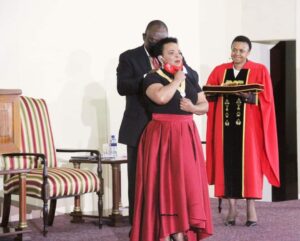
Photo: Dr. Rebecca Malope, one of the recipient of The Order of Ikhamanga in Silver

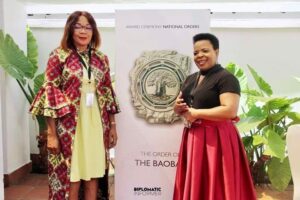
Speaking to Dr. Rebecca Malope ” I am excited and grateful to be recognized” This is a big day for me to be recognized by the First citizen and South Africa said Dr. Rebecca Malope

Mr Arthur Mayisela (Posthumous): For his skilful and entertaining boxing
acumen. He delighted many and left a mark as the ‘Fighting Prince’.

THE ORDER OF THE BAOBAB recognises South African citizens who have
contributed to community service, business and economy, science,
medicine and technological innovation.

The Order in Gold was bestowed on:

Justice Edwin Cameron: For his contribution to the judicial system and
tireless campaigning against the stigma of HIV and AIDS, and the rights
of lesbian, gay, bisexual, transgender, queer, intersex and asexual
(LGBTQIA+) communities.

The Order in Silver was bestowed on:

Professor Lynette Denny: For her contribution to the field of
obstetrics, an age-old honourable tradition of ushering new life into
earth and ensuring the safety of both mother and child.

Mr David Ingpen: For his contribution to the education of young people
about maritime life, leading to many recognising him as the ‘father’ of
secondary school-based maritime education in South Africa.

Ms Nolwandle Mboweni: For her contribution to education and business
through which she strives continuously to uplift communities.

The Order in Bronze was bestowed on:

Dr Hlamalani Judith Ngwenya: For her contribution to the
capacity-building, sustainable agriculture and the empowerment of
communities.

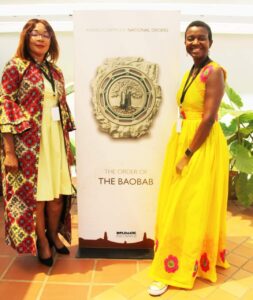
President Cyril Ramaphosa bestows the Order of BAOBAB in Bronze to Dr Hlamalani Judith Ngwenya for her contribution to the capacity Building sustainable agriculture and empowerment of communities.
THE ORDER OF LUTHULI recognises South African citizens who have
contributed to the struggle for democracy, nation-building, building
democracy and human rights, justice and peace as well as for the
resolution of conflict.

The Order in Gold was bestowed on:

Mr Thomas Manthata (Posthumous): For his active participation in human
rights matters, ranging from the rights of the elderly and land issues
to traditional leadership.

Ms Bertha Mkhize (Posthumous): For her brave contribution to the
liberation of South Africa. In addition to her legendary activism, she
also participated in the 1925 Defiance Campaign.

The Order in Silver was bestowed on:

Dr Abubaker Asvat (Posthumous): For his enormous contribution in to the
lives of freedom fighters and the poor by generously providing medical
care, which was desperately needed. He was ‘The People’s Doctor’.

Ms Audrey Coleman: For her contribution to the fight for liberation and
the promotion of human rights through active involvement in lobbying
using both civic organisations and later government institutions.

Mr Max Coleman: For his contribution to the fight for liberation and
promotion of human rights through active involvement in lobbying
utilising both civic organisations and government institutions.

Mr Zazi Kuzwayo (Posthumous): For his contribution to the development of
black business and the fight against apartheid.

Ms Cikizwa Constance Maqungu: For her brave stand against injustice; she
withstood torture and refused to turn state witness.

Ms Nikiwe Debs Matshoba (Posthumous): For her courageous contribution to
the liberation struggle during repressive times that could lead to
torture, imprisonment or death.

Ms Hilda Mally Mokoena: For her contribution to the fight for the
liberation of South Africa.

Ms Laura Mphahlwa (Posthumous): For her contribution to the liberation
movement, black business development and the nursing profession.

THE ORDER OF THE COMPANIONS OF OR TAMBO recognises eminent foreign
nationals for friendship shown to South Africa. It is therefore an Order
of peace, cooperation and active expression of solidarity and support.

The order in Silver was bestowed on:

Mr Anthony Dykes (United Kingdom): For his lifelong commitment to the development of South and Southern Africa. Initially this solidarity work was against and overcoming apartheid.


Photo: President Cyril Ramaphosa bestows the Order of the Companions of OR TAMBO in Silver to Mr Anthony Dykes from the United Kingdom for his life long commitment to the development of South and Southern Africa.

Since 1994, Dykes has been active in support of peace and development in South Africa and the region. He put solidarity into action and also ensured that such work is driven by the views of the people of Southern Africa.

Dr. Gail Gerhart (United States of America): For her enormous
contribution to the struggle for liberation with her writing and keeping
records of the heroic acts of freedom fighters.

Mr Juergen Leihos (Germany): For his commitment and determination to be
on the side of the oppressed and fighting for their cause as an
anti-apartheid activist.

Ms Malin Sellman (Sweden): For using the arts to raise awareness of human rights violations during the repressive period in South Africa.
She continues to be an active friend of South Africa and its artists.
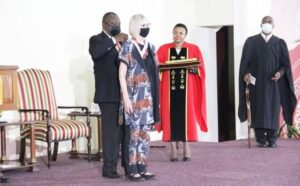
Photo: President Cyril Ramaphosa bestows the Order of the Companions of OR TAMBO in Silver to Ms Malin Sellman from Sweden for using the arts to raise awareness of human rights violations during the days of Segregation
I wish to congratulate and salute all the recipients who are to be
honoured today said Ramaphosa.

PRESIDENT RAMAPHOSA, HONOUR OF THE MEGA HOLY AND SACRED CROSS OF SAINT SAVVAS

18 November 2021

The President of the Republic of South Africa His Excellency Mr Cyril Ramaphosa was conferred with the Honour of the Mega Holy and Sacred Cross of Saint Savvas by His Beatitude, Theodoros ll, Pope and Patriarch of the Orthodox Church of Alexandria and all of Africa for his outstanding and exemplary leadership on and humanitarian contribution to the continent of Africa.

The honour is reserved exclusively for Heads of State by the Patriarchate.

His Beatitude, Theodoros ll, Pope and Patriarch of the Orthodox Church of Alexandria and all of Africa is currently in South Africa and will be visiting with other Southern African countries.

Photo Credit: Elmond Jiyane/GCIS

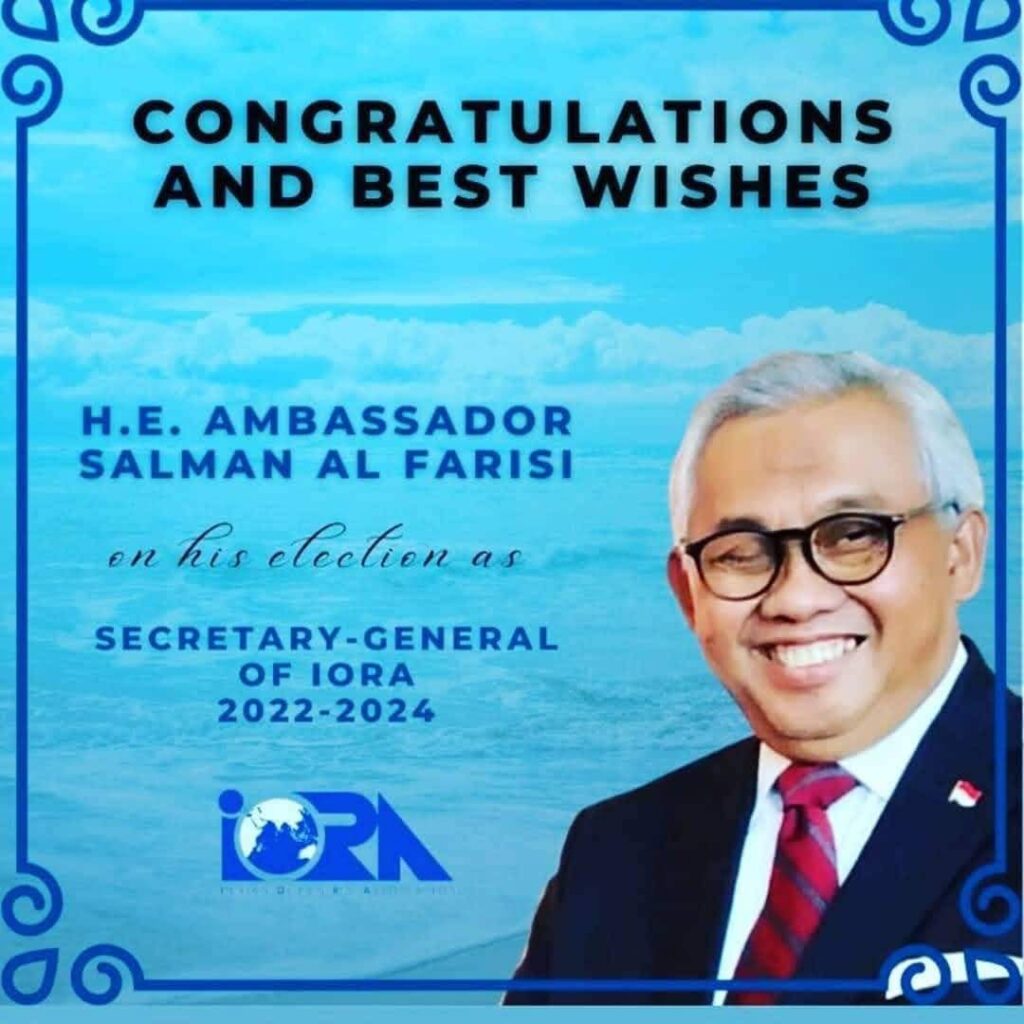
CONGRATULATIONS! INDONESIAN AMBASSADOR TO SOUTH AFRICA ELECTED AS SECRETARY GENERAL OF IORA 2022-2024

The Ambassador of the Republic of Indonesia (RI) to South Africa, Salman Al Farisi was elected as Secretary General of the Indian Ocean Rim Association (IORA) for the period 2022-2024. The appointment of the Secretary General of the IORA was carried out at the 21st IORA Ministerial Meeting (PTM) in Dhaka, Bangladesh today.

Apart from Indonesia, representatives from Malaysia and Sri Lanka were also nominated for the position of Secretary General of the IORA.

“The election of a representative from Indonesia as Secretary General of the IORA is very proud. For the first time an Indonesian representative has held the highest strategic position in the IORA since its formation in 1997, and this was achieved through good diplomatic efforts,” said Foreign Minister Retno Marsudi in a written statement, Wednesday. (17/11/2021).

After the election, Retno expressed her appreciation for the support given by IORA member countries to Indonesian candidates. He believes that as Secretary General of IORA, Salman will contribute optimally in developing the organization.

“With his vast experience, Ambassador Al Farisi will make a maximum contribution in developing the organization and increasing the capacity of the IORA Secretariat in order to better serve and facilitate member countries,” he concluded.

Retno also expressed her appreciation for the selection process for the Secretary General of the IORA which was carried out in a balanced, transparent and inclusive manner. According to him, this is important to strengthen IORA’s institutional capacity.

“In a challenging situation like now, IORA members have no choice but to unite and collaborate to overcome the pandemic together and encourage economic recovery. Let’s work together, recover together, recover stronger,” he said.

According to Retno, the election of a candidate from Indonesia as Secretary General of the IORA is a concrete manifestation of President Joko Widodo’s mission to place the nation’s best sons and daughters in international organizations.

Indonesia’s leadership as Secretary General of Indonesia is expected to contribute to the promotion of cooperation with the IORA. Indonesia hopes that IORA can move faster and be able to face challenges both now and in the future.

Indonesia Reaffirms Its Commitment to Development in Africa

Indonesia itself has an active role in the IORA. In 2017, for the first time IORA held a summit in Indonesia, as well as in commemoration of the 20th anniversary of the founding of IORA.

Retno explained that maritime and fisheries cooperation, which is IORA’s core competency, particularly related to sea-based sustainable economic development, is very close to Indonesia’s national interests. Indonesia’s representation at the IORA as the Secretary General is expected to be able to contribute to the development of a marine-based economy in Indonesia, and at the same time be able to raise the profile of Indonesia’s leadership in the international arena.

For information, Ambassador Salman Al Farisi will carry out his duties as Secretary General of the IORA effective January 1, 2022, with a term of office for three years. The Indian Ocean Rim Association (IORA) is the pioneer and the only regional organization with coverage throughout the Indian Ocean region.

The main priorities for cooperation within the IORA framework include strengthening economic, maritime and sustainable development cooperation within the Indian Ocean Region. IORA has 23 member countries and 9 dialogue partners.

The Saudi Green Initiative leads the way to a Sustainable Future

17 November 2021

Saudi Arabia recognizes the responsibility it bears in the fight against unsustainable climate change as a leading global oil producer. The Kingdom of Saudi Arabia is already engineering innovative solutions to help combat the escalating global climate crisis. In its endeavour to contribute to a sustainable future, its world leading Green Initiative will go a long way in contributing to the development of renewable resources.

With patronage at the highest level in the person of HRH Crown Prince Mohammed bin Salman, the Saudi Green Initiative will chart a path for the Kingdom’s contribution to a sustainable planet.  Since the launch of Vision 2030 in 2016, the Kingdom has taken significant steps to scale up its pro-climate action and environmental protection. The Saudi Green Initiative will propel the efforts to the next level by unifying all sustainability initiatives in the Kingdom. This will underpin reliance on clean energy and offset the impact of fossil fuels while combating climate change.

In October, the Saudi Green Initiative Forum unveiled the roadmap for delivery and shone the spotlight on the Kingdom’s “Green” efforts. Global leaders graced the event to gain a greater understanding of the innovative solutions under development to help tackle climate change.

The Saudi Green Initiative will oversee all of Saudi Arabia’s work to combat climate change, working collaboratively with government ministries, the private sector, and foreign governments to amplify various environmental efforts on climate change.

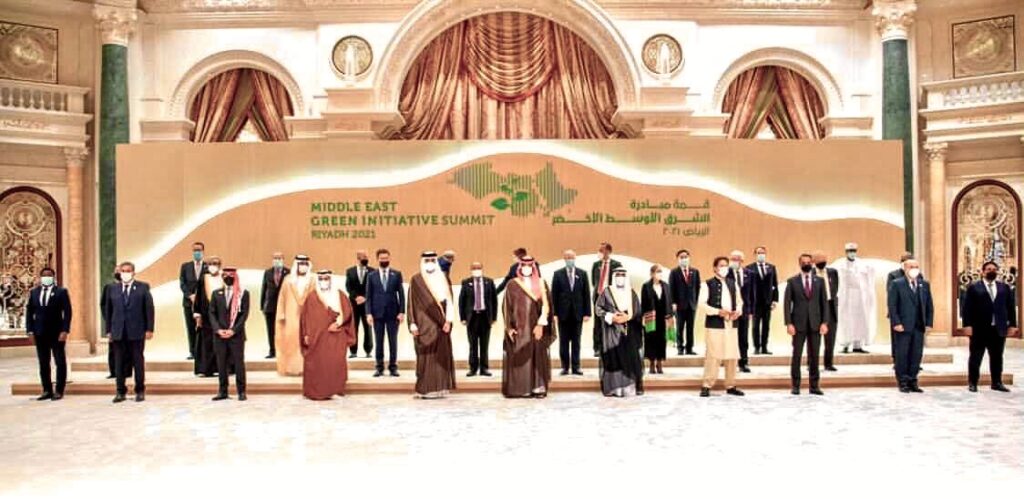
The Middle East Green Initiative (MGI) was announced alongside the Saudi Green Initiative. It complements the latter’s on an international scale and will coordinate efforts with sister countries of the Gulf Cooperation Council (GCC) states, other Middle Eastern countries, as well as other international governments.

The Saudi Green Initiative intends to improve the quality of life and protect the interests of future generations by increasing reliance on clean energy that will offset the impact of fossil fuels, thereby protecting the environment. In a “whole-of-government” approach, Saudi Green Initiative works with entities and organizations across the Kingdom to synergise their current actions. It also creates opportunities for new initiatives, bridges the gap between public and private sustainability efforts, by identifying opportunities for collaboration and innovation.

Saudi Arabia’s crown Prince launched a Middle East Green Initiative which he said it is aimed to secure 39 billion riyals ($10.4 billion) for an investment fund and clean energy project as part of efforts to reduce regional carbon emissions. Through the Middle East Green Initiative, Saudi Arabia will spearhead regional efforts to achieve global targets to combat climate change.

Crown Prince Mohammed bin Salman said the kingdom, would contribute 15% of the funds and would work with other states and development funds on the funding and execution of the initiatives. “As part of the kingdom’s leading role in developing energy markets, it will work to establish an investment fund for carbon circular economy solutions in the region and an initiative to offer clean energy solutions to help feed more than 750 million people worldwide,” he said.

When the region announced plans for the Middle East Green Initiative in March, the prince said it aimed to reduce carbon emissions in the region’s hydrocarbon industry by 60% and reverse desertification in one of world’s most water-stressed regions by planting billions of trees.

Saudi Arabia has said its own Saudi Green Initiative programme will involve investments of over 700 billion riyals ($190 billion) by 2030. Prince Mohammed pledged that Saudi Arabia would reach “net zero” emissions by 2060. Fellow Gulf state Bahrain has pledged the same and the United Arab Emirates has committed to doing so by 2050.

Burning fossil fuels is the biggest source emissions and achieving net zero means a country emits no more greenhouse gases than it can capture or absorb.

Saudi Arabia will help create the necessary infrastructure by establishing a regional carbon capture and storage centre, a regional early storm-warning centre, a regional cloud seeding programme, and a hub for climate change according to Prince Mohammed during the launch.

 “The Saudi and Middle East Green Initiatives are only a start. The Kingdom, the region and the world needs to go much further and faster in combatting climate change. Beginning this journey to a greener future has not been easy, but we are not avoiding tough choices. We reject the false choice between preserving the economy and protecting the environment,” he emphasised.

The climate crisis is urgent and the planet is warming up at an unprecedented rate, affecting our environment and the lives of Saudis. Cutting carbon emissions is critical to slowing and reversing climate change. Through a growing portfolio of renewable energy projects, carbon capture initiatives, and a massive energy efficiency push for buildings, industry, and transport, Saudi Arabia is scaling up and uniting efforts to reduce carbon emissions under the Saudi Green Initiative mandate. And that spells a sustainable future!

By Susan Novela, The Diplomatic Informer Magazine SA

MINISTER PANDOR ATTENDS THE 21ST IORA COUNCIL OF MINISTER’S MEETING

16 November 2021

The Minister of International Relations and Cooperation, Dr Naledi Pandor, arrived, this afternoon, in Dhaka, Bangladesh, to attend the 21st Meeting of the Indian Ocean Rim Association’s (IORA) Council of Ministers (COM) scheduled to take place on 17 November 2021.

This will be the last meeting that South Africa attend as a member of the IORA Troika, as the Association’s past Chair (2017-2019), and where Bangladesh will take over the chairship from the United Arab Emirates (UAE), with Sri Lanka becoming the Vice-Chair.

The COM, to be held under the theme: “Harnessing the opportunities of the Indian Ocean sustainably for inclusive development”, will have to appoint the next Secretary-General of the Association.

Three Member States nominated senior Ambassadors as candidates for the position, i.e. Indonesia, Malaysia and Sri Lanka and an extensive interview process is being conducted to select the most suitable candidate to be considered and approved by the COM, the apex decision-making body of IORA. The COM will also approve the 2nd IORA Action Plan (2022-2027) and formalise the Vision of IORA for the Indo-Pacific.

The Meeting will also approve the Dialogue Partner Membership of the Russian Federation, resulting in all P5 members being Dialogue Partners of IORA, as well as the application by the Kingdom of Saudi Arabia, bringing the total number of Dialogue Partners to 11 together with the 24 Member States of IORA.

The COVID-19 pandemic had a detrimental effect on the members of the Association, like everywhere else in the world, and the Minister will utilise the opportunity to address the Member States and Dialogue Partners at the Strategic Dialogue session with Dialogue Partners on; “The Impact of Covid-19 and perspectives of economic recovery in the Indian Ocean Region”.

South Africa will continue to lead the IORA Working Group of the Blue Economy. It will also become the Chair of the Indian Ocean Rim Academic Group (IORAG) as well as remain very active as a Cluster Group Member of the majority of Working and Core Groups of IORA.

EGYPT’S AMBASSADOR TO SOUTH AFRICA HOSTS HIS BEATITUDE POPE THEODORE II, THE GREEK ORTHODOX PATRIARCH OF ALEXANDRIA AND ALL AFRICA

15 November 2021

On Friday 12 November 2021, Egypt’s Ambassador to South Africa Ahmed El Fadly received His Beatitude Pope Theodore II, the Greek Orthodox Patriarch of Alexandria and All Africa upon his arrival at OR Tambo International Airport in Johannesburg. Pope Theodore II is visiting South Africa and Botswana during the period 12 to 26 November 2021 as part of a wider tour that includes a number of African countries.

Later on Friday, Ambassador El Fadly hosted a luncheon in honor of Pope Theodore II in Egypt’s Ambassadorial Residence in Pretoria which was attended by representatives of the Greek Orthodox Churches and the Coptic Church in South Africa, Ambassadors of the Orthodox countries accredited to South Africa, including the Ambassadors of Cyprus, Bulgaria, Georgia, Ukraine and Belarus, the Chargé d’Affaires of the Greek Embassy and the Consul of Greece in Johannesburg as well as a number of patriarchs, clergy and heads of the Greek and Cypriot Communities in South Africa.

Pope Theodore II has on several occasions praised the role of Egypt and its support to the Patriarchate in Egypt. His Beatitude emphasized that Egypt has always been and remains a welcoming and hospitable country to everyone. His Beatitude acknowledged the strong support that the Patriarchate receives from Egypt’s President Abdel-Fattah El-Sisi whom Pope Theodore II described as an ‘enlightened president’.

During the luncheon, Ambassador El Fadly welcomed Pope Theodore II. “Pope Theodore II is an Egyptian-Greek religious authority present in Egypt; the cradle of civilizations and religions where a number of prophets and messengers resided.” El Fadly said. “Egypt is always proud of the presence of various religious statures in its land, led by His Eminence the Grand Imam Ahmed Al Tayyeb, Sheikh of Al Azhar Al Sharif, and His Holiness Pope Tawadros II, Pope of Alexandria and Patriarch of the See of St. Mark in Egypt” El Fadly added.

Ambassador El Fadly added that they are also honored by the presence of Pope Theodore II in Egypt given the historical ties with the Greek community, whose presence in Egypt was not limited to major cities, but also spread in smaller towns and villages across Egypt. “Pope Theodore II has strong ties with all Egyptian churches through the Council of Churches in Egypt.” El Fadly said. “Pope Theodore II also maintains good relations with the Egyptian State in general, given the importance that President Abdel-Fattah El-Sisi attaches to Christians in Egypt.”

During his visit to South Africa, Pope Theodore II, Patriarch of Alexandria and All Africa for the Greek Orthodox will visit the Holy Diocese of Johannesburg and Pretoria, in addition to meeting members of the Cypriot brotherhood and the Greek community, and visiting a number of historical, tourist and religious monuments in South Africa.

By Ayman Walash, Counselor – Head of the Press & Information Office, Embassy of the Arab Republic of Egypt in Pretoria, South Africa

ADDRESS BY PRESIDENT CYRIL RAMAPHOSA AT THE OPENING OF THE 2021 INTRA-AFRICAN TRADE FAIR


15 November 2021

Your Excellency Felix Tshisekedi, President of the Democratic Republic of Congo and Chair of the African Union,
Your Excellency Olusegun Obasanjo, Chair of the Intra-African Trade Fair Advisory Council and Former President of the Federal Republic of Nigeria,
Your Excellency Moussa Faki Mahamat, Chairperson of the African Union Commission and co-convener of the Intra-African Trade Fair,
Your Excellency Muhammadu Buhari, President of the Federal Republic of Nigeria,
Your Excellency Hakainde Hichilema, President of the Republic of Zambia,
Your Excellency Emmerson Mnangagwa, President of the Republic of Zimbabwe,
Your Excellency Lazarus Chakwera, President of the Republic of Malawi,
Your Excellency Édouard Ngirente, Prime Minister of the Republic of Rwanda,
Your Excellency Hussein Mwinyi, President of Zanzibar,
Premier of KwaZulu-Natal, Mr Sihle Zikalala,
Minister of Trade, Industry and Competition, Mr Ebrahim Patel,
President of the Board of Directors of Afreximbank and co-convener of the Intra-African Trade Fair, Professor Benedict Oramah,
Members of the African Continental Free Trade Area Secretariat,
Ministers and Deputy Ministers,
MECs,
Distinguished Guests,
Ladies and Gentlemen,

Photo: His Excellency President Cyril Ramaphosa, accompanied by visiting Heads of State & Government, cuts the ribbon to mark the Official Opening of the #IAFT2021 Exhibition at Inkosi Albert Luthuli International Conference Centre, eThekwini, KwaZulu-Natal

I am extremely proud to be addressing the Intra-African Trade Fair.

On the first of January 2021 the African Continental Free Trade Area commenced trading, making this Trade Fair the first to take place since we reached the most significant milestone in our quest for African economic integration.

In 2018 the first Intra-African Trade Fair opened in Egypt, in the ancient city of Cairo.

Today, it is opening in the southernmost tip of Africa.

In due course, we hope the IATF will be held in all parts of the continent.

This fair belongs to us all.

The goods, products and services exhibited at the fair represent all the countries of Africa, and its success rests on the participation of all of us.

The AfCFTA aspires to connect all the regions of Africa, to deepen economic integration and to boost intra-African trade and investment.

It aspires to create a single market for goods and services across 55 countries and our continent, creating a market of as much as 1.3 billion people with a combined GDP of $3.4 trillion.

This year’s Intra-African Trade Fair is about building bridges.

It brings together governments, buyers, investors, entrepreneurs and manufacturers from more than 55 countries to give life to the African Continental Free Trade Area.

The countries of Africa are open for business.

Photos: His Excellency President Cyril Ramaphosa
accompanied by former President of Nigeria, His Excellency Olusegun Obasanjo, received African Heads of State and Government at the Intra African Trade Fair 2021) in KwaZulu-Natal

#IATF2021 #OneAfricanMarket

Since ancient times, trade has been the engine that connected communities both near and far.

From the ancient centres of learning like Alexandria and Timbuktu, to the northern civilisations in Egypt and Carthage, the western Kingdoms of Ghana, Mali, and Songhai, the trans-Saharan trade routes, the eastern trading centres of Zanzibar, Mombasa and Mogadishu, to the ancient southern civilisations of Great Zimbabwe and Mapungubwe, for many centuries Africans traded the goods that they produced.

Throughout history, Africa has had a network of trade routes that facilitated the flow of goods such as beads, carvings, ivory, gold, gum, metal works, salt, textiles and metals.

These trade routes enabled African traders to seek out markets beyond the continent.

Colonialism deeply damaged the indigenous development of African trade and caused great harm to our societies.

At first, Europeans traded in African lives, carrying millions of slaves across the Atlantic to produce the wealth of their new-found colonies.

Then, with the realisation of Africa’s vast raw materials, colonial powers turned to the extraction of Africa’s minerals and agricultural products.

Much of the economic storyline of colonialism persists to this day.

Now Africa is taking concrete steps to write its own economic success story.

It is opening up new fields of opportunity.

One such opportunity is in Africa’s rapid adoption of locally developed fintech, of which M-PESA is the most well-known.

It is an example of financial and technological innovation in which Africa leads the world.

A recent report from the Brookings Institution notes that Africa “is already the largest adopter of mobile money transfer systems, comprising nearly half of the globe’s registered mobile money customers, approximately 70 percent of global mobile money transactions, and two-thirds of the transaction volume by value”.

It is by harnessing all our capabilities, both existing and emerging, that we will accelerate Africa’s economic growth and integrated development.

It is our expectation that this Intra-African Trade Fair will further cement its position as Africa’s premier trade platform, where African manufacturers can promote and sell more ‘Made in Africa’ goods to one another.

This is critical if we are to change the distorted trade relationship that exists between African countries and the rest of the world.

We can no longer have a situation where Africa exports raw materials and imports finished goods made with those materials.

We can longer have a situation where the resources of Africa provide employment and add value in other economies, while so many of our people live in poverty and conditions of under-development.

By promoting trade between African countries we are strengthening the continent’s industrial base and ensuring that we produce goods for ourselves and each other.

Two key developments of global significance can serve as a stimulus for Africa to act in unison.

Firstly, the outbreak of the COVID-19 pandemic in the first quarter of 2020 exposed the frailty of African economies.

More importantly, it sent a powerful message to our continent about the dangers of over-reliance on external sources to meet its growing demand for food, medicines and other essential supplies.

It clearly demonstrated that Africa needs to produce its own food and medicines, to strengthen continental supply chains, and to invest in infrastructure and capacitate African institutions.

To illustrate the extent of the challenge, the United Nations Economic Commission for Africa estimates that Africa imports about 94 per cent of its pharmaceutical and medicinal needs from outside the continent at an annual cost of $16 billion.

Secondly, the African Continental Free Trade Area has the potential to accelerate economic growth across the continent and create opportunities for entrepreneurs, small and medium enterprises as well as large corporations to flourish.

The AfCFTA will provide new export opportunities for ‘Made in Africa’ products and enable member countries to trade with each other without tariffs or other hindrances.

All of this will help the continent to absorb the 10 to 12 million African youth looking to enter the job market annually.

The AfCFTA should therefore be underpinned by strong and ambitious rules of origin, requiring a very high level of value-add here on our continent.

We need, as Africans, to resist the temptation to simply become transhipment centres, adding only limited industrial value in Africa.

The AfCFTA will unlock more value and give effect to the dream of African development if it promotes complementary trade between countries.

It is about using the combination of the continent’s raw materials and industrial capacity, finance, services and infrastructure to produce quality finished goods to local and global markets.

It is about creating a market large enough to attract investors from across the world to set up their production facilities on the continent.

We need to leverage platforms such as the Intra-African Trade Fair to mobilise all African governments, together with our social partners, to work tirelessly to address youth unemployment.

Half of Africa’s population are women, and they are the dominant actors in the informal sectors of Africa’s economic landscape.

Despite this, women only generate around a third of the continent’s combined GDP.

It is important that the Intra-African Trade Fair gives special attention to African women in business, recognising their great potential as drivers of economic change across the continent.

Trade is built on a bedrock of investment.

We must therefore find ways of attracting more investment into our economies, and, crucially, we must encourage African businesses to invest in each other’s countries.

This requires that we improve the ease of doing business in our countries and provide protection for investors through strong and independent legal systems that will ensure the sanctity of contract and fair and expeditious legal processes.

It means also that investors must be sensitive to our continent’s development goals: jobs, industrialisation and development of local entrepreneurs.

The conditions of Africa’s workers must improve as part of our development goals and the decent work agenda that all of us have committed to must find expression in our trade, investment and industrial frameworks.

On the 24th of May 1963, independent Ghana’s first President Kwame Nkrumah delivered his famous ‘We must unite now or perish’ speech in Addis Ababa.

His words are as true today as they were when the Organisation of African Unity was formed.

President Nkrumah said:

“With our united resources, energies and talents, we have the means, as soon as we have shown the will, to transform the economic structures of our individual states from poverty to that of wealth, from inequality to the satisfaction of popular needs. Only on a continental basis shall we be able to plan the proper utilisation of all our resources for the full development of our continent.”

Now is the hour of action.

As countries let us work with speed to resolve any outstanding issues around the AfCFTA; let those countries who have not already ratified it do so; and let us take the necessary steps towards domestication.

We are greatly encouraged by the sentiment expressed by the African Development Bank a few weeks ago that the implementation of the AfCFTA will be a key component of the bank’s lending programme and that working with the AfCFTA Secretariat the bank hopes to amass a number of AfCFTA aligned investments.

South Africa stands ready to work closely with all African countries to forge more balanced, equitable and fair trade relations among African nations.

On the 24th of March 2022 South Africa will host its fourth South Africa Investment Conference in Johannesburg, and we look forward to seeing some of the engagements that start here at the IATF come to fruition at that conference.

With these words I welcome you all to South Africa and encourage you to enjoy the warm hospitality of the City of Durban and the KwaZulu-Natal Province.

I wish you all productive days ahead as we work to transform our continent and forge a better future for its people.

I thank you.

IATF2021- 15 to 21 NOVEMBER  2021  

14 November 2021

Hosted by the South African government in conjunction with African Export-ImpoIATF2021 takes place from 15 to 21 November rt Bank (Afreximbank), IATF2021 takes place from 15 to 21 November with the theme focussing on the newly-launched African Continental Free Trade Area (AfCFTA).

The free trade area is an African Union initiative that creates a single continental market for goods and services, with free movement of business persons and investments.

#IATF2021
#BelieveInSA