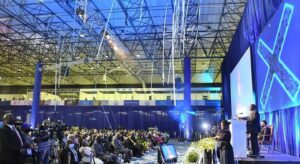
ADDRESS BY PRESIDENT CYRIL RAMAPHOSA AT THE ANNOUNCEMENT OF THE 2021 LOCAL GOVERNMENT ELECTION RESULTS, IEC RESULTS OPERATIONS CENTRE, TSHWANE

4 November 2021

Programme Director,
Chairperson of the IEC, Commissioner Glen Mashinini,
Commissioners,
Chief Electoral Officer, Mr Sy Mamabolo,
Speaker of the National Assembly, Ms Nosiviwe Mapisa-Nqakula,
Deputy Speaker, Mr Lechesa Tsenoli,
Justices,
Leaders of Chapter 9 institutions,
Leaders of political parties,
Members of the diplomatic corps,
Fellow South Africans,

In a month’s time we will mark 25 years since the signing into law of our democratic Constitution.

Its founding values – of democracy, human dignity, the advancement of human rights and the achievement of equality – have been our guide for a quarter of a century.

Tonight we mark another milestone in the advance of our democracy.

This local government election was contested by a record 325 political parties and nearly 95,000 candidates, of whom over 1,500 were independent candidates.

In the run-up to election day we have seen images of parties and candidates everywhere, on billboards, on street posters and on social media, all making a case for why they should get our vote.

This is a sign that multiparty politics is flourishing in South Africa, and that everyone has an equal chance and opportunity to run for public office.

This enriches us in many ways.

It advances openness and transparency.

It affirms that we are a diverse and tolerant society.

It affirms the principle that leaders must be chosen by the people and be accountable to the people.

I want to thank the 12 million South Africans who cast their ballots in this election.

By performing this important civic duty you have contributed to strengthening and consolidating democracy.

I want to congratulate all South Africans for holding an election that was peaceful, free and fair.

The people have spoken.

Those in whom they have placed their trust – the elected councillors – now need to get down to work.

Over the past few weeks we have all spent time with South Africans from all walks of life, meeting them in the streets and being invited into their homes.

They told us about leaking houses, of frustration at electricity cuts, of feeling unsafe because of crime, and of being despondent after years of not working.

At the same time many have told us about the good work that municipalities – supported by dedicated councillors – are doing in their communities.

They have told us of infrastructure that has been built in the poorest areas and of essential services that are being delivered.

They also gave us advice on how we can do things better.

Listening to them I was reminded how important it is that those in positions of responsibility enjoy the confidence of the South African people.

They want their lives improved.

They want better services.

They want their representatives to be responsive and accountable.

They want to live in a better South Africa with equal opportunity, where their rights are realised, and where they are treated with dignity and respect.

Local government must be a force for good, for development and for progress.

If we are to make this a new and better era, we, as leaders, must put aside our differences and work together in a spirit of partnership and common purpose.

At the end of the day, we all want the same thing: to better the lives of the South African people.

We need to strengthen the trust between citizens and elected representatives through competence, integrity, performance and delivery.

Public representatives need to be more visible and active in our communities.

They need to focus on implementation and make the people partners in development.

Above all, they need to listen to the communities they serve.

I want to thank all those people who have contributed to the success of the 2021 local government election.

I want to thank the commissioners, leadership and staff of the Independent Electoral Commission, who have once again conducted themselves with professionalism and impartiality.

I want to thank the South African Police Service and the South African National Defence Force for ensuring the safety of voters and the integrity of the election process.

I want to thank the staff of the Department of Home Affairs for processing voters and enabling them to have the correct documentation on voting day.

I want to thank all the political parties and candidates who stood in this election for their conduct, their discipline and their commitment to the people.

Through their efforts, they have proven that our democracy is enduring and strong.

Last week in Cape Town I received a letter from a young women called Rubi.

“I have faith in the leaders of South Africa,” she wrote to me.

“I believe that South Africa can take her rightful place in the world, and that the dreams of our great leaders can be realised.”

In these difficult times, these words from a young South African encouraged me.

They should encourage us all.

We owe it to Rubi and to the millions of young South Africans who dream of a better South Africa, to do no less than our very best.

We owe it to the millions of South Africans who voted in this election to bring about the change they are asking for.

Let us turn the promises that we made on the campaign trail into reality.

Let us unite for the common purpose of recovery and rebuilding.

Let us work as one for a South Africa of equality, freedom and shared prosperity.

Let us keep moving forward.

I thank you.

MESSAGE BY PRESIDENT RAMAPHOSA AT COP26 ENERGY SESSION, 4 NOVEMBER 2021

Thursday, 04 November 2021

Dear Colleagues and Friends,

There is no longer any doubt that climate change presents a critical and urgent threat to humanity.

This is so because it will have devastating consequences for our economies and societies if we do not take action now.

Bold action must start with accelerated decarbonisation of our energy systems.

This involves harnessing new technologies to reduce our dependence on high-emission fossil fuels, including unabated coal power.

It requires that we move to more sustainable and cost-effective energy sources.

While the energy transition is necessary for reducing global carbon emissions, this transition must also be fair and just.

For many developing economies this requires massive investment in alternative energy sources and other infrastructure.

It requires substantial support for workers and communities throughout the coal value chain who stand to lose their jobs as well as their livelihoods.

A just transition requires finance and support from wealthier nations to enable low- and medium-income countries to protect employment and to promote development.

In South Africa, we have committed to ambitious emission reduction targets.

Achieving these targets will require the transformation of our energy system at an unprecedented speed and scale.

This will include the decommissioning, the repowering and the repurposing of coal-fired power stations and the roll-out of renewable energy.

But our ability to do so will be determined by the extent of support that we receive from developed economies.

The Political Declaration that we announced this week with the governments of France, Germany, the United Kingdom and the United States, as well as the European Union, represents an important breakthrough in this effort.

Through this partnership, an initial amount of $8.5 billion will be mobilised over the next three to five years to support South Africa’s just transition to a low-carbon, climate resilient future.

This will enable us to implement our ambitious goals and to develop a model for a just transition that we hope can be used elsewhere.

We are entering a brave new world bound together by our common destiny as humanity.

We owe this to ourselves, to one another and to the future generations.

I thank you.

SOUTH AFRICA ESTABLISHES A HISTORIC INTERNATIONAL PARTNERSHIP TO SUPPORT A JUST TRANSITION

2 November 2021

President Cyril Ramaphosa has today, Tuesday, 2 November 2021, joined other leaders in announcing a historic partnership with the governments of France, Germany, the United Kingdom and the United States, as well as the European Union, to support a just transition to a low carbon economy and a climate resilient society in South Africa.

In preparation for COP26, South Africa submitted a revised Nationally Determined Contribution (NDC) to reduce domestic carbon emissions to within a target range for emissions of between 420 CO2-eq and 350 CO2-eq by 2030. This revised target is compatible with the ambitious goals of the Paris Agreement and represents our country’s best effort to confront climate change, which will have a devastating impact on sub-Saharan Africa without large-scale mitigation and adaptation efforts.

Through the Political Declaration issued today to establish this partnership, partner countries will mobilise an initial $8.5 billion (R131 billion) over the next three to five years through a range of instruments, including grants and concessional finance, to support the implementation of our revised NDC through a just transition to a low carbon and climate resilient economy.

The highly concessional finance that will be mobilised through this partnership will accelerate investment in renewable energy and the development of new sectors such as electric vehicles and green hydrogen. This will provide a significant boost to investment and growth while ensuring Eskom can access resources to finance repurposing of coal fired power-stations due for decommissioning over the next 15 years.

Welcoming this partnership, President Ramaphosa said: “Climate change is an existential challenge that confronts us all, and South Africa is committed to playing its part in reducing global emissions. The partnership that we have established today is a watershed moment not only for our own just transition, but for the world as a whole. It is proof that we can take ambitious climate action while increasing our energy security, creating jobs and harnessing new opportunities for investment, with support from developed economies.”

Bold and ambitious actions are required from all countries to confront climate change and South Africa has consistently argued that developed economies must support a just transition in developing economies. Today’s Political Declaration represents a first-of-its kind partnership to turn these commitments into reality, and a model for similar forms of collaboration globally.

At the heart of this partnership is the importance of a just transition, which includes support for workers and communities affected by the transition away from coal and enables the creation of quality green jobs. For the transition to be just, decarbonisation must be implemented in a manner that promotes and sustains employment, livelihoods and economic inclusion for historically marginalised communities and sectors of our society. A joint taskforce will be established to take forward the partnership over the coming months.

Political Declaration on the just energy transition in South Africa

Declaration from the Governments of the Republic of South Africa, the United Kingdom of Great Britain and Northern Ireland, the United States of America, the Republic of France and the Federal Republic of Germany, and the European Union.

1. Recognising the need for accelerated actions towards the goals and objectives of the United Nations Framework Convention on Climate Change and Paris Agreement, including the long-term goals on mitigation, adaptation and finance, to avoid the worst impacts of climate change on our countries, our people and the environment;

2. Noting that in order to limit the impacts of climate change, the international community needs to collectively halve global greenhouse gas emissions by 2030 and achieve global net zero CO2 emissions by 2050, while strongly reducing other greenhouse gas emissions;

3. Underlining the consequent urgency of decarbonising energy systems by increasing energy efficiency, and by accelerating the retirement of coal power and the deployment of renewables;

4. Acknowledging that sustainable financing from developed countries, multilateral institutions and investors is required to enhance support for South Africa’s transition;

5. Emphasising the necessity of a just, equitable and inclusive transition for workers and affected communities so that all are protected against the risks and benefit from the opportunities presented by this transition, and no one is left behind;

6. Confirming that the process of transition needs to be based on the full involvement of organised labour and business in targeted programmes of reskilling and upskilling, creating employment and providing other forms of support to ensure that workers are the major beneficiaries of our transition to a greener future;

7. Acknowledging that South Africa faces significant development challenges, including poverty, inequality and unemployment, which have been exacerbated by the impacts of the COVID-19 pandemic;

8. Recognising that South Africa requires a transition that is just, especially as there are several important sectors of its economy that may otherwise be negatively affected by such a transition, including mining, energy, manufacturing and transport;

9. Welcoming, in this context, South Africa’s submission of an enhanced, ambitious Nationally Determined Contribution that strengthens the country’s contribution to the adaptation and mitigation goals of the Paris Agreement;

10. Recognising the progress made by the Government of the Republic of South Africa – as well as leadership from Eskom, organised labour, businesses, civil society, and local governments – towards the net zero aspirations set out in South Africa’s Long-Term Low Emissions Development Strategy;

11. Noting South Africa’s intention to decommission and repurpose or repower coal-fired power stations, invest in new low-emission generation capacity such as renewables, increase energy efficiency and pursue green industrialisation such as manufacturing using green technology and a shift to the production of electric vehicles;

12. Embracing the opportunities for industrial innovation to create quality green jobs, increase renewable energy generation and drive sustainable economic growth for a resilient and net zero South African economy;

13. Recognising the unprecedented opportunity for South Africa to become a leader in the just energy transition, and the importance of global collaboration;

14. Recognising also the need for long term cooperation, commensurate with the timeline for South Africa’s just energy transition; and

15. Acknowledging the commitments of developed countries to provide support, including finance, to developing countries’ mitigation and adaptation efforts;

Resolve to

16. Establish an ambitious long-term partnership to support South Africa’s pathway to low emissions and climate resilient development, to accelerate the just transition and the decarbonisation of the electricity system, and to develop new economic opportunities such as green hydrogen and electric vehicles amongst other interventions to support South Africa’s shift towards a low carbon future.

17. Establish an inclusive task force comprised of South Africa and international partners, to enable:
a. The accelerated decarbonisation of South Africa’s electricity system to achieve the most ambitious target possible within South Africa’s Nationally Determined Contribution range to the extent of available resources;
b. South Africa’s efforts to lead a just transition that protects vulnerable workers and communities, especially coal miners, women and youth, affected by the move away from coal;
c. South Africa’s nationally determined efforts to successfully and sustainably manage Eskom’s debt, define the role of the private sector, and create an enabling environment through policy reform in the electricity sector, such as unbundling and improved revenue collection;
d. Local value chains (including Micro, Small and Medium Enterprises) to benefit from new areas of economic opportunity; and
e. Opportunities for technological innovation and private investment to drive the creation of green and quality jobs as part of a prosperous low emission economy.

18. Subject to concurrence on the investment framework, and in line with budgetary procedures and consensus on the use of funds and terms on which finance may be provided, mobilise an initial amount of approximately $8.5 billion over the next three to five years through a combination of appropriate financial instruments, which may include but is not limited to multilateral and bilateral grants, concessional loans, guarantees and private investments, and technical support to enable the just transition, with a view to longer term engagement.

19. Explore additional sources of financing and mobilise or include additional international partners, to further support South Africa’s ambition.

20. This partnership is a demonstration of the willingness of both developed and developing countries to cooperate on a vital challenge facing humanity.

Annex: Taskforce Action Plan

Over the course of the next 12 months, the taskforce commits to carrying out the following plan.

1. Within six months:
a. Pursue the political dialogue on the just transition and provide a leader level update on the advancement of the partnership;
b. Determine the scope of supported actions;
c. Outline terms of financing taking into account the joint commitment to enable a just transition in South Africa;
d. Identify initial sources of financing for the first phase of a broad-based just energy transition brought forward by South Africa in the electricity and coal mining sectors, and appropriate financing options for initiating the development of the electric vehicles and green hydrogen sectors;
e. Assist South Africa to structure sustainable financial and technical support within the broader transition to a low emission economy; and
f. Set up coordination platforms with development finance institutions and key stakeholders to further develop the conceptual approach and leverage additional technical and financial support towards their most impactful uses.

2. Within a calendar year:
a. Develop a full programme of work for this partnership on the basis of an investment plan for the just energy transition of the South African government, including support to address the social and economic impacts;
b. Provide a leaders’ level update to review progress;
c. Identify potential financing instruments and policies that will act to improve Eskom’s long term financial sustainability;
d. Work to address South Africa’s longer term funding needs to lower emissions across all sectors of the economy; and
e. Identify how to leverage further financial resources including domestic resources to that effect.
WORLD LEADERS DISCUSS CLIMATE CHANGE AND IT’S EFFECTS

1 November 2021

World Leaders disscussed issues of climate change and its effects. Leaders met the U.K. Prime Minister, Rt. Hon. Boris Johnson MP and António Guterres, Secretary-General of the United Nations and spent time with fellow Heads of State ahead of this afternoon’s World Leaders’ Summit in Glasgow, Scotland.

Among the African Leaders was, President Uhuru Kenyatta of Kenya, President Nana Akufo-Addo of Ghana, President Félix Antoine Tshisekedi of DRC, Presidents Lazarus Chakwera of Malawi, President Hage Geingob of Namibia, President Emmerson Mnangagwa of Zimbabwe, President João Lourenço of Angola, President of Nigeria Muhammadu Buhari of Nigeria and President Azali Assoumani of Comoros.

The heads of state discussed wide range of issues of mutual interest and beneficial to their countries and the continent. Also issues concerning cultural diversity between their Nations, while fostering trade and investment was discussed.

 SA-US BILATERAL MEETING AT THE G20 LEADERS SUMMIT, ROME, ITALY

30 October 2021

Minister Naledi Pandor held a bilateral meeting with the United States (US) Secretary of State, Mr Antony Blinken, on the margins of the G20 Leaders’ Summit in Rome, Italy.

The US 🇺🇸 is a strategic partner for SA🇿🇦 and a major export market for value-added products, a significant source of foreign direct investment (FDI), technology transfer, development assistance and tourism.

Roma Convention Centre La Novula, Rome, Italy, 31 October 2021.

#SAUnitedStatesRelations

#diplomacia

#diplomacy

DOMBRA KAZAKHSTAN’S WELL KNOWN MUSIC INSTRUMENT

During the official visit to Kazakhstan, Ms Ndileka Mandela, Founder & CEO of Thembekile Mandela Foundation and Susan Novela, CEO & Publisher of the Diplomatic Informer Magazine SA, had the opportunity to try the ancient music instrument called Dombra.

Dombra is the most well-known kazakh music instrument. According to archeologists’ researches, first dombras appeared about 2000 years ago. Despite this fact, this instrument still popular nowadays. Kazakh musical bands and singers use dombras making covers of famous worldwide top songs and composing their own music.

Usually the body of dombra is made of maple, oak or pine. It has only two catguts. However, dombra is able to convey various moods and make you imagine

Kazakhstan performers make good use of dombras. On YouTube “Made in KZ” channel musicians share their covers and own works.

People in Kazakhstan love and value traditions which includes music as well. Their modern performers do not forget about such instrument as dombra and it blends seamlessly with other musical instruments and even rock music!

We hope you enjoyed reading our post. Please, write in the comments about ethnic musical instruments of your country. Or maybe you play one? Feel free to leave the links to YouTube videos with ethnic music and instrument of your culture!

Photo: Right to left Susan Novela & Ms Ndileka Mandela

            Kazakhstan

            By: Calvin Modirapula

SAUDI ARABIA SUBMITS REQUEST TO HOST EXPO 2030

29 October 2021

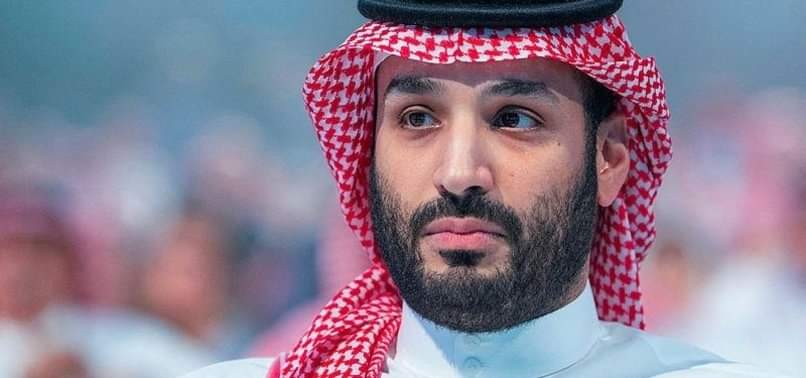
Saudi Crown Prince Mohammed bin Salman announced that Riyadh has submitted a formal request to host Expo 2030, state news agency said on Friday.

Prince Mohammed said hosting the Expo would be under the theme “The era of change: Leading the planet to a foresighted tomorrow”, the news agency added.

Photo: KSA Page

HAPPY REPUBLIC DAY TURKEY

29 October 2021

Turkey celebrates the 98th anniversary of the establishment of the Republic on the National Republic Day, on October 29th.

The occasion commemorates the country’s transition to a new system and cementing its independence following World War II’s devastation.

Wishing the Government and the People of Turkey continued peace, unity, economic growth and prosperity.

 #RepublicDay #Turkey

G20 SET TO COMMIT TO CUTTING PERIOD TO DEVELOP VACCINES IN PANDEMIC

29 October 2021

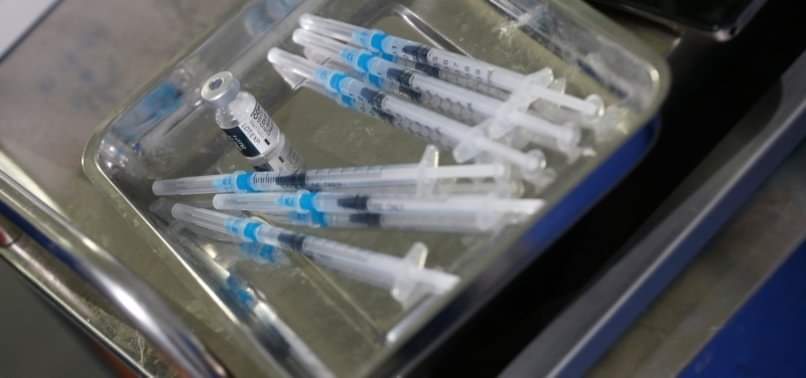
Leaders of the world’s 20 largest economies are set to commit to supporting cutting to 100 days the period in which pharmaceutical companies can develop new vaccines, drugs and tests during a pandemic, according to a draft joint document.

In normal circumstances developing vaccines takes more than a decade, but the COVID-19 pandemic spurred an unprecedented rush in research, trials and regulatory procedures that made it possible to have vaccines ready in less than a year.

Now G20 leaders want that period cut further.

In health emergencies caused by pandemics “we will support science to shorten the cycle for the development of safe and effective vaccines, therapeutics and diagnostics from 300 to 100 days,” the G20 leaders say in a draft statement which they are set to adopt over the weekend at a summit in Rome.

The draft is still subject to last-minute changes, but officials said this commitment was expected to remain unchanged.

One of the measures seen as crucial to cut the time needed to develop vaccines and drugs is the shortening of clinical trials. This could be possible by facilitating cooperation for conducting trials, setting up large registries for volunteers and involving regulators more closely during the trials.

The European Union is, for instance, working to boost clinical trial networks for vaccines and therapeutics to connect those responsible for designing and conducting trials.

Data sharing is also to be encouraged to speed up research. New technologies, such as the messenger RNA, have also demonstrated they permit faster development of new vaccines.

G20 leaders will also support the goal of the World Health Organization (WHO) to vaccinate 70% of the eligible population in each country globally by mid-2022, the draft conclusions of the summit say.

That would narrow the current huge disparity in vaccine rollouts. Many wealthier nations have already reached that target but several poorer states remain below 5%.

Leaders are set to welcome multilateral efforts aimed at supporting and strengthening pandemic preparedness and response, “including consideration of a possible international instrument or agreement in the context of the WHO”, the draft text says, referring to a pandemic treaty without explicitly mentioning it.