Lake Kariba ,in Zimbabwe 🇿🇼 is the world’s largest man-made lake.
Lake Kariba is the world’s largest man-made lake and reservoir by volume. It lies 1,300 kilometres upstream from the Indian Ocean, along the border between Zambia and Zimbabwe.


Lake Kariba ,in Zimbabwe 🇿🇼 is the world’s largest man-made lake.
Lake Kariba is the world’s largest man-made lake and reservoir by volume. It lies 1,300 kilometres upstream from the Indian Ocean, along the border between Zambia and Zimbabwe.

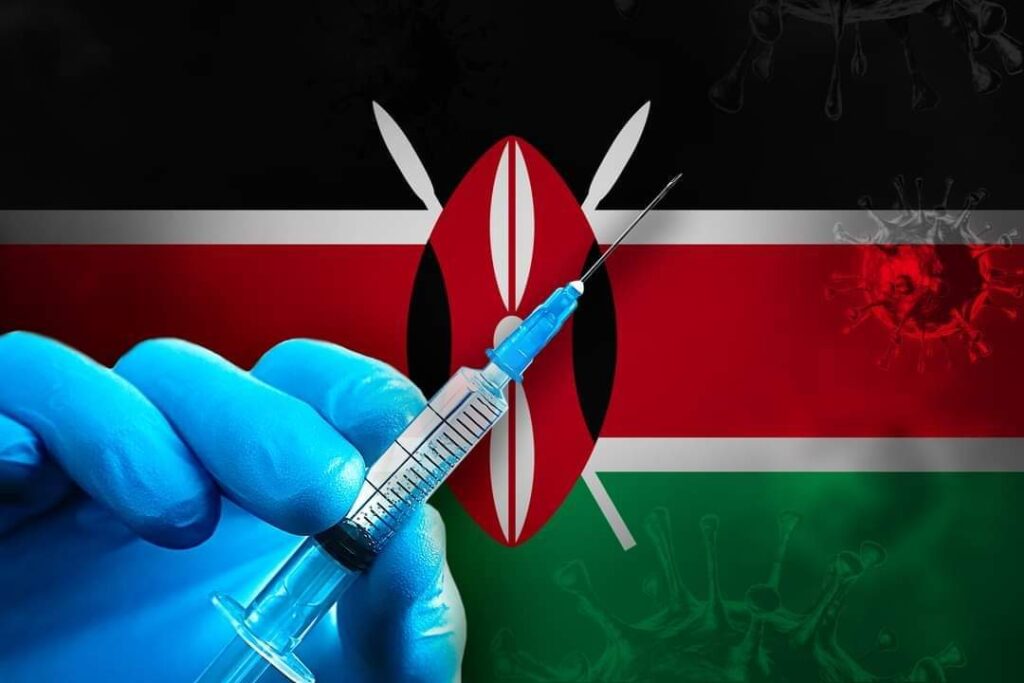
Kenya on Friday September 3, received its first consignment of 141,600 doses of Johnson and Johnson (J&J) vaccines purchased through the Africa Vaccine Acquisition Trust Mechanism (AVAT) and will receive another consignment 248,000 doses next week.
This is the first batch of the 13.3 million Johnson and Johnson vaccine doses that the Kenyan government has purchased under the African Union pooled procurement mechanism. The country expects to have one million doses of Johnson and Johnson vaccines coming in every month.
While receiving the vaccines at Jomo Kenyatta International Airport, Dr. Mercy Mwangangi, Chief Administrative Secretary of the Ministry of Health, said the single-shot Johnson and Johnson vaccine are easily stored and have a longer shelf life. The vaccines therefore require fewer logistics and operational cost.
“The Johnson and Johnson vaccines we have received today will ensure that Kenyans are fully vaccinated quickly. This is a road map towards having local manufacturing of vaccines in Africa,” said Ms Mwangangi, adding that the Ministry of Health will prioritize the distribution of Johnson and Johnson vaccines towards the primary health care level.
“The vaccines are of great utility particularly in reaching primary health care level of our health system where uptake of vaccines is low.”
She said the single dose vaccine will ensure this population is vaccinated quickly, considering the mobile nature of the different population to ensure they are covered as we fight against the Covid 19.
Stephen Karingi, Director, Regional Integration and Trade Division of the Economic Commission for Africa who was at the airport with the Kenyan government officials and AVAT Strategic Partners (Africa Centres for Disease Control and Prevention and Afreximbank) to receive the vaccines said, “this is a big moment for the continent as we are witnessing the country’s efforts to protect its citizens by securing vaccines made in Africa for Africans.”
“It is a demonstration that African countries can indeed pool their resources together and manufacture essential medicines and vaccines for themselves and at the same time create market for it. This is a confirmation that local production of vaccines and pooled procurement of pharmaceutical products are possible as envisaged in the African Continental Free Trade Area (#AfCFTA),” said Mr Karingi.
If fully implemented, he said, the AfCFTA will provide African countries with an opportunity to boost local production of pharmaceutical products like these vaccines and end the continent’s over dependence on imported medicines and vaccines.
According to AVAT, with the 141,600 vaccines delivered today, we hope to continue the efforts toward increasing the number of fully vaccinated persons, while expediting efforts towards the delivery of additional doses to Kenya and the wider African continent
“As vaccines become available, we encourage governments to avail them to as many people as possible while imploring each and every individual to get vaccinated with any and all available vaccines as guided by the Ministry of Health while continuing to observe the set guidelines by the ministry of health,” said AVAT in a press statement.
On August 5, South African President Cyril Ramaphosa, announced that the African Union (AU) would start monthly shipments of vaccines acquired by the AVAT to the AU Member States.
The agreement with Johnson & Johnson was made possible through a $2 billion facility provided by the African Export-Import Bank (Afreximbank).
The AVAT initiative is a partnership between the AU Africa Centres for Disease Control and Prevention (Africa CDC), the African Export-Import Bank (Afreximbank) and the United Nations Economic Commission for Africa (UNECA).
Monthly shipments of the Johnson and Johnson vaccines will continue with a target of delivering almost 50m vaccines before the end of December. It is expected that by January 2022, the number of vaccines being released will be in excess of 25m per month.
Through AVAT African Member States collectively purchased 400 million vaccines to safeguard the health of the African population against #COVID19.
The AU expects to immunize a third of the African people and bring Africa halfway towards its continental goal of vaccinating at least 60 per cent of the population.

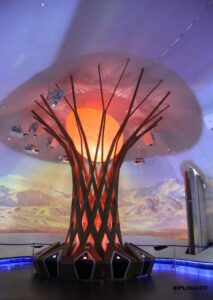


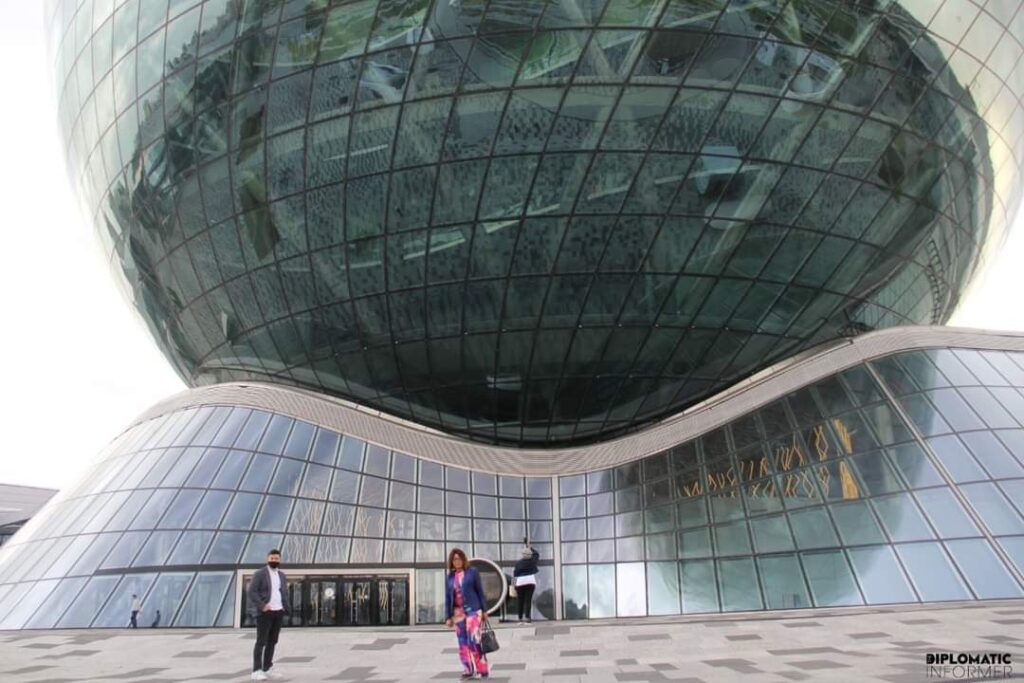
The Kazakhstan Pavilion and Science Museum, known as Nur-Alem in the country, is the iconic, high-performing centerpiece of EXPO-2017, 2017 international exposition, which was held from June 10 – September 10, 2017.
The site has been currently transformed into a Post-Expo development with cultural facilities, an office and research park, and residential components that seeks to attract international entrepreneurs.
Inspired by the EXPO-2017 theme, “Future Energy,” the Kazakhstan Pavilion and Science Museum embodies a futuristic design that is optimized to incorporate sustainable philosophies.
The museum was developed to accomplish the client’s goals of a spherical-shaped building that anchored the master plan of the exposition, while enabling the design team to push the design forward to meet the firm’s programmatic and sustainability goals. A pure-glass sphere—smooth, not faceted like a typical geosphere structure—was envisioned.
This innovative, double-curved-glass facade features glass panels that gently curve in three dimensions. The 80-meter-diameter structure is slightly modified from a perfect sphere shape to achieve the designer’s renewable-energy goals.
The design team used Building Information Modeling (BIM) to explore multiple iterations of the design in a virtual space early in the design process. The energy model created for the project specified a target of 81,056 kWh/yr of electricity and currently about 2.21% of the building’s energy demand is created from the PV system.
The epitome the EXPO-2017 theme “Future Energy,” is the exposition’s centerpiece, the Kazakhstan Pavilion and Science Museum, which seeks to educate visitors about the complex relationship with energy use.
The design team used Building Information Modeling (BIM) to explore multiple iterations of the design in a virtual space early in the design process. Each version was analyzed for design expression, energy impact, and structural integrity. The sphere’s complex design required close collaboration with the structural consultant for all opportunities for energy generation to be investigated, and several were incorporated into the building’s design.
•Wind turbines are set into the top of the building, which were predicted to produce a total of 52,700 kwh/yr of electricity or the equivalent of 1.6% of the buildings total electricity demand or 0.9% of total energy demand
•During EXPO-2017, the sphere was a museum for the history, culture, traditions, places of interest and also recent achievements of Kazakhstan
•In the post-exposition mode, the sphere will be a Museum of Future, where the basic types of energy will be demonstrated on site: space, sun, biomass, wind, waste, and kinetics


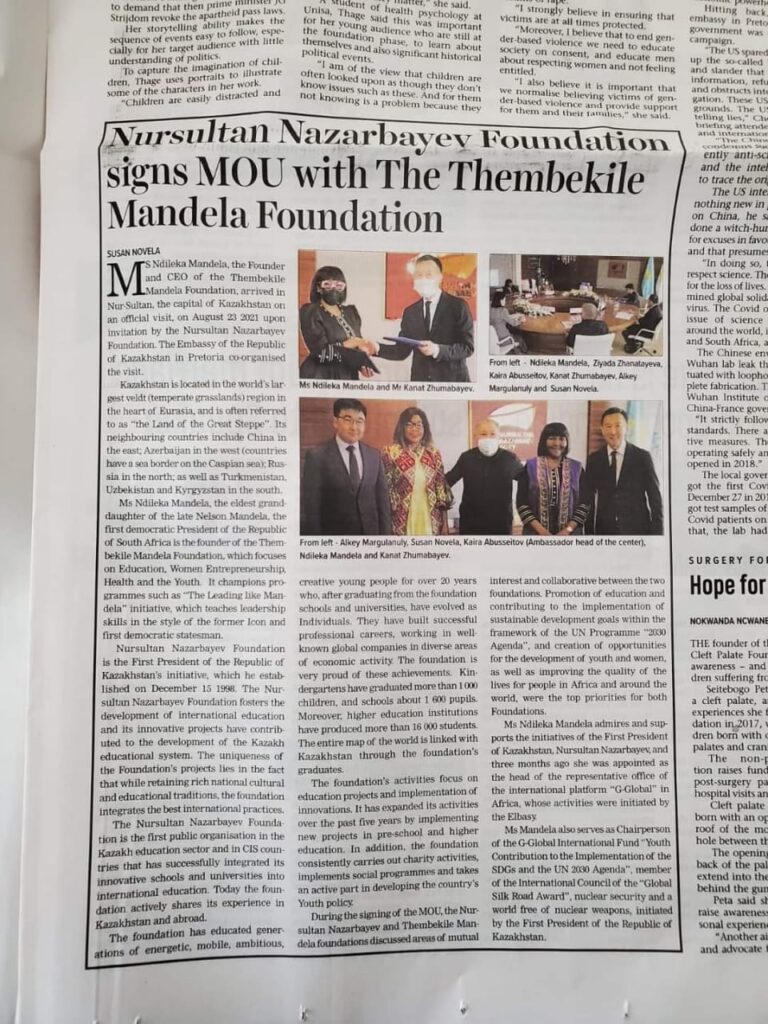
READ OUR ARTICLE IN THE PRETORIA NEWS ON THE SIGNING OF THE MOU, IN NUR-SULTAN
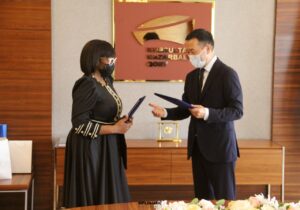
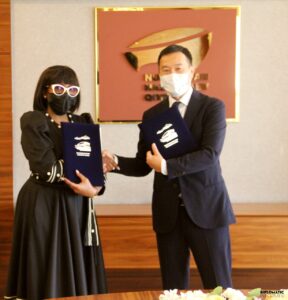
The Nursultan Nazarbayev Foundation signed MOU with the Thembekile Mandela Foundation
By Susan Novela
Founder, CEO & Publisher of the Diplomatic Informer Magazine SA

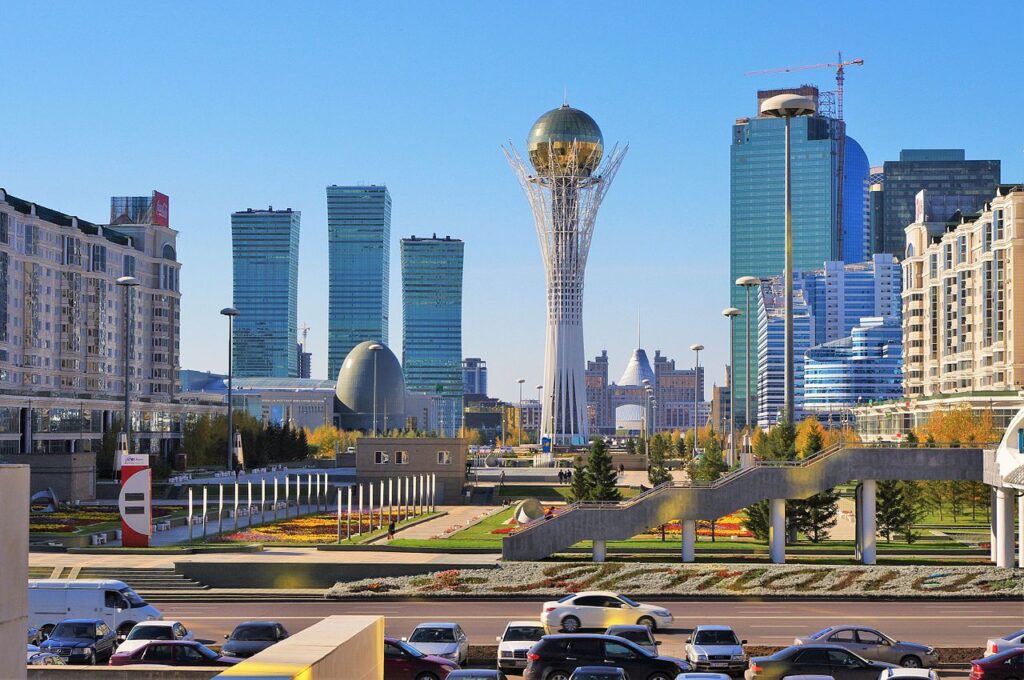
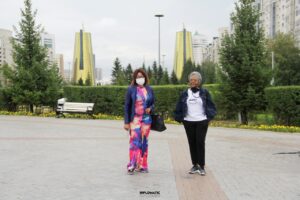
We enjoyed our day visit to the Bayterek Tower, A modern tower, in Nur-Sultan, the capital city of Kazakhstan and a popular tourist attraction among the foreign visitors and Kazakh nationals. It is emblematic of the city, which became capital of the country in 1997
THE KAZAKH WORD “BAYTEREK” mean “tall as in the tree. That’s what makes Bayterek Tower such a fitting name for a national monument steeped in symbolism and meaning, connecting the old world to the modern in a celebration of progress.
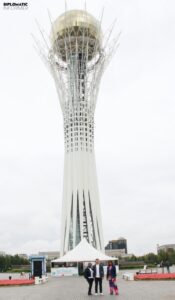
Located in Nur-Sultan (Astana), Kazakhstan, every element of Bayterek Tower was designed with the intention of imparting meaning to visitors and citizens alike, right down to the height of the tower, which stands 97 meters tall to represent 1997, the year in which Astana was named the capital of Kazakhstan.
The monument is meant to embody a folktale about a mythical tree of life and a magic bird of happiness: the bird, named Samruk, had laid its egg in the crevice between two branches of a poplar tree.

The 105m tall structure rises from a wide flat base within a raised plaza. It consists of a narrow cylindrical shaft, surrounded by white branch-like girders that flare out near the top, supporting a gold-mirrored 22m-diameter sphere.
The base contains a ticket booth and exhibition space, with two lifts rising within the shaft to the observation deck within the ‘egg’. Entrances to the monument are sunk below eye level, reached by stairs from the surrounding plaza.


The observation deck is 97m above ground level, corresponding to 1997, the year that Astana became the nation’s capital. It consists of two levels, one with 360 degree views of Astana and beyond, with a second, higher level, reached by a flight of stairs.
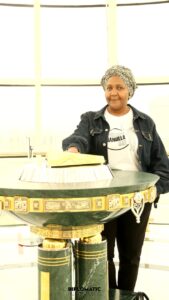
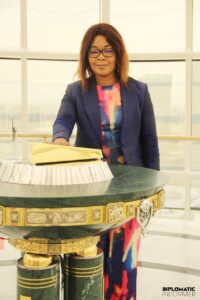
The top level features a gilded hand print of the right hand of Nursultan Nazarbayev, the first President of the independent Republic of Kazakhstan, mounted in an ornate pedestal.
A plaque invites visitors to place a hand in the imprint and make a wish. Alongside the handprint, and also oriented in the direction of the presidential palace, is a wooden sculpture of a globe and 16 radiating segments, commemorating the Congress of Leaders of World and Traditional Religions, held several times in Astana.
23 August 2021
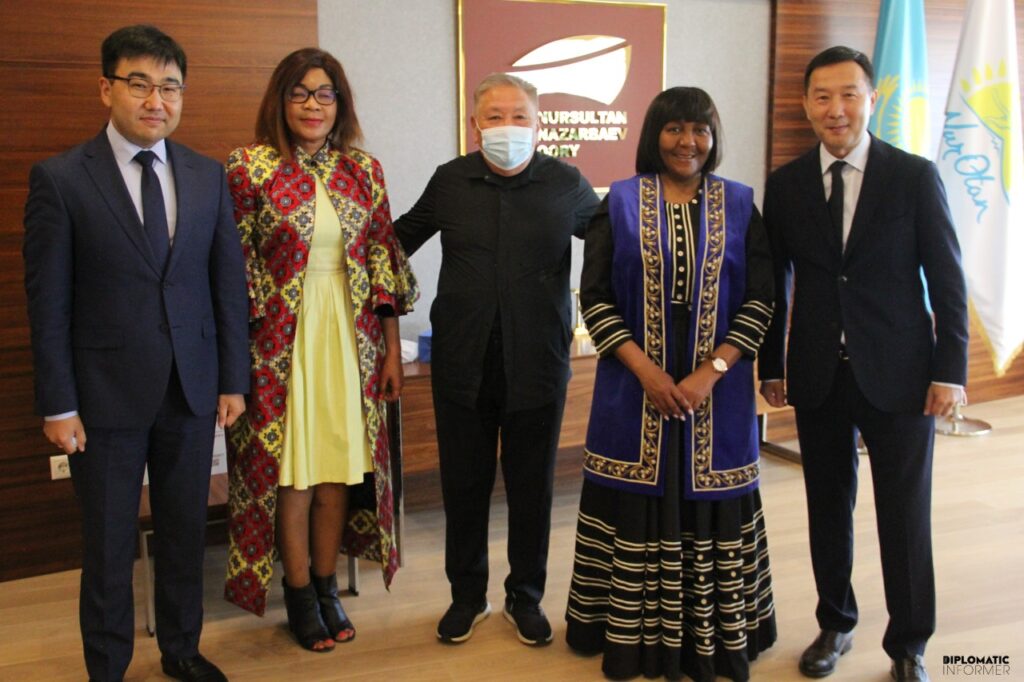
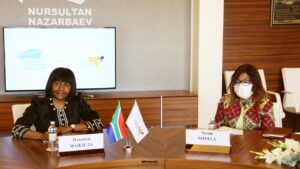
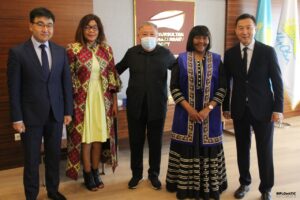
Ms Ndileka Mandela, the Founder and CEO of the Thembekile Mandela Foundation, invited by Nursultan Nazarbayev Foundation arrived in Nur-Sultan, the capital of Kazakhstan on an official visit, yesterday, 23rd August 2021
Kazakhstan is one of the country located in the world’s largest steppe region, often referred to as “the Great Steppe”, found in the Eastern Europe and Central Asia, neighbouring countries stretching from Ukraine in the west through Russia, Kazakhstan, Turkmenistan and Uzbekistan to the Altai, Koppet Dag and Tian Shan ranges in China.
Ndileka Mandela is the eldest granddaughter of Nelson Mandela, the First Democratic President of the Republic of South Africa and founder of the Thembekile Mandela Foundation, which was named after her father and focuses on Youth, and the Leading like Mandela program, which teaches about the leadership style of the former Icon and First Democratic States Man.
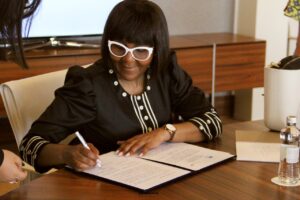
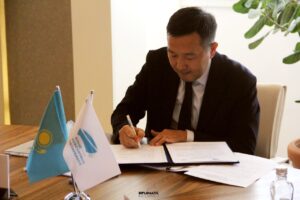
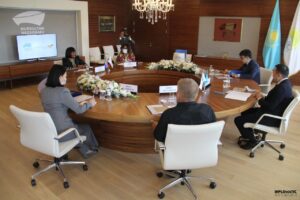
Ndileka Mandela’s visit started with a meeting at the Nursultan Nazarbayev Foundation, where she met with the Executive, Management and the team of Nursultan Nazarbayev Foundation and signed a memorandum of understanding.
Nursultan Nazarbayev Foundation, is an
initiative of the First President of the Republic of Kazakhstan and was established on 15th of December 1998. The Foundation’s activities to highlight a few, focuses on Education projects and implementation of innovations.
The Nursultan Nazarbayev Foundation is the first public organization in the educational space of Kazakhstan and CIS countries that has successfully integrated its innovative schools and universities into the international education. Today the Foundation actively shares its experience in Kazakhstan and abroad.
Under the auspices of the Nursultan Nazarbayev Educational Foundation three innovative Miras kindergartens were opened in Astana, Almaty and Atyrau, two Miras international schools in Astana and Almaty, the International School of Almaty and Arystan specialized lyceum.
The Educational Foundation is a co-founder of higher educational institutions: the University of International Business (UIB), International Information Technology University (IITU), Astana IT University (AITU) and Kazakh-British Technical University (KBTU
Both Foundations shared areas of activities and of mutual interest such as future collaboration between the two foundation, promotion of Education and contributing to the implementation of sustainable development goals within the framework of the UN Program “2030 Agenda”, and creating of opportunities for the development of youth and women, as well as improving the quality of life for people in Africa and around the world
Ms Ndileka Mandela, admires and supports the initiatives of the First President of Kazakhstan, Nursultan Nazarbayev and is the head of the representative office of the international platform “G-Global” in Africa, whose activities were initiated by the Elbasy.
Ndileka Mandela also serves as Chairperson of the G-Global International Fund “Youth Contribution to the Implementation of the SDGs and the UN 2030 Agenda”, member of the International Council of the “Global Silk Road Award” / “Global Silk Road Award” nuclear security and a world free of nuclear weapons the work initiated by the First President of the Republic of Kazakhstan.
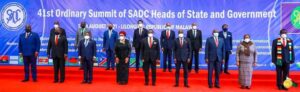
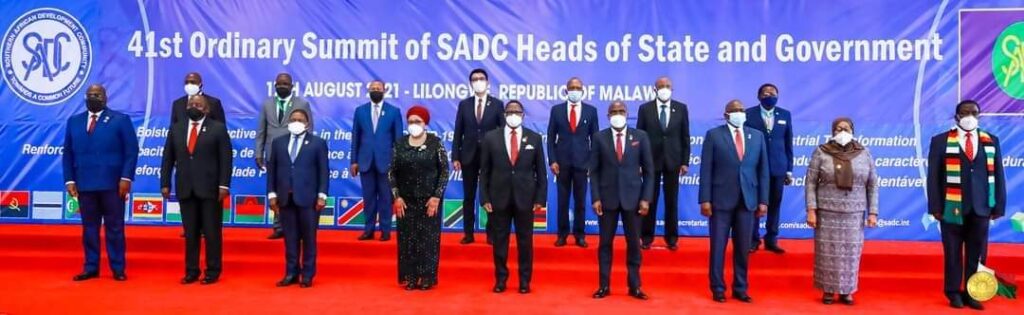
The 41st Ordinary Summit of the Heads of State and Government of the Southern African Development Community (SADC) was held on the 18th August 2021, in Lilongwe, the capital city of the Republic of Malawi.
2. Summit was attended by the following Heads of State and Government and/or their representatives:
Botswana: H.E. President Dr. Mokgweetsi Eric Keabetswe
Masisi
DRC H.E. President Félix Antoine Tshisekedi Tshilombo
Madagascar: H.E. President Andry Nirina Rajoelina
Malawi: H.E. President Dr. Lazarus McCarthy Chakwera
Mozambique: H.E President Filipe Jacinto Nyusi
South Africa: H.E. President Matamela Cyril Ramaphosa
United Republic of Tanzania: H.E. President Samia Suluhu Hassan
Zimbabwe: H.E. President Dr. Emmerson Dambudzo Mnangagwa
Namibia: H.E. Vice President Dr Nangolo Mbumba
Eswatini: H.E. the Right Hon. Prime Minister Cleopas
Dlamini
Lesotho: Hon Mathibeli Mokhothu, Deputy Prime Minister
Angola: Hon. Ambassador Tete Antonio, Minister of External Relations of Angola
Comoros Hon. Dhoihir Dhoulkamal, Minister of Foreign Affairs and International Cooperation
Zambia: H.E. Mwansa Kapeya, Ambassador of the Republic of Zambia to the Republic of Botswana and SADC
3. H.E. Dr. Stergomena Lawrence Tax, SADC Executive Secretary was also in attendance. H.E Moussa Faki Mahamat, Chairperson of the African Union and H.E Dr. Vera Songwe, Chief Executive of UNECA delivered pre-recorded remarks to the Summit.
4. Summit elected H.E Dr. Lazarus McCarthy Chakwera, President of the Republic of Malawi, as Chairperson of SADC, and H.E. Félix Antoine Tshisekedi Tshilombo, President of the Democratic Republic of Congo as Incoming Chairperson of SADC.
5. Summit also elected H.E. Matamela Cyril Ramaphosa, President of the Republic of South Africa, as Chairperson of the Organ on Politics, Defence and Security Cooperation, and H.E. Dr. Hage G. Geingob, President of the Republic Namibia as Incoming Chairperson of the Organ on Politics, Defence and Security Cooperation.
6. Summit commended the people and the Government of the Republic of Zambia, for conducting successful elections, and congratulated H.E. Hakainde Hichilema for winning the elections.
7. Summit thanked H.E. Edgar Chagwa Lungu for his leadership and contribution to SADC development and integration during his tenure as President of Zambia and for nobly accepting the results of the 2021 Presidential elections in the Republic of Zambia.
8. Summit received a report of the Outgoing Chairperson of the Organ on Politics, Defence and Security Cooperation, H.E. Dr. Mokgweetsi Eric Keabetswe Masisi, President of the Republic of Botswana, and commended him for his outstanding leadership and continued efforts to address peace and security threats during the year, notwithstanding challenges posed by COVID-19.
9. Summit endorsed an Action Plan for the implementation of Security Threats Report, and urged Member States to implement interventions contained in the Plan.
10. Summit received a progress report from the SADC Facilitator to the Kingdom of Lesotho, H.E. Matamela Cyril Ramaphosa on the implementation of SADC decisions in the Kingdom of Lesotho, and commended the Kingdom of Lesotho for progress made in implementing SADC decisions and the ongoing reforms.
11. Summit also urged the Kingdom of Lesotho to expedite completion of the ongoing reforms, and to continue with peace, transitional justice and reconciliation process to engender national unity, and bring about national healing and cohesion.
12. Summit recommended an extension of the mandate of the National Reform Authority for a period of six months, from 30th October 2021 to 30th April 2022.
13. Summit commended the SADC Facilitator to the Kingdom of Lesotho H.E. Matamela Cyril Ramaphosa, for his dedication and continued facilitation, and extended his mandate as the SADC Facilitator until the 42nd Summit of Heads of State and Government.
14. Summit received updates on the Security Situation in Cabo Delgado Province, in Northern part of the Republic of Mozambique, and commended SADC Member States for pledging personnel and providing financial support towards the deployment of SADC Standby Force to Mozambique.
15. Summit commended the United Republic of Tanzania for offering to host the Regional Counter Terrorism Centre, which will offer dedicated and strategic advisory services to the Region on terrorism threats.
16. Summit received reports on the socio-economic overview in the region, regional food and nutrition security, gender and development, HIV-AIDS, and on the implementation of the 40th Summit Theme, “SADC 40 Years Building Peace and Security, and Promoting Development and Resilience in the Face of Global Challenges” and commended the Outgoing Chairperson of SADC, H.E Filipe Jacinto Nyusi, President of the Republic of Mozambique, for his exemplary leadership during his tenure.
17. Summit reaffirmed SADC’s position that the creation of the SADC Central Bank and Monetary Union, as a long-term objective to be premised on fulfilling pre-conditions that include, the harmonisation of the fiscal and monetary policies of SADC countries, and greater convergence of banking systems. In this regard, the African Monetary Institute and the African Central Bank should, be long-term objectives.
18. Summit expressed concern and objected to the unilateral decision taken by the African Union Commission to grant the State of Israel Observer Status to the African Union.
19. Summit endorsed “Bolstering Productive Capacities in the Face of COVID 19 Pandemic for Inclusive, Sustainable Economic and Industrial Transformation” as a theme of the 41th Summit. The Theme takes forward the implementation of the SADC Industrialisation Strategy and Roadmap 2015-2063, with a special focus on enhancing regional productive capacities.
20. Summit approved the transformation of the SADC Parliamentary Forum into a SADC Parliament as a consultative and a deliberative body.
21. Summit approved the Protocol on Statistics and an Agreement Amending the SADC Protocol on Energy.
22. Summit noted that an Agreement Amending the SADC Protocol on the Control of Firearms, Ammunition and Other Related Materials; and an Agreement Regarding the Status of SADC Standby Force and its Components Deployed within the Region for Purposes of Training, Peace Support Operation, Exercises and Humanitarian Assistance were going to be signed by Member States who were ready to do so.
23. Summit expressed concern on the implications of the Post-Cotonou Agreement and the Neighbourhood Development and International Cooperation Instrument (NDICI) in terms of potential risks to fragment ACP countries; weaken Regional Economic Communities, shift agenda setting powers from Member States to other Parties, and directed the SADC Secretariat to submit SADC’s preliminary concerns to the European Union Commission.
24. Summit reiterated its call on the unconditional removal of sanctions imposed on the Republic of Zimbabwe, and support Zimbabwe in the ongoing socio-economic strengthening efforts.
25. Summit approved the appointment of Mr Elias Mpedi Magosi as the new Executive Secretary of SADC.
26. Summit commended the Outgoing SADC Executive Secretary, Dr Stergomena Lawrence Tax, for having served the Organization professionally, diligently, and with high level of competence.
27. Summit extended its appreciation to the Government and people of Malawi for a successful 41st Summit.
28. The Chairperson of SADC, H.E. Dr. Lazarus McCarthy Chakwera, President of the Republic of Malawi expressed gratitude to all the Heads of State and Government for attending the 41st Summit of SADC Heads of State and Government.
29. Summit noted that the next Summit will take place in the Democratic Republic of Congo in August 2022.


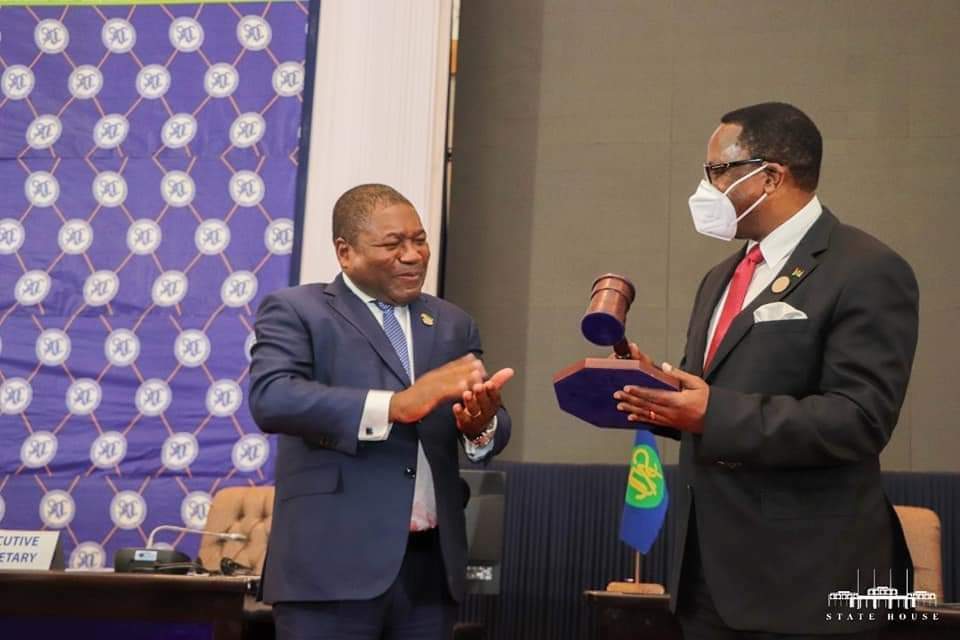
His Excellency President Filipe Jacinto Nyusi of the Republic of Mozambique, who is also the outgoing chairperson of SADC, hands over a badge and a gavel, to His Excellency the President of the Republic of Malawi, Dr. Lazarus McCarthy Chakwera, the incoming chair of SADC, as a symbol of transition.

Brussels, 16/08/2021 – 21:43,
Statements by the HR/VP
The European Union welcomes the announcement of results by the Electoral Commission of Zambia and congratulates President-elect Hakainde Hichilema.
We look forward to working with the new President and his government, as well as with the newly elected members of the National Assembly, to strengthen our long and productive partnership with Zambia.
As a longstanding supporter of Zambia’s democratic process, the European Union commends voters who clearly demonstrated their commitment to democracy, participating in large numbers despite the challenging context of the COVID-19 pandemic. The example set by those candidates who made timely statements of concession is also very welcome.
The EU Election Observation Mission’s preliminary assessment found that, despite a number of shortcomings during the campaign, the election day itself was largely calm and the electoral process was technically well managed. The EU Electoral Observation Mission remains in the country completing its work and finalising recommendations, on which we look forward to working closely with Zambian stakeholders.

Congratulations President-Elect Hakainde Hichilema of the Republic of Zambia.
President-Elect Hakainde Hichilema of the Republic of Zambia and opposition leader was on Monday declared winner of the hotly contested presidential Zambian elections.
The 59-year-old veteran opposition politician beat his long-time rival Lungu following a bruising race held against the backdrop of deteriorating standards of living.
With 155 of 156 constituencies reporting, official results showed Hichilema had garnered 2,810,757 votes against President Edgar Lungu’s tally of 1,814,201.
“I therefore declare the said Hakainde Hichilema to be president-elect of the Republic of Zambia,” electoral commission chairman Justice Esau Chulu said in a televised address.
This is the sixth time Hichilema, who is 59, has run for the top job and the third time he has challenged 64-year-old incumbent Lungu.
In 2016, Hichilema narrowly lost to Lungu by around 100,000 votes. Lungu, who has been in office for six years, faced the electorate amid growing resentment about rising living costs and crackdowns on dissent in the southern African country.
Hichilema enjoyed the backing of 10 opposition parties at Thursday’s vote under the banner of his and the largest opposition United Party for National Development (UPND).