Did you know that Kenya is Africa’s largest producer of Tea and the 3rd in the world.
The beautiful East African nation produces 432,400 tonnes per annum.🇰🇪🇰🇪🇰🇪
#Africa
#kenya
#Tea

Did you know that Kenya is Africa’s largest producer of Tea and the 3rd in the world.
The beautiful East African nation produces 432,400 tonnes per annum.🇰🇪🇰🇪🇰🇪
#Africa
#kenya
#Tea

12 September 2021
My Fellow South Africans,
This evening, I would like to begin by telling you about the experience we have had as a nation in one week in the work we are doing in the health care system in one of our provinces.
Between the dates of 14 and 20 August this year, the Western Cape Department of Health compiled figures on people above the age of 60 who were infected with COVID-19.
Only 30 out of 729 people above the age of 60 who were admitted to hospital for COVID-19 that week had been vaccinated.
This means that 699 of those were not vaccinated.
And of the 292 people above the age of 60 who died from COVID-19 that week, 287 of them were not vaccinated, meaning only 5 were vaccinated.
In other words, 96 per cent of the people over 60 who were hospitalised in the province and more than 98 per cent of the people over 60 who died were not vaccinated.
A similar pattern has emerged in hospitals across the country.
We know that a vaccinated person can still be infected and can still pass on the virus to others.
But what we are seeing is that very few people who are vaccinated against COVID-19 are becoming severely ill with the disease, and very few are ending up in ICU or needing ventilation.
Most importantly, people who are vaccinated against COVID-19 are far less likely to die of the disease.
South Africa is fast becoming a vaccination site.
Over a quarter of all adult South Africans have received at least one vaccine dose and more than 7 million people are fully vaccinated.
In the Eastern Cape, Limpopo and the Western Cape, more than 1 in 5 adults is now fully vaccinated.
The total number of vaccine doses administered in the country now stands at 14.6 million doses.
We are now administering a million doses every 4 to 5 days.
Government has secured sufficient vaccines to vaccinate the entire adult population, and the supply of vaccines is no longer a constraint.
However, we need to do much more.
And we are doing more as we improve our ways of working.
We are increasing the pace of vaccination and ensuring that we reach those that are most vulnerable to serious illness.
While everyone aged 18 years and older is eligible to be vaccinated, we are concentrating our efforts and resources on those over 60 years of age and those with co-morbidities.
To date, over 57 per cent of persons over 60 years of age have been vaccinated.
This is a great achievement, but we need to reach them all.
We are finding that more women than men are coming forward to be vaccinated against COVID-19.
Although the numbers are improving, men are still slow in coming forward to be vaccinated.
We are spreading the message in all languages to ensure that people understand that these vaccines are safe, effective and free.
Many people around the world are being vaccinated, with more than five and a half billion vaccine doses having been administered worldwide thus far.
There is now overwhelming evidence from hundreds of countries that vaccines are safe and provide strong protection.
We have taken steps to make it easier for people to access vaccination wherever they are.
We now have more than 3,000 public and private vaccination sites across the country, and most private sites will vaccinate any member of the public for free whether you have health insurance or not.
I want to stress that the vaccination programme is open to all people in South Africa, whether or not they are South African citizens.
It is important to bear in mind that this is a new virus that the world has never encountered before.
Although nobody can predict how the virus will mutate further, the scientific community has developed innovative ways of tracking the emergence of new variants.
If many people are not vaccinated and remain vulnerable to infection, the chance of new and more dangerous variants emerging is far greater.
That is why vaccines are currently the most potent weapon we have to fight this pandemic.
The sooner we are all vaccinated, the sooner we can open up sports venues to spectators.
The sooner we are all vaccinated the sooner we can welcome tourists to our beautiful country.
If we are all vaccinated, the sooner we can meet with friends and family, the sooner we can return to offices and other places of work.
When we are vaccinated, we will be able to return our economy to full operation and create the jobs that our country needs.
Importantly, when we are vaccinated, we will be able to restore all our other critical health interventions and relieve the strain on our health workers.
It is up to each and every one of us to convince our family, friends and co-workers that vaccination is safe and that it could save their lives.
When I last addressed the nation, we were heading towards the peak of the third wave of infections, which was being driven by the Delta variant of the virus.
The Delta variant is far more transmissible than earlier variants and, because it infects far more people, placed a great strain on our health facilities.
We said then that the third wave would be more severe and last longer than the previous two waves, and that has proven to be correct.
While the third wave is not yet over, we have seen a sustained decline in infections across the country over the last few weeks.
The average number of daily new infections over the last week is 29 per cent lower than the preceding 7 days, and 48 per cent lower than the 7 days before that.
While the third wave peaked in Gauteng far earlier and declined far faster than in other provinces, there is now a marked decline across all provinces.
The two provinces that stand out from the others are the Northern Cape and Free State, where the number of infections as a proportion of the population has remained relatively high for several months.
We are therefore focusing our efforts on these provinces to understand what is driving these infections and what measures we need to take to bring them down.
With the decline of infections across all provinces, the Ministerial Advisory Committee on COVID-19 has recommended an easing of restrictions on the movement of people and gatherings.
These recommendations have been discussed at the National Coronavirus Command Council and with Premiers, mayors and traditional leaders in the President’s Coordinating Council. They have also been discussed with the leaders of political parties represented in Parliament and with faith based organisations.
Based on these discussions, Cabinet has therefore decided that the country should be moved from Adjusted Alert Level 3 and placed on Adjusted Alert Level 2 with effect from tomorrow, Monday, the 13th of September 2021.
This means that:
− The hours of curfew will now start at 11pm and end at 4am.
− Non-essential establishments like restaurants, bars and fitness centres will need to close by 10pm. This is to allow their employees and patrons to travel home before the start of the curfew.
− All gatherings will be limited to a maximum of 250 people indoors and 500 people outdoors.
Where the venue is too small to accommodate these numbers with appropriate social distancing, then no more than 50 per cent of the capacity of the venue may be used.
This includes religious services, political events and social gatherings, as well as restaurants, bars, taverns and similar places.
– The sale of alcohol from retail outlets for off-site consumption will be permitted between 10am and 6pm from Monday to Friday.
– Alcohol sales for on-site consumption will be permitted as per licence conditions up to 10pm.
Alcohol consumption remains prohibited in public spaces.
These measures will be reviewed in two weeks time depending on the state of the pandemic.
We will also be providing further information on an approach to ‘vaccine passports’, which can be used as evidence of vaccination for various purposes and events.
Several important measures remain in place.
It remains mandatory for every person to wear a face mask that always covers their nose and mouth when in public spaces.
It is a criminal offence not to do so, and the managers of shops and restaurants as well as drivers of taxis and buses have a responsibility to ensure that their customers wear masks, and that the appropriate social distancing measures are in place.
Funerals remain restricted to no more than 50 people, and, as before, night vigils, after-funeral gatherings and ‘after-tears’ gatherings are not allowed.
We are able to ease these restrictions thanks to the efforts of all South Africans to adhere to the regulations and basic health measures.
We are particularly thankful to those sectors of society that have had to endure restrictions on their activities for some time.
I speak here of religious communities of all faiths, which have been unable to worship and minister to the needs of their congregants as they normally would.
I speak of the artists, promoters, performers and cultural workers who have had to find other outlets for their work and who have endured great difficulties.
I speak of the owners of restaurants, bars, taverns, hotels, conference venues and others in the hospitality sector that have seen a massive decline in their business.
We recognise these hardships and will continue to find ways, within our means, of supporting these sectors and taking steps to enable their recovery.
The vaccination drive offers an opportunity to open up many of the venues that have remained closed, and we are continuing to work with all partners to find the safest and quickest way to do this.
It needs to be emphasised that the third wave is not yet over, and it is only through our actions – individually and collectively – that we will be able reduce the number of new infections still further.
Once we have done that, our priority must be to prevent a resurgence of infections.
Our most urgent task is to vaccinate our population so that as many people as possible are protected from severe illness or death before any resurgence of infections.
The more people that get vaccinated before December, the less likely it is that we will experience a devastating fourth wave over the holiday period.
That is the greatest reason for all of us who have not yet done so to get to a vaccination site and get protected.
We must take seriously the need to ventilate our homes, workplaces and any places where people gather.
COVID-19 is transmitted through the air, and therefore, we should all be concerned when we find ourselves in enclosed areas without adequate ventilation.
Those responsible for organising indoor meetings should ensure there is a sufficient flow of air through the venue.
In exactly 50 days’ time, South Africans will go to the polls in local government elections.
It is vital that as we undertake this great democratic exercise, we do everything within our means to prevent a resurgence of COVID-19 infections.
At the same time, we need to ensure that the pandemic does not limit the ability of all South Africans to freely exercise their democratic right to elect their local councillors.
This is a matter that I discussed with political party leaders earlier in the week, and there is a firm commitment from all parties that election campaigning should adhere to the state of disaster regulations and all health protocols.
We urge all South Africans to exercise their right to campaign responsibly and take care to safeguard their own health and the health of others.
While we intensify the fight against COVID-19, we cannot ignore the other pandemic that is causing such misery and damage in our society.
We have just finished Women’s Month, where we planned to celebrate the success of women in many fields.
Instead, our country bore witness to several brutal attacks by men against women.
This month alone there have been a number of terrible crimes committed against women and girls.
There was Fort Hare law student, Ms Nosicelo Mtebeni, who was murdered and dismembered in East London; there was the Grade One pupil from Khensani Primary School in Soshanguve, who was raped in the school’s toilets; there was Ms Palesa Maruping, who was found hanging from the ceiling of a house in Khuma Location in the North West; and Ms Pheliswa Sawutana, who was strangled to death in Kosovo informal settlement in Cape Town.
These are just the cases that were covered in the media; there were others that were not.
These gruesome acts of violence cannot go unpunished.
They must strengthen our resolve to end gender-based violence in all its forms.
We must strengthen our efforts across all fronts.
The National Assembly has approved three critical pieces of legislation that will further strengthen the criminal justice system and ensure harsh penalties for those found guilty of gender-based violence.
The courts are increasingly handing down judgements for life imprisonment for statutory rape, robbery and aggravating sentences that involve rape.
We continue to implement all the pillars of the National Strategic Plan against Gender-Based Violence and Femicide.
Ultimately, the success of this work depends on the actions that we all take to end this pandemic of violence against women and children.
I wish to once again make a call to the men of this country to understand that the rights and freedoms guaranteed by our Constitution belong to all people, men and women alike.
We continue to implement measures to assist households, employees and businesses that have been affected by the pandemic and by the public violence that occurred in parts of KwaZulu-Natal and Gauteng in July.
Since we re-opened applications for the special Social Relief of Distress grant in the first week of August, we have received nearly 13 million applications.
Of these, 8.3 million applications have been approved, and payments have started to these recipients.
Just over 3.7 million applications were declined, mainly because applicants have other identified sources of income or are registered for assistance like UIF and NSFAS.
Around 845,000 applications are still in the validation process.
Along with the other measures we have put in place, this grant is providing critical assistance to unemployed South Africans at this most difficult time.
My fellow South Africans,
Since the outbreak of the pandemic, we have looked out for one another, and we have protected one another.
With millions of people already vaccinated and millions of vaccine doses in stock, we are getting ever closer to containing the pandemic.
The day will soon come when we can gather again without restrictions, fill stadiums and music venues, travel and move about freely without the fear of becoming ill or losing our loved ones.
How soon that day arrives depends on one thing: how many of us get vaccinated and how quickly.
We have overcome three waves of infection because of our collective resolve and our adherence to basic health precautions.
Let us make it our mission to vaccinate as many people as we can, so that we can move ahead with the task of rebuilding our economy and our lives.
God bless South Africa and protect her people.
I thank you.

BY ANUAR KALMYKOV 9 SEPTEMBER 2021
Kazakhstan has become a recognized leader of the global movement for the non-proliferation of nuclear weapons and their complete elimination since the years of independence.
This year marks a major historical anniversary related to the non-proliferation of nuclear weapons. The world community celebrated the 30th anniversary of the closure of the Semipalatinsk Test Site on Aug. 29. The Central Asian Nuclear-Weapon-Free Zone (CANWFZ) will celebrate its 15th anniversary Sept. 8.
Kairat Sarzhanov, the director of the department of international security of the Kazakh Ministry of Foreign Affairs of Kazakhstan spoke about the creation of the CANWFZ in the region and its significance in an interview with Kazakhstanskaya Pravda.
History of the Central Asian Nuclear-Weapon-Free Zone
Kazakhstan, Kyrgyzstan, Tajikistan, Turkmenistan and Uzbekistan signed the Treaty on the Central Asian Nuclear-Weapon-Free Zone (CANWFZ) in Semipalatinsk on Sept.8 in 2006.
“We call it the Treaty of Semipalatinsk after the place of its signing. The treaties on the establishment of the other four previously established nuclear-weapon-free zones have similar names – these are the treaties of Tlatelolco, Bangkok, Rarotonga and Pelindaba,” said Sarzhanov.

The parties to the Treaty of Semipalatinsk issued a statement to mark the 15th anniversary of the creation of the CANWFZ this year.
In the statement, the countries of the region reaffirmed their commitment to the historic Treaty on the CANWFZ, and noted the important and decisive role of the Treaty on the Non-Proliferation of Nuclear Weapons (NPT), which is the cornerstone of international efforts to prevent the proliferation of nuclear weapons and ultimately their complete elimination.
The ministers expressed their continued support for the activities of the International Atomic Energy Agency (IAEA) in promoting cooperation in the peaceful use of the atom, the application of safeguards and control over nuclear programs, and noted the entry into force of the new Treaty on the Prohibition of Nuclear Weapons (TPNW).
The parties called on their American partners to complete the ratification process of the Protocol on Negative Security Assurances to the Treaty on the CANWFZ as soon as possible. Moreover, they asked the States listed in Annex 2 of the Comprehensive Nuclear-Test-Ban Treaty (CTBT), on which the entry into force of the Treaty depends, to take measures to sign and ratify it as soon as possible.

Sarzhanov noted that the parties also expressed interest in expanding partnership with existing nuclear-weapon-free zones.
“Given the current international tension and the threat of terrorist organizations acquiring nuclear weapons and their components, these messages are very relevant,” he added.
It is planned to register this joint statement as an official document of the 76th session of the UN General Assembly and distribute it to all its member states.
According to Sarzhanov, the creation of the CANWFZ was made possible primarily due to the initiative of the parties to the treaty themselves, which increased the role and importance of Central Asia in the international arena and, above all, in the non-proliferation of nuclear weapons.
At the same time, the starting point in the process of gaining a nuclear-weapon-free status for the region was the decision of First President of Kazakhstan Nursultan Nazarbayev to close the Semipalatinsk Nuclear Test Site on Aug. 29, 1991. Years later, by a resolution of the UN General Assembly, August 29 was declared the International Day against Nuclear Tests.
“I would like to note the symbolism of the fact that the 15th anniversary of the Semipalatinsk Treaty coincides with the most important anniversary for the global anti-nuclear movement – the 30th anniversary of the closure of the Semipalatinsk Nuclear Test Site,” emphasized Sarzhanov.
Kazakhstan has significantly suffered from nuclear weapons tests. Overall, 468 air, ground, and underground tests were carried out on the territory of our country (456 tests at the Semipalatinsk Test Site). To this day, the lingering effects of these tests remain.
Following the closure of the test site, after gaining independence, Kazakhstan voluntarily renounced its fourth largest nuclear stockpile in the world, inherited from the Soviet military machine. This arsenal included, in particular, over 110 intercontinental ballistic missiles with 1,200 warheads capable of reaching any point on earth.
In cooperation with the United States and Russia, warheads, bombs and nuclear explosive devices were disposed of and removed from the territory of Kazakhstan, and delivery vehicles and launchers were destroyed.
Following the closure of the Semipalatinsk Test Site, all the leading nuclear powers suspended nuclear tests, and some of the test sites were mothballed. This created the conditions for an international legal ban on conducting nuclear tests on a global scale. All this paved the way for the adoption of the CTBT in 1996.
Development of the nuclear-free zone in Central Asia
Sarzhanov noted that the necessary political impetus for joint efforts to create a nuclear-weapon-free zone was initially given during the summit of the heads of Central Asian States in Almaty Feb. 28 in 1997, when the Almaty Declaration was adopted, which called for supporting the idea of creating a nuclear-weapon-free zone.
Following the results of the international conference held in Tashkent in September of the same year, a Group of Experts was established to prepare the main provisions of the relevant treaty. The discussion of its text took place in Ashgabat, Samarkand and Geneva with the active assistance and under the auspices of the United Nations. At various times, the UN General Assembly adopted the relevant resolutions.
“Following many years of work of many diplomats from the countries in the region, the Treaty on the CANWFZ, which entered into force in March 2009, was signed in Semipalatinsk Sept. 8 in 2006, Then Minister of Foreign Affairs of Kazakhstan, now the Head of our State Kassym-Jomart Tokayev signed the Treaty on behalf of Kazakhstan,” he said.
The signing of the Protocol on Negative Assurances to the CANWFZ Treaty by representatives of the five nuclear-weapon states – Great Britain, China, Russia, the United States and France – at the UN headquarters in New York on May 6, 2014, became an important step in the institutionalization of the zone.
“A major step in the legal process of forming the zone was made, and the five nuclear powers have given assurances not to use nuclear weapons and not to threaten to use them against the five parties to the Treaty,” Sarzhanov explained. “Last year, in his speech at the UN General Assembly, President of Kazakhstan Tokayev urged the nuclear powers to ratify the protocols to the treaties on nuclear-weapon-free zones, including Semipalatinsk.”
Since 2010, the states parties to the Treaty have been submitting a resolution of the UN General Assembly Treaty on a Nuclear-Weapon-Free Zone in Central Asia on a biennial basis. In December 2020, during the 75th session of the UN General Assembly, the resolution was reaffirmed by consensus.
“Our countries intend to continue their efforts to strengthen the role and importance of the CANWFZ. In particular, work is underway in this direction to establish cooperation with other nuclear-weapon-free zones. This is stated in a Joint Statement following the Consultative Meeting of the Heads of State of Central Asian states held in Turkmenbashi in August this year,” he said.
On Aug. 28-29, 2019, the Kazakh Ministry of Foreign Affairs, working jointly with the United Nations Office for Disarmament Affairs (UNODA) organized a seminar on the topic Development and Strengthening of Consultation Mechanisms between Existing Nuclear-Weapon-Free Zones in Nur-Sultan. The event was held with the participation of representatives from all existing NWFZs, Mongolia and experts.
Currently, the possibility of signing memorandums of understanding between the NWFZ and the African Commission on Nuclear Energy (AFCONE), as well as between the NWFZ and the Agency for the Prohibition of Nuclear Weapons in Latin America and the Caribbean (OPANAL) is being considered. Its aim is to strengthen the global nuclear non-proliferation program by combining international efforts to ensure peace and security.
Nuclear free zones in other parts of the world
The establishment of nuclear-weapon-free zones is one of the most effective tools in the field of disarmament and non-proliferation of weapons of mass destruction, noted Sarzhanov.
The first regional nuclear-weapon-free zone was established in 1967 in Latin America (the Treaty of Tlatelolco). In 1975, the UN General Assembly defined the general principles for the establishment of nuclear-weapon-free zones, which stipulates, “The support of nuclear powers and all countries of the world will contribute to strengthening the significance of the established zone.” The nuclear-weapon-free zones were established in other regions of the world: in the South Pacific (The Treaty of Rarotonga of 1985), South-East Asia (the Bangkok Treaty of 1995) and Africa (the Pelindaba Treaty of 1996).
In addition, after the adoption of the treaties on Antarctica (1959), on Outer Space (1967) and on the Seabed (1971), these territories were recognized as nuclear-free zones. Moreover, Mongolia unilaterally proclaimed nuclear-weapon-free status.
The nuclear-weapon-free zone in Central Asia has become the fifth nuclear-weapon-free territory in the world. Located in the heart of the Eurasian continent, it has several unique features.
Kazakhstan is a leader in the field of disarmament, non-proliferation and peaceful use of atomic energy
This year marks the 30th anniversary of Kazakhstan’s independence. During this period, the country has formed its own effective model of the path to achieving a world free of nuclear weapons.
“We offer this model to all countries of the world,” said Sarzhanov. “It includes the following basic foundations. First, a voluntary decision to close the Semipalatinsk Nuclear Test Site, renounce the possession of nuclear weapons and prohibit their deployment. We have created and strengthened our newly-independent country, and achieved international respect without nuclear weapons.”
Kazakhstan is a party to all fundamental international treaties in the field of nuclear disarmament, non-proliferation and the peaceful use of atomic energy.
Kazakhstan’s denuclearization model was based on our country’s international cooperation with Russia, the United States and other countries, as well as international organizations. Kazakhstan, with the assistance of the international community, including the UN, the IAEA and donor countries, has been fighting the negative consequences of the nuclear tragedy for almost three decades.
On the eve of the 30th anniversary of the closure of the Semipalatinsk Test Site, the UN General Assembly also adopted an updated resolution on international cooperation during the rehabilitation of the Semipalatinsk region.
“Our country, having renounced its nuclear status, has retained the opportunity to develop civilian nuclear energy and the production of nuclear fuel. By supporting the initiative of the IAEA, Kazakhstan has placed a Bank of Low-Enriched Uranium on its territory,” Sarzhanov said.
In view of the stalemate in the process of nuclear disarmament, 122 UN member states developed and adopted the TPNW, which entered into force in January 2021. Kazakh diplomats also took part in the negotiations on its text. The Treaty establishes an international legal prohibition on nuclear weapons, thereby outlawing them, and is considered a real step by like-minded States to implement their obligations under NPT Article VI.
The article was originally published in Russian in Kazakhstanskaya Pravda newspaper.

10 September 2021
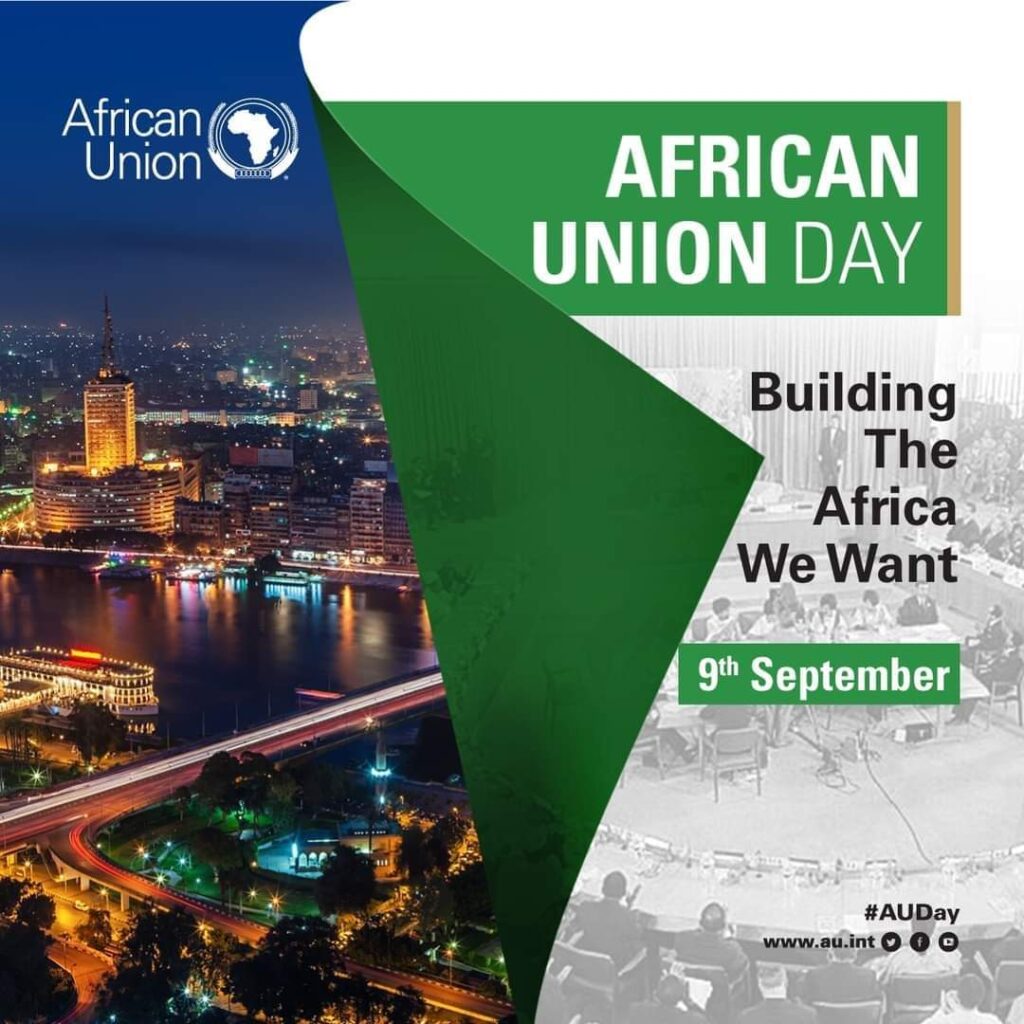
H.E. Moussa Faki Mahamat, on the occasion of the celebration of the African Union Day 9 September 2021
Soon reaching the end of its second decade of existence, the African Union has come of age. It is useful to combine, in a dual retrospective and forward-looking perspective, the assessment of the progress made since 2002 as well as the prospects that are emerging for the future of our Continent.
This day of 9 September will always be full of memories but also of expectations. Remembering not only the first steps of this long-held political project of African unity, but also memory of the achievements made on the road to this unity.
The successes we have achieved can only be mentioned here in the shadow of the challenges, which are many and diverse, that are piling up on our journey. They compel us to permanently reconfigure our action strategy. These challenges keep on the alert our critical capacity to spot unwanted bifurcations in time. Above all, they call upon our creative genius, our ability to innovate and to face the uncertainties of the next day victoriously.
One of these challenges, not to say the main challenge, which emerged in the world, as early as February 2020, took the form of a formidable pandemic, that of COVID-19, appalling by its strong capacity to challenge the classic prevention and treatment Protocols developed by research laboratories, and by its power to kill. This challenge, which became central to the disruption caused to our economies, determined our leaders, with the help of our various partners, to redirect our commitments to the Post-COVID economic recovery.
But before, in the heat of the fight against this pandemic, our leaders took political and technical measures, whose operational effectiveness was confirmed through the joint action of AfricaCDC and units based in the Regional Economic Communities and Member States of the Union. This action continues through the call for the vaccination of our peoples with a view to attaining community vaccine protection.
The general panorama of political life on our Continent has been greatly shaken up by political instabilities resulting from Unconstitutional changes, but above all from repeated and ever more threatening attacks by Jihadist terrorists operating in vast areas of the Continent.
What to do in the face of all these challenges? What are the prospects for our Continent in this environment of difficulties, whose tenacity and permanent nature we all fear? Arm ourselves with resolutions and ingenuity to find ever more appropriate solutions that guarantee our progress towards the execution of the flagship projects contained in our programmatic compass that is Agenda 2063, on the other hand.
It is within the framework of our constant efforts, our will to reject the fatalism of despair, that we must maintain the momentum for the attainment of the major objective set by our Founding Fathers of the OAU, of which the AU is the heir, with a fervour that has never dampened since its inception in 2002.
Happy African Union Day to all.


8 September 2021
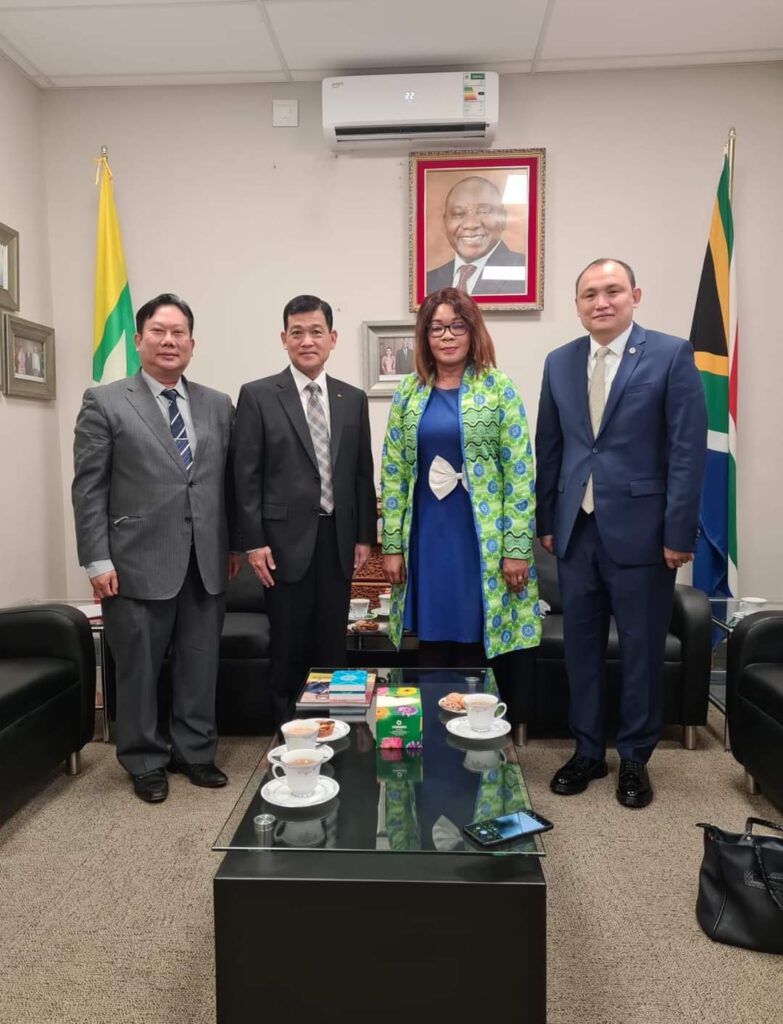
H.E. Mr. Kanat Tumysh, Ambassador of Kazakhstan to South Africa, assumed the office of the Treasurer of the Asia Group.
Kazakh Ambassador took over these responsibilities from the new Dean of the Asia Group, H.E. Mr. Myint Swe, Ambassador of the Republic of the Union of Myanmar to the Republic of South Africa.
Asia Group is a regional diplomatic association of the Heads of Mission of 21 Asia-Pacific countries, accredited to South Africa, as follows:
1. Australia
2. Bangladesh
3. China
4. DPRK
5. India
6. Indonesia
7. Iran
8. Japan
9. Kazakhstan
10. Malaysia
11. Myanmar
12. Nepal
13. New Zealand
14. Pakistan
15. The Philippines
16. Republic of Korea
17. Singapore
18. Sri Lanka
19. Thailand
20. Turkey
21. Viet Nam
The Diplomatic Informer Magazine SA wishes the new Dean of the Asia Group, H.E. Mr. Myint Swe, Ambassador of the Republic of the Union of Myanmar to the Republic of South Africa and H.E. Mr. Kanat Tumysh, Ambassador of Kazakhstan to South Africa, the Treasurer of the Asia Group all the best.


8 September 2021
Hon. Netumbo Nandi-Ndaitwah, Deputy Prime Minister and Minister of International Relations and Cooperation, lead a delegation to Cairo to participate in the International Cooperation Forum (Egypt-ICF) under the high patronage of H.E Abdel Fattah El Sisi, President of the Arab Republic of Egypt, from 8-9 September 2021.
The event, organized by Egypt in collaboration with regional development banks will bring together policy makers, multilateral and bilateral development partners, private sectors, civil society and think tanks with the aim to join efforts in identifying the parameters of sustainable recovery. The Forum underscores the significance of multilateralism with emphasis on country ownership for building back better transition economies and developing countries, with special focus on Africa.
Hon. Netumbo Nandi-Ndaitwah will participate in a panel, titled “Multilateralism and International Cooperation in the Post COVID-19 era”.
The Deputy Prime Minister is accompanied by Hon. Calle Schlettwein, Minister of Agriculture, Water and Land Reform, Hon. Maureen Hinda-Mbuende, Deputy Minister of Finance, as well as the Regional Governors of respectively the //Karas and the Otjozondjupa regions and senior officials. The delegation will visit food system projects and participate in other technical meetings at the margins of the Forum, which will enable them to network, strategically intervene and probe on matters crucial to Namibia’s development.

President Cyril Ramaphosa will lead the South African delegation during his participation in the virtual 13th BRICS Summit scheduled for tomorrow, Thursday, 09 September 2021.
BRICS is a grouping of five major emerging economies – Brazil, Russia, India, China and South Africa – which together represent about 42% of the global population, 23% of GDP, 30% of the world’s territory and 18% of global trade.
The 13th BRICS Summit will be chaired by Prime Minister Narendra Modi of the Republic of India, as Chair of BRICS for 2021, under the theme: “BRICS@15: lntra-BRICS Cooperation for Continuity, Consolidation and Consensus”.
The programme will include opening remarks, which are open to the media, and the traditional closed Leaders’ Session, which will reflect on the future direction of BRICS. Leaders will be focused on strengthening intra-BRICS relations and mutually beneficial cooperation across the BRICS pillars of cooperation, namely, political and security, economic and finance, social, and people-to-people cooperation. The Summit will also receive reports from the BRICS National Security Advisors, the Chair of the BRICS Business Council, the Chair of the BRICS Women’s Business Alliance, and the President of the New Development Bank (NDB).
The Summit will adopt the BRICS 2021 New Delhi Declaration that emphasises the priorities of the Indian Chairship in 2021, namely reform of the multilateral system, counter-terrorism cooperation, the application of digital and technological solutions for achievement of the Sustainable Development Goals and enhancing people-to-people exchanges.
For this year’s Summit, some of the cooperation outcomes include a revised Action Plan for Agricultural Cooperation of BRICS Countries, a Counter-Terrorism Strategy Action Plan, an Action Plan for implementing the Strategy on BRICS Economic Partnership and a revised BRICS Action Plan for Innovation Cooperation.
South Africa’s membership of BRICS enables the country to employ additional and powerful tools in its fight to address its domestic triple challenges of unemployment, poverty and inequality through increased trade, investment, tourism, capacity building, skills and technology transfers, particularly to address its post-pandemic economic recovery.
South Africa has made concerted efforts to place the African Continent and the Global South on the agenda of BRICS and to harmonise policies adopted in regional and international fora with those pursued in BRICS, particularly Africa’s Agenda 2063 and the 2030 Agenda for Sustainable Development.
President Ramaphosa will be supported by Dr Naledi Pandor, Minister of International Relations and Cooperation, Mr Enoch Godongwana, Minister of Finance, Mr Ebrahim Patel, Minister of Trade, Industry and Competition, Dr Joe Phaahla, Minister of Health, and Mr Zizi Kodwa, Deputy Minister in the Presidency responsible for State Security.
Session I of the 13th BRICS Summit is scheduled for 14h00-14h15 (South African Time) and is open to the media and will be broadcast live on the Republic of India’s Ministry of External Affair’s


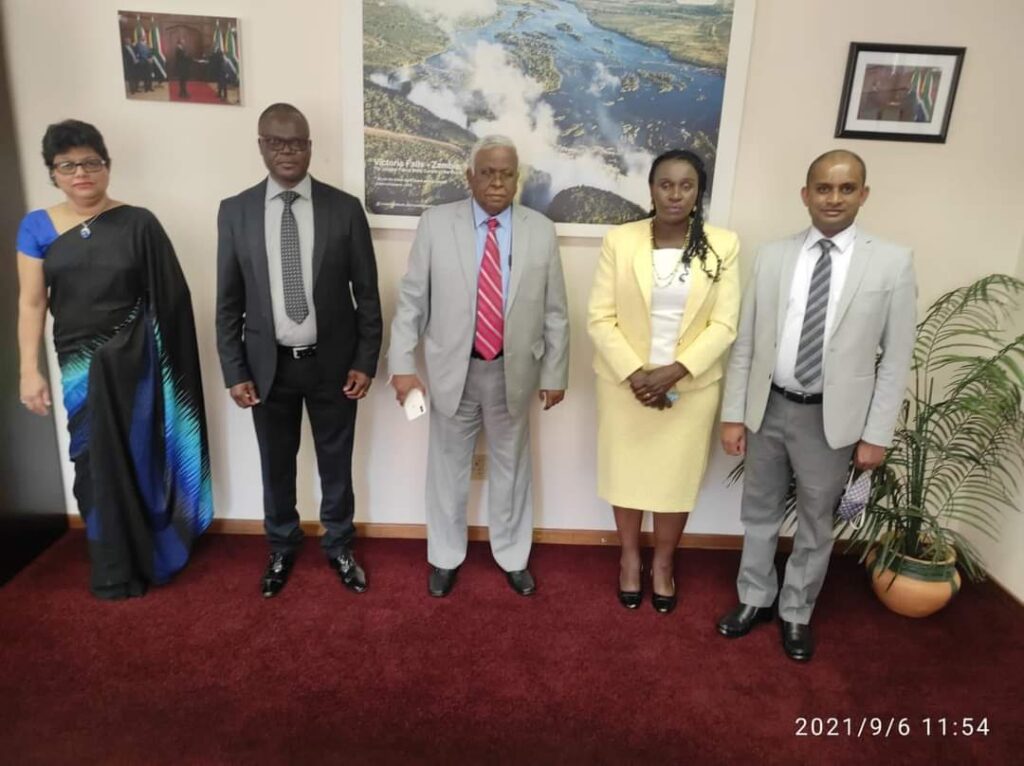
The High Commissioner, S. Amarasekara based in Pretoria, South Africa recently paid a visit to his counterpart of Zambia, intending to find new avenues for Sri Lanka businesses.
Zambia is among the 09 other Countries, concurrently accredited to Sri Lanka High Commission in Pretoria, South Africa. At the meeting with Major General (Rtd) Jackson Miti, the Zambian High Commissioner in Pretoria, High Commissioner Amarasekara reiterated the historical relations between Sri Lanka and Zambia. Further, the High Commissioner expressed his views on the renewal of the bilateral relations with Zambia at the dawn of a new era, under the leadership of newly elected President HE. Hakainde Hichilema.
In response, High Commissioner Miti thanked High Commissioner Amarasekara for the visit and assured his support to enhance the relations between Sri Lanka and Zambia. At the discussion, both parties identified several areas of potential business links such as the provision of raw material for the textile industry (cotton) in Sri Lanka, investment opportunities for Sri Lankan investors at the industrial parks in Zambia, participation in the construction industry, health and education sectors and professional services. Additionally, both parties agreed to initiate an MoU at the earliest to lay a solid foundation for the economic co-corporation between the two countries.
Senior officials of the Sri Lanka High Commission and Zambian High Commission in Pretoria also attended the meeting.
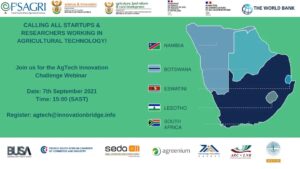
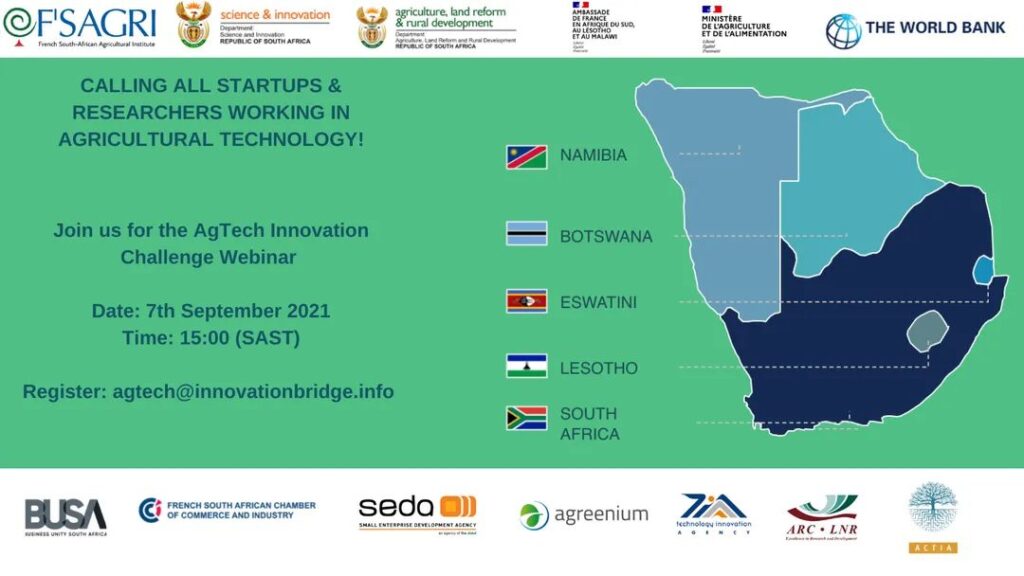
The French-South African Agricultural Institute (F’Sagri), Department of Science and Innovation (DSI), Department of Agriculture, Land Reform and Rural Development (DALRRD), Embassy of France in South Africa, French Ministry for Agriculture & Food & World Bank have launched a call for applications inviting all SMEs, startups and researchers working within the Agriculture Technology (AgTech) landscape who have innovative ideas towards finding state-of-the-art solutions to some of the most urgent issues affecting agriculture and food security in Southern Africa ─ one of the sectors most affected by the Covid-19 pandemic.
Want to know more about how you can apply to pitch your ideas to industry leaders, and stand a chance to win prizes and resources that will accelerate your proposal?
Email agtech@innovationbridge.info for queries.

BY ASSELSATUBALDINA 3 SEPTEMBER 2021
NUR-SULTAN – President Kassym-Jomart Tokayev noted his country’s interest in strengthening business ties with the countries of the Asia-Pacific region during the plenary session of the VI Eastern Economic Forum which is taking place in Vladivostok through Sept. 3 in a virtual format, reports the Akorda press service.
In 2020, Kazakhstan’s trade turnover with the region exceeded $43 billion, and Russia, China, and South Korea accounted for 94 percent of it.
“I believe we have great potential for the development of trade and the expansion of its geography. The role of the Eurasian Economic Union is important, promising to become a key player in the global trade and economic community,” said Tokayev.
In his remarks, Kassym-Jomart Tokayev also noted the large potential of the Far East region. He said that the region is of great importance to Kazakhstan as it connects Eurasia with the dynamically developing Asia-Pacific region.
“Kazakhstan, as Central Asia’s largest economy, plans to strengthen its presence in the region. This approach reflects the essence of our country’s relations with partners in Asia. The backbone of Kazakhstan’s Eurasian strategy has been comprehensive cooperation with the Russian Federation, our strategic partner, and ally,” said Tokayev.
Tokayev proposed strengthening cooperation in transport. He spoke in detail about the potential and opportunities of Kazakhstan in the development of transit hubs, including in the context of the Eurasian Economic Union and the Chinese Belt and Road initiative.
“Kazakhstan’s transit has proven its economic attractiveness and reliability. We will therefore continue to improve the infrastructure. We are beginning construction of the new Dostyk-Moiynty railway line to expand transit from China. The total investment will amount to more than $2 billion,” said Tokayev.
Tokayev also supported the idea of the Eastern Economic Forum to create new forms of cooperation to unlock the potential of the region. He said, “it is in our common interest to find new areas for growth, which will attract investments, create jobs and ensure sustainable growth in the future.”
Kazakhstan and Russia have several successful projects in many areas, including mining, metallurgy, digitization, vaccine development, finance, space, oil and gas, and renewable energy.
“Attracting foreign investment is an unconditional priority of our state’s economic policy. Kazakhstan has attracted more than $365 billion in direct foreign investment. Even during the last crisis year, the net inflow of investments in Kazakhstan grew by 35 percent,” he said.
Tokayev described the transition to low-carbon development as one of the most important topics of the forum. Though there are certain challenges associated with the reduction of investment in the coal industry and the reduction of funding for the oil and gas sector, these measures create risks for the economies and can lead to shortages of resources, rising inflation, and lower living standards.
“I believe that we should be as pragmatic and coordinated as possible on this issue. Each country will have to undergo a complex transformation of its technological and economic structure. And this is certainly a challenge for national economies. But at the regional and even more so, at the global level, only together can we win,” said Tokayev.
At the forum, Tokayev reiterated the need for exploring nuclear energy prospects.
“In my address to the people of Kazakhstan, I set the task to study the possibility of creating a nuclear power industry in Kazakhstan. In doing so, it is important to give due consideration to the urgent needs of the state, of course, including citizens and businesses. I believe that the time has come to substantially consider this issue because Kazakhstan needs a nuclear power plant,” Tokayev said.
Along with Tokayev, Russian President Vladimir Putin and Mongolian President Ukhnaagiin Khuresukh also addressed the virtual meeting.
President of China Xi Jinping, Prime Minister of India Narendra Modi, and Prime Minister of Thailand Prayut Chan-o-cha addressed the participants with prepared video greetings.
Image: President Tokayev addresses the meeting. Photo credit: Akorda press service