May the spirit of Good Friday bring hope, healing, and renewal to all those who are observing Good Friday

Good Friday, the Friday before Easter, the day on which Christians annually observe the commemoration of the Crucifixion of Jesus Christ.

From the early days of Christianity, Good Friday was observed as a day of sorrow, penance, and fasting, a characteristic that finds expression in the German word Karfreitag (“Sorrowful Friday”).

In the same way, Good Friday is “good” because as terrible as that day was, it had to happen for us to receive the joy of Easter.

The wrath of God against sin had to be poured out on Jesus, the perfect sacrificial substitute, for forgiveness and salvation to be poured out to the nations.

Without that awful day of suffering, sorrow, and shed blood at the cross, God could not be both “just and the justifier” of those who trust in Jesus (Romans 3:26).

Paradoxically, the day that seemed to be the greatest triumph of evil was actually the death blow in God’s gloriously good plan to redeem the world from bondage.

The cross is where we see the convergence of great suffering and God’s forgiveness. Psalms 85:10 sings of a day when “righteousness and peace” will “kiss each other.” The cross of Jesus is where that occurred, where God’s demands, his righteousness, coincided with his mercy.
We receive divine forgiveness, mercy, and peace because Jesus willingly took our divine punishment, the result of God’s righteousness against sin. “For the joy set before him” (Hebrews 12:2). Jesus endured the cross on Good Friday, knowing it led to his resurrection, our salvation, and the beginning of God’s reign of righteousness and peace.

Good Friday marked the day when wrath and mercy met at the cross. That’s why Good Friday is so dark and so Good.

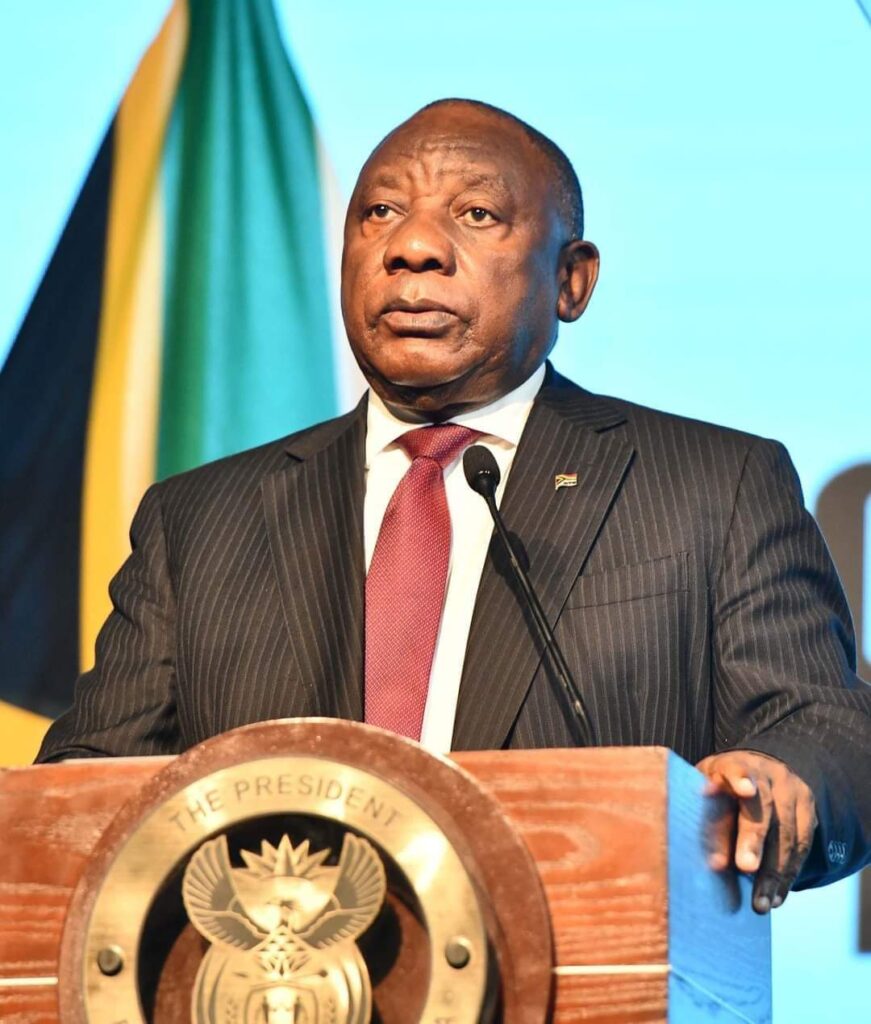
President wishes the nation a peaceful, safe Easter weekend

President Cyril Ramaphosa wishes South Africa’s diverse Christian denominations a prayerful and peaceful Easter and celebration of the Resurrection of Christ.

The President extends his wishes to the Muslim community who are approaching the mid-point of the Holy Month of Ramadan, as well as the Jewish community who are observing Passover.

The President calls on the nation to observe this weekend with care and consideration for families and communities affected by natural disasters and incidents of violent crime.

President Ramaphosa said: “It is good for the soul of our nation that so many communities are engaging in prayerful devotion and family-centred activities at this time.

“May this Easter bring us together as families and as a nation to ease some of the challenges that have affected communities and families in recent weeks, including incidents of violent crime and carnage on our roads.

“As we travel around our beautiful country during this period, let us take good care of one another. Our roads aren’t dangerous; it’s our behaviour that’s dangerous: behaviour such as drinking and driving, overtaking on solid lines and blind rises in the road, not taking breaks when we are tired, or overloading vehicles with people or goods.

“We can all play our part by reporting risky behaviour or criminal activity, by moderating the way we socialise with alcohol, and by avoiding conflict within our families or circles of friends.

“Let us enjoy this time and make it possible for our law enforcement authorities and emergency services personnel to enjoy it too, and let us come back refreshed to continue building a better South Africa.”

The Presidency of the Republic of South Africa

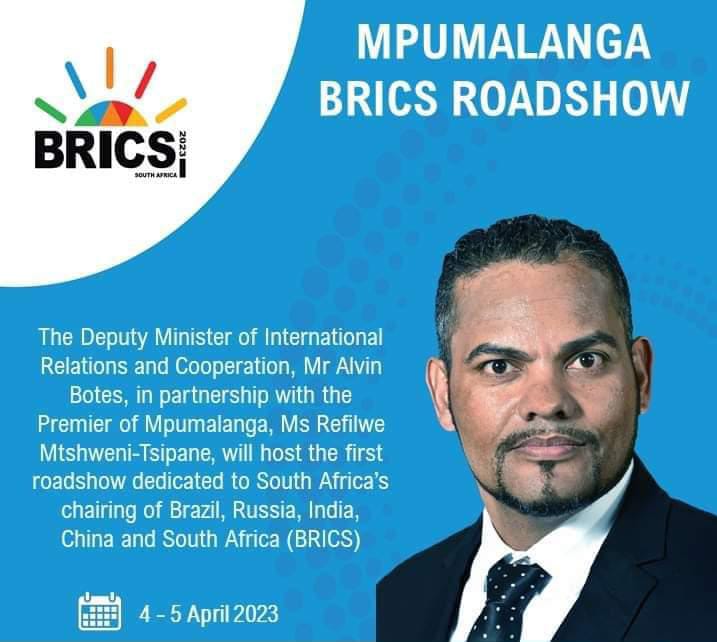
The first BRICS Roadshow

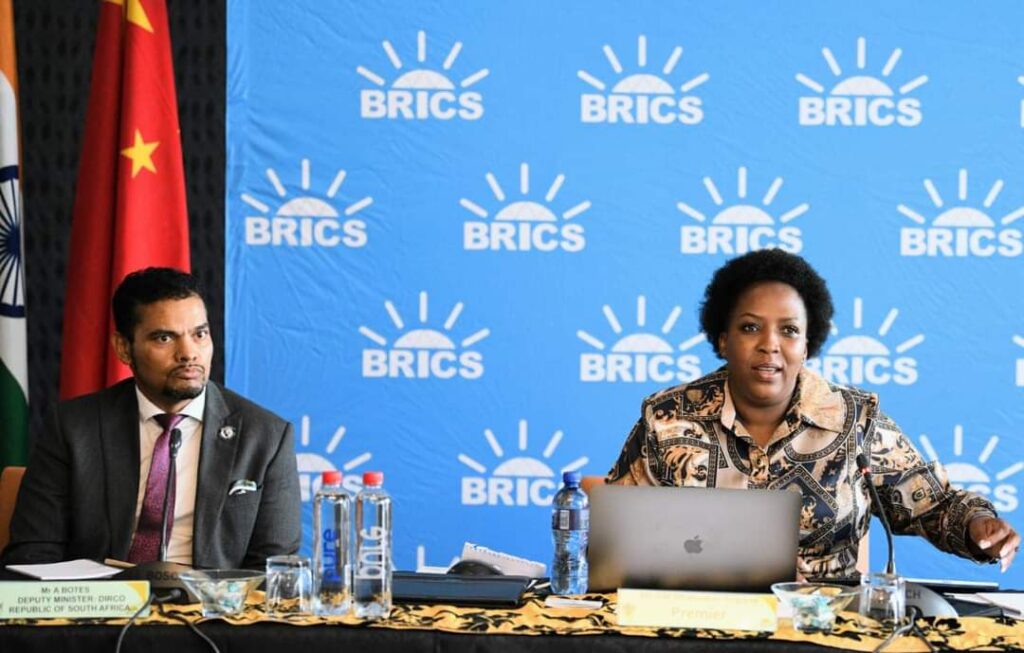
Photo: Deputy Minister Alvin Botes, Department of International Relations and Cooperation and Premier of Mpumalanga, Ms Refilwe Mtshweni-Tsipane

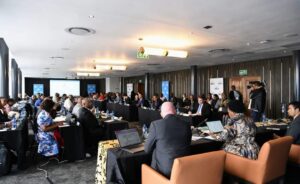
The first #BRICS Roadshow hosted by the Premier of Mpumalanga, Ms Refilwe Mtshweni-Tsipane and Department of International Relations and Cooperation, SA Deputy Minister Alvin Botes has begun.

The meeting held discussions on the investment opportunities available. South Africa will market the province to #BRICS countries, highlighting tourism and infrastructure development, and showcase their strength as a province.

Photo: Brics Countries Representatives

Areas of trade:

* The green economy is a priority, as this province produces a high quantity of coal

* Tourism (Graskop)

* Moloto Development Corridor connecting to the Limpopo Province at Thembisile Hani

* Maputo Corridor, and

* Mpumalanga Fresh Produce Market

The three pillars of cooperation for the #BRICS formation are:

* Political and Security Cooperation

The Political and Security Cooperation Pillar is the backbone of cooperation with BRICS Leaders usually meeting twice a year – once for the BRICS Summit and once on the margins of the G20 Summit.

* Financial and Economic Cooperation

BRICS countries have been the main engines of global economic growth in recent years. The combined economic strength of BRICS can be a catalyst for sustainable global economic recovery and respond to the disruptions to supply chains and challenges of food and energy insecurity.

* Cultural and People-to-People Cooperation

BRICS cooperation provides tangible benefits for South Africa through research and innovation, energy, health, and education cooperation. More than 100 multilateral BRICS research projects have been funded under the BRICS Framework Programme.

#BRICSza

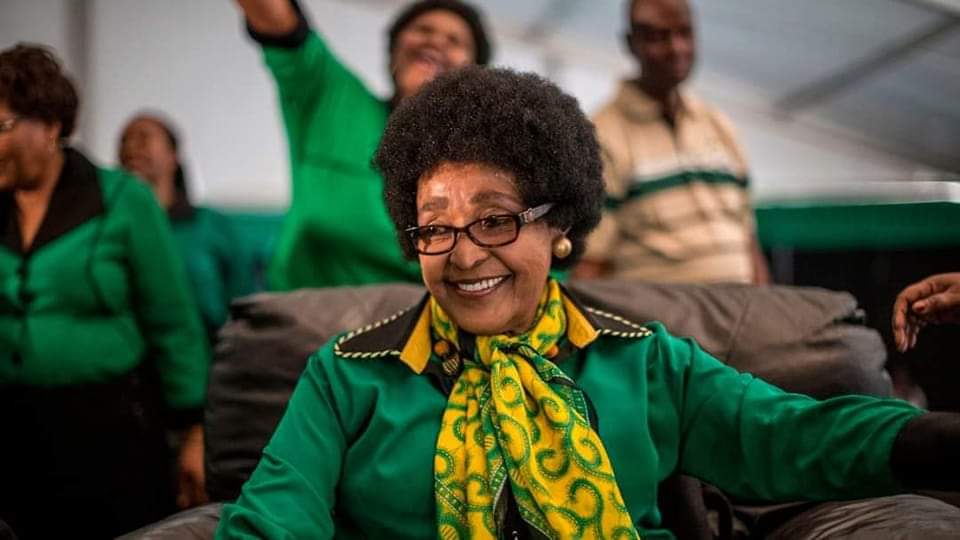
Remembering a Phenomenal Heroine – Mama Winnie Madikizela Mandela

On the 2nd April 2018, the nation stood still at the breaking news that you had left this world never to be seen again. The ache in our hearts still hurts and tears still fall but we take solace in the fact that you are now resting and at peace. And yet we never wanted to let you go…How do we carry on, we can never forget you, defiant, beautiful, and captivating; you who had suffered torture, solitary confinement, constant surveillance, and harassment. You were a freedom fighter, a stalwart and an icon of our struggle, a dedicated revolutionary and a mother of the nation.

More than anything, your presence was dramatic and arresting, how can we forget that you symbolized the spirit of Black South Africa that fought the apartheid regime on the street. A mother to the nation you were a warrior despite the wounds you carried — you fought relentlessly.

Your life’s journey has been one of challenges beyond what any ordinary woman could bear. Today we remember the selflessness of our heroines. These are our role models who deserve a place in history that is worth emulating by present and future generations.

International Diplomatic Spouses Association in South Africa “Women in Diplomacy making a difference”

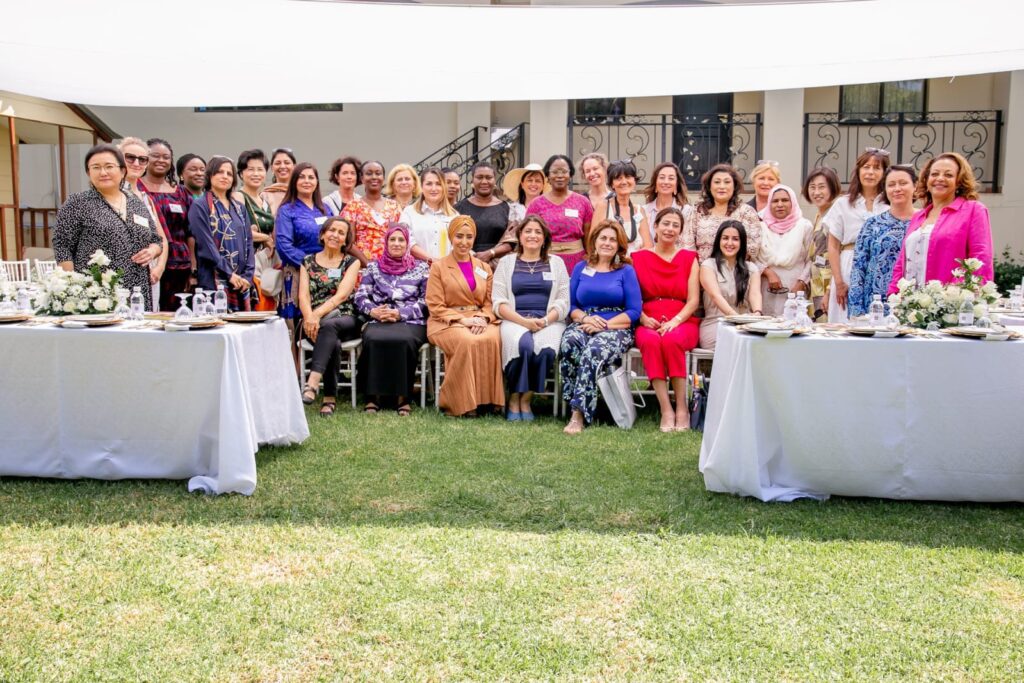
Photo: International Diplomatic Spouses Association South Africa

April 2023

As we continue to celebrate women who are making a difference in our communities, in our online April 2023 digital Monthly News Edition, we present the International Diplomatic Spouses Association to our readers.

The International Diplomatic Spouses Association (IDSA) is a non-profit organization that provides a platform to support diplomatic spouses and partners in South Africa. IDSA provides opportunities for members to network and collaborate, encourages international friendships, and opens doors to the enjoyment of cultural, social, and educational events in South Africa.

On 28 February 2023, the International Diplomatic Spouses Association in South Africa hosted a Coffee Morning Meeting at the residence of the Ambassador of the United Arab Emirates.

We express our sincere gratitude to the host, Mrs Kalthoom Al Hameli, the spouse of the UAE Ambassador, HE Mr Mahash Saeed Al Hameli for graciously hosting the Diplomatic spouses and for the delicious cuisine and warm hospitality.

Photo: The host, Mrs Kalthoom Al Hameli, the spouse of the UAE Ambassador, HE Mr Mahash Saeed Al Hameli

Mrs. Abdel Razek, the spouse of the Ambassador of Egypt in South Africa, also expressed similar gratitude in her remarks as the president of the
International Diplomatic Spouses Association (IDSA).

Photo: Mrs. Abdel Razek, the spouse of the Ambassador of Egypt in South Africa, President of the International Diplomatic Spouses Association (IDSA)

When you think of Women in Diplomacy, also think of “the diplomatic spouse.” One might imagine that their role is about hosting functions and accompanying spouses to official events. But this is not the case; these spouses are making a difference while serving in South Africa as diplomatic spouses. The International Diplomatic Spouses Association is responsible for supporting the diplomatic missions, fostering diplomatic
relations, and adapting their families to a new way of life while trying to forge their own growth paths.

Photo: IDSA Members

The main objectives of the association are:
• To promote cultural and social interchange between members of the diplomatic corps and South Africans
• Extend assistance and support the various charitable organisations in
South Africa; and
• Cultivate harmonious relationships and cooperative spirit among its members.
In welcoming the guests, IDSA’s President noted that every year, the association seeks to raise funds to help vulnerable women and children in South Africa.

The association’s prime concern is to help underprivileged groups, especially women and children. “IDSA continues to alleviate the plight of women and children through various charities, in addition to direct donations of food, toiletries, school stationery, toys, and hours of volunteer work,” she intimated.

The IDSA was established over twenty years ago and has been supporting the South African communities strongly in various social and humanitarian
causes, particularly in education, girls, and women.

This year, IDSA
is also considering supporting the Gift of the Givers Foundation as it
wants to intensify its support to underprivileged schools with books, book shelves, reading skills, and through the provision of much-needed sanitary towels.
International Diplomatic Spouses Morning Coffee event was a success, and more than 45 spouses of heads of missions attended as well as, Poppy M’Poko, the spouse of the former Ambassador of the DRC to South Africa and the
Dean of the Diplomatic Corps HE Bene M’Poko.

New members included, among
others, the spouse of the Ambassador of Kazakhstan, the spouse of the High Commissioner of Pakistan. IDSA welcomed them all very warmly into its fold, and they took the opportunity to join the
organisation officially.

We acknowledge IDSA’s for the important charity efforts it carries out in South Africa, and we thank the esteemed Spouses of the Heads of
Missions for their spirit of “ubuntu” inherent in their charity work an. for their generous donations.

Celebrating International Women’s Day

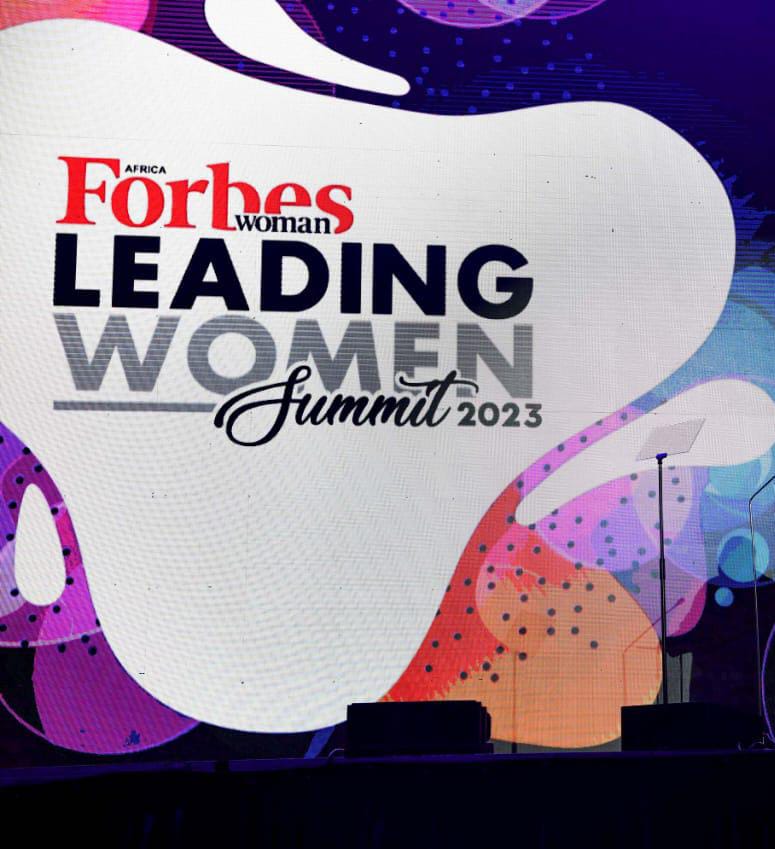
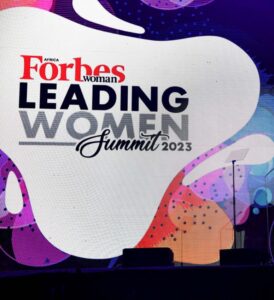
Photo: The 2023 FORBES WOMAN AFRICA Leading Women Summit!

April 2023

Last month, we celebrated International Women’s Day on 8th March 2023. Every year, March 8th is celebrated as International Women’s Day around the globe.

The day can be traced back to the feminist movements in Europe and America in the early 1900s. In 1917, women in Russia chose to protest and strike for “bread and peace,” and this fell on March 8 as per the Gregorian calendar.

This is how the idea of Women’s Day to be celebrated on March 8 came about. 1975 was observed as the International Women’s Year, and since then March 8, it is celebrated as International Women’s Day.

#FORBESWOMANAFRICA summit was held on 8 March at Sun Bet Arena, Time Square in Pretoria. The summit was an incredible opportunity for the audiences to interact with game-changers live, at what has fast become a calendar highlight.
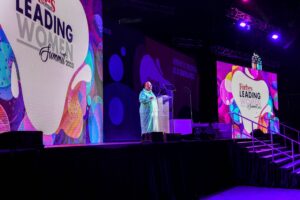
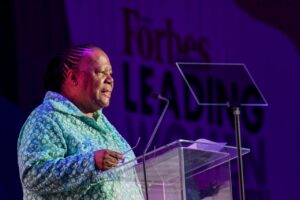
Photo: Dr Naledi Pandor, South Africa’s Minister for International Relations and Cooperation Delivering the opening address at #LWS2023

Minister Naledi Pandor attended the Forbes Africa Leading Women’s Summit as a key note speaker, and in her speech, Minister Pandor extended her gratitude to Forbes Africa for their invitation to deliver the keynote address at the exciting, vibrant, and in-person at the 2023 Forbes Africa Leading Women’s Summit. 

In her remarks, Minister Pandor said it is wonderful to have such a diverse group of dynamic women here today who are committed to seeing change and bring about a more inclusive society. There are many inspiring women who have joined us today. We are honored to have with us South Africa’s recent Grammy-award-winning artists Wouter Kellerman and Nomcebo Zikode, the Tunisian pan-African activist Aya Chebbi, prominent speakers and guests from Nigeria to Kenya, Botswana and Uganda, and some of South Africa’s most renowned business leaders, including Wiphold CEOs Gloria Serobe and Louisa Mojela, Chair of Anglo-American Management Board Nolitha Fakude, and CEO of Awakened Global Nonkululeko Gobodo. 

As you may be aware, today – 8th March – is commemorated as International Women’s Day.
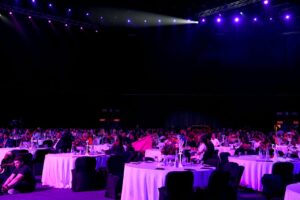
Photo: Guests at the 2023 FORBES WOMAN AFRICA Leading Women Summit

It was on this very day in 1857 where our fellow sisters in New York City decided to engage in a peaceful protest march to highlight unfair working conditions and wages as well as the unequal rights of women in the textile industry. It is because of these and other trailblazers on our continent that we understand the need to promote and protect the rights of women and young girls in Africa and globally.

This Summit is an excellent opportunity to recognise women who are making a difference in their organisations and communities and for us to advocate for African women’s social, economic, political, and cultural rights. None of the UN’s Sustainable Development Goals can be achieved without Goal 5 at the forefront of our efforts. It’s time to empower women and girls everywhere so they can reach their potential. In South Africa, we have reason to celebrate good news in a variety of 8 South African women in the workforce. As is evident in South African statistics, women are increasingly entering the workplace, constituting 43.8% of the labour force and are thus contributing significantly towards the economy. The increase in remuneration and access to jobs because of the decrease in gender discrimination, are contributing factors to the proliferation of women in the labour force.

However, only 32 percent of women occupy a managerial position in South Africa. Today in South Africa, many women are members of a union, and the major union federation COSATU is led by a woman – Zingiswa Losi.
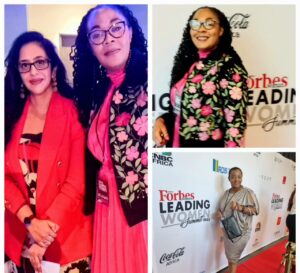
Photo: Renuka Methil Managing Editor, Forbes Africa, Susan Novela, CEO The Diplomatic Informer Magazine SA, and Nickoulah Chesa, Director of Circle Way Training, @forbesafrica

The prestigious FORBES WOMAN AFRICA AWARDS 2023 winners of the Forbes Woman Africa Businesswoman Award Nonkululeko Gobodo, Woman Africa Entertainer Award Nomcebo Zikode,Forbes Woman Africa Technology and Innovation Award Funmi Adewara#FWAA2023

Photo: At the FORBES WOMAN AFRICA AWARDS 2023 #FWAA2023

Women in Decision-Making in South Africa.

Achieving gender equity in positions of decision-making – both in government and in the private sector – is crucial. A new report was released by Statistics South Africa titled Gender Series Volume IX: Women Empowerment, 2017–2022 found that from 2004 to 2019, South Africa saw an increase in the proportion of seats held by women in the National Assembly from 33 percent in 2004 to 46 percent in 2019, which remains the current percentage. Half of the South African cabinet positions are held by women.

Women in Science and Technology Innovation

In science, technology, and innovation in South Africa, women have shown incredible talent and leadership with Professor Glenda Gray serving as the first female president and CEO at Medical Research Council, and Professor Helen Rees is now a leading global researcher on children and HIV.

As a country, we need to acknowledge the pertinent role of science, Technology, Engineering, and Mathematics Education for young girls and women. These fields serve as a foundation for their development and economic empowerment, as well as for creating opportunities for research and development in exciting new fields such as artificial intelligence, and Data Science.

South Africa will be concluding her term as Chair of the United Nation Commission on the Status of Women during the 67th Session, which is taking place from 6 to 17 March this year in New York, under the theme:

“Innovation and technological change, education in the digital age for achieving gender equality and the empowerment of women and girls. ” The theme recognises that there are still many challenges and barriers that exist in closing the digital gender divide. We should commit to doing everything possible to narrow this gender divide so that all women and girls are empowered for the fourth industrial revolution.

Women in the Private Sector

The private sector has also shown progress with women owning major companies and serving as CEOs and Chairs of Boards. Women have also started digital start-ups and other innovative businesses. Across all JSE-listed companies, women make up 15% of executives and 30% of non-executive directors. According to a new PwC report, the percentage of female CEOs in JSE-listed companies improved to eight percent at the end of June last year from five per cent a year earlier.

Women in South African Universities

Our universities have been an important site for the empowerment of young women with over 58 percent of university students being women across all population groups. Currently, women constitute 15% of the 26 Vice- Chancellors in the country and out of 30 deputy Vice-chancellor 12 are women. The University of the Witwatersrand has been engaged in concerted efforts to transform the gender and racial profile of academics at the university. One of the cornerstones of Female Academic Leaders Fellowship (FALF) is the empowerment of black and coloured South African female academic scholars. Other universities are making similar efforts.

Women in the Legal Profession

The role of South African women judges, magistrates, lawyers, prosecutors, and other female judicial officers in the fight for equity, equality, and the fight against GBV is invaluable. During the inaugural International Day of Women Judges on 10 March 2021, the United Nations crisply observed that: “The representation of women in the judiciary is significant for many reasons. In addition to ensuring that the legal system is developed with all of society in mind. It also inspires the next generation of female judges and motivates them to achieve their goals. “

Justice Maya and her members in the South African Chapter of the International Association of Women Judges, given a proper space to influence women’s protection and empowerment measures, have the unmatched potential to positively change the plight of women – not only from the point of equal representation on the bench, but also with regard to the eradication of the scourge of GBV and women access to justice.

Despite these welcome developments toward gender equity, there exists terrible levels of gender inequality and brutal repression of women and girls in South Africa.

Gender based violence and femicide have been described as a pandemic by President Ramaphosa. During the most recent African Union Summit held in Addis Ababa, there was also an initiative aimed at advocating for addressing women’s developmental challenges and Gender-Based Violence on the continent with the partnership of President Ramaphosa, President Akufo Addo, and other African Heads of State who formed a Circle of Champions in this regard.

South Africa has the opportunity to make a real impact on achieving gender equality through its chairing of the Committee on the Status of Women (CSW), which we are chairing on behalf of the Africa Group, as well, as the role it plays in the Global Generation Equality Action Program and working groups.

In terms of national interventions, President Ramaphosa convened the 2nd Women’s Economic Assembly (WECONA) from 5 to 6 October 2022, under the theme “Gender-responsive value chains for a resilient economy.”

A key aspiration of this assembly was to address bottlenecks to women’s economic empowerment and development. Stakeholders from the private sector, government, and civil society gathered to connect and inspire innovation, thought leadership, and action to transform value-chain ecosystems and create clear pathways for women-owned businesses to participate in the mainstream economy across all sectors of industry.

We should remind ourselves that the launch of WECONA in 2021 is informed by one of the pillars of the National Strategic Plan (NSP) on Gender-Based Violence and Femicide (GBVF), which clearly advocates for the economic empowerment of women as a means to address and end GBVF in South Africa.

WECONA is on its way to becoming the largest gathering of private and public sector decision-makers, together with women entrepreneurs around the topic of women’s inclusion. Over the past year, WECONA has engaged industry leaders to set gender transformation targets in each industry.

The government has managed to activate public and private sector supply value chains to make sure that South Africa’s 40 percent preferential procurement from women-owned businesses becomes a reality. Procurement is a critical element with the potential to grow women owned businesses, which unfortunately attracts less than two percent of the global

procurement market according to the United Nations. This gap presents an opportunity to create gender equality through ethical supply chains to enable South Africa to achieve economic outcomes for businesses and communities.

There are many objectives of WECONA, as well as South Africa’s Leadership of the Generation Equality Forum’s Action Coalition on Economic Rights and Justice, that dovetail with today’s conference.

I wish you all successful deliberations and exchange of views as we try to collectively unpack ideas and strategies aimed at women empowerment and leadership during this Forbes Africa Leading Women’s Summit.

After a full day, engaging on critical issues and unlocking new opportunities, the summit culminated in the prestigious Awards, a glittering ceremony where the most accomplished leaders and luminaries were honored for their impactful work.

Africa at The Macallan in association with The Macallan and supported by Coca-Cola, the 2023 Forbes Woman Africa Leading Women Summit focused on topics ranging from wealth to Web 3.0 and mining to fintech, AgriTech, and climate resilience, all of which were debated and discussed by industry leaders.

Renuka Methil, managing editor, Forbes Africa, said that the 8th edition of the Forbes Woman Africa Leading Women Summit is already on track to become one of our most dynamic events as they will welcome an illustrious speaker line-up to the stage. “Considering the socio-economic challenges as a result of the pandemic, there is a lot we’re having to navigate. This summit is the ideal space to gain inspiration and guidance from those who are not only navigating these challenges but forging new paths for our future generation of female leaders,” Methil added.

Thami Banda, brand ambassador at The Macallan (Africa), said that the Macallan is extremely proud to collaborate with Forbes Woman Africa, as both brands respect values that women bring in the business world. “At The Macallan, we have a long history of inspirational women, from the current Lead Whisky Maker, Kirsteen Campbell to the exceptional Janet Harbinson, who – against all odds – steadied The Macallan ship after her husband’s passing. “Guided by her conviction and strong belief in doing the next right thing for everyone she cared about, she unconsciously made history by overseeing the process that produced the most expensive single malt whisky, The Macallan 1926. It is, therefore, only right that we pay tribute to African women who embody such spirit and courage,” said Banda Patricia Obozuwa, Coca-Cola Africa Vice President for Public Affairs, Communications and Sustainability, said Coca-Cola Africa is excited to support summit in the International Women’s Day and celebrating the achievements and resilience of women across Africa and the world.

Obuzwa said; “Empowering women to thrive is a global commitment by The Coca-Cola Company. We believe women are critical to the success of our business. Therefore, we aspire to be 50% led by women globally by 2030.”

“Women are integral to the continued success of the communities we proudly serve. Women and youth empowerment is one of the focus areas under Coca-Cola Africa’s sustainability platform, JAMII, where we commit to unlock economic opportunities for women across the continent.”

She continued to say that the impact of Coca-Cola is evident through initiatives such as the 5by20 Program, a global initiative to economically enable five million women entrepreneurs by 2020, which surpassed its target by enabling six million women – including over two million in Africa.

When women are empowered, their families and children are empowered. “Their communities are empowered. Their country is empowered, and our continent can flourish,” said Obuzwa.

550 Foreign Students to Receive Scholarships to Study in Kazakhstan

31 March 2023
BY Staff Report in International

ASTANA – Kazakhstan will provide 550 scholarships to foreign nationals, including 490 for bachelor’s degrees, 50 for master’s degrees, and ten for PhD, reported the press service of the Kazakh Ministry of Education and Science on March 31.

Applications are open from March 30 through June 30. The ministry’s National Center for the Development of Higher Education is in charge of the application process.

The applicants can apply online via the center’s official website. Scholarship recipients will be chosen based on their provided documents, online test results to determine adaptive potential, and online interviews.

The list of scholarship recipients will be made public until Aug. 28.

Astana Times

Deputy Minister Botes to host first BRICS roadshow in Mpumalanga

31 March 2023

The Deputy Minister of International Relations and Cooperation, Mr Alvin Botes, in partnership with the Premier of Mpumalanga, Ms Refilwe Mtshweni-Tsipane, will host the first roadshow dedicated to South Africa’s chairing of Brazil, Russia, India, China and South Africa (BRICS) on Tuesday, 4 April 2023.

The purpose of the roadshows is to raise public awareness around the importance of South Africa’s role as Chair of BRICS for 2023 and the benefits thereof.

It is expected that more roadshows will be held throughout the country for the duration of South Africa’s chairing of BRICS.

The Mpumalanga roadshow also seeks to promote tourism as one of the features that the province is known for, such as the Kruger National Park, God’s Window, Three Rondavels, Sudwala Caves and the World Heritage Site, Makhonjwa Mountains.
It will further promote trade and investment opportunities in the infrastructure development, agriculture, mining, and energy sectors that Mpumalanga offers, for economic development and sustainable job creation initiatives.

South Africa is the Chair of BRICS for the year 2023 under the theme: “BRICS and Africa: Partnership for Mutually Accelerated Growth, Sustainable Development and Inclusive Multilateralism”. The theme emphasises the continued value of BRICS as a partnership of leading emerging markets and developing countries providing leadership and momentum towards global growth, sustainable development, and inclusion of the global South in the world system.

The theme informs South Africa’s priorities for 2023, namely developing a partnership towards an equitable Just Transition; transforming education and skills development for the future; unlocking opportunities through the African Continental Free Trade Agreement; strengthening post-pandemic socio-economic recovery and the attainment of the 2030 Agenda on Sustainable Development and strengthening multilateralism, including working towards real reform of global governance institutions and strengthening the meaningful participation of women in peace processes.

South Africa previously chaired the organisation in 2013 and 2018. South Africa joined the important bloc of emerging economies in December 2010, in line with the country’s foreign policy to strengthen South-South relations.

South Africa’s membership of BRICS has contributed to further expanding BRICS’ geographic reach, representatively, and inclusiveness and the membership of BRICS considers its systemic importance as an economic power, as the only African G20 member, its driving role as champion for integration and development initiatives in Africa, as well as its diversified economy and well-developed infrastructure. President Cyril Ramaphosa will host the 15th BRICS Summit in August 2023.”

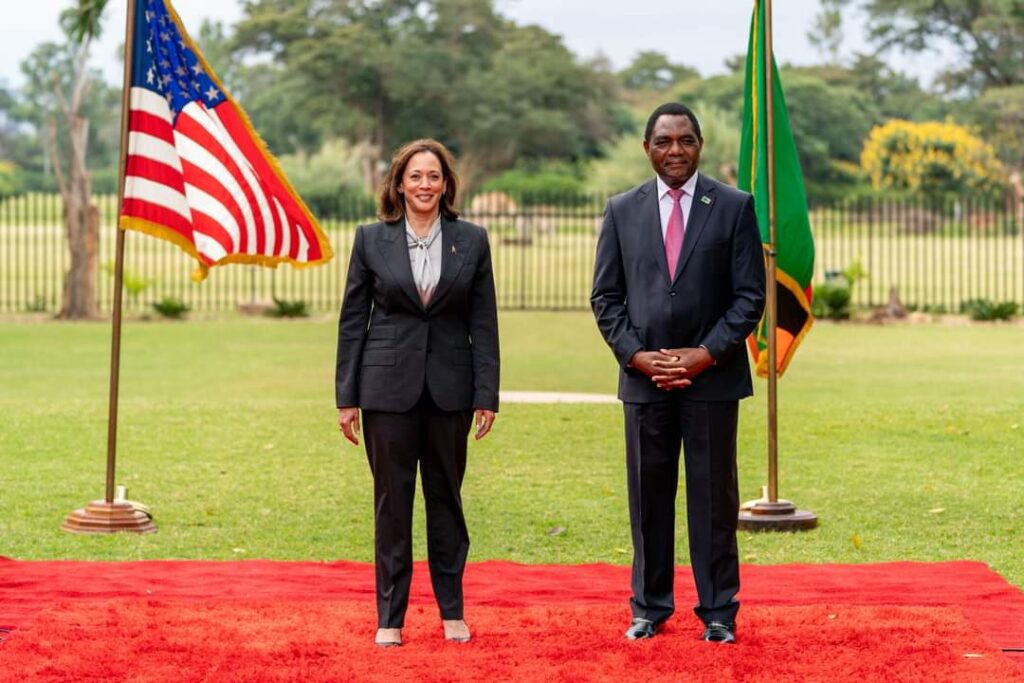
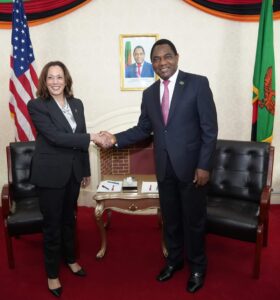
Mr. Hakainde Hichilema, President of the Republic of Zambia, hosts Ms. Kamala Harris, Vice President of the United States of America

Photo: Mr. Hakainde Hichilema, President of the Republic of Zambia, and Ms. Kamala Harris, Vice President of the United States of America
Photo credit: Presidency

31 March 2023

Mr. Hakainde Hichilema, President of the Republic of Zambia, hosted Ms. Kamala Harris, the Vice President of the United States of America at State House in Lusaka.

Ms. Kamala Harris, Vice President of the United States of America, embarked on an official visit to Zambia from 31st March to 1st April 2023, accompanied by the Second Gentleman, Mr. Douglas Emhoff.

Vice President Harris held a bilateral meeting with Mr. Hakainde Hichilema, President of the Republic of Zambia. Discussions focused on important matters of mutual interest at bilateral, regional, and global levels, including democracy, food security, and sustainable economic growth.

Photo: Vice President Harris held a bilateral meeting with Mr. Hakainde Hichilema, President of the Republic of Zambia.

The Vice President’s visit serves to advance US efforts to expand assistance to Zambia in accessing the digital economy, supporting climate change adaptation and resilience, strengthening business ties and investment, including through innovation, entrepreneurship, and economic empowerment of women.

President Hichilema has been driving the country’s bold and ambitious economic development agenda, and this visit solidifies Zambia’s partnership with the United States, while exploring new areas of cooperation in identified sectors that will accrue tangible benefits to the people of Zambia.

The increased high-level visits by foreign leaders and dignitaries to Zambia serves as a testament to the renewed confidence the international community has in the country’s current leadership. These visits are crucial and demonstrate Zambia’s standing as a preferred investment destination.

The country is open to collaborative partnerships, and the international community has shown willingness to work with the government of Zambia in various areas such as health, education, agriculture, mining, water and sanitation, energy, and tourism.

In her remarks, Vice President Harris said she had a great meeting with President Hichilema of Zambia. “The United States and Zambia have a shared history that underpins our strong partnership.” Democracy and good governance around the world is a priority for the United States.

Vice President Kamala Harris thanked President Hichilema for co-hosting the Summit for Democracy and embarking on an ambitious democratic reform agenda in Zambia.

The Diplomatic Informer Magazine SA

#USAZambiaRelations
#USAAfricaRelations
#KamalaHarris
#KamalaHarrisvisittozambia
#ForeignAffairsZambia
#Zambia🇿🇲
#onezambiaonenation

President Tokayev Proposes Key Changes to Economic Policy to Boost Growth and Diversify Industries

Photo credit: Akorda.

31 March 2023
BY ASSEL SATUBALDINA

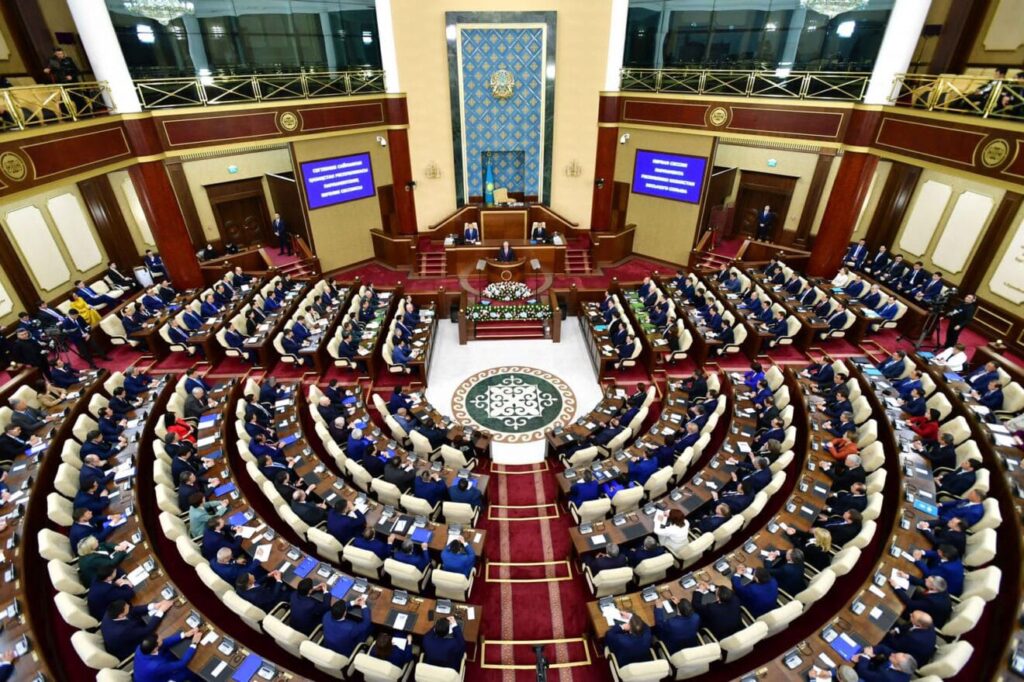
ASTANA – Kazakhstan is set to change the focus of its economic policy, said President Kassym-Jomart Tokayev, in his address to the first session of the Kazakh Parliament on March 29, reported the Akorda press service.

Tokayev outlined the key steps to tackle the challenges facing the nation following the March 19 election to the Mazhilis, the lower chamber of the Parliament, and maslikhats, local representative bodies.

The creation of an open and self-sufficient market economy remains a top priority.

Encouraging business activity

“Small and medium-sized enterprises should become the driving force of the economy and the labor market. Much has been said about this, but there are still no significant shifts in this direction. Therefore, we need to change the focus in our economic policy,” said Tokayev in his one-hour-long televised address, widely anticipated by Kazakh citizens.

There are nearly 1.9 million small and medium-sized businesses operating in Kazakhstan, accounting for 33.5 percent of the nation’s gross domestic product, up from 24.9 percent in 2015.

Tokayev proposed launching a full range of measures to support small and medium-sized businesses that would enable them to “feel a significant role in the development of the country.”

“We need a new wave of entrepreneurs who can take responsibility for the economic progress of Kazakhstan. Businesspeople who can build a successful business without access to administrative resources, at the expense of entrepreneurial talent and diligence, should become its core. Such people exist in every region. It is important to give them the opportunity to develop their businesses within the country and genuinely help them,” said the President.

Kazakhstan’s existing economic model, he noted, heavily relies on investments, primarily in its abundant resource sector.

“In general, the government faces the task of attracting significant investment in key sectors of the economy, including foreign investment. They should give a tangible boost to the development of medium-sized businesses. There can be no red tape in this matter,” said Tokayev.

Fair and open competition

Protecting private property and ensuring a competitive market is a key priority moving forward, said the President. He urged the officials to continue the reforms of the judicial and law enforcement systems.

A comprehensive program to support small and medium businesses will help enterprises boost their competitiveness. At the same time, the decisions on financial support should be transparent.

“It is crucial that the selection of projects that will receive state support should be transparent. It is necessary to take into account the real socio-economic effectiveness of a project. In this regard, I instruct the government and MPs to develop new ways of developing medium-sized businesses because they play a key role in the development of the country’s economy,” Tokayev said.

Economic diversification and improvement of production potential

Diversifying Kazakhstan’s economy has long been on top of the national agenda, whose windfall oil and gas resources have supported substantial economic growth over the years.

Tokayev emphasized that a competitive economy is a diversified economy.

“The pandemic and the current geopolitical crisis have clearly shown that the commodity market is unstable. The days when people depended only on wealth and did not care about it are gone. The added value of underground resources must be maximized. It is very important to turn it into a quality and sought-after product. The previous industrialization failed to properly develop the non-oil sector. We still buy food and consumer goods from abroad. This is one of the main causes of rising inflation,” said Tokayev.

He also emphasized the importance of making full use of the country’s production potential.

“Kazakhstan’s economy is still dependent on the extraction of minerals. In other words, its structure is based on raw materials, while the country’s progressive development requires economic diversification. Undoubtedly, we also have our competitive advantages in the global market, which must be effectively used to solve current and strategic tasks,” he said.

Tokayev highlighted some of the acute problems accumulated in the subsoil use sector, including insufficient exploration works, a declining rate of replenishment of the mineral resource base, and the depletion of developed subsoil.

“It is necessary to use mineral resources efficiently and rationally. This requires the improvement of legislation and simplification of necessary procedures. Investments in the exploration and development of mineral deposits are of particular importance,” he added.

Kazakhstan’s economy has always been open to foreign trade and investment, said Tokayev. Fulfilling domestic needs, however, should be a top priority.

“First of all, we must develop the processing industry, oriented to the domestic market. The processing industry develops rapidly only through innovation and high technology. This is obvious. That is why Kazakhstan’s economy must be based on scientific achievements. It is not enough to conduct research and obtain a patent. It is necessary to use scientific discoveries in production. A new law should be adopted for the comprehensive development of science. I think the MPs will support this bill,” said Tokayev.

Demonopolization of the economy

Since the beginning of last year, Kazakhstan has been taking steps to demonopolize the economy. According to Tokayev, it is not an easy process, “requiring willpower and professionalism on the part of the government.”

“We need to introduce clear and effective instruments to ensure control over transfer pricing, international taxation, allocation of subsidies, and state resources. One of the first decrees I signed after my re-election as President was on measures to return illegally withdrawn assets to the state. The government and the Prosecutor General’s Office have already prepared a separate bill,” he said.

The bill, which the Parliament is expected to pass soon, envisions the use of funds solely for the development of the country.

“This also applies to budgetary expenditures. However, budget planning and execution leave much to be desired,” he added.

The draft of the new Budget Code will also be submitted to the Parliament in 2023, designed to address rising expenditures for servicing the national debt, reduce the volume of transfers from the National Fund and enhance the efficiency of the use of budget funds.

Upgrading the energy grid and infrastructure

The recent accidents at the country’s major energy facilities have revealed significant problems in the energy sector, particularly outdated infrastructure.

“You all know how this winter went. In the midst of winter, cities and towns in several regions were left without heat. The dilapidated energy infrastructure is practically non-functional. On my instruction, a new model for the development of the electricity market is being prepared. It is supposed to attract additional investment in this sphere. This document will also ensure maximum transparency in this area,” he said.

Three draft laws addressing problems in this sector will be considered by members of the Mazhilis.

Speaking about infrastructure development, Tokayev suggested adopting a National Infrastructure Plan until 2029. “We need to build our country’s infrastructure capacity,” said Tokayev, referring to numerous concerns in the housing sector and city development.

Food security

Though Kazakhstan possesses enormous agricultural potential, it still faces challenges in ensuring food security. Kazakhstan is known for its vast agricultural lands and has great potential for increasing food production. The country produces a variety of crops, including wheat, barley, corn, potatoes, and vegetables, among others.

President Tokayev, however, questioned the performance of the agricultural sector in ensuring its citizens have access to safe and nutritious food.

“Frankly speaking, the agricultural industry does not fully fulfill this task. The policy in this area is inconsistent. Funds allocated by the state are spent ineffectively. There are many intermediaries between the producer and the consumer,” said Tokayev.

The President is adamant that programs such as Auyl – El Besigi (the village is the cradle of the country) and Auyl Amanaty (heritage of the village) will benefit the development of the agro-industrial sector.

As part of the Auyl – El Besigi project, 3,700 social and engineering infrastructure facilities have been modernized in more than 1,000 villages. Kazakhstan has allocated 143 billion tenge ($315 million) this year for more than 1,500 projects.

The Auyl Amanaty project envisions the provision of microloans to rural residents for five to seven years at an annual interest rate of 2.5 percent. The project aims to develop rural entrepreneurship through agricultural cooperation.

“It is necessary to take systematic measures to preserve soil fertility and improve it. Strengthening control is important for the effective use of agricultural land. Particular attention should be paid to increasing the volume of output and its diversification. Reforms in agriculture require quality laws,” Tokayev said.

The Astana Times