Zayed Sustainability Prize adds a New Award for Climate Action ahead of Cop28

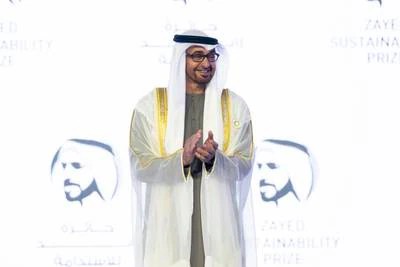
President Sheikh Mohamed bin Zayed at the 2023 Zayed Sustainability Prize ceremony in January. Presidential Court
Photo credit: The National author image

31 March 2023

The Zayed Sustainability Prize has launched a special category labeled Climate Action. Entries are open until May 23, 2023

The new category is aimed at recognising and promoting solutions that address climate change and protect the planet’s natural resources.

Non-profit organisations and small and medium-sized enterprises can apply until May 23, 2023. The winners will be announced at an awards ceremony in Abu Dhabi.

The launch of the Climate Action category coincides with the UAE’s Year of Sustainability, a national initiative to accelerate sustainable development across the country in line with the UAE’s national strategy.

It also comes ahead of the 28th Conference of the Parties to the UN Framework Convention on Climate Change (Cop28), which will be hosted in the UAE later this year.

Dr Sultan Al Jaber, UAE Minister of Industry and Advanced Technology, Director General of the Zayed Sustainability Prize, and Cop28 President-Designate said: “As we mark the UAE’s Year of Sustainability and prepare to host Cop28, it is more important than ever to recognise and support innovative solutions that protect the planet and people from the impacts of climate change.

“The UAE is committed to delivering a Cop of Action – a solutions-focused Cop that promotes inclusive sustainable development and accelerates the adoption of policies that will deliver across mitigation, adaptation, climate finance and loss and damage.

“The new Climate Action category of the Zayed Sustainability Prize reinforces this commitment by supporting the deployment of solutions the world needs today to keep the Paris Agreement alive and limit warming below 1.5ºC.

“In this critical decade of action, the Climate Action category is a significant addition to the prize’s mandate, and we look forward to receiving submissions from around the world. We are proud to encourage and reward innovative solutions needed to turn climate pledges into concrete action and drive tangible, inclusive, and lasting progress for our planet and communities.”

The prize recognises organisations and high schools that are delivering effective and inspiring innovations across the following categories: Health, Food, Energy, Water, Global High Schools, Climate Action.

The new Climate Action category will further broaden the prize’s reach and effect by rewarding solutions that protect the environment while also addressing the urgent challenge of climate change.

The prize awards $600,000 to each winner in the Health, Food, Energy, Water, and Climate Action categories. The Global High Schools category is split into six world regions, with each school able to claim up to $100,000 to start or further expand their project.

Source: The National

Palestine celebrates the 47th Anniversary of Land Day

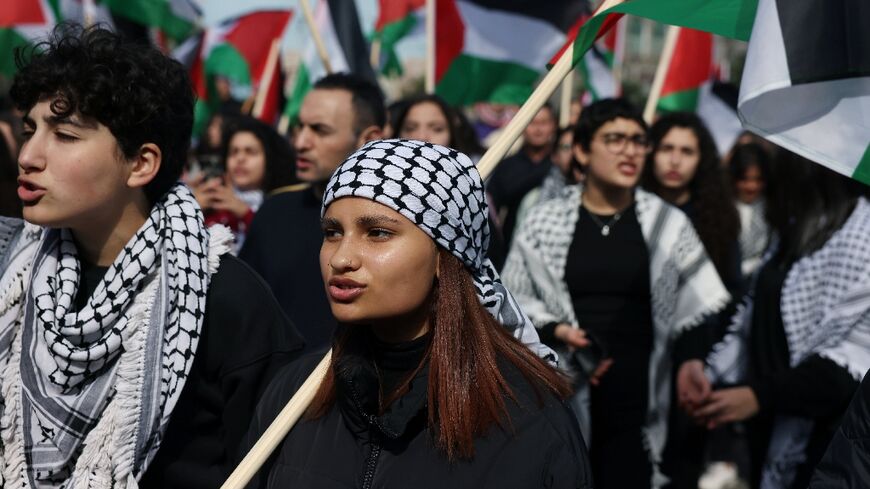
Photo: Protesters wave Palestinian flags during a demonstration marking the annual Land Day in the northern Arab-Israeli town of Sakhnin on March 30, 2023. (Ahmad Gharabli AFP)

31 March 2023
By The Diplomatic Informer Magazine SA
Publisher’s Pick

On 30th March 2023, Palestinians marked the 47th anniversary of the “Land Day” amid calls to end the Israeli occupation of the Palestinian territories that has been going on since 1967.

They also called for the establishment of an independent Palestinian state on the territories seized by Israel in 1967, with East Jerusalem as its capital, reports a news agency.

Land Day (Yom Al-Ard)- a day that emphasizes Palestinian resistance to Israeli colonization and the attachment to their land!🇵🇸

On this day in 1976, Israeli authorities declared the confiscation of thousands of acres of land belonging to Palestinian citizens.
This announcement sparked a wave of peaceful protests, which were met with heavy brutality by the Israeli army, resulting in the death of six unarmed Palestinian protesters, the injury of hundreds, and the arrest of thousands.

Photo: Palestinian women wave flags during a rally marking the 47th anniversary of Land Day, along the border fence with Israel, east of Gaza City, Thursday, March 30, 2023. (AP/Adel Hana)

Since then, Land Day has become an annual day of remembrance and resistance for Palestinians worldwide, a day to commemorate the struggle for land rights and the ongoing occupation and colonization of Palestine.
The day serves as a reminder of the importance of land to the Palestinian people and their identity.

From the olive trees that have stood the test of time to the homes that have been passed down from generation to other, the land is a symbol of resilience and resistance.

Evert year, on this day, Palestinians and supporters around the world come together to demand an end to the illegal occupation and settlement of Palestinian land and the return of Palestinian refugees to their homes and lands.

Despite decades of oppression, the resilience and determination of the Palestinians continue, and so does their attachment to their land, a bond that can never be broken.

#palestine #landday #freepalestine #palestine🇵🇸 #palestinewillbefree #landdaypalestine🇵🇸

The King Salman Humanitarian Aid and Relief Center (KSrelief) inaugurates the 2023 Ramadan Food Basket project in South Africa

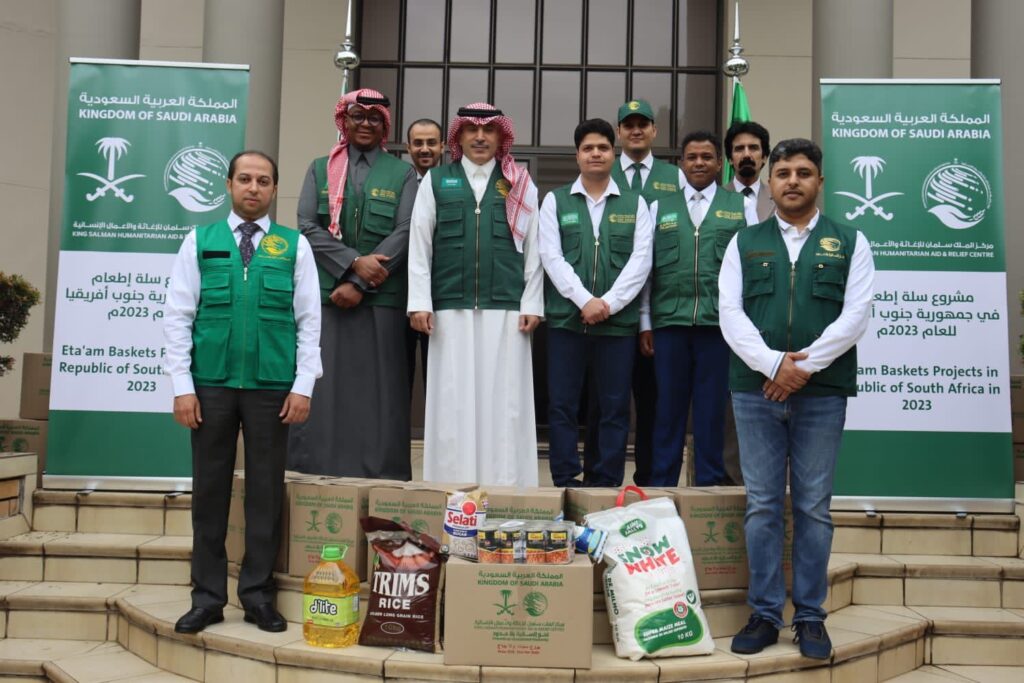
Photo: The King Salman Humanitarian Aid and Relief Center (KSrelief) inaugurates the 2023 Ramadan Food Basket project in South Africain the presence of the Saudi Ambassador to South Africa, His Excellency Sultan bin Abdullah Al-Anqari, the representative of the Scholars Association in South Africa, and a team from the KSrelief.

31 March 2023

On the 30th March 2023, the King Salman Humanitarian Aid and Relief Center (KSrelief) inaugurated the Ramadan Food Basket project in South Africa for the year 2023, in the presence of the Saudi Ambassador to South Africa, His Excellency Sultan bin Abdullah Al-Anqari, the representative of the Scholars Association in South Africa, and a team from the KSrelief.

Photo: Each basket weighs 34 kilograms, containing basic foodstuffs

The project aims to distribute 5,924 food baskets to the most vulnerable and needy. Each basket weighs 34 kilograms, containing basic foodstuffs, benefiting 35,544 people in several cities, including Johannesburg, Rustenburg, Kimberley, Hectorspruit, Middleburg, Bela-Bela, and Limpompo. Ramadan food baskets help to meet the nutritional needs of the fasting month, which is known for its abundance of needs and high consumption rates.

Photo: The project aims to distribute 5,924 food baskets to the most vulnerable and the needy.

The aid comes within the relief and humanitarian efforts undertaken by the Kingdom through its humanitarian arm, KSrelief, to provide food security in many countries around the world.

Photo: The foodstuffs will benefit people in several cities, including Johannesburg, Rustenburg, Kimberley, Hectorspruit, Middleburg, Bela-Bela, and Limpompo

The good impact left by these projects in the hearts of the beneficiaries during this holy month, shows KSrelief continuous support for various humanitarian projects, which have succeeded in an increasingly effort in meeting the needs of the needy around the world.

Photo: The aid comes within the relief and humanitarian efforts undertaken by the Kingdom through its humanitarian arm, KSrelief, to provide food security in many countries around the world.

The Diplomatic Informer Magazine SA

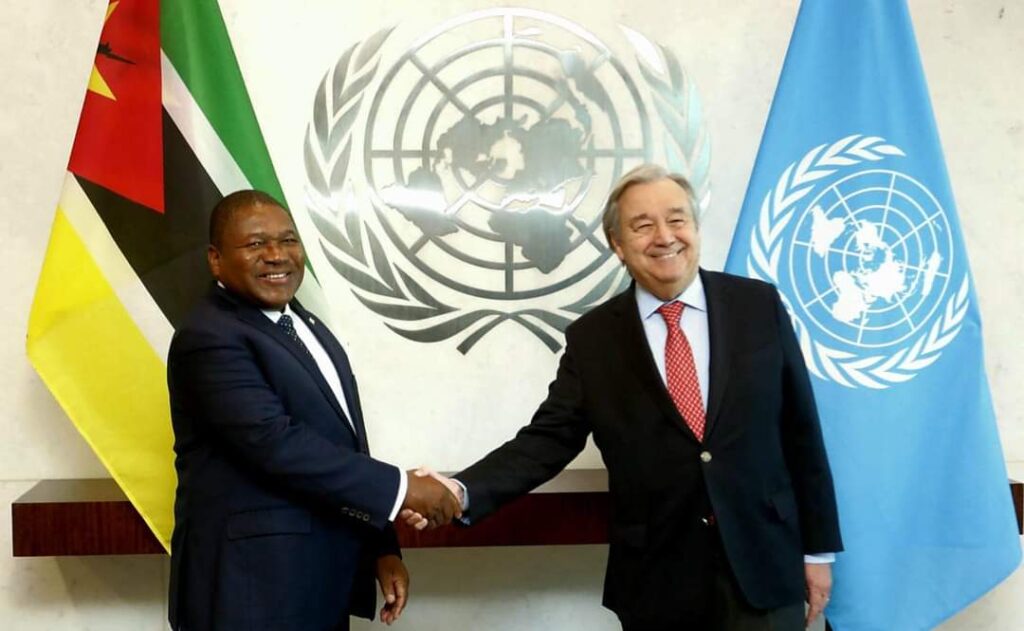
Nyusi Proposes greater Cooperation between Security Council and African Union

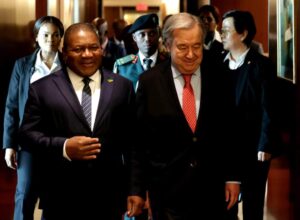
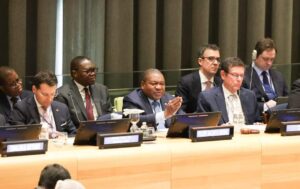
Photo: Mozambican President Filipe Nyusi and António Guterres, Secretary-General of the United Nations

31 Mar 2023

Mozambican President Filipe Nyusi believes that greater coordination between the United Nations Security Council and the African Union can help control the spread of terrorism in Africa and the Middle East.

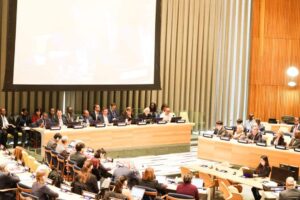
The president was speaking on Tuesday, at the United Nations headquarters in New York, where he was chairing a high-level debate on the theme “Threats to International Peace and Security, Caused by Terrorist Acts: Combating Terrorism and Preventing Violent Extremism.”

“The Republic of Mozambique would like to propose the revision of the project to be debated in July 2023, and to establish instruments for the prevention of terrorism, including the creation of a fund that can be translated into the promotion of jobs in Africa and the Middle East”, he said.

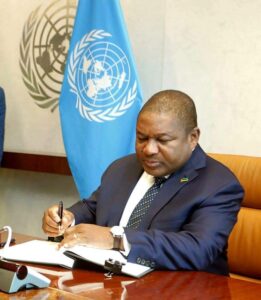
Photo: Mozambican President Filipe Nyusi at the United Nations Headquarters

According to Nyusi, greater cooperation among regional groups in the world can also help curb the spread of extremist groups.

“The approach should include interventions and socio-economic security dimensions and other factors that lead us to the real causes of attacks by terrorist networks”, he said.

Nyusi thought it necessary to disclose the “modus operandi” of terrorists so that regional blocks can defend themselves in the best possible way, taking into account global solutions to combat violent extremism.

Nyusi said that the rise in terrorist attacks in developing countries, including Mozambique, reduces economic growth, making them more vulnerable, a fact exacerbated by climate change.

“We had a United Nations study which says that about 54 percent of the population around the world is currently facing terrorism and climate change”, he said, launching an appeal for more international support for Mozambique, which, since October 2017, has been a victim of terrorist attacks, in the northern province of Cabo Delgado.

Mozambique, he stressed, continues fighting terrorism with positive results thanks to the support of partners, including the SADC Military Mission to Mozambique (SAMIM) and the Rwandan Defence Force.

“We make our appeal for more support to Mozambique and these countries so that terrorism is eradicated in our country and in the region”, he said.

Nyusi has been in the US since Monday for a five-day working visit as part of the rotating presidency of the Security Council.

Source: AIM

Kazakhstan is Only Country in Geopolitical Environment Implementing Profound Reforms, President Tokayev Says

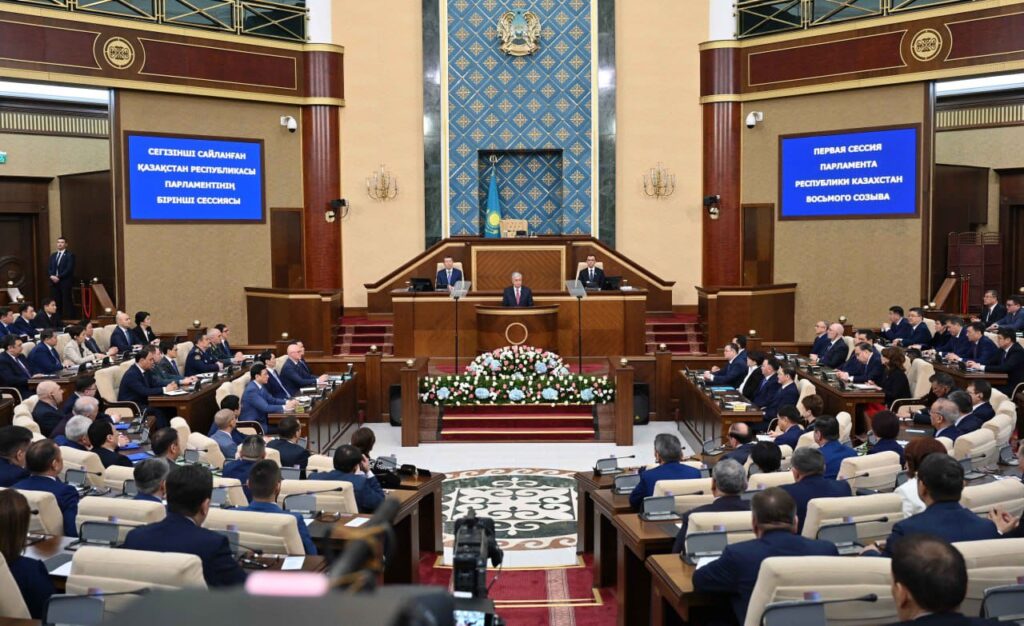
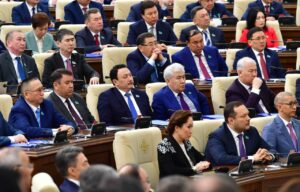
President Kassym-Jomart Tokayev at the opening of the first session of the Kazakh Parliament of the eighth convocation on March 29. Photo credit: Akorda press service

30 March 2023

BY DANA OMIRGAZY
in Election 2023, NATION

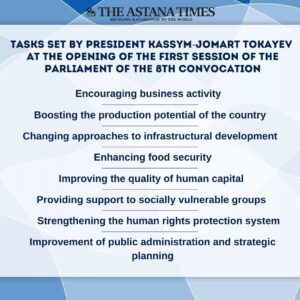
ASTANA – Kazakhstan is the only country in the geopolitical environment implementing profound reforms that are ushering in a new era of development, President Kassym-Jomart Tokayev said at the opening of the first session of the Kazakh Parliament of the eighth convocation on March 29, outlining priorities aimed at improving the country’s political system, the Akorda press service reported.

In less than a year, Kazakhstan witnessed five electoral campaigns, including a referendum, which took place during a very responsible period. Despite all the challenges, Kazakhstan was able to pass the most important stage of the country’s life in a short time, Tokayev said.

Photo credit: Akorda press service.

New Parliament

According to Tokayev, the new composition of the Mazhilis, the lower chamber of the Kazakh Parliament, reflects an entire spectrum of ideological views. Owing to the large-scale political reforms and the liberalization of legislation governing the registration of parties, an opposition party has entered the Parliament for the first time.

Commenting on the process of the election campaigns held throughout the country, including high competition, strengthened democratic traditions, and equal opportunities for all political parties and candidates, he said the society is approaching a new civil and political culture.

Tokayev focused on the active engagement of the youth in state affairs, welcoming progressive-minded and educated young people with the hope they will bring new values to society.

“Young people should appreciate this as a unique opportunity to work for the good of the country. The country also created conditions for women and persons with special needs to enter the Mazhilis. The election campaign showed that social lifts work and every citizen can be elected to the Parliament. This is how a just and fair society is built,” he said.

In the age of information and advanced technologies, people closely follow processes in the country. Therefore, the responsibility of members of parliament to the country and people has increased significantly, Tokayev noted.

He expressed hope that the newly-elected MPs will demonstrate consciousness and wisdom and work adequately and fruitfully to benefit the country’s interests during the upcoming five years.

Direct elections of regional governors

Tokayev emphasized that the transformation does not end here, and reforms to improve the political system will continue. This year, the country will hold direct elections of akims (governors) of 45 regions and cities of regional significance. After that, elections of district governors will be held nationwide.

“As a result, all the state institutions will begin to work in a new way. Certain individuals, including politicians, say these reforms could threaten Kazakhstan. However, I am convinced that this transformation is of the utmost importance for the future of our nation,” Tokayev said.

Strengthening the human rights protection system

Tokayev emphasized the need to strengthen the human rights protection system, making the rule of law in all spheres of life a fundamental principle in the country’s progress. He urged the members of Parliament to reinforce the system of protection of the constitutional rights of citizens by bringing the country’s legislation fully in line with the Constitution.

“Another serious problem in the field of human rights protection is human trafficking. To solve this problem, a special law should be adopted,” he said.

Improvement of public administration and strategic planning

Addressing ways to improve public administration and strategic planning, Tokayev urged the MPs to implement their election promises and programs. This will primarily determine the trust of citizens in government institutions and their faith in positive change.

The President noted that civil servants play a vital role in the development and implementation of reforms. It is therefore necessary to attract highly motivated and highly qualified specialists to the civil service.

“The country should move to a more harmonious, decentralized model of public service. We need to address issues immediately without waiting for instructions from above,” he said.

Tokayev recalled the work initiated last year to de-bureaucratize the functions of the public service and the rule-making process. Necessary conditions have been created for the rapid adoption of high-quality laws on the most significant problems. However, real de-bureaucratization is yet to take place, he noted. In this regard, the President said digitalization is a critical factor in improving the effectiveness of the public administration system.

“A digital parliament and maslikhats of all levels can significantly strengthen public confidence in the government,” he said.

Tokayev also raised the issue of the state planning system. Several strategic documents have lost their relevance amid recent unprecedented geopolitical, economic, and technological shifts. Tokayev proposed to revise the Kazakhstan 2050 Strategy.

“This document should turn into a document defining a long-term vision and key development priorities for the country, taking into account global trends,” the President said.

Following the meeting, Tokayev encouraged the members of Parliament and the maslikhats to interact as closely as possible to ensure consistency in the implementation of the state policy, excluding populism and promoting personal goals and instead focusing on the interests of the nation.

The Astana Times

Finland’s ‘NATO Option’ Set to Become Reality

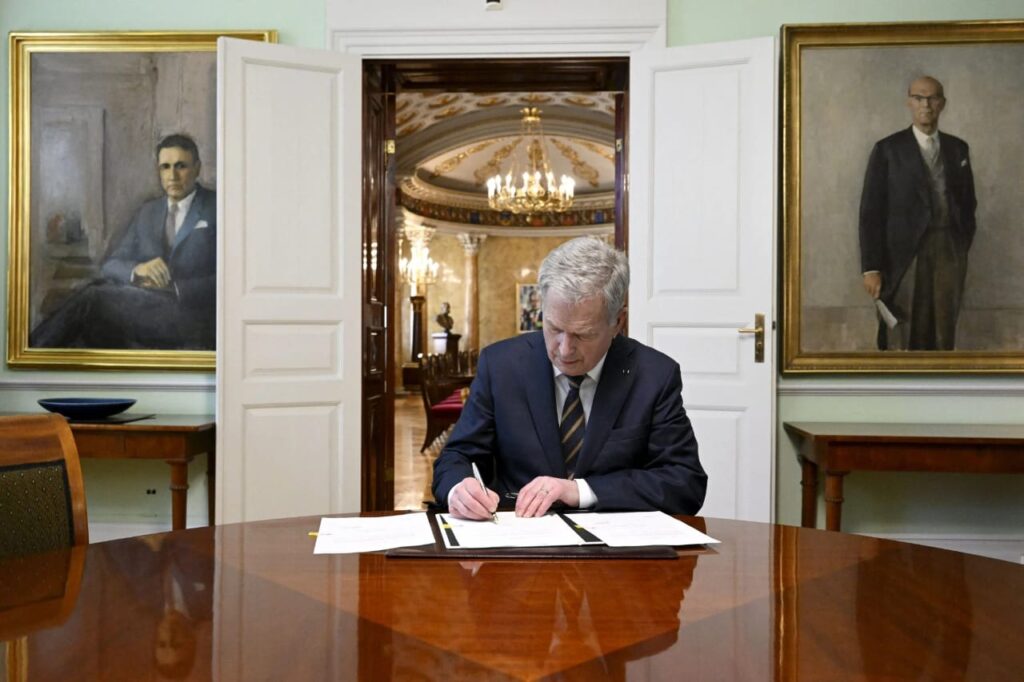
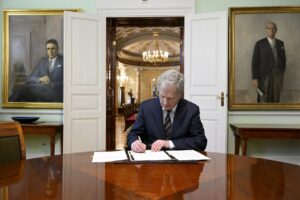
Photo: Finnish President Sauli Niinisto signs Finland’s national NATO legislation in Helsinki.

By Emily Schultheis
30 March 2023

HELSINKI—The Turkish parliament is poised to vote on Thursday to make it official: Nearly 10 months after formally applying for membership in response to Russia’s invasion of Ukraine, Finland is about to become NATO’s newest member.

After months of delays due to concerns from Hungary and Turkey, which ultimately led to Sweden’s membership bid being further delayed, Finland is going it alone. After the vote, and once some more paperwork is done, Finland will formally join the 30-country Western military alliance, ending decades of military neutrality.

For the Nordic country, which shares an 800-mile border with Russia and has sought to maintain a careful balance in its relations with Moscow and the West—the Cold War-era notion of “Finlandization” springs from just that high-wire act—joining NATO is a big deal.

At the same time, it’s also a culmination of Finland’s security policy over the last three decades, which has kept a wary eye on Russia and in recent years held the so-called NATO option in reserve should Russia overstep.

“This is a really big change,” said Juhana Aunesluoma, an expert on the history of Finnish foreign and security policy at the University of Helsinki. Seismic though it is, the shift marks the endpoint of decades of inching toward the West and away from a nonaligned stance. “A lot of the groundwork has been done over the last 30 years,” he said.

Finland’s attitude toward Russia and national security goes back centuries: It spent more than 100 years as part of the Russian Empire, until it declared independence in 1917. Two decades later, in the Winter War, the Soviet Union invaded in an effort to annex Finland, taking some territory in the country’s east; after Finland allied with Nazi Germany during World War II, it sought to reclaim that territory.

During the Cold War, Finland pursued a strategy of Finlandization, refraining from provoking the Soviets by staying out of NATO, while continuing to pursue closer relations with the West.

Since the end of the Cold War, the country’s leadership has followed a two-pronged security strategy: maintaining good relations with Russia and shoring up its national defense. Finland fostered economic and social ties with Russia, but at the same time built up a large military. In a country of 5.5 million people, Finland can call on as many as 280,000 troops and has a total of 900,000 people trained as reservists.

Before Russia invaded Ukraine last February, Finland was content to stick with its decadeslong policy of military nonalignment. Finns wanted to believe in the best-case scenario, where Russia remained an economic and diplomatic partner, but also wanted to be prepared for the worst-case scenario.

Finnish leadership saw no reason to join NATO at the time but reserved the right to apply for membership if the security situation with Russia changed.

“There has been this tradition that in Finland politicians do not talk about Russia as a threat,” said Johanna Vuorelma, a researcher at the University of Helsinki’s Center for European Studies. But since Russia’s invasion of Ukraine, she added, “There’s been a massive transformation from not speaking about the Russian threat to speaking about it in very direct terms.”

The Russian invasion changed everything. All of a sudden, it was clear the best-case scenario was no longer possible—and after years of keeping the NATO option in its back pocket, Finland was ready to whip it out.
Practically overnight, public opinion swung massively in favor of joining NATO, and top Finnish politicians from nearly all the country’s political parties got on board: A poll conducted by Finnish broadcaster Yle last May found that three-quarters of Finns wanted their country to join NATO, up from less than one-third in previous years.

In fact, the only drama surrounding Finland’s NATO bid has been from other NATO members intent on delaying the process. Last May, Finland formally submitted its application to join NATO along with Sweden, making a symbolic statement by applying together. But leaders of two NATO member states—Hungarian Prime Minister Viktor Orban and Turkish President Recep Tayyip Erdogan—expressed concerns. Orban objected to both countries’ criticism of democratic issues in Hungary, while Erdogan took issue with how Finland and Sweden had handled Kurdish groups considered terror organizations in Turkey.

Ultimately, both Hungary and Turkey opted to move forward with Finland’s bid, while putting Sweden’s on hold for the time being. During a visit to Ankara earlier this month, Finnish President Sauli Niinisto said he still considers the two countries’ bids to be complementary, even if Finland’s is approved first.

Security policy experts said that despite Finland’s overt neutrality, it has slowly but surely been integrating itself into the Western security and military framework. Finland joined the European Union in 1995, which was seen as a decisive step toward European integration, and that intensified after Russia annexed Crimea in 2014. Since then, and even before, Finland has increasingly collaborated with Western defense forces. In 2009, it joined the Nordic Defense Cooperation, a collaboration with Sweden, Norway, Denmark, and Iceland, the latter three of which are NATO members. Last year, both Finland and Sweden participated in joint NATO exercises on the Baltic Sea.

Leading up to last February, Finland did “all the things you can do that are necessary to prepare, without establishing a formal military alliance,” said Aunesluoma, the University of Helsinki policy expert. Finnish leaders, he added, were “taking it pretty much as close to that status as you can without forming a formal alliance.”

But there’s a “psychological” element to it as well, Vuorelma said. Joining a military alliance like NATO means Finland will need to adjust its view of itself and its role in Europe, moving from a go-it-alone mentality to integrating into an alliance with dozens of other countries. And although this process has been underway for years, it’s still a big step.

“It’s about hard security, but it’s also about psychology and sort of the rethinking of the national self. Rethinking things like, what does it mean to Finland as a nation, how can we rewrite the national narrative?” she said. “Because it has been so strongly connected to the idea of being outside of any of the military alliances. And so this process, I think it will take some time.”

Emily Schultheis is a freelance journalist based in Berlin, where she writes about European elections and the rise of populism. Twitter: @emilyrs

SA Repo Rate Increases to 7.75%

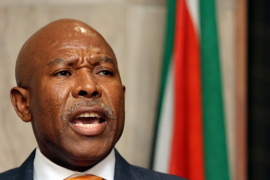
Photo: South African Reserve Bank (SARB) Governor Lesetja Kganyago
Photo credit: Reserve Bank

30 March 2023

South African Reserve Bank (SARB) Governor Lesetja Kganyago has announced that the repurchase rate (repo rate) has reached 7.75% after the Bank’s Monetary Policy Committee (MPC) agreed to a 50 basis points increase.

As a result, the prime interest rate will now move up to 11.25%.

Kganyago announced this at a press briefing on Thursday afternoon.

“The revised repurchase rate is now less accommodative and is more consistent with the current view of risks to inflation. The aim of policy is to anchor inflation expectations more firmly around the mid-point of the target band and to increase confidence in attaining the inflation target sustainably over time.

“Guiding inflation [currently at least 7%] back towards the mid-point of the target band [between 3% and 6%] can reduce the economic costs of high inflation and enable lower interest rates in the future. Achieving a prudent public debt level, increasing the supply of energy, moderating administered price inflation and keeping wage growth in line with productivity gains would enhance the effectiveness of monetary policy and its transmission to the broader economy,” Kganyago said.

The SARB has raised the repo rate at least six times in a row, as South Africa’s economy continues to recover slowly from global volatility and the long-standing effects of the COVID-19 pandemic.

The Governor said the bank expects economic growth to remain constrained.

“The South African economy contracted by 1.3% in the fourth quarter of 2022, considerably worse than expected at the time of the January meeting. The contraction was broad-based, consistent with the extensive load shedding experienced in the final three months of the year. For the whole of last year, GDP growth of 2.0% was achieved, compared to the 2.5% previously expected.

“For 2023, the Bank’s forecast for GDP growth is lowered slightly to 0.2% from the 0.3% expected in January. As a result of extensive load shedding and logistical constraints, the supply performance of the economy remains severely impaired,” he said.

Despite these factors, Kganyago said some growth is expected to be achieved in 2024 and 2025.

“Over the forecast period, we expect household spending and investment to grow modestly, even as load shedding and uncertainty continue to weigh heavily on consumption and investment decisions. Private sector investment is expected to remain positive, in large part reflecting efforts to overcome constraints in energy and transport supply.

“As a result of these factors, the economy is forecast to expand by 1.0% in 2024 and by 1.1% in 2025,” he said. –

Source: SAnews.gov.za

Saudi Arabia takes step to join China-led security bloc, as ties with Beijing strengthen

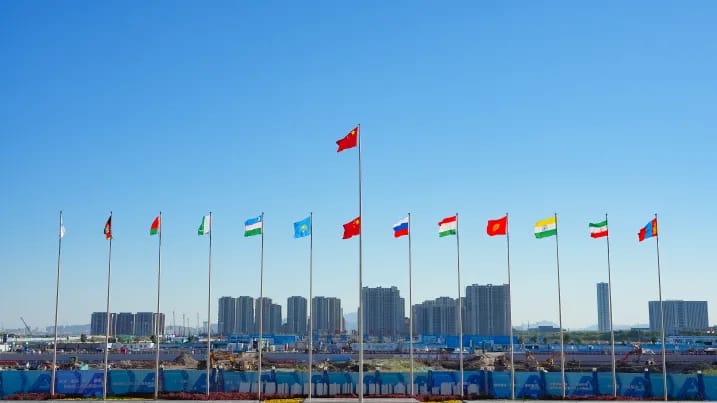
Photo: The symbol of the Shanghai Cooperation Organisation and the flags of its member states and observer states.
Photo credit: Peng Song | Moment | Getty Images
#SCO

Ruxandra Iordache
29 MAR 2023

Saudi Arabia’s cabinet on Tuesday approved a memorandum awarding Riyadh the status of dialogue partner in the Shanghai Cooperation Organization.

The SCO is a political, security and trade alliance that lists China, Russia, India, Pakistan and four other central Asian nations as members.

Saudi Arabia’s cabinet approved a decision to join a China-led security bloc, strengthening Riyadh’s eastern ties in a further step away from U.S. interests.

The state-owned Saudi Press Agency said that, in a session presided by King Salman bin Abdulaziz, the Saudi cabinet on Tuesday approved a memorandum awarding Riyadh the status of dialogue partner in the Shanghai Cooperation Organization — a political, security and trade alliance that lists China, Russia, India, Pakistan and four other central Asian nations as full members.

The organization further tallies four observer states — including Iran — and nine dialogue partners, counting in Saudi Arabia, Qatar and Turkey. It is headquartered in Beijing and served by China’s Zhang Ming as secretary-general.

Saudi Arabia’s decision to join the SCO, while falling short of full membership, takes Riyadh’s interests further east, at a time when Beijing is testing out its sway in the Middle East in a potential hit to U.S. influence.

In early March, China brokered a deal for long-time Mideast rivals Saudi Arabia and Iran to resume diplomatic relations and reopen embassies in each other’s countries.

Saudi interests have long been intertwined with those of leading SCO members China and Russia. Beijing is Riyadh’s largest trading partner, with bilateral trade worth $87.3 billion in 2021, according to Reuters.

China is a major consumer of hydrocarbon-reliant Saudi Arabia’s oil exports, with the two countries making significant inroads in each other’s petrochemical sectors — including the recent announcement by Saudi state-controlled oil giant Aramco of a joint venture that will build a refinery and petrochemical complex in Panjin in northeast China, alongside partners Norinco and the Panjin Xincheng Industrial Group.

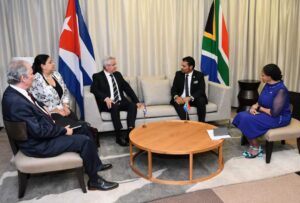
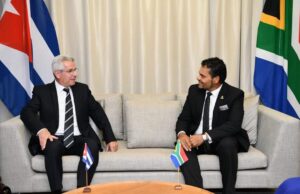
Deputy Minister Botes co-chairs the South Africa – Cuba Joint Consultative Mechanism

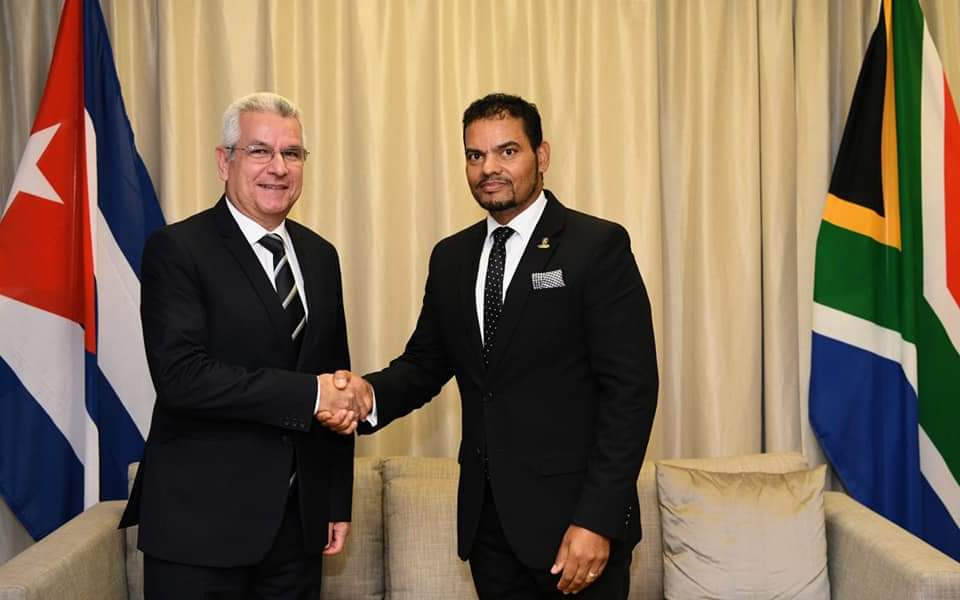
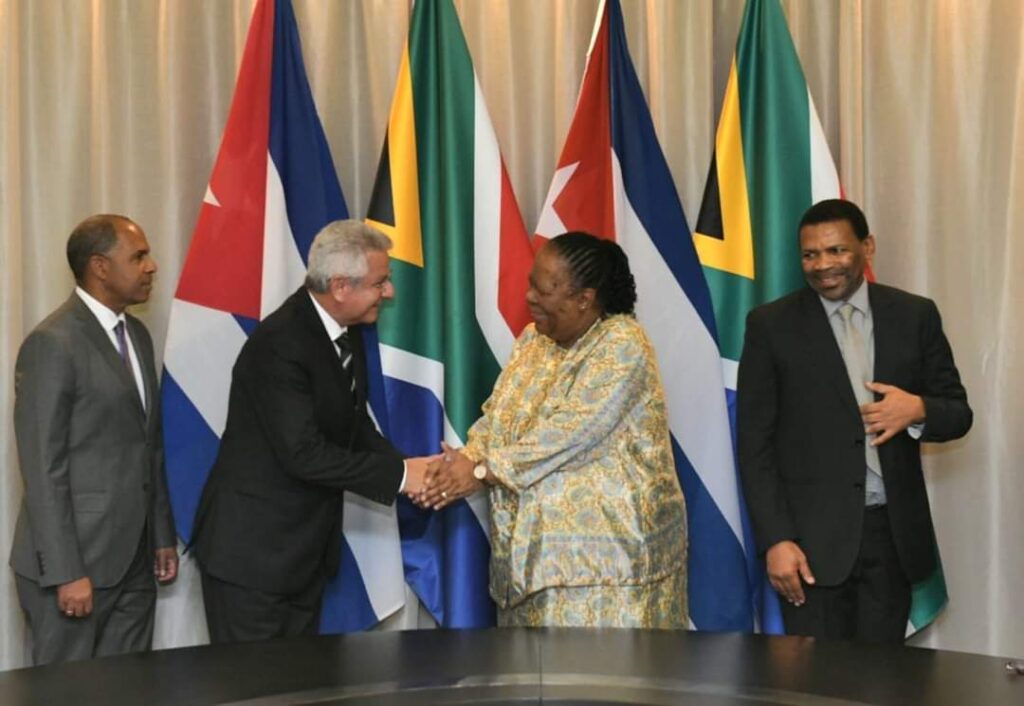
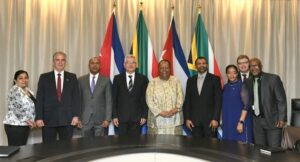
Photo: The Deputy Minister of International Relations and Cooperation, Mr Alvin Botes, with his counterpart, HE. Mr Elio Rodríguez Perdomo, Deputy Minister of Foreign Affairs of Cuba, in Pretoria.
Photo credit: Dirco

28 March 2023

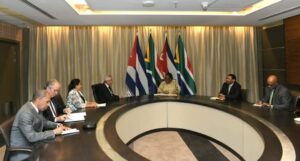
On Tuesday, 28 March 2023. The Deputy Minister of International Relations and Cooperation, Mr Alvin Botes, co-chaired the 17th Joint Consultative Mechanism (JCM) with his counterpart, HE. Mr Elio Rodríguez Perdomo, Deputy Minister of Foreign Affairs of Cuba, in Pretoria.

The last JCM was held in Havana, Cuba, in July 2022. On that occasion, Deputy Minister Botes met with several Cuban Ministries and institutions.

Science and Innovation was identified as a key area of cooperation between the South African Department of Science and Innovation (DSI) and their Cuban counterparts.

The JCM is characterised by renewed commitments to continue with the implementation of the existing agreements in areas such as Health; Public Works and Infrastructure; Basic and Higher Education; Arts and Culture; Human Settlements; Science and Innovation; Sport; Trade and Economic Cooperation; Defence and Water and Sanitation.

The JCM convenes annually, taking place against the backdrop of the excellent bilateral and fraternal relations of solidarity between the two countries that go far beyond the formal establishment of diplomatic relations in May 1994.

Several agreements have been signed between South Africa and Cuba, and both countries attach great importance in addressing economic, technical, and trade barriers.

Cuba chairs the Group of 77+China for 2023. For the first time in the history of the United Nations and since the founding of the G77+China in 1964, Cuba was elected as Chair of the Group of 77+China during the 77th Session of the United Nations General Assembly in September 2022.

Relations between South Africa and Cuba are significant. They were forged in the common struggle against apartheid and colonialism on the African continent.

The victory of the Cuban People’s Movement for the Liberation of Angola (MPLA) forces, fighting side by side with liberation forces against apartheid’s South African Defence Force at the battle of Cuito Cuanavale in southern Angola in 1988 paved the way for the independence of Namibia in 1990.

South Africa’s first democratically elected President, Nelson Mandela, acknowledged that the Cuban military victory at Cuito Cuanavale marked “the turning point for the liberation of our continent, and of my people, from the scourge of apartheid”.

Following South Africa’s democratic transition, South Africa and Cuba established formal diplomatic relations in 1994 and opened resident embassies in Pretoria (1994) and Havana (1995), respectively.

In 2009, Castro was honoured by South Africa on two occasions, namely the Order of the Companions of OR Tambo, as well as the Ubuntu award by the National Heritage Council.

In South Africa’s hour of bereavement, when former President Mandela passed away on December 5, 2013, Cuba sent a high-level delegation to the country, presided over by President Raul Castro, first secretary of the Central Committee of the Communist Party of Cuba.

The bestowal of the Order of Jose Marti on President Jacob Zuma in 2009 during his state visit to Cuba reflected the depth of friendship and ties between the two countries.

The same honour had previously been bestowed on presidents Mandela and Thabo Mbeki during their respective state visits to Cuba. In 2012, South Africa bestowed the Order of OR Tambo on the Cuban Communist Party veteran and internationalist Prof Jorge Risquet for his sterling contribution to the anti-apartheid struggle and the international peace negotiations that followed after the ceasefire agreement in Angola.

The pre-1994 support given for the liberation of South Africa included the education of South African students.

Many South Africans carried Cuban passports to facilitate international travel.

Cuba has, therefore, been the backbone of South Africa’s liberation despite its many own challenges. After 1994, Cuba was one of the first to offer material and human resource support.

The success of South Africa’s political bilateral and multilateral relations can, therefore, be measured in the extent of the numerous development programmes, cooperation projects as well as the strong political and social solidarity and support that exist between the two countries and peoples

Cuba is a strategic partner for South Africa in the Latin American region and within multilateral forums.

Cultural and historical ties, as well as shared struggles and common aspirations, create the basis for a strong bond of solidarity between Cuba and South Africa and the continent of Africa.

The past years of diplomatic relations between South Africa and Cuba have been marked by robust and constructive interactions at both bilateral and multilateral level.

In addition, Cuba has enjoyed the unequivocal relations between South Africa and Cuba are historic support of South Africa at the UN General Assembly, where South Africa voted in favour of a call to lift the US-imposed economic blockade against Cuba.

#SACubaRelations
#SACuba
#diplomacy
#bilateralmultilateral

SA – Cuba Relations

28 March 2023

Minister Naledi Pandor received a courtesy call from Cuban Deputy Minister of Foreign Affairs, Mr Elio Rodriguez Perdomo.

South Africa-Cuba relations serve as a successful and exemplary model of South-South cooperation in the areas of health training and services, human settlements technical exchange, public works, technical assistance, cooperation on water resource management, water supply and on professional services in the field of basic education for South Africa in the Latin American region and within multilateral forums.

Cultural and historical ties, as well as shared struggles and common aspirations, create the basis for a strong bond of solidarity between Cuba and South Africa and the continent of Africa.

The past 22 years of diplomatic relations between South Africa and Cuba have been marked by robust and constructive interactions at both bilateral and multilateral levels.

In addition, Cuba has enjoyed the unequivocal » Relations between South Africa and Cuba are historic support of South Africa at the UN General Assembly, where South Africa voted in favour of a call to lift the US-imposed economic blockade against Cuba.

There are over 30 signed bilateral agreements in place between the two countries, covering vast areas of cooperation; for example, education, science and technology, agriculture, health services, housing and water, and sanitation.

Cooperation is highest in the areas of health, human settlements, and public works.

The year 2016 marks the 20th anniversary of the arrival of the first group of Cuban doctors in South Africa.

Under the auspices of the 2012 Agreement on Cooperation in the Fields of Public Health and Medical Sciences, almost 3 000 South African students are receiving medical training in Cuba.

Meanwhile, 36 Cuban engineers are working in South Africa under the auspices of the South Africa-Cuba Agreement on Cooperation in the Fields of Water Resource Management and Water Supply, signed on September 9, 2013. We in South Africa must endeavor to take forward the ideals that Castro espoused: internationalism, freedom, equality, justice, and a better and more just world

#SACubaRelations🇿🇦🇨🇺
#SACubaBilateral