WISHING A HAPPY RAMADAN TO ALL WHO CELEBRATE RAMADAN


2 April 2022

As Muslim families starts Ramadan, we join our Muslim family and friends to pray for the well-being of the communities and a year ahead filled with the blessings of health, happiness & family.

The Diplomatic Informer Magazine SA wishes all Muslim communities in South Africa and around the World a blessed Ramadan Kareem.

May the fasting month be full of charity, learning, prayer and May You all experience peace during this special time of fasting.

Ramadan Mubarak!

KAZAKHSTAN AND SOUTH AFRICA CELEBRATE THE PEARL JUBILEE OF THEIR FRIENDSHIP

HAPPY 30TH ANNIVERSARY OF DIPLOMATIC RELATIONS BETWEEN KAZAKHSTAN AND SOUTH AFRICA!

Article by His Excellency Ambassador Kanat Tumysh of Kazakhstan to South Africa

Today, on the 5th of March, we celebrate the 30th Anniversary of diplomatic relations between Kazakhstan and South Africa; it is the Pearl Jubilee of our Friendship.

Allow me to convey warm greetings from my leadership and extend the best wishes of our Government and people to the Government and people of the Republic of South Africa. Based on the modern history of our two states, that very date, when our diplomatic relations were officially established, is the beginning of the Kazakh-South African cooperation.

We are thankful to the Rainbow Nation because after Kazakhstan gained its Independence, South Africa was among the first countries to recognize our statehood, thereby emphasizing genuine interest to establish and develop mutually beneficial relations with us.

A milestone event in the development of bilateral relations was the opening of the Embassy of South Africa to the Republic of Kazakhstan in December 2003. Since December 2016, H.E. Ms. Kiitumetsi Matthews has been the Ambassador of South Africa to Kazakhstan. On the other hand, the Embassy of the Republic of Kazakhstan in South Africa was opened in December 2013, and it is the only diplomatic mission of Kazakhstan in the vast region of Southern Africa. In July 2019, I was appointed as the Ambassador of Kazakhstan to South Africa.

I would like to underscore the strength of Kazakh-South African political, economic, cultural, and humanitarian relations aimed at strengthening interstate cooperation across the entire spectrum of ties.

Our countries have much in common. Both South Africa and Kazakhstan boast diverse populations with different ethnicities, religions, and traditions – a diversity that strengthens and enriches our countries. I have personally experienced the depth of South Africa’s history and culture.  Likewise, I also always try to utilize opportunities to share the Kazakh culture with the people of South Africa.

I appreciate the strong friendship between our two countries greatly. We are partners. Exchange programs have allowed our doctors, professors, and students to learn from and teach one another. In numerous fields, people from our nations are working together to advance our shared interests. This has produced tangible outcomes and has helped identify priority areas. Indeed, the two nations have started a very promising conversation on a range of important issues, including cooperation in the fields of defense, security, industry, trade, overall economic development, energy, and education. We would like to stress Kazakhstan’s leadership’s interest in further building efforts to improve mechanisms of mutually beneficial cooperation. In this vein, it is important also to promote cooperation in the mining industry, engineering, healthcare, and agriculture, in particular, in the exchange of advanced technologies.

We have already agreed to strengthen the economic partnership and have pledged to conclude the Enhanced Trade and Economic Cooperation Agreement that seeks to give preference to Kazakh and South African companies to win goods and services contracts in both countries. In the future, we plan to launch a binational Business Forum as a vehicle through which our two countries can promote and advance economic and development goals that are beneficial to both sides. Our business leaders work together to create jobs and grow our economies. Both countries strive to build a genuinely attractive business environment for foreign companies. We believe that together with South Africa we will work closely towards catalyzing private financing to develop our economies.

We also share common values and a strong commitment to contribute jointly to the principles of multilateralism and UN pillars, having worked, in particular, as non-permanent members of the UN Security Council.

For instance, we work hand-in-hand to make Africa, the Middle East, and Asia inhospitable terrains for extremists and terrorists, freeing our planet from nuclear weapons and nuclear tests, advancing effective and sustainable primary healthcare for all, promoting the empowerment of women and in many other spheres.

Our state also proposed the creation of a new geopolitical reality based on the establishment of direct dialogue among the world powers. Many of the troubles of the contemporary world lie in the lack of trust and dialogue. We believe that such a reputable state as South Africa, being a full member of NAM and BRICS, as well as being an authoritative African leader, will be instrumental in the implementation of this agenda.

I look forward to being constantly in touch with the Government and people of South Africa in order to continue our tradition of partnership. For 30 years, since we established our diplomatic relations, these ties have grown steadily and smoothly. Even during some difficult times of COVID-19 and other challenges for our planet, we have worked together and accomplished much in pursuit of shared goals, most particularly to build a juster, more prosperous, and safer world. This work rests on our shared commitment to maintain peace and security, ensure sustainable development, as well as to promote humanitarianism. As the relationship between our countries grows and develops, our shared values ensure that we will remain close.

Madiba once said, “Only through hardship, sacrifice and militant action can freedom be won. The struggle is my life. I will continue fighting for freedom until the end of my days.”

Indeed, for years humanity wandered in the dark forest of disunity. However, the greatest illusion on the planet Earth is the illusion of our dissociation, as we are all a part of the whole. Neither frontiers, language distinctions, nor political contradictions can cancel the unassailable fact that we live on one planet, which we must bequeath to our children and grandchildren. That is why my country Kazakhstan calls for unity in these turbulent times. That is why Madiba urged us to continue our long walk to freedom. Indeed, Freedom is a virtue, and virtue is the dress of a human being. We have deceived ourselves for too long, but now we must come to our senses before the complete and final destruction of the spirit of humanity has come.

This is why this year we decided to commemorate the Pearl Jubilee of our diplomatic relations in a very unusual manner. We have organized in partnership with the Yunus Emre Institute, Council of Muslim Theologians, G-Global Africa, the Thembikile Mandela Foundation, AWQAF, AMKA Products, Two Lights Foundation, and others a unique contest – Essay Competition for South African schools on the legacy of Great Sufi Leader and Turkic Poet – Ahmed Yassawi.

Yassawi was a Great Sufi leader who exerted a powerful influence on the development of Islam. He was born in the town of Sayram (another name: Ispijab) in South Kazakhstan in 1093. His father, Sheikh Ibrahim ibn Mahmud, was a famous learned man (Mullah and Ulama), and also religious master and Sultan of the Khoja community, pertaining to the Hanafi school of Islamic jurisprudence (fiqh). His mother was Aisha Khatun Iftikhar, the daughter of one of Ibrahim’s disciples. With the help of another local Hanafi scholar, Bakh ad-Din Ispijabi, the father introduced the son from early childhood to the religious life and to the study of sciences.

He praised ascetic life and meditation on death and adapted the Islamic message to Turkic customs. He also abolished differences between men and women and showed tolerance for other religions. He also emphasized the importance of individual freedoms and knowledge. He practiced and taught the mystic way (tasavvuf) and garnered more than 10,000 followers. Many were good students and novices (murids) and he mustered an uninterrupted line of successors (khalifah), thereby becoming the spiritual ancestor of all Turkic tribes. A popular brotherhood rose around him and developed into a school (tariqah) called Yasawiyya, representing one of the three important Sufi orders of Central Asia.

Yasawi is also the earliest known Turkic poet who composed poetry in Middle Turkic.

Last year Ahmed Yasawi’s native city of Turkestan located in Southern Kazakhstan was proclaimed the Spiritual Capital of the Turkic World. Muslims call Ahmed Yasawi Sayyid Hadrati-Turkistan. My President Kassym-Jomart Tokayev of Kazakhstan, while calling for the revival of Turkic Civilization, highlighted, that this process should begin, above all, with the promotion of Yasawi’s legacy and presentation of our sacred Spiritual Capital to the entire world. That is why we organized the Essay Writing Competition, and we plan to publish in Pretoria in December 2022 Ahmad Yassawi’s book entitled ‘Diwan-i Hikmat’, which means ‘Collection of Divine Wisdom’.

We did it also, because Madiba taught us, that education is the most powerful weapon, which one can use to change the world.

Thank you.

PRESIDENT RAMAPHOSA ATTENDS THE CELEBRATION OF SOUTH AFRICA DAY AT THE  EXPO 2020 DUBAI


29 March 2022

On 28 March 2022, His Excellency President Cyril Ramaphosa arrived at the  Al Maktoum International Airport in the United Arab Emirates to lead the celebration of South Africa Day at the  Expo 2020 Dubai.

President Ramaphosa was received by Ambassador Saa’d Cachalia to South Africa in the UAE and Ambassador Mahash Saeed  Salem Mahash of the to the UAE in South Africa.

Expo 2020 is the first World Expo to be held in the Middle East, Africa and South Asia (MEASA) region. Expo 2020 Dubai commenced in October 2021, coinciding with the 50th anniversary of the United Arab Emirates.

The President’s Working Visit was in honour of an invitation by the Host of the Expo 2020 Dubai,  His Highness Sheikh Mohammed bin Rashid Al Maktoum, the Vice President and Prime Minister of the United Arab Emirates and Ruler of Dubai.


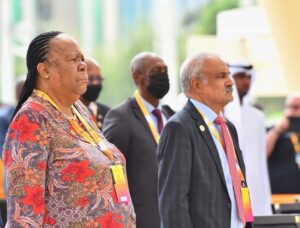
President Ramaphosa was accompanied by Minister of International Relations and Cooperation Dr Naledi Pandor; Minister of Agriculture, Land Reform and Rural Development Ms Thoko Didiza; Minister of Public Enterprises Mr Pravin Gordhan; Minister of Higher Education , Science and Innovation Dr Bonginkosi Nzimande, and the Minister of Trade , Industry and  Competition Mr Ebrahim Patel.

Expo 2020 Dubai has for the past six months since its premiere introduced participating countries, corporations, non –governmental organisations and educational institutions to a region of 3.2 billion people with an estimate accumulated gross domestic product of 6.5 trillion USD.

The hosts retained the title Expo 2020 Dubai after the event which was originally scheduled for 2020, was postponed due to the COVID-19 pandemic.

Expo 2020 was the first World Expo to be held in the Middle East, Africa and South Asia (MEASA) region. Expo 2020 Dubai commenced in October 2021, coinciding with the 50th anniversary of the United Arab Emirates.

South Africa was among 192 countries that established national pavilions at this global showcase of human ingenuity and innovation, national cultures and solutions to challenges confronting humanity.

Held under the theme “Connecting Minds and Creating the Future via Sustainability, Mobility and Opportunity”, South Africa’s participation to the Expo invited visitors to “Think Opportunity. Think South Africa.”

At the South African pavilion at the Expo 2020 Dubai, visitors immersed themselves in South African innovation, culture and ingenuity.

Trade and investment opportunities, world-class technology, creative arts, tourism, sports and unique cultural diversity and tolerance have been proudly highlighted by SMMEs, youth and women-led organisations, established  businesses with an international footprint and emerging innovators in science, technology, engineering and mathematics.

The South African pavilion at the Expo 2020 Dubai hosted visitors physically and virtually, where 103 companies exhibited.

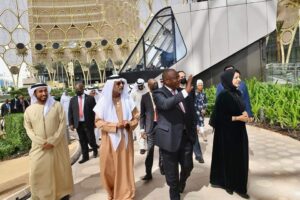
President Ramaphosa addressed the South African Dubai 2020 Expo National Day Celebration at the Al Wasl Plaza in Dubai.

The President toured the pavilions of South Africa, the United Arab Emirates and the African Union.

Following the tours, President Ramaphosa held an interaction with the Multichoice SMME Accelerator Activation, which showcased leading-edge small enterprises from South Africa in health tech, fin tech, the green economy, edtech and creative industries.

The Accelerator Activation offers SMMEs the opportunity to unlock growth capital and market opportunities from investors across the UAE, and to leverage relationships from the Dubai Expo and trade stakeholders.

In the evening, the President addressed an Investment Opportunities in South Africa Dinner with aim of bolstering South Africa’s five-year domestic and international investment drive with a target of R1,2 trillion.

President Ramaphosa’s Working Visit strengthened  bilateral and economic cooperation between South Africa and the United Arab Emirates.

The UAE is South Africa’s main trading partner within the Gulf Cooperation Council (GCC) and is still growing as a lucrative export market for South African products and services.

South Africa’s top 10 imports from the UAE were valued at R17.3 billion out of a total of R19.6 billion in 2020.

South Africa’s exports to the UAE totalled R24,9 billion in 2020, with the top 10 products accounting for R16,7 billion.

#Expo2020Dubai
#SAUAERELATIONS
#SAUAE

PHOTOS: Yandisa Monakali (DIRCO) #DubaiExpo2020.

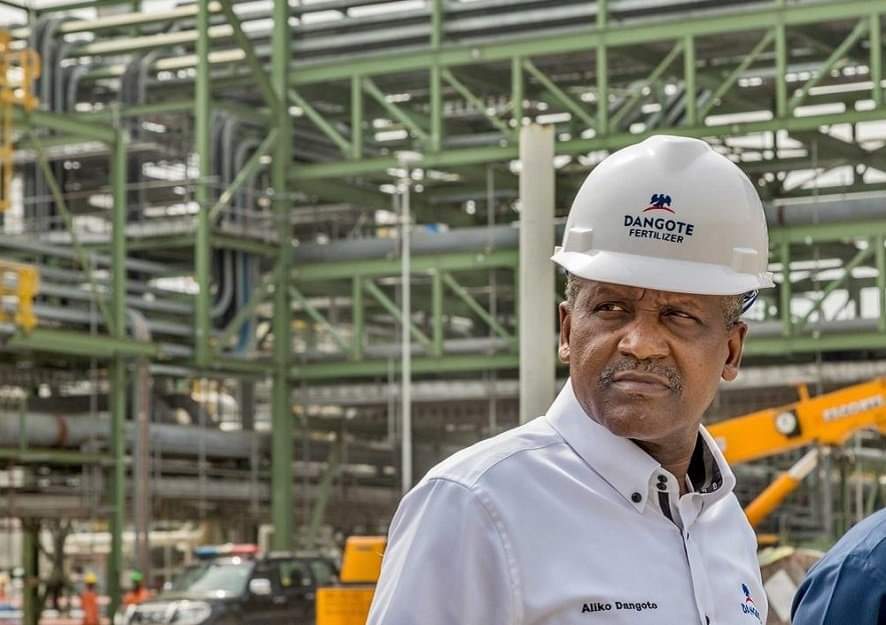
ALIKO DANGOTE, AFRICA’S RICHEST MAN  OPENS THE LARGEST FERTILIZER PLANT ON THE CONTINENT.

BUSINESS DESK

28 March 2022

Africa’s richest man, Aliko Dangote, has opened the largest fertilizer plant on the continent. The plant, based in Africa’s biggest economy, Nigeria, was opened at the cost of $2.5 billion, according to Reuters.

The plant was commissioned by Nigerian president Muhammadu Buhari. Located at the Lekki Free Zone in Lagos State, the plant is designed to produce 3 million tonnes of urea per year.

Reuters reports that the fertilizer plant will target Africa and other markets. The immediate market target of the plant is to export to Brazil, which relies heavily on Russia for imports of fertilizer. The war in Ukraine has cut off supplies from Russia, threatening a global food shortage and higher prices.

Speaking at the launch of the plant, the Nigerian billionaire noted that shipments will also go to the United States, India and Mexico.

“It is an ambitious project that will reduce unemployment in Nigeria,” Dangote said. “The plant will boost productivity and enhance output across the nation as products from plants have reached the African market, and across Brazil, India, and Mexico.”

Nigeria consumes about 20kg of fertilizer per hectare of arable land and the plant is expected to reduce the high cost of importing fertilizers which have been found to contribute to the high cost of food production.

Also, the plant is expected to boost Nigeria’s agriculture output, as the sector accounts for 20% of Nigeria’s gross domestic product, with crop production contribution the highest with the farming subsector, Reuters reported.

“Low fertilizer usages have been the reason for low yield of agriculture products. Our goal is to make fertilizer available in quantity for our farmers. We are rolling out initiatives that will transform the agric sector for all,” Dangote said at the launch.

The launch of the fertilizer plant comes on the back of reports that the Nigerian businessman has started assembling vehicles in Nigeria under the brand name Dangote Peugeot Automobiles Nigeria Limited (DPAN).

The vehicles are being assembled at the new Greenfield Ultima Assembly Plant which is located in the northwestern region of Nigeria. The assembly plant will reportedly assemble 120 vehicles in a day running two shifts.

Dangote, who is also the world’s richest Black man, saw his wealth grow by $1.3 billion in January, putting his fortune at $20.4 billion, nearly the GDP of Senegal ($24.9 billion). The growth came on the back of a surge in the share prices of his cement company. Dangote Cement contributes to nearly half of the entrepreneur’s net worth. Dangote Cement produces 45.6 million metric tons annually and has operations in 10 countries across Africa, according to Forbes.

Africa’s richest man opens continent’s biggest fertilizer plant at the cost of $2.5 billion

Aliko Dangote during a visit to the fertilizer plant under construction in Lagos

#dangotefertilizer
#alikodangote

PHOTO: ANDREW ESIEBO FOR BLOOMBERG BUSINESSWEEK

INVESTMENT COMMITMENTS REVEAL A DIVERSE AND TRANSFORMING ECONOMY

28 March 2022

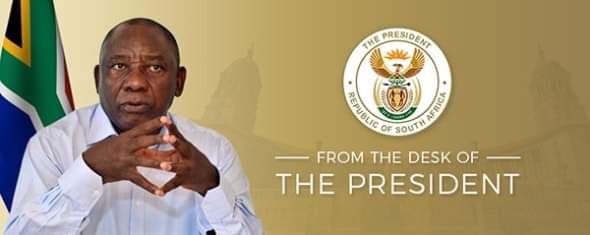
From the Desk of the President

Last week we held our fourth South Africa Investment Conference as part of our ambitious drive to raise R1.2 trillion in new investment over five years.

The value of the investment commitments made at the conference was R332 billion, bringing the total value of commitments to date to R1.14 trillion. With just one year to go, we have now reached 95% of the target we set in 2018.

The Investment Conference was significant for several reasons.

Firstly, this was an impressive amount of investment commitments in the midst of a pandemic that has dampened the global investment climate for more than two years.

Such is the appetite of global investors for our economy that this year saw pledges from traditional trading partners in the European Union, United States, China and the United Kingdom, but also from Canada, Mauritius, Norway, Turkey and Pakistan. We also had funding pledges from the United Arab Emirates, where we are currently participating in Dubai Expo 2020.

Secondly, firms that already have a footprint in South Africa are increasing their existing investment commitments, signifying a renewed vote of confidence in our economy even at this difficult time.

The expansion plans of existing mining operations include an additional R10 billion investment by Anglo American, R11.8 billion by Impala Platinum, and R2.8 billion from Ivanhoe Mines to expand its Platreef mine in Limpopo. In the automotive sector, the Ford Motor Company has committed R16.4 billion to expand the manufacture of the next generation Ford Ranger, and there are commitments of R800 million by BMW and R350 million by Volkswagen.

Thirdly, the range of projects represented at this year’s conference illustrate the diversity of our economy and that potential investors see far more opportunity across several sectors than they did in previous years.

We have secured investment pledges in mainstay sectors like mining, agriculture and automotive, but also in renewable energy production, pharmaceuticals, clothing and textiles, infrastructure and logistics, telecoms and the digital economy.

Our creative industries have been given a major boost by multimillion rand investments in film and television production by the world’s largest media companies like Warner Media and Netflix. After nearly 15 years in the making, the eThekwini Film Studio in KwaZulu-Natal will soon become a reality following a R7.5 billion investment from Videovision Entertainment.

Finally, and perhaps most importantly, this year’s conference was marked by increased domestic investment, most notably from black industrialists.

Thanks to a concerted campaign by government, we are continuing to increase the participation of black industrialists in the nation’s economy. Over the last five years, some R32 billion has been invested in nearly 800 black industrialists and entrepreneurs through funding initiatives within the Department of Trade, Industry and Competition, with close to 120,000 jobs either saved or created.

At this year’s conference, black industrialists made investment pledges in mining and steel production, automotive, component manufacturing, consumer goods, bulk fuel storage, and ship-building and repair in the Saldanha Industrial Development Zone.

Importantly, these investments are not confined to the traditional economic centres.

As the commitments turn into projects, they will create jobs and improve livelihoods not only in the cities and metros, but also in small towns and rural areas. This will spur the growth of local economies, leading to more opportunities and to the improvement of people’s quality of life.

As one of the CEOs at last week’s conference said, the truest measure of the success of these investments lies in the extent to which they give opportunity to every South African to realise their potential.

Since the first South Africa Investment conference in 2018, these investments have brought jobs, work and training opportunities all over the country, from data centres in the Western Cape to e-hailing services in Gauteng, from food and beverage production and pharmaceutical manufacturing plants in the Eastern Cape to mines in the North West and to factories around the country.

Delegates to the conference said that our reforms around energy, transport, telecommunications and immigration, and the progress of sectoral master plans, have improved investor confidence, as has government’s effort to increase private sector participation in our infrastructure build programme.

I am currently on a visit to the United Arab Emirates, where we are making a case for investors in the Gulf and beyond to come invest in South Africa. Our pavilion at Dubai Expo 2020 is showcasing not just our agricultural and tourism offerings, but also what we have to offer in manufacturing, defence, aerospace, e-mobility and many other areas.

Several investors in these foreign markets often express surprise at just how diverse the South African economy is and the range of opportunities that exist.

In what often appears to be a sea of bad news, we are encouraged by the diversity and extent of the investment commitments made at the 4th South Africa Investment Conference.

These investments – like those made at past conferences – are good for employment, good for transformation and good for the country.

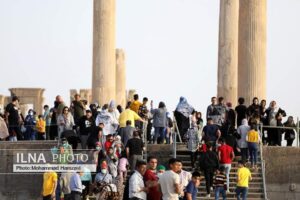
IRANIANS CELEBRATED NOWRUZ HOLIDAY/ PERSIAN NEW YEAR


27 March 2021

Marking the beginning of a new year, Nowruz traces its origins back to ancient Persia. Nowruz holiday and it is widely celebrated across the Iranian.

Nowruz— also known as the Persian New Year “new day”—is a holiday marking the arrival of spring and the first day of the year in Iran, whose solar calendar begins with the vernal equinox.
Nowruz has been celebrated in Iran and the Persian diaspora for more than 3,000 years as the victory of spring over darkness.🇮🇷

PHOTOS ILNA, MOHAMMAD HAMZAVI

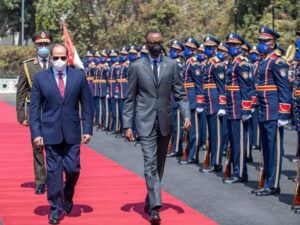
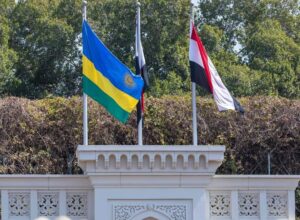
PRESIDENT KAGAME OFFICIAL VISIT TO EGYPT

27 March 2022

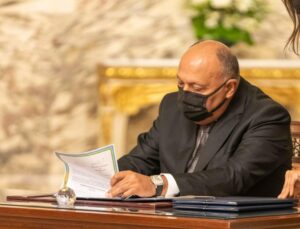
President Kagame visited Egypt for an Official Visit. During the visit President Kagame had tête-à-tête and bilateral meetings with President Abdel Fattah Al-Sisi.

President Kagame and President Al-Sisi presided over the signing of bilateral agreements in sectors of ICT, museums, youth, sports and training of diplomats.

President Kagame said: will create numerous opportunities, especially for entrepreneurs and young people. Protecting their future is essential for our continent’s sustainable development.

A good starting point will be to capitalize on the African Continental Free Trade Area, which is now operational

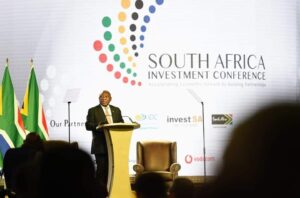
OPENING ADDRESS BY PRESIDENT CYRIL RAMAPHOSA AT THE 4TH SOUTH AFRICA INVESTMENT CONFERENCE, SANDTON, JOHANNESBURG

24 March 2022

We meet at a moment when our country, like many others, is facing huge challenges as a result of the COVID-19 pandemic.

Yet it is also a moment of great opportunity and promise.

For two years, our world has been battered by a pandemic far worse than any experienced in more than a century.
Our economy, like so many around the world, has been severely damaged.

Unemployment has deepened, resulting in the loss of almost 2 million jobs.
Businesses have closed and families across our nation have suffered great hardship.
But it could have been far worse.

Had we not acted swiftly to contain transmission and strengthen our health facilities, many more people would have gotten ill and many more lives would have been lost.

Had we not introduced an unprecedented social and economic relief package, many more businesses would have closed, many more jobs would have been lost and many more people would have gone hungry.

Not only did these measures provide vital support to those most affected by the pandemic; they also established a foundation for the recovery of our economy.

Due to the decline in COVID infections, hospital admissions and deaths, and thanks to the levels of vaccination and immunity, we have entered a new phase in the management of the pandemic.

We have been able to remove almost all restrictions on social and economic activity.
We are learning to live, to work and to build back and reconstruct with the virus in our midst.

This 4th South Africa Investment Conference could not be taking place at a better time, just as the country is casting off the long shadow of the pandemic and embarking on a concerted and determined recovery.

We are not unaware of the challenges our country faces. We know that our challenges are many, that they are complex and that they are protracted. But we are neither defined by these challenges, nor are we daunted by them.
Rather, we are dedicated to surely, steadily and decisively overcoming them.
I am not here to pretend that these challenges are not real. I am here to share with you about what has been done and what we are doing to meet these challenges.

I am here to say that as the government of the Republic of South Africa we are making progress along the difficult but necessary path of reform we embarked on three years ago, that we are starting to see the results.

Nowhere is this difficult path more apparent than in the sphere of energy. No economy can operate without a reliable supply of electricity.
That is why we have undertaken the most extensive transformation of our energy sector in nearly a century.

In December last year Eskom met its deadline of establishing a separate transmission entity, and is set to complete the process of unbundling into separate entities for generation, transmission and distribution by the end of this year.

We are moving ahead to facilitate a competitive market for electricity generation, and the establishment of an independent state-owned transmission company.

We have a deficit of some 4,000 MW of energy supply. We are working with the private sector to fast-track investment to unlock a potential 4,000 MW of embedded generation. We have increased the licensing threshold for embedded generation projects from 1 MW to 100 MW.

Last year, we launched bid window 6 of our Renewable Energy Independent Power Producer Procurement Programme.
This is going to add new generation capacity to the grid over the next two years, mainly through wind and solar power.

And so, even as the country continues to experience intermittent load shedding, we are moving with pace and determination to bring new generation capacity online in the shortest possible time.

We are doing so while undertaking the far-reaching reforms that will secure a reliable, affordable and sustainable supply of electricity well into the future.

For South Africa’s economy to realise its potential as a supplier of products to markets across the world, it needs roads, railways and ports that work.

While we undertake a range of measures to improve operational performance, we are also implementing structural reforms to increase investment, introduce new technologies and skills, and improve efficiency in our rail and port infrastructure.

The establishment of the Transnet National Ports Authority as a separate entity may not, at first glance, seem particularly transformational, but it is a long-overdue structural reform that will have a profound effect on investment in ports infrastructure.

Transnet will soon start the process of providing third-party access to the freight rail network, a development that will encourage more efficient use of some of our country’s most valuable infrastructure assets.

Last week, we concluded the first significant spectrum auction in close to two decades.

This is going to unlock valuable spectrum for mobile communications that will have significant benefits for consumers and businesses, and will facilitate the deployment of broadband infrastructure across the country.

Soon we will be completing the migration of our TV signal from analogue to digital, unlocking much of the country’s digital potential.

Our state owned enterprises have been a huge drain on the fiscus over the years. Our reform process is aimed at bringing this to an end.

Like many other countries, we are transforming our entire approach to state owned companies so that they are better able to fulfil their vital social and economic functions.

We have revised our Critical Skills List, which will enable us to attract skilled professionals to work and do business in South Africa.

It is our ambition to be an economy and a society that is open to global skills, that attracts talent, expertise and innovation.

We are establishing a special unit in the Presidency to deal with bureaucratic red tape and to improve the operating environment for businesses and to reduce the cost of doing business.

These reforms are not insignificant. Nor are they superficial. These reforms are contributing to an economy that, despite the setbacks of the last two years, is developing and transforming.

We see signs of this everywhere.
We see this in Postmasburg, a small town in the Northern Cape, where the country’s largest concentrated solar powered plant is being built as part of our Renewable Energy Independent Power Producer’s Programme.

We see it in the upgrades to the passenger terminal at Durban harbour, as part of a public private partnership with Transnet.

It can be seen at the Toyota plant in KwaZulu-Natal where the first hybrid vehicle produced in South Africa is being manufactured.
It can be seen in Cape Town where the Nant SA vaccine manufacturing campus is being built.

It can be seen in Gqeberha in the Eastern Cape where the largest pharmaceutical manufacturing site in Africa, owned by Aspen Pharmacare, is producing products for domestic consumption and export.

These are all places where investment commitments are being realised, where plants are being built, where jobs are being created, and where production is underway.

We are supporting these investments with a renewed focus on expanding the country’s economic and social infrastructure.

We have established the Infrastructure Fund, with a R100 billion allocation from the fiscus over 10 years, to leverage blended financing from private investors and multilateral development banks for infrastructure.

We have prepared a pipeline of projects in water, sanitation, energy, transport, digital infrastructure, agriculture, agro-processing and human settlements.

Construction on a number of these catalytic projects will commence this year.
A Presidential Climate Finance Task Team has been established to lead the mobilisation of funds for our just transition to a low-carbon economy.

Headed by former Reserve Bank Deputy Governor Daniel Mminele, this task team will lead engagements on the R131 billion just transition partnership with the European Union, France, Germany, United Kingdom and the United States.

This partnership will involve repurposing and repowering some of the coal plants that are reaching the end of their lives, and creating new livelihoods for workers and communities most impacted by this change.

All this work is part of the Economic Reconstruction and Recovery Plan that we put in place in October 2020 to drive growth and job creation in the aftermath of the pandemic.

The measures that form part of the plan underpin the social compact that we are building among social partners, and specifically between government, labour, business and the community constituency.

We seek a new consensus that draws together the resources, capabilities and efforts of all sections of society to achieve our common goal of a rapid and sustained recovery.

We see this social compact in action through initiatives like the Youth Employment Service, which is a collaboration between government and business to provide work experience opportunities to unemployed youth.

We see it at work in the Presidential Employment Stimulus, which has provided job and livelihood opportunities to over 800,000 people in the 17 months since it was established.

We see this social compact at work in our infrastructure programme, in the several industries that have developed masterplans to expand investment and production, and in our demand-led skills development programmes.

This is supported by a macroeconomic framework that is clear, stable and prudent.

We are working to steadily reduce our deficit and debt burden.

We are shifting public spending away from consumption and servicing debt towards supporting capital investment, productive activity and social development.

It is nearly four years since we embarked on the ambitious drive to raise R1.2 trillion in new investment over five years.

Despite the impact of the pandemic, by the time of the 3rd South Africa Investment Conference in 2020, we had raised a total of R774 billion in investment commitments.

We are two-thirds of the way to reaching our target.

Of the R774 billion committed, around R316 billion has so far been invested.

Of the 152 investment pledges, 45 projects have been completed.

A further 57 are under construction.

Fifteen have been put on hold, in several cases due to the impact of the pandemic.
The investments that have been realised since our first conference have created job opportunities, increased localisation and expanded local value chains.
They have brought skills, technology and know-how into our economy.

Whether it is a young person employed in a data centre, a worker at an auto plant, or a small business supplier to a renewable energy plant, these investments are changing people’s lives.

The chance to earn a decent livelihood is fundamental to the dignity and worth of every human being, and it is these investments that are making the difference.

Today, at this 4th South Africa Investment Conference, many companies will come forward to make new investment commitments.

They will do so because they see opportunity in this country.
They see beyond the difficulties and challenges.
They see reform and progress.
They see an open society that has enabled us to weather many storms.
They see a strong and vibrant democracy, a diverse media and an active civil society.
They see durable institutions, an independent judiciary and the rule of law.

After a decade of state capture, they see a country that is confronting corruption and criminality, and that is rebuilding its law enforcement agencies and strengthening the capacity of the state.

They see a well-regulated banking, financial and taxation system and a transparent budget process.

These investors see a Constitution that enshrines the rights of employer and employee alike, that advances the rights of the landless as it does those of property owners, that protects workers and businesses, and that prevents the arbitrary exercise of power.

As we continue along the path of reconstruction and recovery, I call on all investors, entrepreneurs and business people to be part of this journey.

As investors, you need to know that your investments are secure, that the operating environment is stable, and that you are supported by policy certainty and regulatory safeguards.

You need to know that the measures we are taking to tackle crime and damage to infrastructure are having an effect.

Your investments are making are a difference in local economies and in people’s lives.

We therefore invite you to be part of South Africa’s growth story.

We invite you to be part of a young, dynamic, resilient nation positioning itself at the forefront of progress and change.

We are forging ahead to transform our economy, to unlock our country’s potential and to create meaningful livelihoods for all our people.

And we are determined to leave no one behind.
THE OIC FOREIGN MINISTRY HAS ADOPTED FOUR RESOLUTIONS ON ARMENIA’S AGGRESSION AGAINST AZERBAIJAN


24 March 2022
The OIC Foreign Ministry has adopted four resolutions on Armenia’s aggression against Azerbaijan

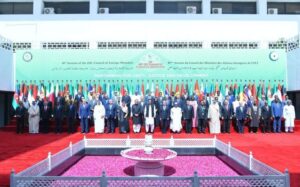
The 48th session of the Council of Foreign Ministers of the Organization of Islamic Cooperation (OIC) on “Building Partnership for Unity, Justice and Development” was held on March 22-23, 2022 in Islamabad, Islamic Republic of Pakistan.

According to the press service of the Ministry of Foreign Affairs , the session focused on a number of issues related to the Islamic world, including the activities of the OIC General Secretariat on the implementation of resolutions on Palestine and Jerusalem and Niamey 2020. The security situation in the period after the last Foreign Minister was discussed. The session also discussed other political issues, in particular the events in Afghanistan and its humanitarian consequences for the Afghan people, the situation in Jammu and Kashmir.
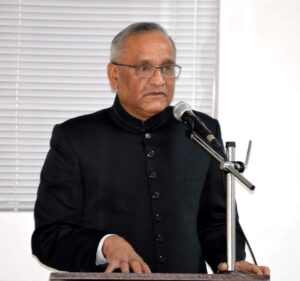
Azerbaijan was represented at the event by a delegation led by Deputy Foreign Minister Elnur Mammadov. Speaking at the session, the Deputy Minister informed the participants of the position of our country on a number of fundamental issues.

Within the framework of the 48th session of the ECO Foreign Ministry, covering political, economic and cultural issues related to the consequences of the Armenian aggression against Azerbaijan, “Elimination of the consequences of the Armenian aggression against the Republic of Azerbaijan”, “Economic assistance to the Republic of Azerbaijan”, Four resolutions were adopted:

“Destruction of historical and cultural monuments of Islamic culture in the territories of Azerbaijan” and “Solidarity with the victims of the Khojaly massacre.” We would like to note that these resolutions, traditionally adopted annually by the ECO, include new provisions, taking into account the latest situation in the region.

The resolution “Elimination of the consequences of the aggression of the Republic of Armenia against the Republic of Azerbaijan” welcomed the member states’ tripartite statement of November 10, 2020 on the liberation of the occupied territories of Azerbaijan as a result of retaliatory operations and the cessation of hostilities. It called for the normalization of relations between Armenia and Azerbaijan based on the sovereignty, territorial integrity and mutual recognition and respect of international borders.
Also in violation of Armenia’s The resolution “Destruction and insult of Islamic historical and cultural shrines in the territories of Azerbaijan as a result of the aggression of the Republic of Armenia against the Republic of Azerbaijan” The acts of vandalism were strongly condemned, and the insult of mosques in the newly liberated territories by Armenia was strongly condemned. The resolution affirms Azerbaijan’s right to demand compensation for the damage caused to it, and Armenia’s responsibility to pay this compensation.

The resolution “Economic Assistance to the Republic of Azerbaijan” states that the liberation of Azerbaijani territories will allow more than one million IDPs in Azerbaijan to return home safely and honorably, and thus eliminate serious humanitarian problems. In this regard, member states, the Islamic Development Bank and other Islamic institutions were urged to assist the government and people of Azerbaijan in the reconstruction and rehabilitation of IDPs to ensure the return of IDPs to the liberated lands. It also called on all international institutions to support Azerbaijan’s economic and social development.

The 48th meeting of the OIC Council of Foreign Ministers adopted a resolution entitled “Solidarity with the Victims of the Khojaly Massacre”. The states were called upon to make necessary efforts to recognize the crimes committed during the conflict in Khojaly and other occupied territories of Azerbaijan as war crimes, crimes against humanity and genocide at the local and international levels. The resolution also praised the activities of the international campaign “Justice for Khojaly” and called on member states to support the campaign and closely participate in its activities.

PAKISTAN NATIONAL DAY CELEBRATED IN SOUTH AFRICA


23 March 2022
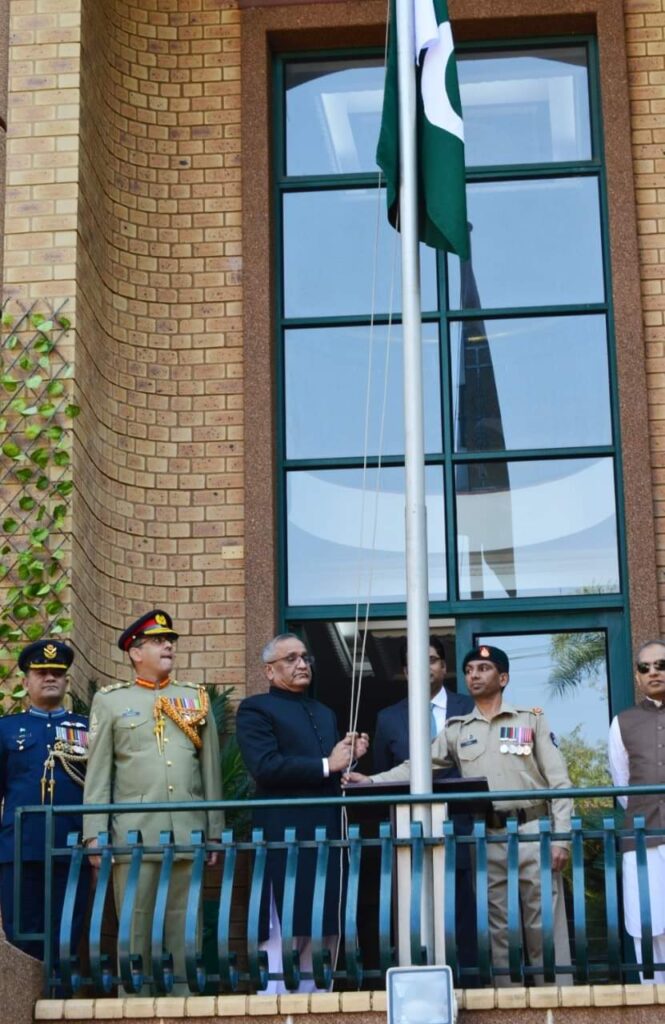
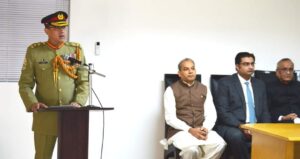
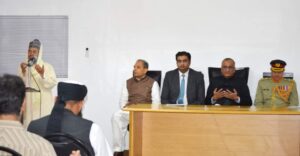
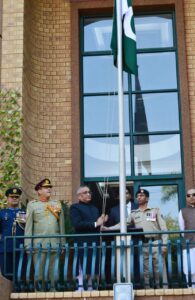
Pakistan National Day was celebrated in Pretoria with traditional zeal and fervor. The Day began with a graceful flag hoisting ceremony, to which entire Pakistani community was invited.

Messages of the President and the Prime Minister of Pakistan were read out.

The event was attended by a number of members of Pakistani community.

In his remarks, High Commissioner Dr. Mazhar Javed highlighted the significance of this historic day in the history of the Muslims of the subcontinent. Dr. Javed emphasized the need to pass-on the spirit of the Pakistan resolution and the two-nation theory to the youth of the nation.

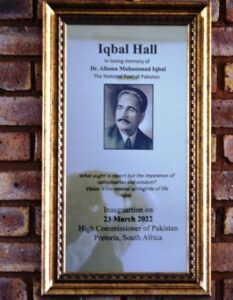
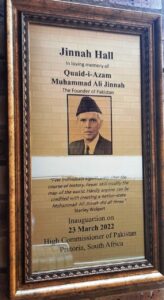
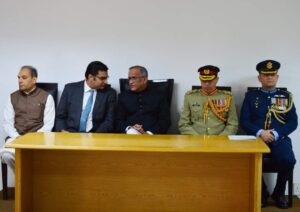
Two halls, Jinnah Hall and Iqbal Hall were inaugurated at the High Commission.

High Commission of Pakistan Pretoria, South Africa


23 March 2022

#pakistanissarelations
#pakistaninationalday #Pakistaninationalday
#pakistaniresolutionday