IT ALL BEGINS WITH EDUCATION IN EGYPT AND SOUTH AFRICA

13 October 2021

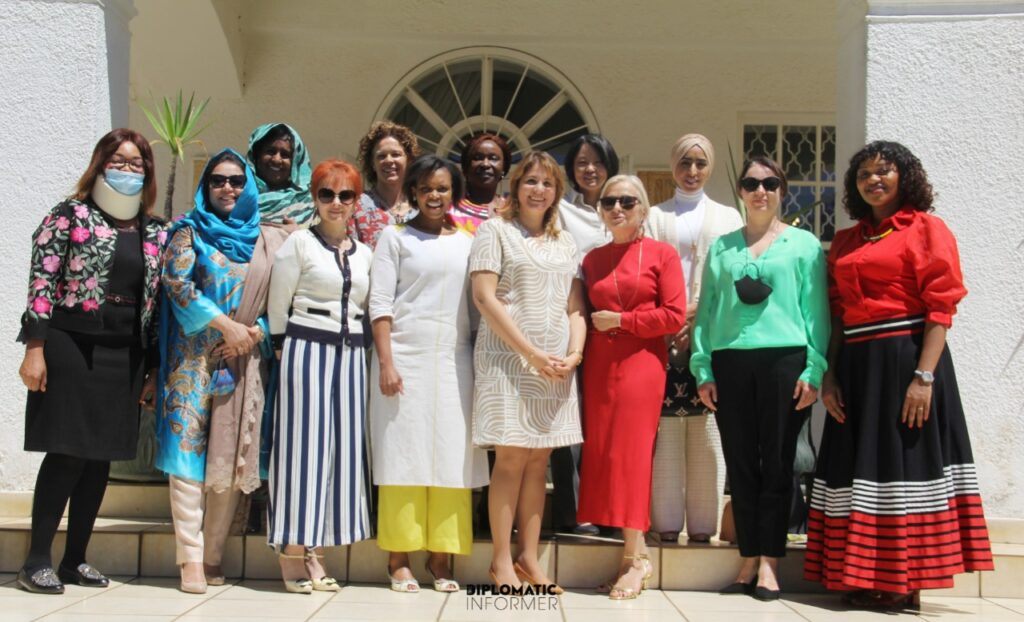
On Monday, October 11th, 2021, Mrs. Habiba Abdel Razek, the spouse of the Ambassador of Egypt to South Africa, Ambassador Ahmed El Fadly hosted Diplomatic Spouses and members of the African Show Coalition Institute (TASCI) in a charity event and a themed photo exhibition entitled “Cultural Diversity of South Africa”.

The event was arranged to support the renovation of ‘Baleni Secondary School’ in Pumzipika in the Eastern Cape. The student body there is promising despite seriously overpopulated classrooms, amidst a lack of basic services in a small and rather underprivileged community, such as water and electricity.

In her introductory remarks, Mrs. Abdel Razek referred to the importance of sponsoring sustainable development projects in realizing the full spectrum of development in communities. Simultaneously, eradicating illiteracy and poverty is imperative in ensuring the stability and safety of communities and countries from violence, crime and terrorism.

From her side, Mrs Bathandwa Kwababa, President of TASCI, stressed on the importance of the role played by the diplomatic community, NGOs and NPOs in the development of rural communities, and in supporting their battles against violence and crimes. As such, TASCI has a vision for developing learners, teachers and members of societies in townships, pre-urban and rural communities. Its mission is to support the creation of social cohesive bonds in society, and to enable learners, teachers and community members to rebuild their vibrant societies using cultural competency methods.

The event was attended by the Spouses of the Ambassadors of Austria, Côte d’Ivoire Georgia, Lithuania, Netherlands, Pakistan, South Korea, Sudan, Switzerland and UAE, and as well as media representatives.

Mrs. Habiba Abdel Razek considered the goals of TASCI to be similar to those of the “Decent Life Initiative” which is endorsed by the Egyptian President Abdel Fattah El Sisi. “In Egypt, we have the same initiative but on a much larger scale. Decent Life (Hayah Karima) is an initiative for the sustainable development of rural communities. It was endorsed by the President of Egypt in 2019,” said Mrs. Abdel Razek. “The main objective of the initiative is to improve the quality of life in the poorest rural communities within the framework of the “Sustainable Development Strategy: Egypt Vision 2030”.

The “Decent Life” Initiative has four main goals: improving living-standards by establishing micro-projects and supporting families most in need; investing in human capital by providing proper medical and educational services; developing infrastructure services by building decent housing; and ensuring the provision of vital services such as water and sanitation, and eventually reaching the ultimate goal which is raising the quality of human development services and economic development,” Ms. Abdel Razek added.

“Overall, the initiative targets rural communities. This entails covering 58% of the Egyptian population living in 4658 villages across the country. The estimated budget of the initiative is EGP 700 billion ($ 45 billion) and the stakeholders include State Agencies, 13 Ministries, NGOs, and the Private Sector” Mrs. Habiba Abdel Razek said.

She also added “The initiative is divided in three phases. We have completed the first phase, covering the worst 142 villages in terms of living conditions. Currently, we are implementing the second phase of this project. The implementation program for this initiative is planned to last for three years, by which we are expecting to witness a considerable improvement in the standard of living index in rural areas and therefore our overall index. This is why this initiative, is considered an unprecedented achievement in Egypt, one that has been hailed by the UNDP sustainable development platform for promising projects in 2021.”

By Ayman Walash, Counselor – Head of the Press & Information Office, Embassy of the Arab Republic of Egypt in Pretoria, South Africa
Images by The Diplomatic Informer Magazine SA

              Calvin Modirapula

KAZAKHSTAN’S INVESTMENT ACTIVITIES DISCUSSED AT UNCTAD WORLD INVESTMENT FORUM

BY STAFF REPORT

INTERNATIONAL ON 22 OCTOBER 2021

NUR-SULTAN – Kazakhstan’s measures to created favorable conditions for investments were presented at the virtual seventh United Nations Conference on Trade and Development (UNCTAD) World Investment Forum, which kicked off Oct. 18, reported the press service of the Kazakh Invest national company.

As a main part of the United Nations Secretariat, the UNCTAD has a mission to maximize the trade, investment and development opportunities of developing countries and assist them in their efforts to integrate into the world economy on an equitable basis.

Kazakhstan took the leading position in the international UNCTAD ranking among countries with transition economies and among landlocked countries in the latest UNCTAD report on global investment. This was achieved due to the measures initiated by the Kazakh government, said Deputy Chairman of the Board of Kazakh Invest Zhandos Temirgali.

Temirgali noted that investment promotion strategies should be developed considering new realities and meet the UN Sustainable Development Goals.

“We see that the crisis can open up new opportunities for further diversification of the economy in the field of food production, medical devices, as well as other types of products with high added value. In addition, the pandemic has shown the growing importance of agribusiness and food security. It is important to note that in 2020 Kazakhstan ranked 32nd in the Global Food Security Index. In addition, today the factors of the environmental, social and corporate governance criteria are becoming significantly relevant. Within the framework of the adopted Green Economy Concept, Kazakhstan has set a clear goal to become a carbon-neutral country by 2060,” he said.

The Kazakh Invest national company operates as a single negotiator on behalf of the Kazakh government in discussing the prospects and conditions for the implementation of investment projects. The company also promotes sustainable socio-economic development by attracting foreign investment in priority sectors and supports investment projects.

One-Stop Shop for investors on the provision of public services, is a CRM system to monitor and control the progress of investment projects and also serve as a hotline for investors as providing service support 24/7 are among its major initiatives.

During the meeting, the experts also spoke about the negative impact of the pandemic on the global investment environment. In this regard, sustainable economic recovery is a priority task for developed and developing countries. The parliamentary monitoring of economic management issues related to the regulation of the investment sphere are important.

According to the latest UNCTAD’s Investment Trends Monitor, the global foreign direct investment (FDI) flows in the first half of 2021 reached an estimated $852 billion, showing stronger than expected rebound momentum. The increase in the first two quarters recovered more than 70 percent of the loss induced by COVID-19 in 2020.

“The global FDI outlook for the full year has improved from earlier projections. However, the current momentum and the growth of international project finance are likely to bring FDI flows back beyond pre-pandemic levels,” the report says.

The Astana Times

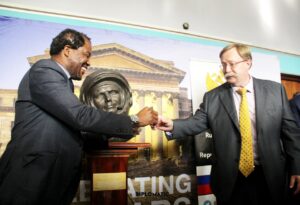
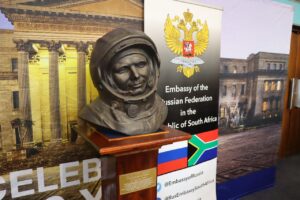
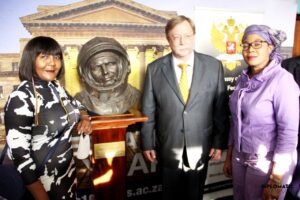
EMBASSY OF RUSSIA IN SOUTH AFRICA UNVEILED THE BUST OF YURI GAGARIN – WORLD’S FIRST COSMONAUT – AT WITS PLANETARIUM

22 October 2021

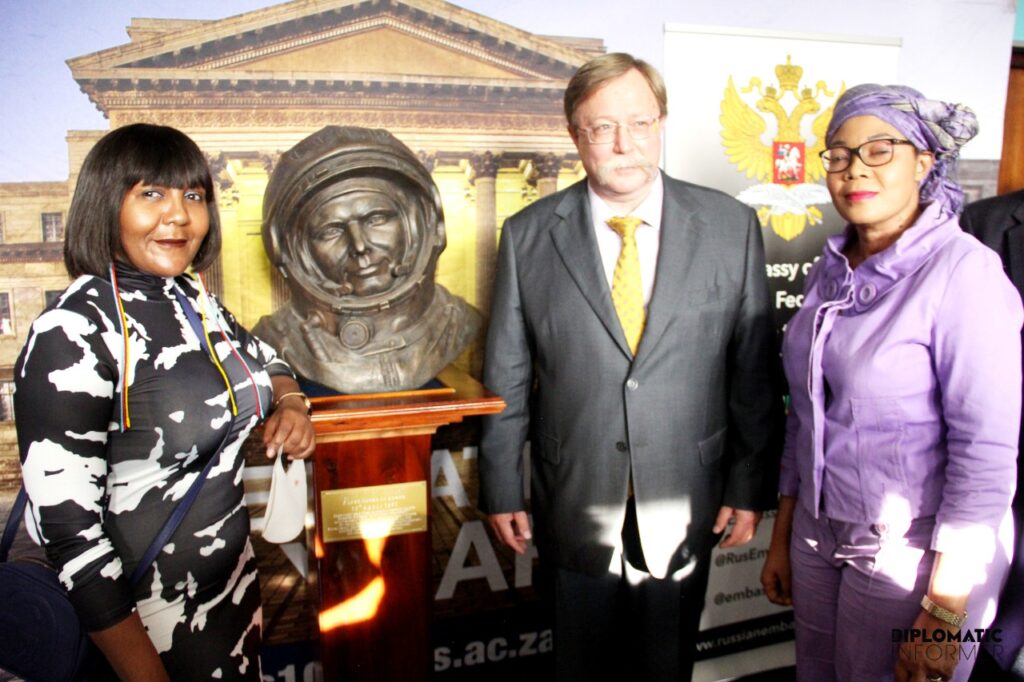
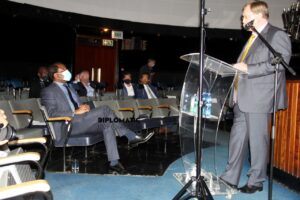
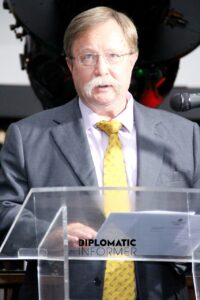
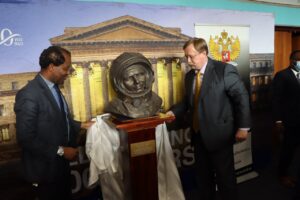
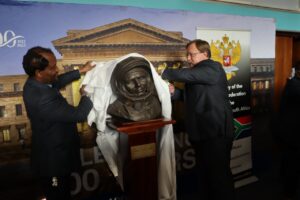
Russian Ambassador to South Africa His Excellency Mr. Ilya Rogachev & Professor Zeblon Vilakazi, Vice-Chancellor and Principal of Wits University, unveiled the bust of Yuri Gagarin – world’s first cosmonaut – at Wits Planetarium

On Thursday, 21 October 2021, The Russian Embassy in South Africa and Wits University celebrated 60 years of human space exploration with the unveiling of a bust of Yuri Gagarin, the first man to reach outer space in a spacecraft.

The occasion coincided with a celebration of the 60-year anniversary of the Planetarium at Wits University, where the bust was on display.

Yuri Gagarin made his – and humanity’s – maiden flight in outer space on 12 April 1961 after launching from the Baikonur Cosmodrome in the USSR. His flight in the spacecraft named Vostok 1 took one hour and 48 minutes after which he returned to Earth’s atmosphere. He ejected as planned at 7000 m and landed near Engels.

Gagarin’s comment at the time of his launch “Poyekhali! (Off we go!),” became widely known in Russia and is one of the key milestones in the Space Race between the Soviet Union and the United States, which culminated in the Americans landing on the Moon and the establishment of the International Space Station where global cooperation across all countries became a norm.

“This year we are celebrating the 60th anniversary of Yuri Gagarin’s journey to outer space which took place on 12 April 1961. Today the significance of his extraordinary achievement is still as relevant as it was 60 years ago and, we hope, it will never be forgotten. Preserving the memory – is one of the main objectives of today’s event and it is definitely the most noble one,” says H.E. Mr. Ilya Rogachev, Russian Ambassador to South Africa.

The gift of the statue of Gagarin’s bust was made to Wits University as part of the global campaign dedicated to the 60th anniversary of Yuri Gagarin’s flight to outer space.

Professor Zeblon Vilakazi, Vice-Chancellor and Principal of Wits University said Wits is thankful to receive the bust as a donation from the Russian Federation.

“I believe this donation will inspire many young people to know that the exploration of space is not just the confines of one country, but that it is part of a broader search to explore beyond our latitudes,” says Vilakazi. “Science has no borders. Science is about the exchange of information. This is part of the intellectual, cultural and scientific exchanges between Wits, South Africa and the Russian Federation and I am certain that the Ambassador of the Russian Federation made this kind gesture in the spirit of international cooperation.”

Gagarin’s bust will be on display in the Planetarium at Wits as part of an exhibition on space exploration and the history of the Planetarium. The Planetarium falls under the curatorship of the School of Physics, Faculty of Science at Wits University and will soon see an evolution into a new multifunctional, multidisciplinary Digital Dome under the helm of Professor Roger Deane, Director of the Wits Centre for Astrophysics.

“We have assembled a team ranging from digital artists to artificial intelligence experts, engineers and physicists, with a vision to transform the Planetarium into a cutting-edge digital facility, while building on its proud history which dates back to Gagarin’s historic flight,” says Deane.

“The Planetarium is the place where thousands of school children developed their first impressions of Wits University during science educational tours over the years, and a science engagement facility capturing the imaginations of the general public,” says Professor Deena Naidoo, Head of the School of Physics at Wits University.

“In addition, we look forward to the new Digital Dome which will serve as a new hub for Researchers and Postgraduate training across many disciplines to inspire a new generation of scientists and explorers and broaden our links with the People of the Russian Federation for future collaborations, and the sharing of knowledge and ideas.”

MINISTER PANDOR CONCLUDES SUCCESSFUL VISIT TO ABIDJAN

22 October 2021

The Minister of International Relations and Cooperation, Dr Naledi Pandor, has concluded her successful visit to Abidjan, where she led a South African delegation at the inaugural Joint Commission for Cooperation (JCC) between the Republic of Côte d’Ivoire and the Republic of South Africa.

Minister Pandor co-chaired the JCC, held on 19-21 October 2021, with her Ivorian counterpart, Minister Kandia Camara.

On 20 October 2021, Minister Pandor held meetings with the Minister of Defence, Mr Téné Birahima Ouattara; and the Minister of Planning and Development, Ms Nialé Kaba.

Addressing the ministerial segment of the JCC on 22 October 2021, Minister Pandor said South Africa and Côte d’Ivoire were looking at strengthening economic, social, scientific and technical cooperation.

The JCC noted that trade and investment relations between South Africa and Côte d’Ivoire have improved. However, the two delegations said there is still room for further growth.

The two countries agreed that a number of draft memoranda of understanding must be finalised in time for signature during the upcoming State Visit to the Republic of Côte d’Ivoire by President Cyril Ramaphosa, to be undertaken before the end of 2021.

Whilst in Abidjan, Minister Pandor paid a courtesy call on the President of the Republic of Côte d’Ivoire, HE Alassane Ouattara.

ISSUED BY THE DEPARTMENT OF INTERNATIONAL RELATIONS AND COOPERATION

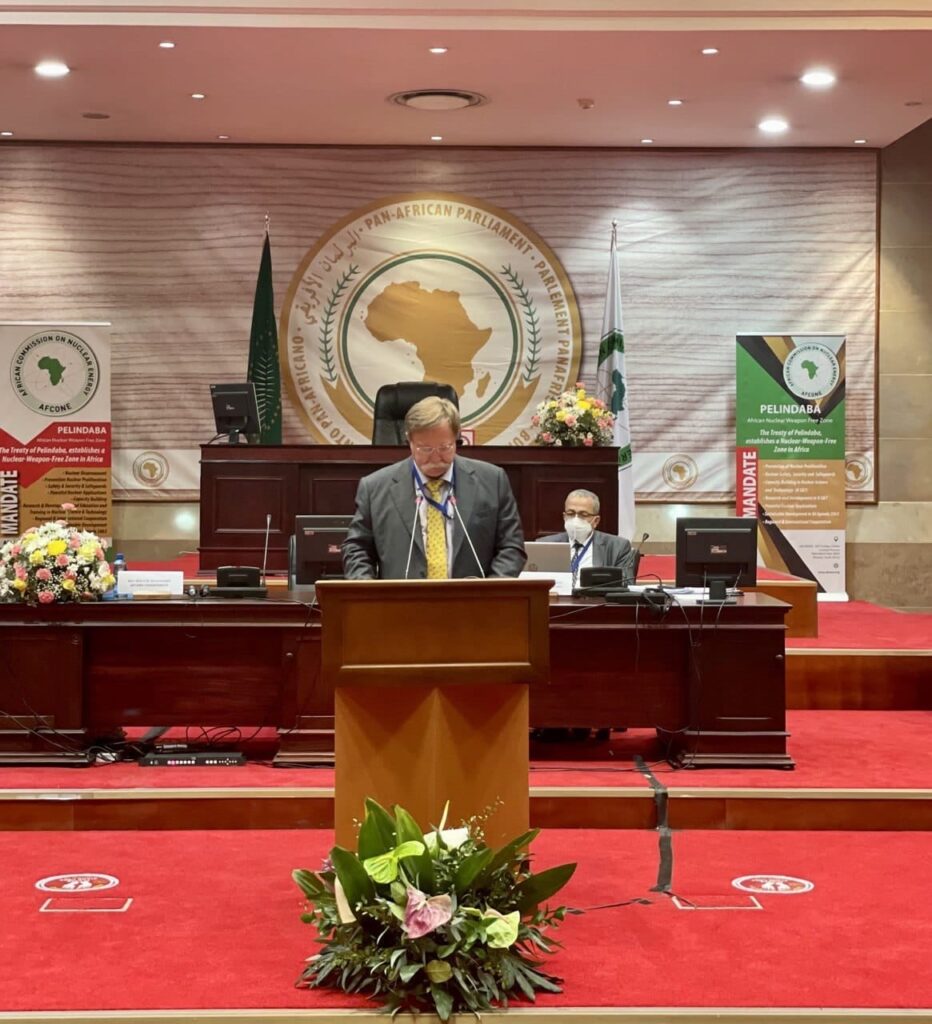
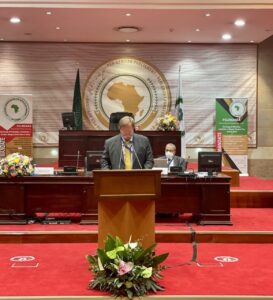
STATEMENT DELIVERED BY H.E.MR. ILYA ROGACHEV, AMBASSADOR OF THE RUSSIAN FEDERATION TO THE REPUBLIC OF SOUTH AFRICA AND THE KINGDOM OF LESOTHO, AT THE 5TH CONFERENCE OF THE STATE PARTIES TO THE PELINDABA TREATY (MIDRAND / JOHANNESBURG, 21-22 OCTOBER 2021)

Distinguished delegates, colleagues,

Ladies and Gentlemen,

It is a pleasure to greet all the participants of the 5th Conference of the States Parties to the Pelindaba Treaty. I am grateful to the organizers for the invitation to this important forum.

Russia as one of the initiators and depositories of the NPT supports the creation of nuclear-weapon-free zones provided for in the Article VII of the Treaty. We highly appreciate the decision of the African States to establish such a zone in the region.

During 25 years of the Pelindaba Treaty existence it has become an essential element of the system of agreements that form similar zones in other regions of the planet: in Latin America and the Caribbean – the Treaty of Tlatelolco, in the South Pacific – the Treaty of Rarotonga, in Southeast

Asia – the Bangkok Treaty, in Central Asia – the Semipalatinsk Treaty, as well as in Mongolia, which has officially declared itself a nuclear-weapon-free State.

The Pelindaba Treaty is good evidence of the African States’ commitment to achieving the goal of a world free of nuclear weapons, as well as strengthening the nuclear non-proliferation regime, and their readiness to significantly contribute to strategic stability and international security.

The establishment of nuclear-weapon-free zones is an important factor of ensuring international peace. Within this framework, nuclear states provide security assurances to non-nuclear-weapon countries against the use or threat of use of nuclear weapons. Russia has signed protocols to the existing nuclear-weapon-free zone treaties, thus providing appropriate assurances to more than a hundred Member States of the relevant international agreements.

The Russian Federation signed the Protocols I and II to the Treaty on the Nuclear-Weapon-Free Zone in Africa. The reservations made by our country when signing these Protocols are of purely clarifying nature and in no way affect the interests of those states that respect «the letter and spirit» of the Treaty.

Nowadays four nuclear weapon states provide security assurances to the States Parties of the Pelindaba Treaty. To accomplish the development of the security environment of the region the ratification of the relevant Protocols to the Treaty by the United States is required.

We call on Washington to demonstrate its commitment to the goals of the nuclear non-proliferation regime and address this important issue without delay.

Speaking of nuclear-weapon-free zones in general, it is worth mentioning the efforts of the Middle East countries aimed at the establishment of a Middle East Zone Free of nuclear weapons and Other Weapons of Mass Destruction, as provided for by the resolution of the 1995 NPT Review and Extension Conference.

Russia is an active proponent of the creation of this zone. Our country took part in the first Conference on its establishment, held in November 2019 in New York City as an observer, actively contributed to its convening and successful holding. This event became the first practical step in many years’ efforts towards the creation of a WMD-free zone in the Middle East.

We intend to participate in the second Conference on establishing the Zone which is going to take place from 29 November to 3 December 2021.

Distinguished Chairperson,

Ladies and Gentlemen,

The 10th NPT Review Conference, which was postponed due to the COVID-19 pandemic, is scheduled for the beginning of the next year. In the current situation when we face global challenges in the area of arms control and non-proliferation, the States Parties to the NPT need to consolidate their efforts to ensure its stability. In particular, it is important to avoid focusing on disagreements and to hold the Review Conference in the most conflict-free manner, so that it will help to strengthen the nuclear non-proliferation regime and reaffirm all the obligations and rights of countries in accordance with the Treaty.

Thank you for your attention.

LIBERIAN TEEN WHO RETURNED MISSING $50K REWARDED BY PRESIDENT WEAH

20 October 2021

FRANCIS AKHALBEY

Emmanuel Tuloe became a national hero after he returned missing $50,000 to the person who lost it.

A Liberian teenager who recently made national headlines after he returned missing $50,000 to a businesswoman who lost it has been rewarded by President George Weah for his good deed.

According to the Associated Press, Emmanuel Tuloe, 18, found the lost bundle of cash on a highway while he was driving his motorcycle taxi. The money in question belonged to a businesswoman who had accidentally dropped it.

“I was afraid because it was plenty (of money) and so I brought it home and gave it to my aunty to keep until the owner could ask for it,” he said.

After realizing she had lost the money, the teen said the businesswoman tearfully went on the radio to appeal to whoever may have found her money to return it. Tuloe said he subsequently returned the missing cash.

As a sign of gratitude, the businesswoman rewarded Tuloe with cash and other items valued at around $1,500. And after the story made national headlines, the president of the West African nation offered to also meet the teen.

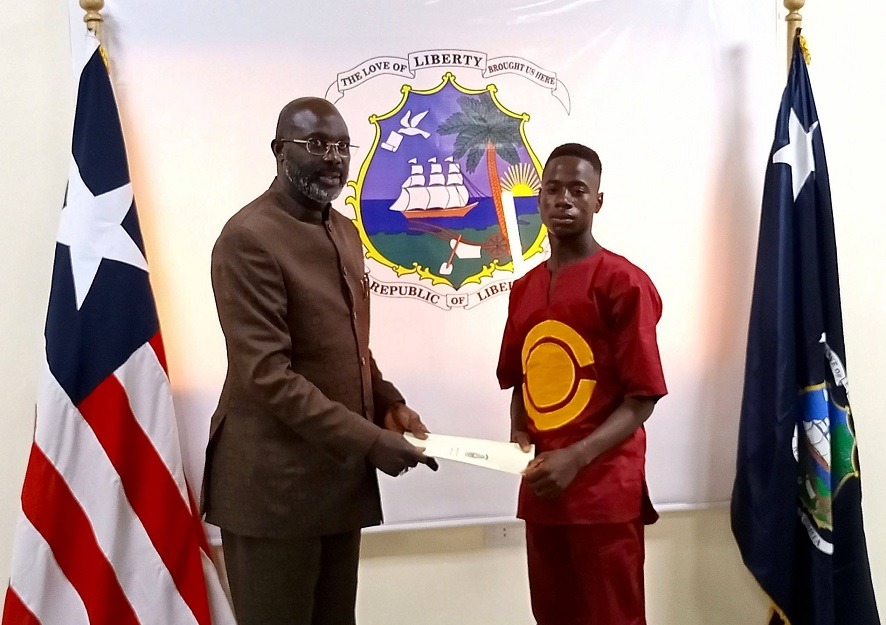
At their meeting, President Weah rewarded Tuloe with $10,000, two motorcycles, a scholarship that would cover his education through to the graduate level, and an opportunity to work in the office of the president, BBC reported.

“This scholarship is personal from me and my family, and will be valid whether or not I am President of Liberia,” President Weah said, per the Liberian Observer.

“I want to inform you that, at the next national investiture ceremony, you will be recognized and honored with one of Liberia’s highest Orders of Distinction for your honesty,” he told the teen. “Additionally, I am hereby presenting you, herewith enclosed, an amount of Ten Thousand (US$10,000.00) United States Dollars, as well as two (2) brand-new motorcycles for you to improve your circumstances and sustain yourself financially.”

Even though Tuloe was hailed as a national hero for his honesty, the teen said some of his friends and other people ridiculed him for returning the money as it’s something uncommon in a country ravaged by poverty and still recovering from two civil wars.

“Since the end of the civil war honesty has been a problem here… People just don’t understand why a struggling young man who had to leave school because of difficulties would see money and decide to return it to the owner. So it’s resonating well with people across Liberia,” BBC’s Jonathan Paye-Layleh said.

MINISTER PANDOR LEADS SA’S DELEGATION AT THE CÔTE D’IVOIRE-SOUTH AFRICA JCC

19 October 2021

The Minister of International Relations and Cooperation, Dr. Naledi Pandor, is expected to arrive in Abidjan today, 19 October 2021, where she will lead a South African delegation at the inaugural session of the Joint Commission for Cooperation (JCC) between the Republic of Côte d’Ivoire and the Republic of South Africa.

The Côte d’Ivoire-South Africa JCC was established in 2015. The JCC is being preceded by meetings of senior officials from the two countries today, 19 October 2021. The ministerial segment of the JCC is scheduled for 20-21 October 2021.

The JCC will provide an opportunity for the two countries to review the status of bilateral relations and exchange views about continental and global issues of mutual concern.

South Africa and Côte d’Ivoire enjoy cordial diplomatic relations, formally established in May 1992.

Leaders from the two countries have in recent times held meetings on the sidelines of major international events and reiterated the importance of strengthening diplomatic and trade ties.

Enquiries: Mr Clayson Monyela, Spokesperson for DIRCO

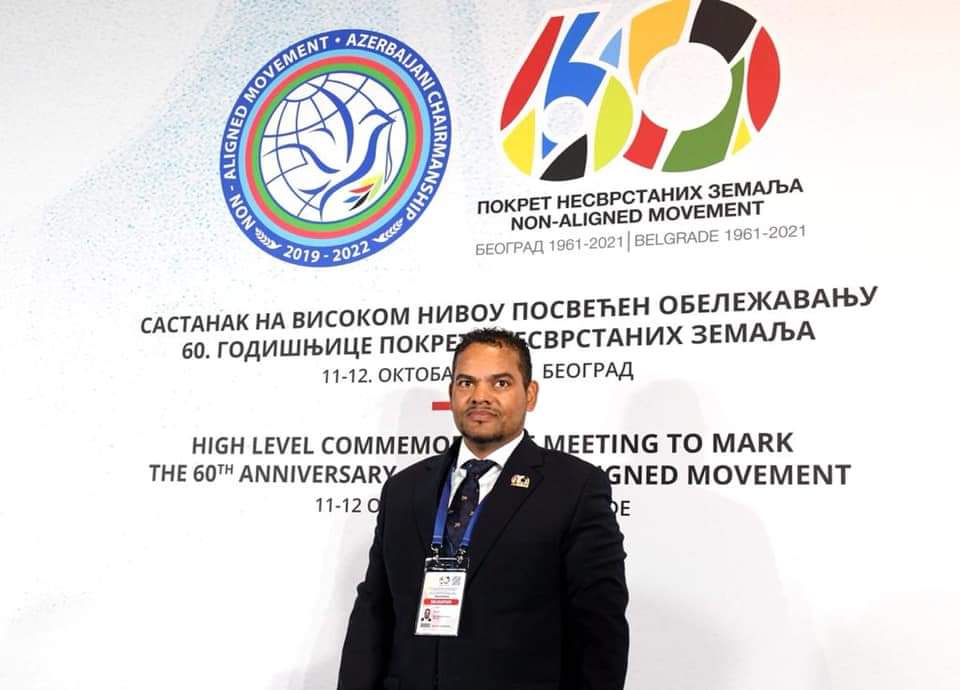
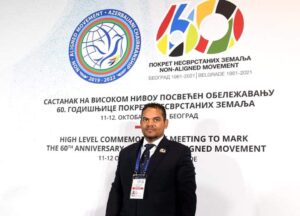
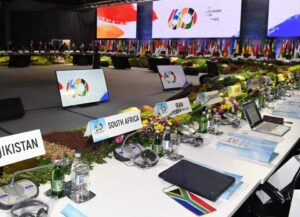
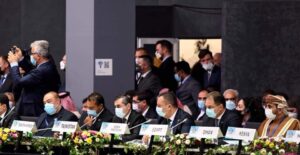
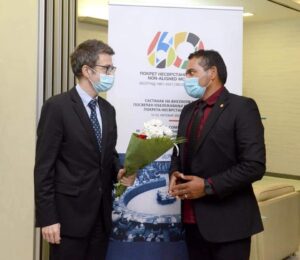
STATEMENT BY MR ALVIN BOTES, DEPUTY MINISTER OF INTERNATIONAL RELATIONS AND COOPERATION, ON THE OCCASION OF THE HIGH-LEVEL COMMEMORATIVE MEETING TO MARK THE 60TH ANNIVERSARY OF THE NON-ALIGNED MOVEMENT

12 October 2021

HE Mr Aleksander Vučić, President of the Republic of Serbia and co-host of this commemorative meeting,

HE Mr. Ilham Aliyev, President of the Republic of Azerbaijan, the Chair of the Non-Aligned Movement,

Ministers,

Excellencies,

Distinguished guests,

I wish to express my delegation’s sincere appreciation to the Government and people of Serbia, for hosting this High-Level Commemorative Meeting to mark the 60th anniversary of the Non-Aligned Movement (NAM) and the hospitality extended to me and my delegation since our arrival in this beautiful city of Belgrade.

We would like to express our appreciation to the Chair of our Movement, Azerbaijan, for the excellent work they continue to carry out – of coordinating and steering the activities of this glorious Movement.

We are indeed honoured that we are able to meet here in Belgrade, where the first Conference of the Non-Aligned Movement took place, and to commemorate the milestone of 60 years of the illustrious existence of this gigantic Movement.

Excellencies not have a permanent secretariat, the administrative responsibility of capturing all the documents and statements delivered at NAM Summits have rested on the Chairs of NAM. Since 1961, there have been 18 Chairs with Uganda taking over as the 19th Chair of NAM in 2023. South Africa would like to propose that a single website be created where all NAM documents since 1961 could be found. In the age of digitisation of information, this is important that the history of this Movement not be lost. This could be maintained and run by each chair in office,

Excellencies,

South Africa was not part of the NAM at its creation. However the movement was instrumental in galvanising international solidarity against the racist Apartheid regime. Shortly after South Africa’s democratic elections in 1994, we had the privilege of chairing the Movement and participation in the work of the NAM remains a key priority of our foreign policy.

Excellencies,

This year also marks the 20th anniversary of the entry into force of the African Union’s (AU) Constitutive Act. The commemoration reflected on the key factors that facilitated the transformation of the Organisation of African Unity (OAU) founded in 1963 to the AU established in 2002 as its successor.

You will recall the role that Africans played in the formation of the Non-Aligned Movement, and its existence over the years.

This provides us with an opportunity as we commemorate 60 years of NAM’s existence, to locate, in the same context, the struggles of the African people for decolonisation, economic independence and sustainable development.

The world has changed since Marshall Tito, Gamal Abdel Nasser, Jawaharlal Nehru, Ahmed Sukarno and Kwame Nkrumah, first met to reflect on issues of international relations, peace and security, conflicts and development.

We are here today presented with an opportunity to look back and reflect on our common achievements of the past 60 years and agree on a shared vision of the Movement’s role for the next 60 years.

One of the most critical questions that have been raised, concerns the relevance of NAM in today’s globalised world.

This Movement was formed at the height of the Cold War, and adopted the important principle of non-alignment.

It is NAM that brought the concept of non-alignment closer to the concept of the centrality of multilateralism. Made up of 25 countries at its formation, it has today grown to 120 members.

As we take stock of what we all have achieved under the banner of the Non-Aligned Movement, we are proud that since Bandung, NAM became a home for developing countries, as it demanded the resolution of international tensions and wars. It called for peace and disarmament, inspired by the principle of non-alignment.

We are grateful to the role that NAM has played in the decolonisation of our continent of Africa and the struggle against Apartheid in our country.

The NAM brought a new appreciation to the important principle of the sovereignty of states. More than anything, the NAM brought back our pride as a people, worthy enough to enjoy all the rights contained in the United Nations Charter – which all human beings enjoy.

Excellencies,

As we celebrate 60 years of a sometimes turbulent and trying history, which culminated in the liberation of so many, we shall not stand oblivious to the challenges that lie ahead of us all. As we begin our next 60 years, including moving forward towards our Centenary, we are inspired by the words of our icon and statesman President Nelson Mandela, during the 1998 NAM Summit:

“We commit ourselves to work tirelessly for the eradication of poverty and under-development”. He went further to say that as NAM “we need to encourage the peaceful resolution of conflicts within and between countries, to defeat terrorism and vigorously pursue the objective of nuclear disarmament”.

True to these words, spoken more than two decades ago, the Non-Aligned Movement will have to tirelessly deal with the challenge of global pandemics such as COVID-19; poverty and underdevelopment; peaceful resolution of conflicts; terrorism; climate change; respect for human rights; issues of disarmament; the quest for self-determination and remain steadfast in our condemnation of  unilateral coercive measures.

The right of the Palestinian people to self-determination has been called for by this Movement for as long as it has been in existence. We have a responsibility as members of NAM, to spare no effort in finding a just, lasting and peaceful solution in terms of the relevant United Nations resolutions. There can be no global peace or justice until the Palestinian people are free from occupation and are able to exercise the rights for which this Movement stands.

South Africa reiterates its position that the people of Western Sahara have the right to self-determination in line with the relevant African Union decisions and UN General Assembly and Security Council resolutions.  We welcome the appointment of Mr Staffan de Mistura as UN Personal Envoy for Western Sahara. It is vital that the political process be resuscitated under his leadership in order to break the current political impasse. A key priority for the Personal Envoy should be to get the parties to recommit to the 1991 ceasefire agreement and to move the parties towards a mutually acceptable negotiated settlement resulting in the long outstanding referendum that will realise the right of the people of Western Sahara to their self-determination.

South Africa further affirms its solidarity with the peoples of Cuba, Iran, Venezuela and Zimbabwe. As NAM we should continue to call for the immediate lifting of all unilateral sanctions against these fellow NAM countries that have caused untold damage to their economies and people. At a time when resources and assistance are needed to respond to the COVID-19 pandemic and to save lives, these sanctions have not only remained but have been intensified and this is a grave violation of international law.

All these issues will require us to continue to contribute to the strengthening of multilateralism and ensuring that the UN remains at the centre of global governance.

These are the challenges of our time and the future. We have to define a common vision to deal with these various challenges. We need a Movement that is ready and confident, willing to redouble its efforts in a manner that will prove to the sceptics, that NAM represents the future.

The COVID-19 pandemic has illustrated that, only through our solidarity and support for each other, would we be able to avert, or minimise a resurgence of COVID-19, as we can see happening elsewhere in the world.

NAM’s response to COVID-19 in particular, has strengthened the unity within the Movement. Vaccine nationalism has, unfortunately, taken hold with the developed world vaccinating its populations at rapid speed whilst developing countries are largely left behind. NAM has been at the forefront of calls for equitable distribution of vaccines.

In this regard, we reiterate our call for a temporary waiver of certain provisions of the World Trade Organisation’s TRIPS Agreement to allow more countries, particularly low- and middle-income countries, to produce COVID-19 vaccines.

As NAM, we should continue to call upon the international community – for the sake of all humanity – to support and work with the World Health Organisation (WHO) and its Director-General, Dr Tedros Ghebreyesus, in leading the fight against this pandemic.

South Africa would like to take this opportunity to also congratulate the Dr Tedros and the WHO on the malaria vaccine breakthrough. The world’s first malaria vaccine endorsed by the WHO is a game-changer in combating the disease on the African Continent. This decades-long collaborative partnership between the WHO and African countries has led to resolving and bringing solutions to some of our health problems.

Excellencies,

Twenty-seven years after our liberation in South Africa, we remain indebted to the role that NAM has played in our struggle against Apartheid. For this reason, my country will continue to contribute to the strengthening of this august Movement, in order for it to discharge its historic responsibilities.

South Africa is of the firm view that NAM remains relevant in today’s inter-connected world and this high-level meeting provides an opportunity to re-affirm the principles that have guided this movement in the past 60 years. Indeed, it also provides an opportunity to consolidate unity, coherence and solidarity of our Movement as we march towards the future.

In an effort to strengthen multilateralism, NAM will have to remain resolute in its call for the reform of Institutions of Global Governance, in particular the International Monetary Fund, World Bank and the United Nations.

We should continue to contribute to the debate on the reform of the UN in general, and the Security Council in particular. The current anachronistic composition of the Security Council and the lack of representation of Africa in the permanent category are unsustainable.

The Security Council has to be reformed as a matter of urgency to reflect the current global realities, for it to remain relevant and maintain its legitimacy.

The Movement has to remain at the forefront of the struggle for the advancement and promotion of human rights and fundamental freedoms; gender equality and women empowerment. In this regard, we should take advantage of the review of the Human Rights Council and find ways to improve and strengthen the Council to make it more responsive, effective and efficient.

The scourge of racism, racial discrimination, xenophobia and other related intolerances remain a challenge to this day.

We have to continue to ensure that the fight against racism remains on the agenda of the international community, and the UN, in particular.

This year marks the 20th anniversary of the adoption of the Durban Declaration and Programme of Action. The Durban Declaration and its Programme of Action remains the main programme in the fight against racism and NAM should continue to call for its full and effective implementation.

Excellencies,

Throughout the 60 years of NAM’s existence, disarmament and peace has been a basic principle of non-alignment. We must remain resolute in our commitment towards disarmament, non-proliferation and arms control.

South Africa believes that the Non-Proliferation Treaty should remain the cornerstone of the nuclear disarmament and nuclear non-proliferation regime, leading to an eventual world free of nuclear weapons.

The lack of concrete progress in the area of nuclear disarmament, however, remains of great concern. The unequivocal undertaking by Nuclear Weapon States should be honoured, as it is only through nuclear disarmament that comprehensive non-proliferation may be achieved. True security cannot be achieved by expecting Non-Nuclear Weapon States to forgo nuclear weapons while Nuclear Weapon States do not disarm. The integrity of the Non-Proliferation Treaty cannot be safeguarded by only focussing on the security interests of some States.

It is further important that States’ inalienable right to nuclear material, equipment and technology for peaceful purposes is realised and not be subjected to unwarranted restrictions.

In this context, South Africa continues to support the full and effective implementation of the Joint Comprehensive Plan of Action (JCPOA) or the “Iran Nuclear Deal.”

The Non-Aligned Movement should continue to be a significant and major player in UN peace-keeping operations. We must therefore, as a collective, remain steadfast in ensuring that the UN peacekeeping operations at all times adhere to the guiding principles of peacekeeping and that all peacekeeping mandates support and complement political processes and strategies.

Excellencies,

As developing countries, our overriding objective is to fully implement the United Nations 2030 Agenda on sustainable development. The NAM therefore adds an important political voice to that of its sister body, the Group of 77, on the need to eradicate poverty and achieve sustainable development, leaving no one left behind.

There are several key upcoming international conferences related to sustainable development, such as the United Nations Framework Convention on Climate Change’s UN Climate Change Conference (COP26) and the UN Convention on Biological Diversity (COP15), where we need progressive and ambitious outcomes that include massively scaled-up and appropriate means of implementation support for developing countries.

During times of COVID, where there is no uniformity as to whether meetings are in-person, online or in-person, we also need to ensure that all developing countries are able to participate effectively and be fully represented, without any discrimination.

Excellencies,

The next 60 years will be long, rough and bumpy, but the same resolve and principles that sustained us until now will see us through. The NAM, based on its tried and tested principles, remains a progressive force of the South and more than ever relevant in today’s world.

In conclusion,

We would like to take this opportunity to inform this august gathering that the people of South Africa will next year, in January, celebrate the 110th anniversary of the African National Congress – the oldest political movement in Africa. Throughout its existence, the ANC drew its inspiration from the liberation and decolonisation struggles of NAM Member States.

I thank you!

TOP 10 LARGEST PRODUCERS OF COTTON IN AFRICA 2020

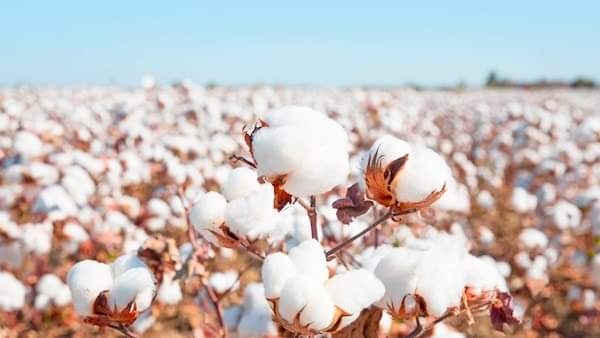
Cotton is the most important cash crop in the textile industry. It is used in making clothes, canvas, cotton seed oil is derived from the plant, cosmetics, etc. It is also a food crop. Most of the clothes we wear are from cotton or a mixture of cotton and synthetic fibers and fabrics (crude oil).

Here are the top 10 largest producers of cotton in Africa and their global rankings for 2020 in Bales.

1. Benin – 1.35 million 10th

2. Ivory Coast – 1milliion 13th

3. Burkina Faso – 900,00015th

4. Cameroon – 640,000 17th

5. Sudan – 600,000 18th

6. Mali – 400,000 21st

7. Tanzania – 375,000 22nd

8. Nigeria – 350,000 23rd

9. Chad – 330,000 24th

10. Ethiopia -240,000 28th

#cotton #africa #agriculture #world

35TH ANNIVERSARY OF THE PASSING  OF PRESIDENT SAMORA MACHEL OF MOZAMBIQUE, THE MBUZINI TRAGEDY

19 October 2021

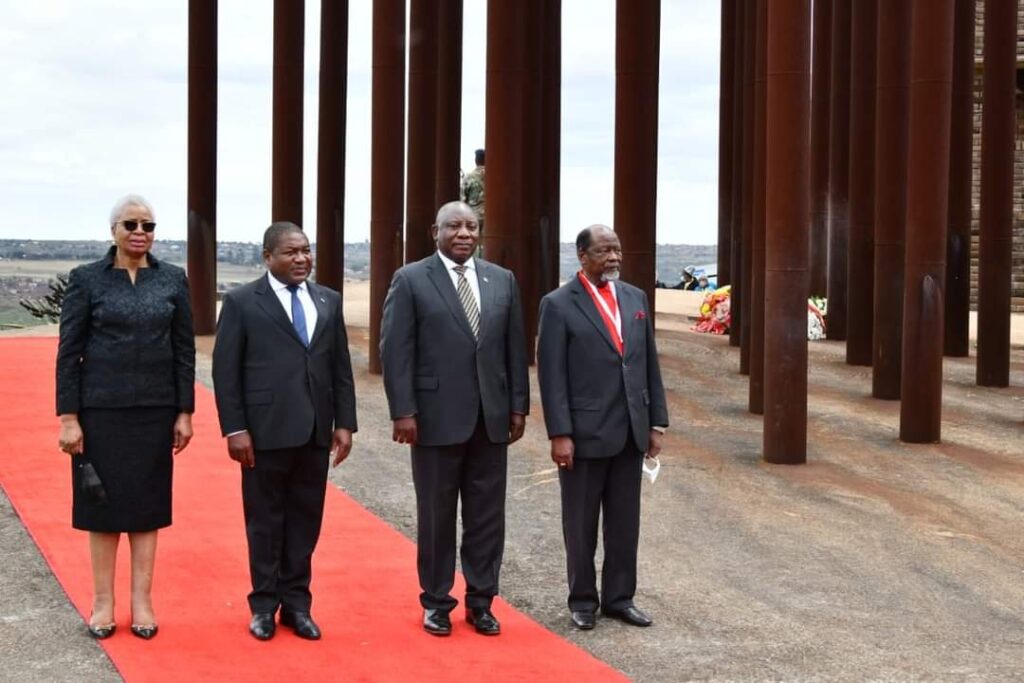
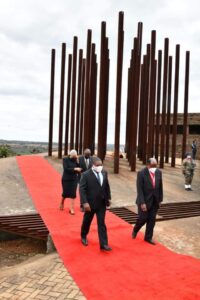
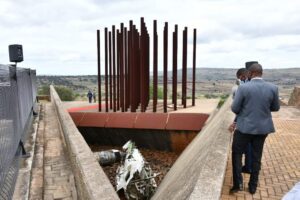
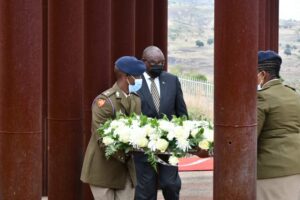
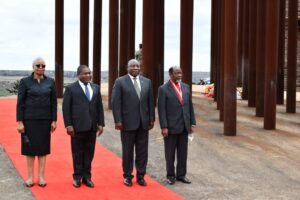
The 35th anniversary of the passing of President Samora Machel of Mozambique takes place annually at the crash site at Mbuzini in the Nkomazi Municipality, Mpumalanga, where the Samora Machel Museum was established.

It serves as a constant reminder of the bonds of friendship that exist between the people of South Africa and Mozambique.

“Exactly 35 years ago today, a tragedy befell the Southern African region when President Samora Machel and 34 of his compatriots were killed in a mysterious plane crash right in Mbuzini.” President Cyril Ramaphosa”

Read: Address by President Cyril Ramaphosa  on the occasion of the 35th commemoration of the Mbuzini tragedy, Mbuzini, Mpumalanga,

I thank you.Programme Director,

Your Excellency, President of the Republic of Mozambique, President Filipe Nyusi,
Ministers and Deputy Ministers from the Republic of Mozambique and the Republic of South Africa,
Premier of Mpumalanga, Ms Refilwe Mtsweni-Tsipane,
Mama Graça Machel and all members of the Machel family,
Mayors and Councillors, Traditional and Religious Leaders in our midst,
Survivors of the Mbuzini tragedy and family members of those who lost their lives,
Comrades and Friends,

Avuxeni.

Exactly 35 years ago today, a tragedy befell the Southern African region when President Samora Machel and 34 of his compatriots were killed in a mysterious plane crash right here in Mbuzini.

For 35 years now, people from all walks of life have come to Mbuzini to pay tribute to Samora Machel and to honour his revolutionary spirit.

And so we are here at this memorial site today.

On its own, this site is a reminder of the dreadful past from which we come and the sacrifices many people made to achieve a better world in which all can enjoy peace, freedom, dignity and equality.

The commemoration of the death of President Machel and his staff play a significant role in keeping alive the memory of those who selflessly laid down their lives for the liberation of the people of Southern Africa.

As South Africans, we will never forget the contribution made by President Machel and the people of Mozambique in ensuring that freedom reigns in country.

In commemorating the Mbuzini tragedy, South Africa and Mozambique continue to celebrate the ties of solidarity and struggle that bind us together.

Through this act, we reaffirm our deep commitment to work together to ensure peace and freedom in Southern Africa.

The monument we built on this site not only commemorates the tragedy of that day; it reminds us that the fates of our two countries are inextricably intertwined.

It reminds us that the border that lies just a few hundred metres from where we stand was placed there by foreign powers that had no interest in our history, our heritage or our aspirations.

It reminds us that we are born of the same ancestors, that we have shed the same blood, that we have cried the same tears and that we have shared the same joy.

And it reminds us that we share the anguish of this tragedy.

We share the frustration that the cause of the crash has never been established and, should our suspicions be correct, that those responsible have never been identified.

It offends our sense of justice and our desire for the truth.

Yet, while there is much that we do not know about the circumstances of this tragedy, we are certain of its meaning and the responsibility that it places on our shoulders.

We know that the struggle to which Samora Machel dedicated his life is not complete.

The people of Southern Africa – and indeed of our continent – have yet to know the dignity, prosperity and security that they seek and deserve.

They have yet to recover from the ravages of colonialism and iniquities of apartheid

They still face major challenges of poverty, unemployment, inequality and violent conflict.

We must decisively deal with these challenges and work towards lasting peace in our region and continent.

In honour of Samora Machel, let us use the recently established African Continental Free Trade Area to increase intra-Africa trade and minimise our dependence on the outside world for goods and services.

We are a continent that has an abundance of mineral resources and agricultural produce, but we do not use them for the benefit of our people.

Many of the finished goods that Africa imports from elsewhere are made from materials that originate on the continent.

By exporting our raw materials, we are also exporting jobs, opportunity and value.

We need to reverse this trend and beneficiate our own raw materials to ensure that the continent prospers, that our people have jobs and that our children are healthy, educated and happy.

The continent has some of the biggest rivers, like the Zambezi and the Congo.

These are big enough to produce enough electricity for the whole continent.

We have enough sun, wind and minerals to become a global leader in the green economy.

We are a continent of young people, possessed of the energy, initiative and skills to establish Africa as a new frontier of production and innovation.

What we need to achieve our potential are strong democracies, accountable institutions, capable leaders, peace and stability.

We need societies that strive for the empowerment of women and the achievement of gender equality in every area of life.

We need leaders who follow in the footsteps of Samora Machel, who are selfless, who are committed, who are dedicated to serve and who are prepared to sacrifice.

We need leaders who put the needs and the aspirations of the people above all else.

We are having today’s commemoration in the midst of the worst global health crisis in more than a century.

As African countries, we must continue to work together to overcome this disease and ensure an inclusive and sustained social and economic recovery.

We must continue to encourage our fellow countrymen and women to be vaccinated against COVID-19, and to continue observing critical prevention measures like washing hands with soap and water, wearing masks and social distancing.

We must intensify the struggle for equitable access to COVID-19 vaccines, ensuring that as many people as possible are vaccinated as rapidly as possible.

No country, no community and no person must be left behind.

President Machel and his compatriots laid down their lives to ensure that our countries attain freedom from colonialism, apartheid and oppression.

Let us continue with the struggle to ensure that Southern Africa realises their dream of freedom from hunger, inequality, injustice and conflict.

The struggle continues.

A luta continua.

Ndza khensa.